
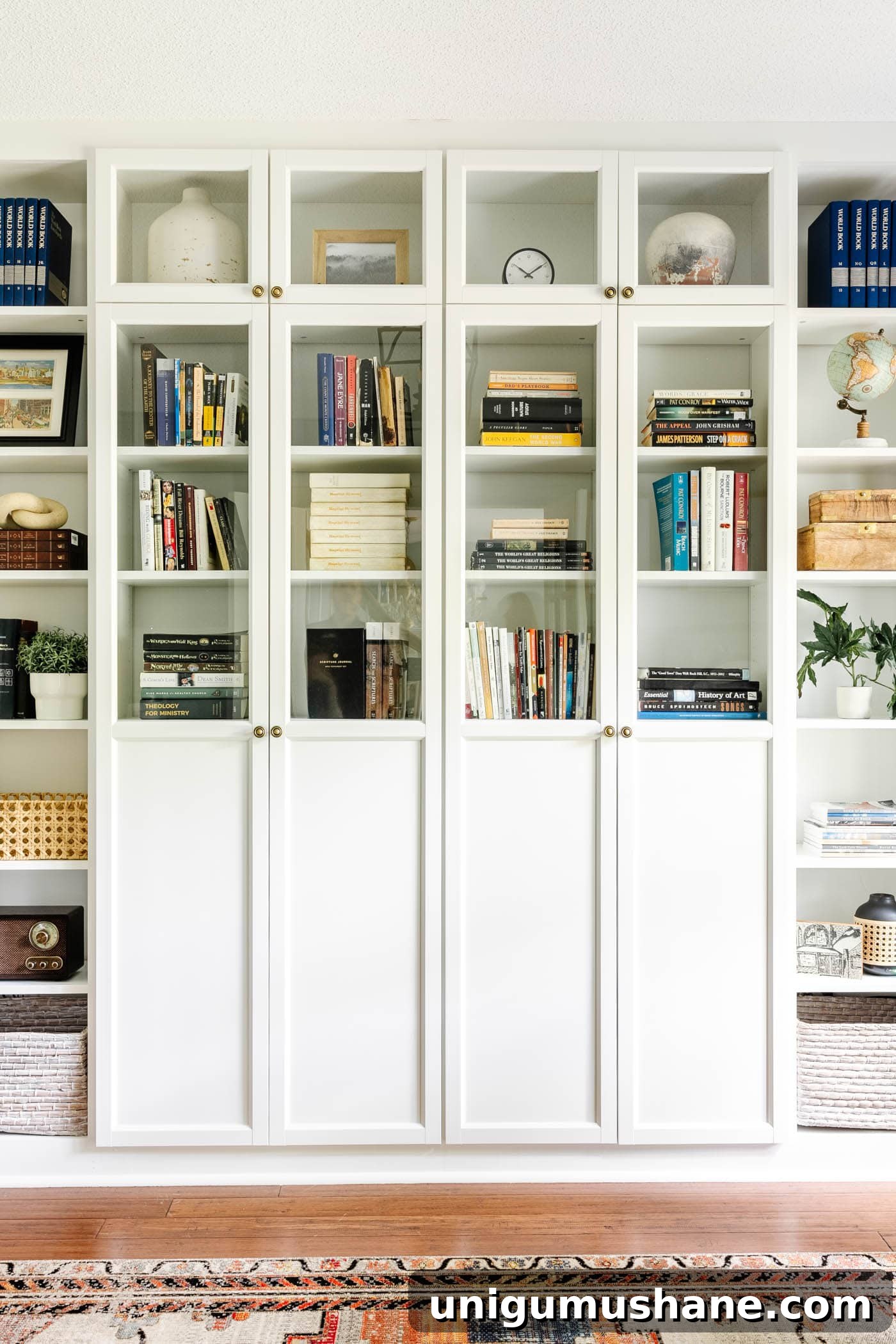
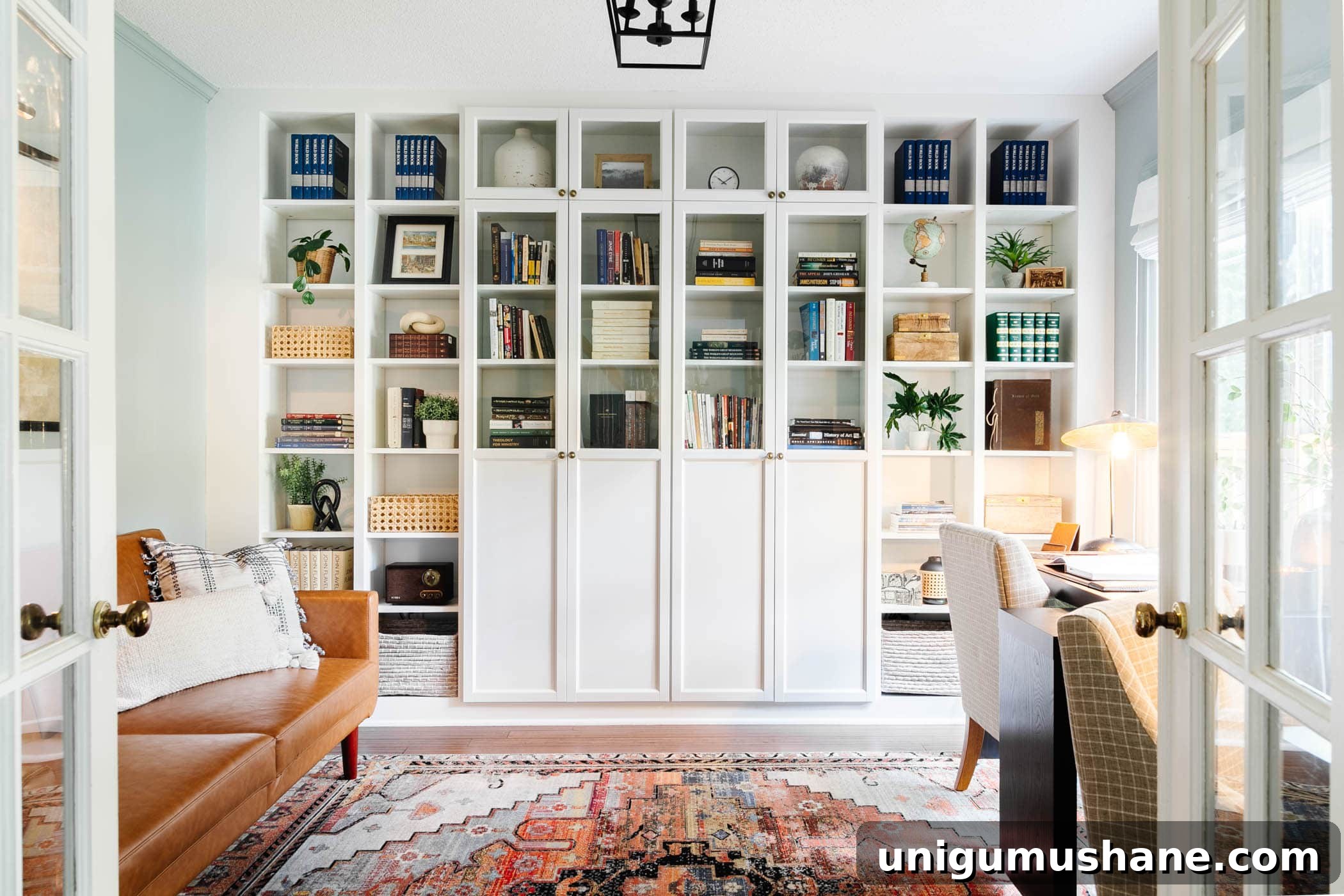
How to build DIY built-in bookshelves with glass-front Oxberg doors using the budget-friendly IKEA BILLY bookcase hack.
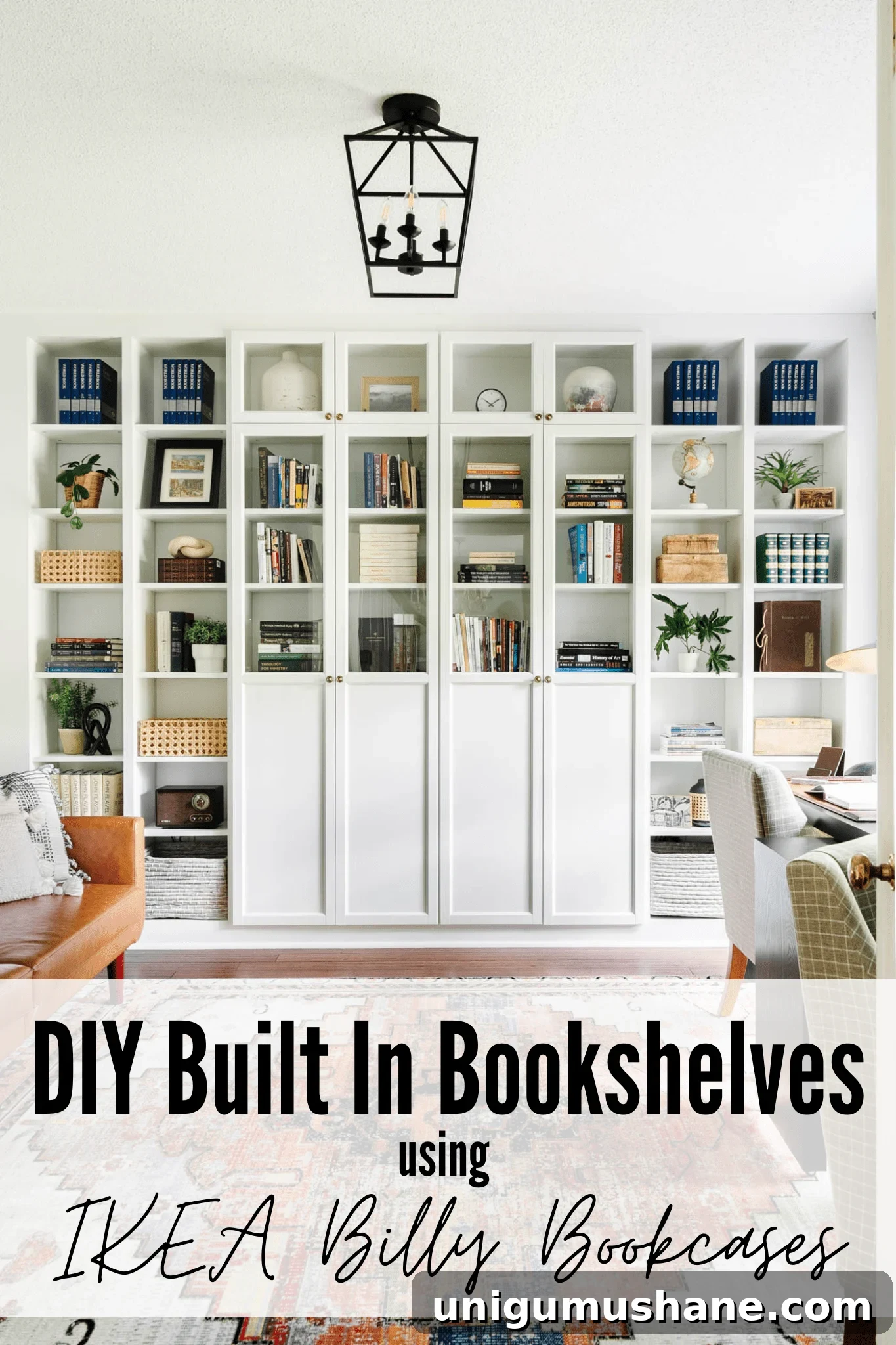
We love the IKEA BILLY bookcase hack and have used it repeatedly in our home projects. After building several built-ins, this approach is one of the fastest, most budget-friendly ways to achieve a custom, high-end look without building full cabinetry from scratch. This tutorial focuses on a narrow BILLY bookcase variation and how to add glass-front Oxberg doors so you can adapt if your preferred BILLY size is out of stock.
These instructions follow the same reliable method we use for every built-in: assemble the BILLY units, anchor and join them, build out the gaps with trim and boards, fill and sand, then paint and finish. This version is slimmer and surprisingly sturdy, making it ideal for book storage and a refined office or living area install.
Why IKEA Built-In Shelves Are the Best Solution for DIYers
Built-in shelving elevates any room—living room, home office, playroom, media room, or dining area—while adding practical vertical storage. The best part of this IKEA hack is that much of the hard work is already done: the BILLY bookcases provide a ready-made structure you can customize and tie together with trim, boards, and paint for a truly built-in appearance.
If you want a more affordable route to a custom look, need efficient vertical storage, or are tackling a first carpentry project, this step-by-step guide will walk you through the process in a clear, beginner-friendly way.
How to Make Built-In Bookcases Using the IKEA BILLY Hack
Tools
- Circular saw or table saw
- Coping saw or jigsaw
- Saw horses
- Power drill and drill bits
- Orbital sander with medium and fine grit pads
- Cordless brad nail gun (finish nailer)
- Hammer (claw)
- Pry bar
- Tape measure
- Step ladder
- Clamps
- Combination square
- Utility knife
Supplies
The list below reflects what we used for an 11.5-foot-wide wall with 8-foot ceilings. Adjust quantities and board sizes to match your wall and ceiling height.
- 8 BILLY bookcases (15 3/4″ x 93 1/4″)
- 4 long Oxberg glass/panel doors
- 4 short Oxberg glass doors
- #8 1 1/2″ wood screws
- Bookcase anchors (included with BILLY)
- Five 2x4x8 pine boards
- Two pre-primed 1x10x8 boards
- Four pre-primed 1x4x8 boards
- Finishing nails and brad nails
- Caulk and wood filler
- Expanding foam (Loctite or similar) for larger gaps
- Painters tape
- Satin finish paint matched to the IKEA white
- Cabinet knobs or pulls for doors
Notes: measure your wall and ceiling before buying materials. In our setup the top of the assembled bookcase reached about 7.5 feet, leaving roughly 6 inches to cover with a trim board. If you’re installing on carpet, consider removing the carpet where the built-in will sit for a clean, solid base.
Steps
Step 1 – Remove Baseboard
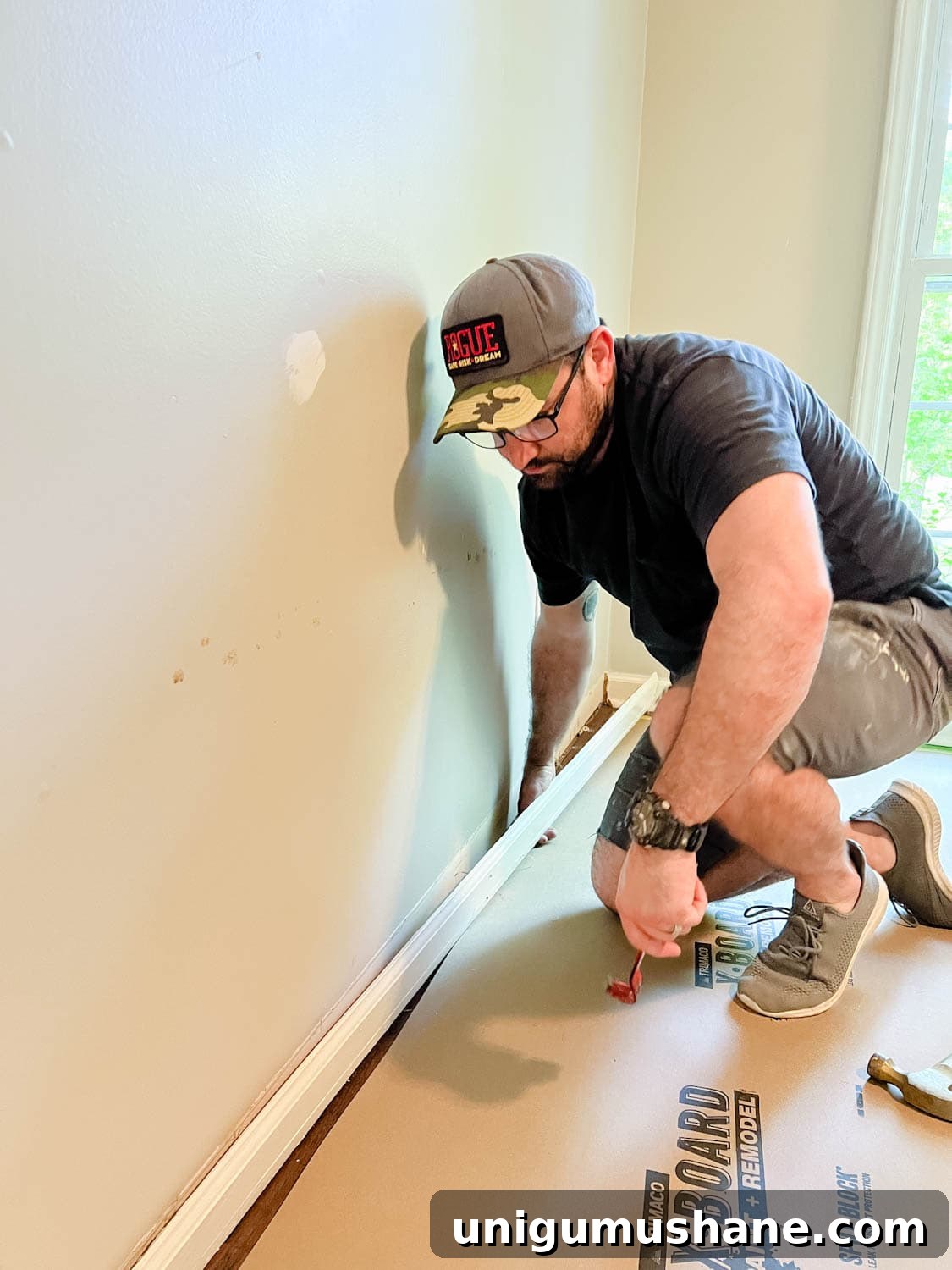
To get the backs of the BILLY units as flush to the wall as possible, remove the baseboard and shoe molding along the installation area. Score the caulk line with a utility knife, then use a claw hammer and small pry bar to carefully remove the trim.
Step 2 – Assemble
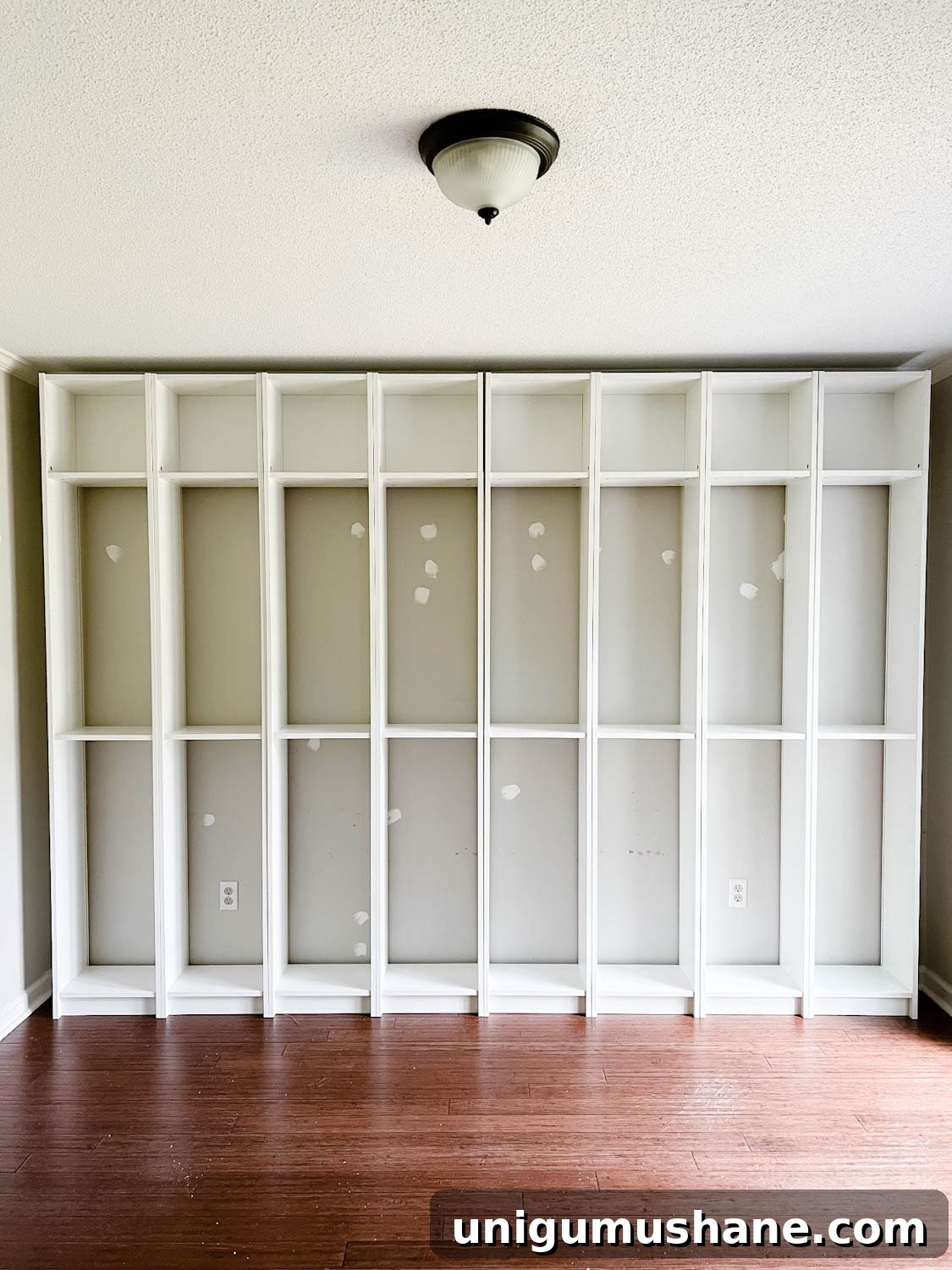
Assemble each BILLY bookcase per instructions, including any height extenders. Do not install the thin manufactured backing—leave the backs open so the actual wall becomes the backing when installed. You can wait to add the extenders until after the bookcases are anchored.
Step 3 – Correct Gap
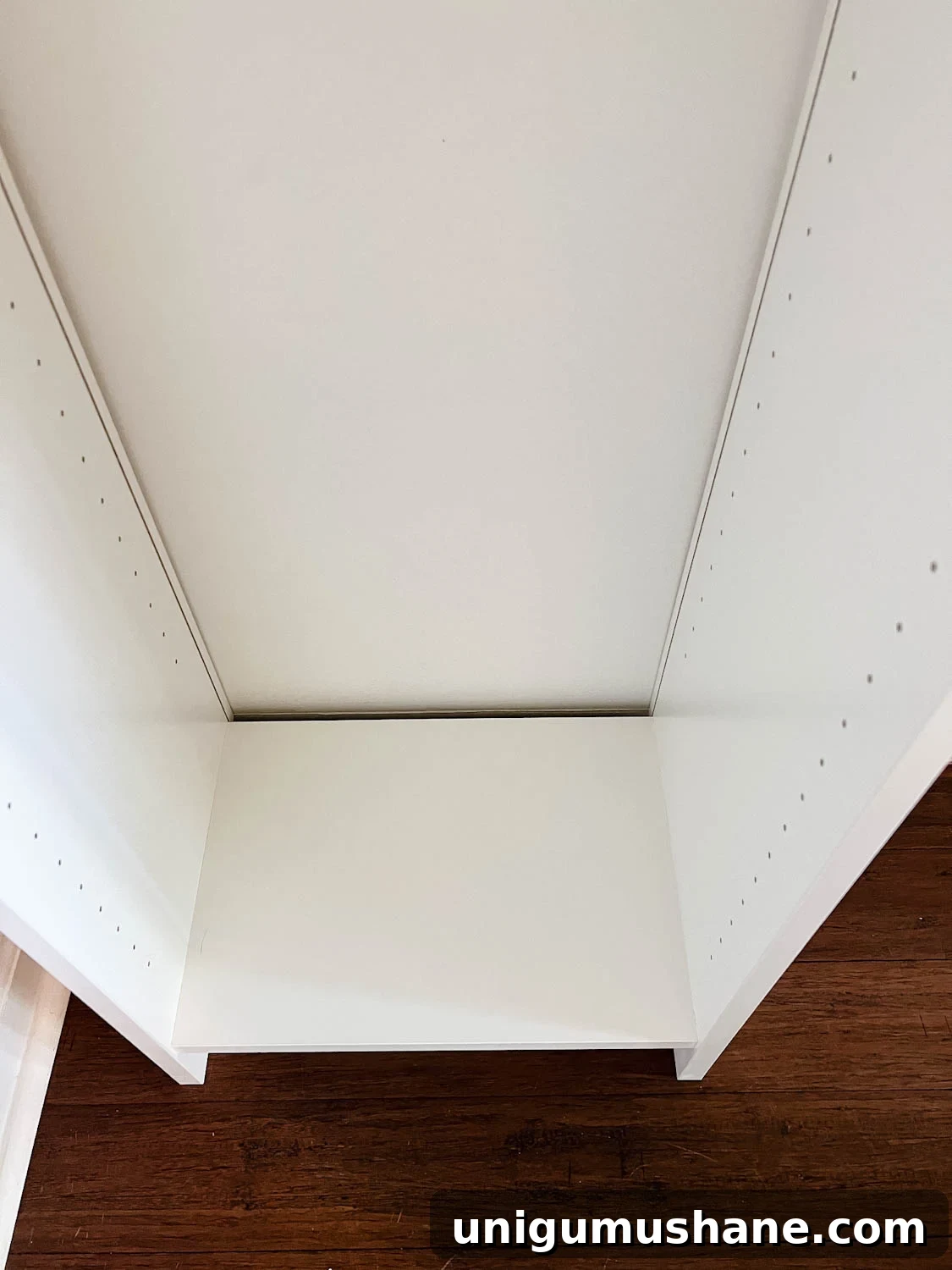
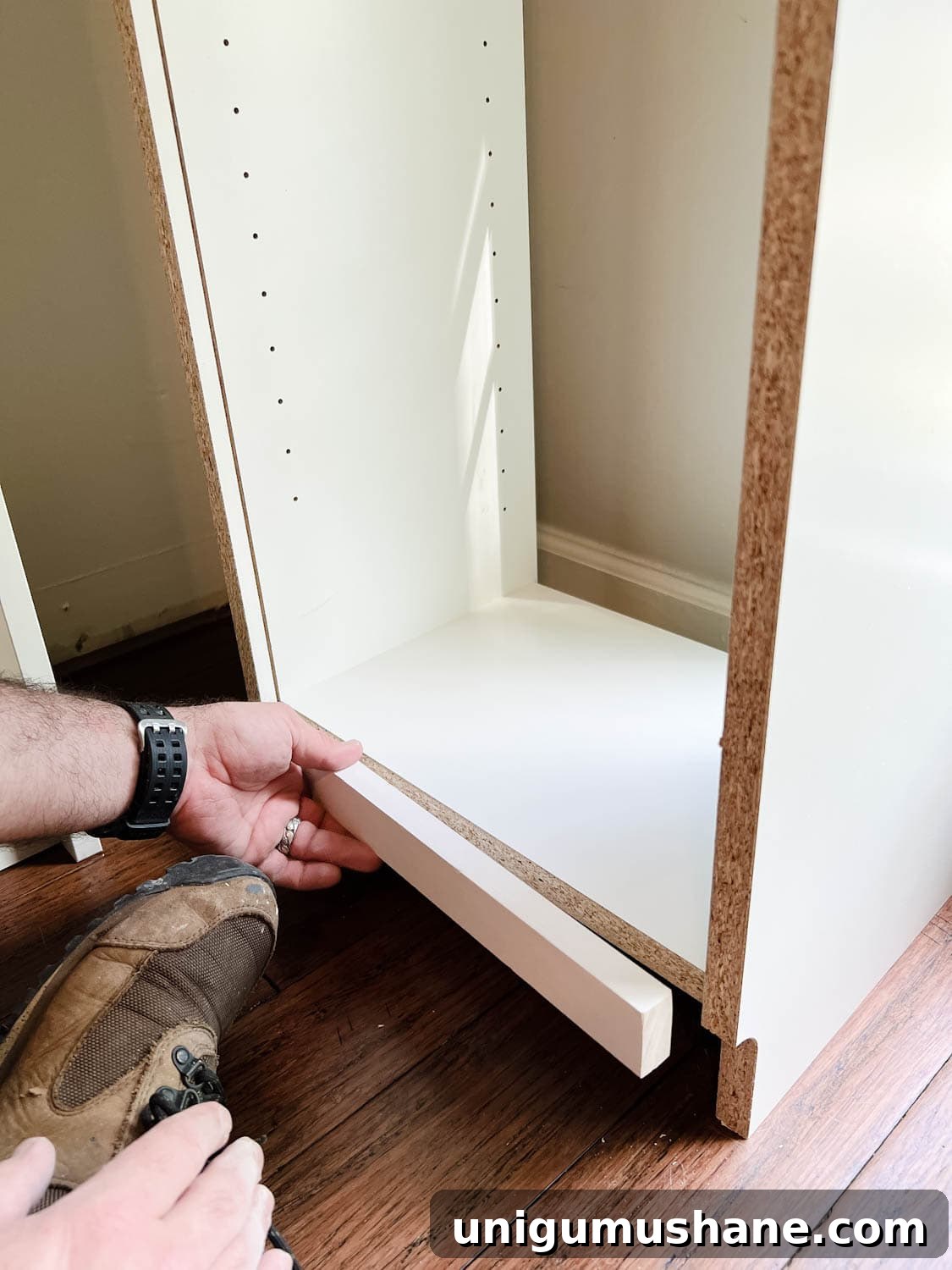
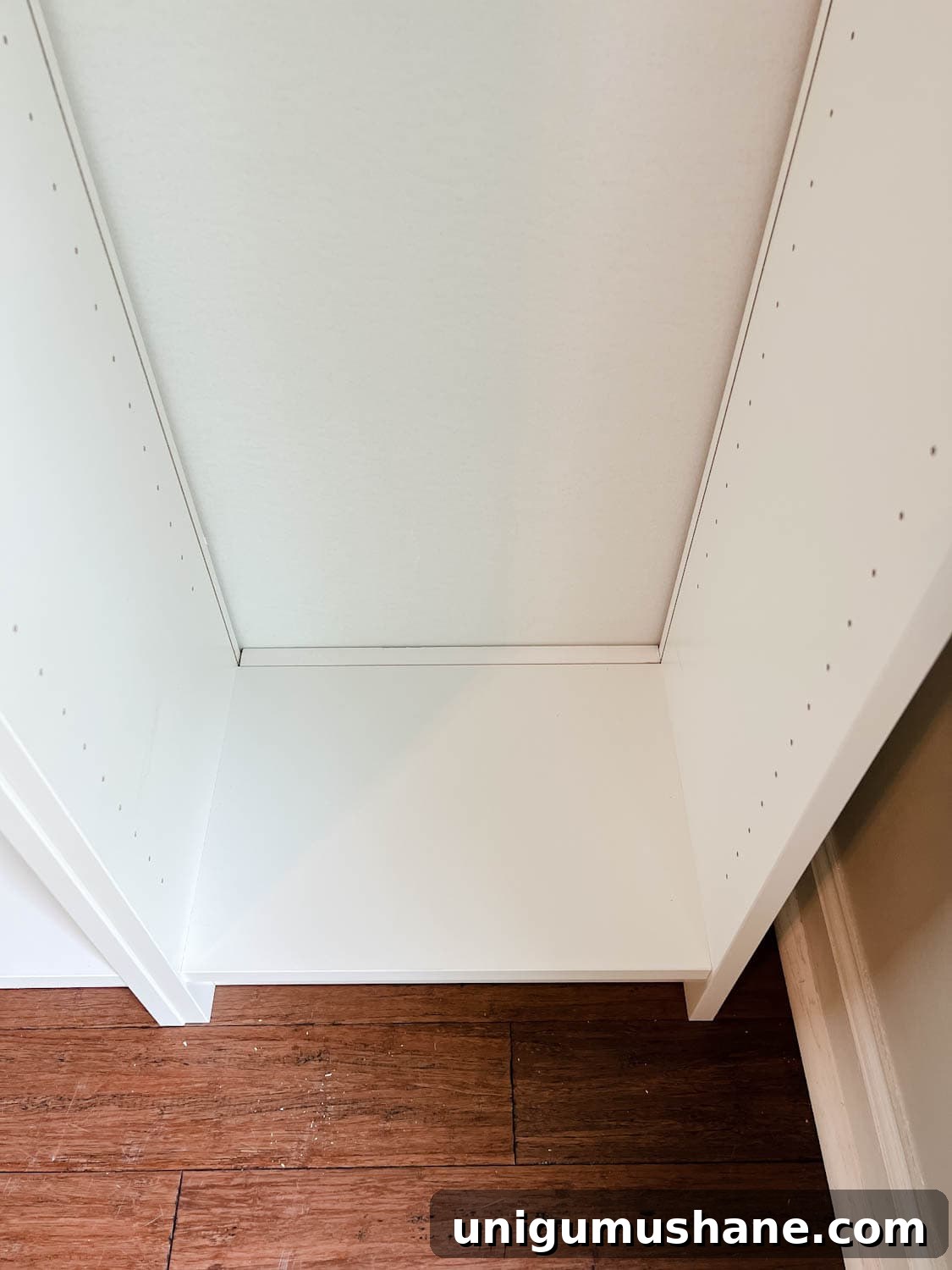
Without the backing the units leave a small rear gap. To close this and create a seamless built-in look, cut a length of 1×2 to fit across the back inside bottom of each bookcase and nail it in place. Caulk will hide any small seams later.
Step 4 – Anchor Shelves
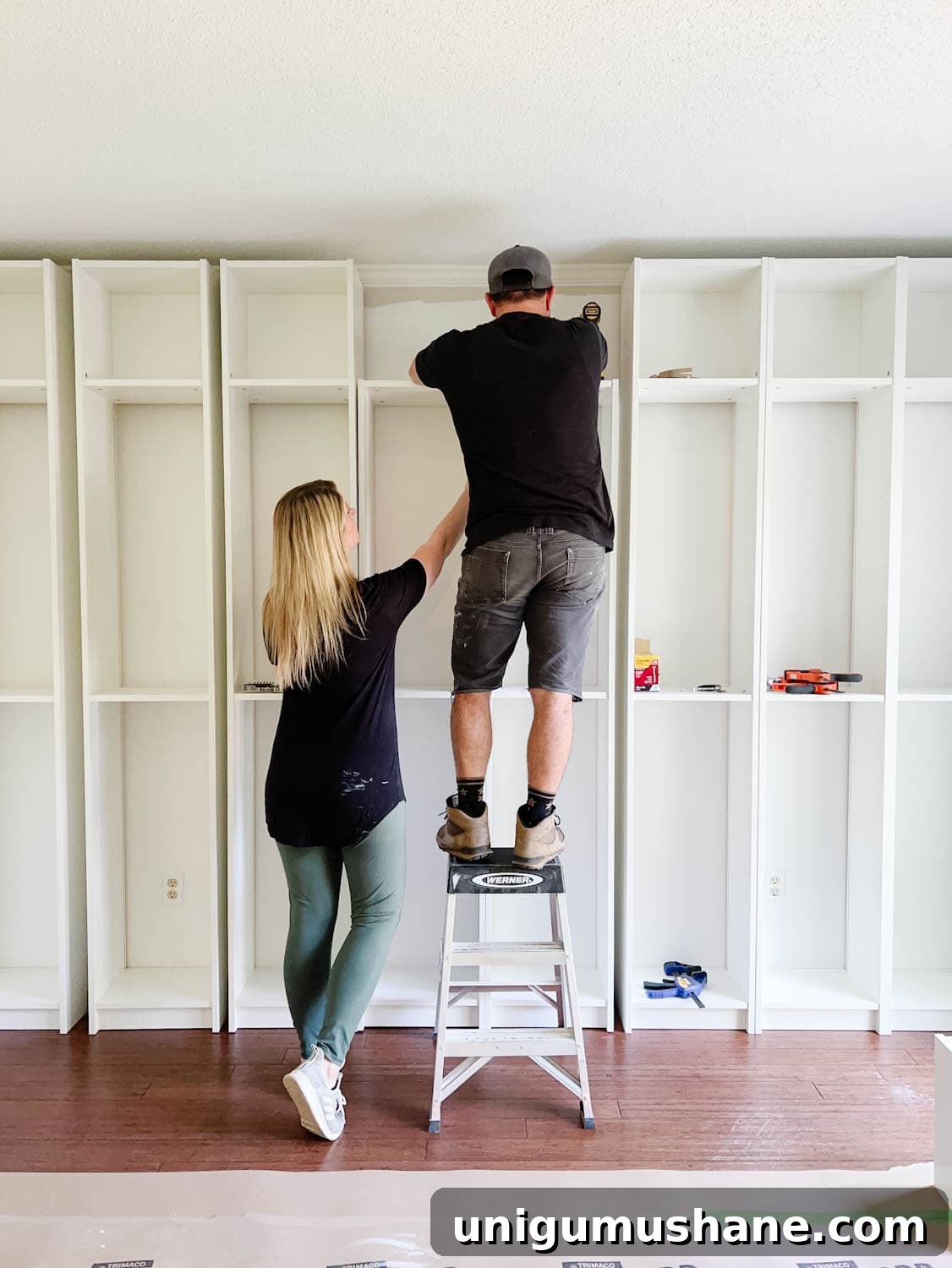
Measure and mark the center and placement of the bookcases on the wall. Use a stud finder to locate studs and anchor the center bookcase into studs first for a stable reference point. Use the included bookcase anchors and long screws where needed.
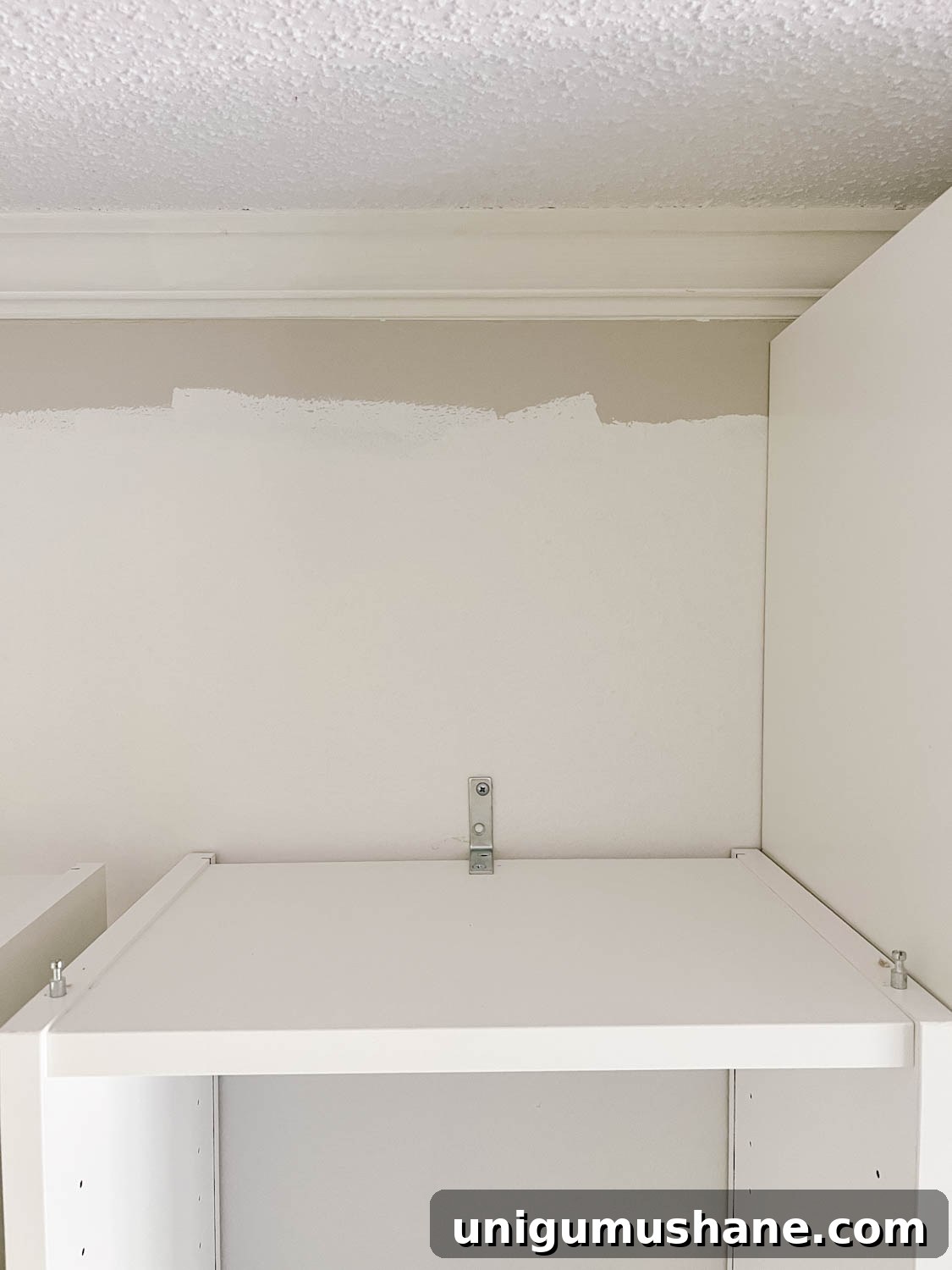
Step 5 – Attach Each BILLY Bookcase Together
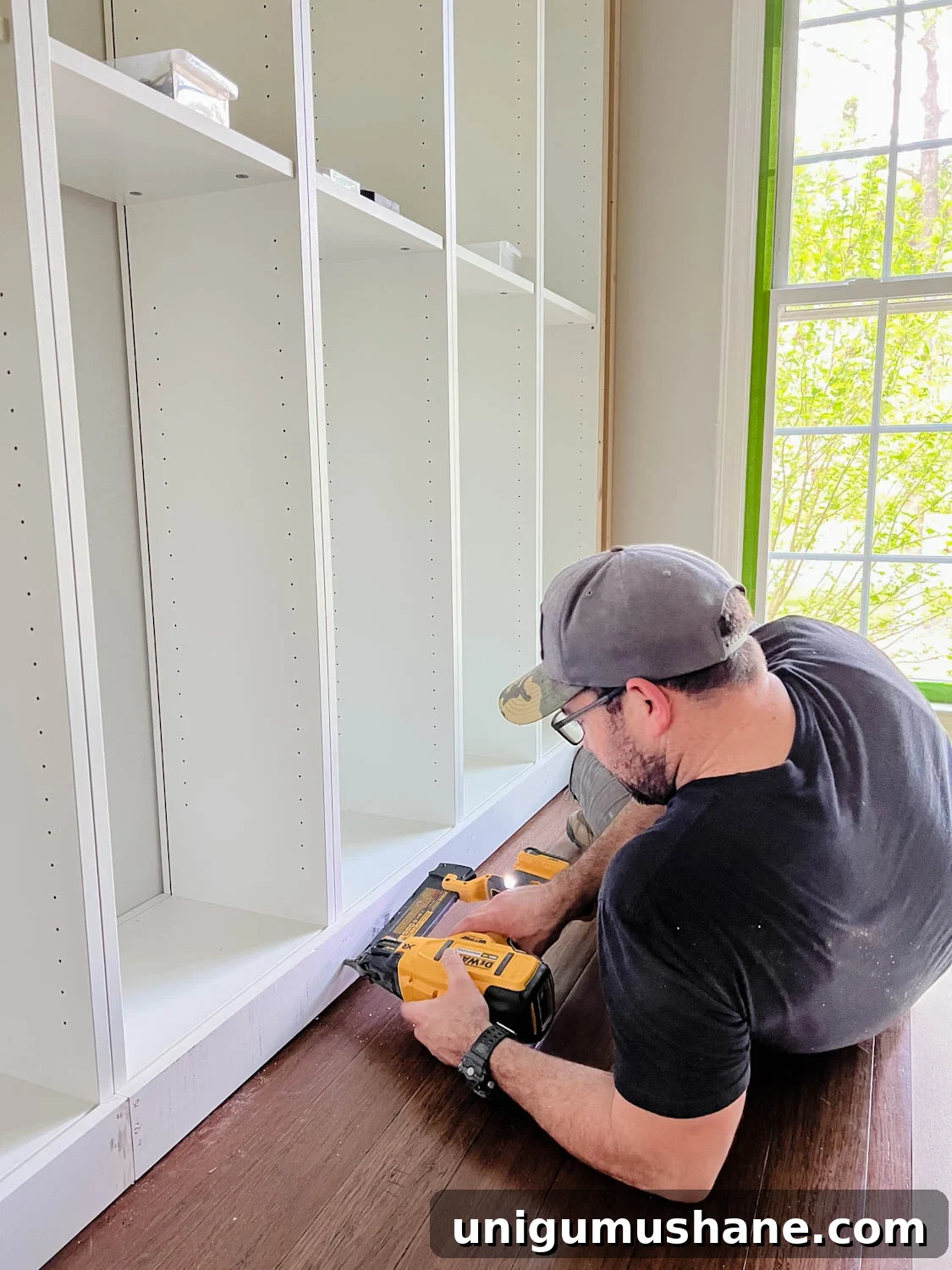
Clamp adjacent bookcases tightly and drive wood screws through the sides where the units meet to fasten them together. This creates a continuous unit that will be further stabilized when trim and face boards are added.
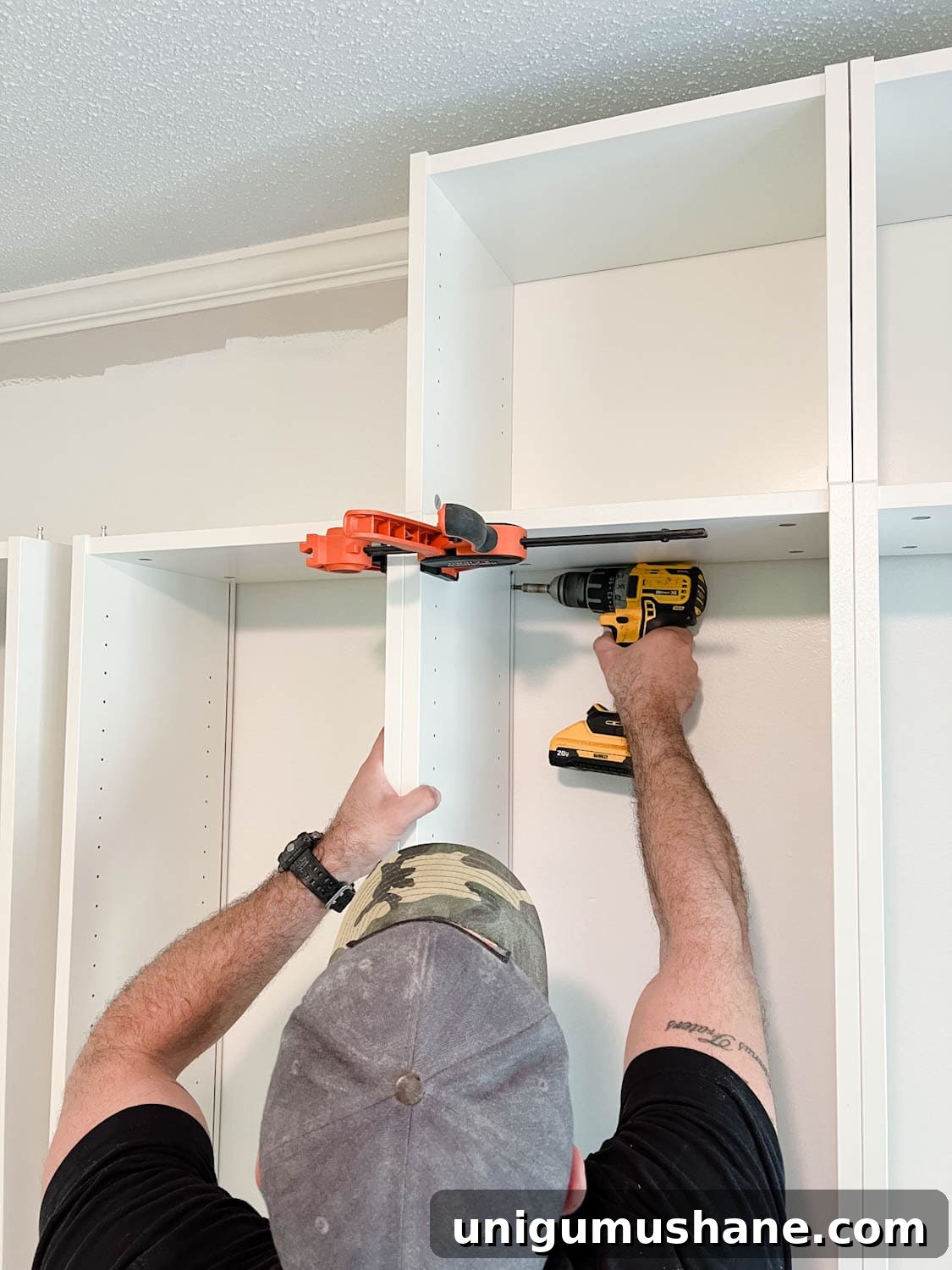
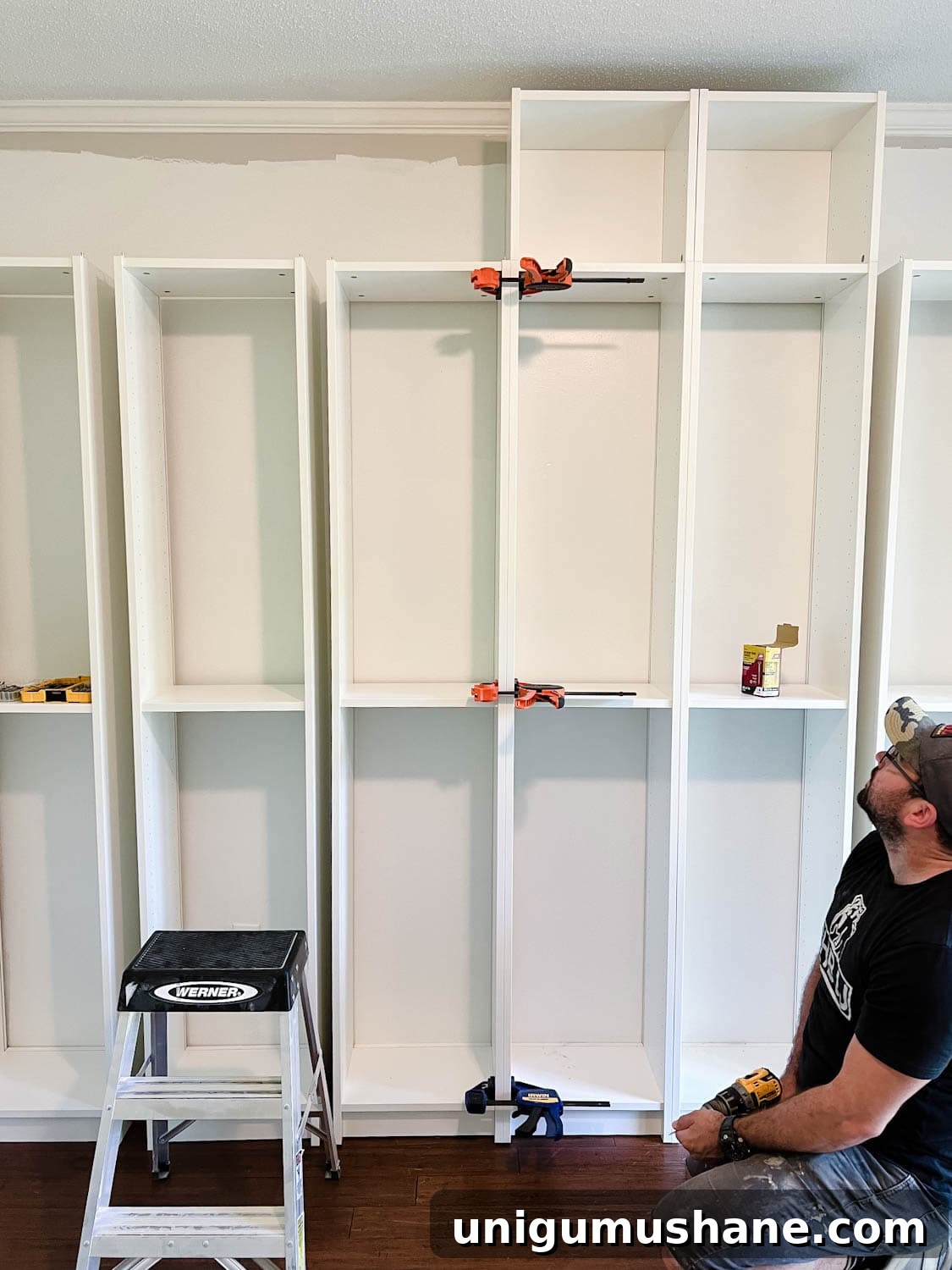
Step 6 – Build In the Gaps
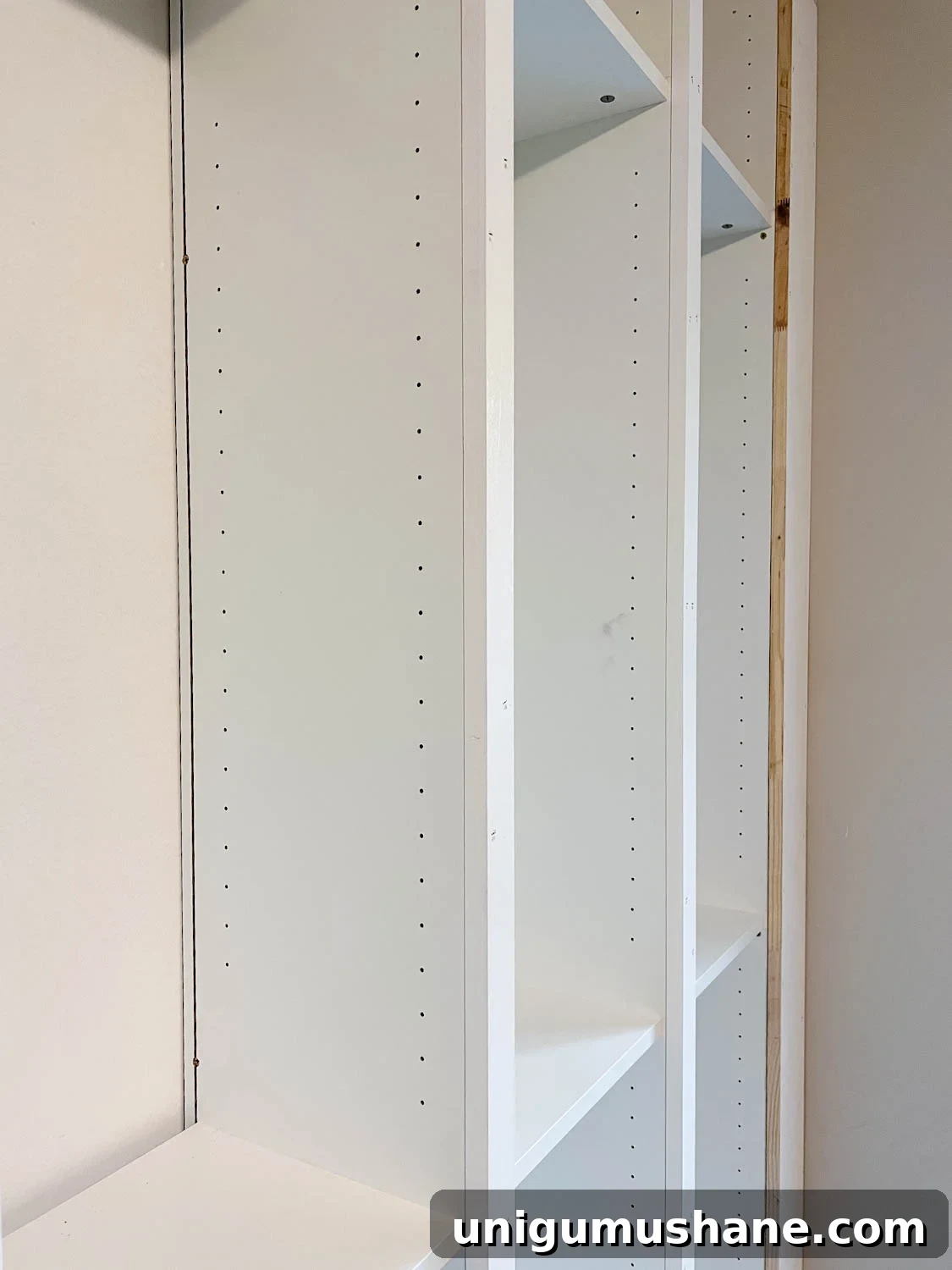
Fill the gaps between bookcases and the wall with trim and blocking so the assembled units read as built-ins. This requires measuring each gap and installing 2×4 blocking where needed to secure the face boards and crown or base trim.
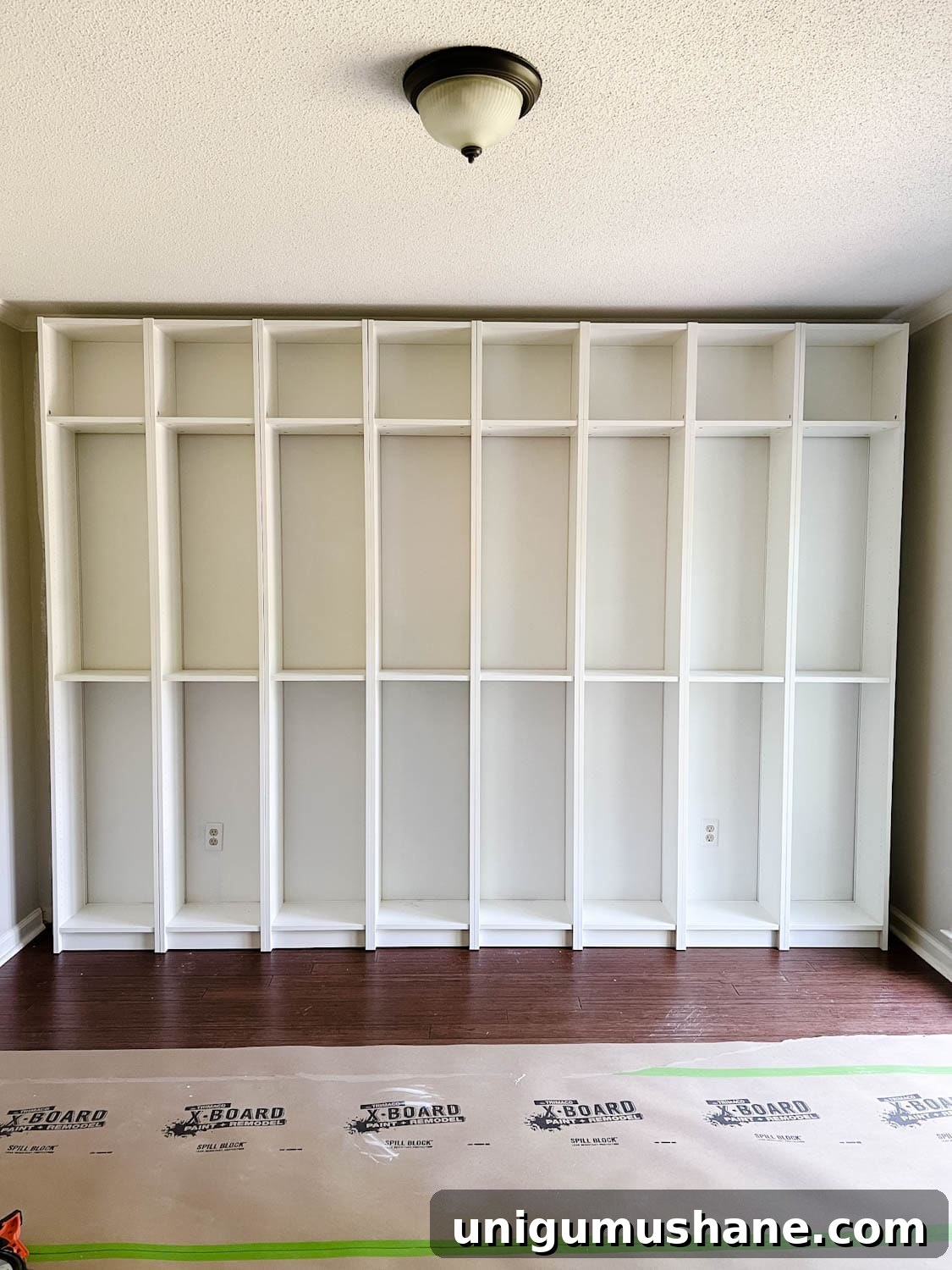
Step 7 – Attach 2x4s
Screw 2x4s into the wall and to the sides or tops of the bookcases to create a solid surface for attaching faceboards and trim. Do this for both sides and across the top where necessary to close the gap toward the ceiling.
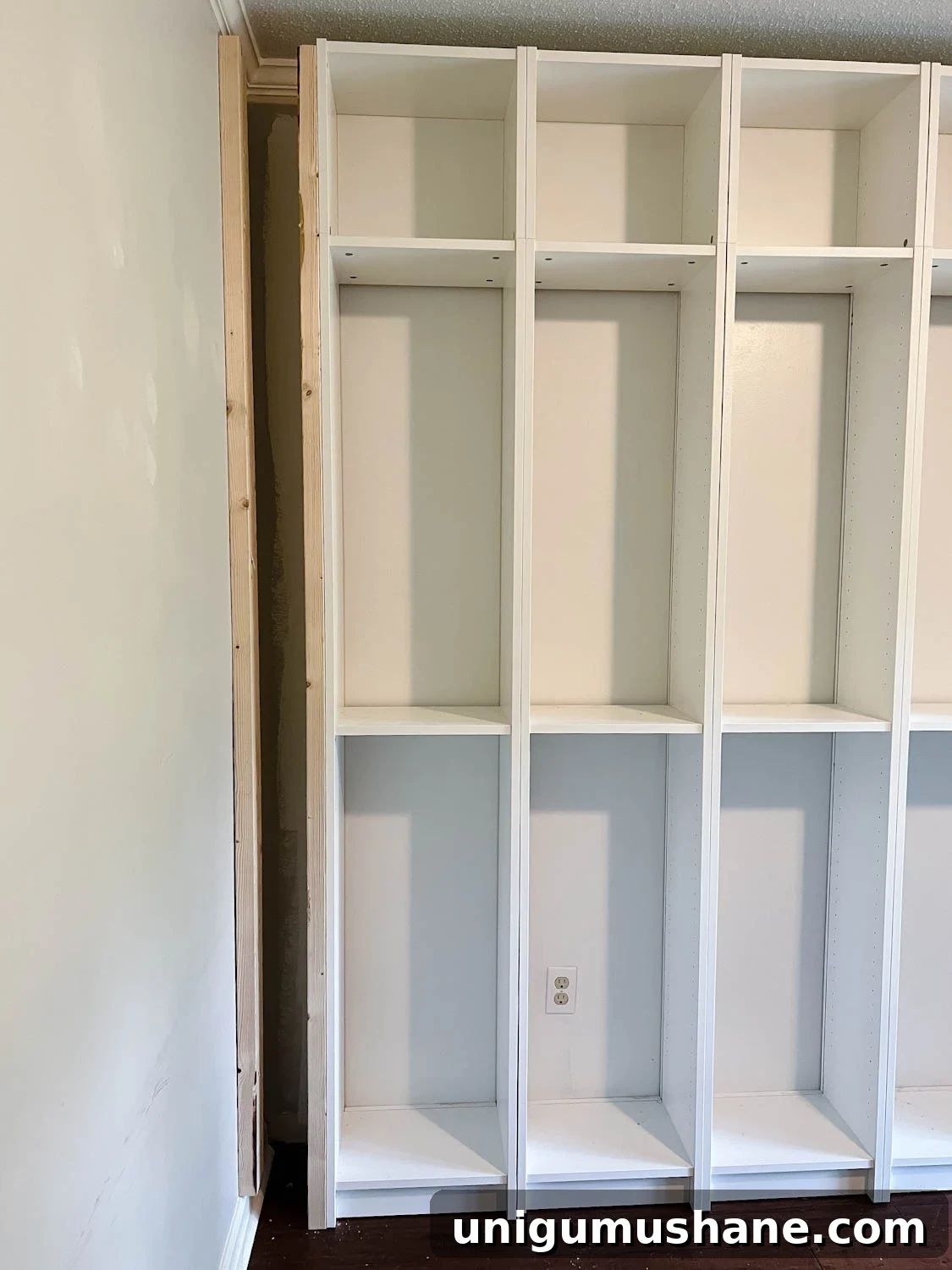
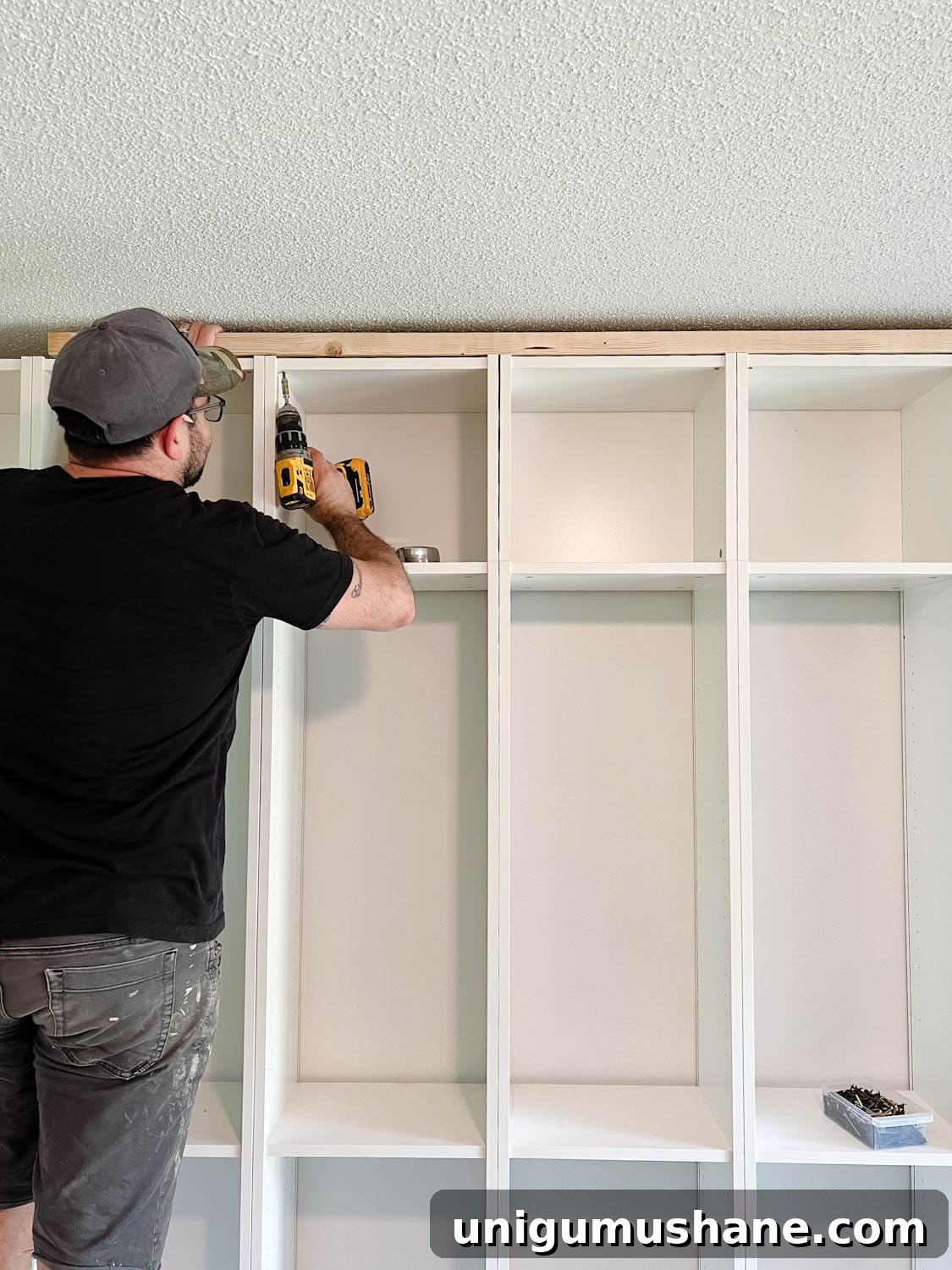
Step 8 – Attach 1×4 Boards to Front of the Bookcase
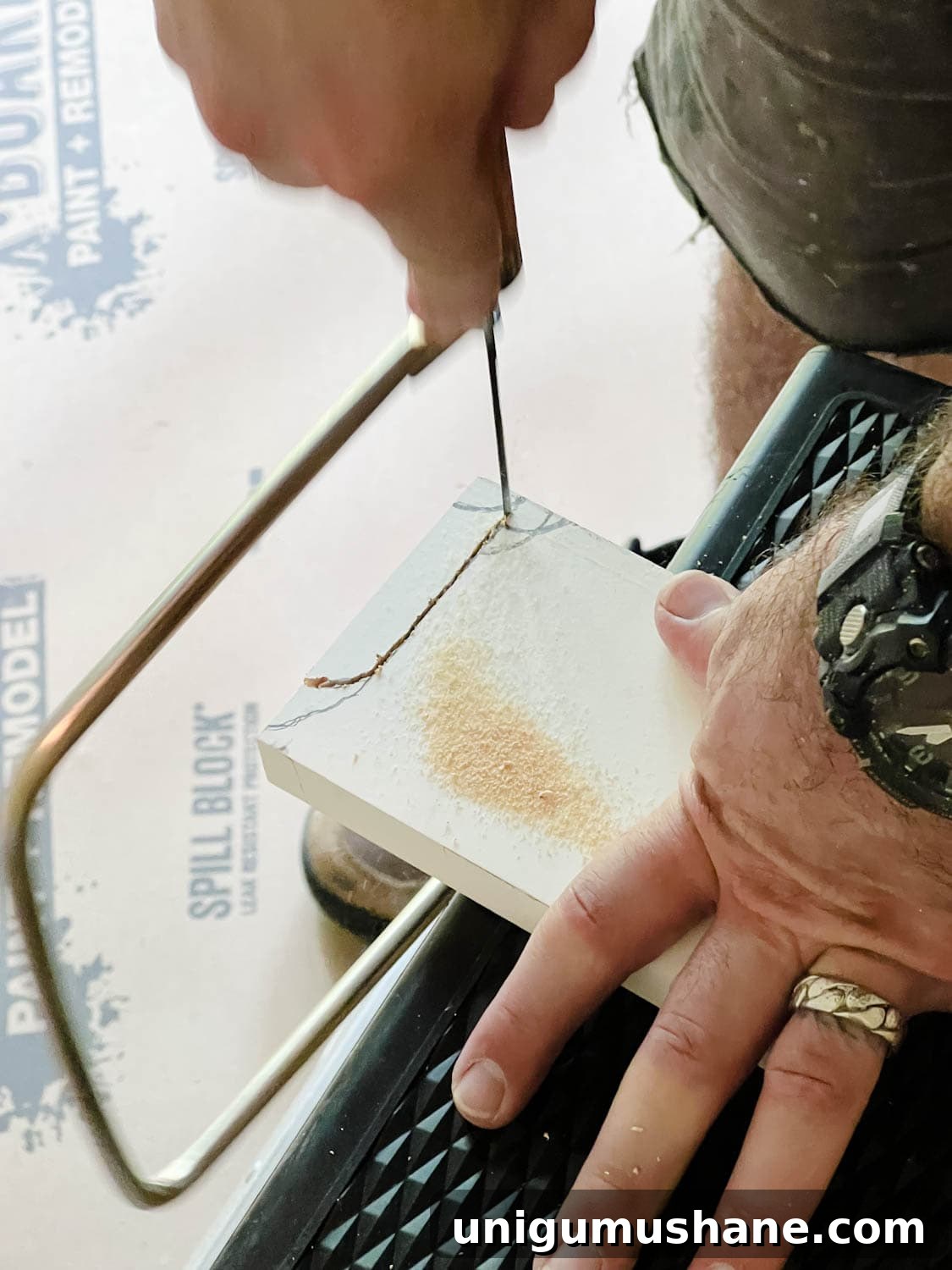
Attach pre-primed 1×4 boards to the fronts at the top and bottom to give a continuous, cabinet-like face. Use a coping saw or jigsaw to cut the board edges to match existing baseboard and crown profiles so the built-in looks integrated. Imperfect joins can be corrected later with caulk.
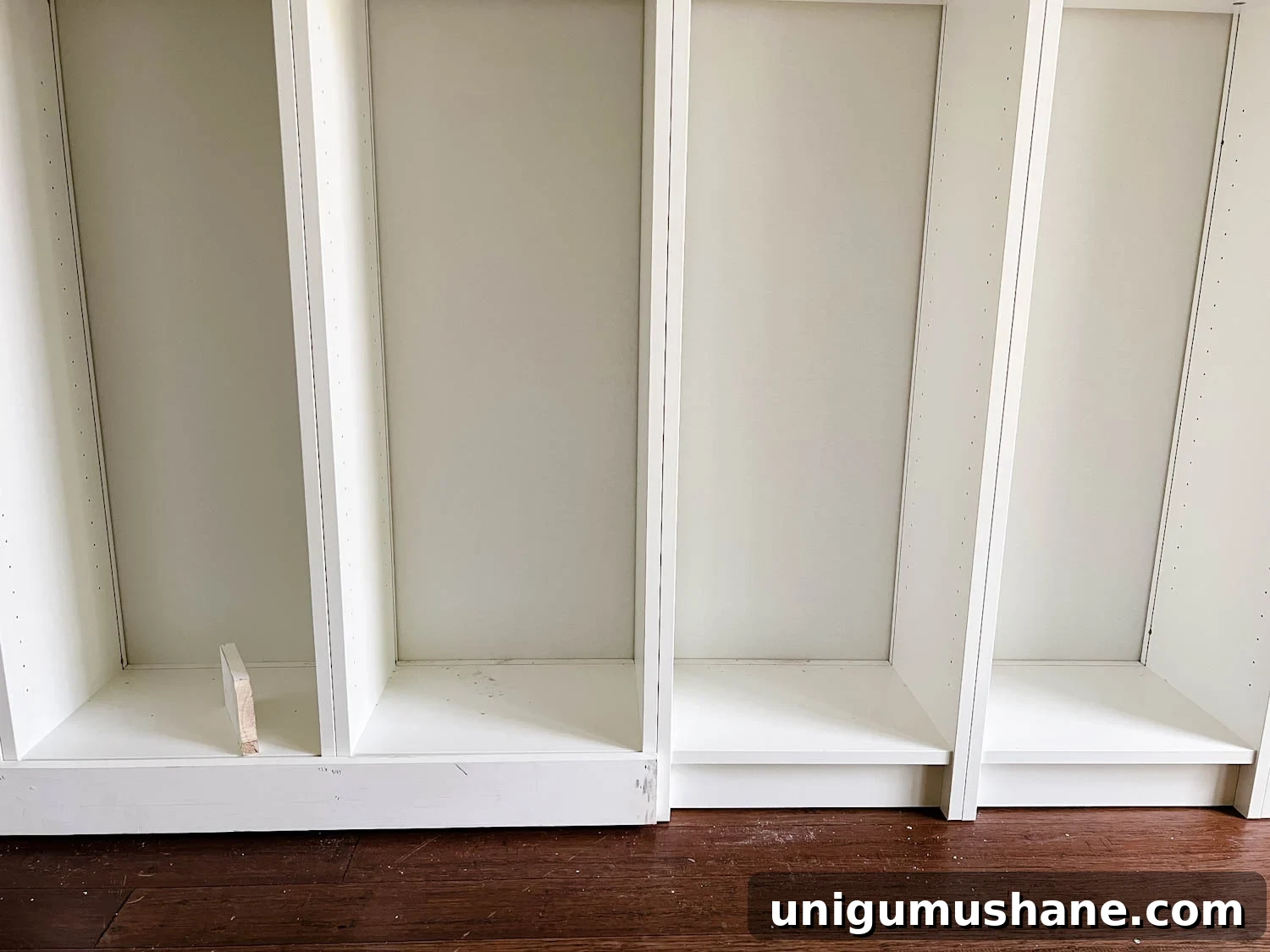
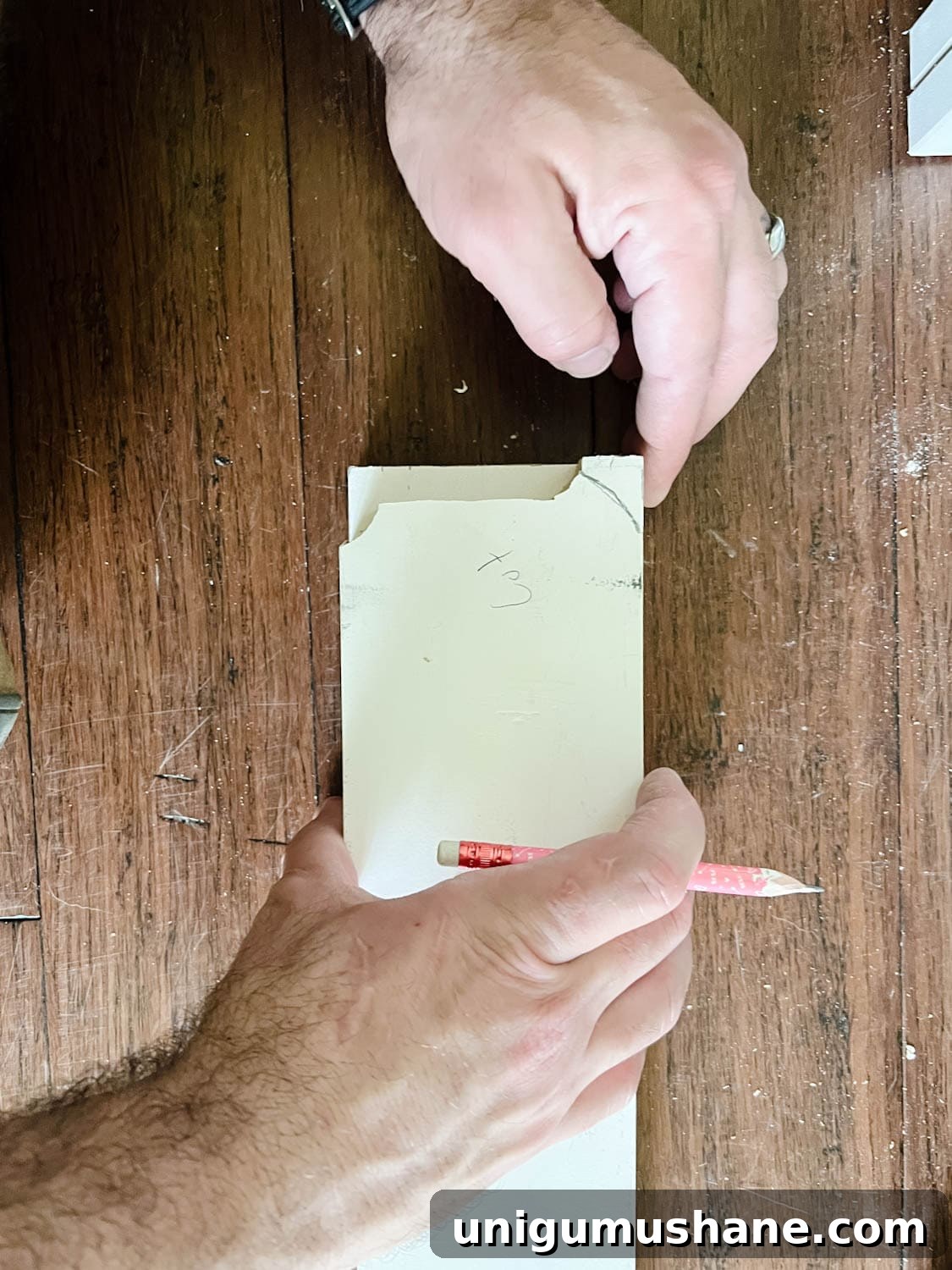
Step 9 – Cut 1×10 Boards to Fit Sides
Measure the gap between the bookcase edge and the wall and trim the 1×10 board to create a flush side face that covers the seam. Cut with a circular or table saw and test-fit before fastening.
Step 10 – Attach 1×2 Boards to Front
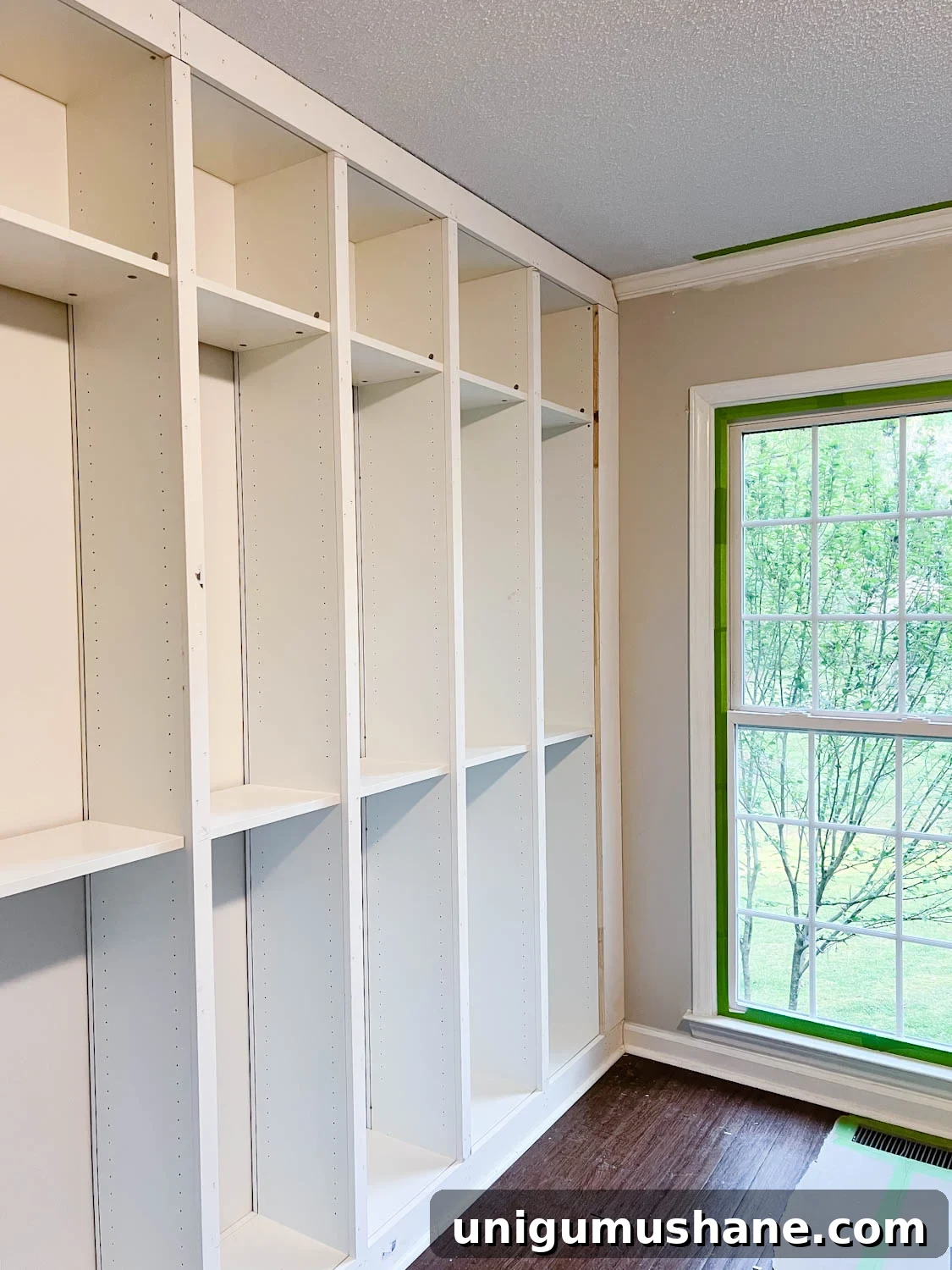
Install 1×2 trim across joining seams where bookcases meet to hide gaps and create crisp vertical lines. Use a finish nailer and check alignment as you go.
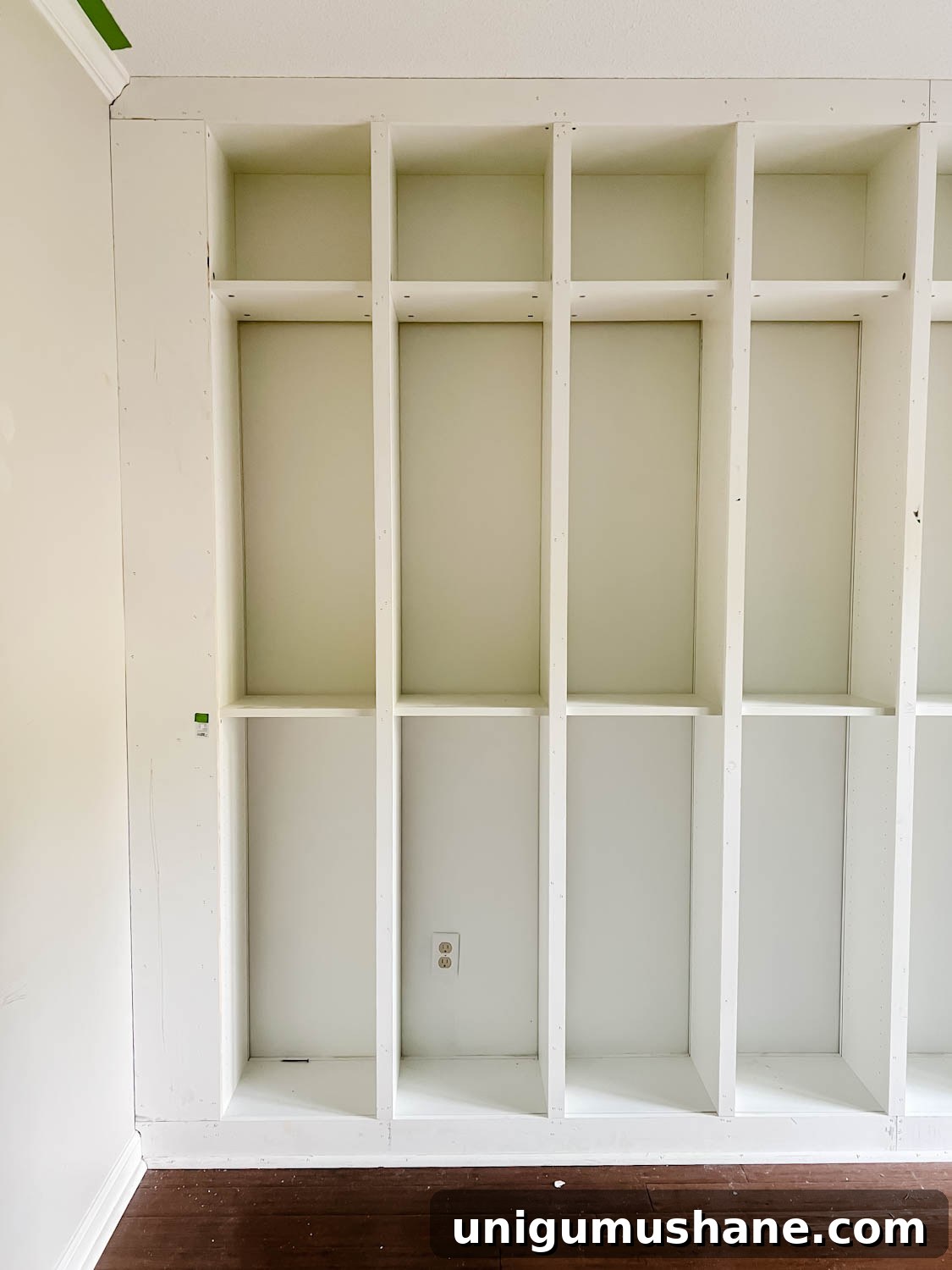
Step 11 – Fill Gaps, Cracks, and Nail Holes
Use expanding foam for larger voids and, once cured, trim and sand it smooth. Apply caulk between boards and walls to seal seams. Fill nail holes and any small imperfections with wood filler, allow to dry, then sand smooth.
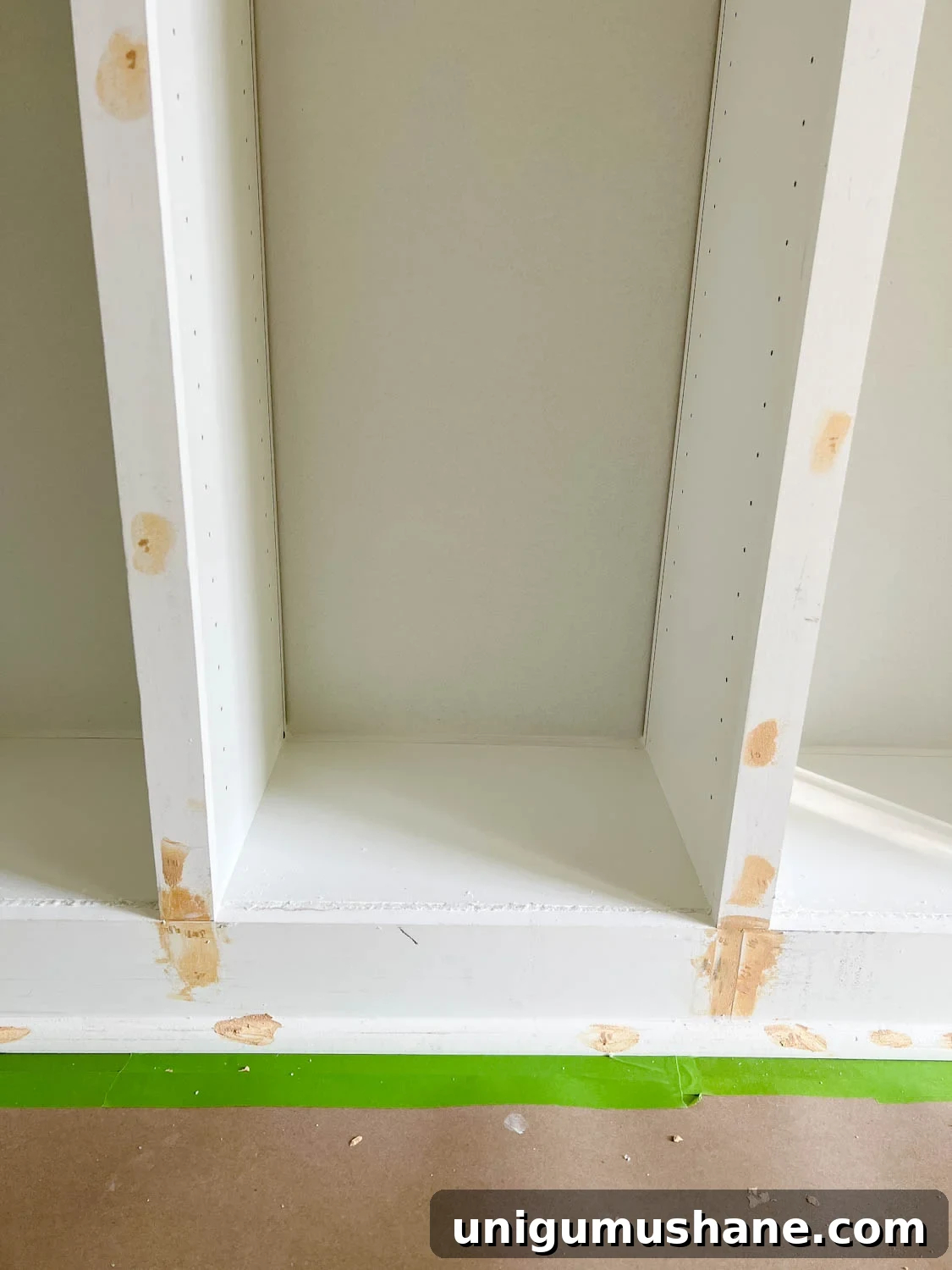
Step 12 – Sand Smooth
After all fillers have dried, use an orbital sander to smooth edges and surfaces so paint will apply evenly.
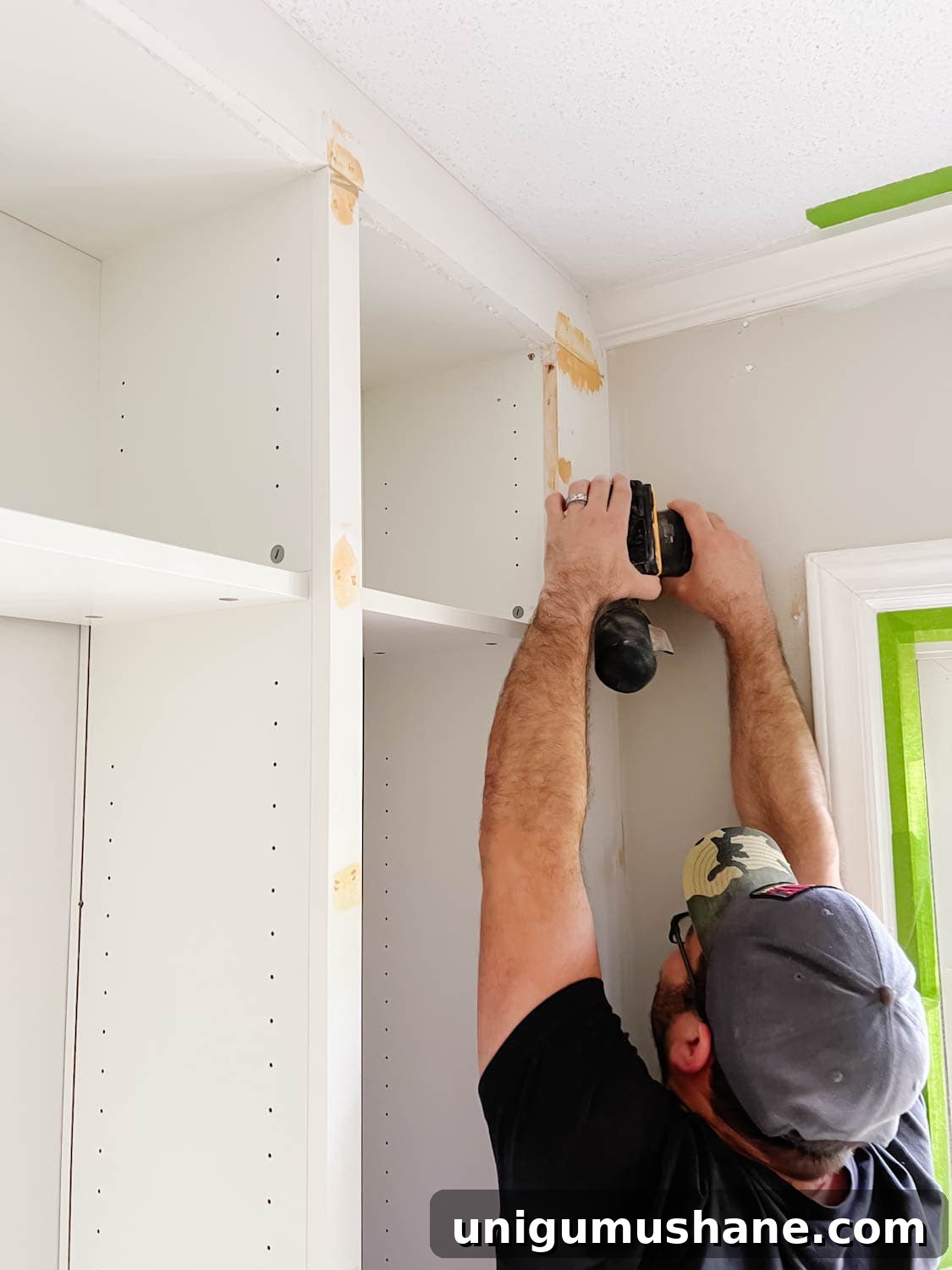
Step 13 – Remove Dust
Vacuum all sanding dust thoroughly with a shop vac and wipe surfaces clean to prepare for painting.
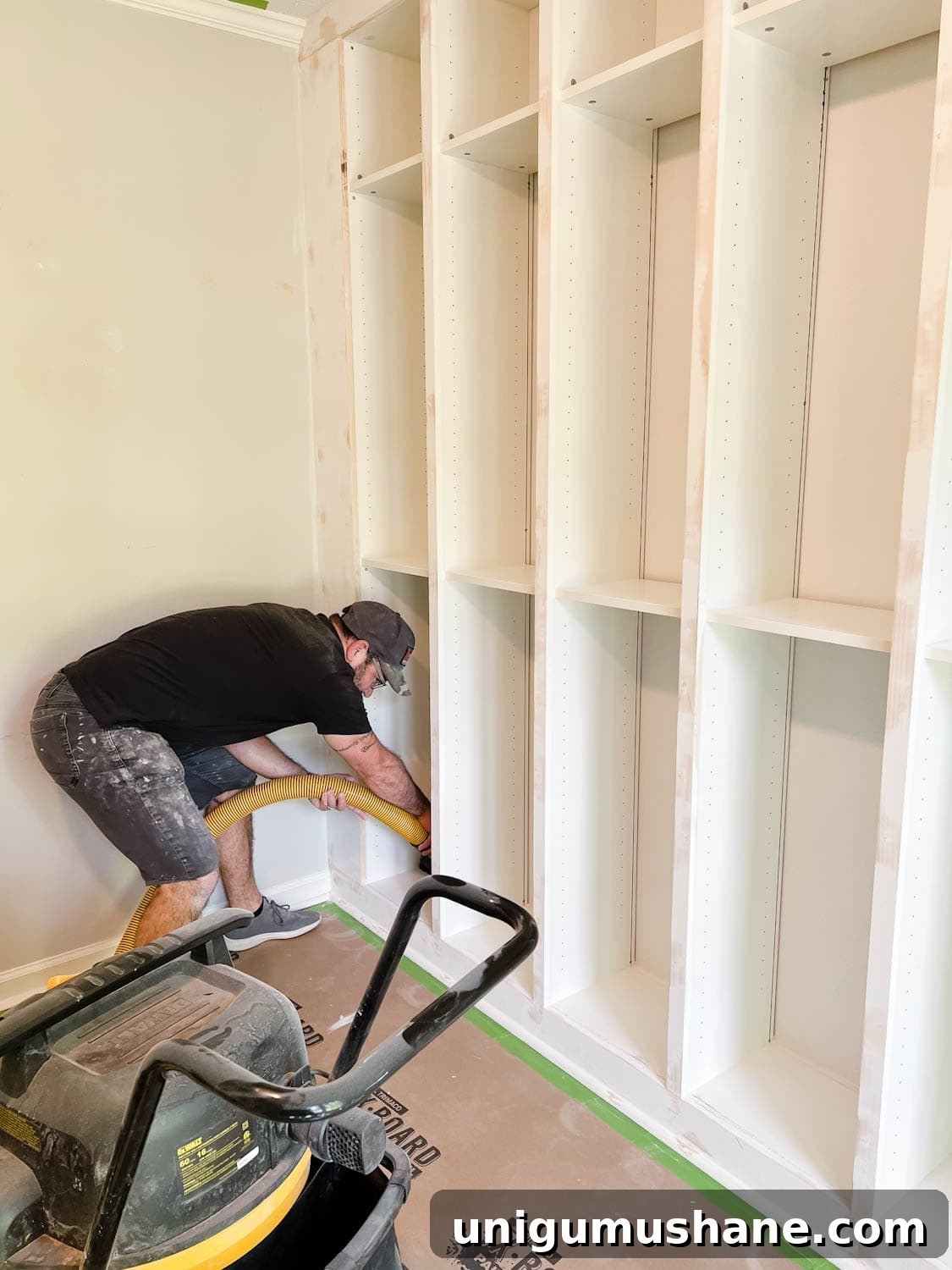
Step 14 – Paint Boards
Paint all visible face boards and trim with a satin finish matched to the BILLY finish so the whole unit reads as one continuous piece. We found Sherwin-Williams Base White matches IKEA white well. If you plan to paint the BILLY units themselves, lightly sand, prime with a shellac-based primer, and use a durable enamel finish—this creates a more custom, long-lasting result. For cabinet-grade durability, consider a urethane-alkyd enamel.
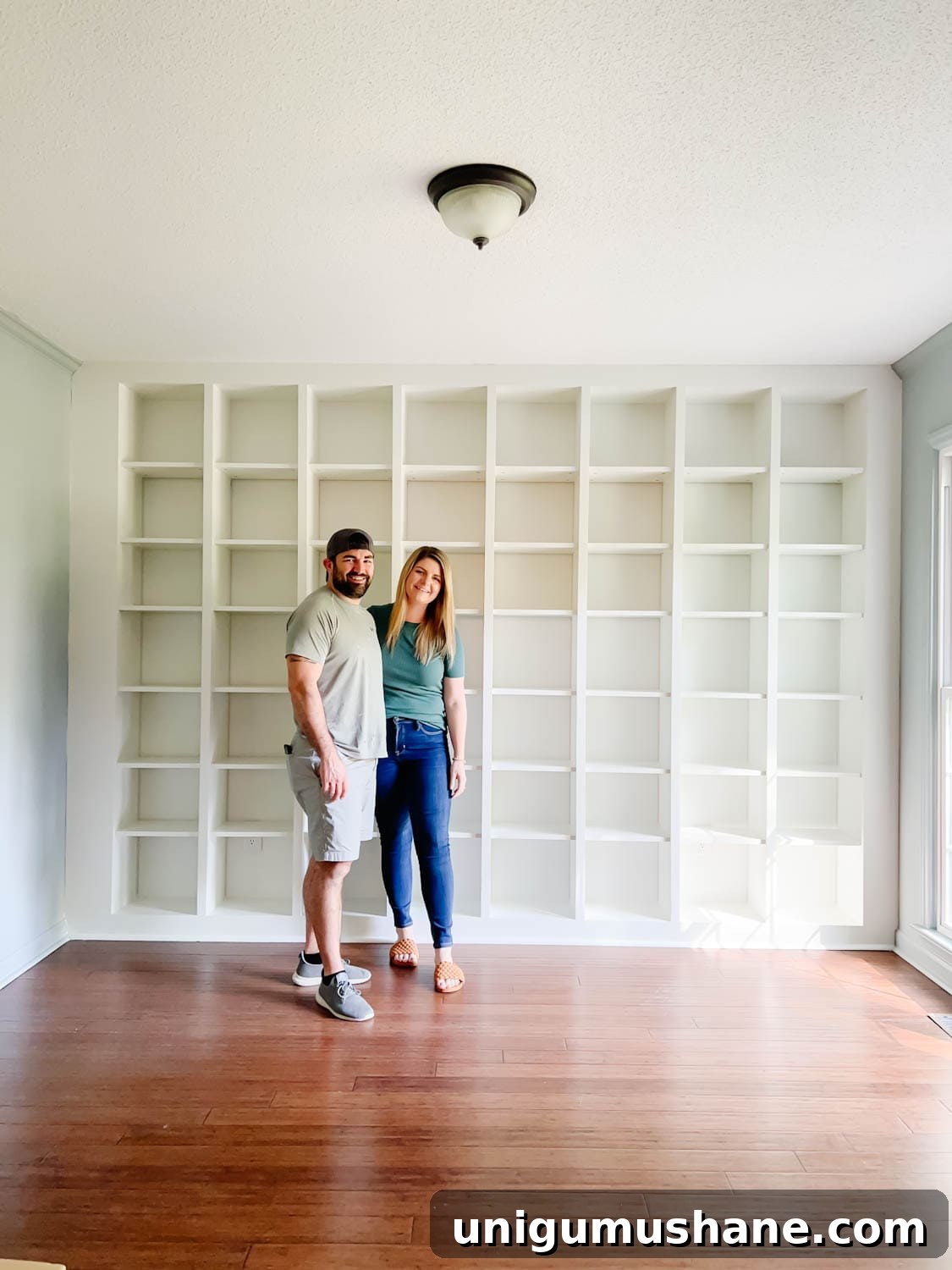
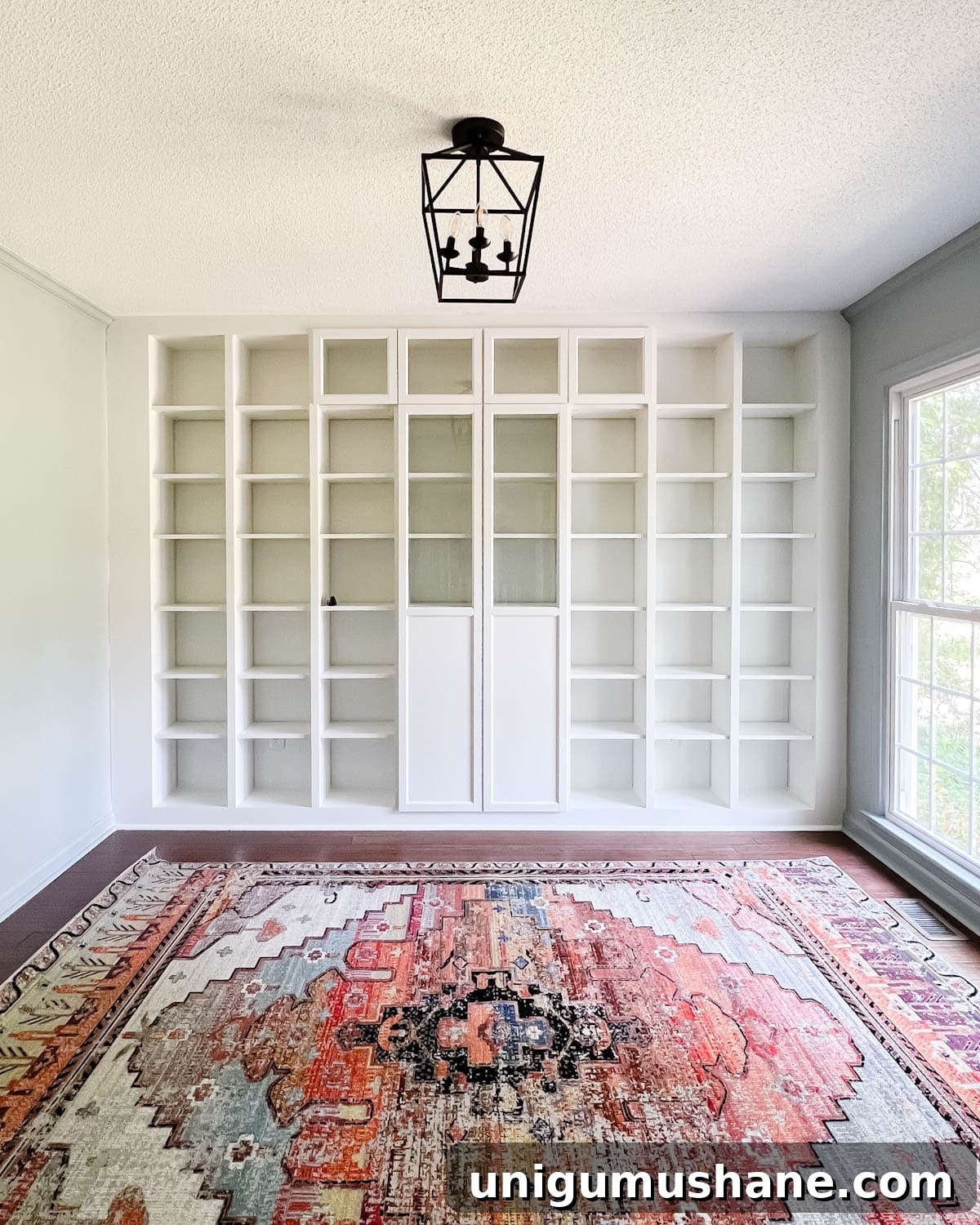
Step 15 – Add Doors (optional)
Adding Oxberg glass/panel doors gives you concealed storage and a polished look. Because you added 1×2 trim to the face, the original hinge holes on the BILLY units are no longer in the right place—follow the next steps to relocate hinge holes correctly.
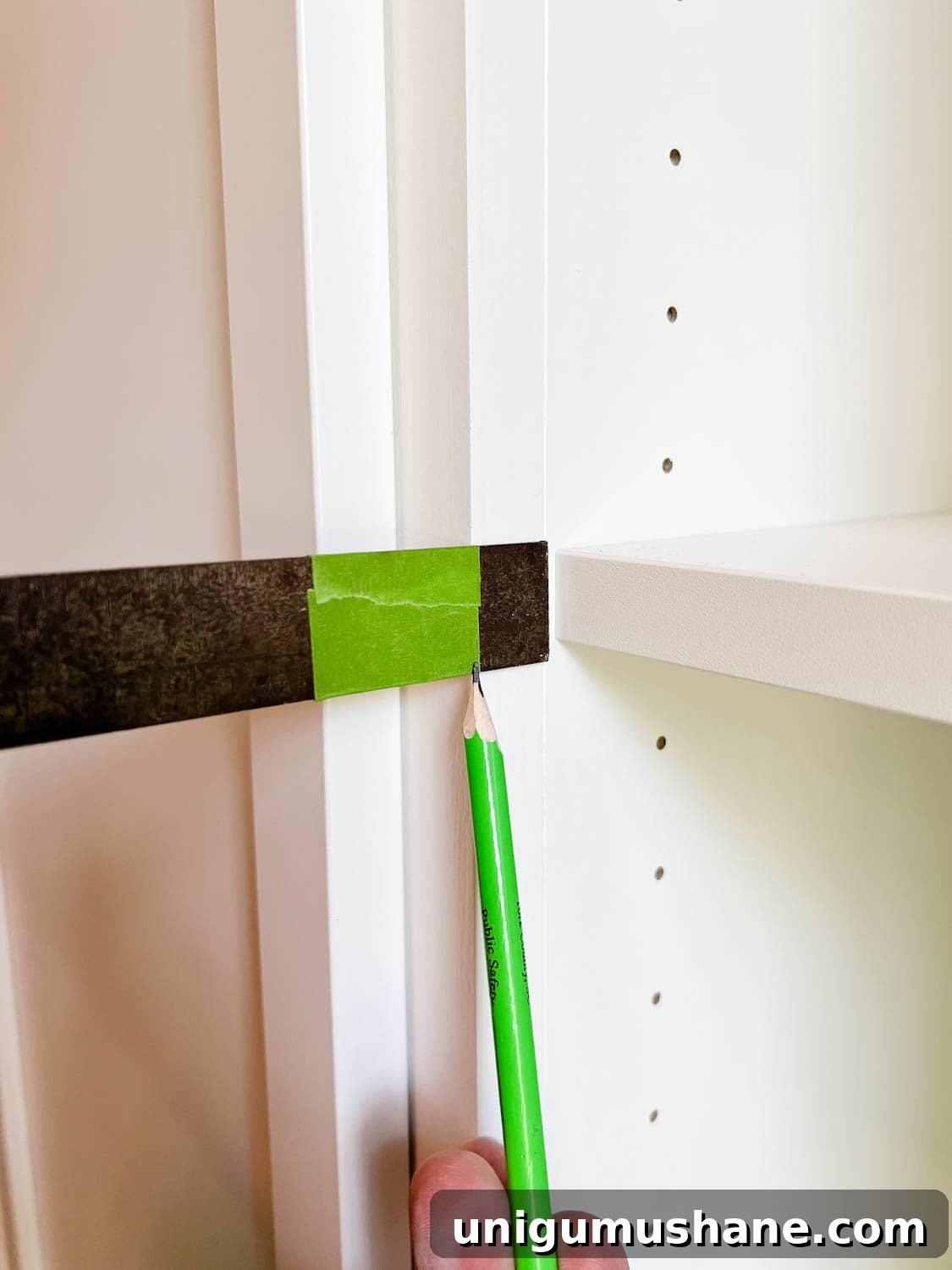
Step 16 – Mark for 1×2 Depth
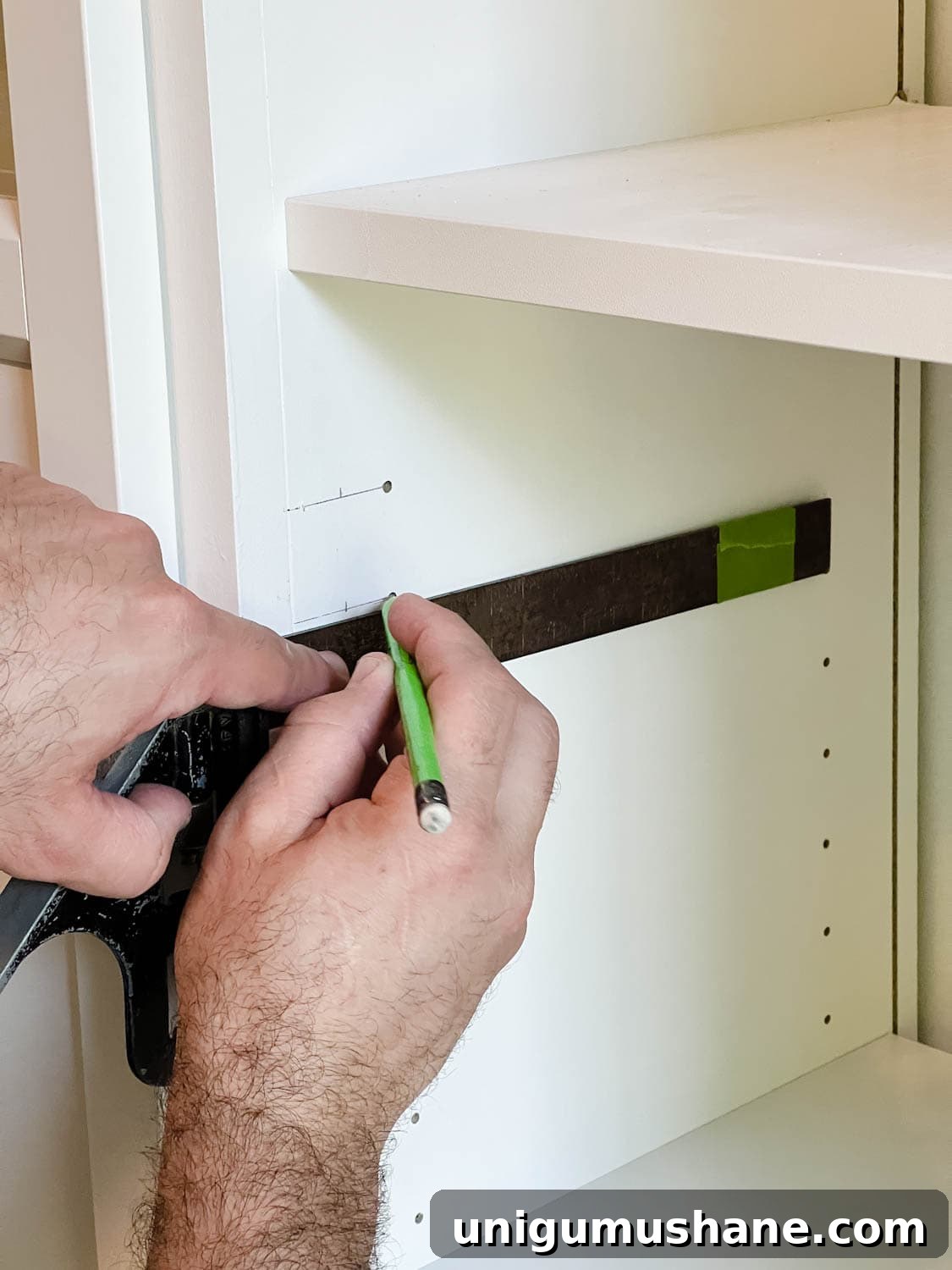
Use a combination square pressed against the 1×2 trim and mark the trim depth with painter’s tape. This mark becomes your reference for the new hinge hole placement.
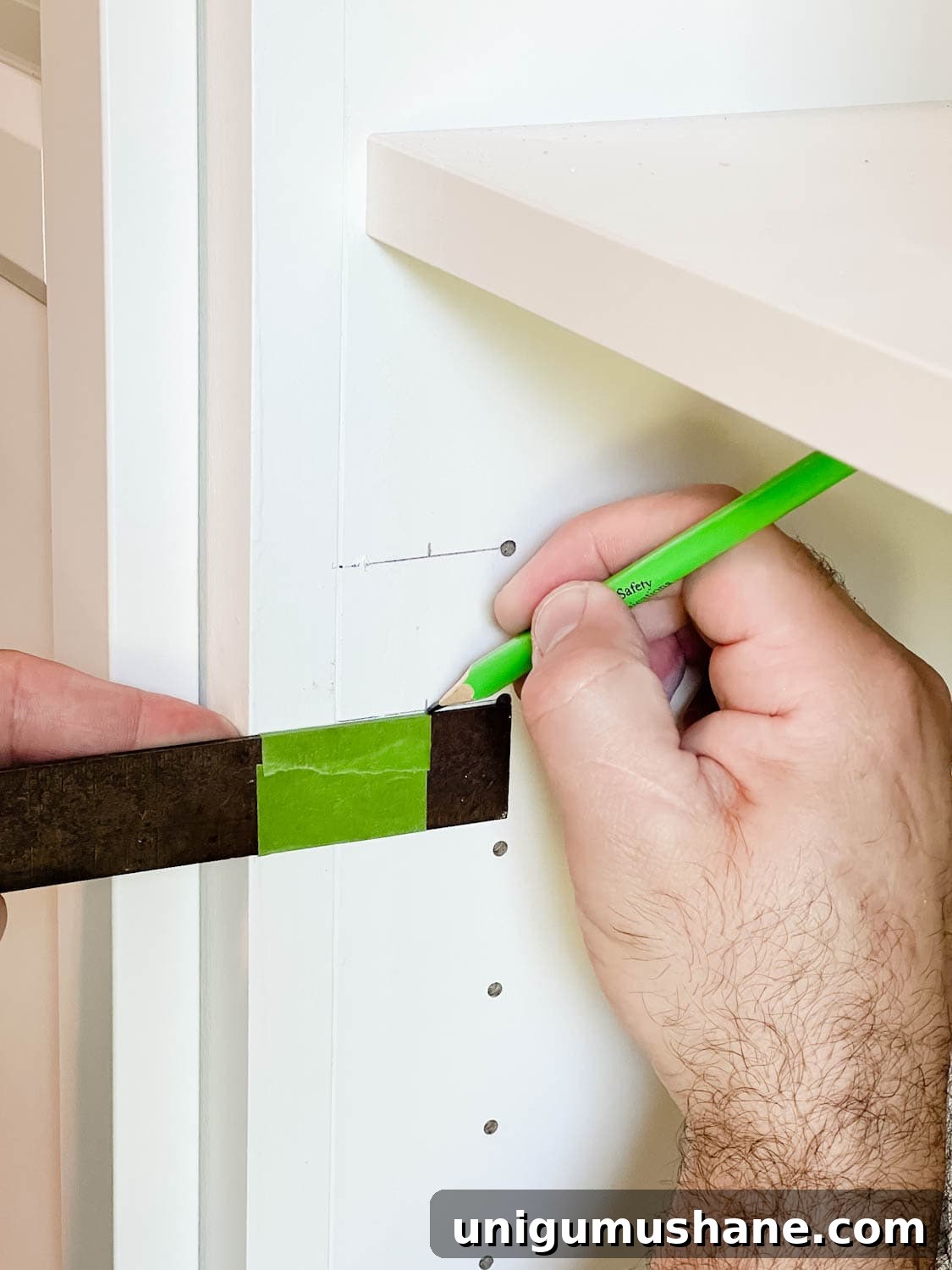
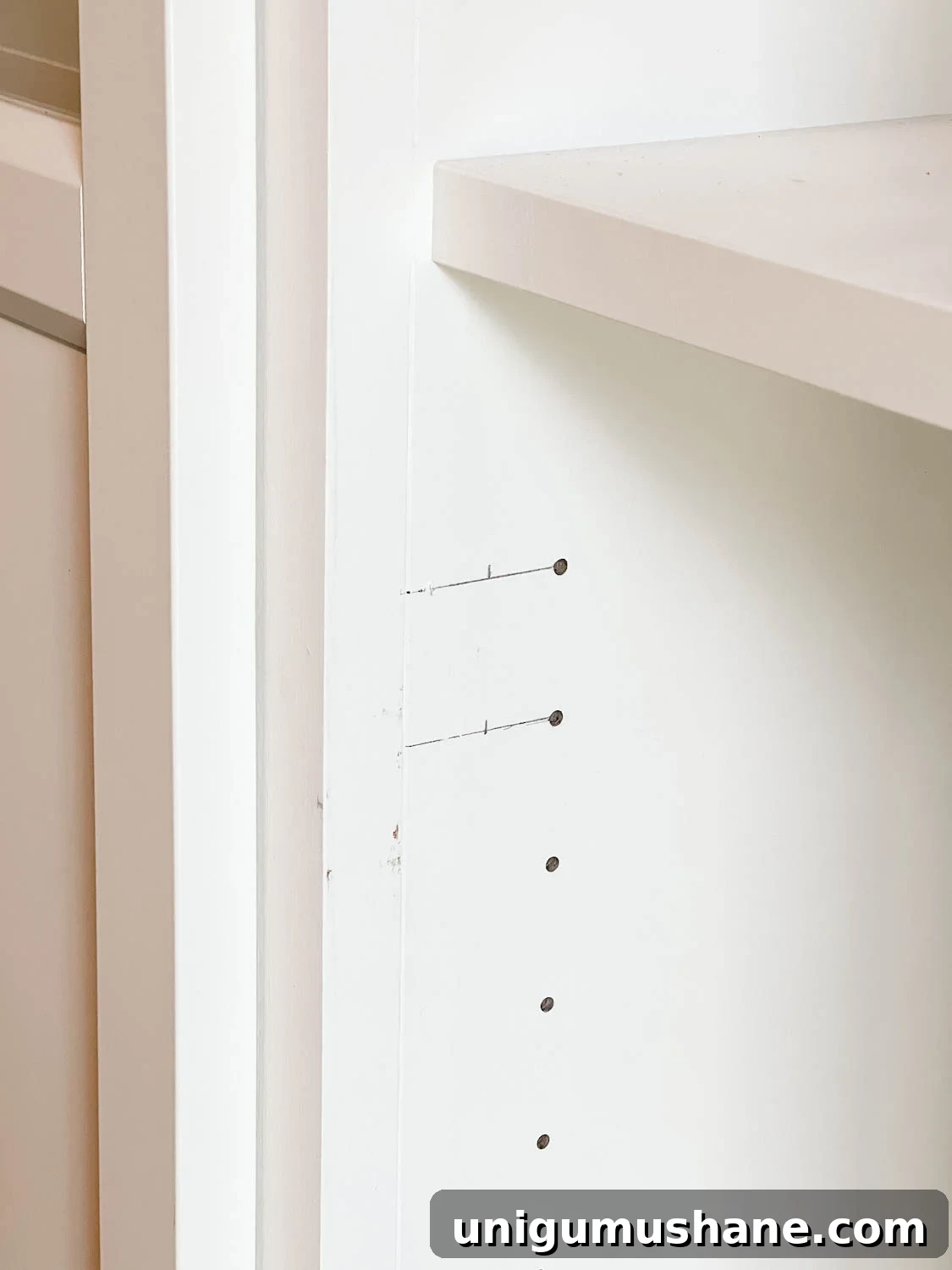
Step 17 – Mark the New Hole
Use the reference mark to transfer new hinge hole locations closer to the front of the face trim so the doors will sit flush when installed.
Step 18 – Drill New Hinge Holes
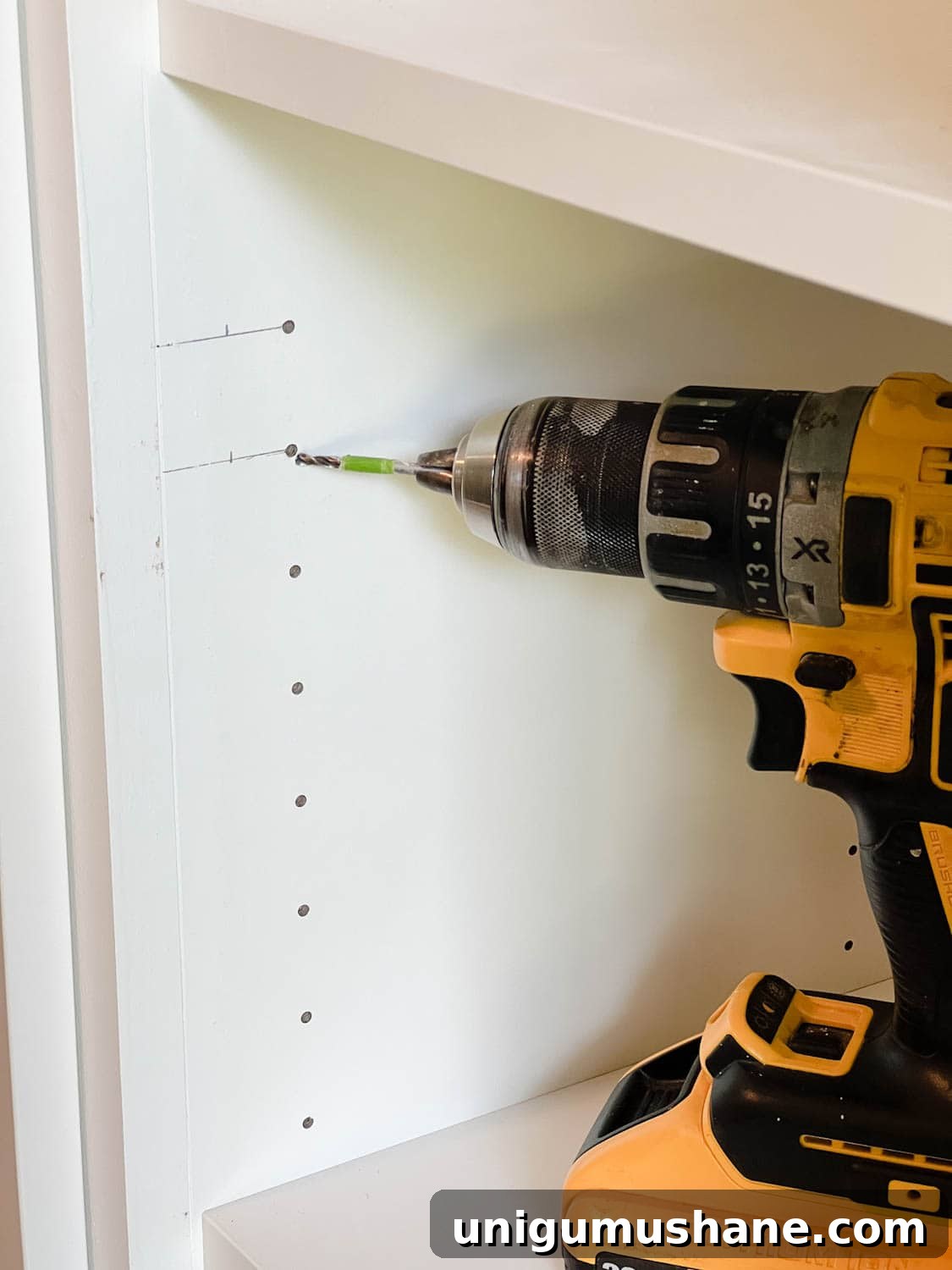
Place a drill bit into an existing hole and mark the required depth with tape so you only drill to the correct depth in the new location. Drill the new holes to the tape mark.
Step 19 – Attach Hinges and Door Hardware
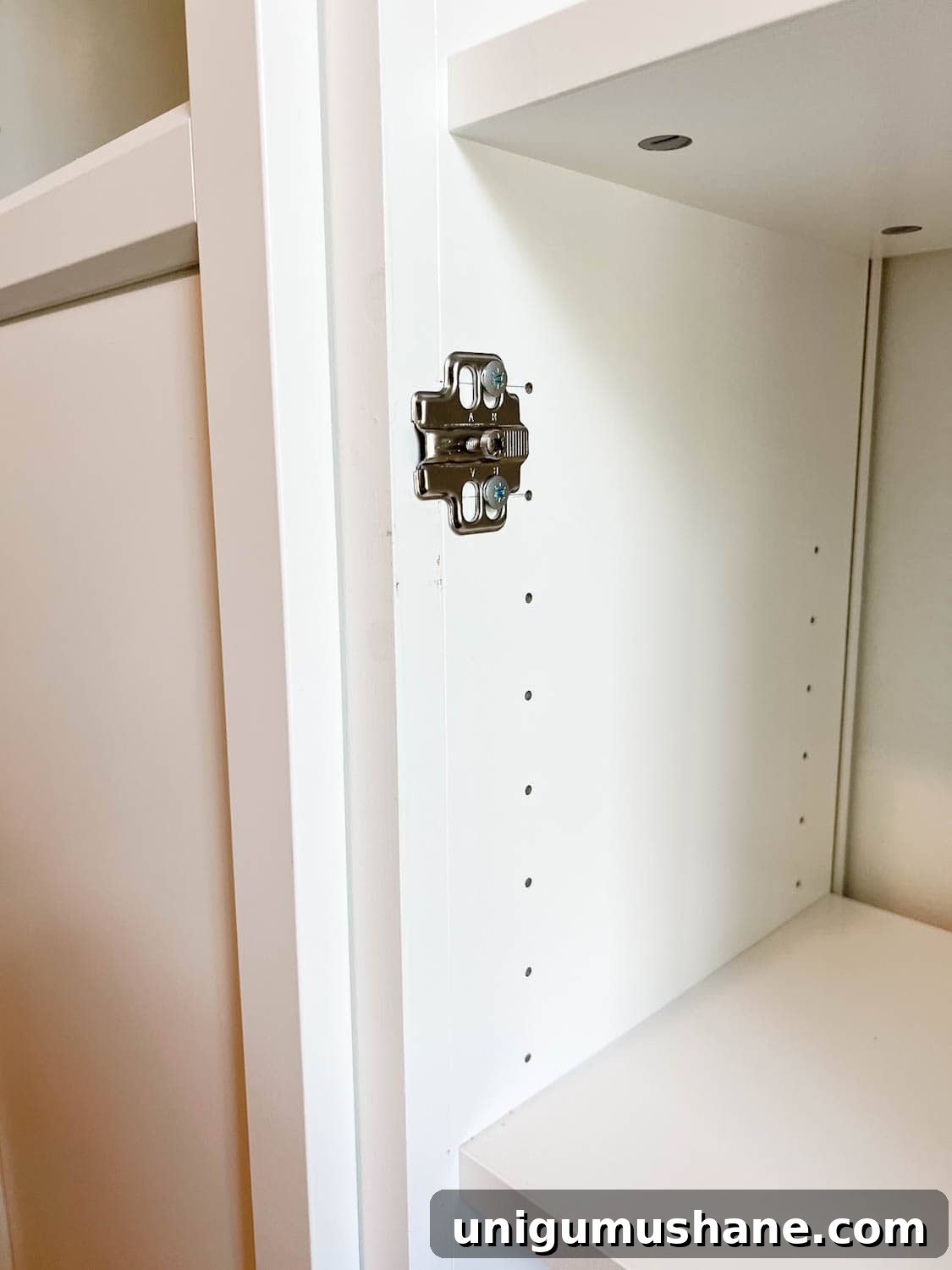
Screw the hinge plates into the new holes, attach hinges to the doors, and then install the doors on the bookcases.
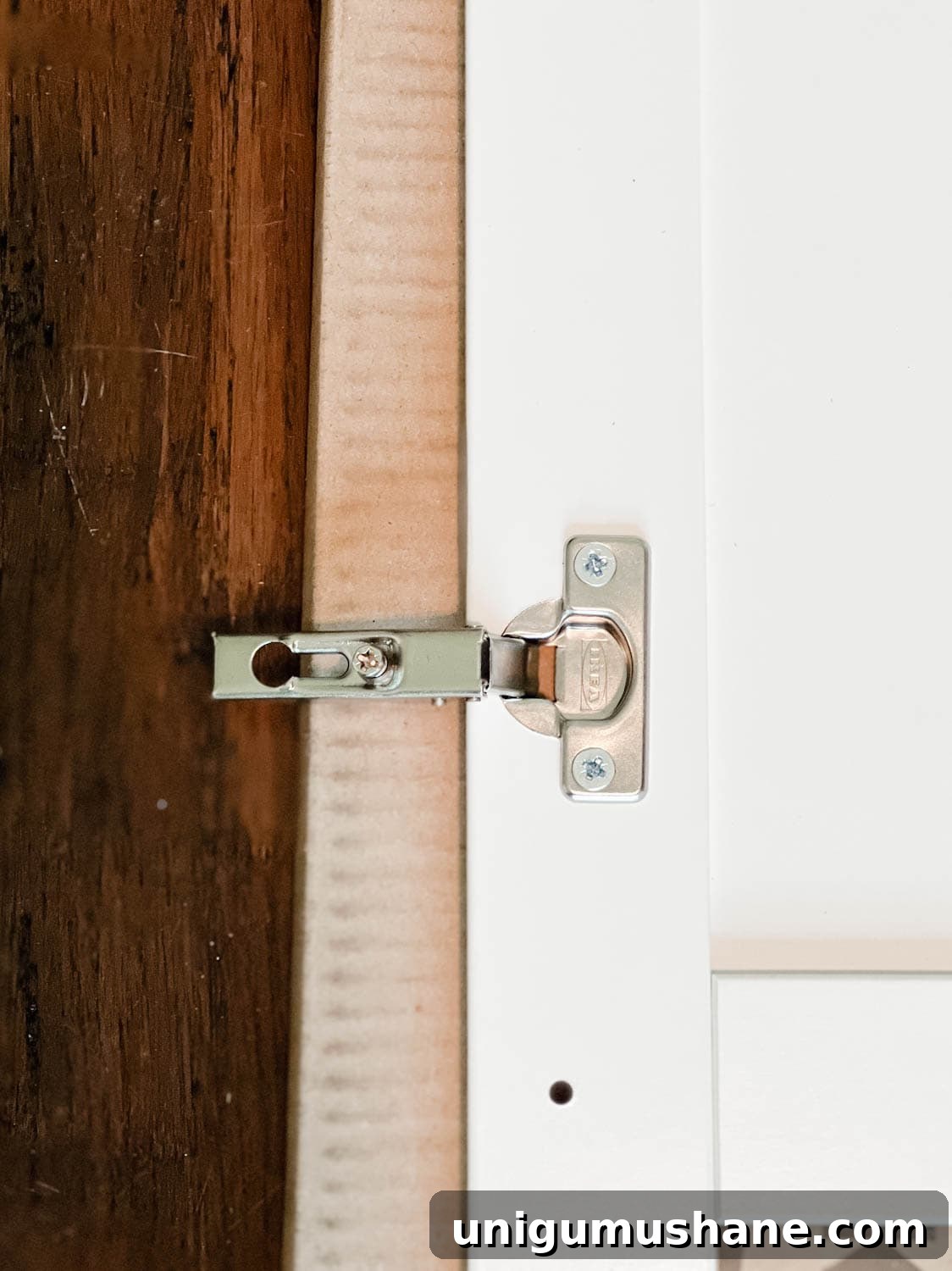
Step 20 – Hang Doors and Add Knobs
Hang each Oxberg door, check alignment across the entire built-in, and adjust hinge tension if necessary. Once aligned, install pulls or knobs.
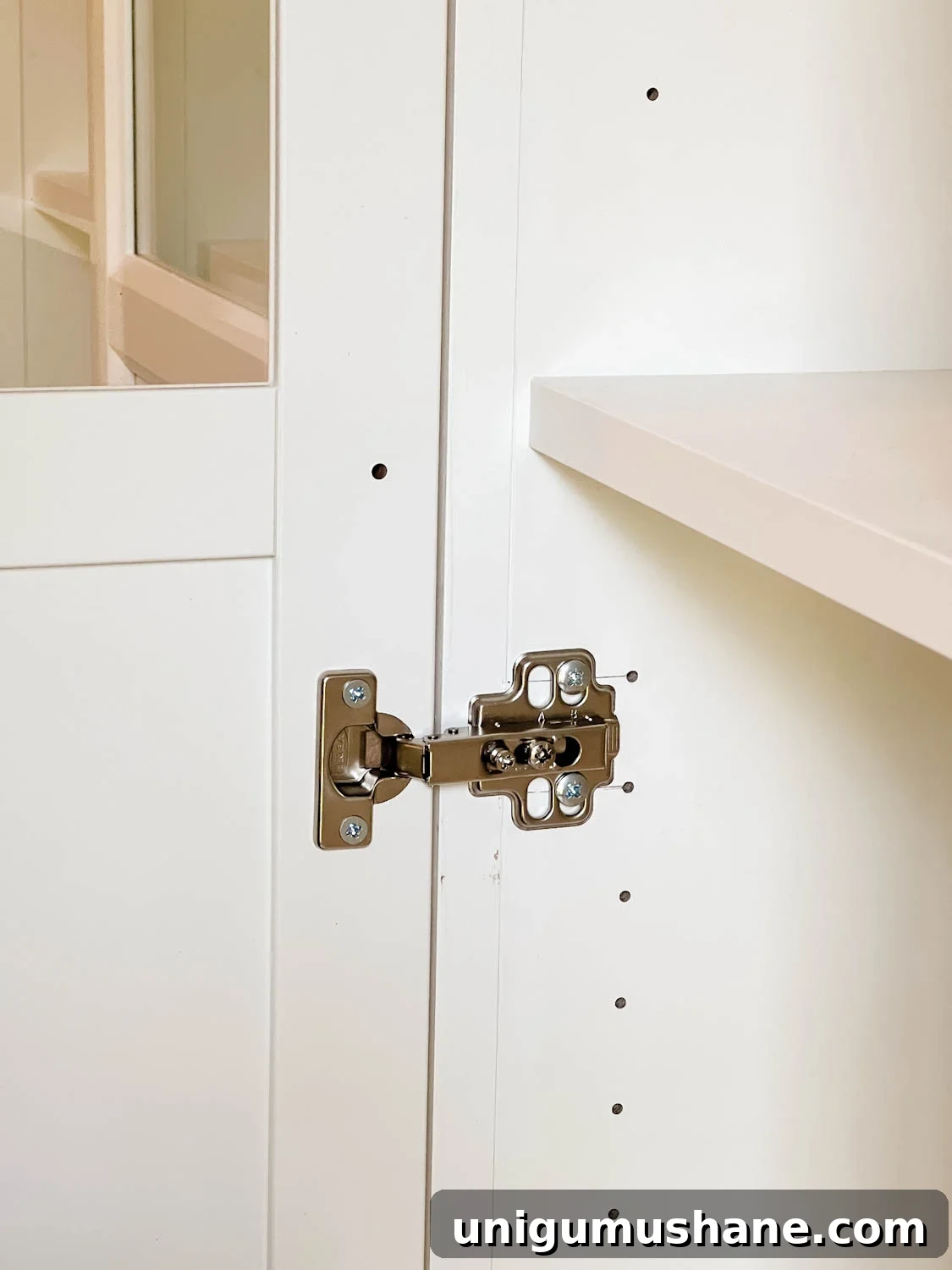
Style the Shelves
Have fun styling. Alternate stacked books with vertically shelved books and add decorative objects to break up rows. Vary heights and shapes until the arrangement feels balanced and personal.
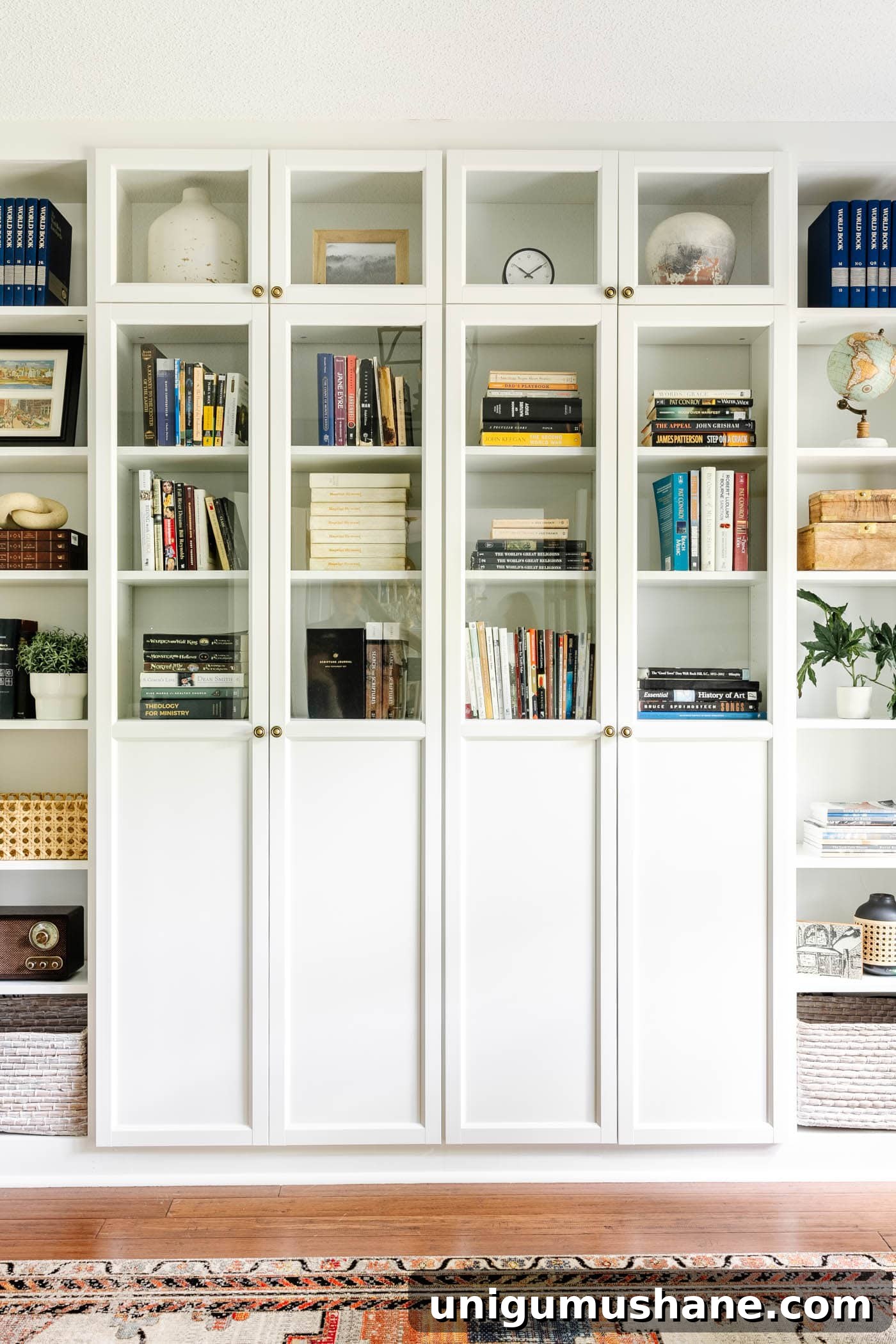
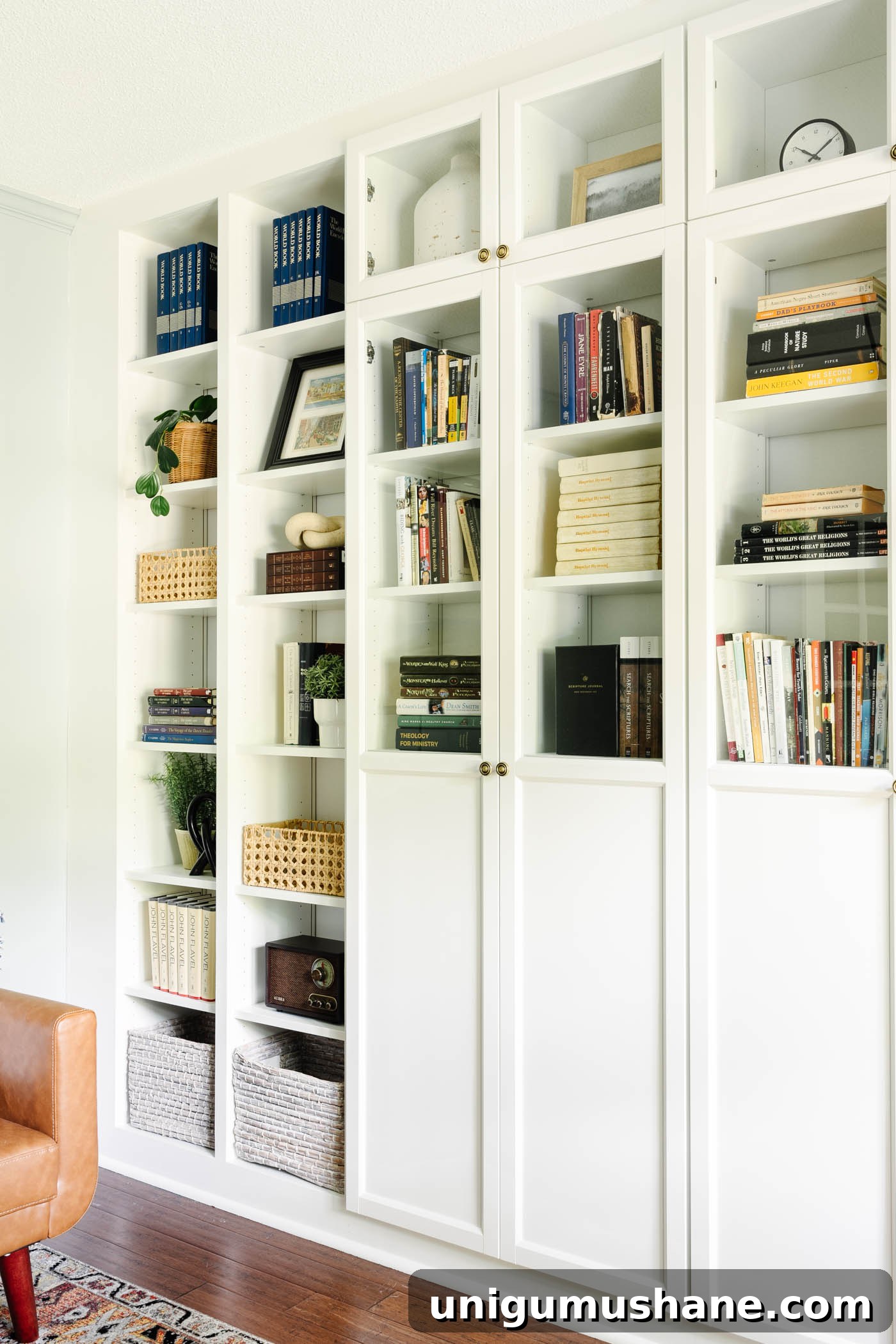
The narrow BILLY units we used ended up being even more rigid than wider versions and offered excellent shelf support. The finished wall reads like a custom built-in—great storage, classic style, and a strong visual anchor for the room.
More DIY Built-In Ideas
DIY IKEA Built-In Closet Hack With BILLY Bookcases

DIY IKEA Bookcase Built-In Shelves
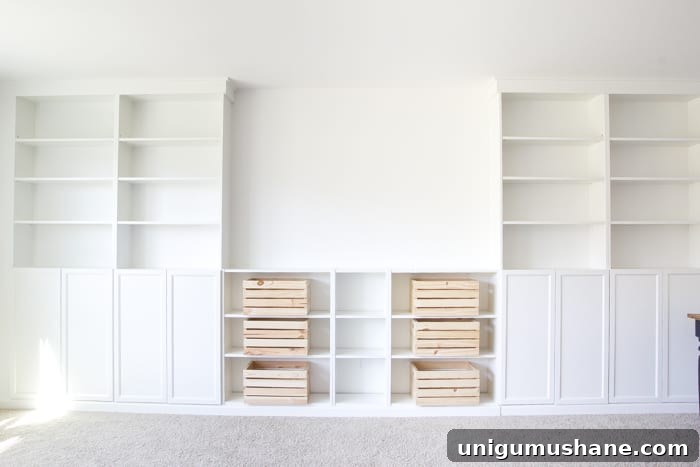
How to Make Built-In Cabinets and Window Seat

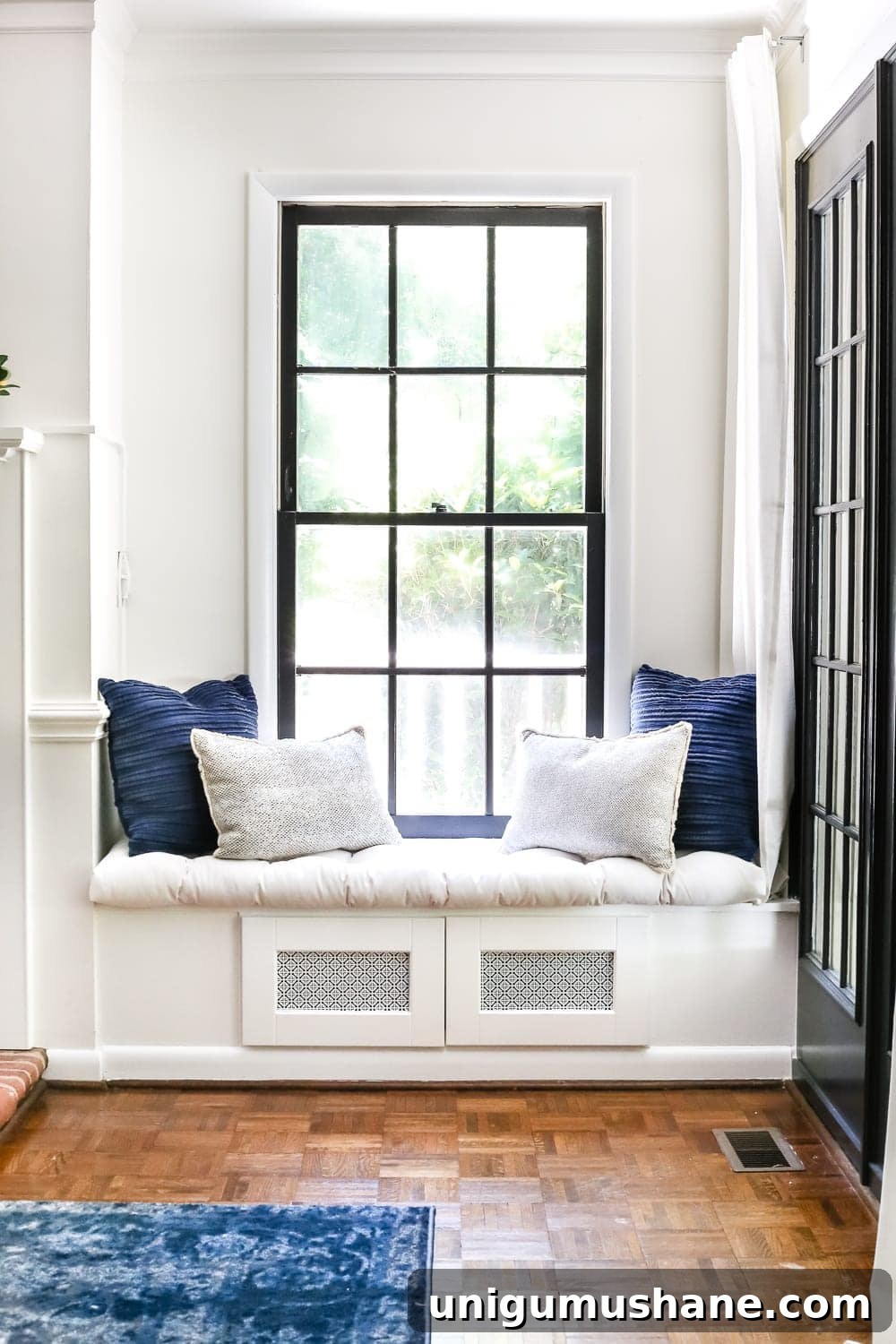
DIY Window Seat Using a Kitchen Cabinet
More IKEA Hack Ideas
- 30 Inspiring IKEA Pax Closet Makeovers
- The Trick to Paint Laminate IKEA Furniture
- DIY IKEA Pantry Cabinet Using Hemnes
- 5 DIY IKEA Storage Hacks We’ve Used and Recommend
Project Summary
Project: DIY Built-In Bookshelves Using the IKEA BILLY Bookcase Hack with Oxberg Glass Doors
Summary: Convert BILLY bookcases into a cohesive built-in wall by assembling and anchoring the units, building out and trimming gaps with 2x4s and face boards, filling and sanding seams, painting the face boards to match the IKEA finish, and optionally hanging Oxberg glass doors for concealed storage.
Prep Time: 1 hour
Active Time: Approximately 3 days (spread across assembly, drying, paint, and finishing)
Total Time: About 3 days and 1 hour
Yield: One built-in bookcase wall
Author: Lauren
Estimated Cost: $1,300
Equipment
- Circular saw or table saw
- Coping saw or jigsaw
- Saw horses
- Power drill and drill bit set
- Orbital sander with sanding pads
- Cordless brad nailer
- Hammer, pry bar, tape measure, ladder, clamps, combination square, utility knife, shop vac
Materials
- 8 BILLY bookcases (15 3/4″ x 93 1/4″)
- 4 long Oxberg doors and 4 short Oxberg doors (glass/panel style)
- Wood screws (#8, 1 1/2″) and finishing nails
- 2×4 studs, pre-primed 1×10 and 1×4 boards, 1×2 trim
- Caulk, wood filler, expanding foam
- Painters tape and satin finish paint matched to IKEA white
- Cabinet knobs or pulls
Instructions (Condensed)
- Remove baseboard and shoe molding where the built-in will sit.
- Assemble BILLY bookcases; leave backs off so the wall acts as the backing.
- Add a 1×2 to the back base to close the small gap left without a backing.
- Place and anchor the center bookcase into a stud, then position and secure adjacent units.
- Clamp and screw bookcases together along their meeting edges.
- Install 2×4 blocking in gaps to create solid attachment points for trim and face boards.
- Attach 1×4 face boards at top and bottom and trim to match baseboard and crown shapes.
- Cut and install 1×10 side faces and 1×2 vertical trim to hide seams.
- Fill larger voids with expanding foam, then caulk seams and fill nail holes with wood filler.
- Sand smooth, remove dust, and paint face boards to match the BILLY finish. Optionally paint the shelves for a fully custom look.
- Relocate hinge holes to account for face trim, install door hardware, hang Oxberg doors, and fit knobs.
- Style shelves with books and decor.
Most Frequently Asked Questions
IKEA introduced an updated BILLY design with a paper foil finish to improve durability and offer more finish options. Availability and style changes can vary by region, so check local inventory when planning a build.
There are comparable budget bookcase options at other retailers; dimensions and construction may differ, so plan trim and blocking accordingly if you use a non-IKEA unit.
Have you tried this BILLY hack or another IKEA build? Once you complete your first built-in, it’s easy to get hooked—this method is one of the best beginner carpentry projects with great visual payoff.