
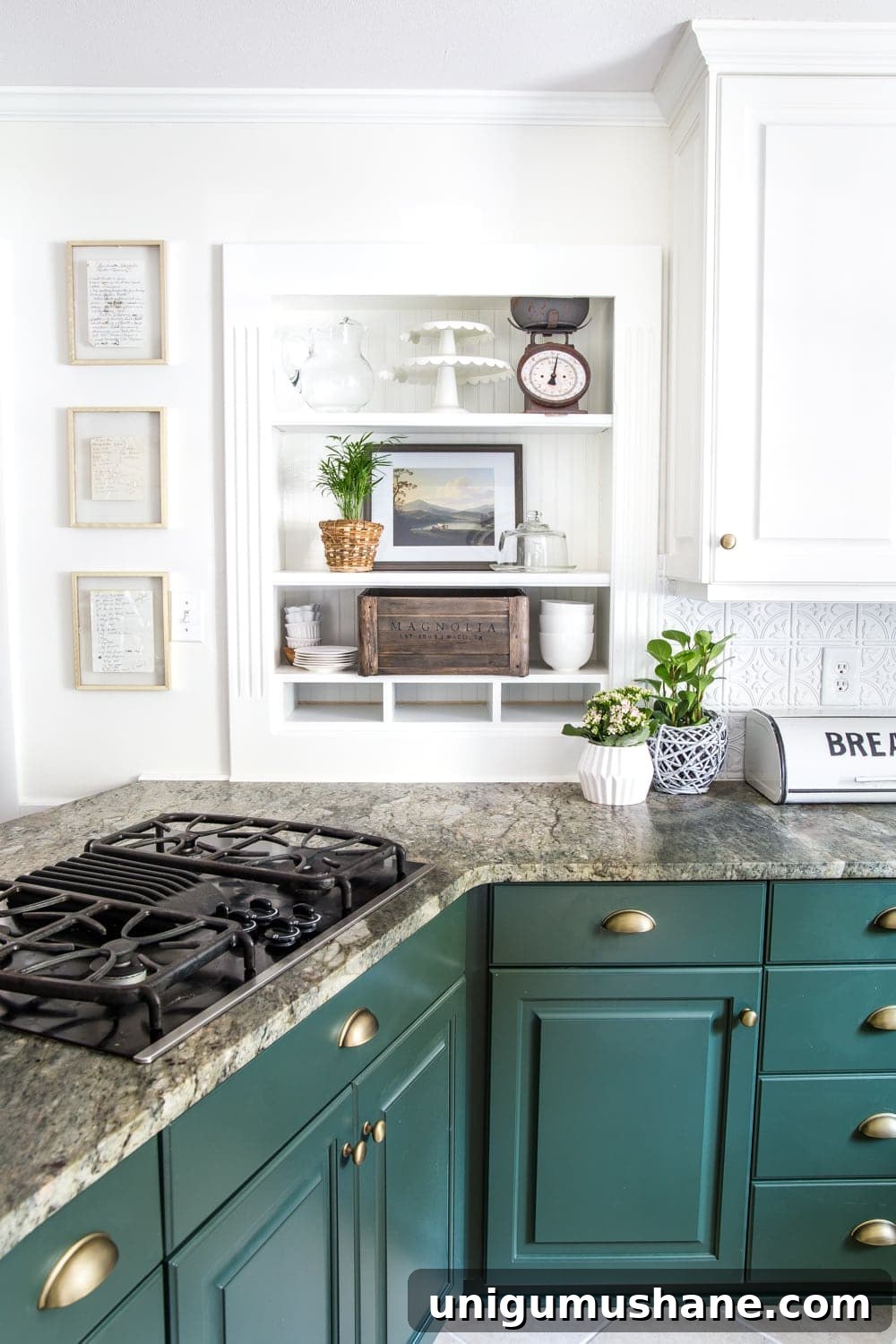
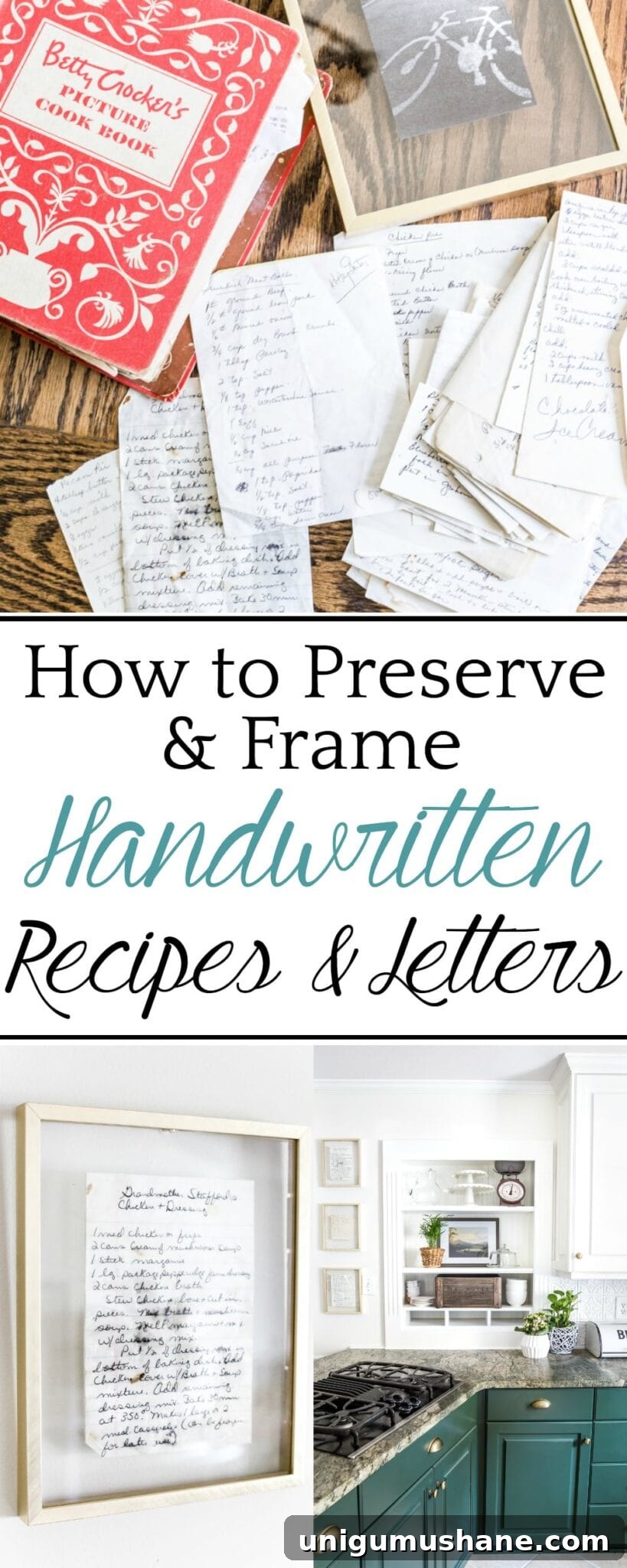
It’s rare to find home decor that makes you cry — but framing handwritten recipes and letters did just that for me. I’m the kind of person who gets emotional watching sentimental commercials, but until recently I never expected to be moved by a framed recipe. When my mom brought out a stack of loved, stained, and smudged handwritten recipes collected from my grandmothers and herself, I knew they deserved to be preserved and displayed.
Related: 28 Creative DIY Wall Decor Ideas for Your Blank Walls
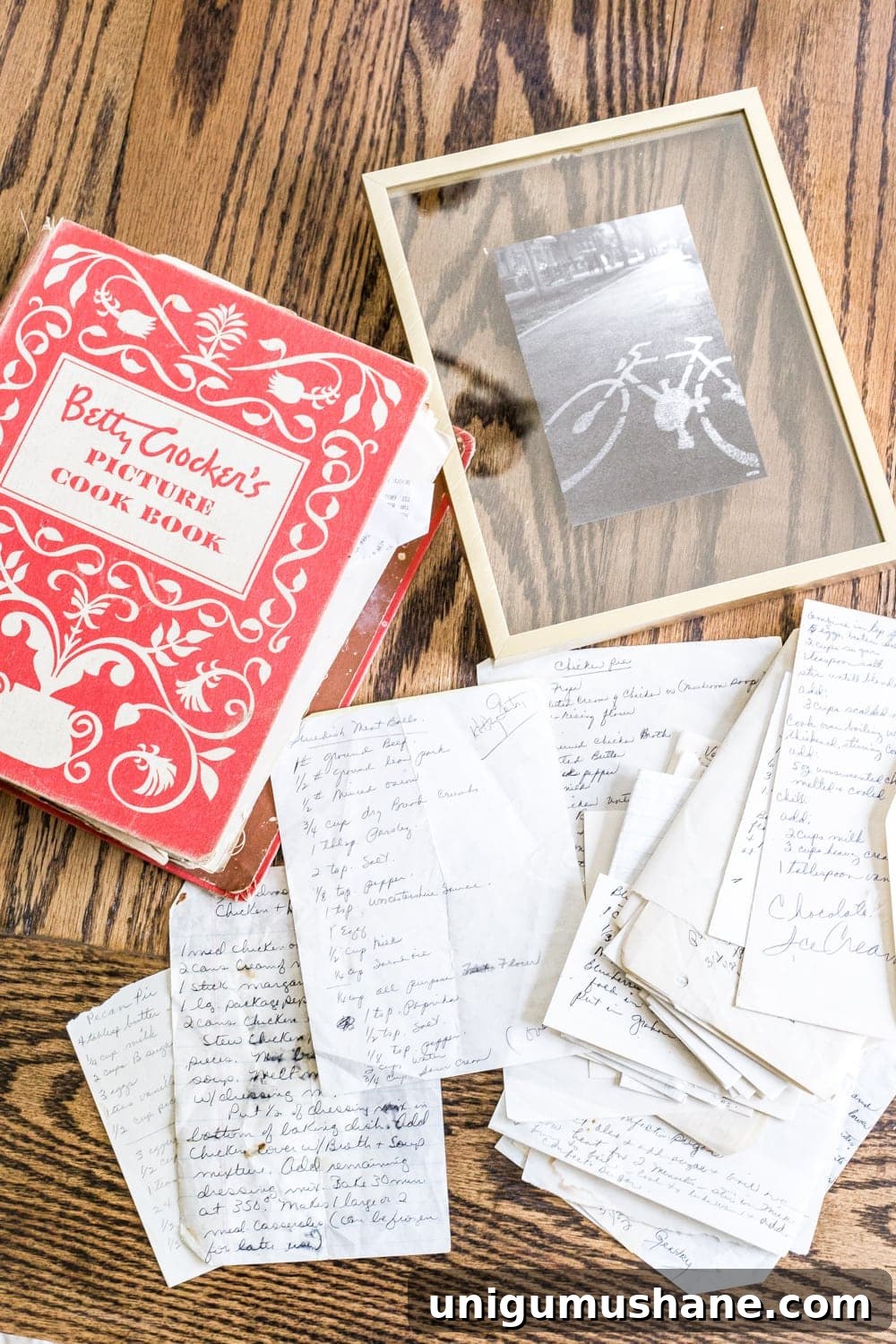
That old Betty Crocker cookbook has seen real use — the kind of wear that tells you a recipe is worth keeping: splatters, wrinkles, and faded handwriting. When I inherited these recipes, my goal was simple: protect them so they last, and display them so we can enjoy them daily.
How to Preserve Handwritten Letters and Recipes for Display
Important note: This is a decorative preservation method, not a museum-grade archival process. For truly historical or irreplaceable documents, consult professional archival guidance. The method below laminates the paper with UV-filtering film to help protect ink from fading and to make the sheets more durable for handling and framing.
If you prefer a less permanent solution, consider using UV-blocking acrylic in a frame. It lets you protect ink without laminating the paper itself.
Supplies
- 8×10 floating frames
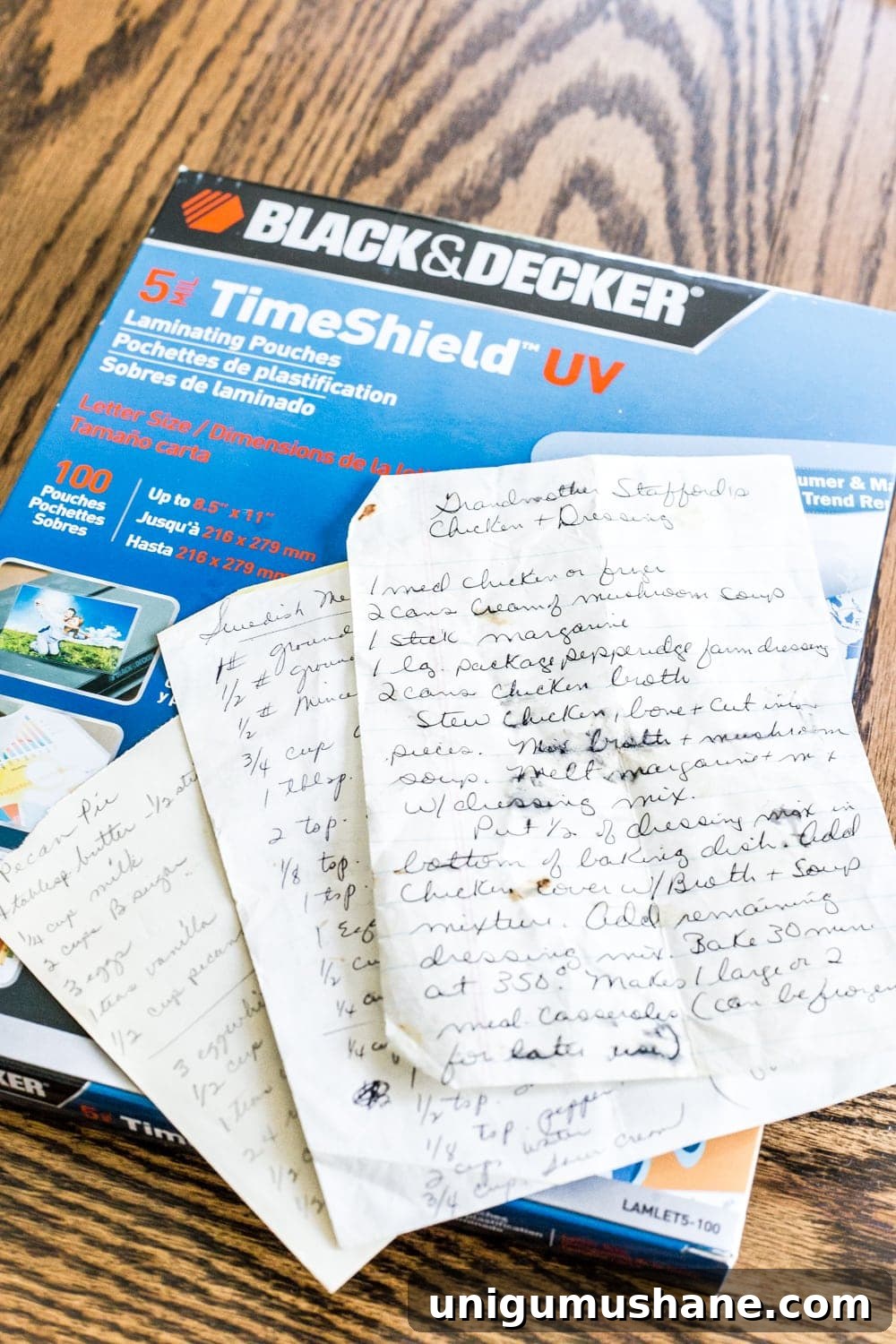
- UV-filtering laminating film
- Iron and ironing board
- Scissors
- The most-loved recipe or handwritten note you want to preserve
Why Letters Need UV Protection
Sunlight and artificial light can fade ink over time. UV-filtering laminating film helps block damaging light and seals the paper so it’s less prone to tears and smudges. Keep in mind that laminating is permanent — once applied, the film cannot be removed without damaging the paper. If permanence is a concern, frame the originals behind UV-blocking acrylic instead.
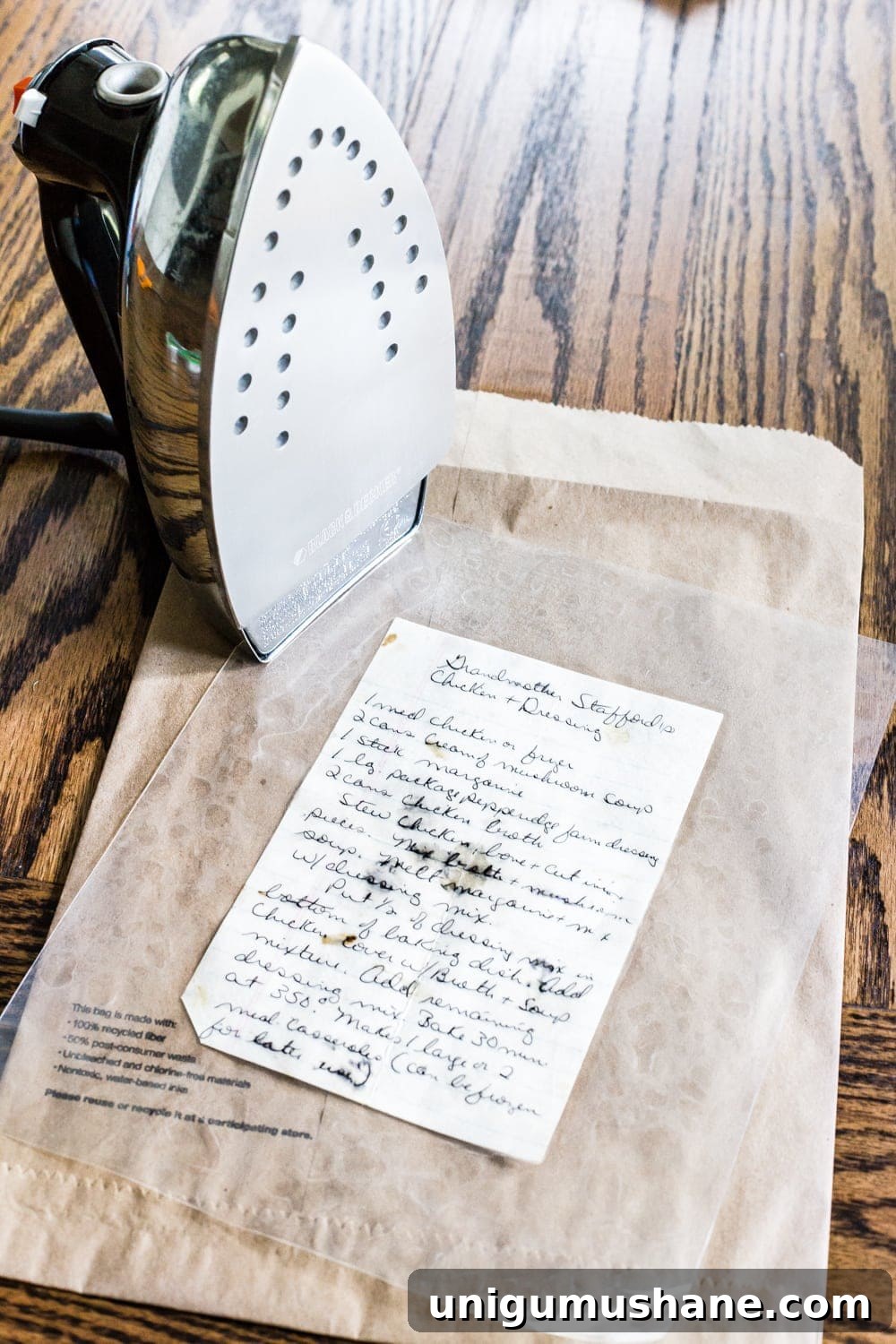
Although many laminating films recommend a machine laminator, a hot iron applied carefully can work well on pouches when done slowly and gently.
Step 1 – Slide Paper Into Pouch
Open the laminating pouch and carefully position the recipe or letter between the sheets. Center the paper so margins remain even and the image looks balanced when framed.
Step 2 – Iron
Lay the pouch on the ironing board and press with a hot iron. Start at a low heat and increase slowly until the film begins to adhere. Move the iron steadily to avoid hot spots and keep the film smooth and wrinkle-free. For a firmer pressing surface and to reduce bubbling, place a piece of cardboard under the pouch while ironing.
Step 3 – Trim and Frame
After the film cools and fully seals, trim the excess film to fit your frame. Floating frames work especially well for old recipes because they showcase the paper’s rough, beloved edges. Place the laminated piece in your frame, secure it, and hang it where you’ll enjoy it every day.
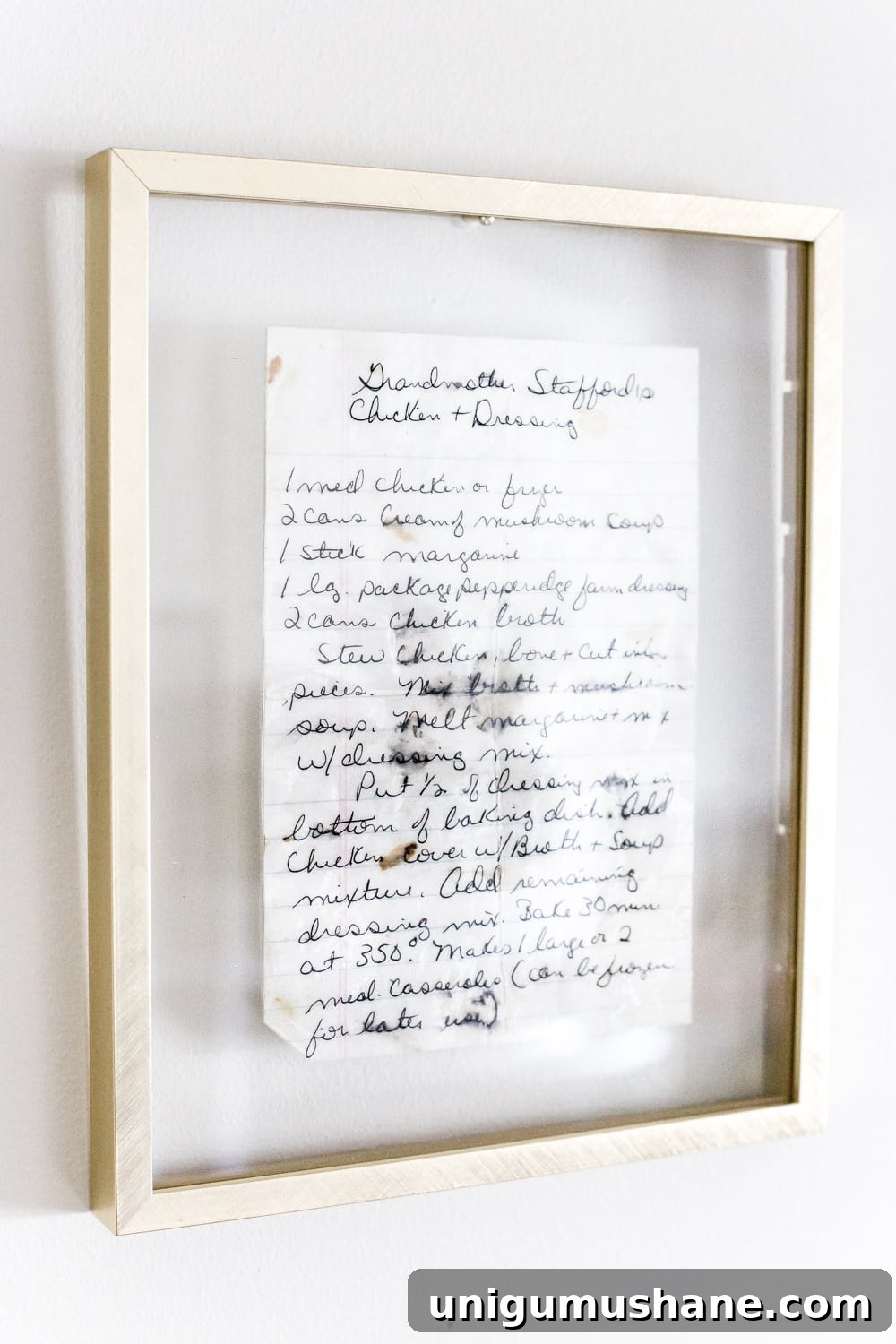
Those smudges and stains tell stories: one of my mom’s recipes was written using my great-grandmother Gussy’s chicken-and-dressing recipe. I love that the documents feel lived-in and real. Floating frames let you see the irregular edges and add character to the display.
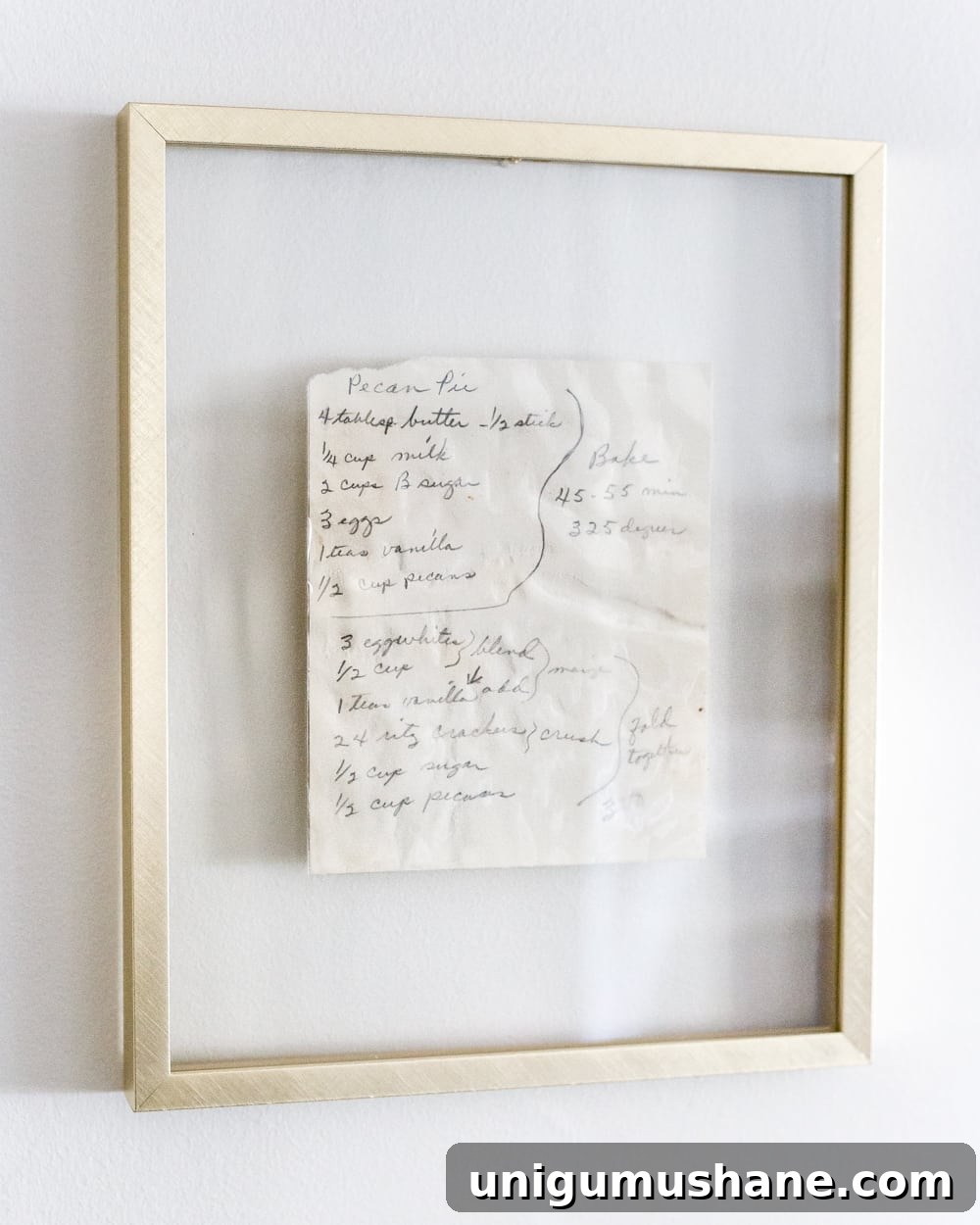
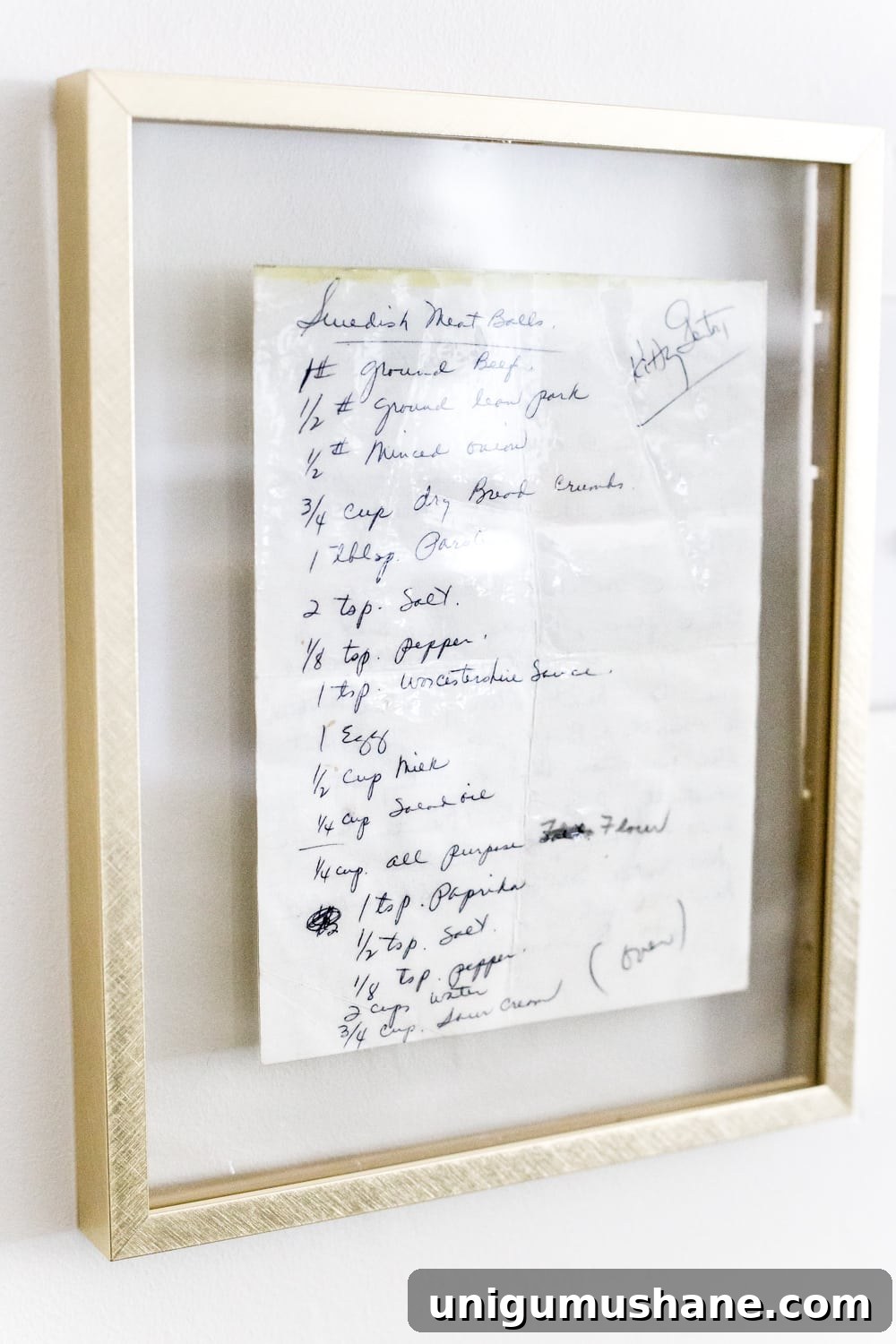
Another recipe in my collection was penned by my maternal grandmother, passed down from her mother, and it carries generations of family memory — the kind of heirloom that makes holidays feel like home. I also framed a recipe my paternal grandmother, Kitty, wrote and signed. Even though she passed away when I was young, seeing her handwriting keeps those kitchen memories present.
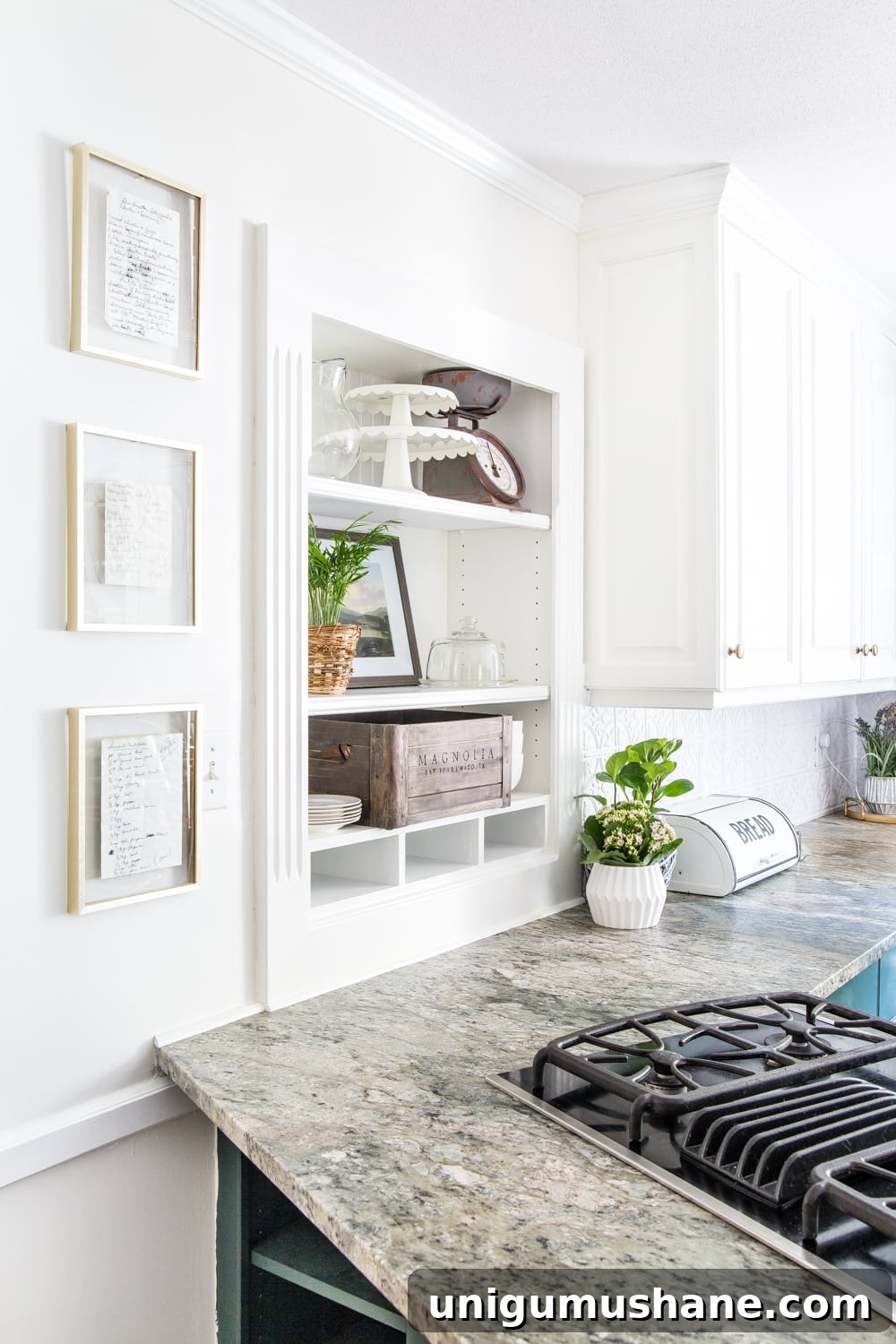
I hung the framed recipes beside the stove as a way to honor these family cooks and to inspire me when I try their dishes. The small gallery feels like a corner of daily comfort.
Related: Free Oil Painting Kitchen Art Prints
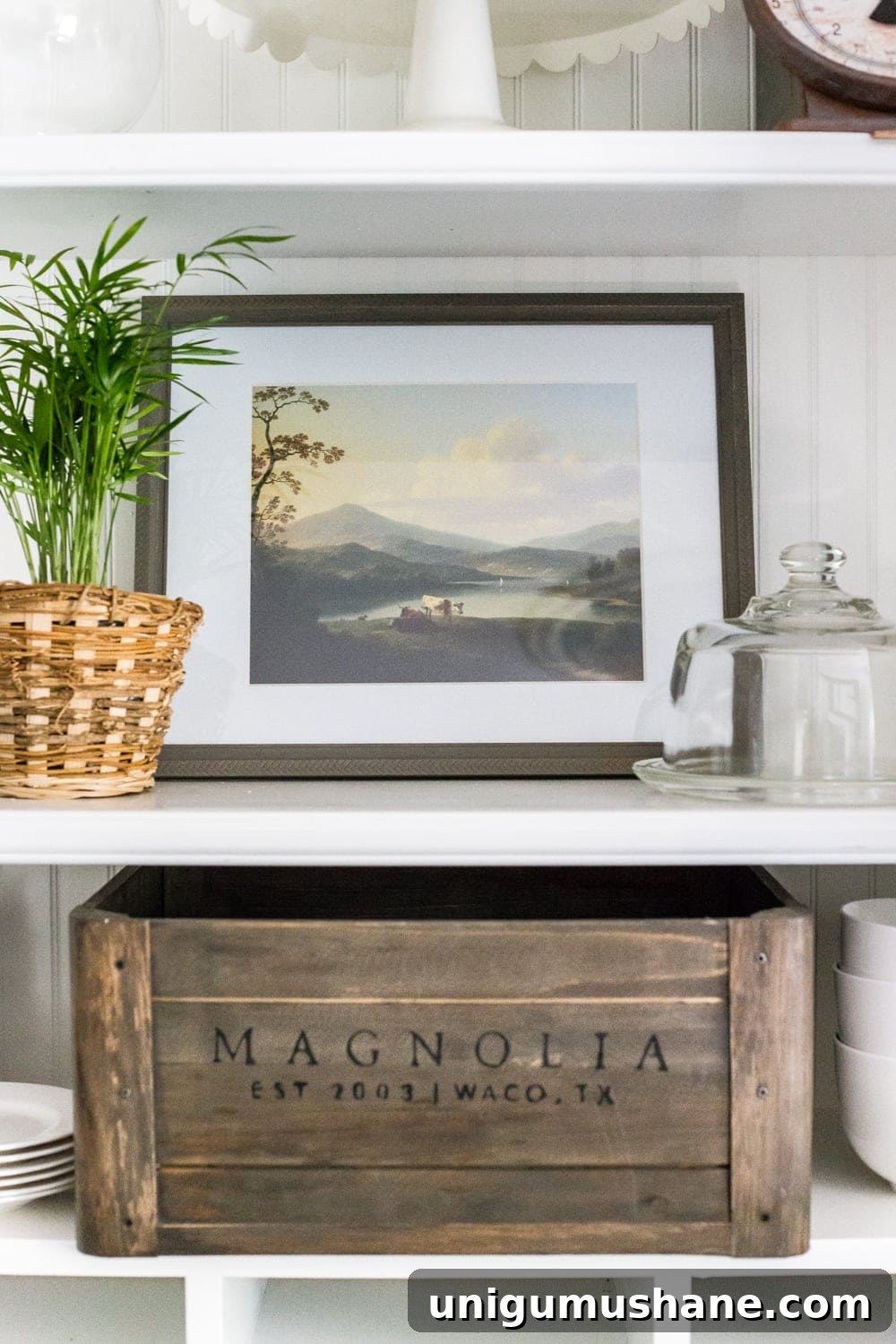
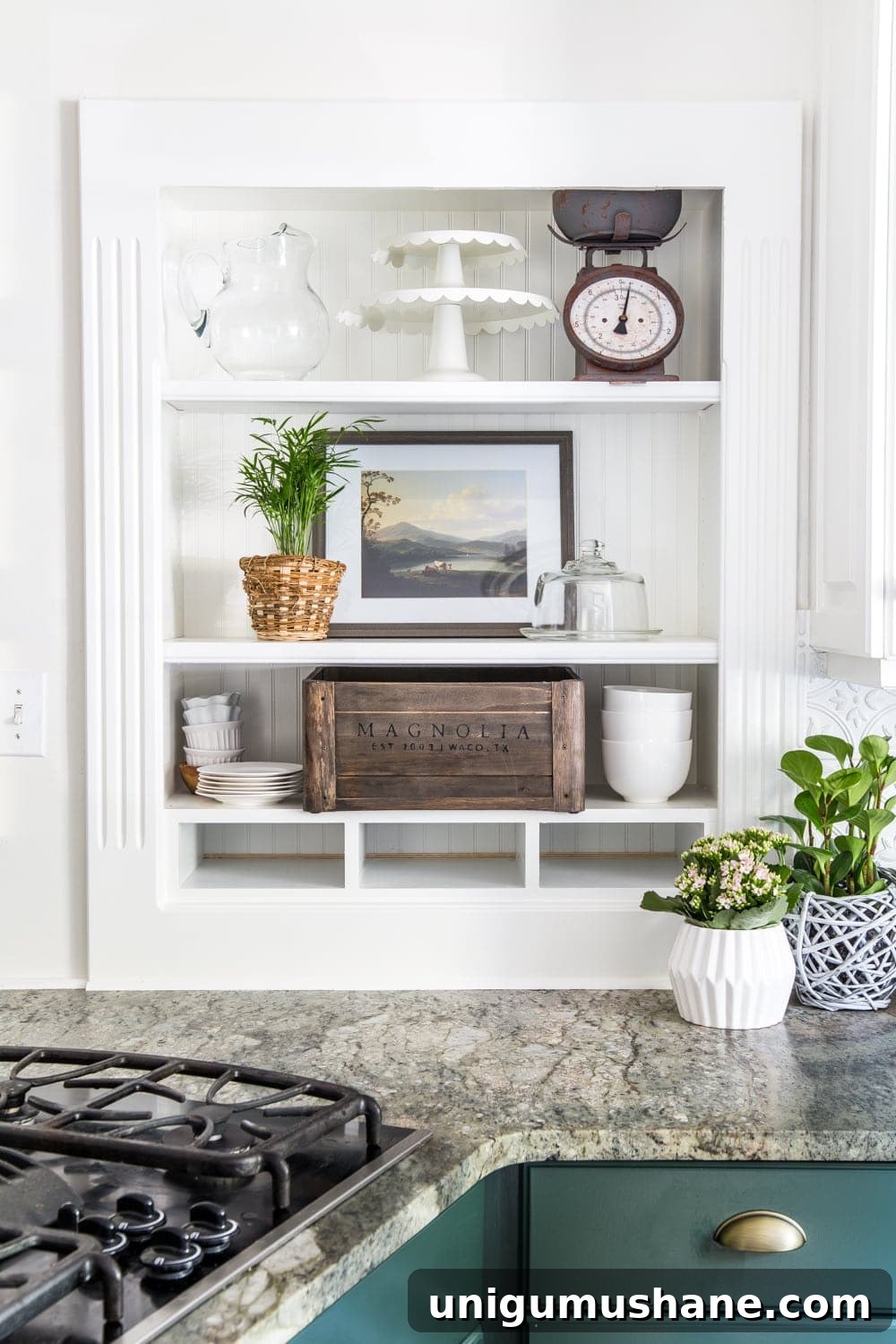
To complete the vignette, I decorated nearby shelves with a few affordable prints and thrifted finds. A small landscape print and a repurposed crate corral our daily mail, and a painted thrifted scale adds texture. These small choices make the space feel personal and lived-in.
Having these recipes displayed has inspired me to write and preserve more handwritten notes and recipes for my own family. Handwritten keepsakes — even small things — often become treasured family heirlooms.
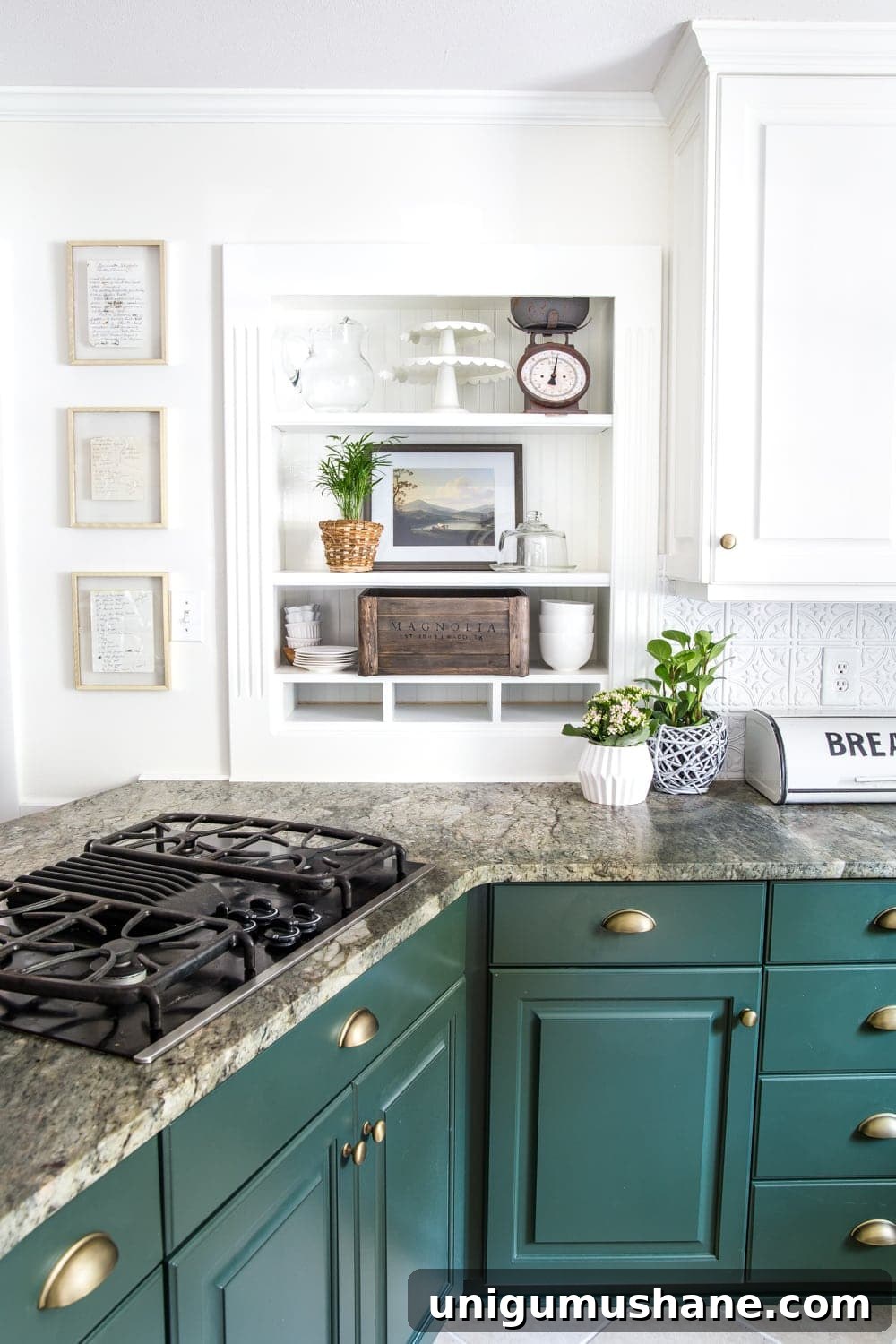
With the recipes in place, the kitchen refresh feels complete. I plan to share a full reveal of the space soon.
Update: See our budget kitchen refresh reveal.
More kitchen updates:
- Memory foam layered kitchen rug and grout refresh
- Green painted kitchen cabinet update
- Kitchen refresh mood board and design plans
- Five tips to create an organized command center
- Printable art sets and how to use them
Have you ever used handwritten mementos as wall art? Some people even turn recipes into printed kitchen towels — another lovely way to keep memories in daily use.
Frequently Asked Questions
What are some gift ideas for preserving handwriting?
How do you turn handwriting into a font?