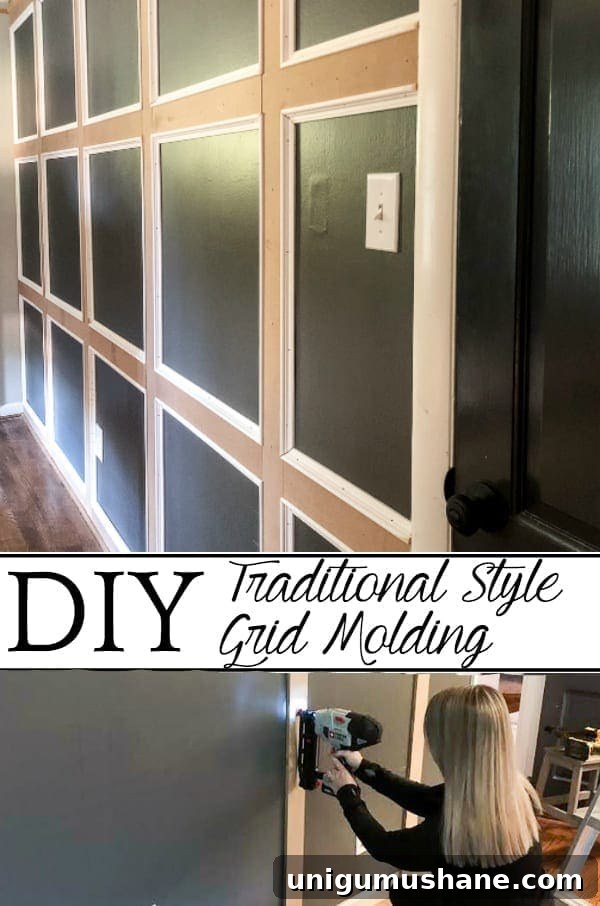
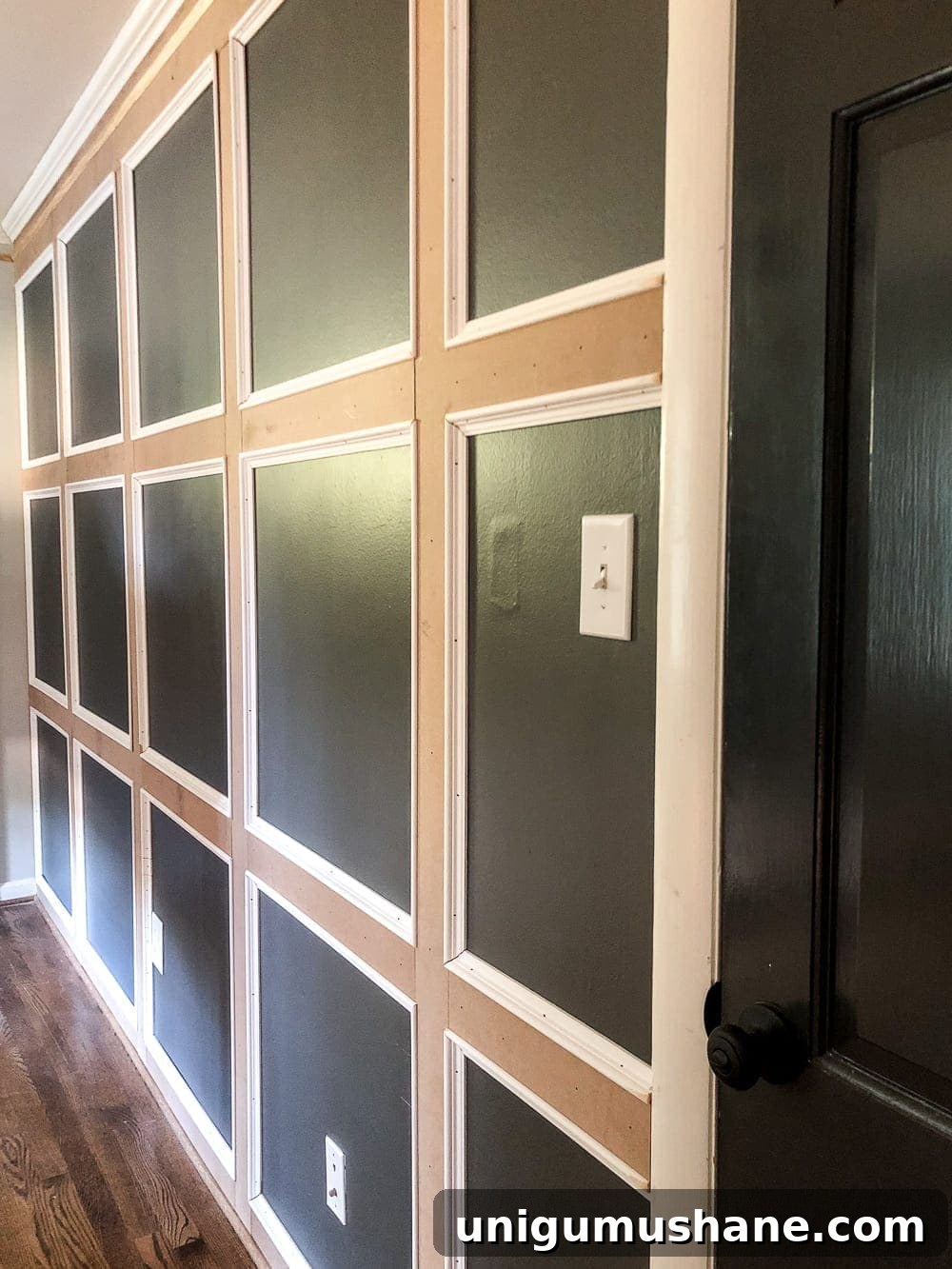
How to build a traditional-style board-and-batten grid molding focal wall to add character and depth to any room.
We love celebrating finished room reveals, but there’s something special about celebrating progress. Big projects can feel messy and overwhelming at times, but stepping back and recognizing the work you’ve done is incredibly satisfying. Today we’re sharing how we built a traditional grid molding focal wall behind our bed — a project that adds instant character and depth to the room.
We’re not licensed contractors or professional designers, so we’ll describe this in practical terms. Think of this as a DIY-friendly approach to a “fancy traditional” grid molding wall that feels more elevated than basic board-and-batten.
UPDATE: See our final Master Bedroom reveal here!
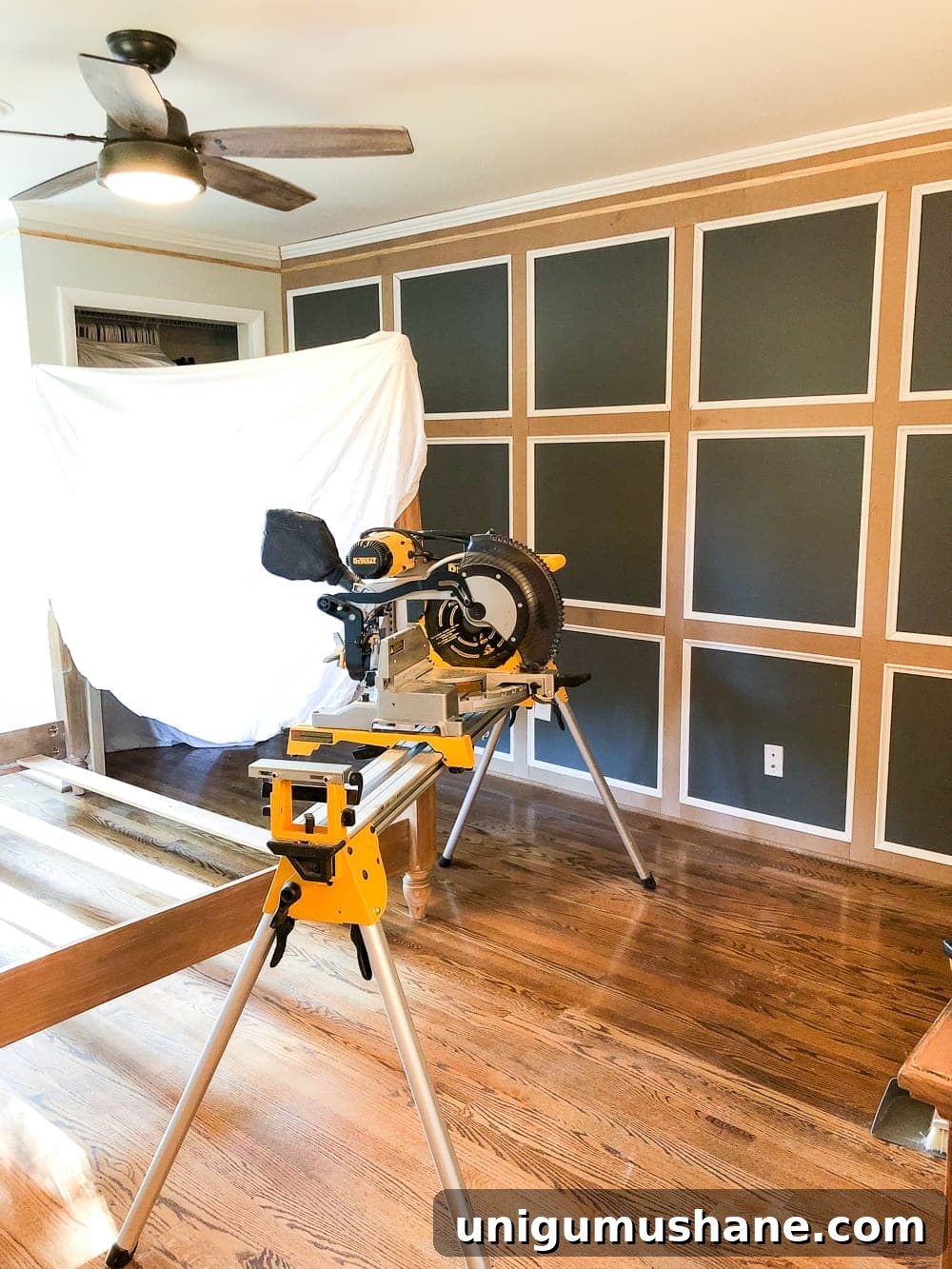
DIY Traditional Grid Molding Focal Wall
(Some affiliate links were originally provided.)
Supplies
- Two panel sheets of 1/2″ x 4′ x 8′ MDF
- Finger-jointed panel cap molding
- Table saw
- Miter saw
- Construction adhesive
- Cordless finish nailer
- Level
- Tape measure or laser measuring tool
- Carpenter square
- Pencil
- Safety glasses and mask
- Caulk and caulk gun
- Wood filler and putty knife
- Medium and fine grit sandpaper
- Primer
- Paint
Difficulty: Intermediate
Time: Allow about 48 hours for carpentry, caulking, priming, and painting (can vary by experience).
Materials cost: Approximately $358 (tools not included).
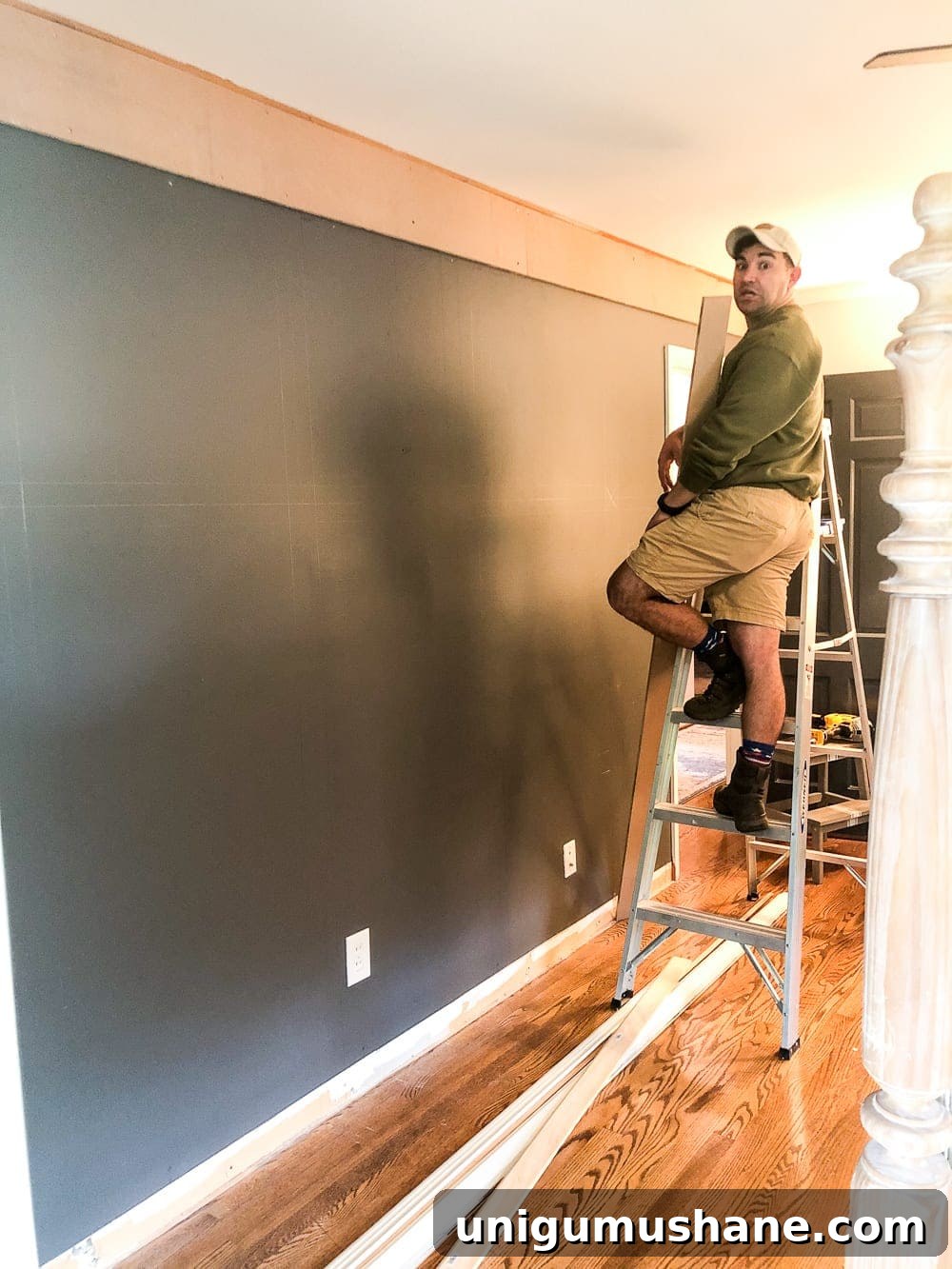
The Steps
1. Measure the entire wall to determine how many rows and columns of squares or rectangles you want. The number of divisions will determine the final size of each panel.
2. Cut a spacer/template from MDF equal to the width of the boards you’ll use. We cut ours to 3½” wide. This template simplifies marking and cutting the rest of the pieces.
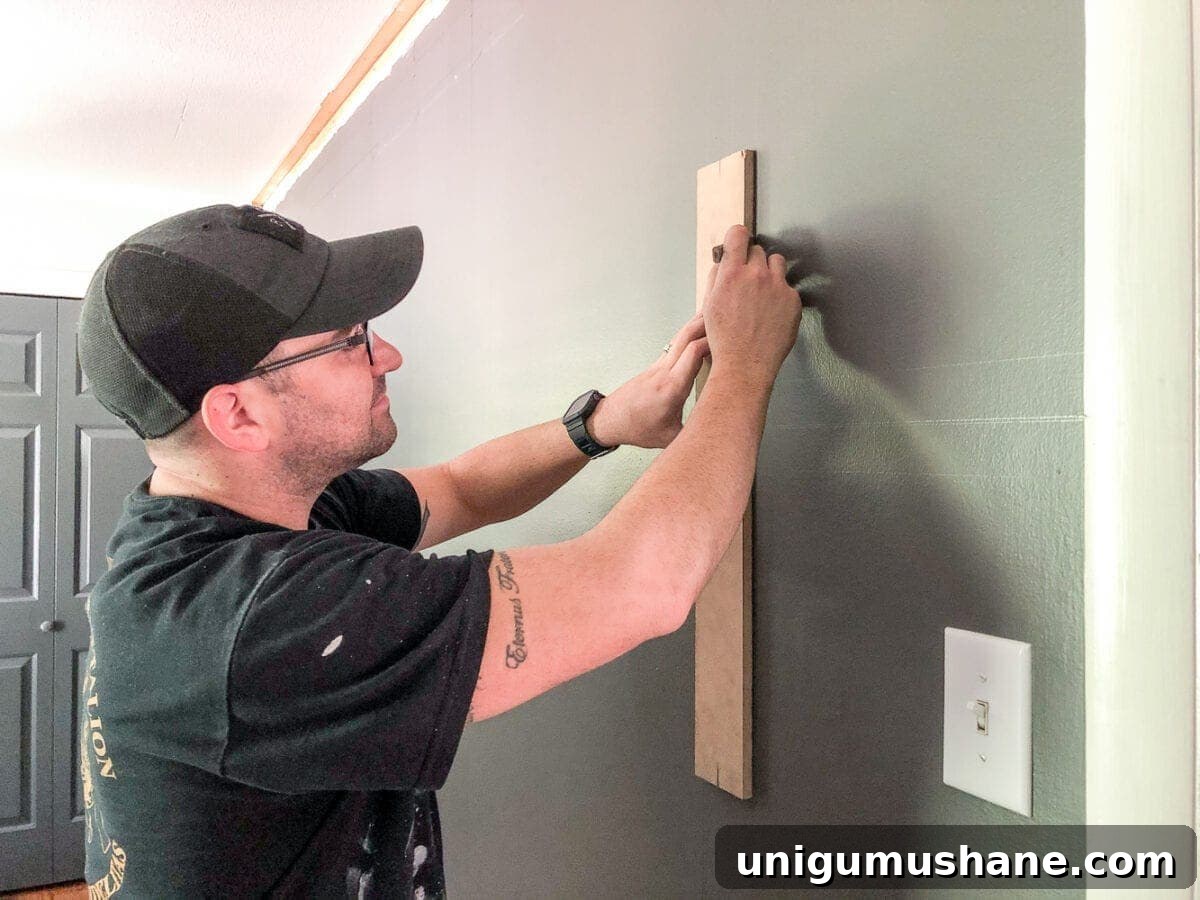
3. (Optional) Remove existing baseboard and crown if you plan to install a header and footer board first. We installed an 8″ header and a 3½” footer to create a strong frame around the grid.
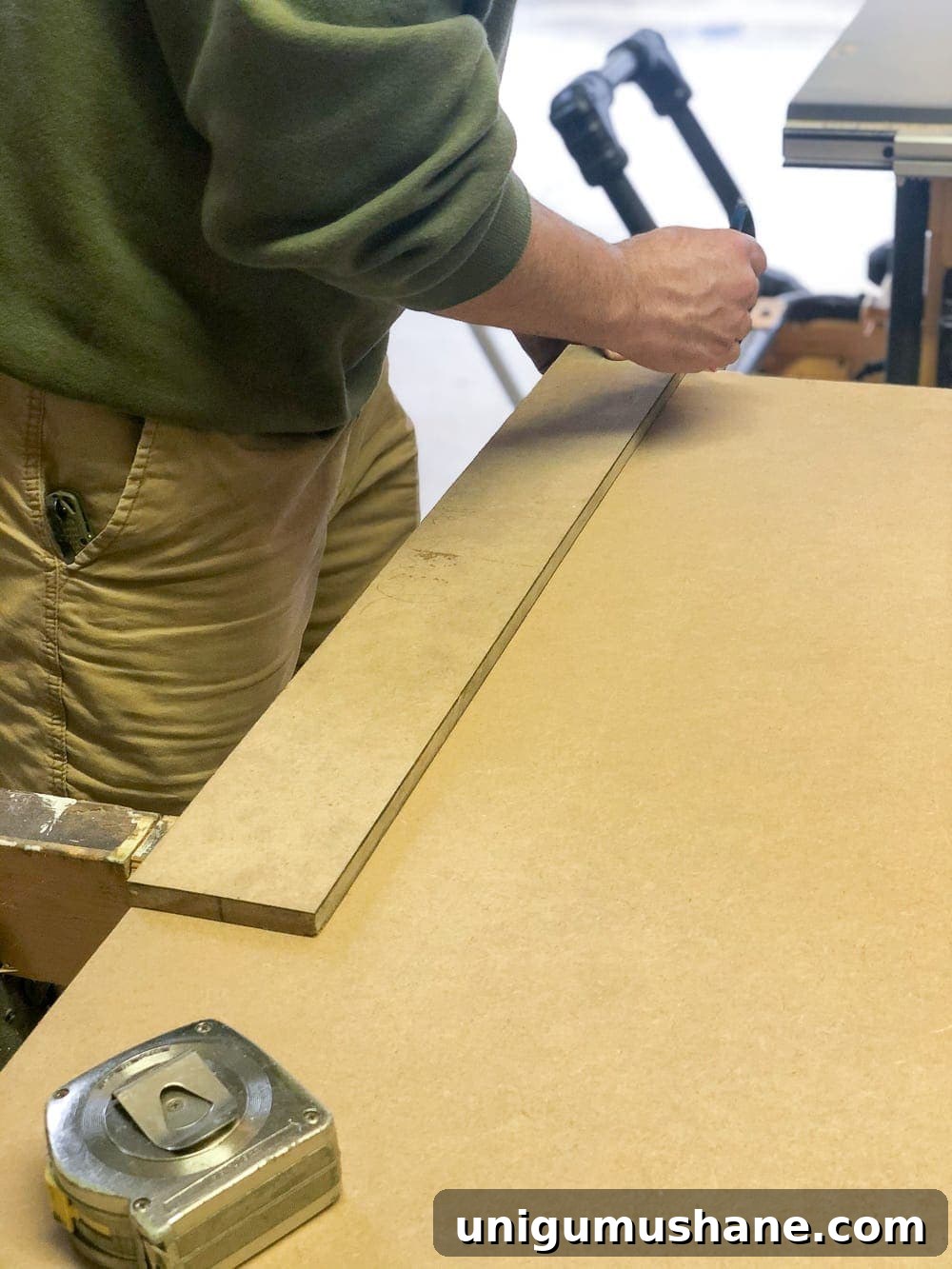
4. Sketch your grid on the wall using the spacer as a guide. When you’re happy with the layout, use the spacer to mark and cut all of your MDF boards on the table saw.
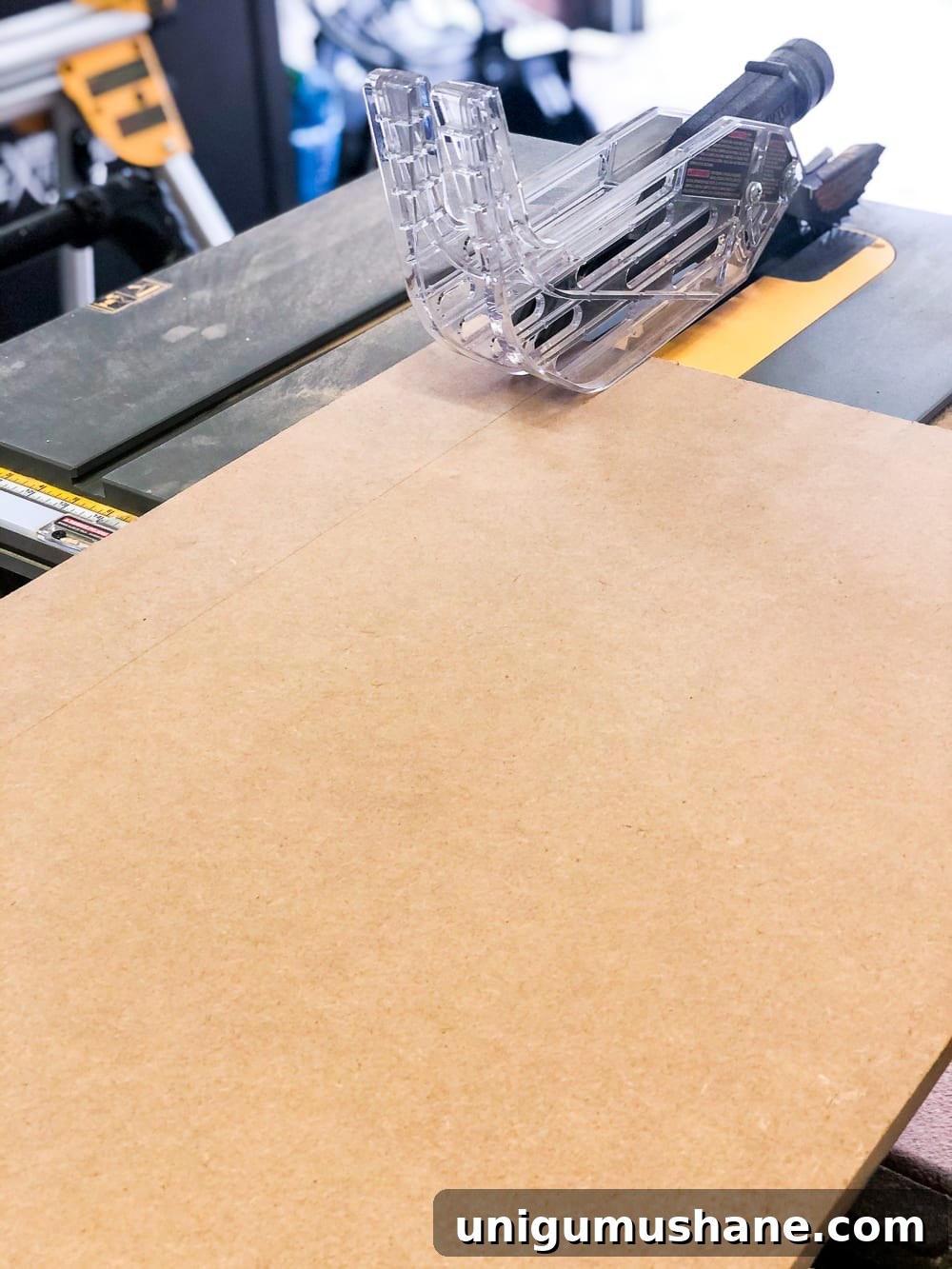
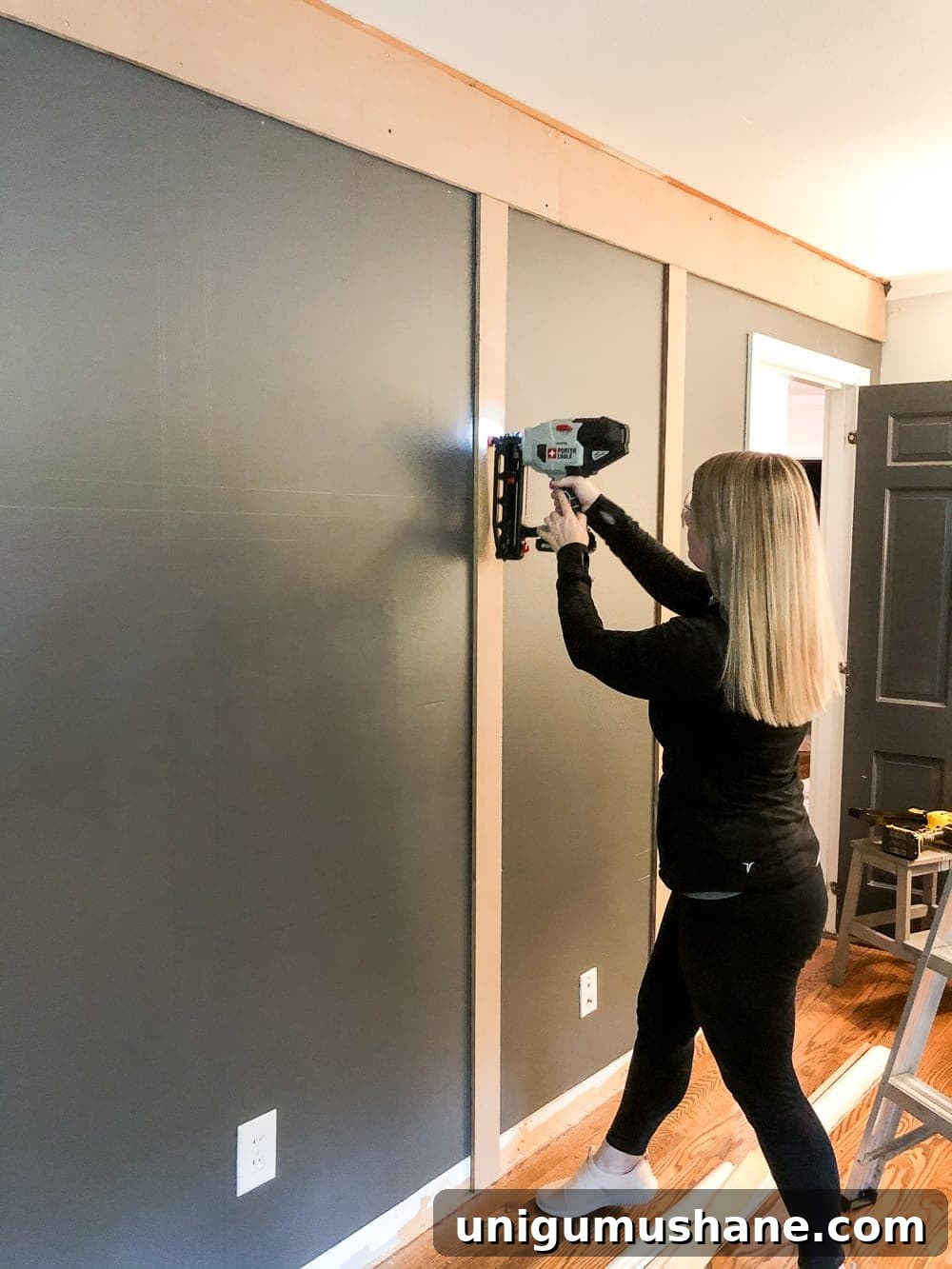
5. After cutting the boards (we made about 14), start with the vertical pieces. Apply a bead of construction adhesive to the back of a board, then place it along the pencil line on the wall.
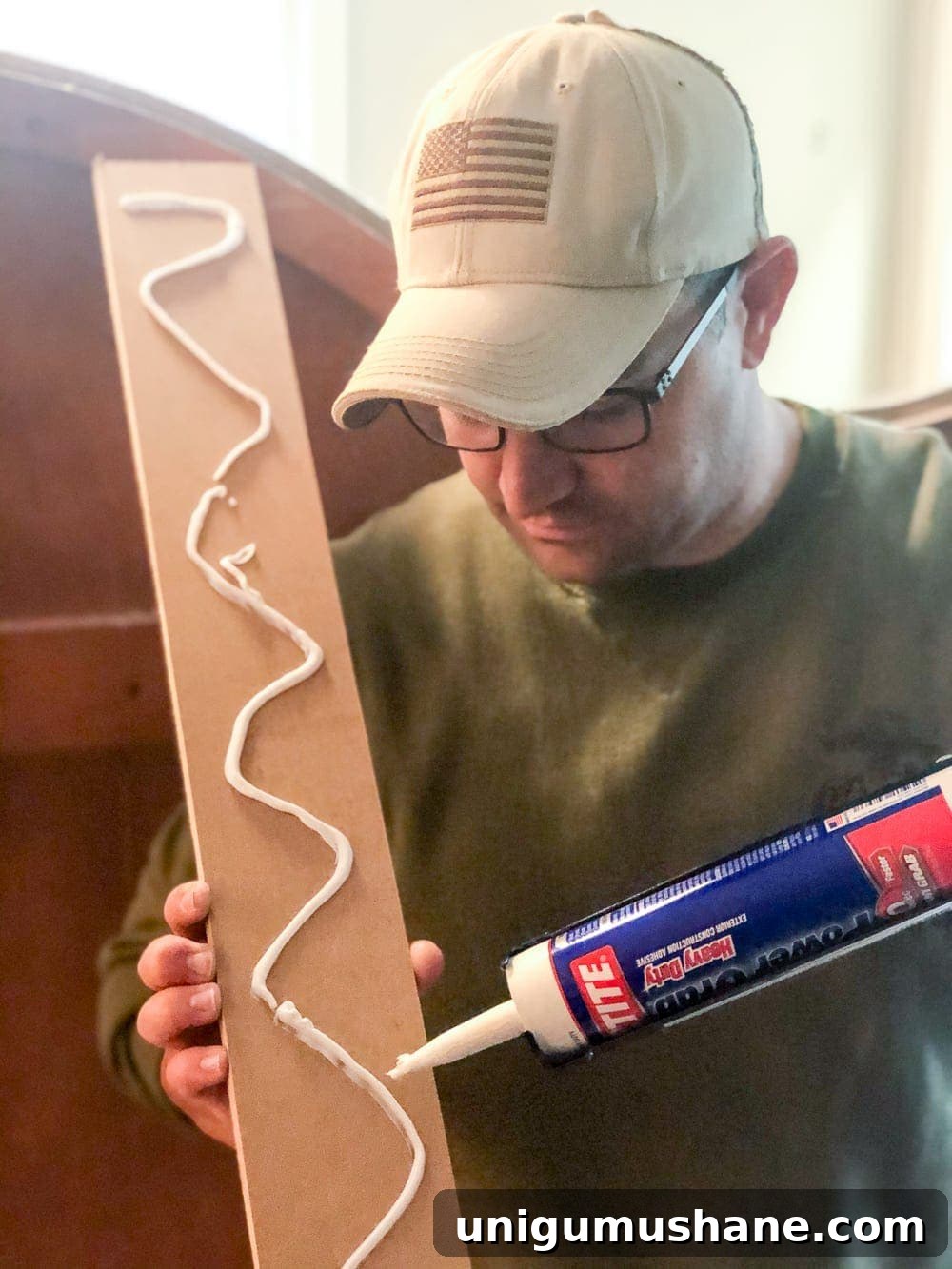
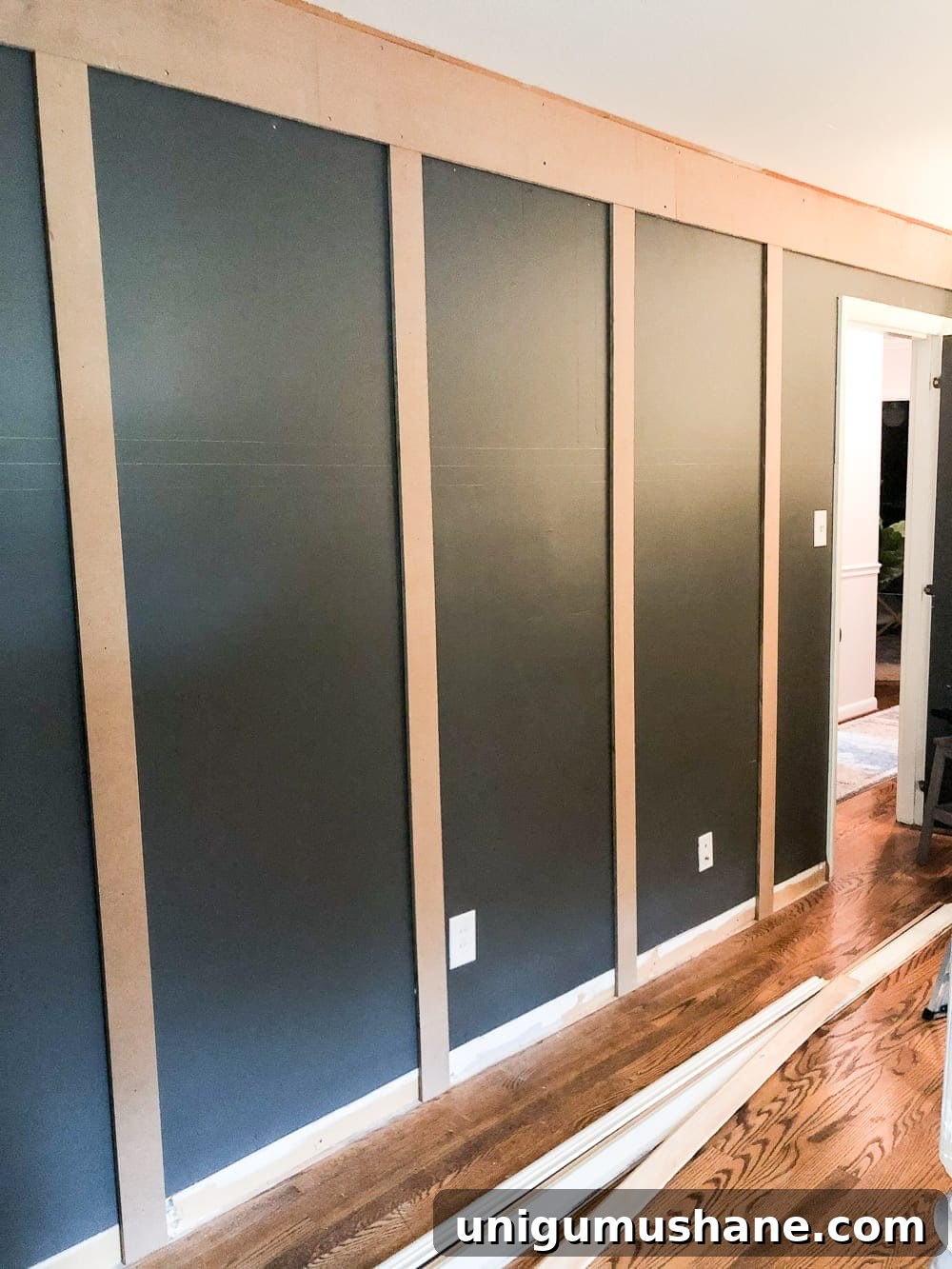
6. Secure each board with a finish nailer, checking that everything is plumb with a level as you go. Repeat until all vertical boards are in place.
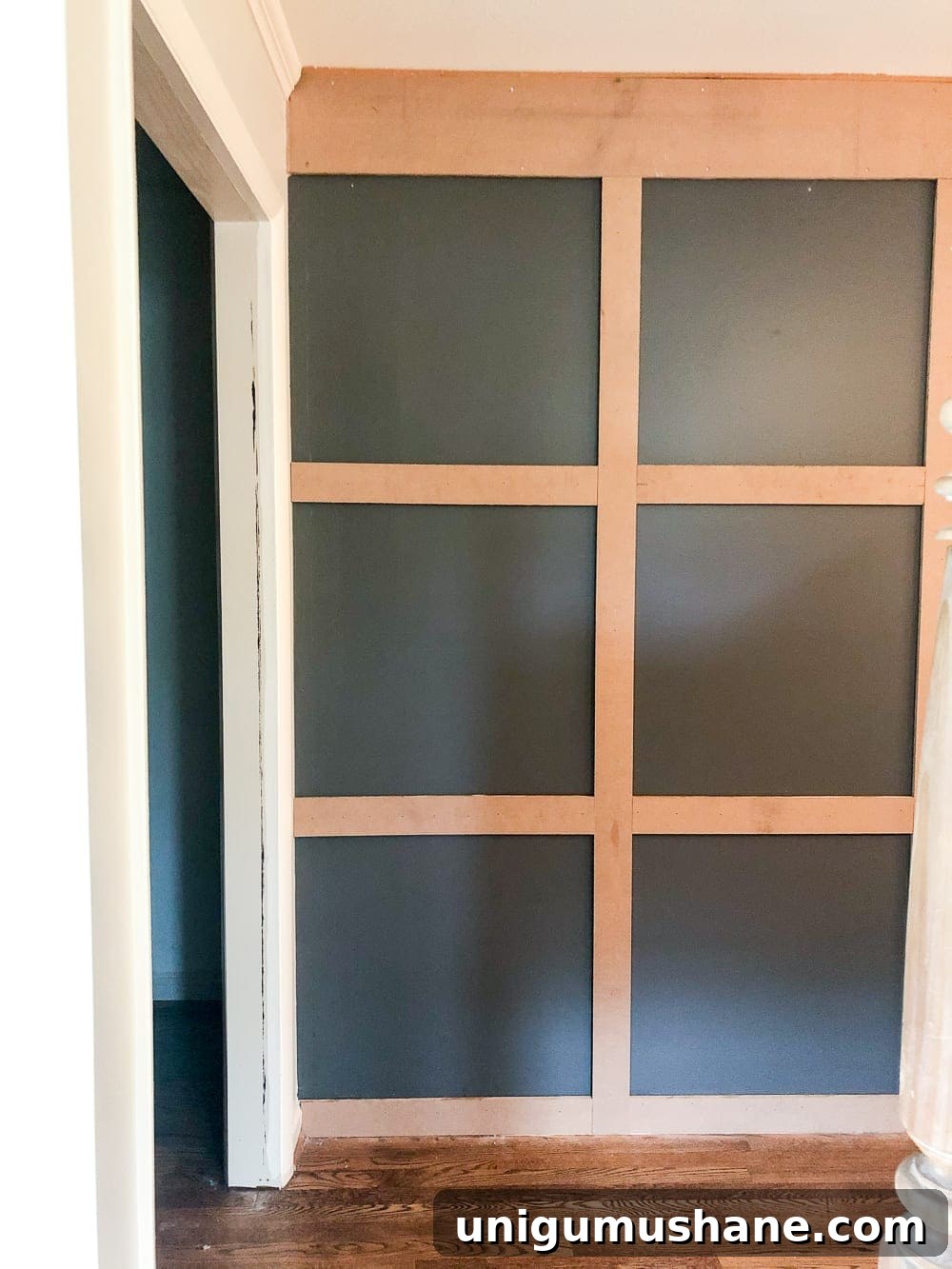
7. Measure between vertical boards to determine the correct lengths for the horizontal pieces. Cut, adhesive, and nail them in place just like the verticals.
8. If you prefer a simpler, more Craftsman-style look, you can stop after filling nail holes and caulking seams, then prime and paint. For a more detailed, traditional profile, continue with cap molding.
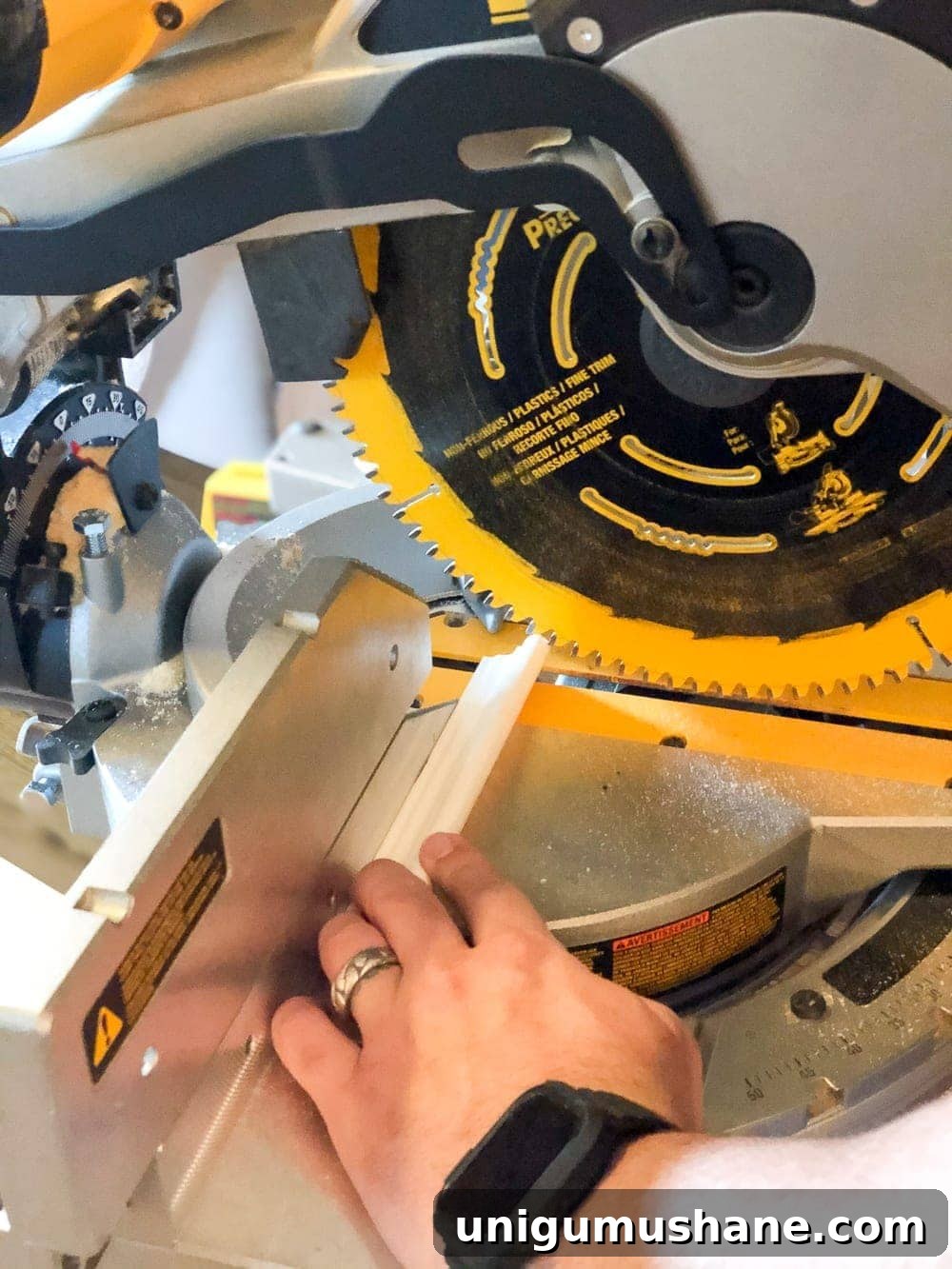
9. Measure and cut the finger-joint cap molding at 45-degree angles where corners meet, test-fit, then glue and nail them to the face of the MDF boards. Take your time here — accurate miter cuts make a cleaner final result.
10. Once the cap molding is attached, reinstall crown and baseboard pieces over the header and footer if you removed them earlier. Then fill nail holes with wood filler and sand smooth.
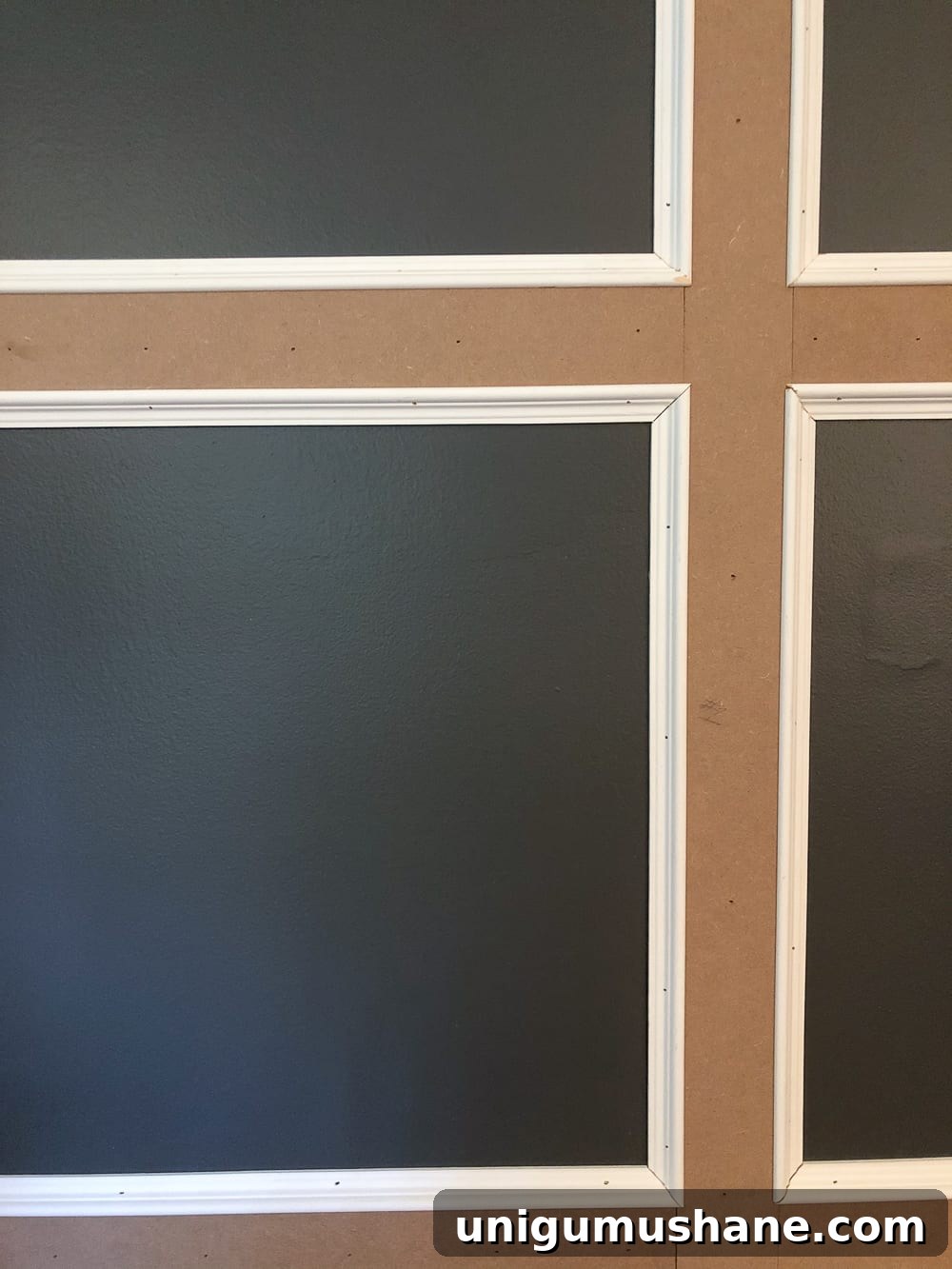
11. Caulk all seams, joints, and gaps for a seamless look. After the caulk dries, prime and paint the wall. Choosing a rich paint color or classic white will dramatically change the room’s mood — both look great with traditional grid molding.
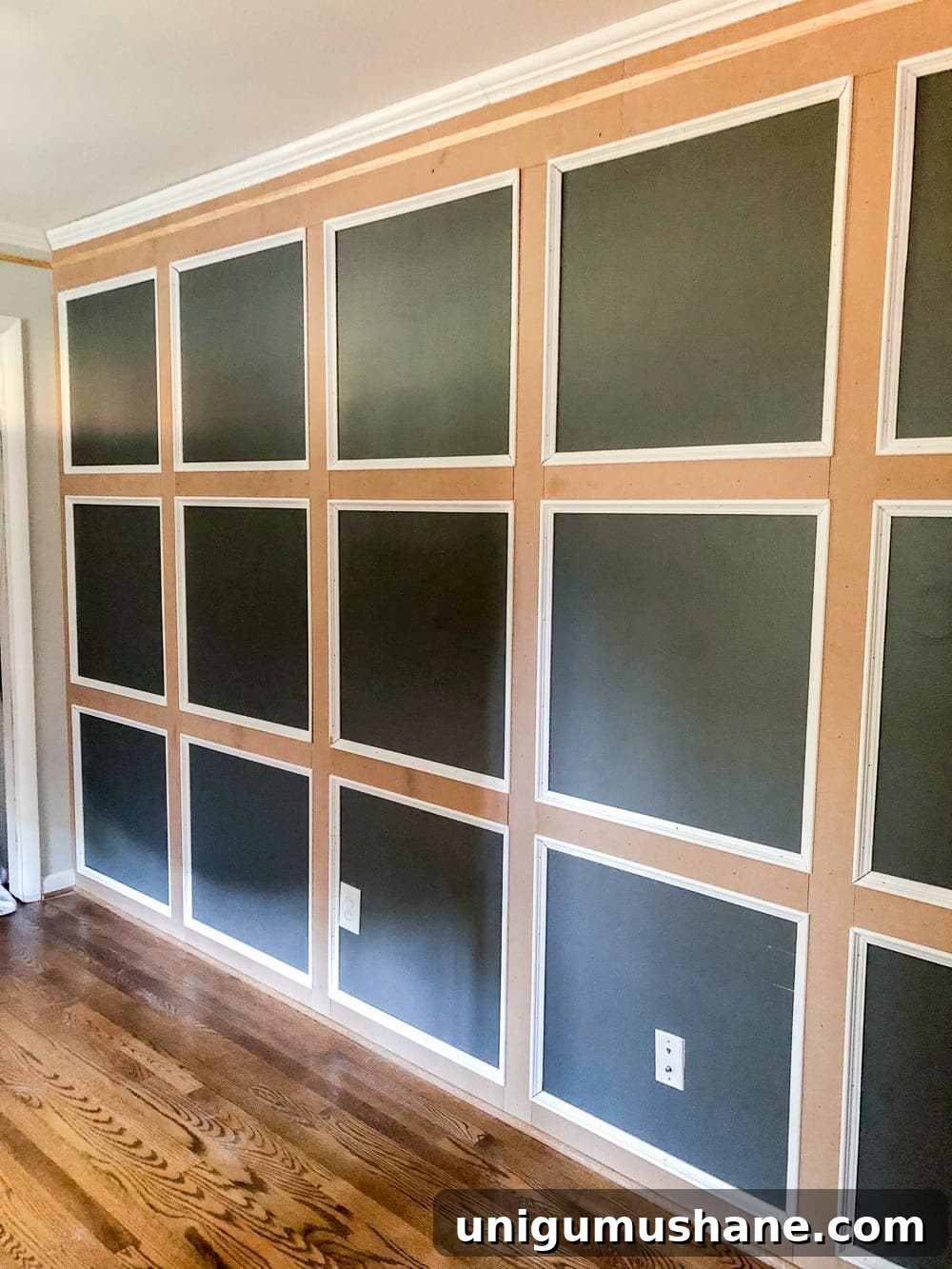
This finishing work takes time and patience, but the visual payoff is huge. We still have a few touch-ups to do — wood filling, final caulking, and painting — but the transformation is already clear. The grid molding focal wall turns a plain surface into a thoughtful architectural feature that elevates the entire bedroom.
If you’re tackling a similar project, take careful measurements, use a consistent spacer for repeatability, and test-fit molding before final installation. With deliberate prep and patience, you can create a stunning, traditional-style focal wall that looks professionally done.