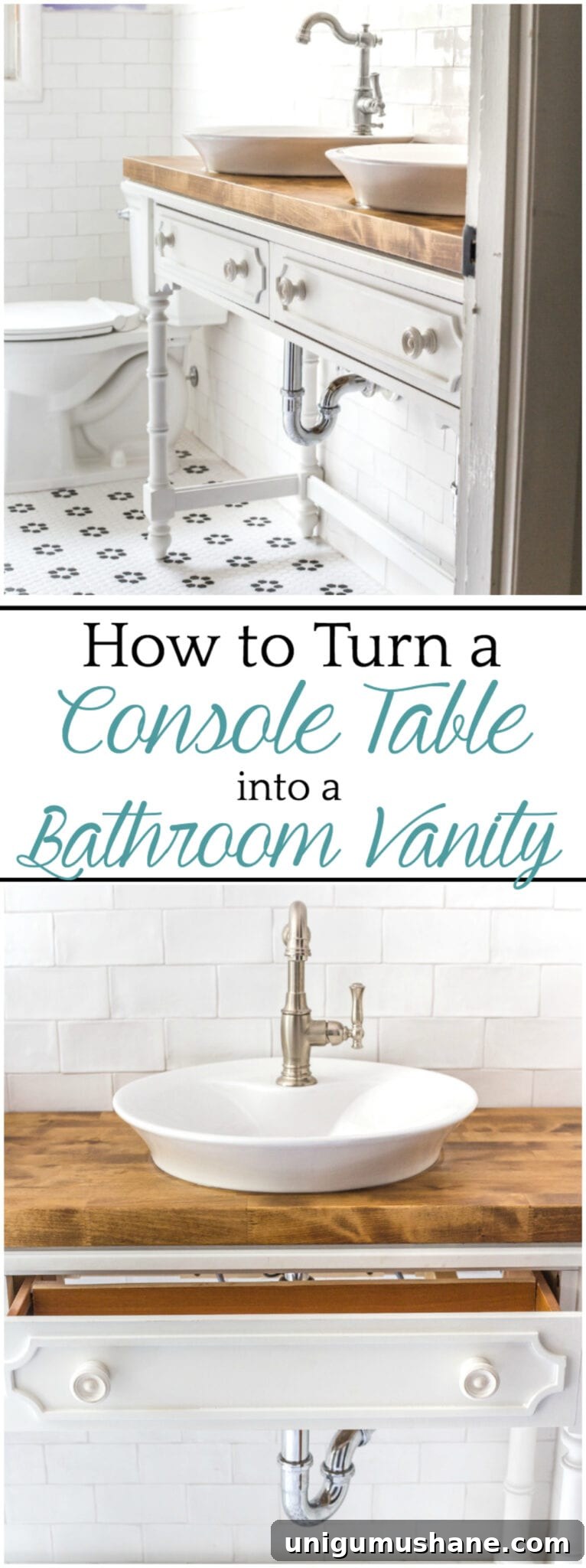
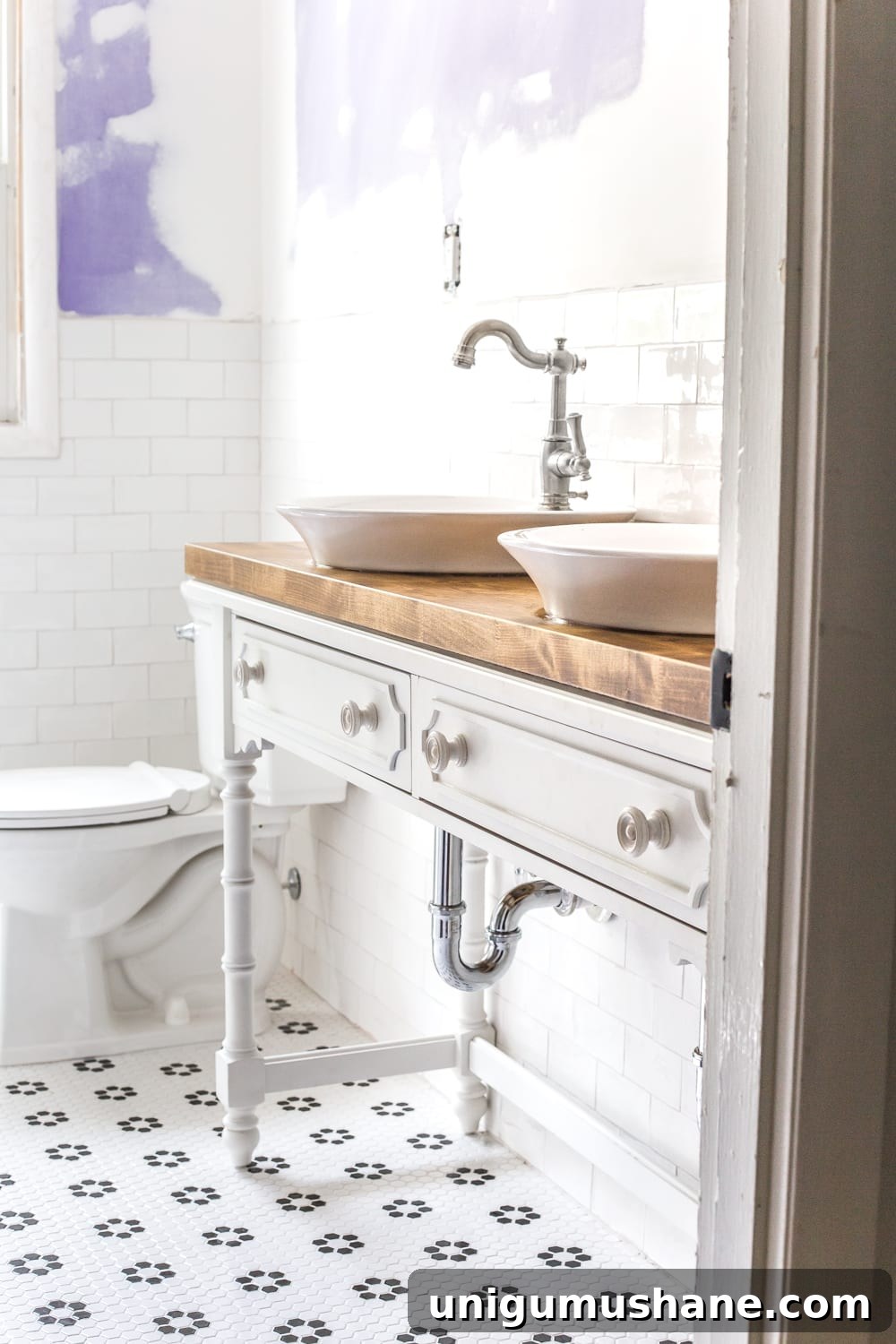
A tutorial for how to reconstruct a console table to repurpose as a bathroom vanity and leave drawers functional underneath sinks.
We’re sharing a step-by-step guide for converting a solid console table into a functional bathroom vanity while keeping the drawers usable beneath vessel sinks. This is a great solution when a bathroom is narrow and you want an open, airy look without losing the convenience of drawer storage.
The bathroom makeover is coming together, and this console-turned-vanity is one of my favorite pieces so far.
(Some affiliate links are provided in the original post.)
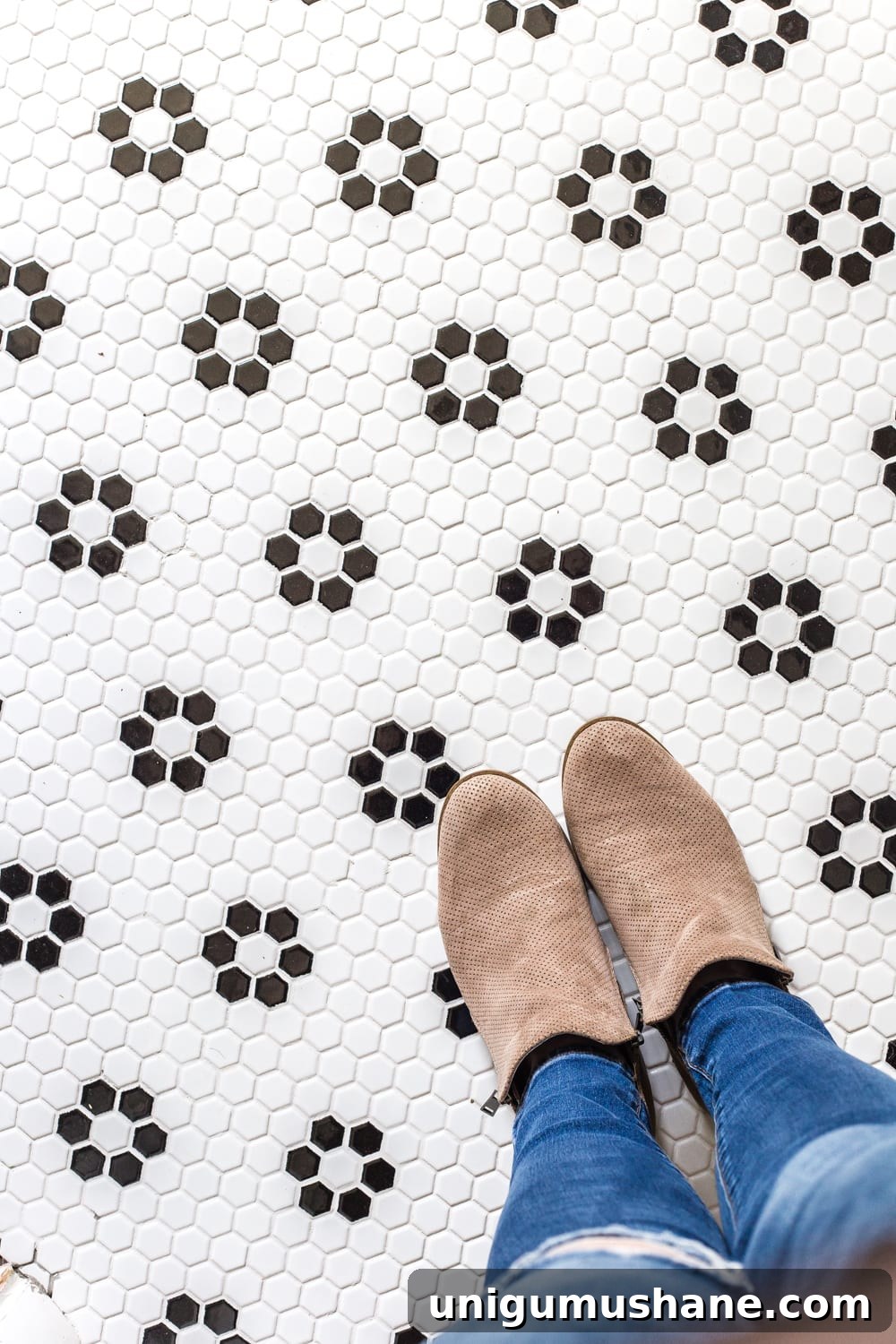
If you’ve been following this renovation, we’ve already shared the bathroom plans, the demolition, and the shower/tub installation. The tile floor is in now—my daughter picked the sweet hexagonal floral pattern herself—and it sets a playful, vintage tone for the space.
Because the room is narrow and we already have a large linen closet, an open console-style vanity with vessel sinks felt like the perfect choice. I searched for a well-built, solid-wood console table in the exact dimensions we needed. The table I chose had dovetail drawers and sturdy construction, which made it safe to support a butcher-block countertop and vessel sinks.
Finding the right piece can be a splurge, but it’s worth investing in a quality table that will stay in place for years. Below is the method Robert used to convert the table and keep the drawers functional beneath the sinks.
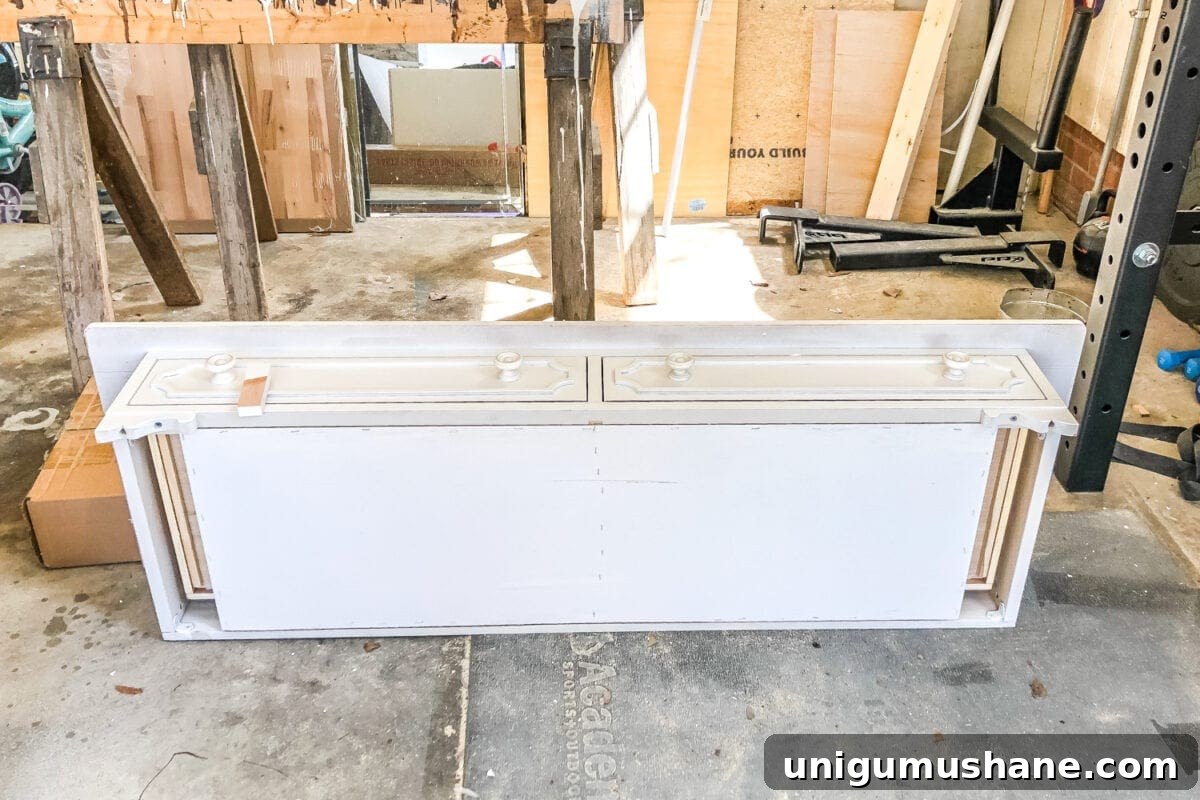
How to Turn a Console Table Into a Bathroom Vanity:
Supplies Used:
- Jigsaw
- Power drill
- Circular saw
- Finishing nail gun
- Sink template (usually provided with your vessel sink)
- Vessel sink(s)
- Pencil
- Butcher block countertop (optional)
- Stain (optional – example: Minwax Special Walnut or Weathered Oak)
- Spar urethane in satin
- Two stain/poly brushes
- Clear silicone caulk
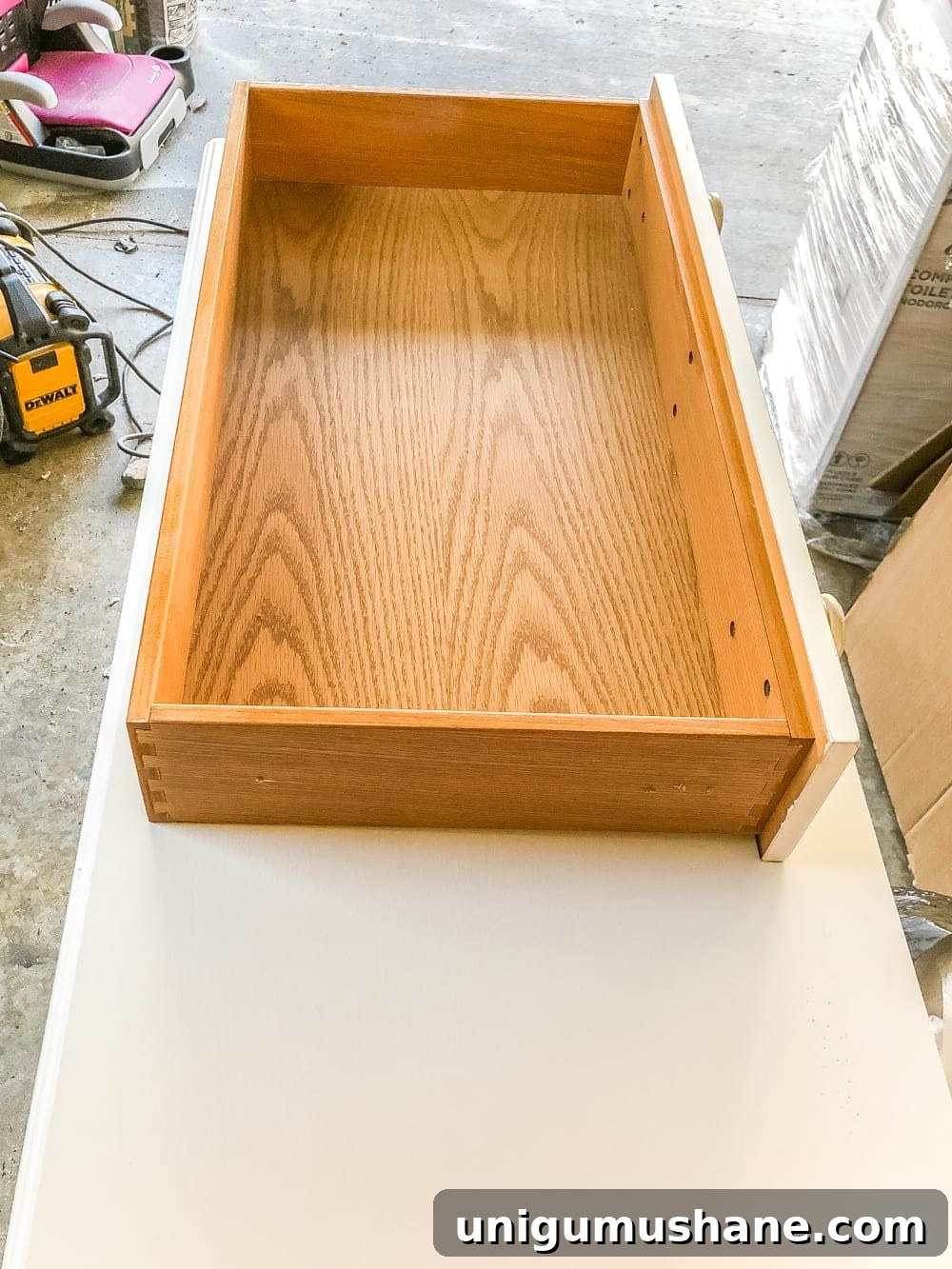
The Steps:
This approach preserves drawer functionality while giving enough room for the sink drain and plumbing. If you prefer non-functional drawer fronts instead, skip the drawer modification and simply cut the drawer box away and reattach the front as a faux drawer.
1. Remove any board or panel fixed under the table that obstructs access using a pry bar and hammer or mallet.
2. Decide whether the drawer fronts should remain decorative or fully operational. For faux drawers, cut out the drawer box and reattach the front as a fixed panel.
3. To keep drawers functional, remove each drawer and measure how far from the wall the sink drain will sit. This measurement determines how deep to make the drawer so plumbing can clear the back of the drawer.
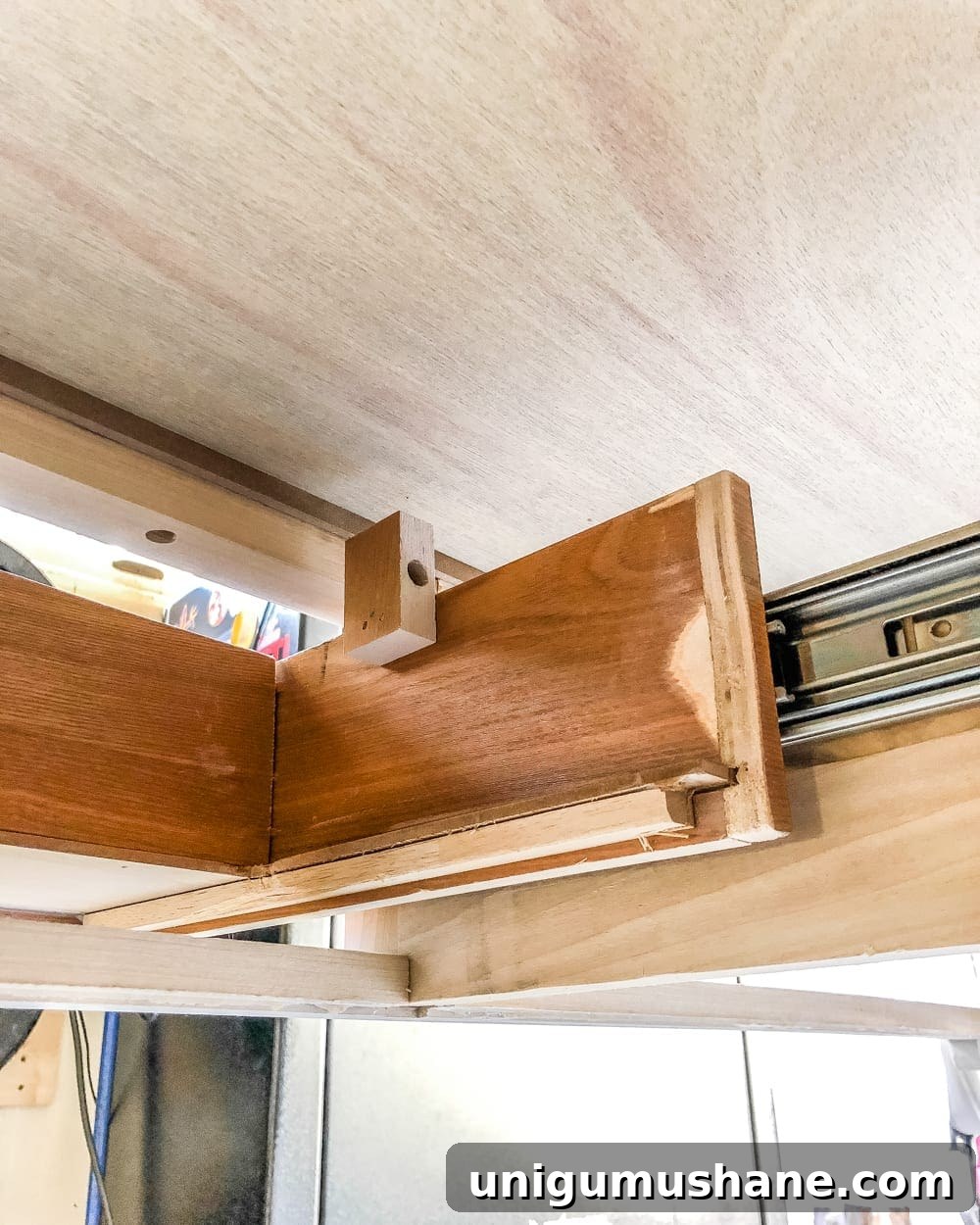
4. Mark the new depth on the back and bottom of the drawer. Use a jigsaw to cut away the excess back and bottom wood, keeping the drawer sides intact.
5. Slide the detached back forward to match the desired new depth and secure it to each side with finishing nails.
6. Create a drawer stopper: attach a short scrap (about 1″ x 2″) to each side inside the drawer so the lip of the console catches on it and prevents the drawer from pulling out too far.
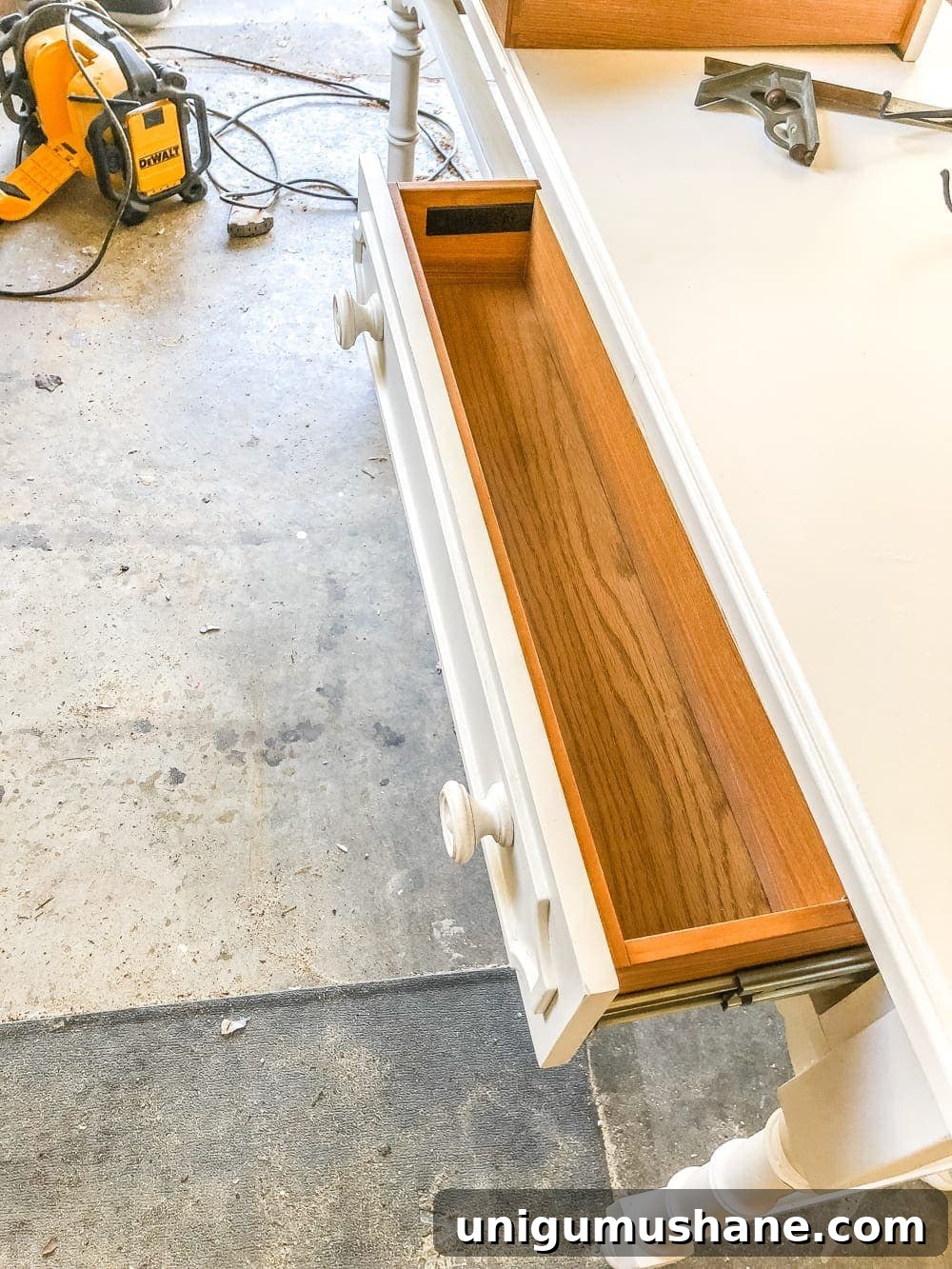
7. If your vessel sink includes a template, use it. If not, trace the bottom of the sink onto cardboard to create a cutting template.
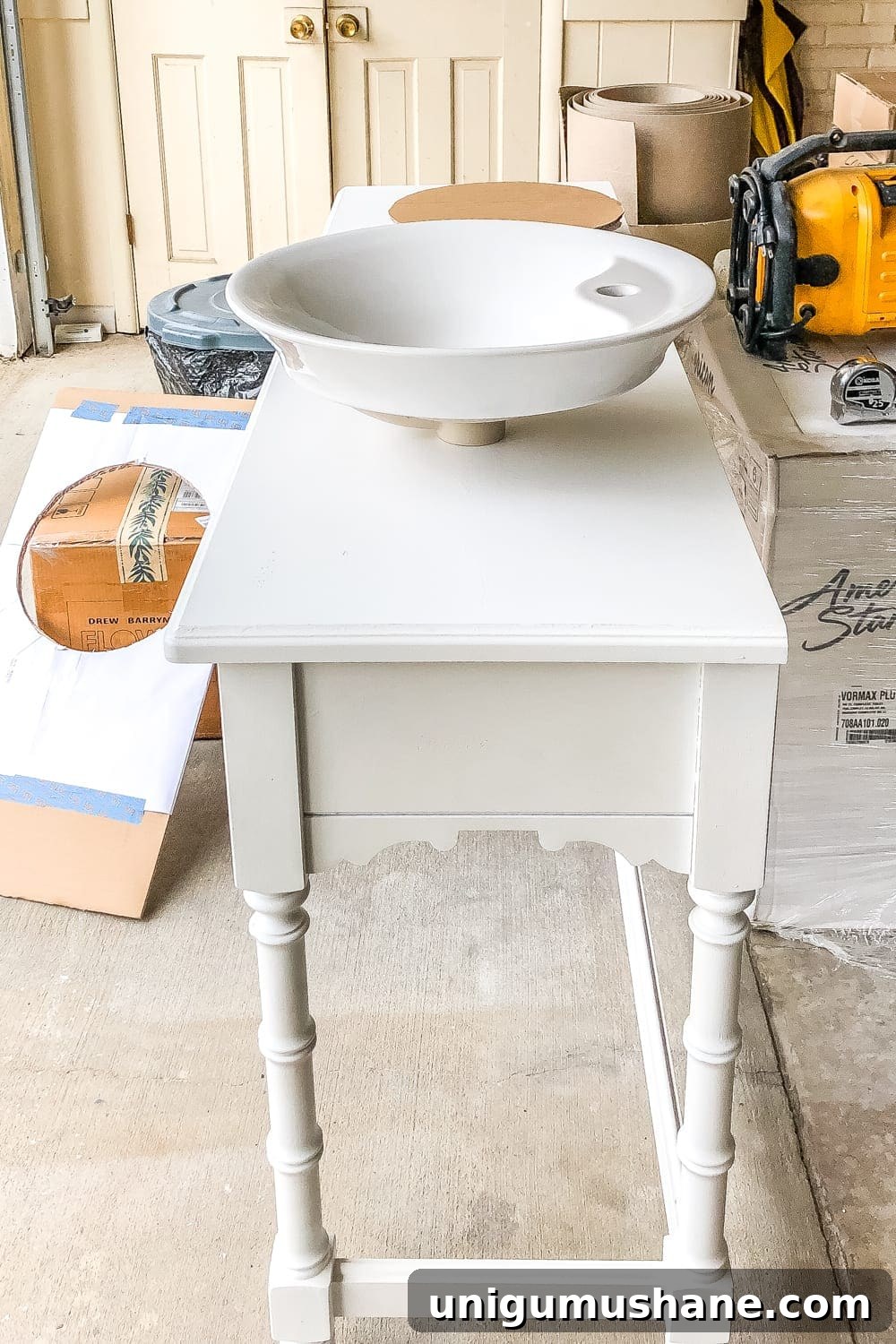
8. Position and trace the sink templates where you want them on the top of the console or on the butcher block countertop.
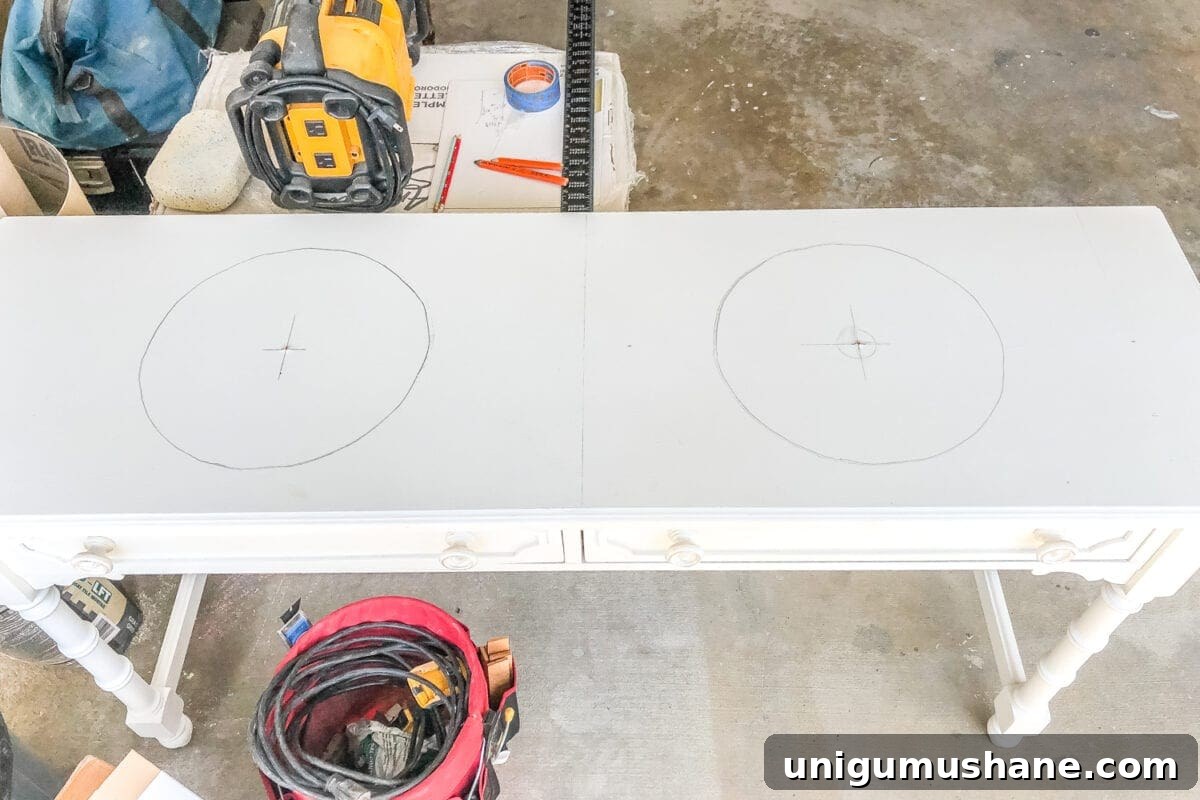
9. Drill a starter hole inside each traced circle and use the jigsaw to cut out the sink openings.
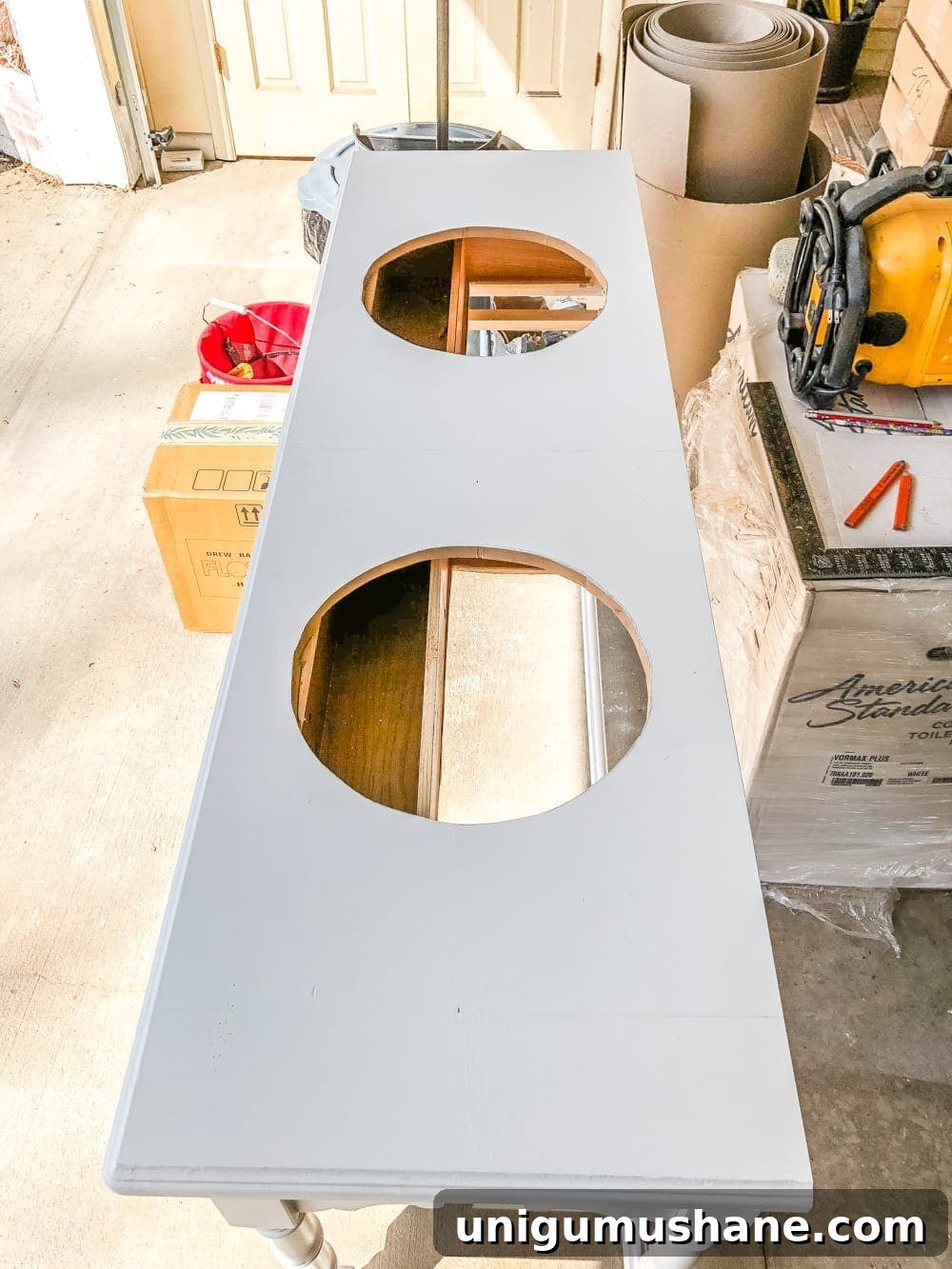
10. If you’re using a butcher-block countertop, repeat the template, tracing, and cutting process on the countertop piece so the sinks sit flush and centered.
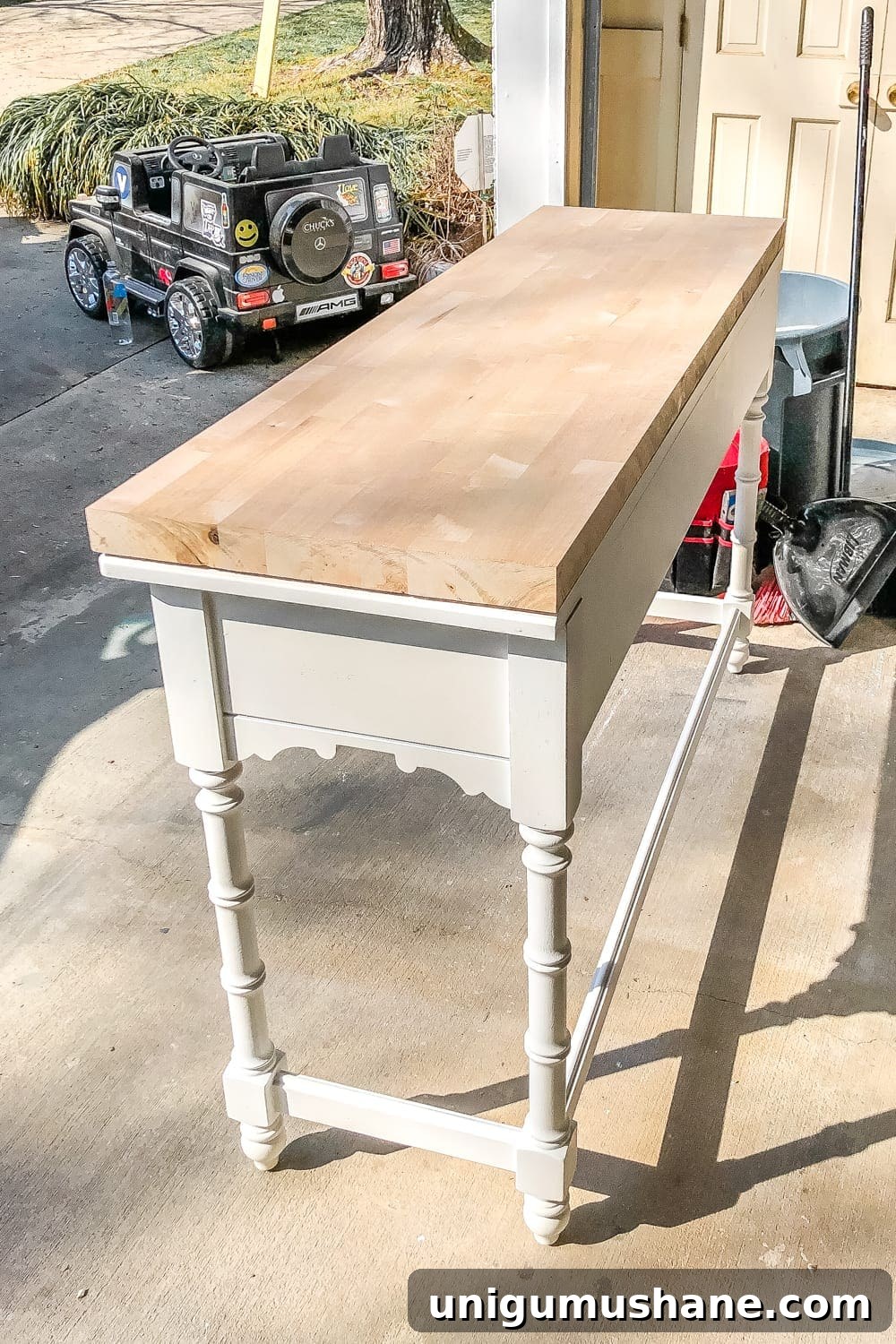
11. Test fit the sinks and drawers to ensure the plumbing clears and the drawers open and close smoothly.
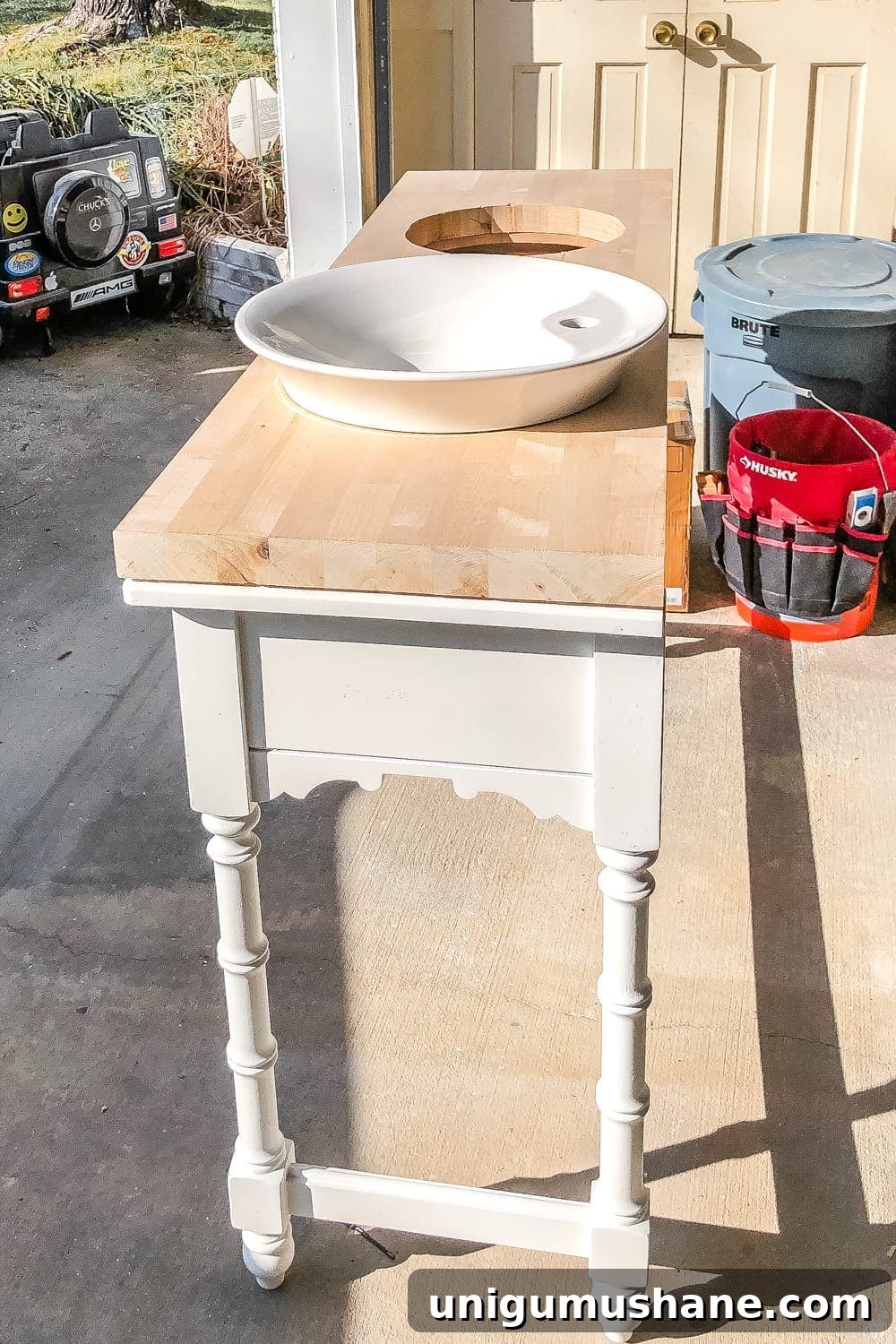
12. Finish your countertop: we stained the butcher block with two coats of stain (Special Walnut) and protected it with four coats of spar urethane for waterproofing. Proper sealing is essential for a wood countertop in a wet environment.
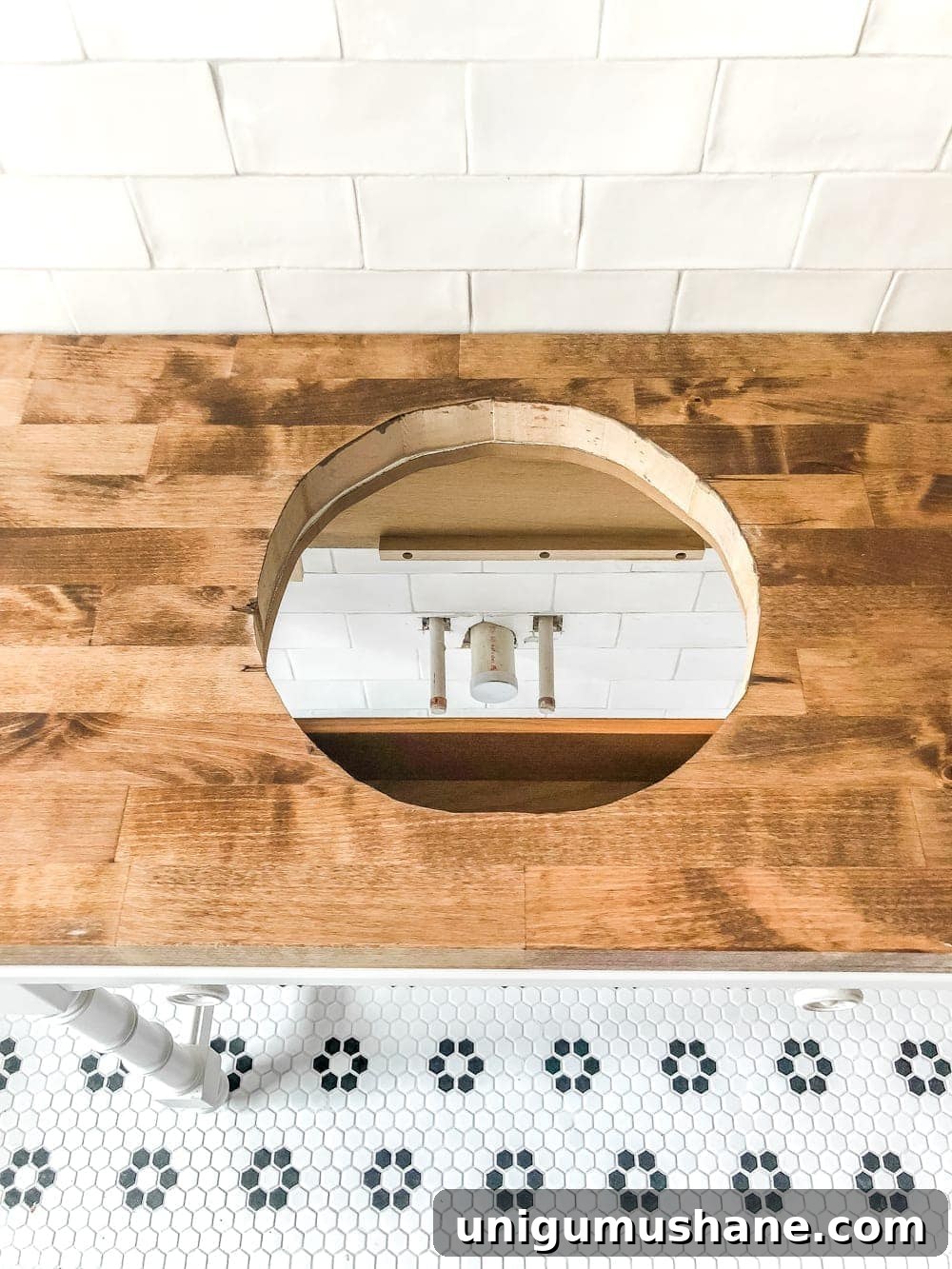
13. When installing the vanity in the bathroom, apply clear silicone caulk along the back and side edges between the countertop and the wall to seal gaps and prevent water infiltration.
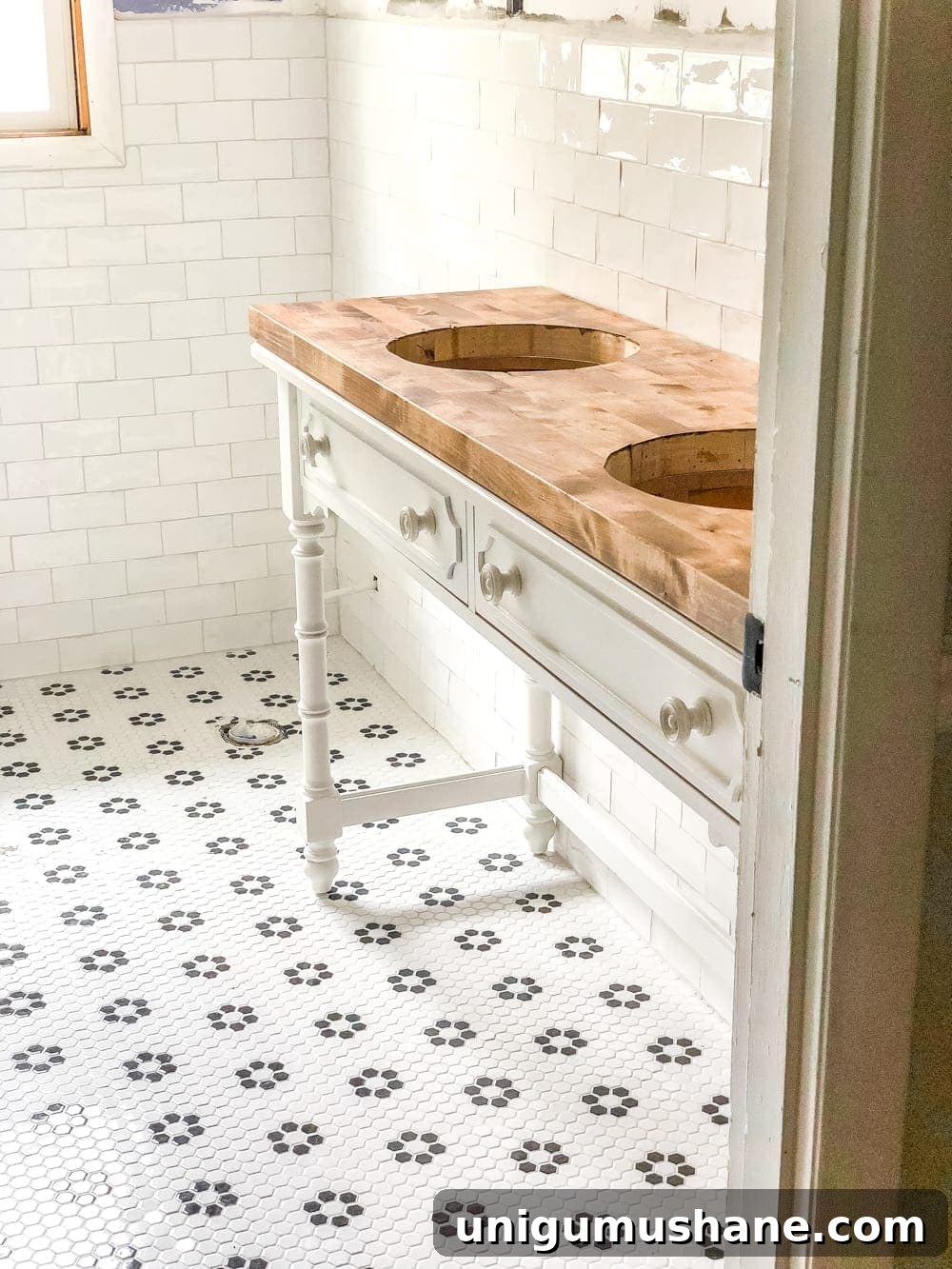
14. Finally, follow the sink manufacturer’s instructions to install the vessel sinks, faucets, and plumbing. Double-check for leaks and make any needed adjustments.
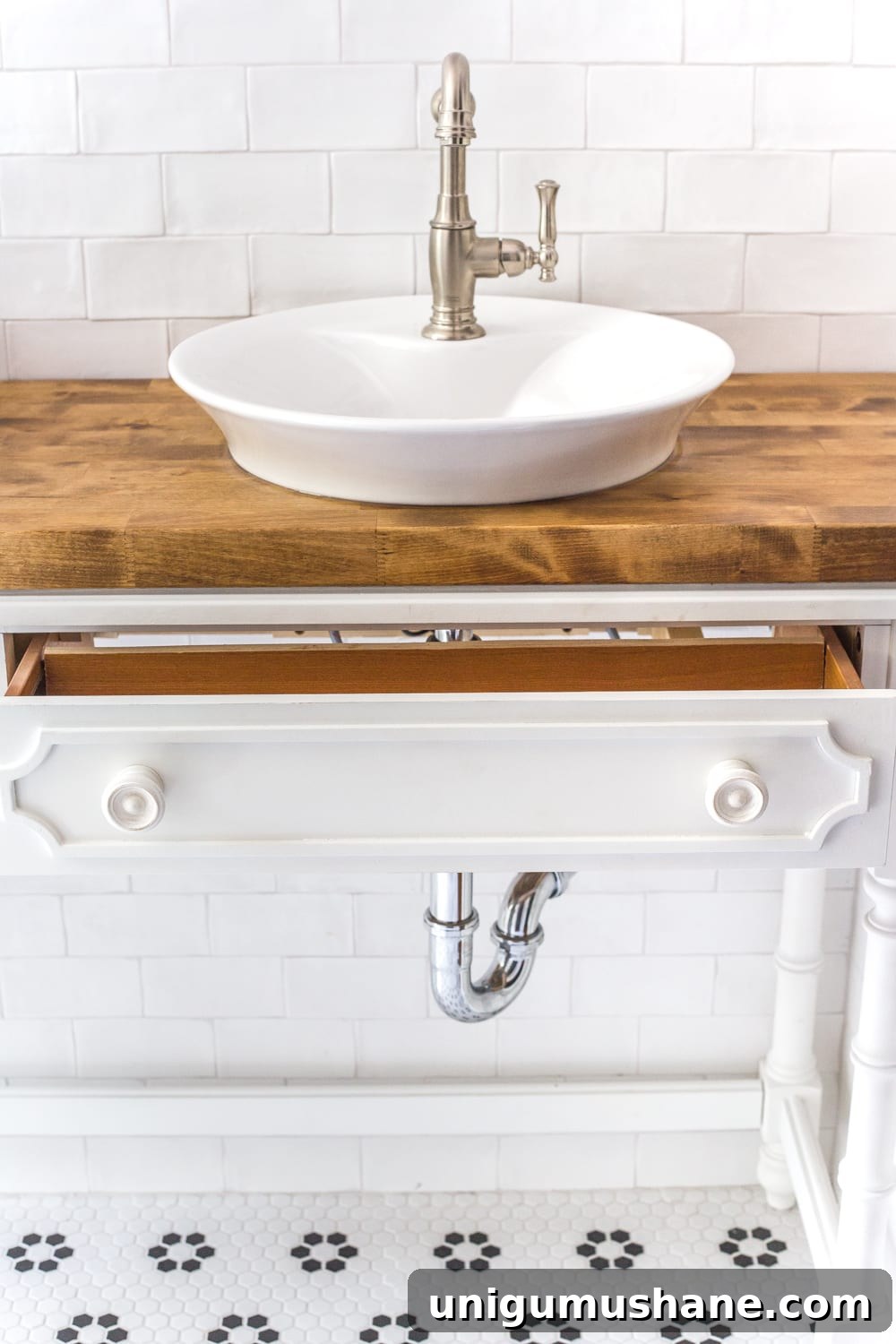
This conversion keeps the charm of furniture-as-vanity while giving you useful, accessible storage beneath the sinks. Next steps for this room include painting, installing lights and mirrors, adding a couple of step stools, and a storage basket for towels. The result is a custom, character-filled vanity that fits a tight bathroom footprint perfectly.
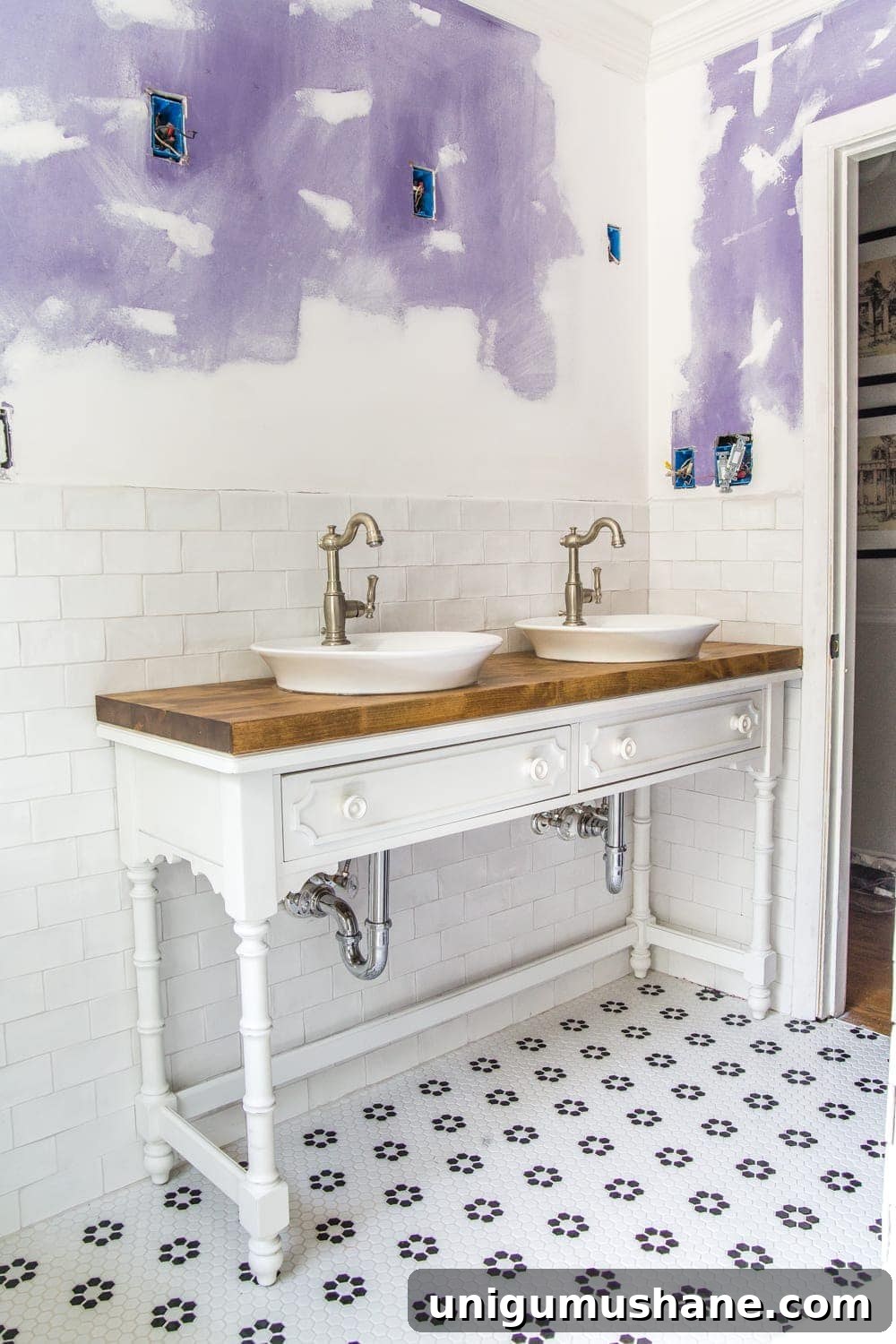
If you love furniture with personality, using a console or dresser as a vanity is a fantastic way to bring warmth and uniqueness into a bathroom. With careful measuring, clean cuts, and proper sealing, a furniture-based vanity can be both beautiful and practical.
Crossing fingers that this space will be fully finished the next time we share an update!