
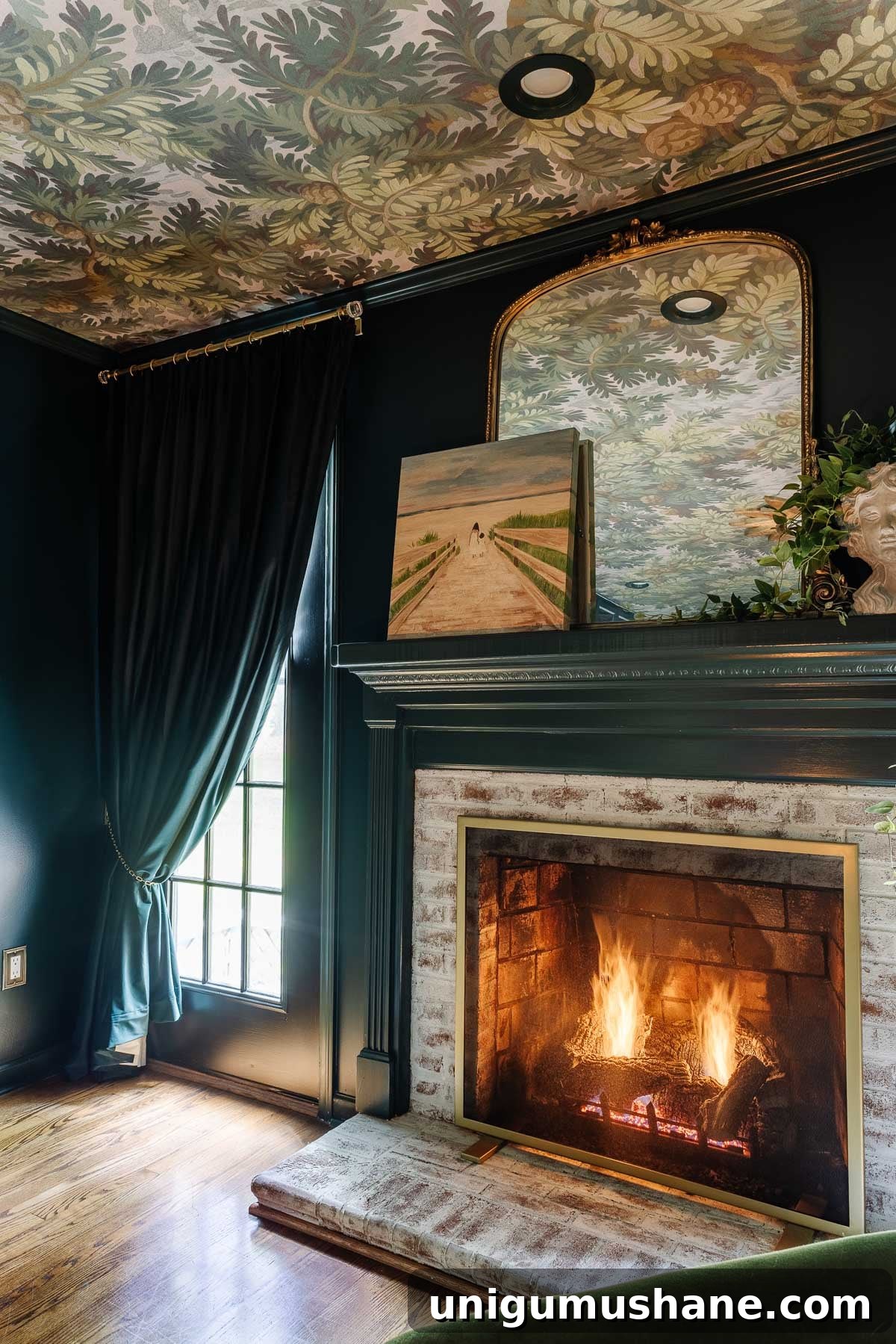
After all the effort we put into converting our playroom into a media room last year, we still love this space. The only thing missing was true blackout curtains for daytime movie watching.
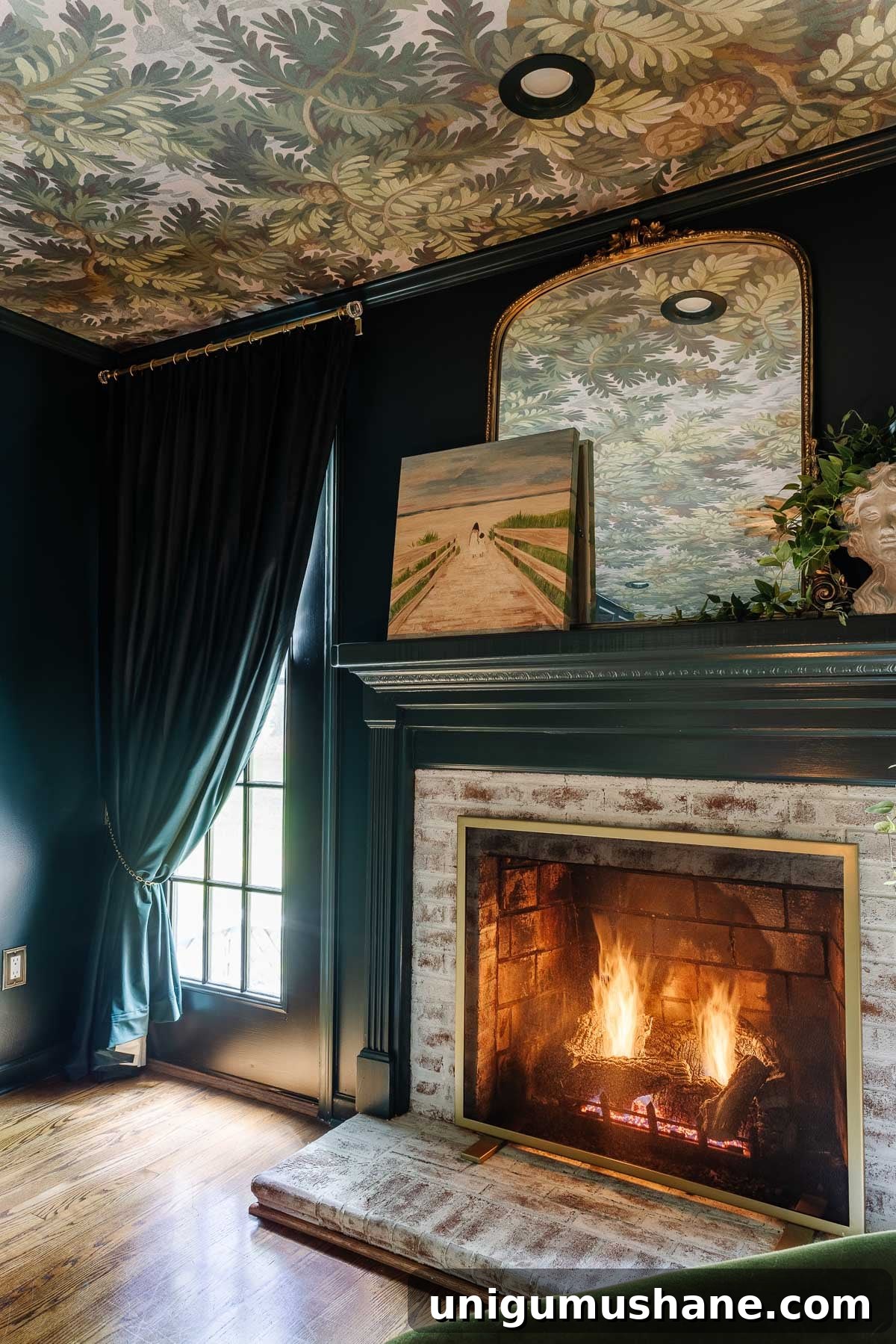
As the finishing touch, we chose single-panel drapes pulled back at the sides of our media room windows to create a vintage theater curtain effect.
Pin it for later ⤵️
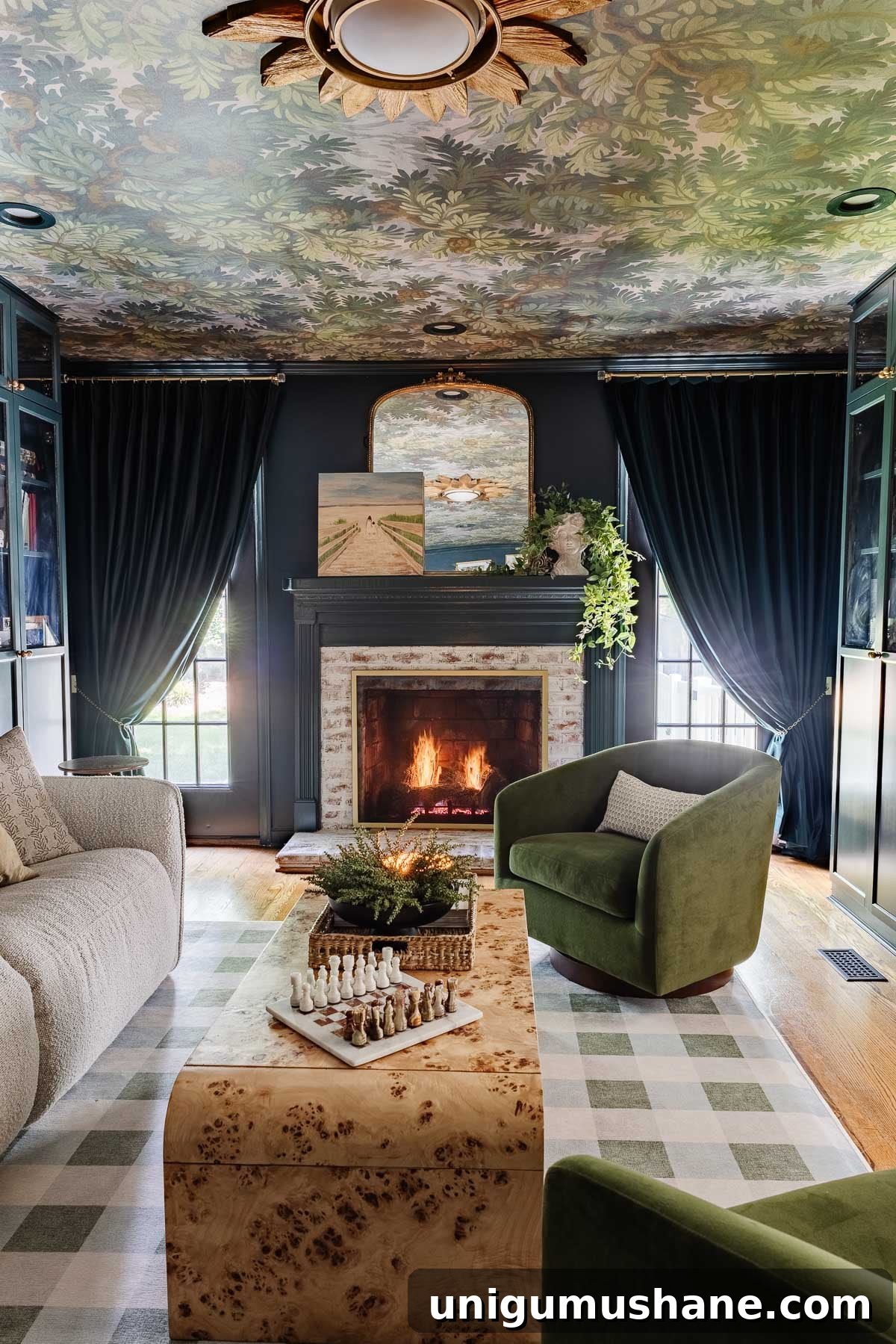
Curtains | Ceiling Wallpaper | Recliner Sofa | Rug | Mirror | Swivel Chairs | Fireplace Screen | Bust Planter | Curtain Rods | Curtain Tiebacks | Coffee Table | End Tables
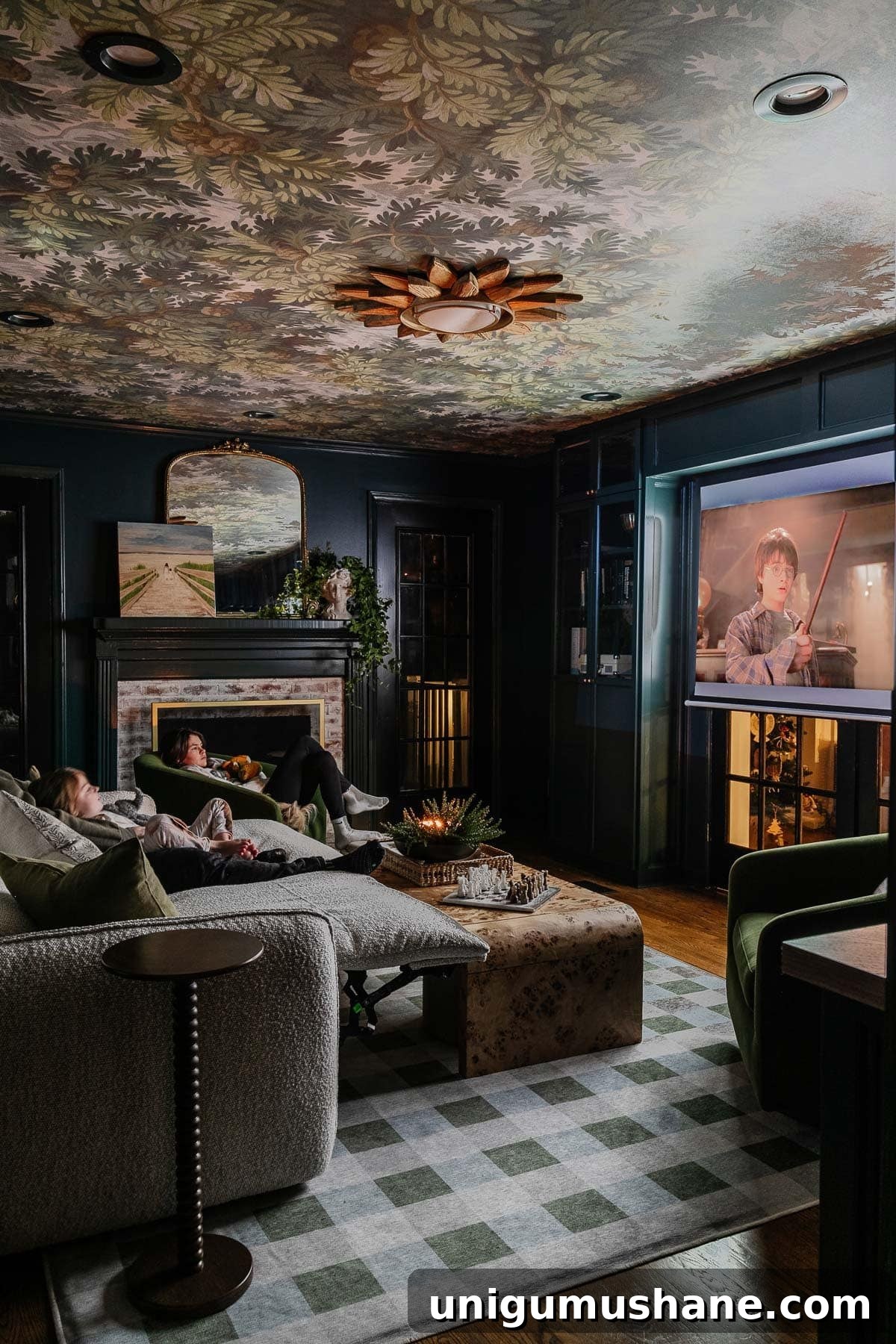
If you missed our media room makeover, we installed a hidden motorized projector screen above our double French doors to create a true home theater experience.
That setup looked great, but during long summer evenings—when the sun stays out late—the uncovered windows made it hard to darken the room enough for movies.
Related: Easy DIY No Sew Curtains With Trim: Step By Step Tutorial
Best Home Theater Curtains
We chose luxe velvet curtains with a blackout liner. They completely darken the room for daytime viewing and also dampen outside noise—street sounds and lawnmowers are much less noticeable when the curtains are closed.
Because the color needed to coordinate with our Sherwin Williams Cascades walls, I ordered a fabric swatch book and found the closest match in Dark Jungle Green. The panels come in 29 color options and arrived with hooks attached in a pleated header and rings ready to hang, which made installation quick and easy.
Related: DIY Lime Washed Brick Fireplace – Easy Tutorial
How to Pull Back Curtains
Pulling back curtains is straightforward, but if you want the polished, vintage-theater look we achieved, here are the steps we followed.
How to Measure for Curtains
Start by measuring your window width, then multiply that measurement by 2.5 to determine the total fabric width needed for a full, gathered look.
For example, our window is 30 inches wide, so we calculated:
30 x 2.5 = 75 inches total width
If you plan to hang two panels, divide that number by two to find each panel’s width. For our single-panel, pull-back style, we used one panel per window. Because the panels were sold in set widths, we ordered panels that added up to the 75-inch width we needed.
With 8-foot ceilings and the curtain rod installed just below the crown molding, we chose 90-inch curtain lengths so the panels “kiss” the floor for a tailored appearance.
Related: Best Luxury for Less Amazon Curtains & Window Shades
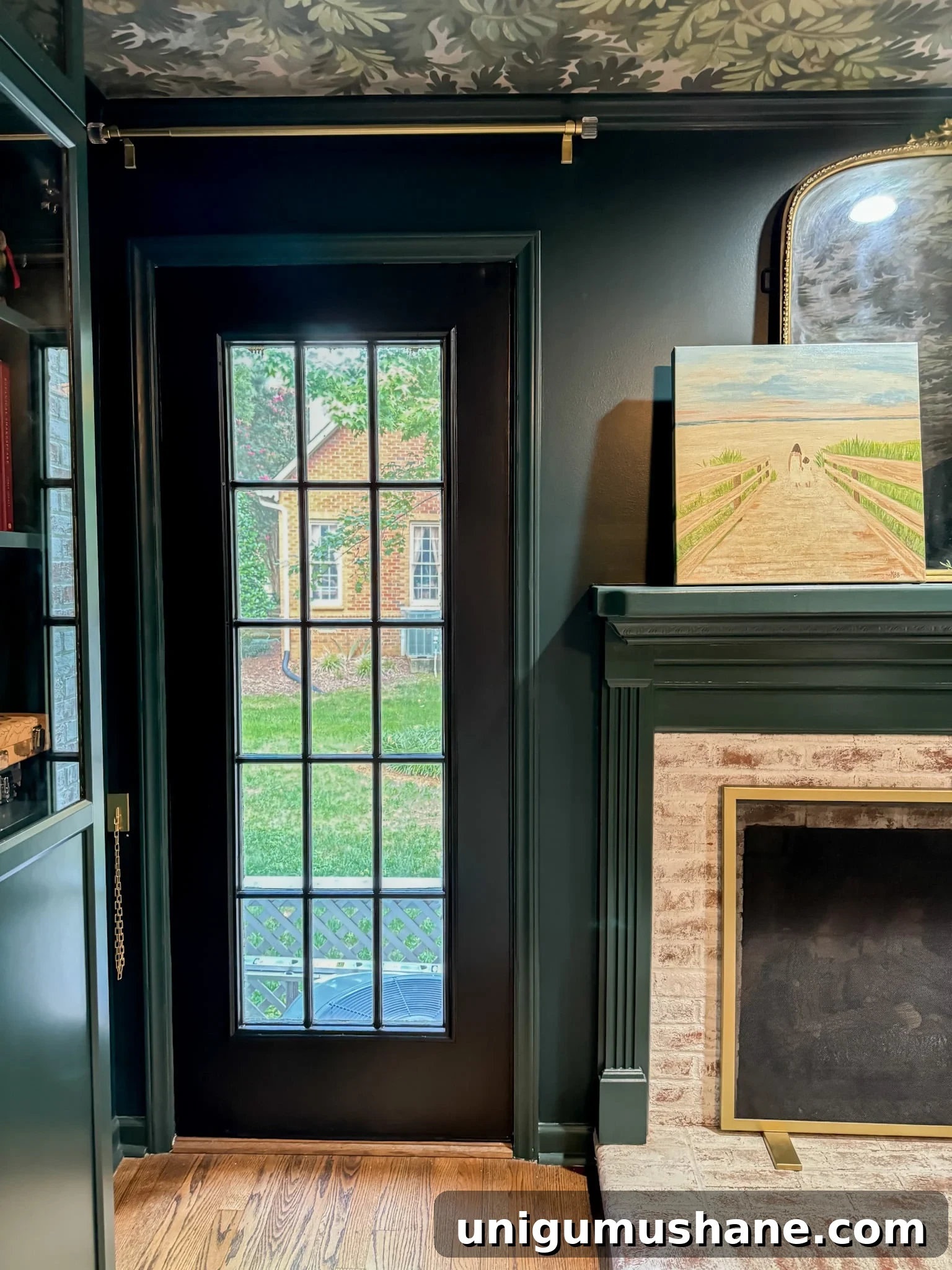
What Height to Put Curtain Holdbacks?
When hanging a pair of curtain panels, I usually extend the rod about 12 inches beyond each side of the trim. For single-panel pull-backs, we reduced the overhang to just 2–3 inches on each side to maintain symmetry and the vintage look.
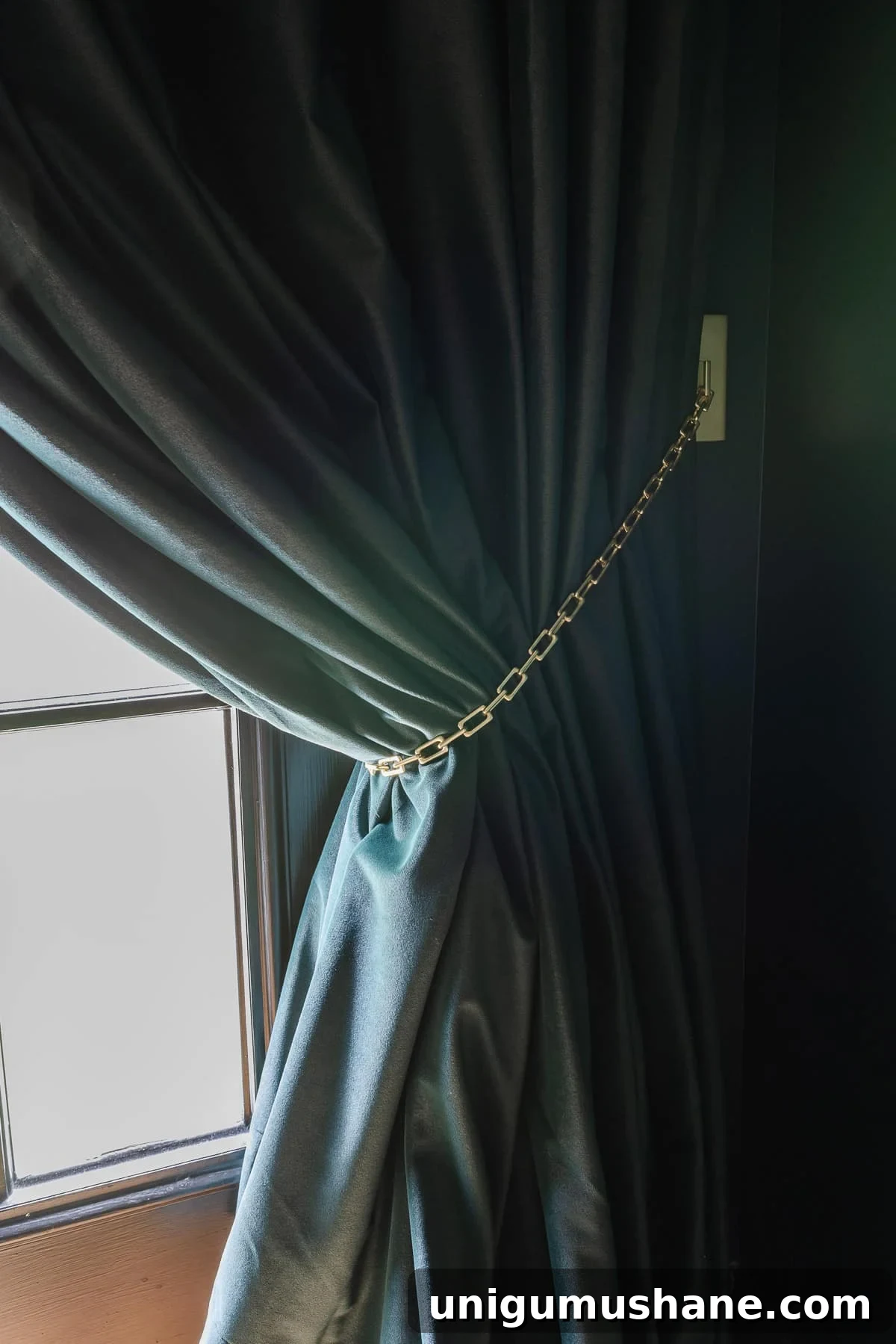
We attached a decorative gold chain and hook tieback about one-third of the way up from the bottom of the curtain. This height keeps the drape elegantly gathered when open but allows the panel to be easily released and closed for full blackout coverage when we want to watch a movie.
Related: How to Hang a Wall Tapestry Easily: 7 Easy Ways
What Is Curtain Training?
One feature I appreciate about our pleated velvet curtains is that they arrived pre-trained—shipped tied into an accordion shape—so the pleats fell into crisp, neat lines right out of the box. That saved us a few days of manually shaping the pleats.
Curtain training (also called drapery training or memory training) is the process of forming and setting folds and pleats so curtains hang evenly and look custom. It’s a simple technique that can elevate basic, inexpensive curtains from big-box stores into a polished, high-end-looking window treatment.
How to train your curtains: gently form the folds, secure them with temporary ties or clips, and allow the fabric to relax into place over a few days. For pleated or accordion-style curtains, pre-training by the manufacturer removes most of that work.
Related: DIY Light Fixture Made from a Repurposed Sunburst Mirror
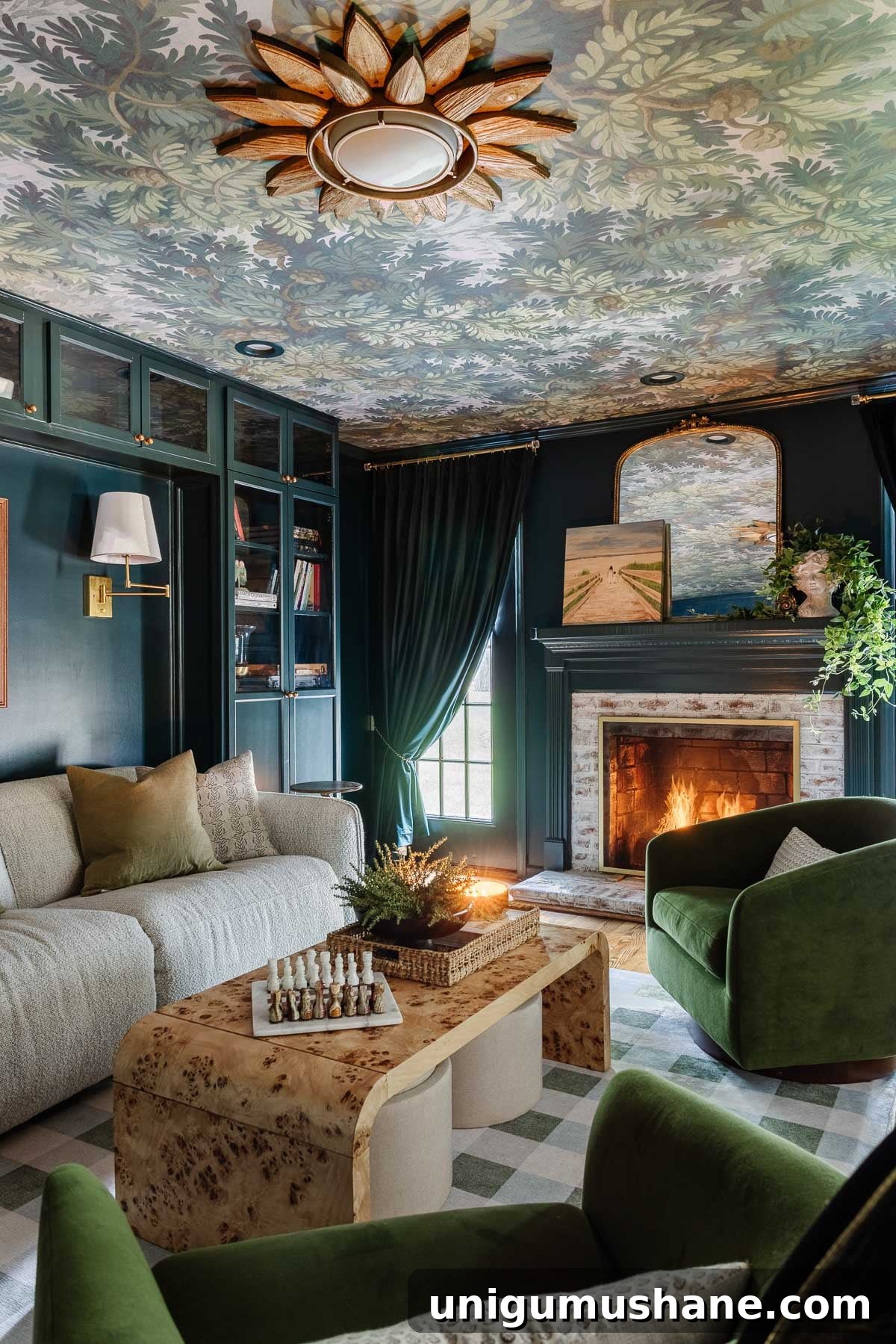
Now the room finally feels complete. The velvet panels add warmth and a layer of luxury, and the blackout liner delivers the true movie-theater darkness we were after. It’s cozy, dramatic, and exactly the vintage theater vibe we wanted.
Normally, I’m not a fan of pulled-back drapery, but for this space it’s the perfect exception. The look is classic, functional, and adds real character.
Pin it for later ⤵️

If you want more ideas, below are additional window treatment projects and tutorials to inspire your next update.
More Window Treatment Ideas
How to Make Easy No Sew DIY Cafe Curtains
Best Luxury for Less Amazon Curtains & Window Shades
Easy DIY No Sew Curtains With Trim: Step By Step Tutorial