
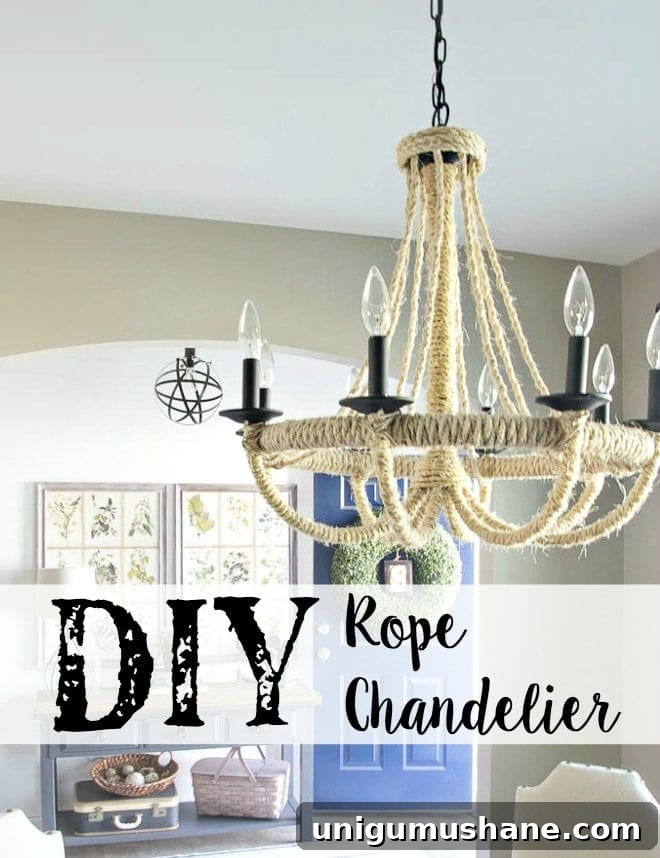
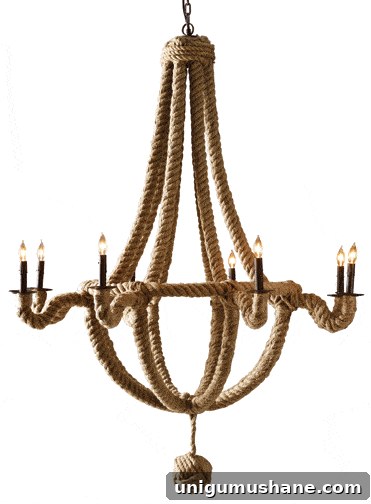
Hi friends! Have you ever seen a designer light fixture and thought, “I could recreate that for a fraction of the cost”? While hunting for dining room inspiration I had one of those moments and ended up making a rope-wrapped chandelier that captures the look of a high-end Restoration Hardware French Empire Rope Chandelier (a similar style retails for around $1,595) for roughly $30. It took patience and time, but the result brightened our space and added rich texture.
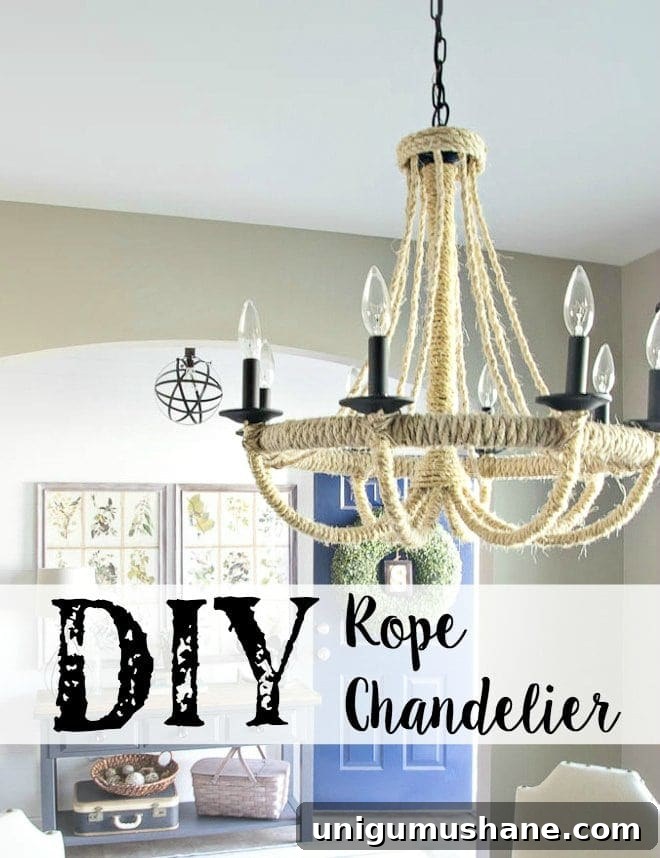
This was not a difficult build in terms of skill, but it was definitely a project that required time and focus. If you enjoy hands-on, budget-friendly home decor, this rope chandelier is a great way to get a custom, textured light fixture without spending a fortune.
I started with a simple black chandelier I found secondhand. It was perfectly fine as-is, but I wanted more texture and a handcrafted touch, so I wrapped the arms and added a rope hoop to create elegant swags.
Supplies used:
– Chandelier (a basic multi-arm fixture; I used a used black chandelier)
– 3/8″ sisal rope, 100 ft (one spool)
– 1/4″ sisal rope, 100 ft (one spool)
– Twine
– Sharp scissors
– Hot glue gun and extra glue sticks
– A long wooden spoon or popsicle stick (to hold rope ends while glue dries)
– Small hula hoop (used as the circular hoop for rope swags)
– Hand saw (to cut the hula hoop)
– Super glue
– A few strips of duct tape
– Plenty of patience
Tip: I bought the rope and the hula hoop for a total of about $18 at a discount store, which kept the total project cost very low.
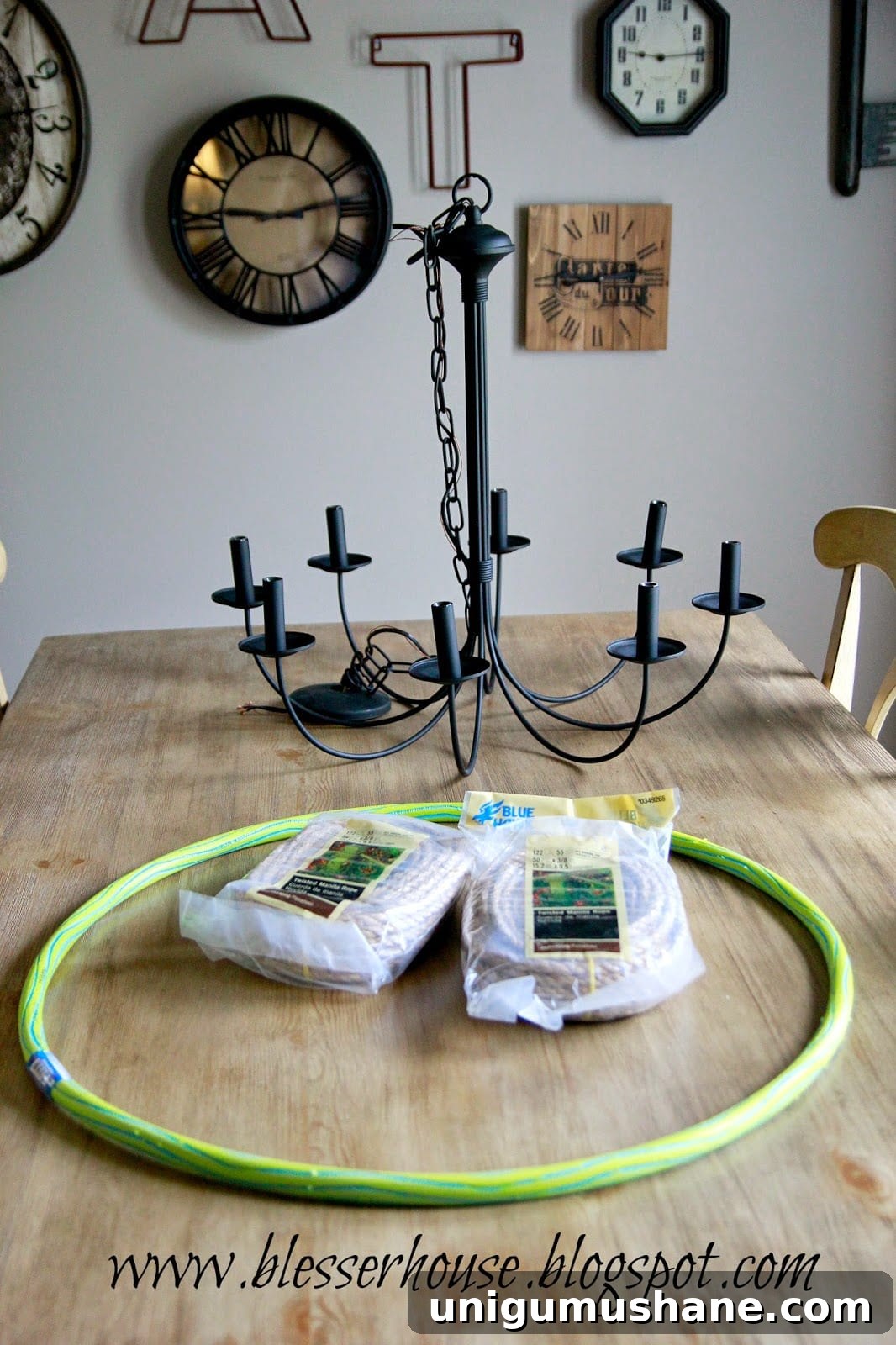
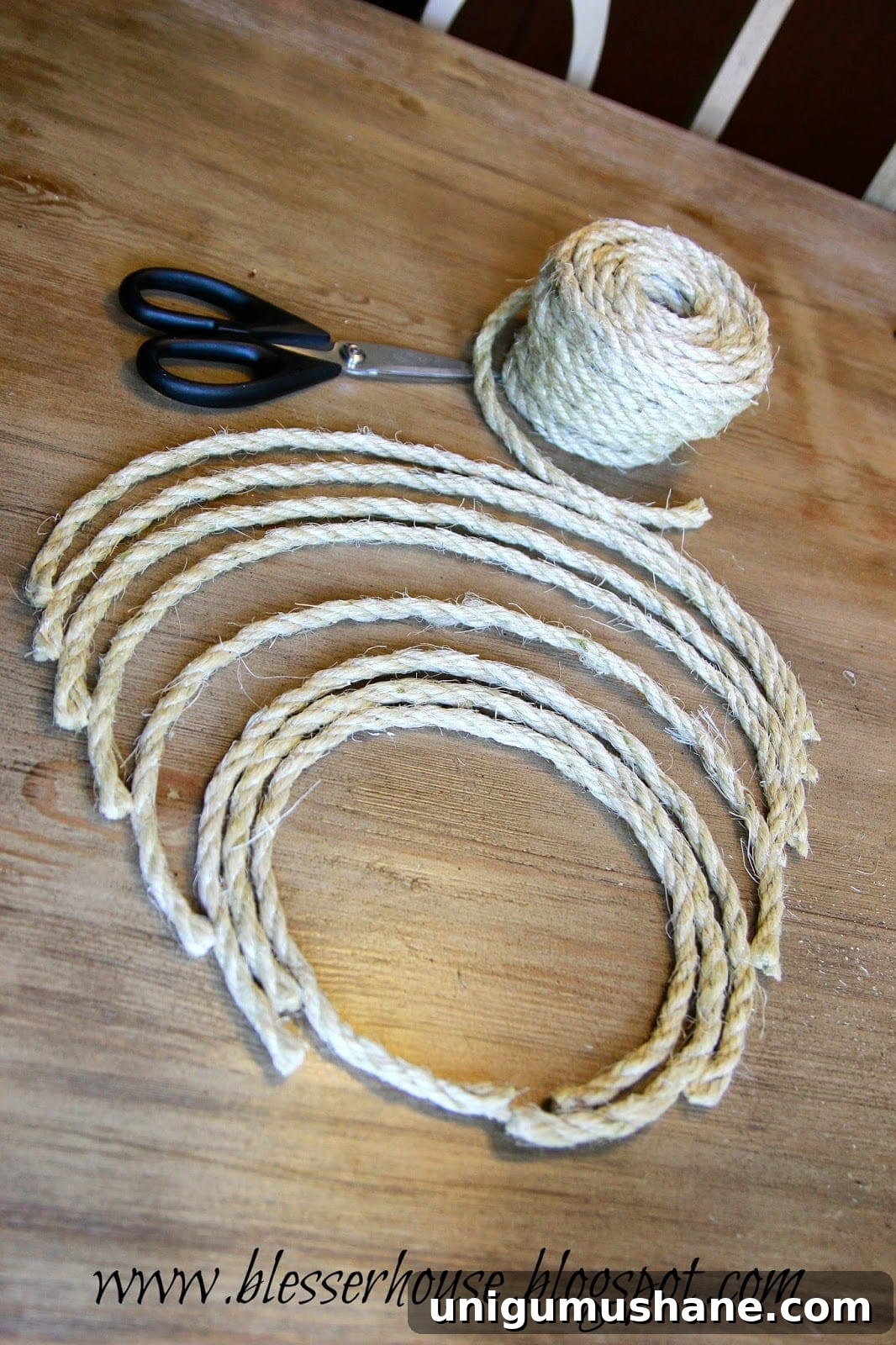
To begin, I cut the hula hoop with a hand saw and emptied the small beads inside. That step made the hoop easier to work with and gave a solid frame for wrapping rope.
A quick note on timing: if you have curious children, make sure the hoop isn’t a favorite toy first—mine caused a brief toddler meltdown until nap time saved the day.
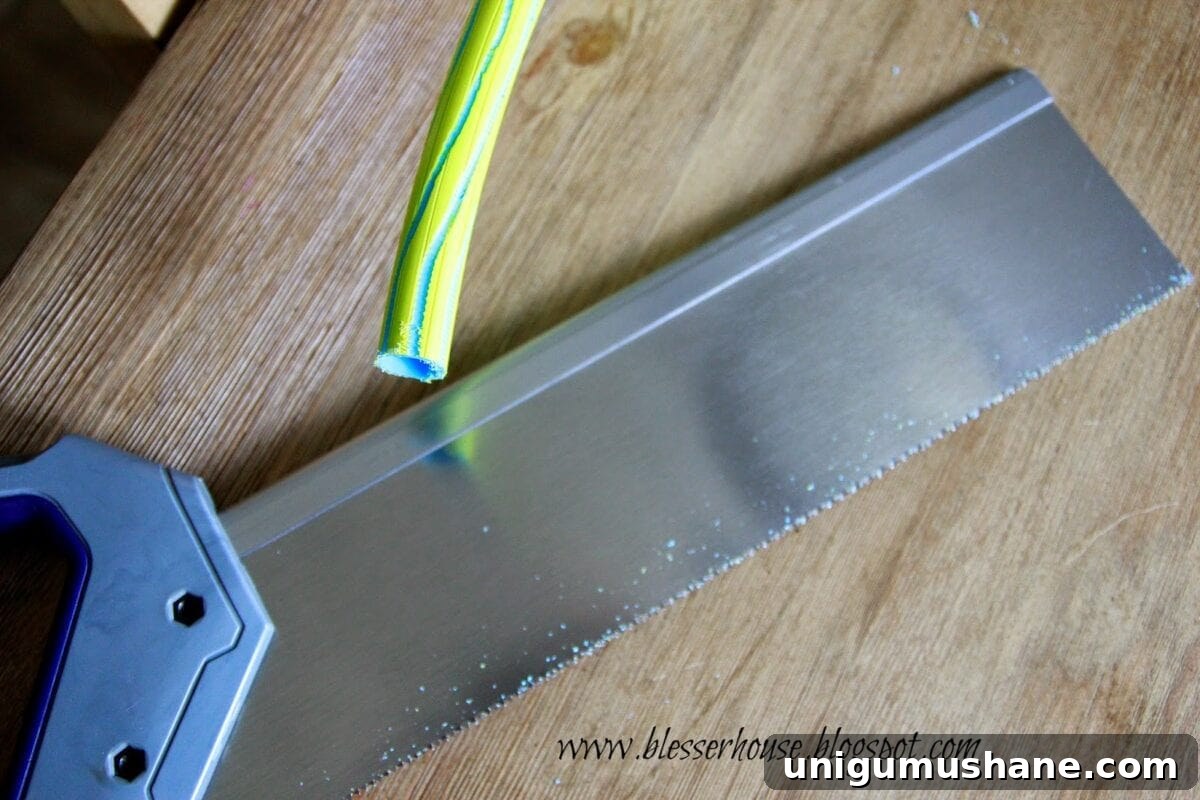
I checked the hoop size against the chandelier opening and made a second adjustment so the hoop would fit neatly inside the frame. You could wait until the arms are wrapped to finalize this measurement, but I wanted to visualize the finished look first.
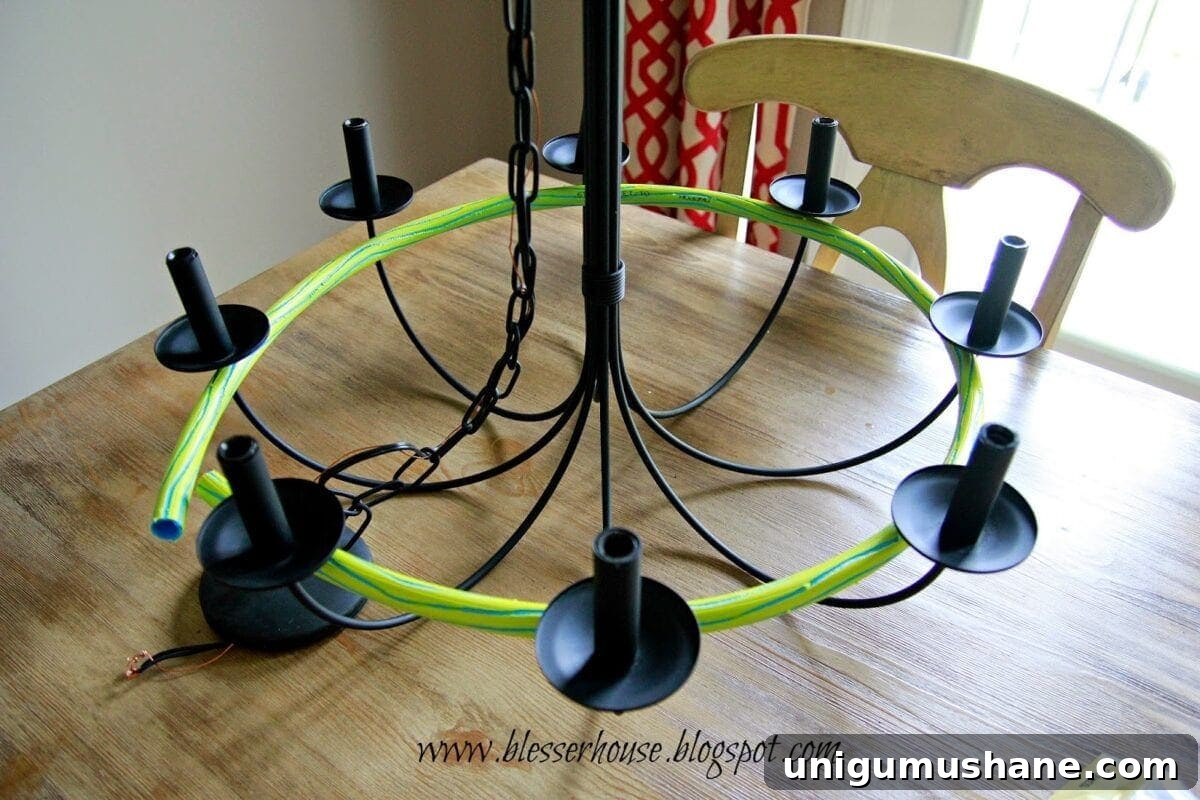
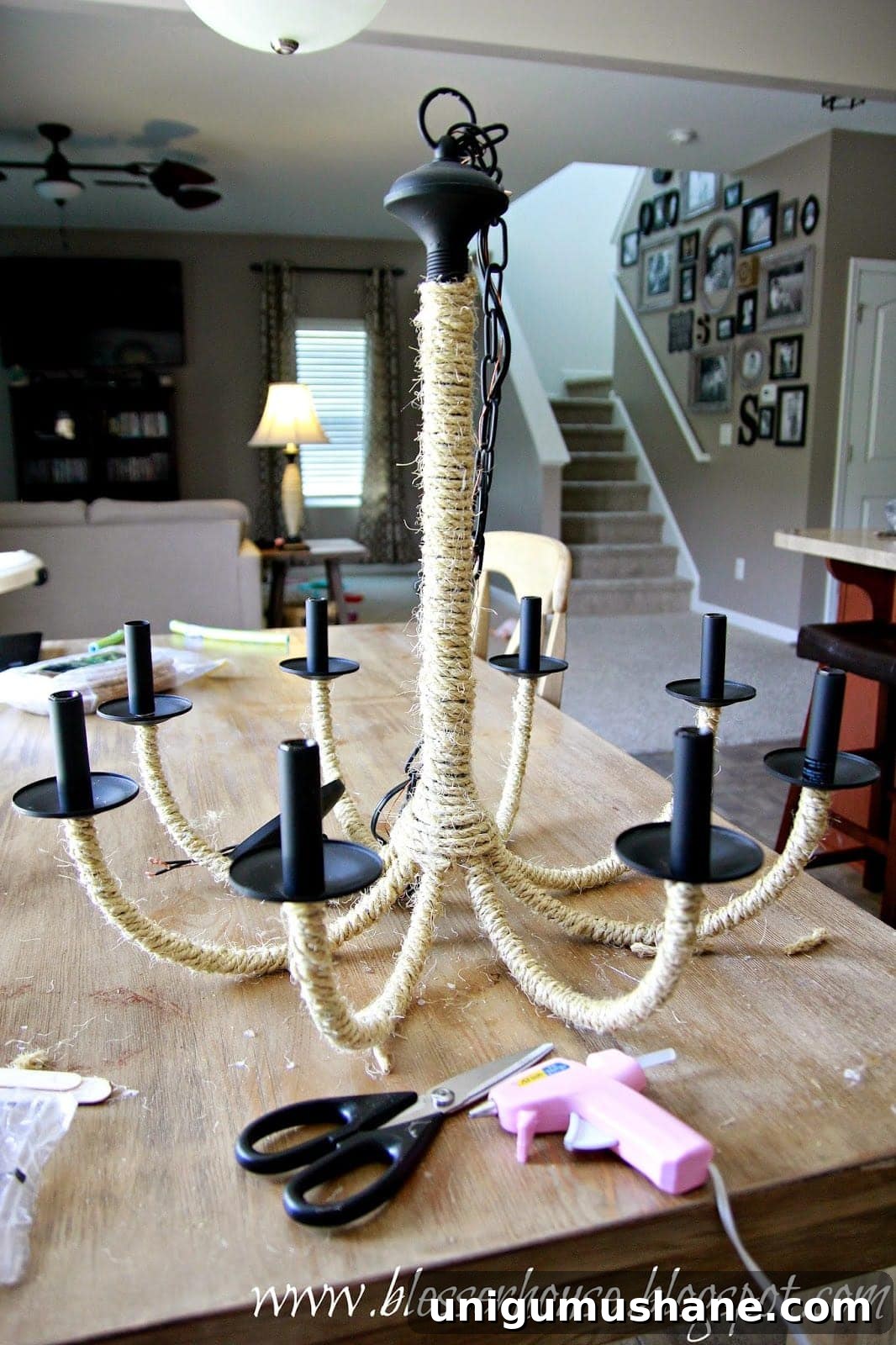
Next I removed the hoop and flipped the chandelier upside down to wrap the arms. I used the 1/4″ rope and hot glue to bind the rope along each arm, using a wooden spoon to hold the starting end so I wouldn’t burn my fingers. Work slowly at the beginning and use plenty of glue so the rope stays secure.
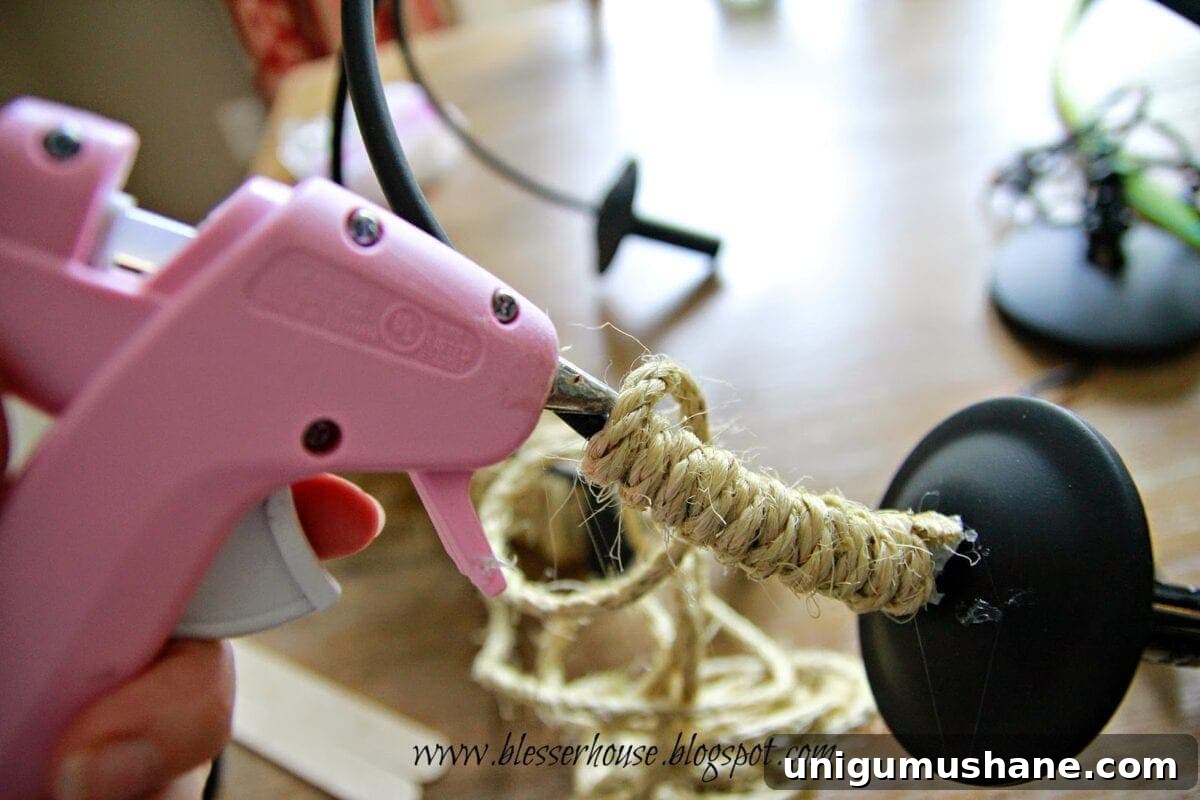
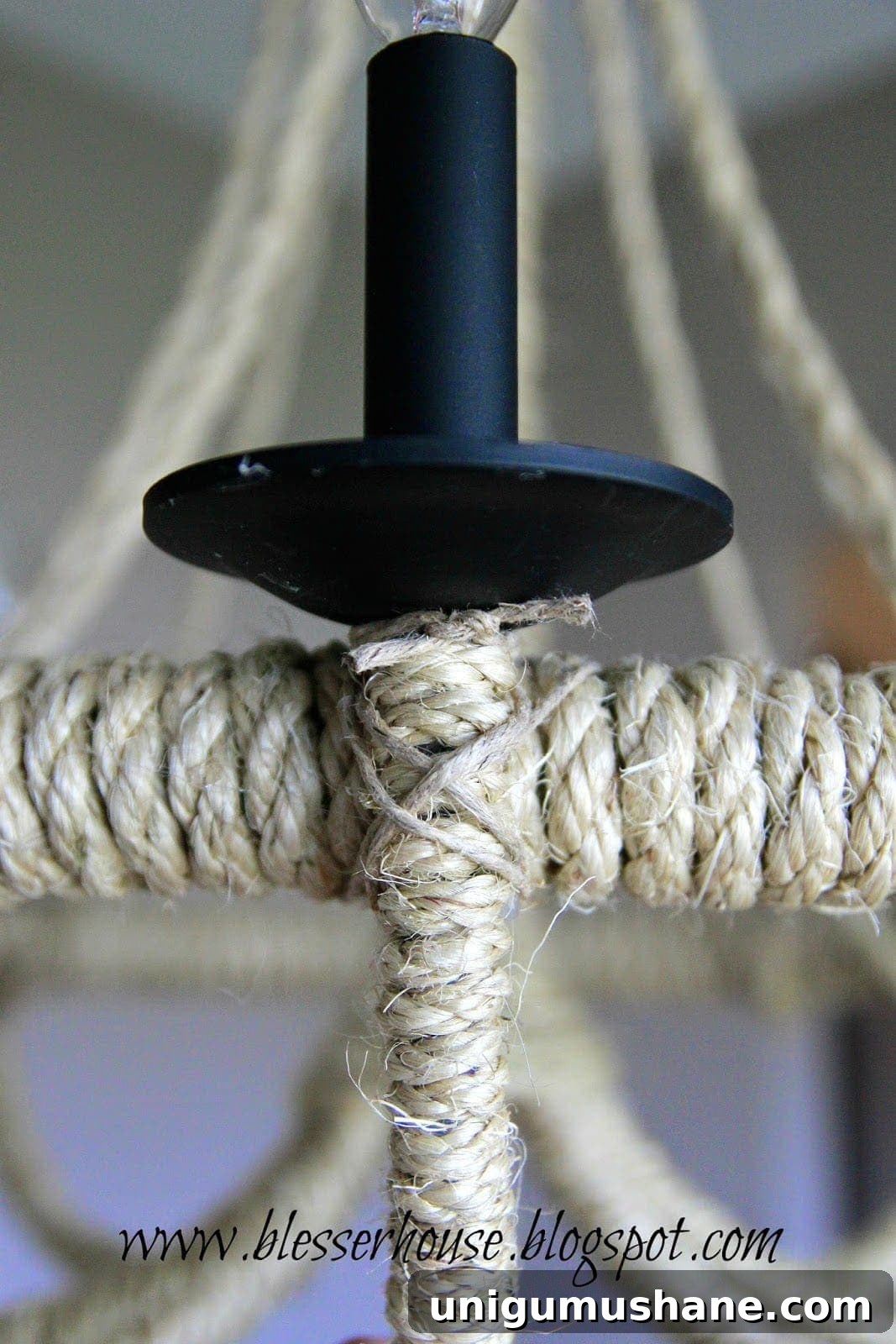
Wrapping all the arms took about two hours. For the central area where the arms meet, I tucked the rope ends under additional wraps of 1/4″ rope and continued upward to create a seamless appearance. Hot glue strands can be annoying—clean them up as you go for a neater finish.
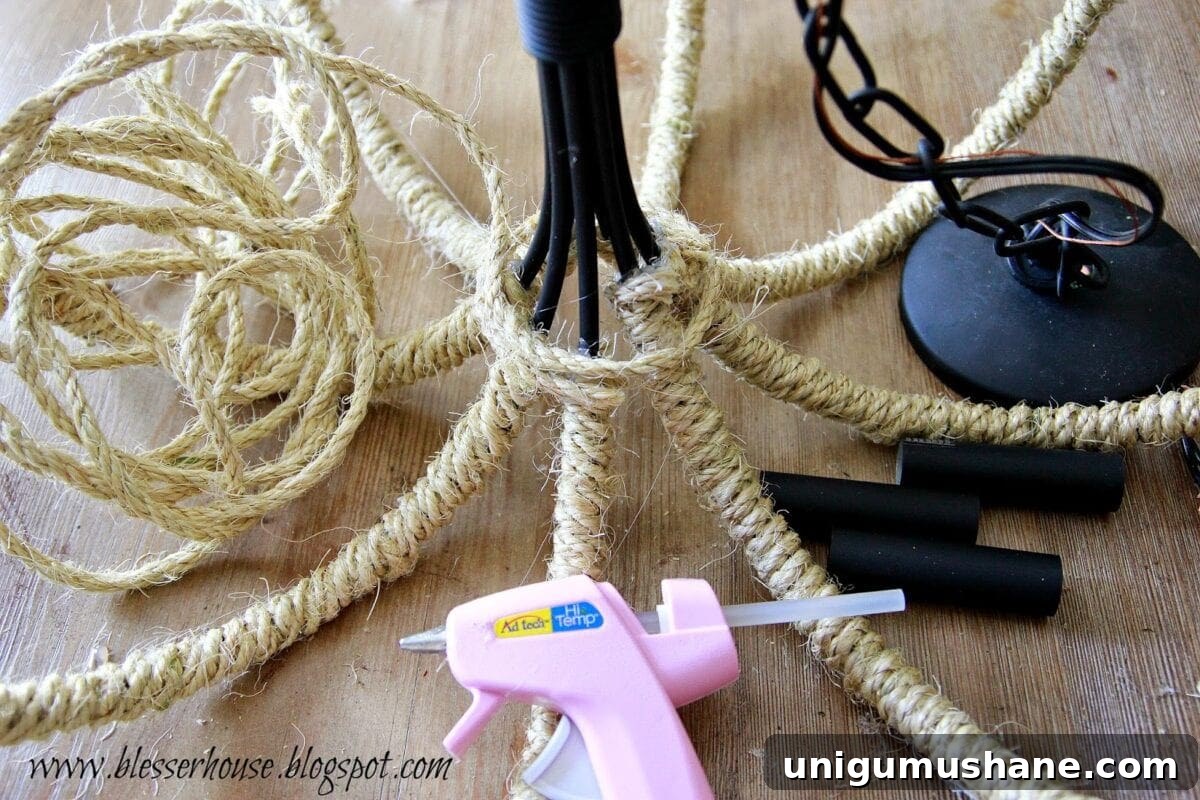
At this point it already looked great, but I continued to add the hoop and rope swags to achieve the full French-Empire-inspired effect.
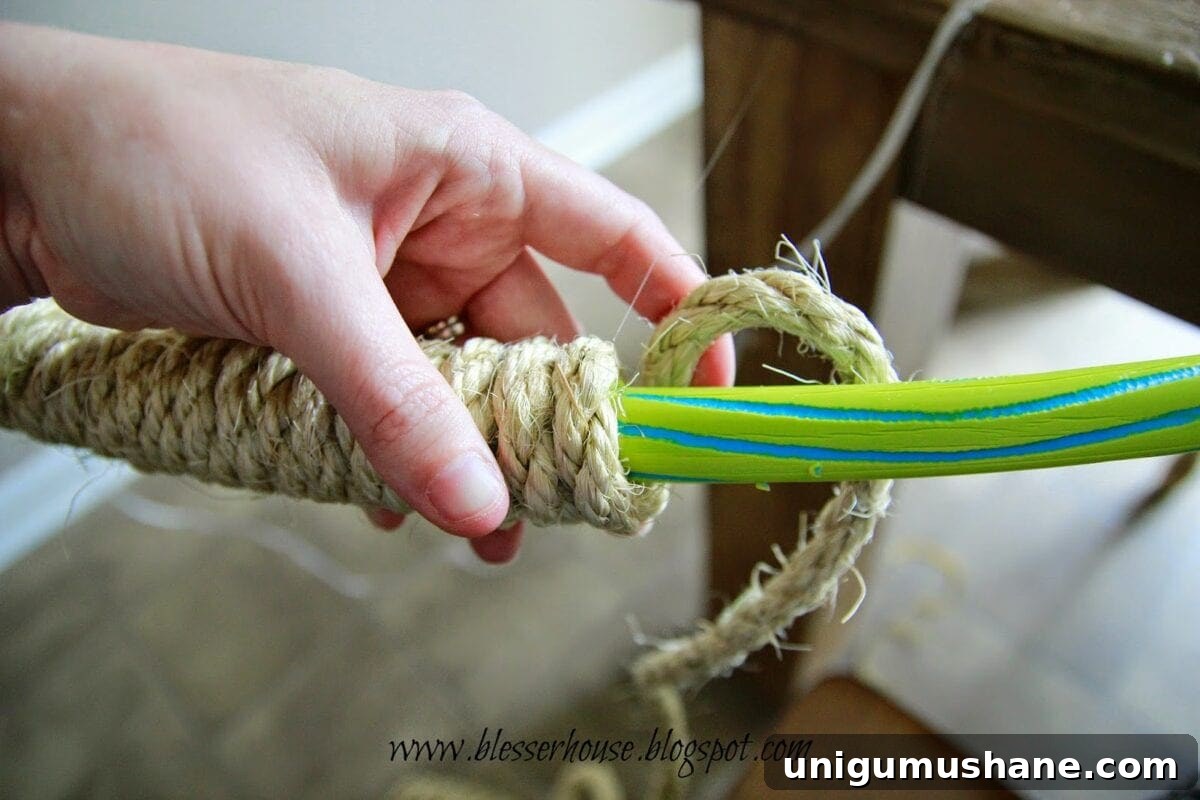
I wrapped the hula hoop in 3/8″ rope because I was running low on the 1/4″ rope. You can use 1/4″ if you have enough—both widths create lovely texture but 3/8″ gives a chunkier, more substantial look.
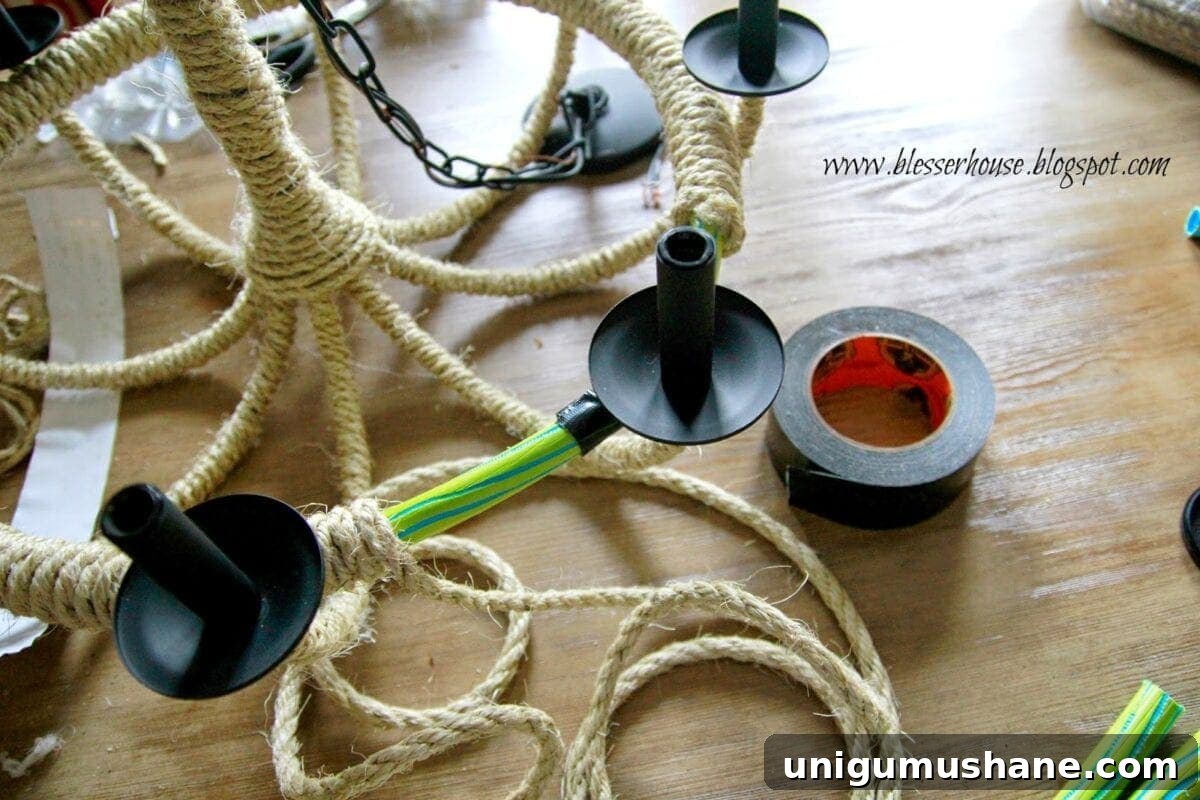
When I neared the end of wrapping the hoop, I positioned it inside the chandelier, joined the hoop ends with super glue, and reinforced the seam with duct tape to hold everything in place while the adhesive cured.
After finishing the hoop, I saved the final steps for installing the rope swags and the finishing touches.
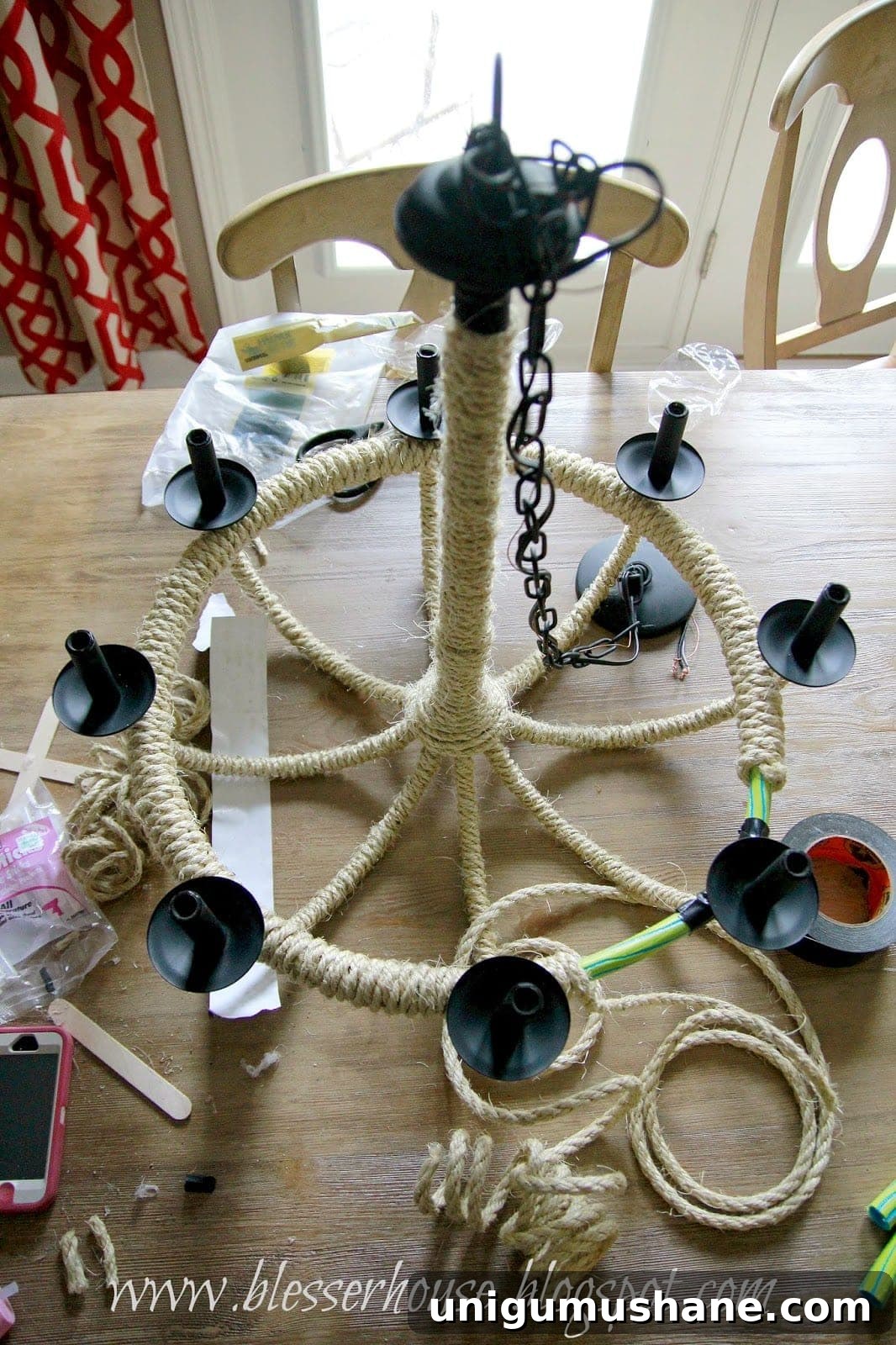
For each rope swag I measured the length from the top center of the chandelier to the base of one light and cut eight matching lengths. I hot-glued one end of each rope to the top center of the chandelier, then attached the other end under the hoop beneath each light. Press the connections with a wooden spoon while the glue cools so the joins are tight.
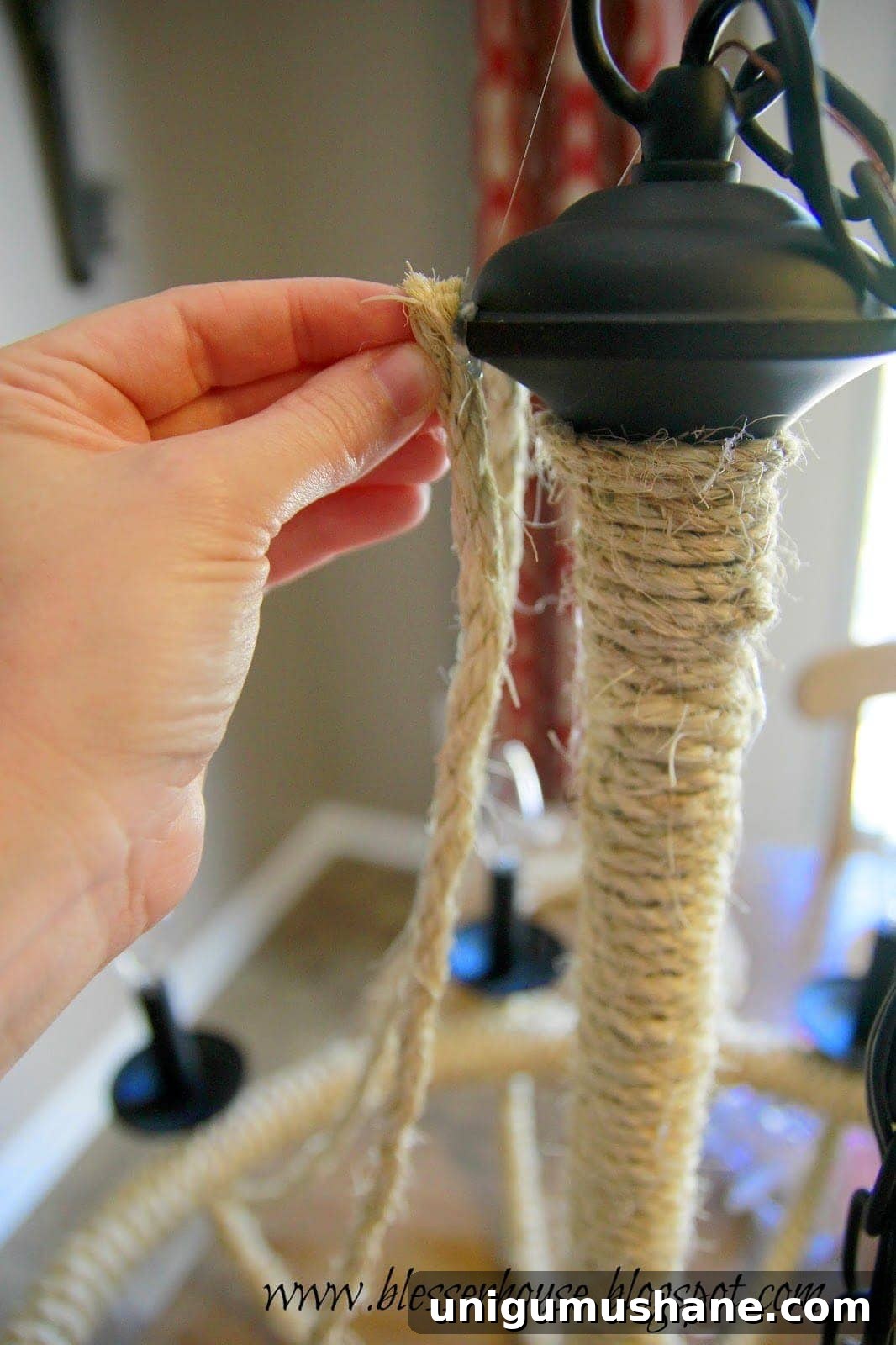
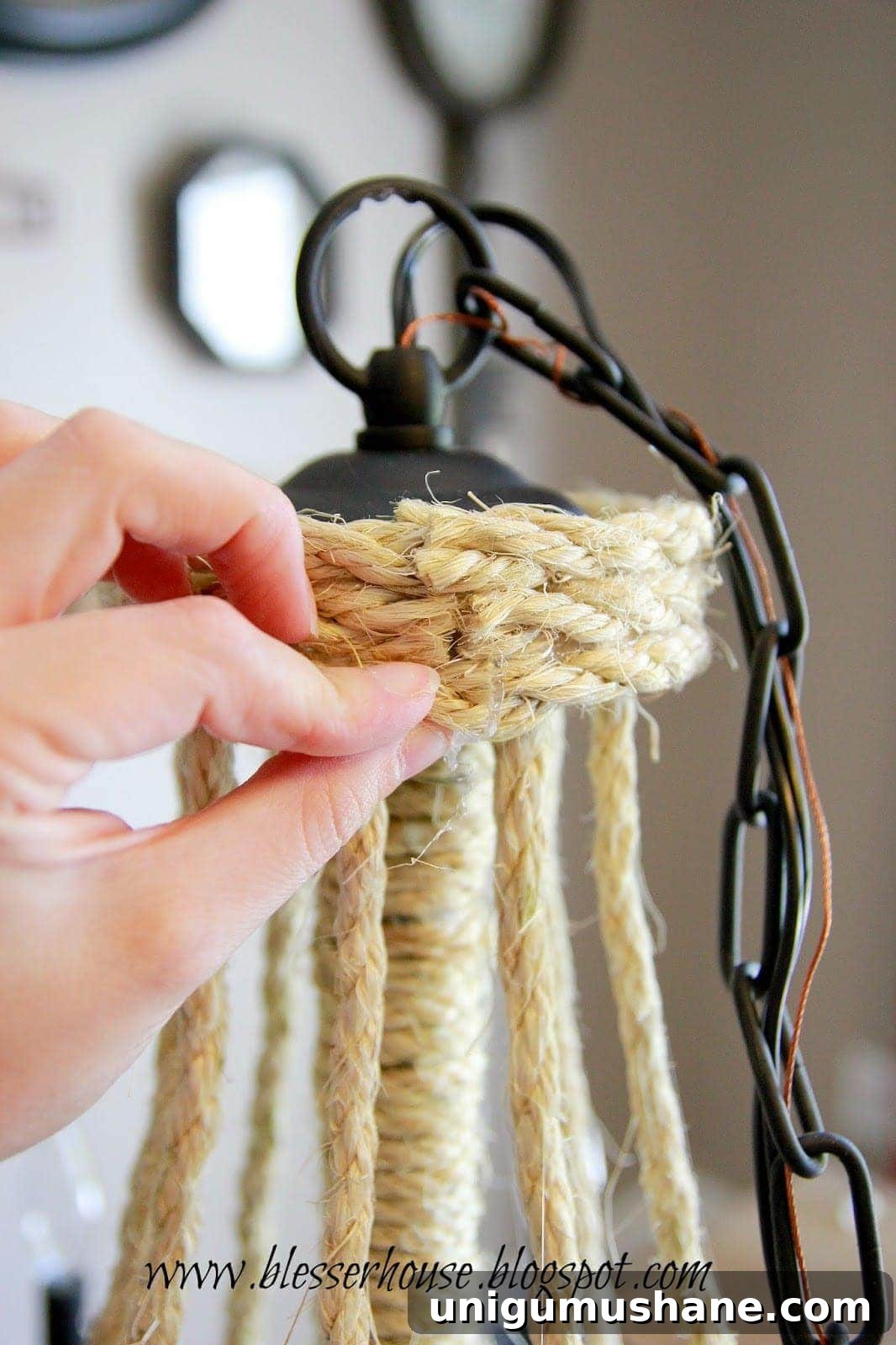
When all eight swag pieces were attached, I wrapped three rope lengths around the top center to conceal any rough ends and give the top a polished finish. Under each light I secured the rope ends to the hoop with a short length of twine, knotted tightly for extra support.
Finally, I rehung the chandelier. The rope details immediately warmed and brightened the dining room. It now complements the foyer as well and provides a custom, coastal-inspired look without a big investment.
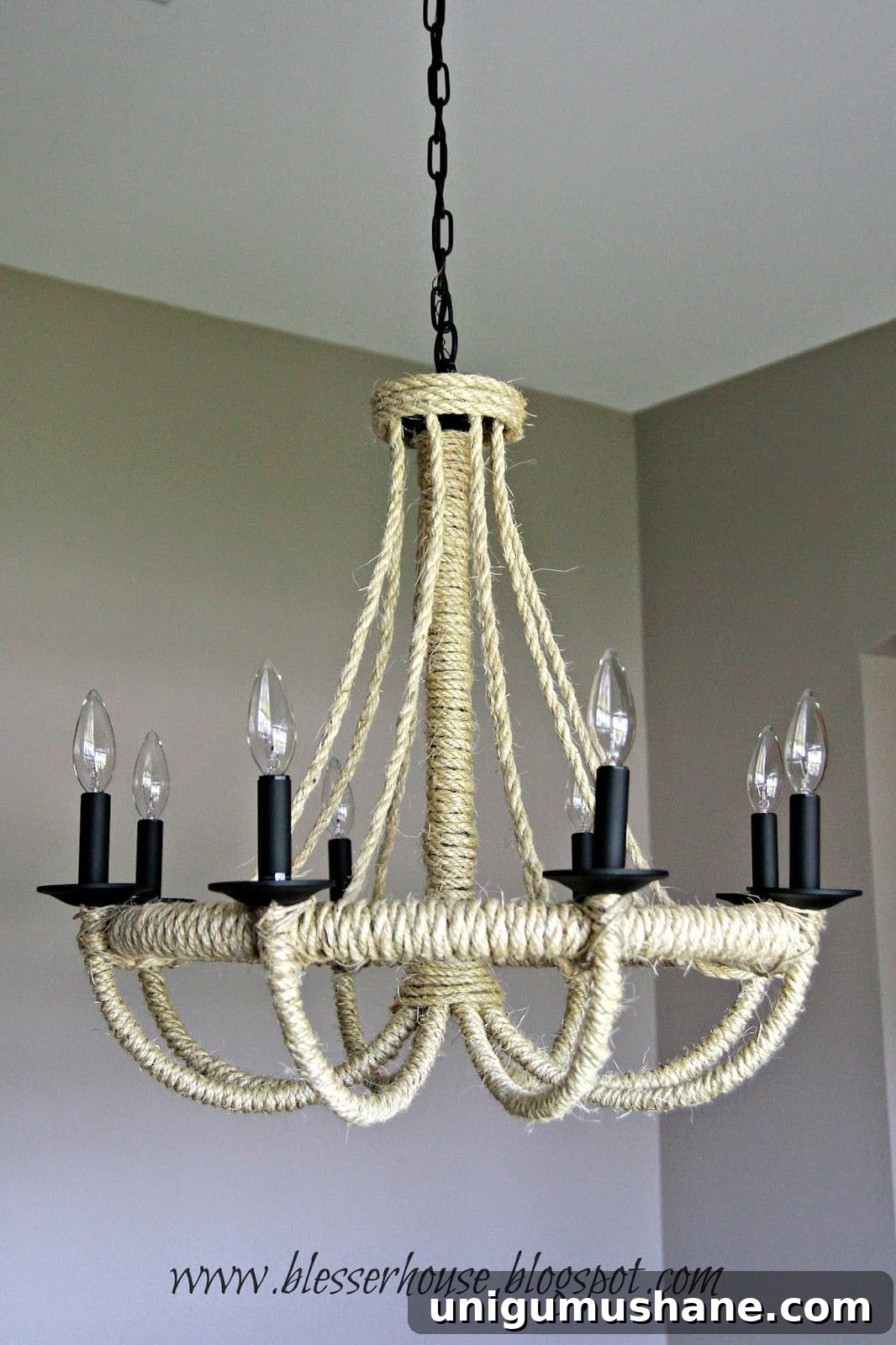
If you try this DIY rope chandelier, here are a few quick tips: take your time wrapping the arms for a neat finish, use a wooden tool to hold hot ends, test-fit the hoop before finishing, and reinforce glued joins with tape until they cure. Small details make a big difference in the final look.
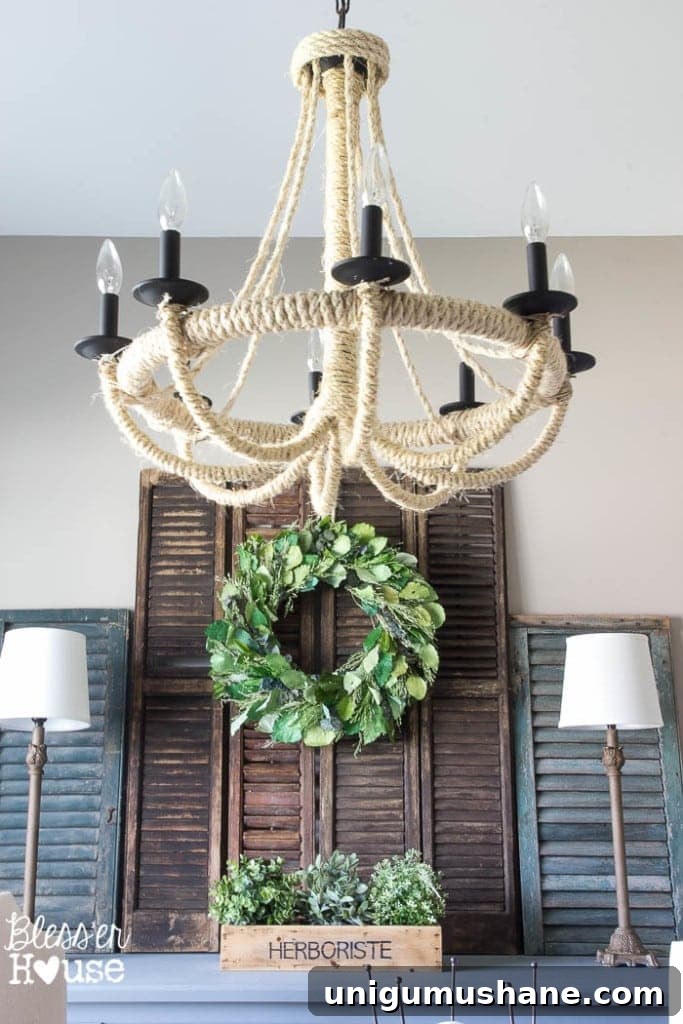
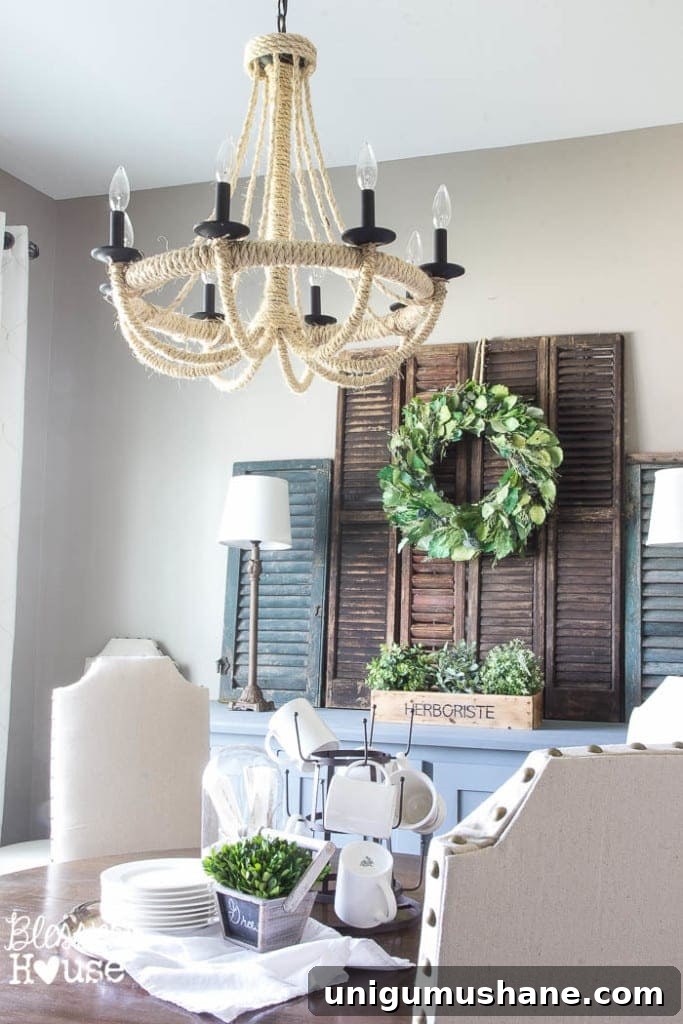
This project opened my imagination to many other rope decor ideas—wrapped frames, rope mirrors, or simple textured accents. Rope is an inexpensive material that adds warmth and dimension to any room.