
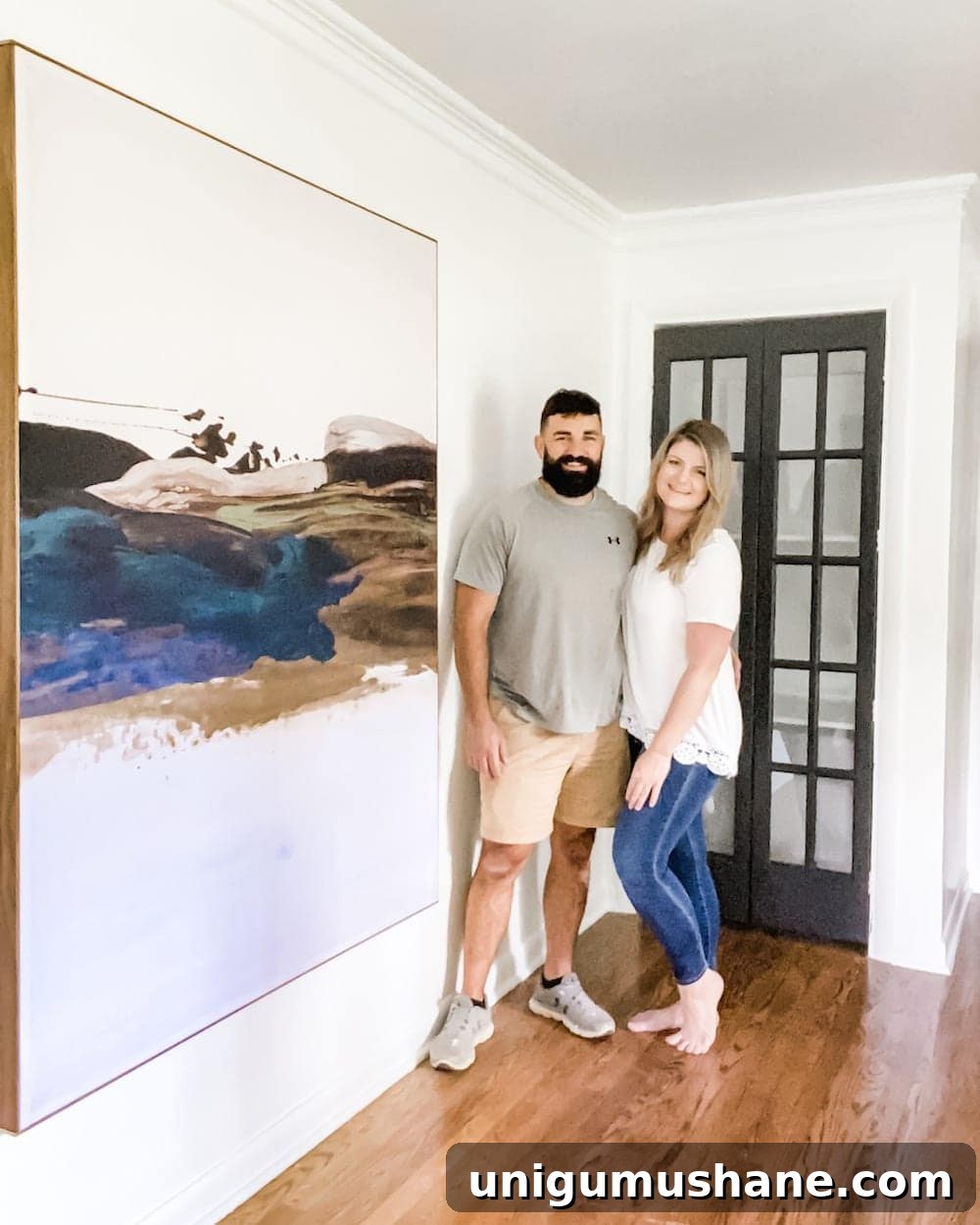
How to create large-scale wall art from a shower curtain for under $100 — plus a curated selection of beautiful shower curtains ideal for this project.
This DIY became one of our favorite art projects yet — and we’ve made a lot. It’s an easy, affordable way to produce striking oversized art that looks custom and high-end.
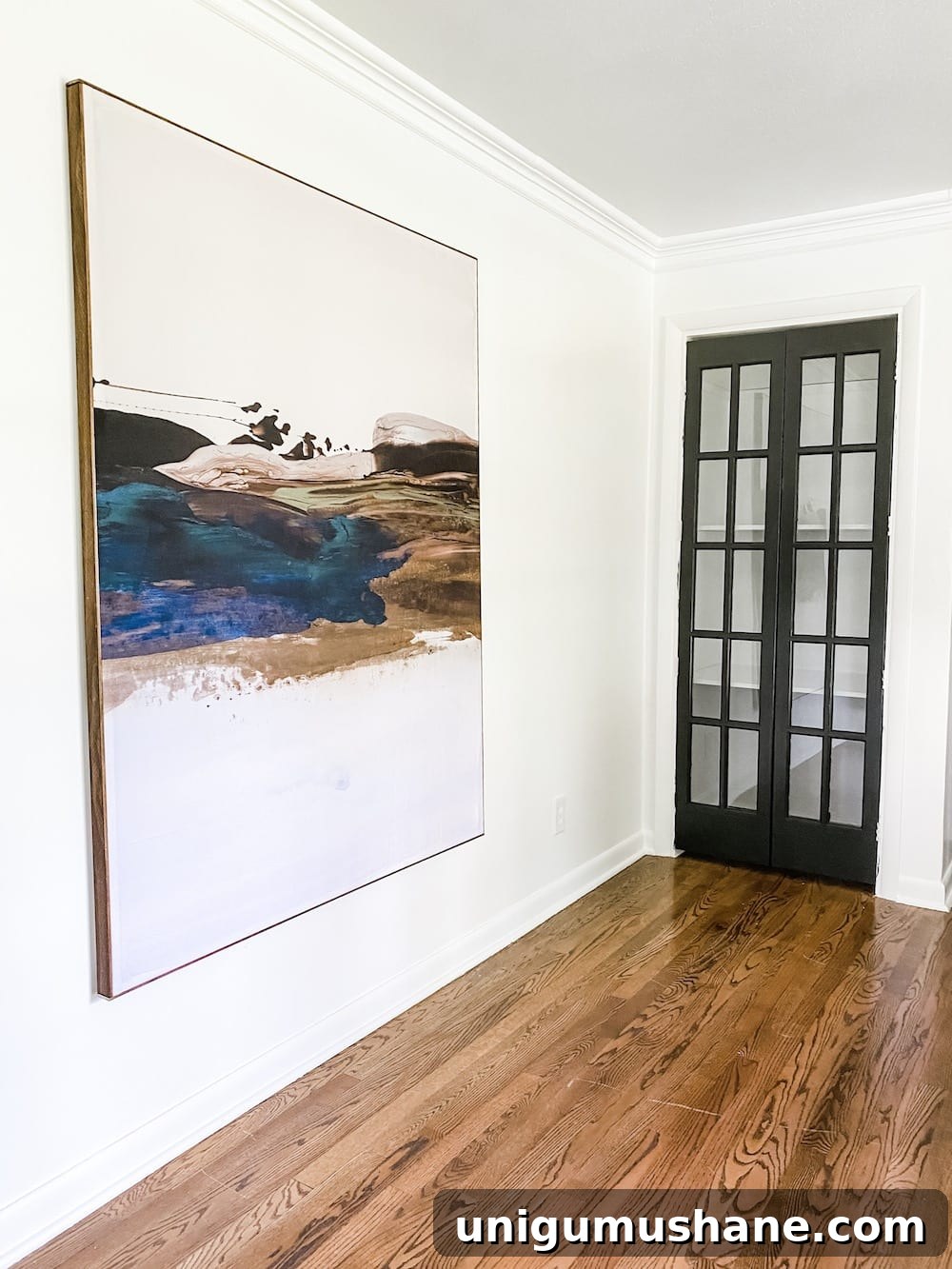
DIY Large-Scale Wall Art from a Shower Curtain
If you’ve ever printed smaller pieces or grabbed cheap engineer prints, you know those options are great but limited in size. A standard home printer or even many print shops won’t easily give you a true oversized piece. We solved that by turning a decorative shower curtain into a stretched canvas — and the result is a bold 5′ x 4′ piece that cost under $60 to build, thanks to a sale curtain we found for $40. Had we bought something like this ready-made, it would have cost hundreds.
This concept has been shared by other creative DIYers — credit to House of Jade Interiors and Angela Rose Home for popularizing the idea — but we refined the steps and tools to make it quick and budget-friendly. You can use a patterned shower curtain or, if you prefer to create your own imagery, a plain canvas drop cloth to paint directly onto.
(A few affiliate links are included below for convenience; see full disclosure on the original blog.)
Supplies
- 5 pieces of 1″ x 2″ x 8′ lumber
- 4 lattice strips (for the frame trim)
- Decorative shower curtain in the design you want
- Power drill with bits
- Hand saw or miter saw
- Staple gun and staples
- Hammer or brad nail gun
- Brad nails and a handful of wood screws (about 6)
- Wood stain (we used Minwax Special Walnut)
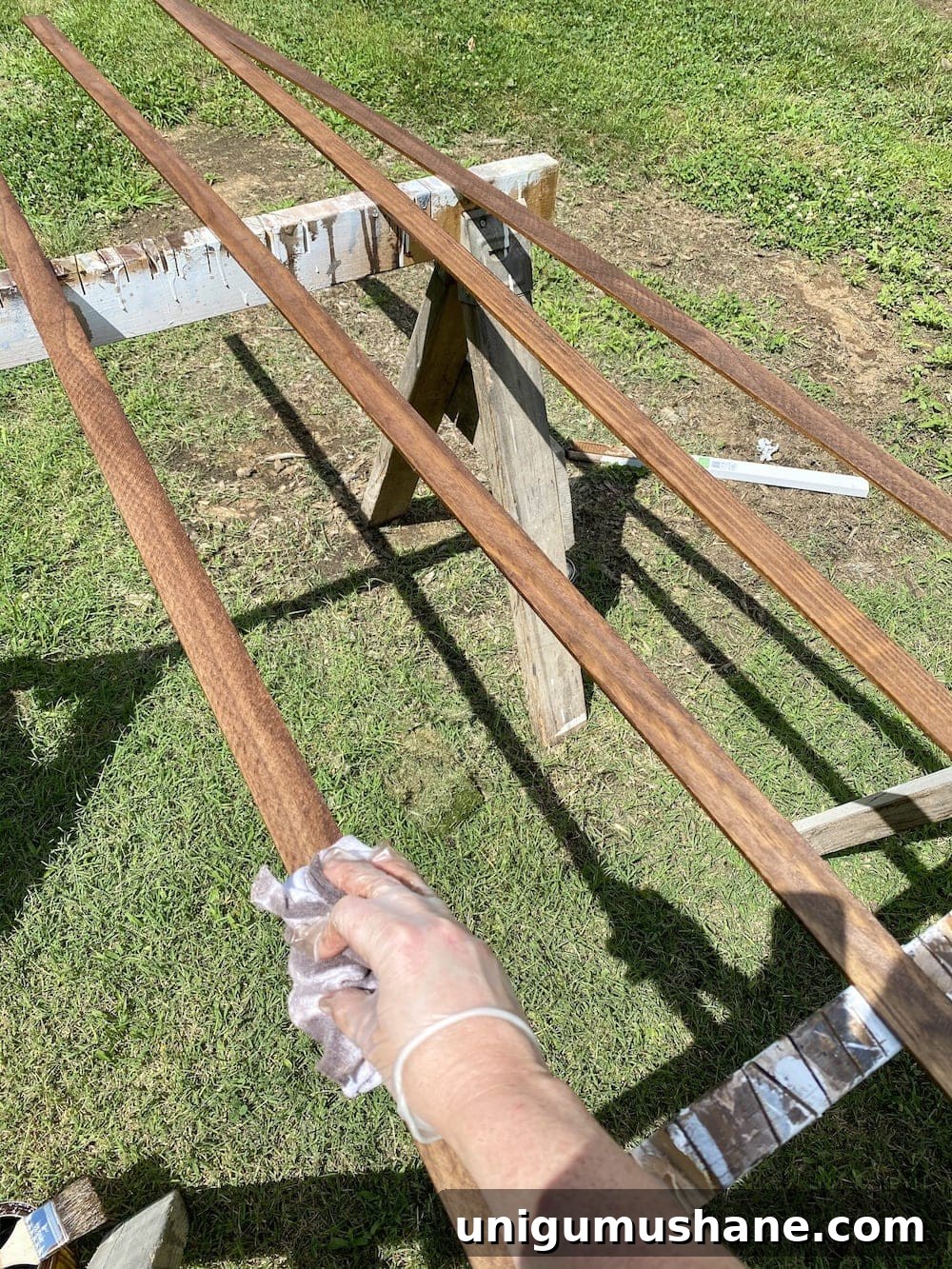
Step 1 – Stain the Lattice Strips
Stain the lattice strips first and set them aside to dry while you build the frame. This saves time and keeps your workspace cleaner.
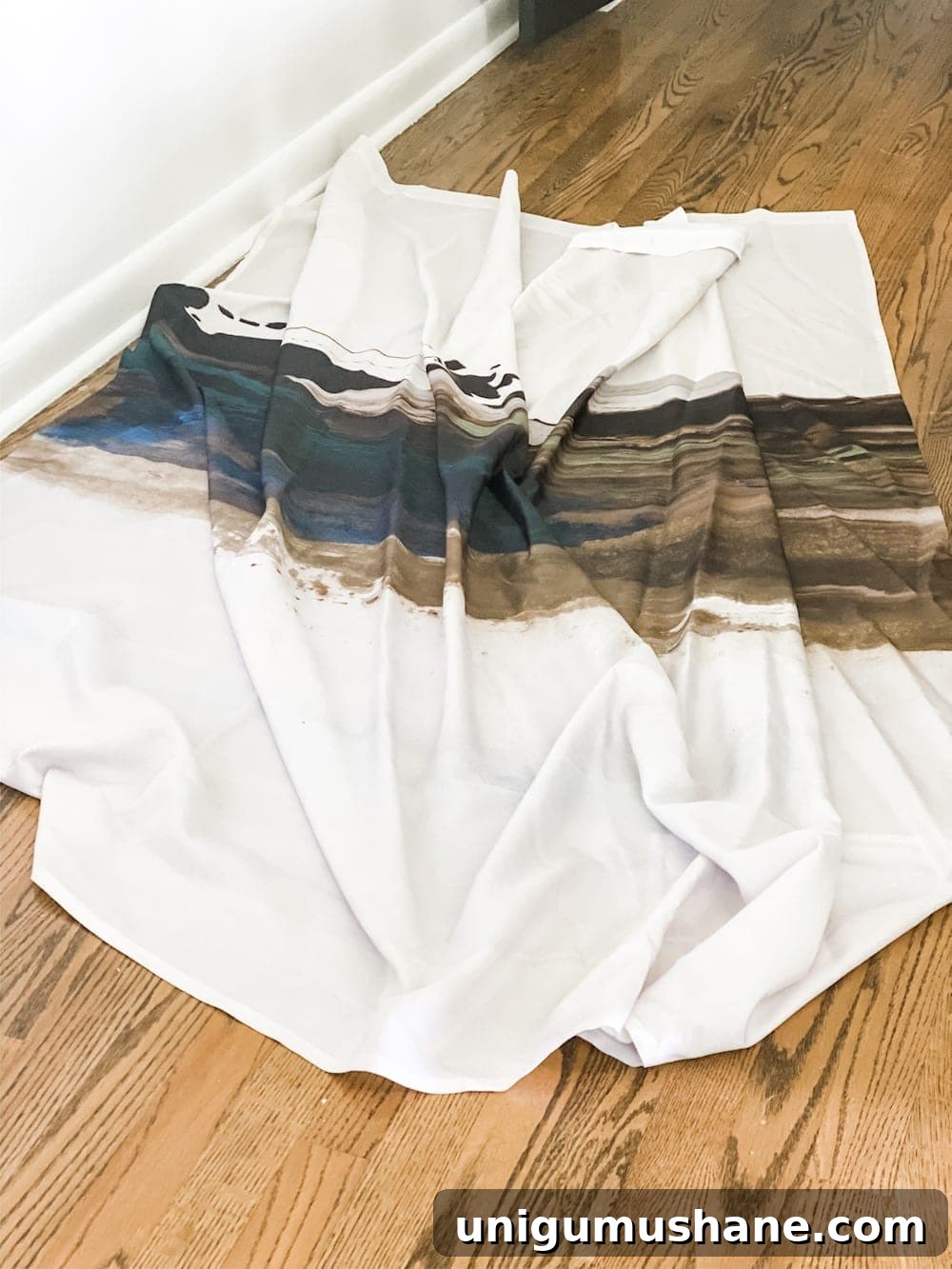
Step 2 – Measure and Trim the Shower Curtain
Decide the final artwork dimensions and allow 3–4 inches of extra fabric around the edges to wrap around the frame. For our piece, we trimmed the curtain to create a finished art size of 5′ 8″ × 4′. Mark and trim carefully so the design lands where you want it on the finished piece.
Step 3 – Cut the 1×2 Boards
Measure and cut the 1″ x 2″ boards to form the frame perimeter and one or two internal braces for support. You’ll need four boards for the outer rectangle and at least one or two cross supports depending on the size.
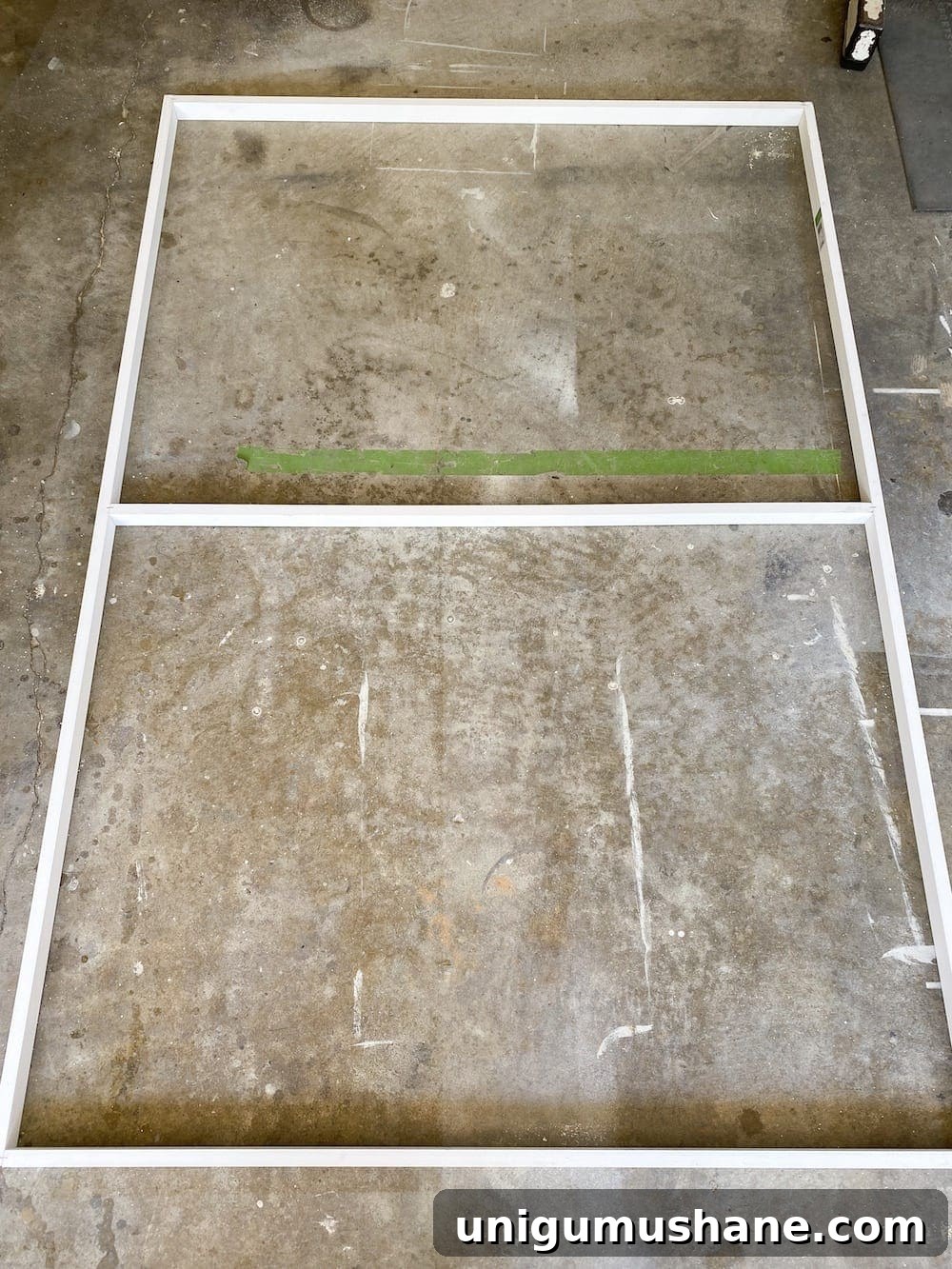
Step 4 – Assemble the Frame
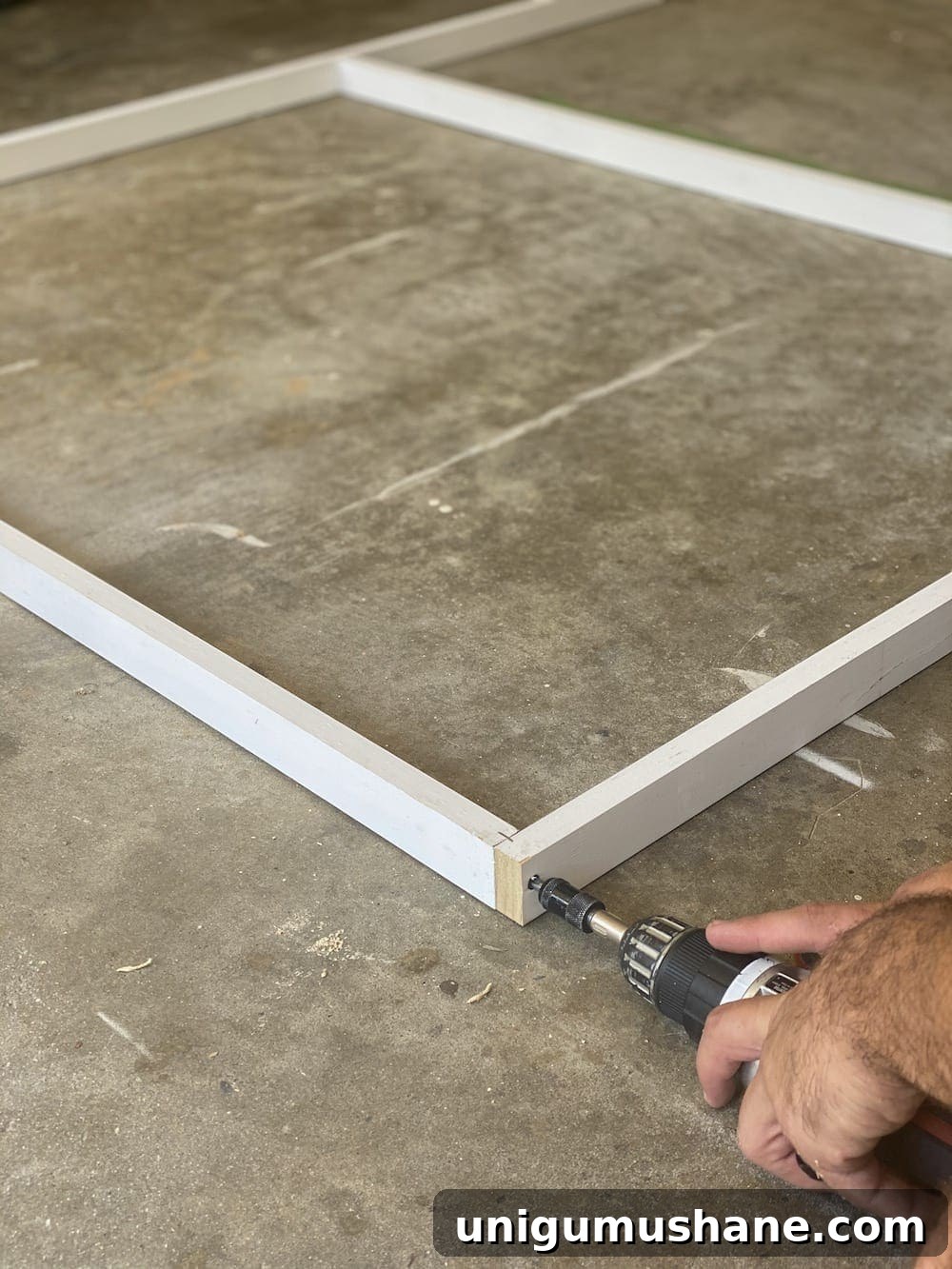
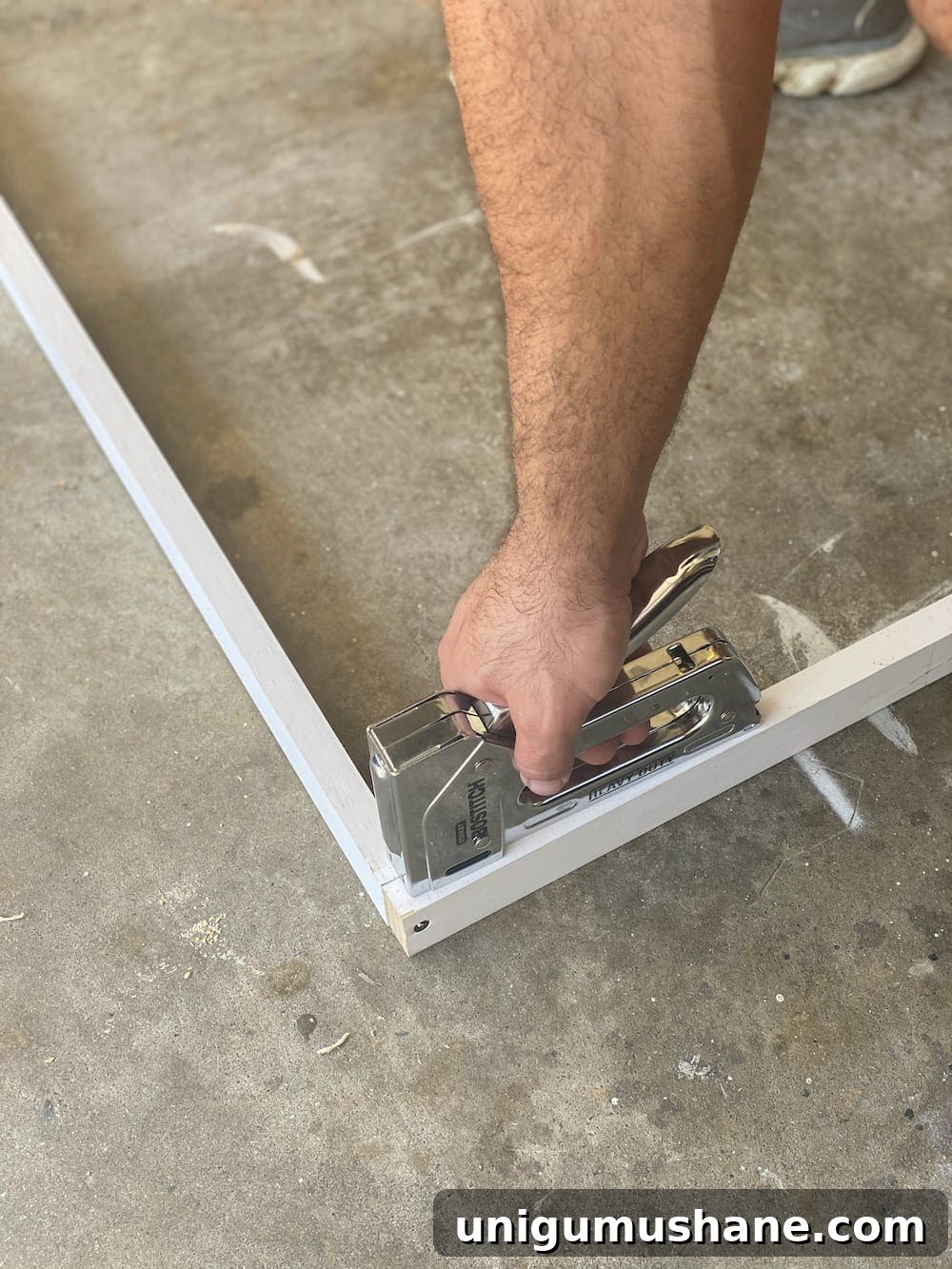
Create pilot holes at the corners, then fasten the frame with wood screws. For extra strength and to help squares stay flush, add staples along the seam where boards meet. Make sure the frame is square before final fastening.
Step 5 – Position the Shower Curtain
Lay the curtain face down on a clean surface, then place the assembled frame on top. Center the design and add a couple of temporary staples along the top edge to hold it in place while you work.
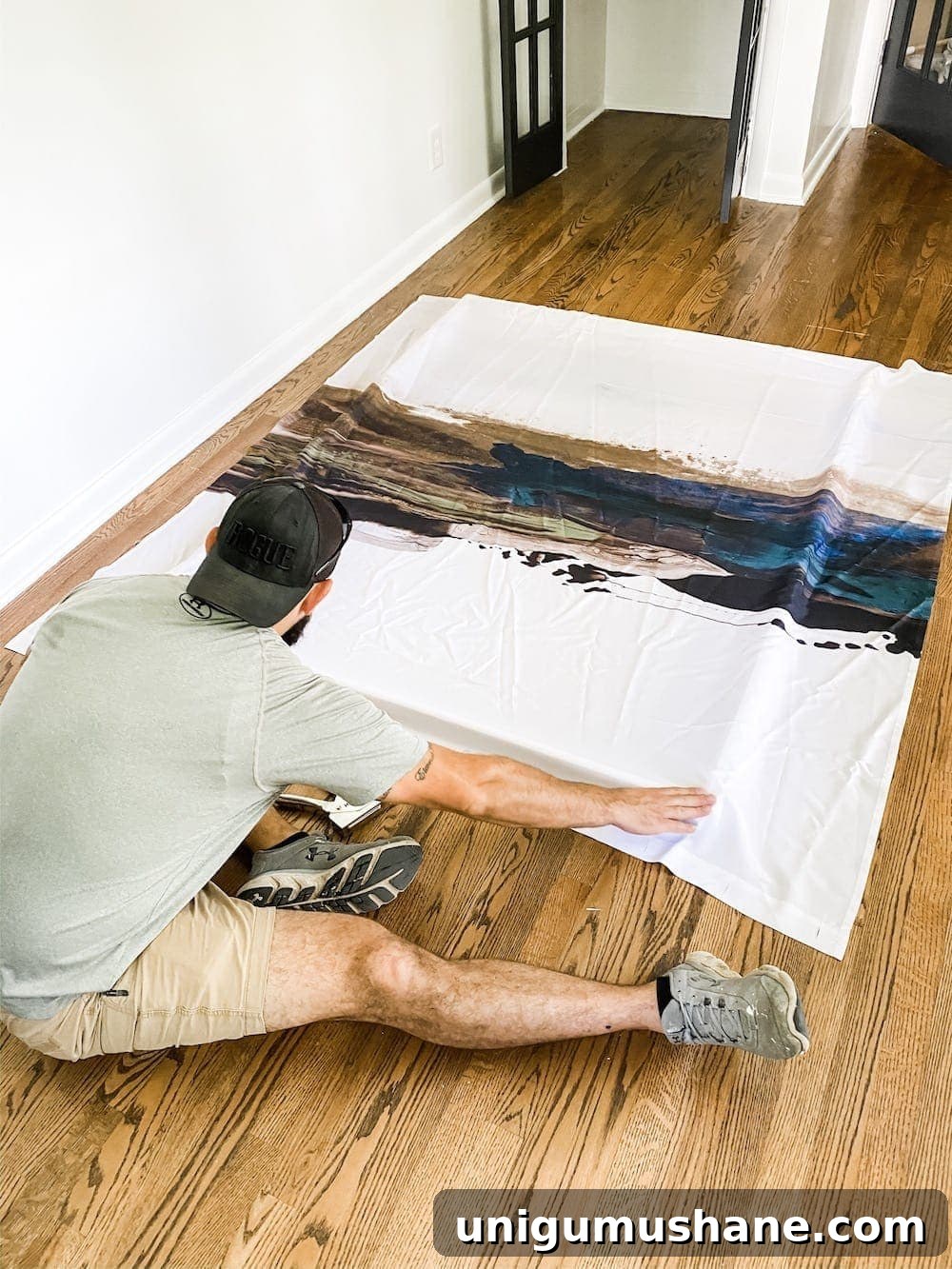
Step 6 – Flip and Prepare to Staple
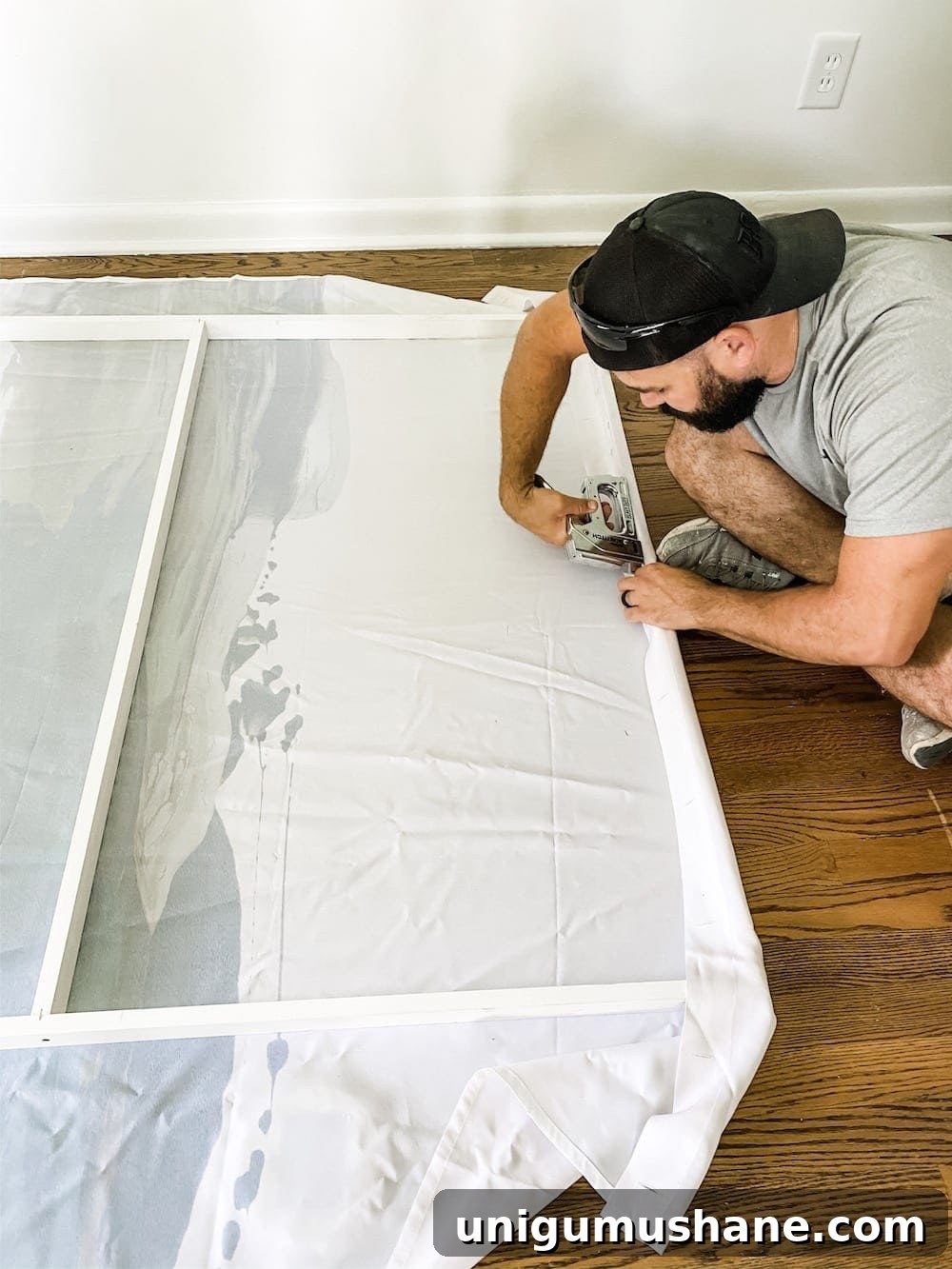
Flip the frame over so the curtain is underneath and the frame is on top. This lets you stretch and staple the fabric from the back, giving a clean front appearance.
Step 7 – Secure the Top Edge
Wrap the top edge of the shower curtain over the top board, smooth the fabric to remove any wrinkles, and staple along the full length. Start with a staple at the center, then work out toward each end, pulling gently as you go.
Step 8 – Stretch the Bottom Edge
Repeat the stapling process on the bottom edge. Pull the fabric taut so it lays flat and eliminates wrinkles. Use even tension to avoid distortion of the design.
Step 9 – Attach the Side Edges
Staple each side, starting at the center and working toward the corners. Keep tension balanced so the pattern remains straight and the fabric sits smoothly on the front.
Step 10 – Fold and Staple Corners
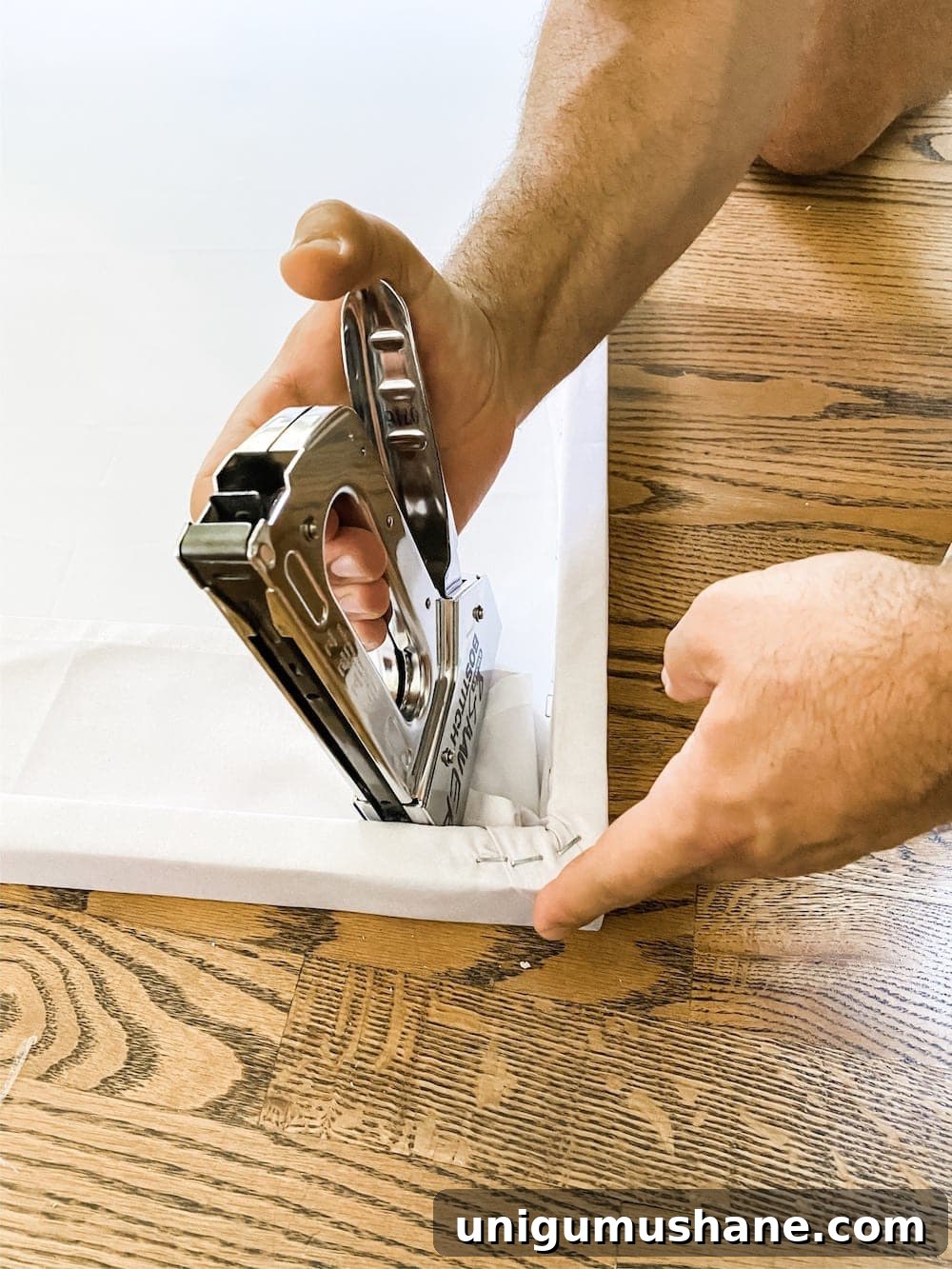
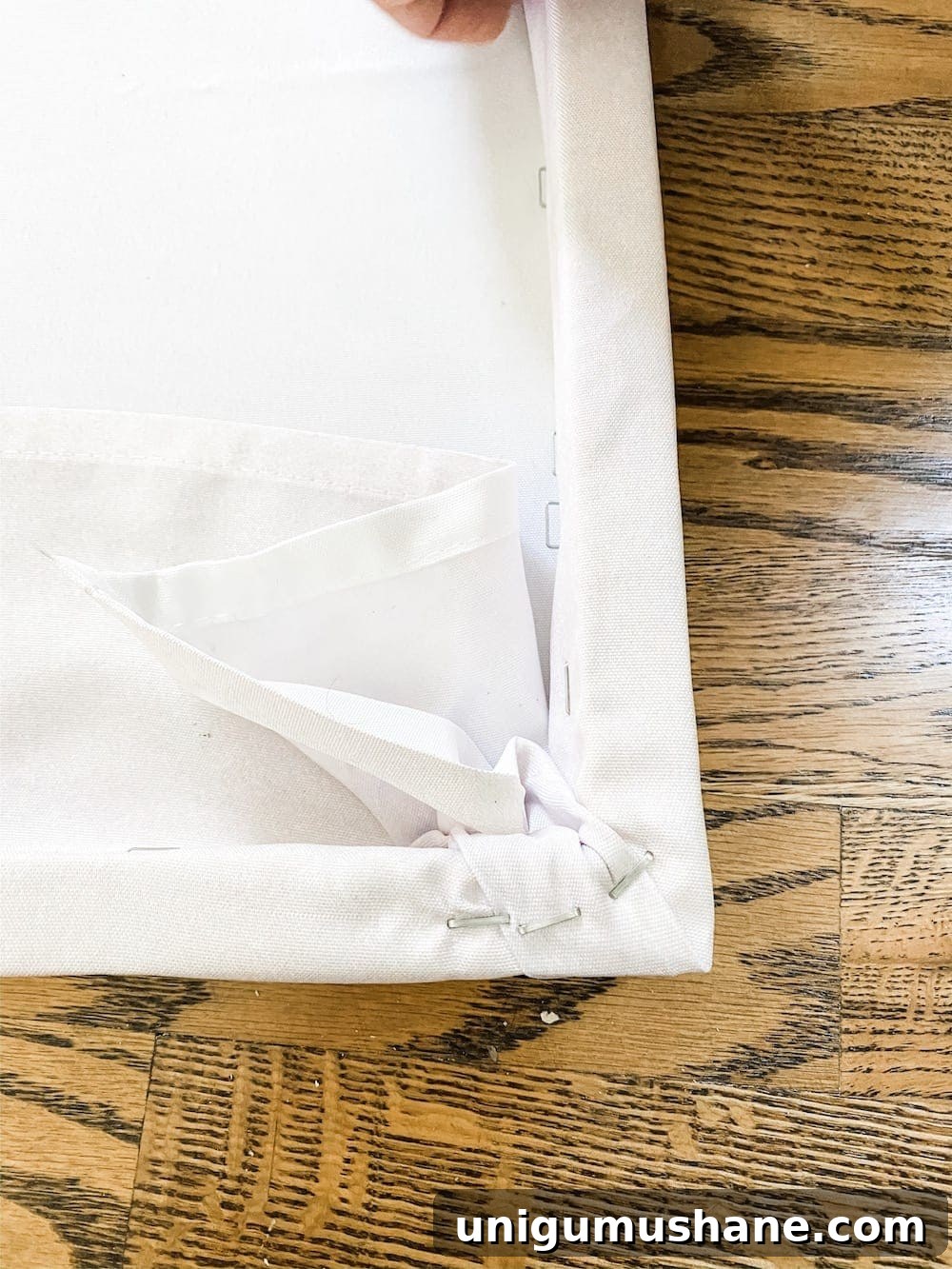
Neatly fold each corner and staple securely. Trim excess fabric if needed, then staple any remaining loose bits along the back to keep the front clean.
Step 11 – Tidy the Back
Staple and trim any leftover fabric along the back of the frame so it sits flat. A tidy back makes hanging easier and gives the finished piece a more polished look.
Step 12 – Attach Top and Bottom Lattice Strips
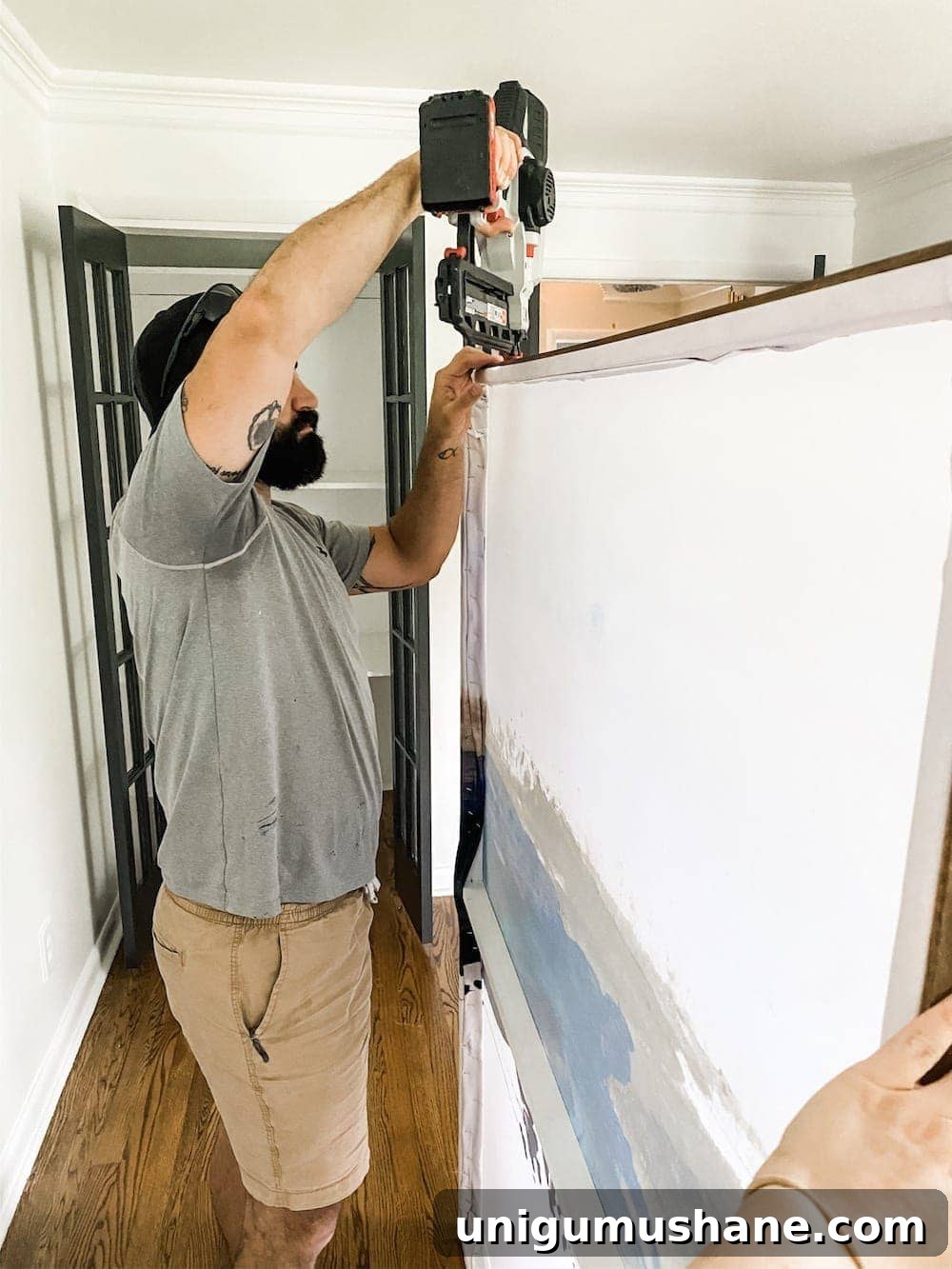
Measure and cut two lattice strips to cover the top and bottom edges of the frame. Fasten them with brad nails for a clean, framed appearance that hides staples and rough edges.
Step 13 – Add Side Lattice Strips
Cut and attach the side lattice strips, accounting for the thickness of the top and bottom pieces so everything lines up flush. These trim strips give the piece a finished, gallery-like edge.
Step 14 – Hang Your Artwork
Mount screws or anchors where you want the piece, hang the canvas, and enjoy the dramatic impact. We completed our piece in under two hours and it instantly transformed our office.
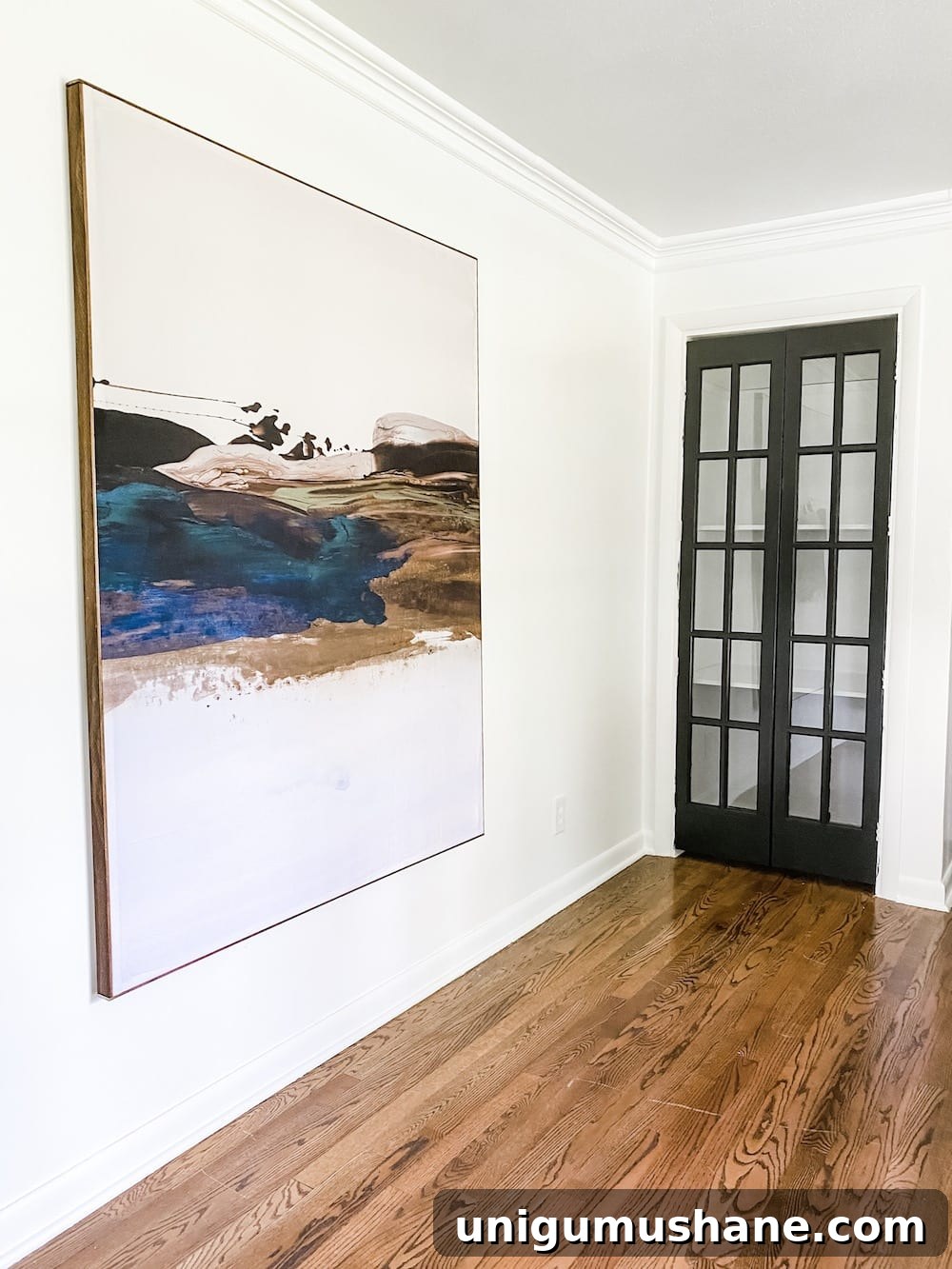
Robert already wants to make a second one featuring a giant world map for the garage — because in his mind, the garage counts as an office. This technique is perfect for any large, bold image you want to display.
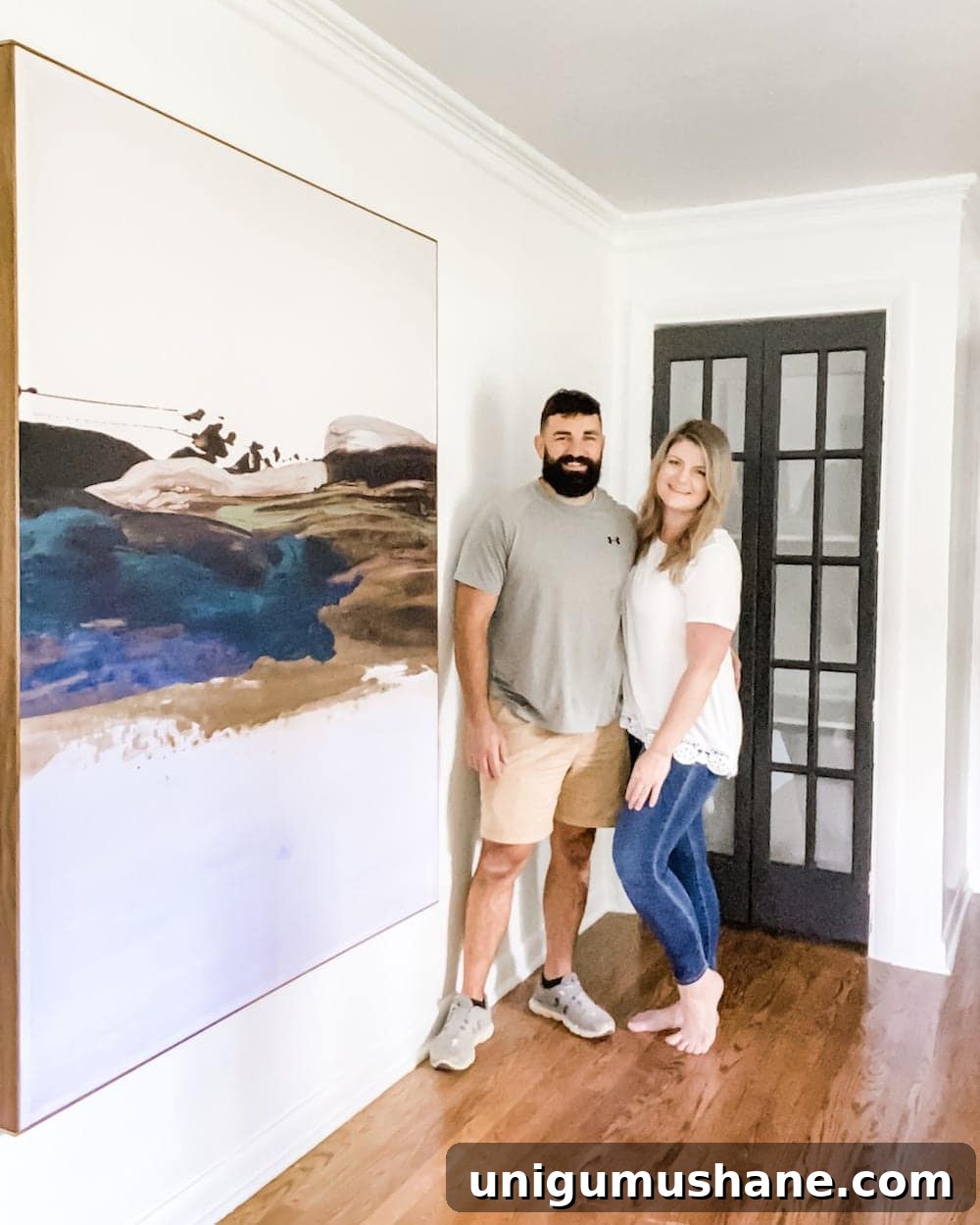
What do you think? Below we’ve gathered several shower curtain designs from artists we love that would all make stunning wall art — it was tough to pick just one for our project.
If you’d like more DIY art ideas, search the blog for “art” to find other projects and printable options.
More DIY Art Ideas
28 Creative DIY Wall Decor Ideas for Your Blank Walls
The Secret to Find Free Printable Wall Art Online