
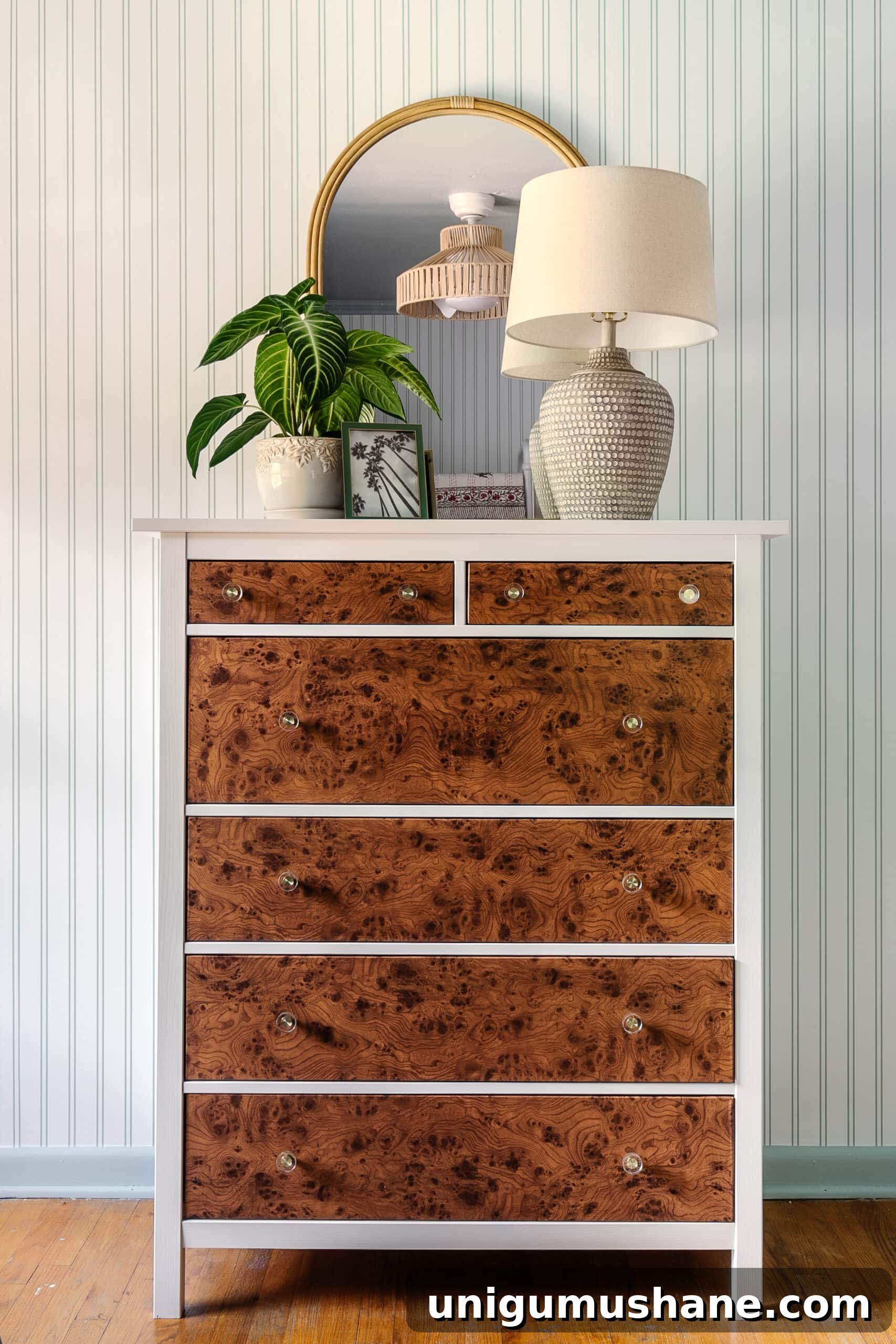
Create a high-end burl wood look on a plain dresser with this easy IKEA dresser hack using burl wood contact paper—for about $30.
Last week we began a room makeover in a shared bedroom for three pre-teen girls at our neighbors’ house. The design direction is beachy and vintage with a refined, slightly rustic vibe. Midway through planning, a burl wood dresser popped into my head. Rather than splurge on an expensive designer piece, I decided to try an IKEA dresser hack to achieve that same warm, vintage look affordably.
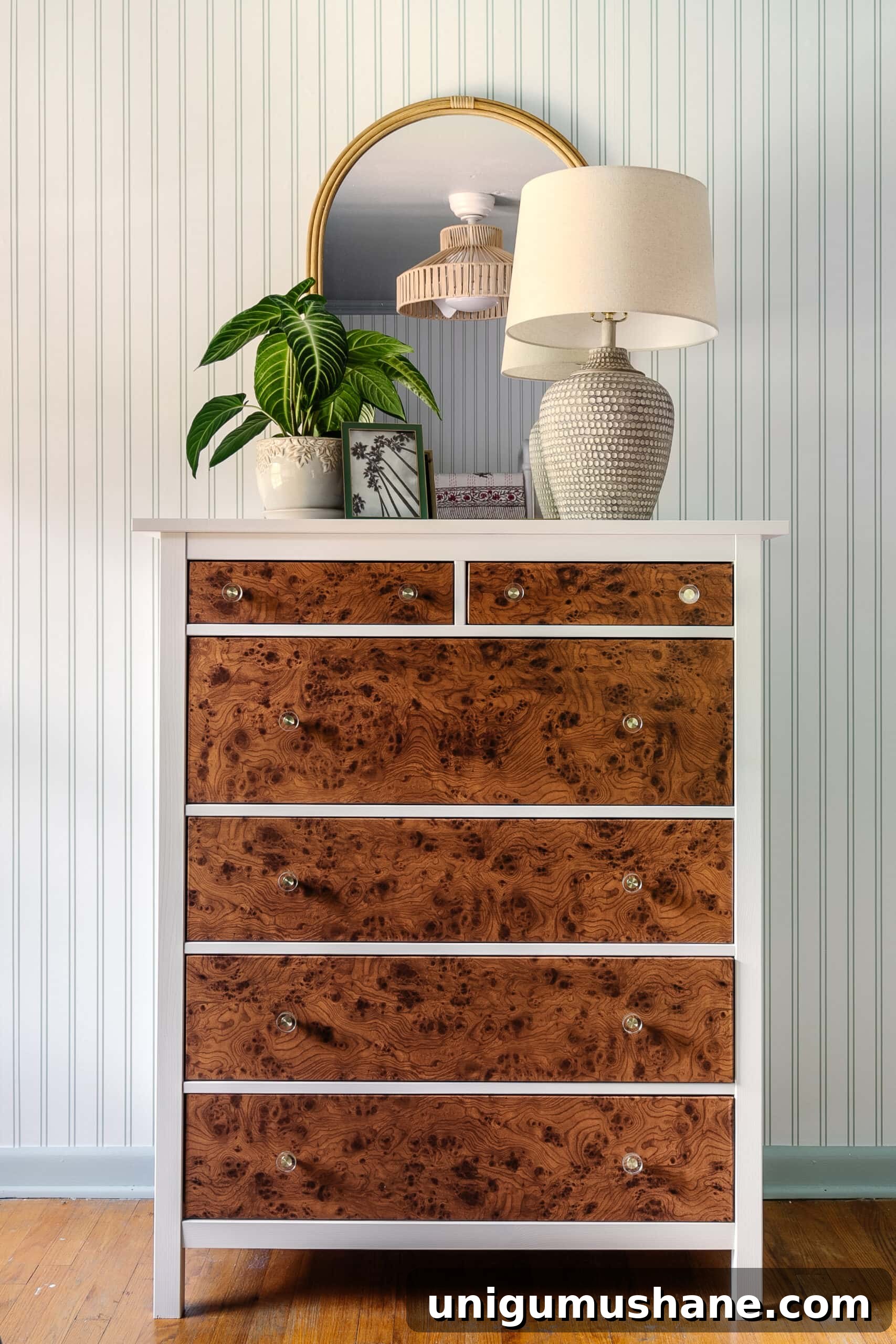
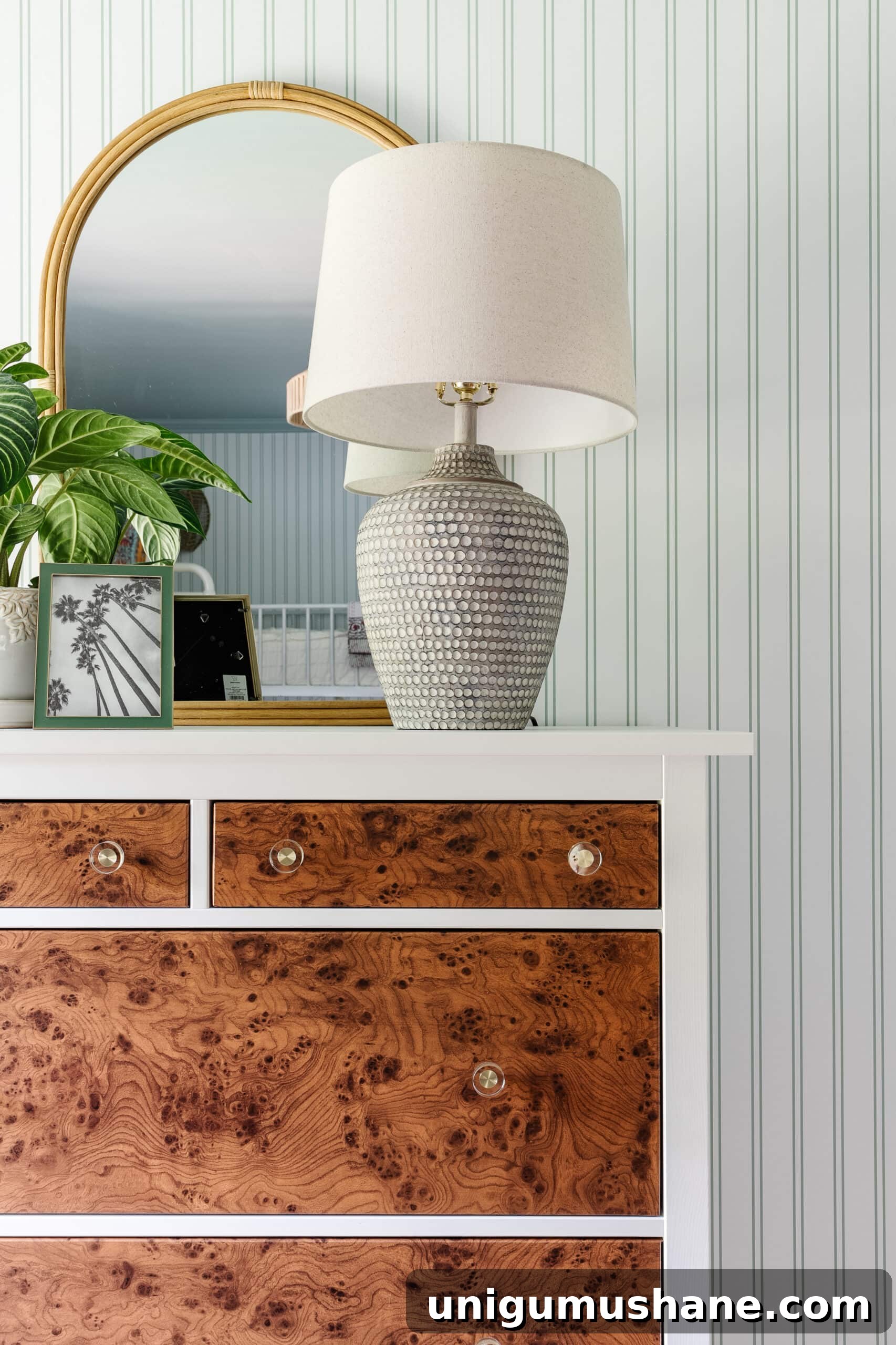
The result has a genuine vintage, art deco feeling—and it only took about an hour and roughly $30 in contact paper to transform the piece.
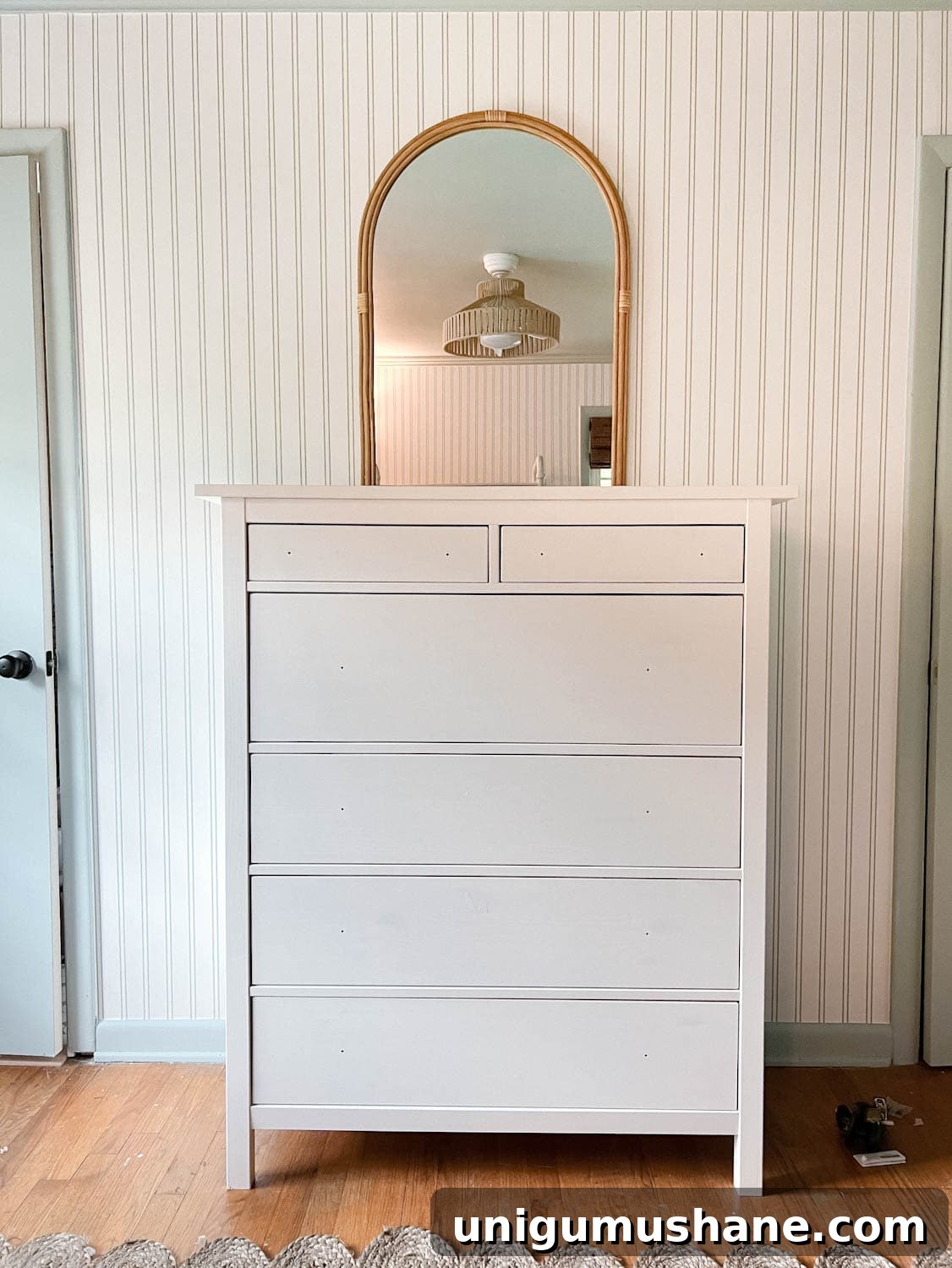
IKEA Hack Ideas Using Contact Paper
I used an IKEA Hemnes six-drawer chest for this project, but any dresser with flat drawer fronts works well—MALM dressers, basic sideboards, and flat-front storage cabinets are great candidates. Contact paper is especially effective on sleek, simple furniture with clean lines because the pattern reads like real veneer when applied smoothly.
Beyond dressers, you can try the same technique on wardrobe doors, a side table, a top for an inexpensive coffee table, or on secondhand furniture found through local marketplaces. The key is choosing pieces with flat surfaces where the pattern can sit without lots of seams or deep contours.
DIY Burl Wood IKEA Dresser Hack
Supplies
- Dresser with flat drawer fronts (I used an IKEA Hemnes 6-drawer chest)
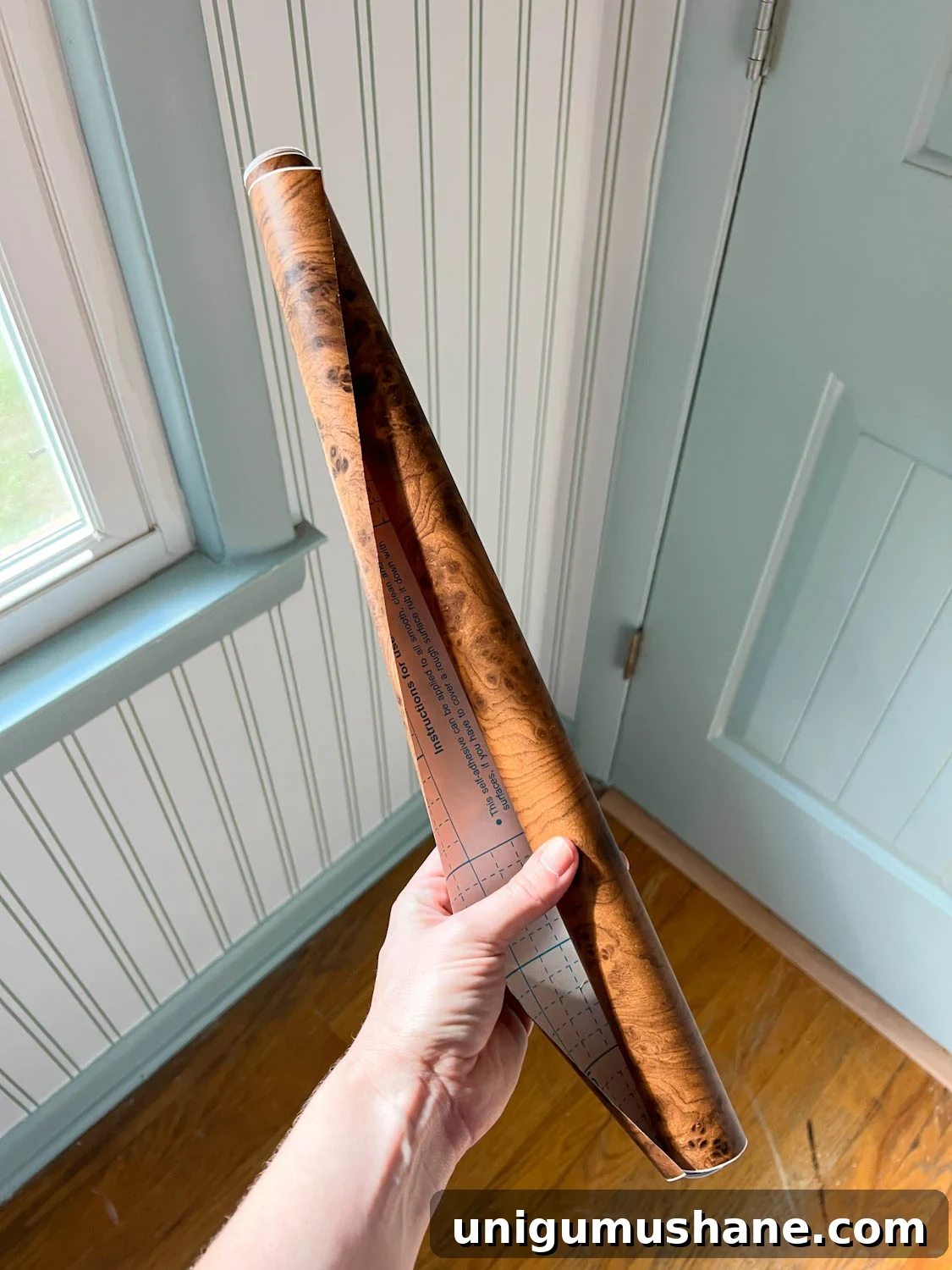
- Burl wood print contact paper (choose a high-quality adhesive vinyl with a natural-looking grain)
- Old credit card or a wallpaper smoothing tool to press out bubbles
- Scissors or a utility knife
- Pen or pencil for marking
- Knobs or pulls of your choice (optional) to elevate the finish
Steps
Step 1 – Place the drawer front on the contact paper
Cut a length of burl wood contact paper slightly larger than one drawer front, leaving an inch or two of excess around the edges. Place the drawer front face down on the vinyl and mark 1–2 inches outside the perimeter so you’ll have enough material to wrap the sides.
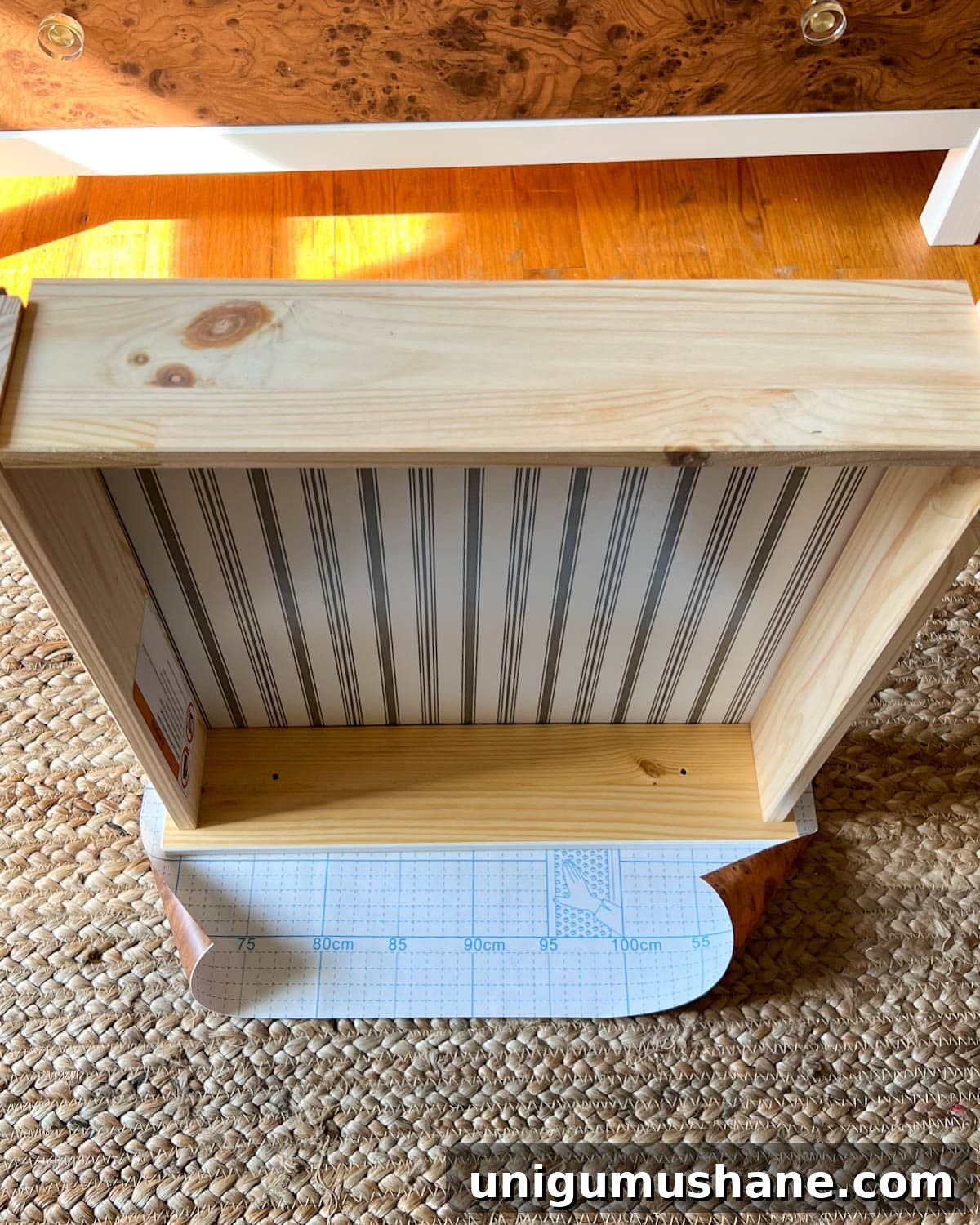
Step 2 – Trim the contact paper
Trim along your pencil marks so you have a neat margin for wrapping. Clean, straight cuts make it easier to fold and tuck the vinyl around corners.
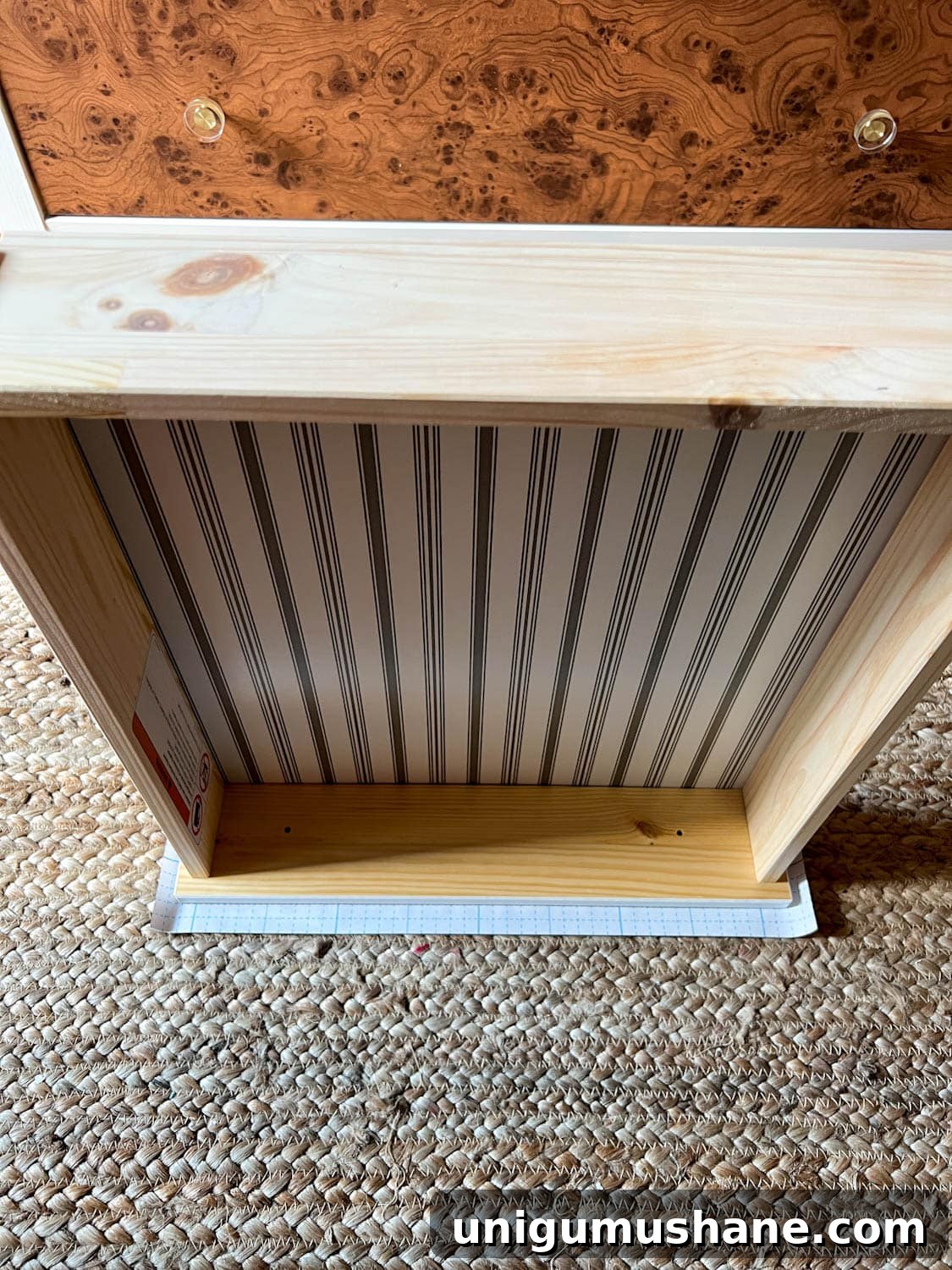
Step 3 – Align and apply the contact paper
Peel back a few inches of the backing and align the paper carefully on the drawer front. Slowly peel the backing while smoothing the vinyl down with your credit card or smoothing tool to avoid air pockets. Working slowly ensures the burl pattern lines up naturally and looks continuous.
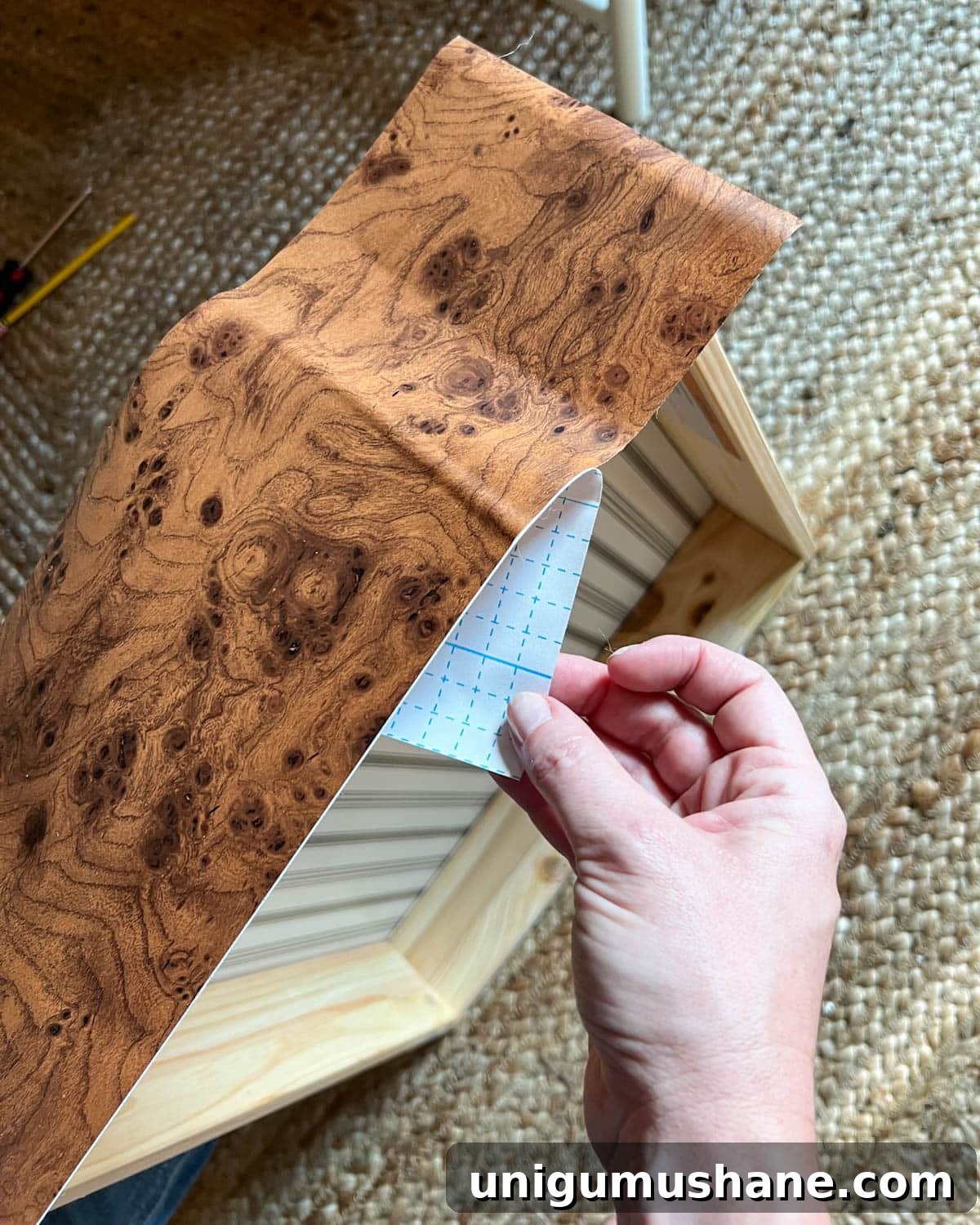
Step 4 – Press out air bubbles
Use firm, even strokes with your smoothing tool to press out any bubbles and fully adhere the vinyl. If small bubbles remain, you can lift the vinyl gently from the nearest edge and re-smooth it.
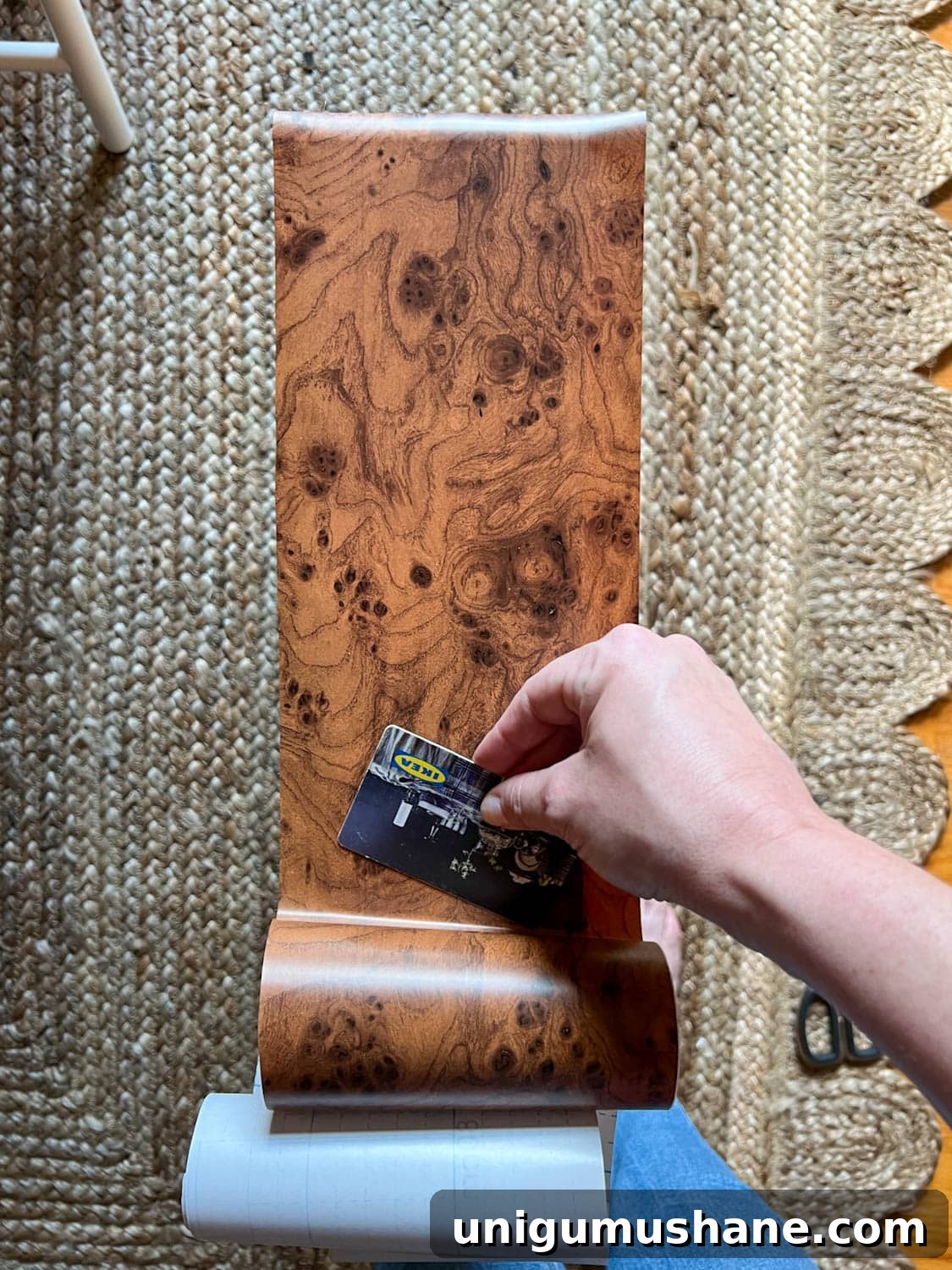
Step 5 – Cut corner slits
With excess vinyl around the sides, make small slits at each corner to create flaps. These slits let you fold and tuck the material neatly so corners look clean and seamless.
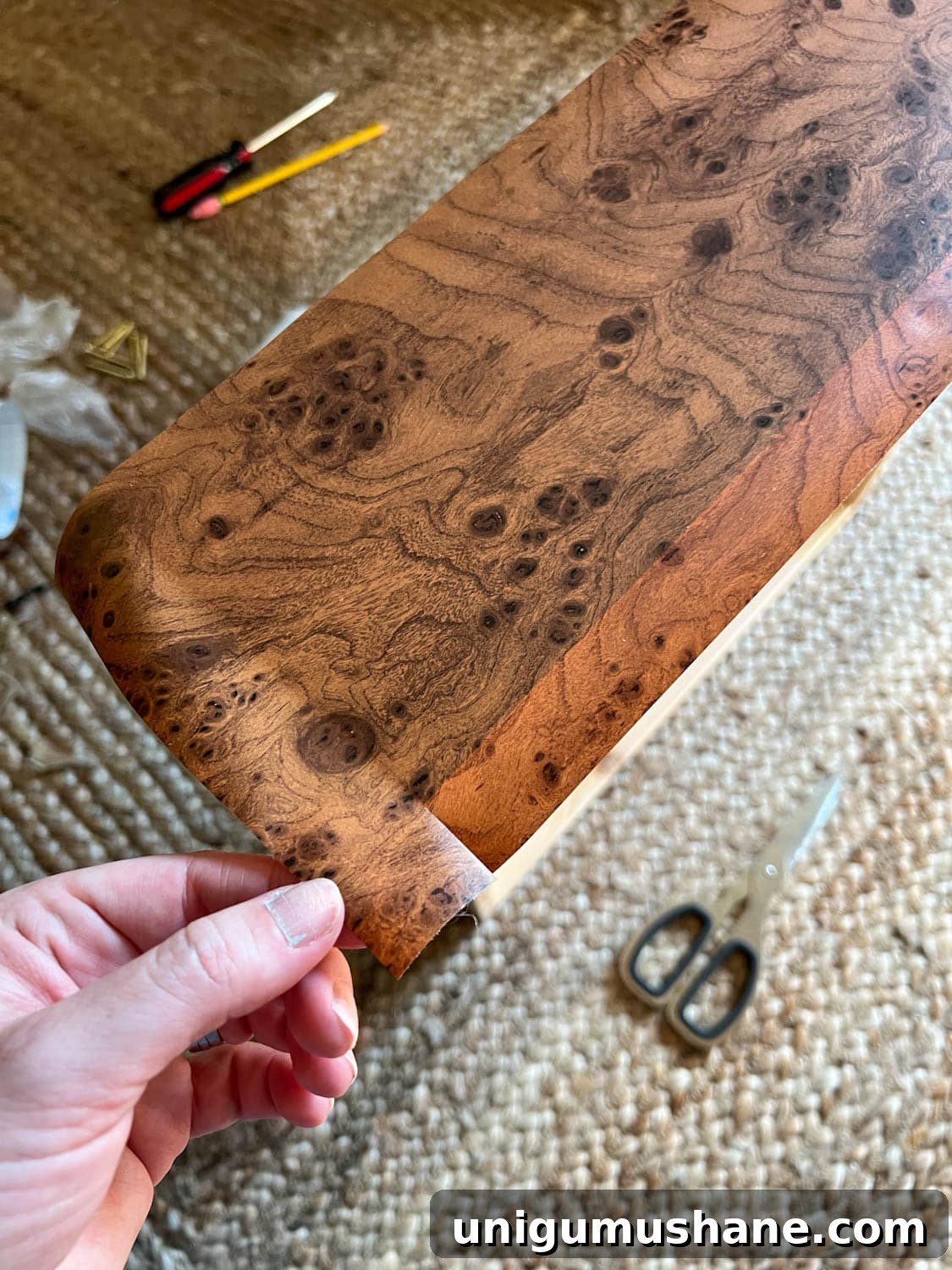
Step 6 – Fold and smooth flaps
Smooth down one side flap as you would when wrapping a present, then tuck the corner flaps underneath the adjacent side so everything sits tight against the drawer front.
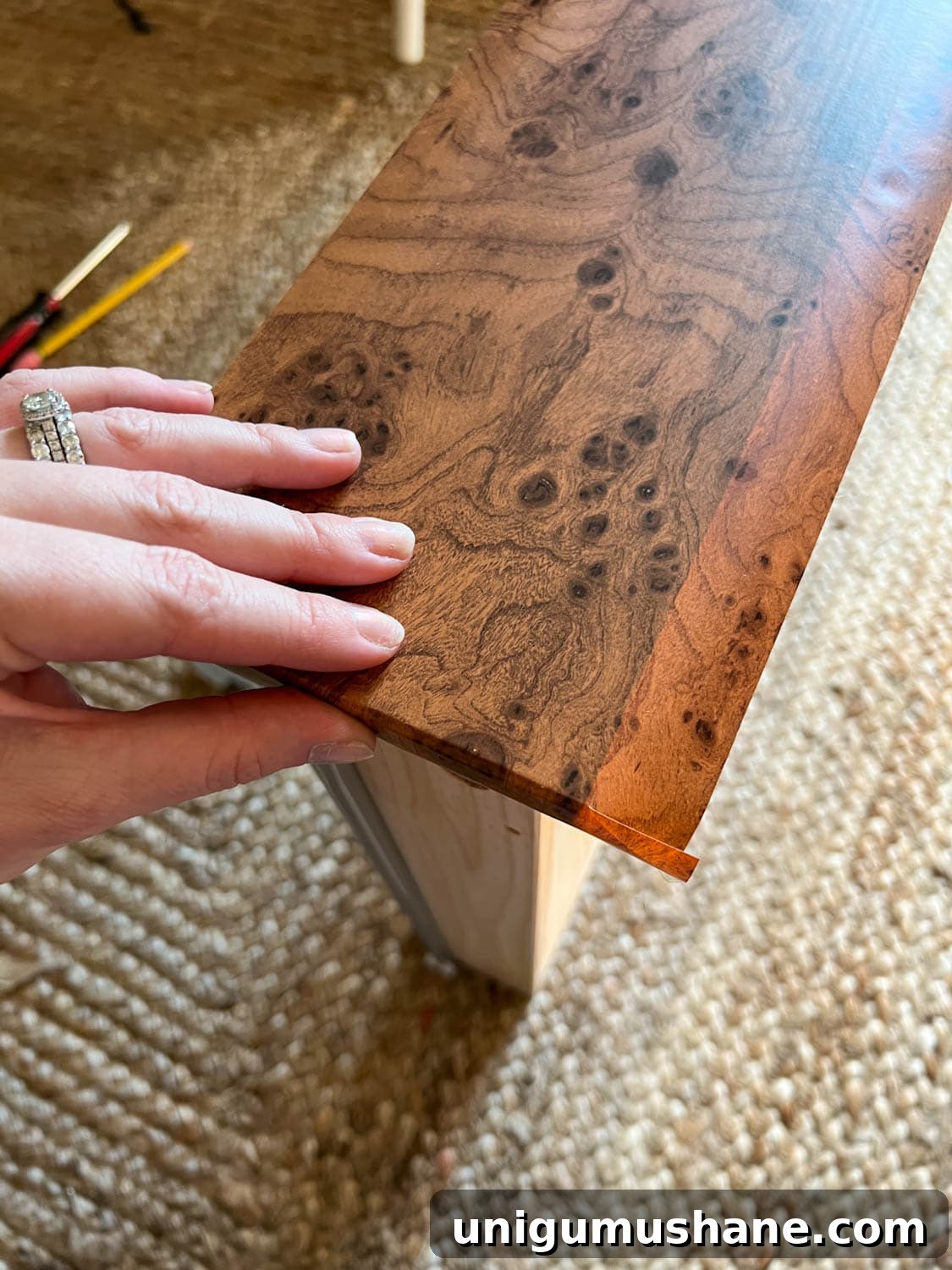
Step 7 – Tuck and finish the edges
Repeat the folding and tucking on the opposite side and then smooth the top and bottom flaps so they cover the tucked corners. Trim any excess for crisp lines.
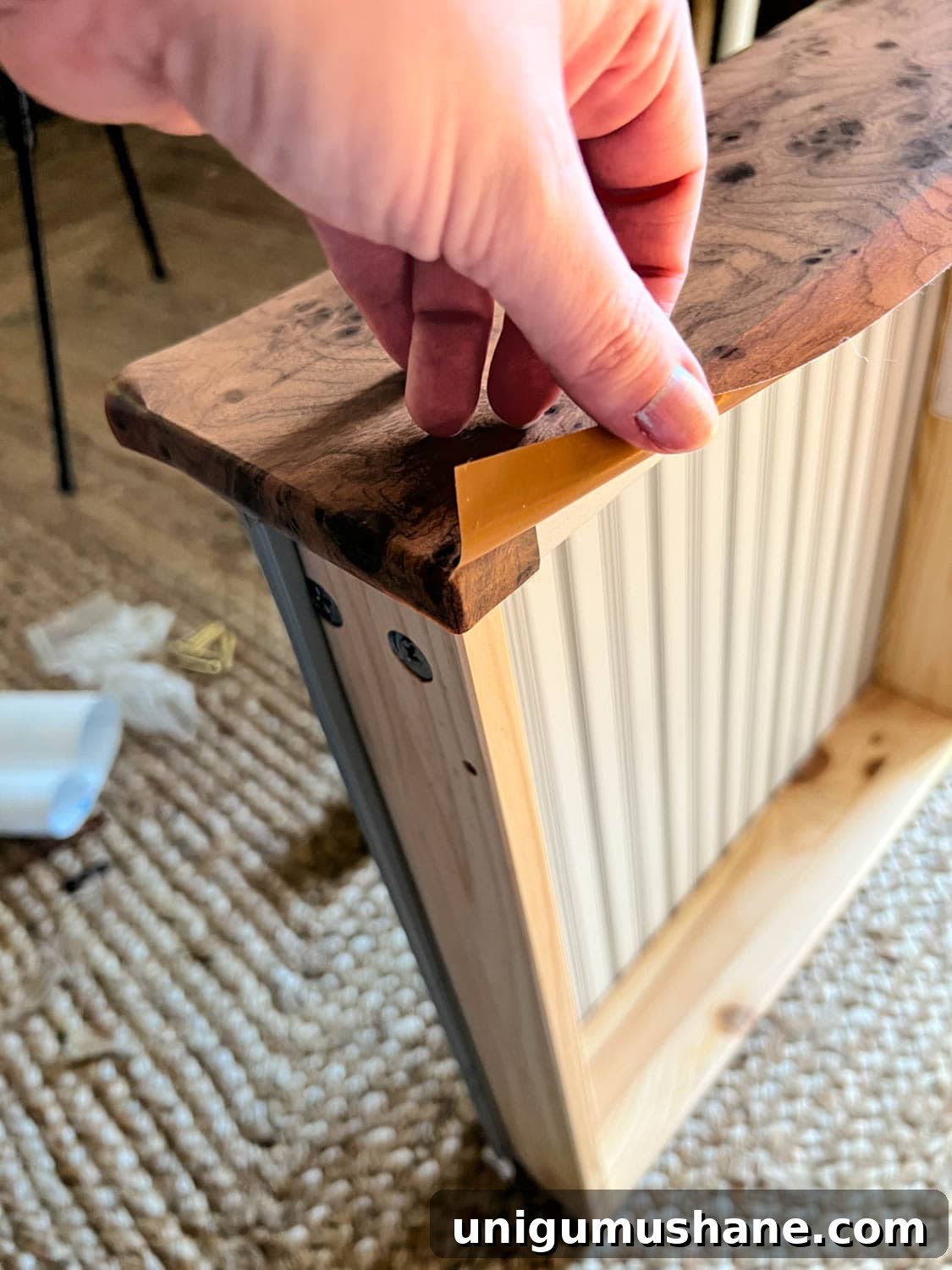
Step 8 – Final smoothing
Give the entire drawer front one last pass with the smoothing tool to ensure a seamless finish and remove any remaining imperfections. If you notice small bubbles, a pinprick and gentle smoothing will usually fix them.
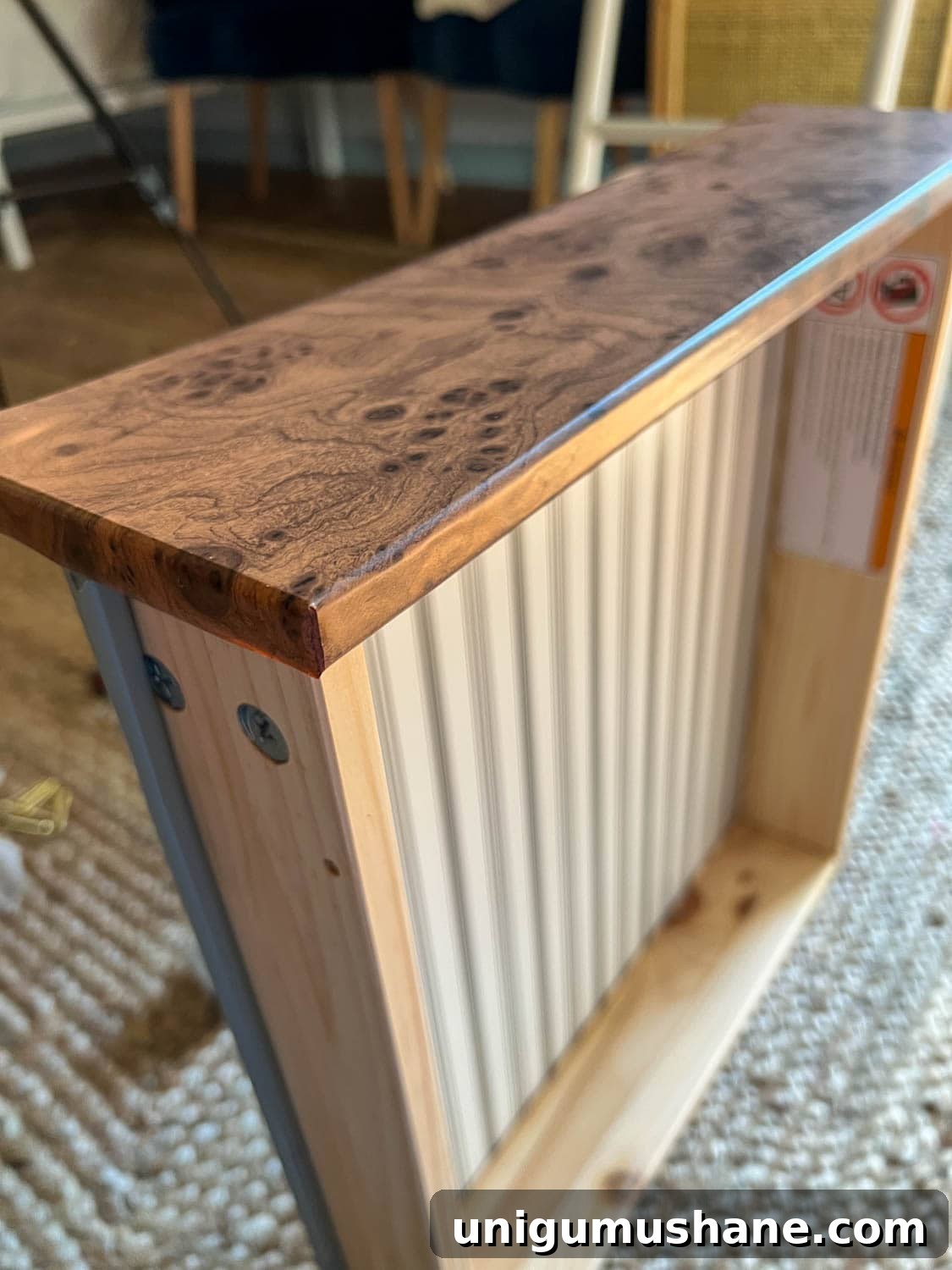
Step 9 – Add hardware
Replace or add knobs and pulls to personalize the piece and raise the overall look. Glass, brass, or simple matte black hardware all pair beautifully with a burl wood finish and can shift the style from coastal to art deco or modern vintage.
Project Cost Breakdown
The total for this dresser—furniture, contact paper, and new knobs—came to about $405. That’s a fraction of the price of comparable designer burl wood dressers and a quick way to get a high-end look on a budget.
To complete the vignette I added a coastal table lamp, a rattan mirror, framed art, and a plant to bring texture and personality into the room. The finished dresser reads as vintage and slightly glamorous, perfectly at home in a beachy, refined bedroom.
Contact Paper Style Options for Easy IKEA Hacks
If burl wood isn’t your preference, contact paper comes in many styles that simulate real materials: white marble, black marble, various wood grains, gray linen, grasscloth textures, and colorful marbles. Each option can dramatically change the vibe of a simple piece—marble tops for a modern look, linen for soft texture, or black wood for a moody, contemporary feel.
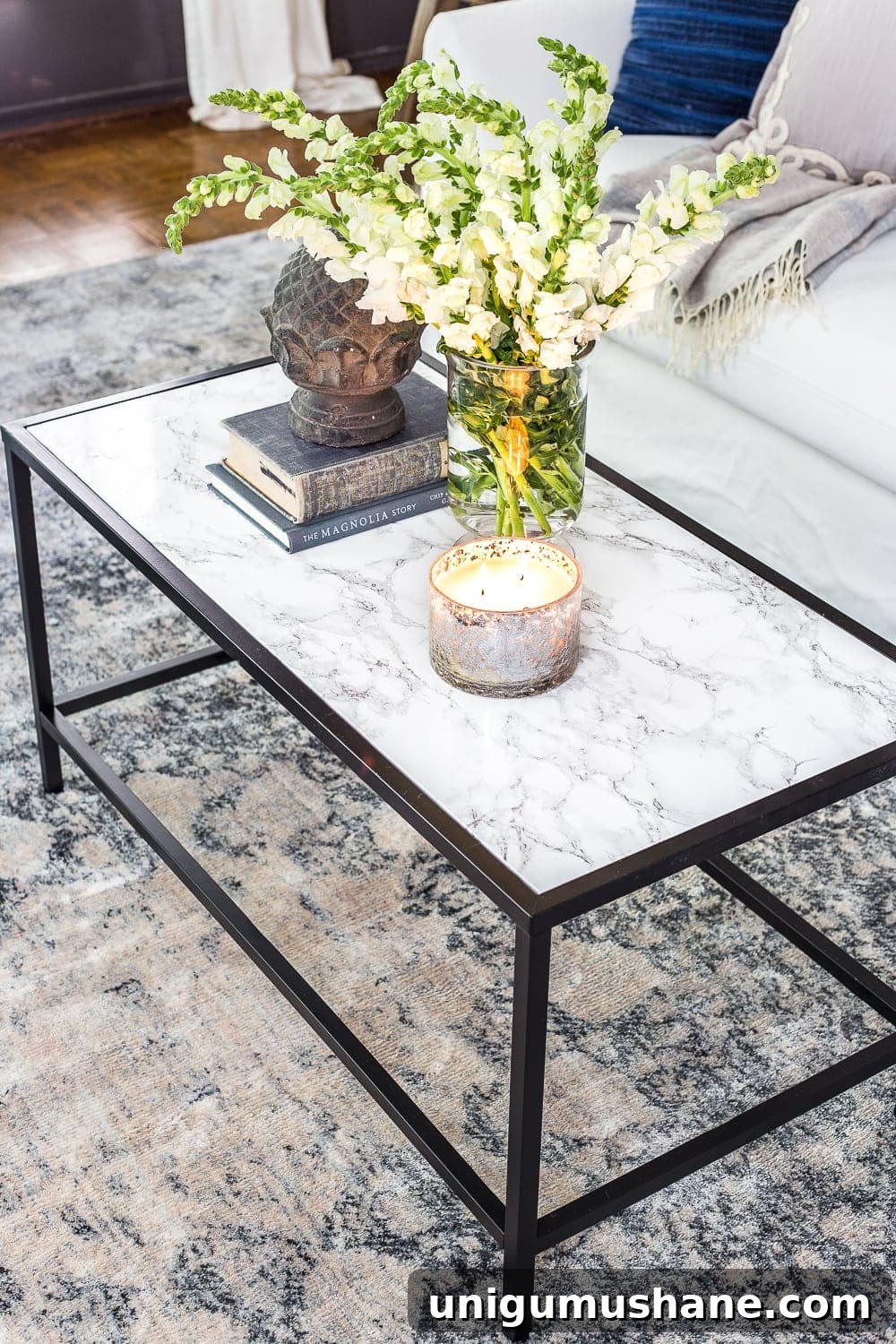
Contact Paper for Furniture
Some popular styles to consider are white marble, black wood grain, gray linen, beige or brown wood grain, blue marble, black marble, and grasscloth-style vinyl. Choosing a realistic pattern and high-quality adhesive vinyl will yield the most convincing results.
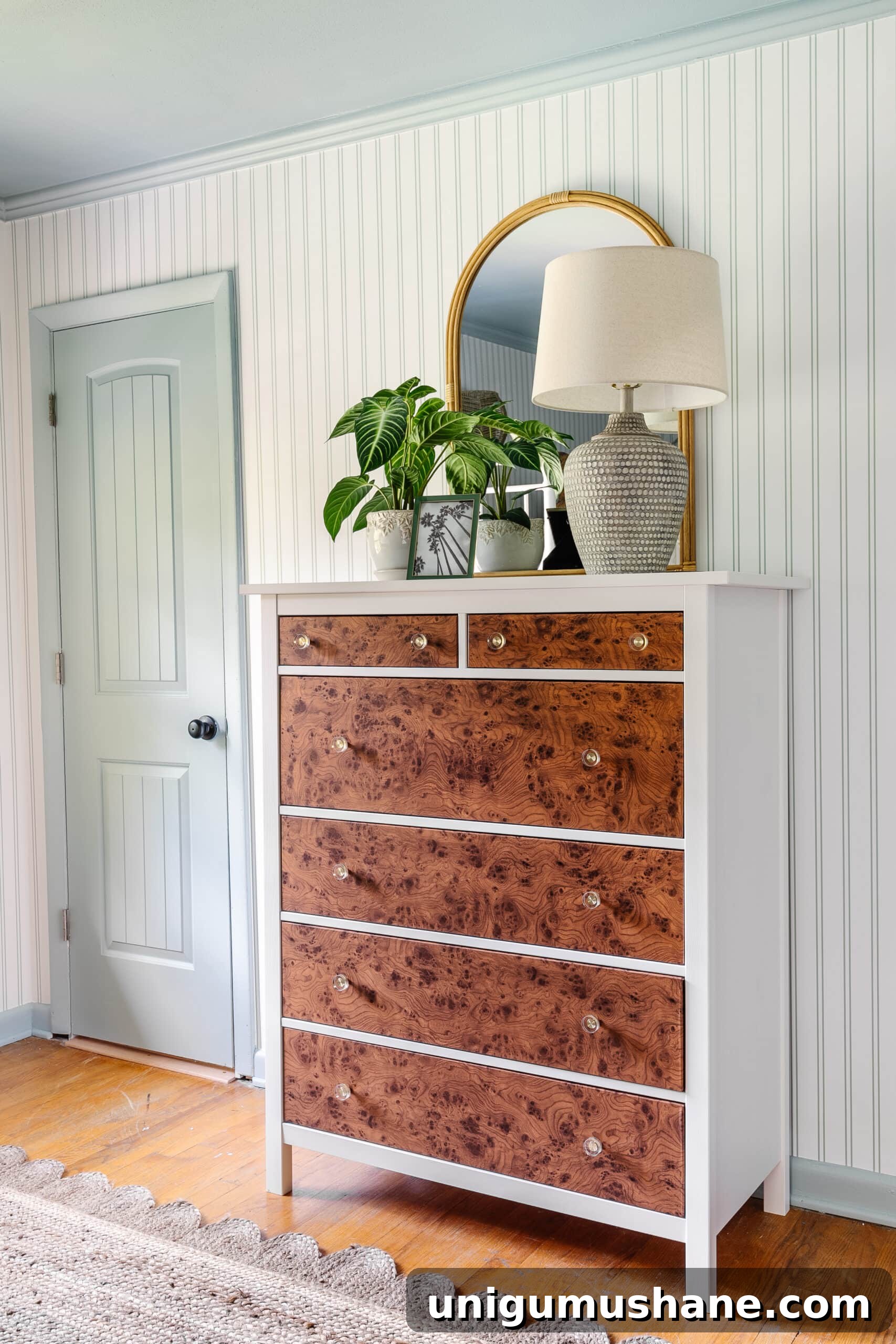
This burl wood contact paper technique is fast, affordable, and surprisingly convincing. It’s a great way to elevate inexpensive furniture into a focal point for any room. I’m tempted to try this on more pieces around my own home—the realism is hard to believe until you see it in person. The room is coming together beautifully, and I can’t wait to share the final reveal.
More IKEA Hack Ideas
- Built-in bookshelves using bookcase hacks
- DIY storage hacks for maximizing space
- How to paint laminate furniture for lasting results
- Decorative appliqué on dressers
- Faux marble tabletops using contact paper
- Decorative window film ideas to create custom glass