
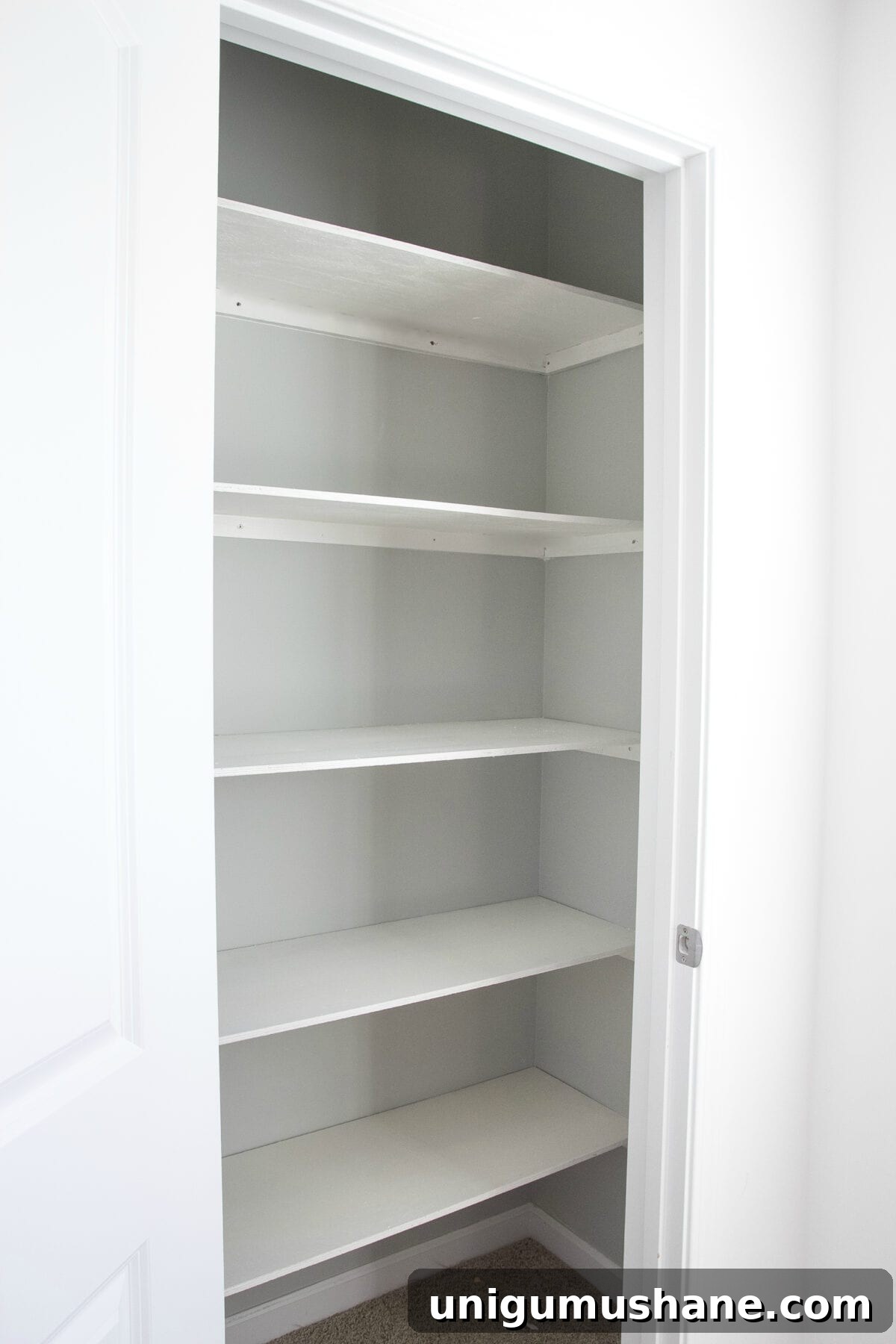
How to build basic DIY closet shelves with beginner skills and tools in less than 2 hours for under $80.
Is your closet cramped and overflowing? That was my playroom closet — cluttered, inefficient, and full of wire shelving that never worked for the space. I finally decided to fix it with a quick, budget-friendly DIY: sturdy wooden shelves built with basic tools and beginner skills.
Over the holidays we quietly tackled a few overdue projects, and organizing this closet was top of the list for the new year. After clearing everything out and starting fresh, the plan was simple: add several deep shelves to hold craft supplies and storage bins so the rest of the office could stop being a disorganized disaster.
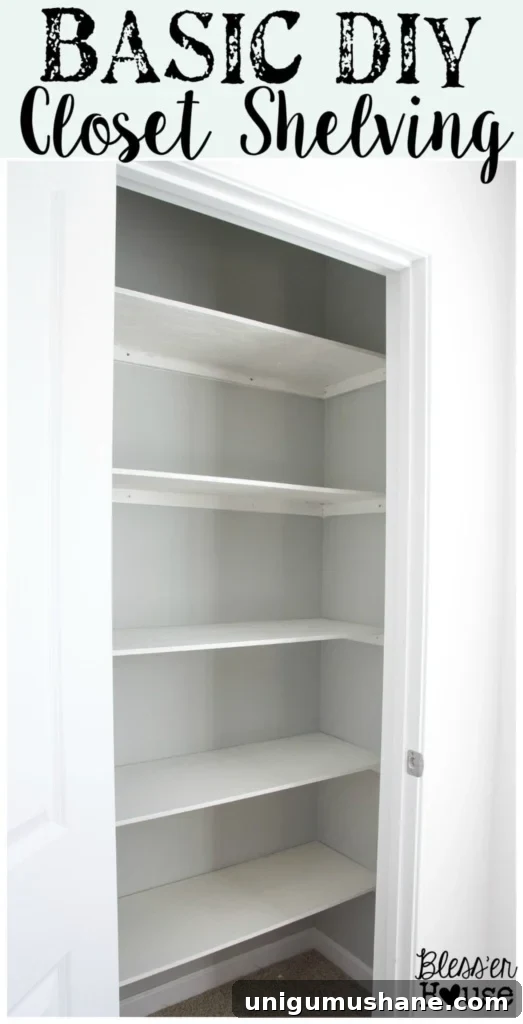
This project is ideal if you want closet shelving that’s simple, functional, and affordable. I used basic materials and inexpensive plywood, spaced the shelves to fit storage boxes, and painted everything for a clean finish. The entire job cost around $80 for wood, hardware, and paint and took less than two hours for two people.
Supplies
(Tools and materials are basic; adjust quantities and sizes to fit your closet.)
- 5 — 1x2x8 furring strips
- 1 — 3/4″ primed hardwood plywood sheet, cut into strips sized to your closet (we used 4′ x 14″ shelves)
- Drywall anchors and stud anchors
- Power drill and appropriate bits
- 2″ wood screws
- Level and pencil
- Paint and brush (pre-primed plywood saves time)
Steps
1. Remove any existing shelving and clear the closet completely. This gives you a clean slate to measure and plan.
2. Measure the interior width and depth of your closet and plan shelf spacing. We spaced our shelves 14″ apart to fit the storage boxes we planned to use. Mark shelf locations on both side walls, using a level to keep lines straight.
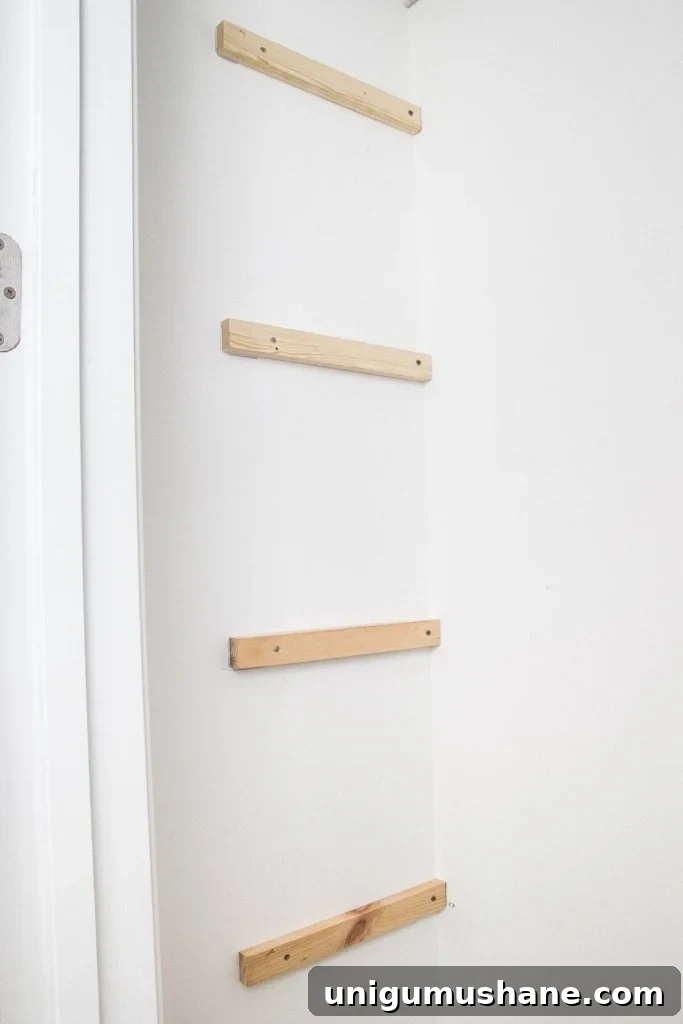
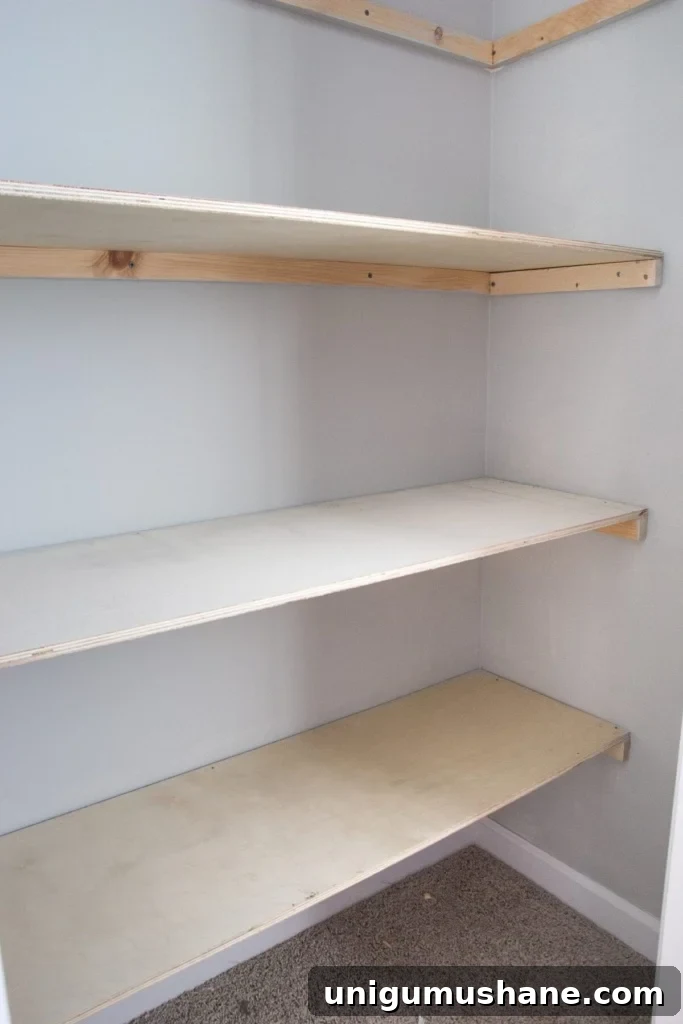
3. Cut the 1×2 furring strips into supports for the shelf ends. For this project we cut ten pieces at 14″ each to support five shelves (two supports per shelf). Place them on the side walls where you marked, check for level, and fasten into studs with 2″ wood screws.
4. If your shelf depth only reaches one stud, use drywall anchors where you cannot hit a stud. Pre-drill the boards where anchors are needed to prevent splitting, then insert anchors and secure the support strips for extra stability.
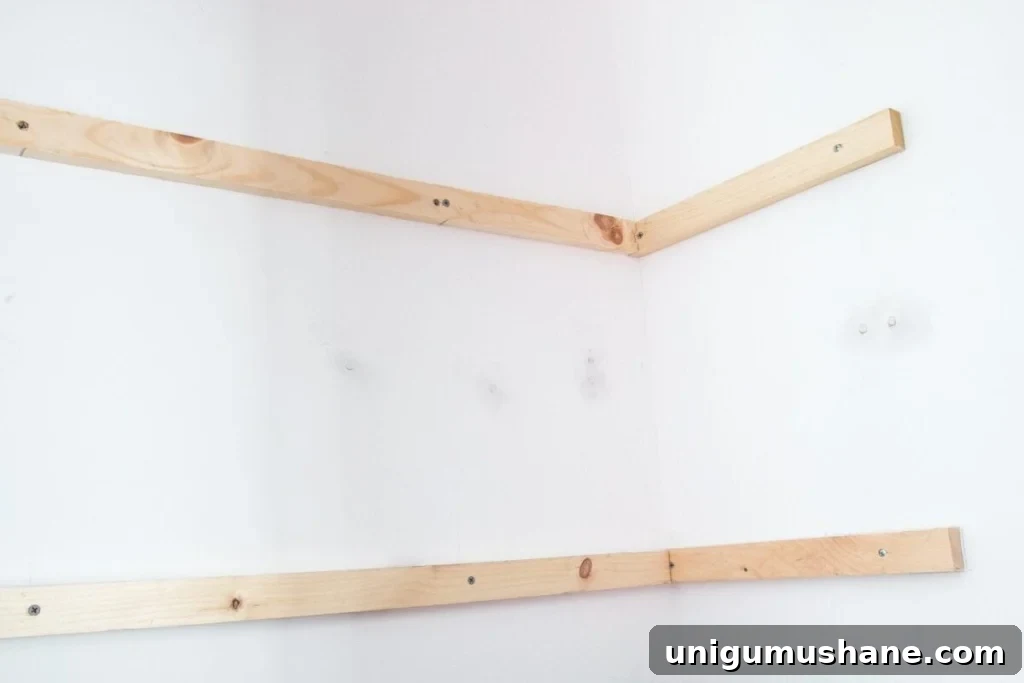
5. Attach a horizontal 1×2 strip across the back wall at each shelf level to connect the side supports and help distribute weight. Anchor this back strip into studs with screws.
6. Lay the plywood shelf boards on top of the supports and secure them by screwing up through the supports into the plywood. Use several screws along the front, back, and side supports to prevent sagging under load.
7. Paint the closet walls and shelves. It’s easier to paint walls before installing shelves, but painting afterward works too. I used leftover Benjamin Moore Gray Owl for the walls and Sherwin Williams Pure White for the shelves. Primed plywood reduces paint absorption and speeds up the process.
8. Optional finishing touches: caulk seams and fill screw holes for a cleaner look, or leave as-is if the closet is for practical storage rather than display. Add labeled storage bins and clear containers to maximize organization and visibility.
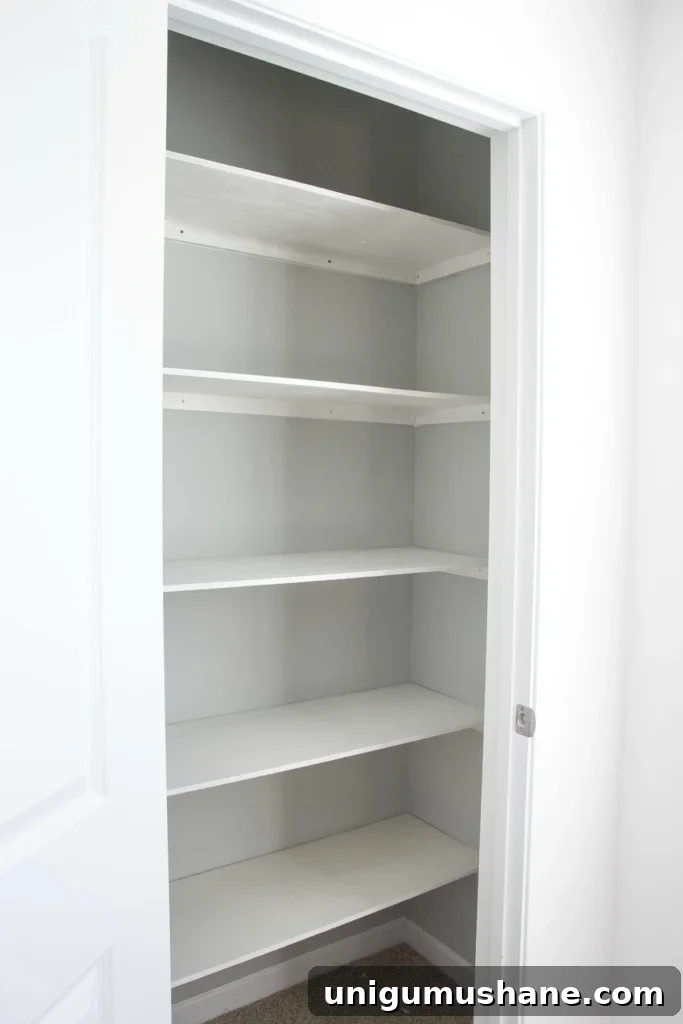
This approach gives you sturdy, simple shelving that can be adapted to closets of varying widths and depths. For heavier items, consider thicker plywood or additional supports. Keep safety in mind: always mount supports into studs when possible and use anchors rated for the expected load.
After completing these shelves, the difference was huge. Craft supplies are contained, the home office cleared up, and weekly projects stopped requiring a scavenger hunt through unopened boxes. The project is straightforward for most DIYers and delivers a big organizational payoff on a small budget.
Ready to get started? Measure your closet, pick your shelf depth based on the storage boxes or bins you want to use, and gather the simple supplies listed above. In a couple of hours you’ll turn a cluttered closet into a functional storage space that finally works for you.
Have you taken on any organizing projects this year? Whether it’s a craft closet or pantry, small investments in shelving can make a big difference in how your space functions.

Related Posts
- How to Convert Closets to Built-In Shelves
- How to Build a Closet
- Our Small Master IKEA Closet Reveal!
- DIY IKEA Closets in Our Master Using Billy Bookcases