A few simple tricks for creating a perfect gallery wall.
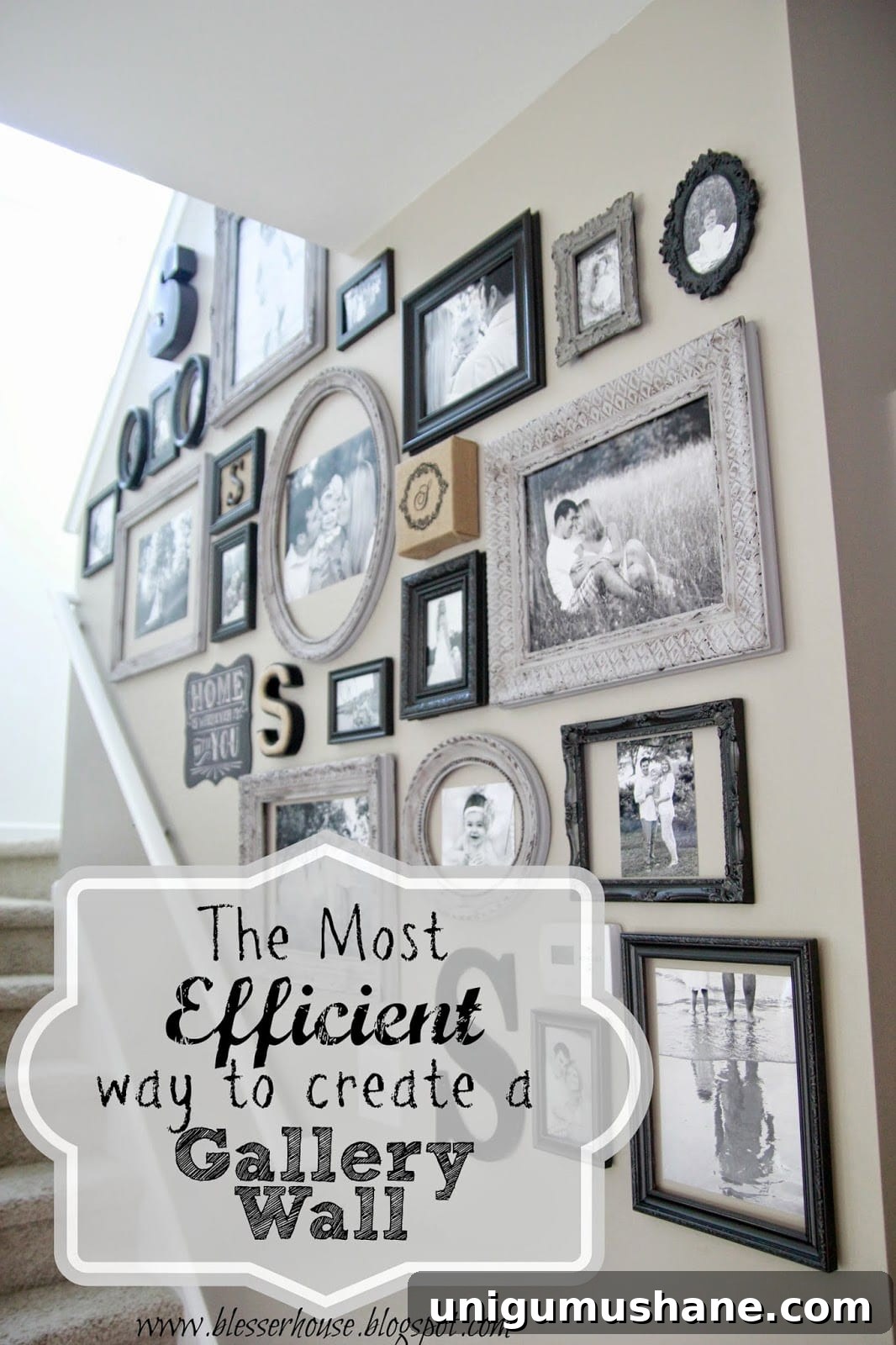
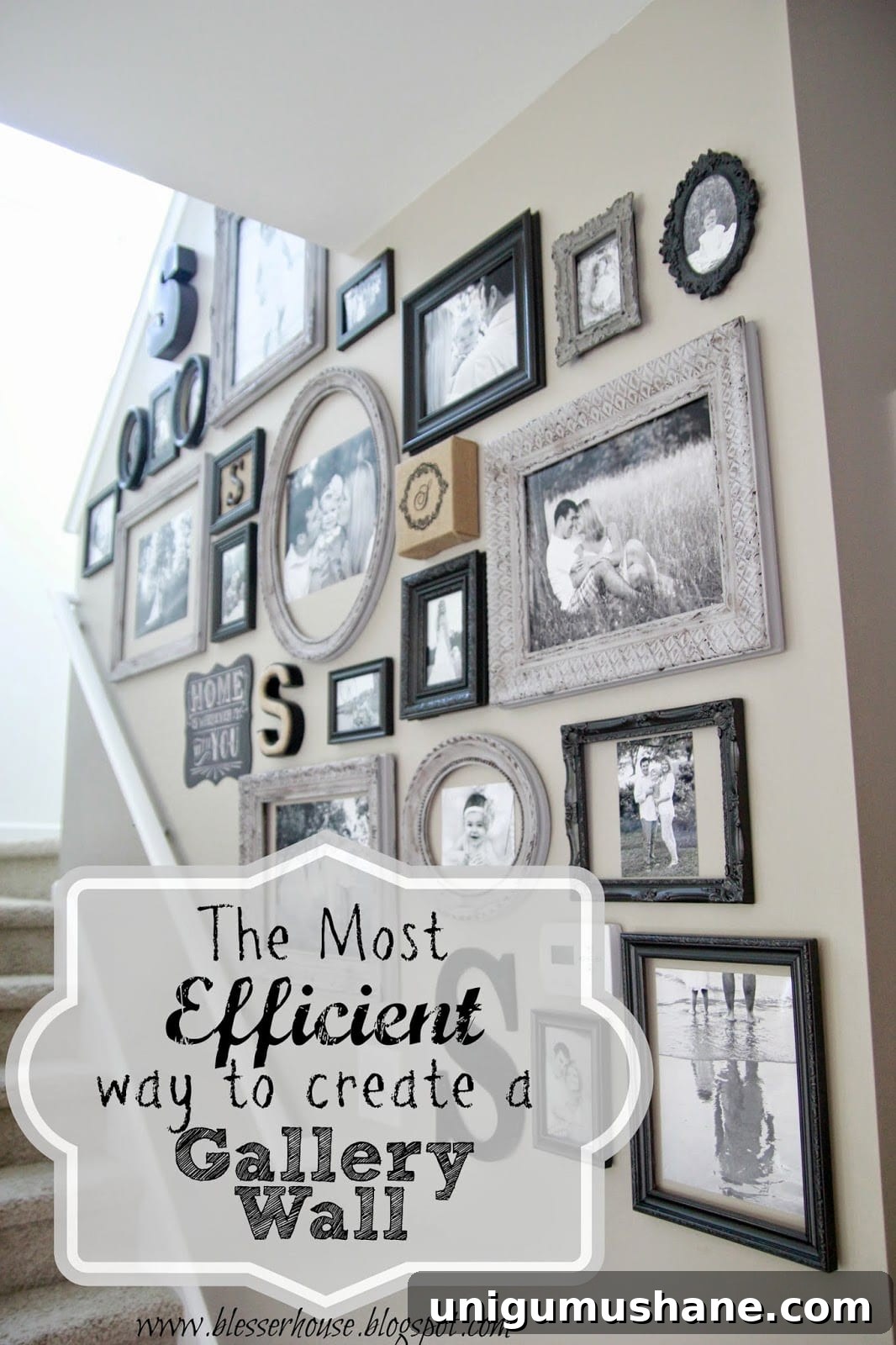
I promised I’d share our gallery wall and flirted with the idea last week when my prints arrived from Shutterfly. Then my perfectionist side took over — I spent days planning, tweaking, and rearranging. Finally, it’s finished, and I’m excited to show you the finished gallery wall and the simple method I used to avoid a forest of nail holes in the drywall.
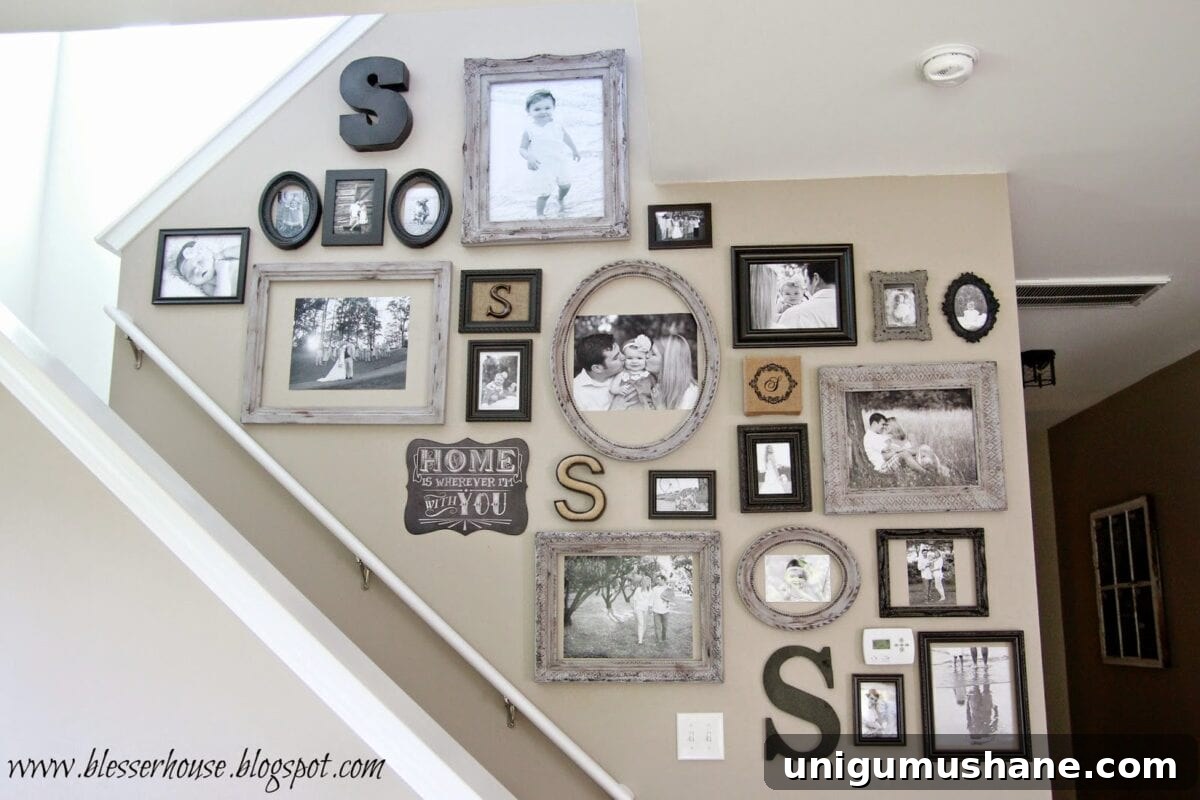
I’m thrilled that the once blank wall now has personality. I used thrifted frames that I distressed with chalk paint and Vaseline to get a vintage look that ties the gallery together. Below I’ll walk you through the planning technique I used — it’s easy, practical, and prevents mistakes when hanging multiple frames.
A couple of weeks ago I showed how I refreshed four thrifted frames using a distressing technique, and those frames became the backbone of this gallery. I borrowed a common planning trick I’d seen on several blogs: trace each frame onto paper and use the paper templates to arrange the layout on the wall first. I adapted the method slightly to suit my space and tastes.
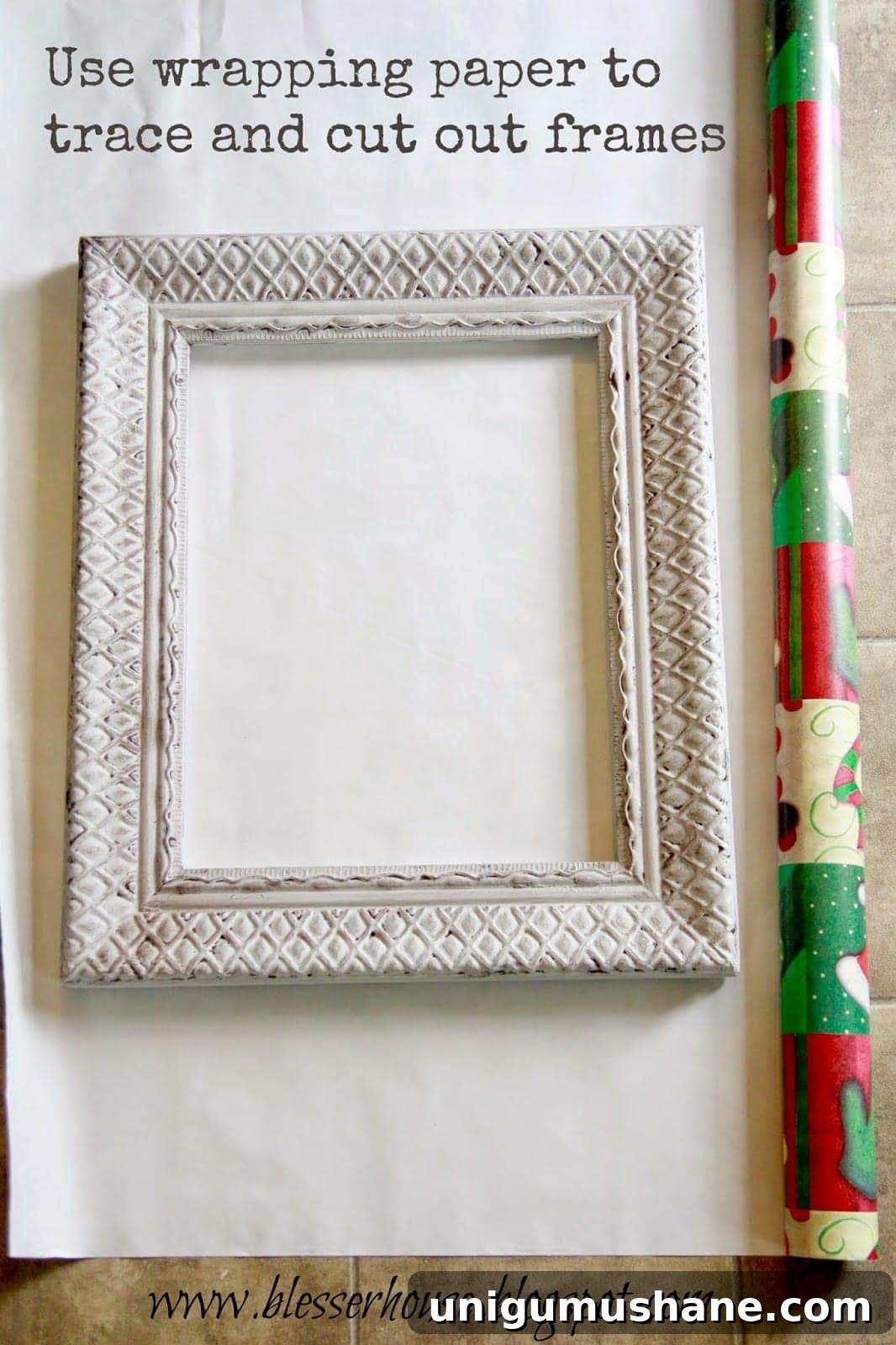
Start with inexpensive wrapping paper, kraft paper, or any large sheet to trace each frame’s outline and cut out the shapes. While cutting I kept wondering whether this extra step was necessary and if I could just guess where to place each frame. Don’t skip the templates — they save time, prevent extra holes, and make it far easier to visualize the final composition.
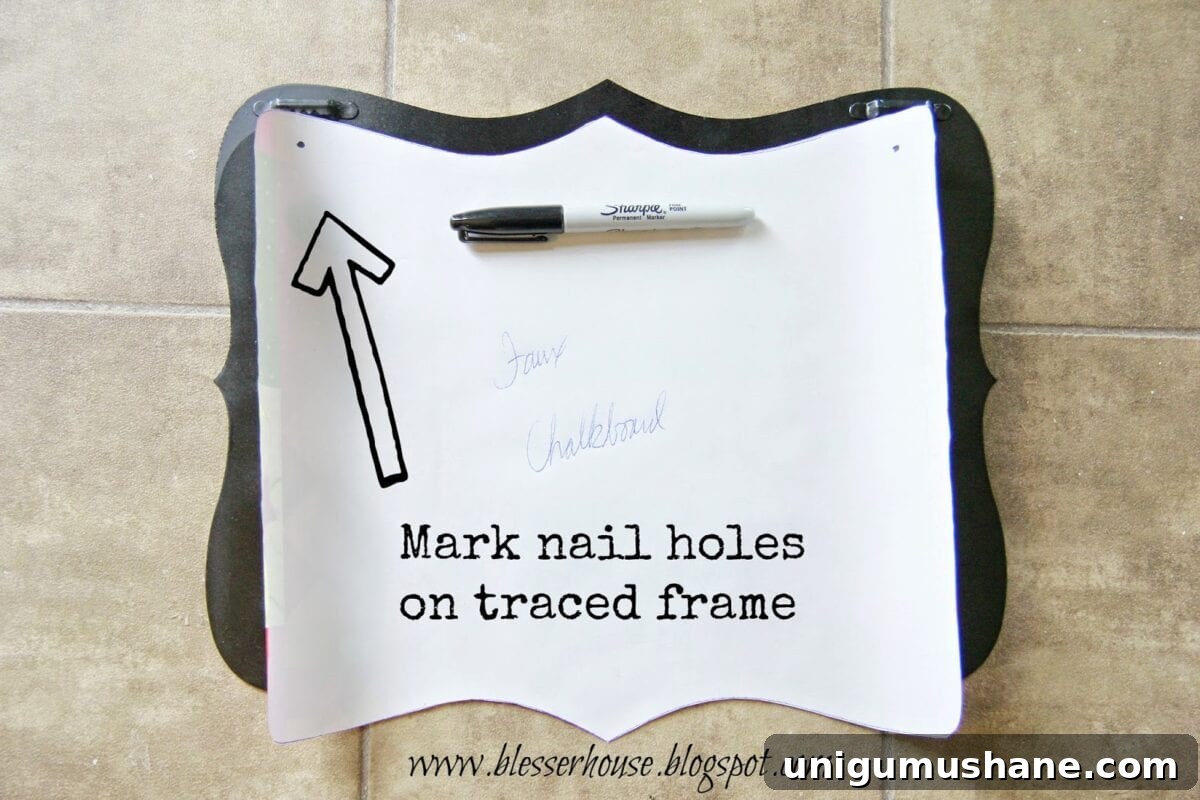
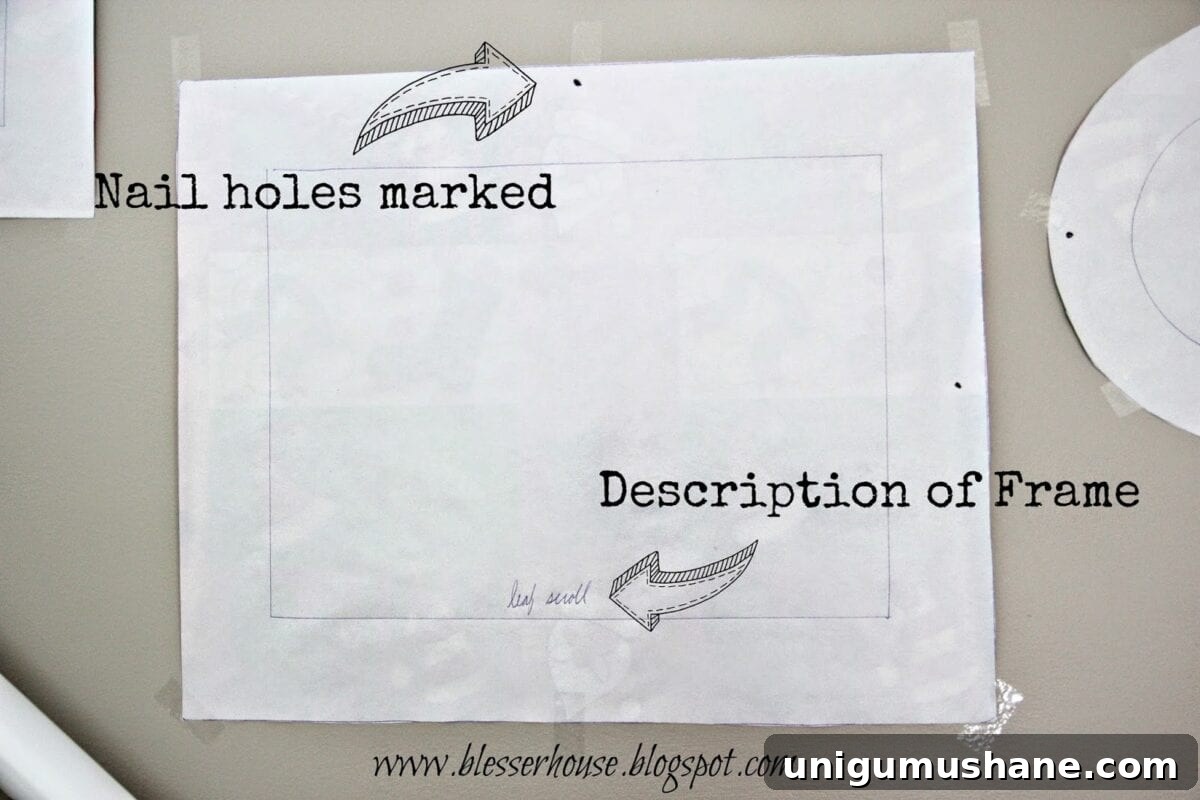
After cutting each paper template, place them over the actual frames and mark the nail or hook positions on the paper. I also labeled a few templates with short descriptions so I could remember which photo or frame style would go where while planning.
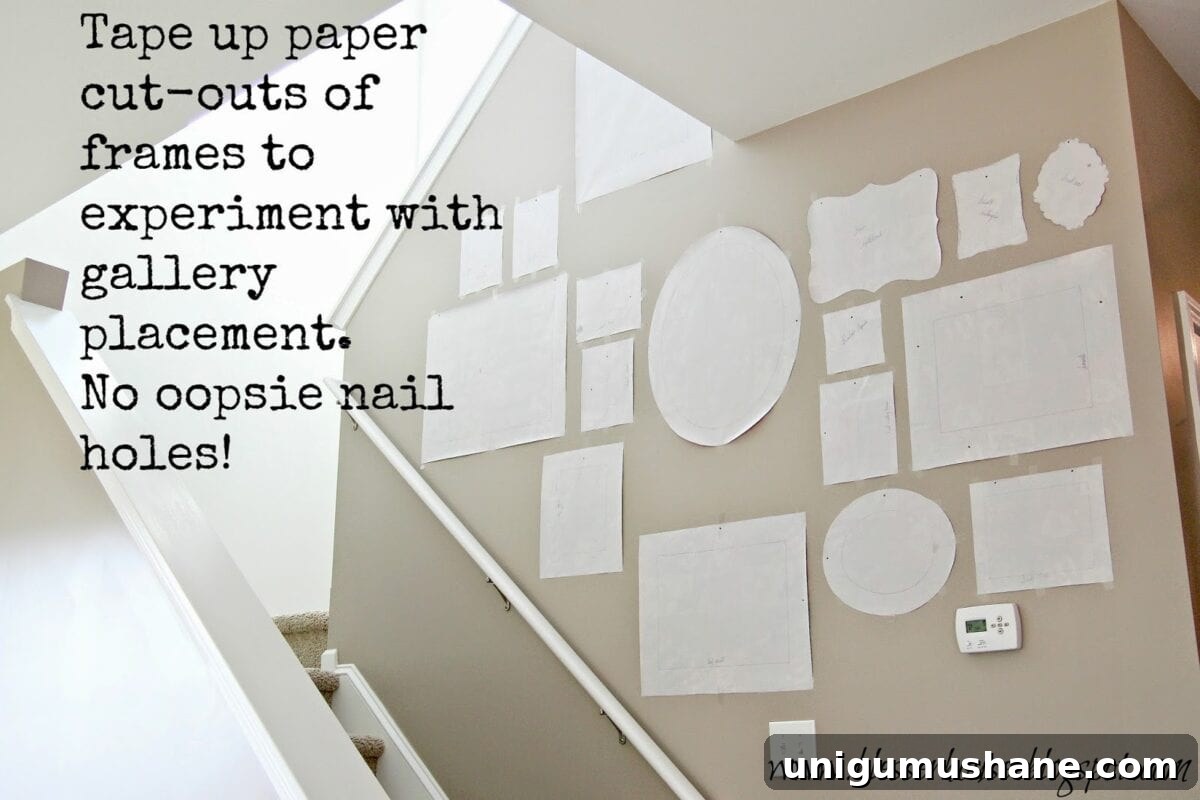
Use clear tape to attach the paper templates to the wall when you begin experimenting with layout. Painter’s tape works too, but I found clear tape less visually distracting while arranging the pieces.
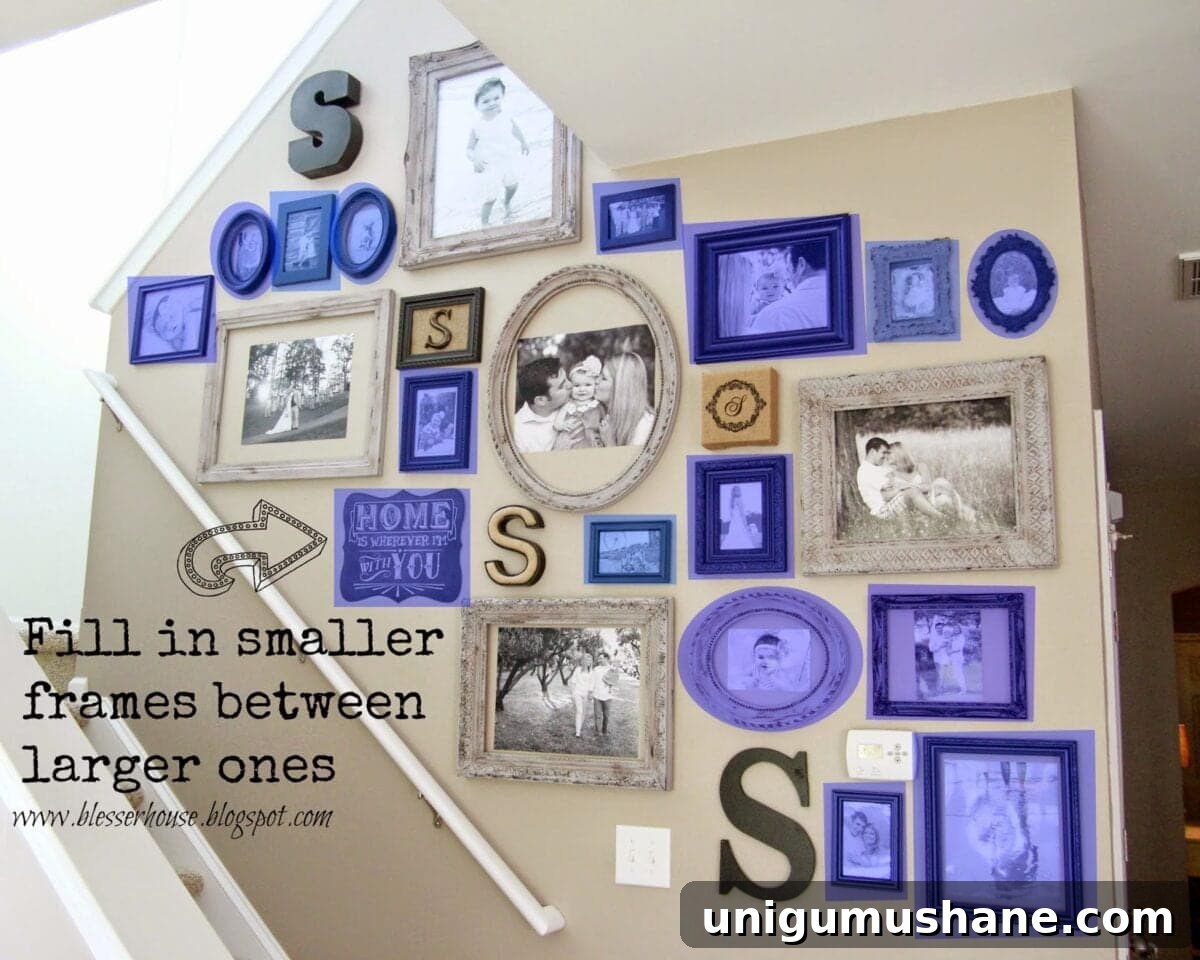
With all the paper pieces in place, I could see gaps and realized I needed a few more smaller frames to balance the composition. I shuffled templates around until the arrangement felt right — this flexibility is why tracing and taping templates is the best step for planning a gallery wall.
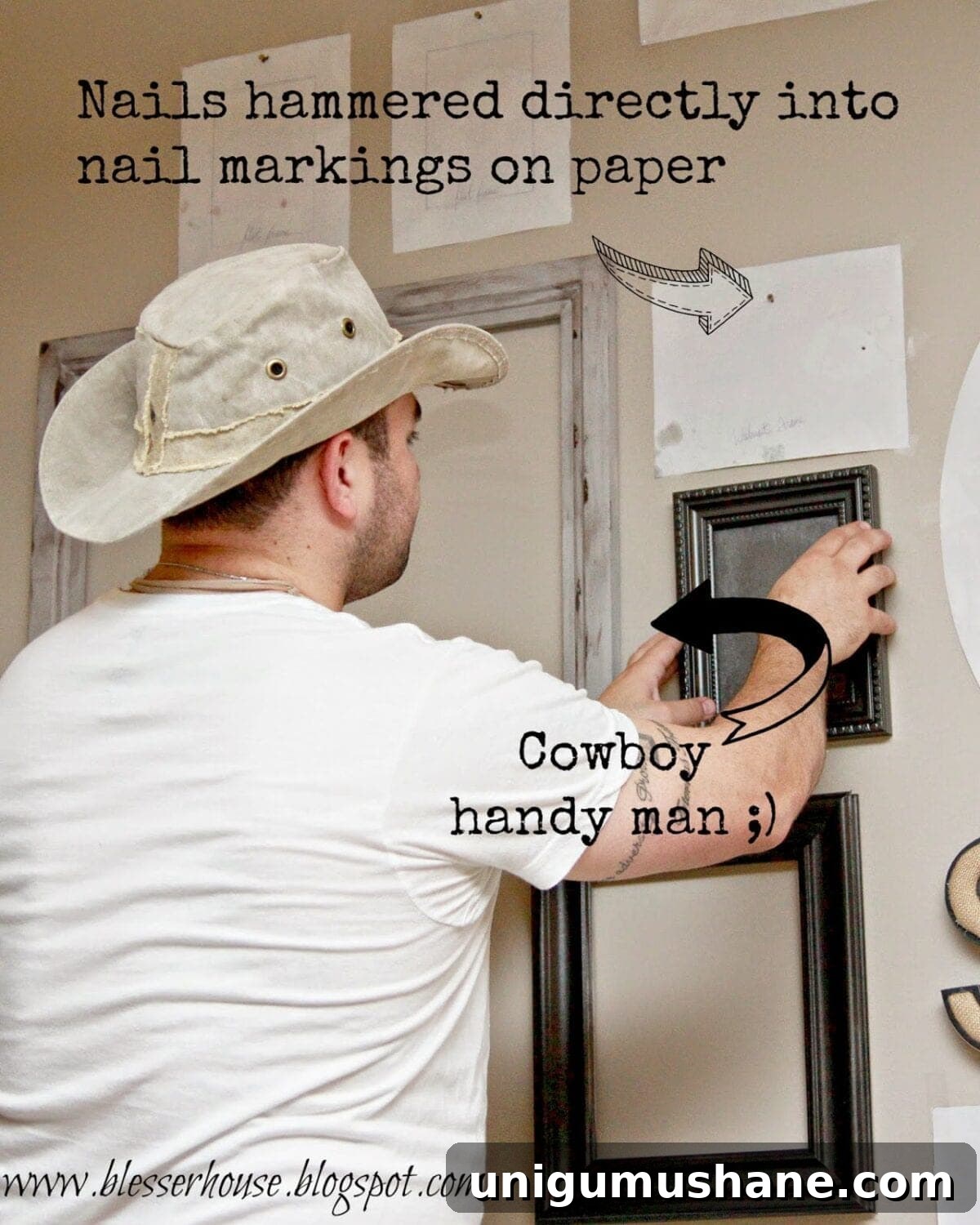
When the paper layout felt balanced, I called in help to mark and install the nails according to the template holes. Having a second pair of hands makes hanging larger groupings easier and helps ensure everything is level and straight.
While arranging, I discovered the most efficient approach for building a cohesive gallery wall:
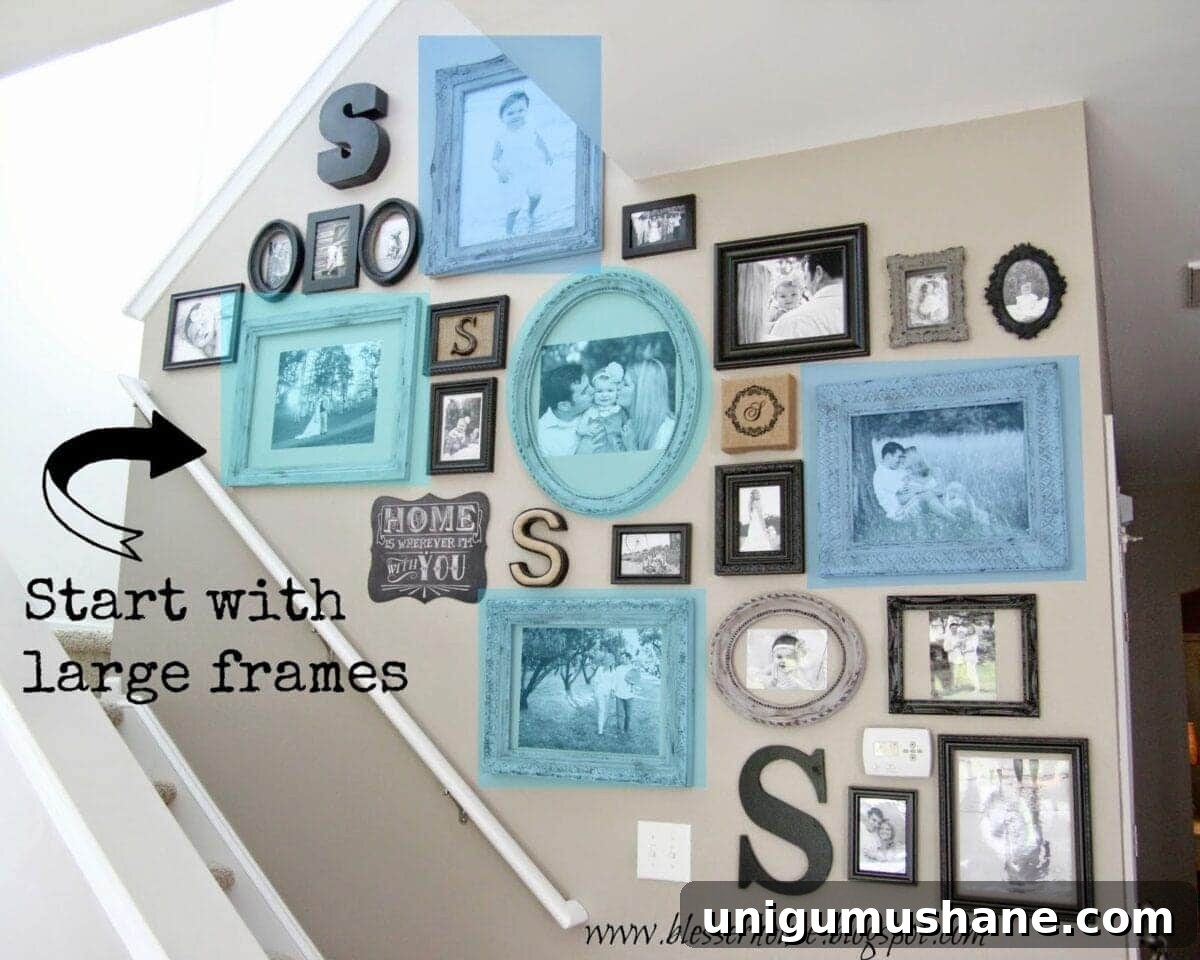
Begin with the largest frames as anchors. Place those big pieces first so they define the overall scale and balance of the display. I left enough space around each large frame to accommodate at least a 5×7, which made it easy to fill in with medium and small pieces later.
Next, add the mid-size and smaller frames (8×10 and smaller) to fill the spaces between the anchors. This step helps the gallery feel intentional and full without overcrowding any single area.
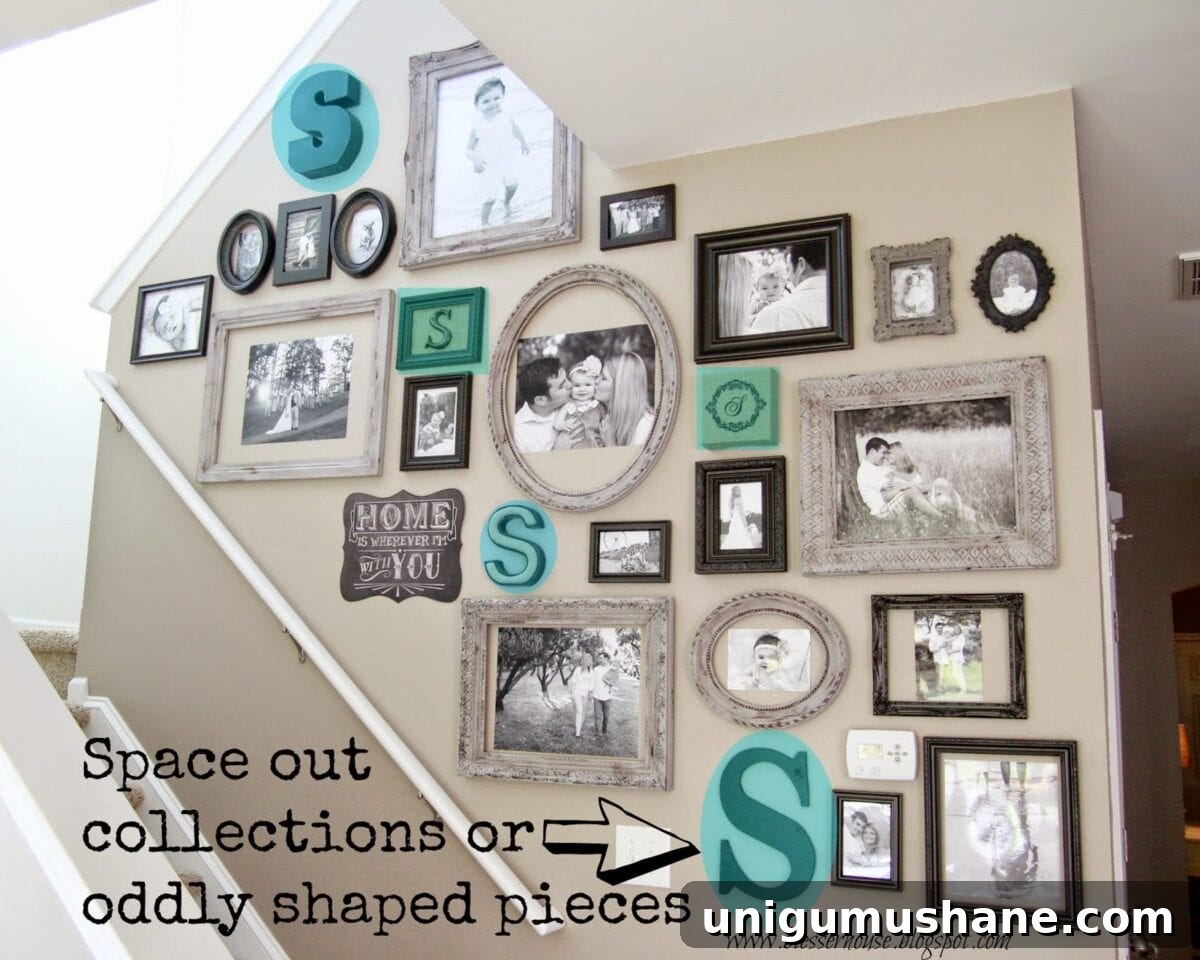
Finally, pay attention to distribution of visual elements such as initials, colors, and textures so similar items don’t end up clustered together. I spaced out the “S” initials and varied textures and frame finishes to keep the composition dynamic and balanced.
That’s the process in a nutshell. Choosing the photos took the longest — I loved revisiting memories from our recent beach trip while picking images for the frames. Sunrise shots were worth the early wake-up call for those special moments.
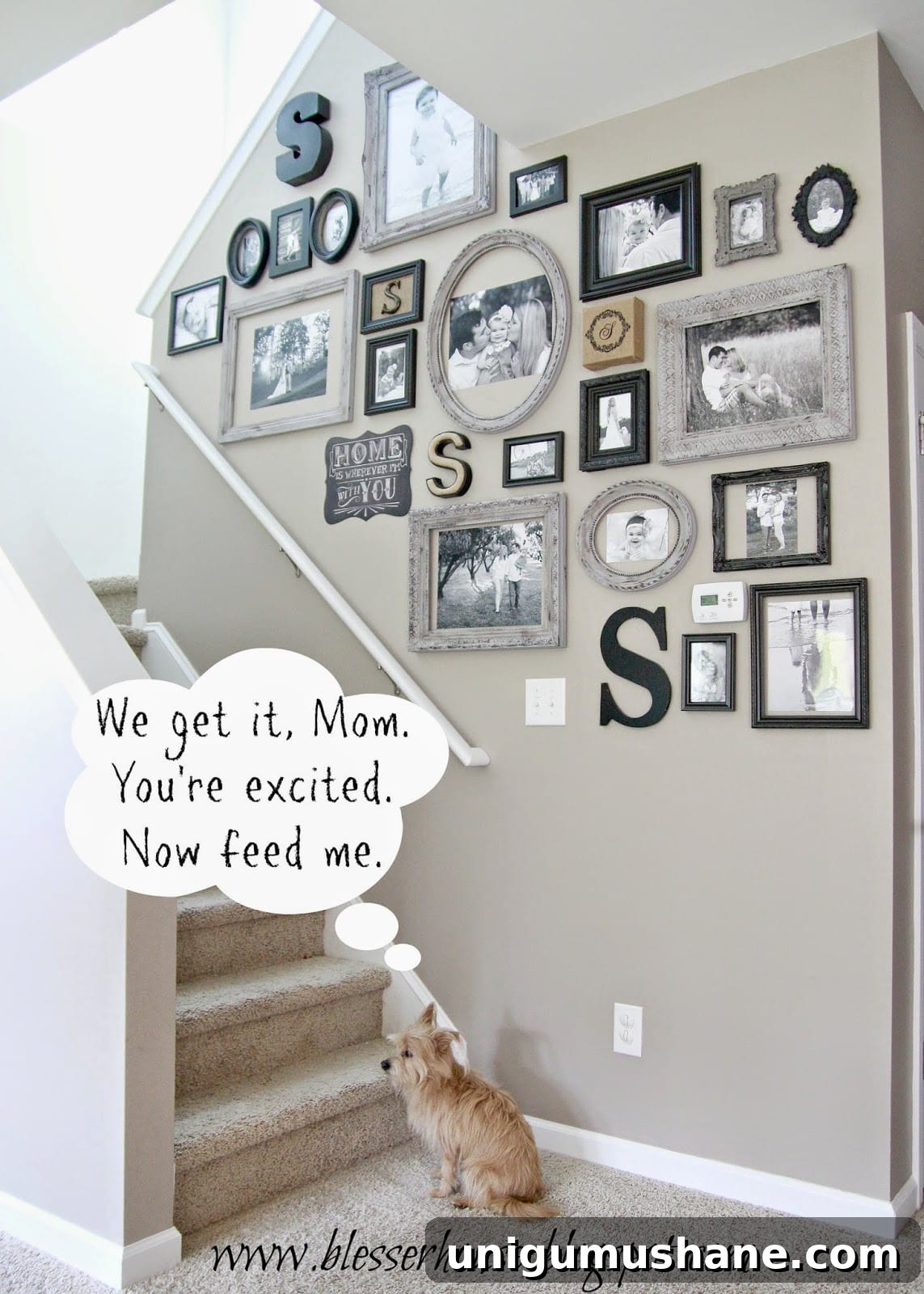
Even our dog Lola seemed impatient with my tweaks, and I admit I took dozens of photos of the new gallery wall once it was up. The space now feels less cookie-cutter and more like our home — warm, personal, and layered with little details that tell our story.
I still have the lower stair wall to plan, but I’m waiting to find the right dresser or console for storage before I tackle that area. Once I sort that out, I’ll move the TV shelves into the office and start the faux fireplace project I’ve been teasing about. Little by little, our home is gaining character.
What do you think of the layout? Would you tweak anything? I’m always adjusting things until they feel just right. Update: I later expanded the display into a full stairwell gallery — it continued the same planning process with templates and anchor pieces for a cohesive look.

Follow: Facebook | Pinterest | Instagram | Twitter | Google+ | Bloglovin | Hometalk