
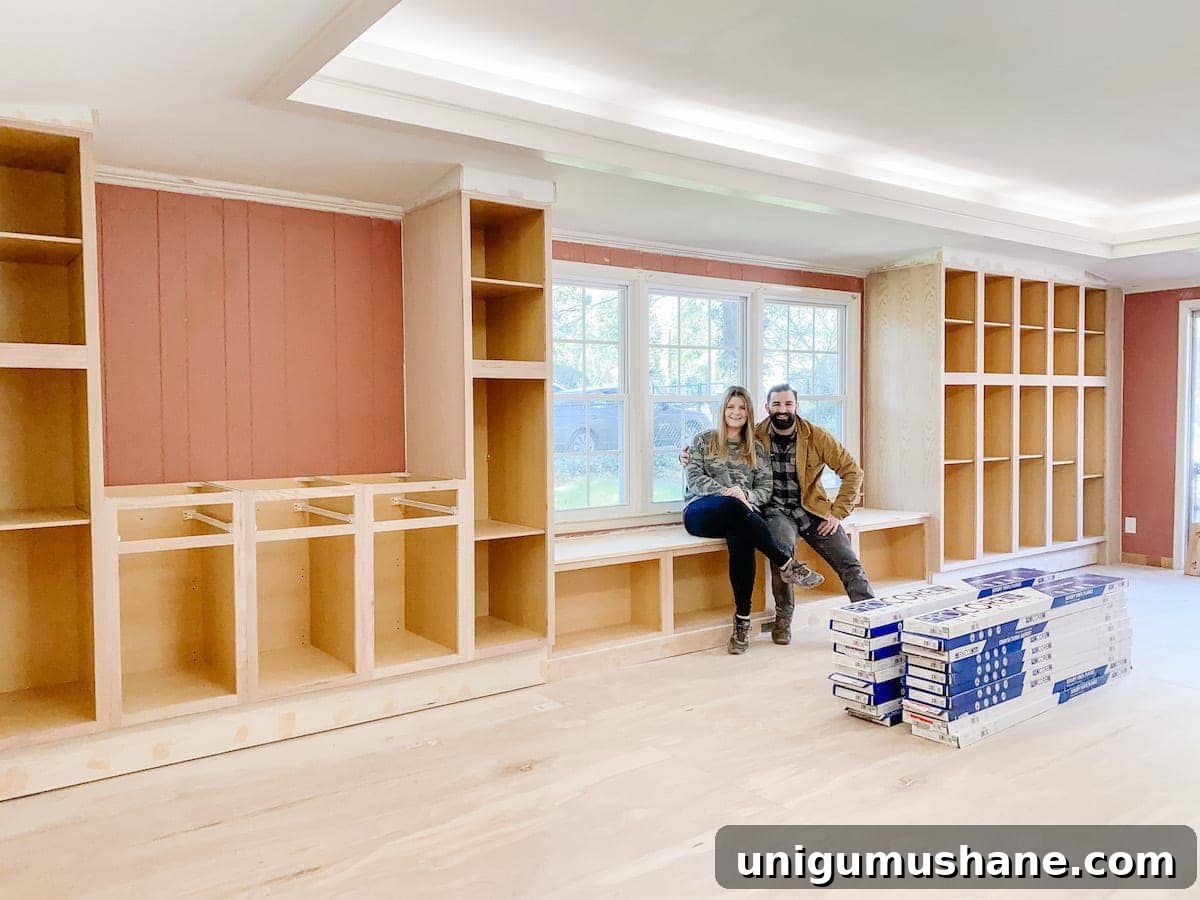
A step-by-step tutorial to build DIY built-in cabinets and a window seat using inexpensive stock kitchen cabinets.
We survived the most intense project of the Carney rec room makeover: building custom-looking built-ins and a window seat from inexpensive stock kitchen cabinets. It was a challenging week of planning, measuring and installing — but the result is a room that suddenly feels massive and organized.
Two weeks earlier, the room looked like this:
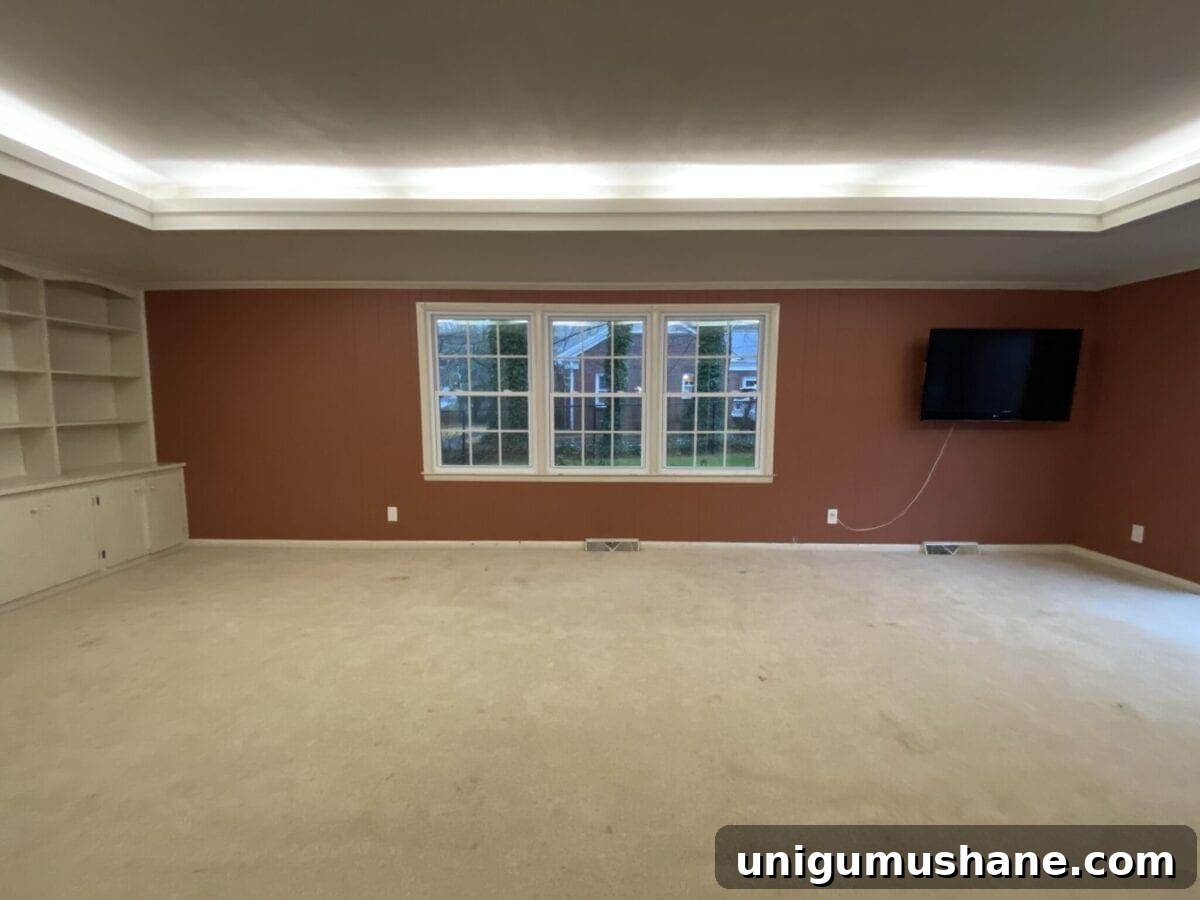
This was the toughest built-in project we’ve tackled so far. We’ve done a few built-in jobs over the years — including IKEA built-ins at our previous house, bookcase built-ins in our current playroom, and a window seat made from a refrigerator cabinet — but this one required adapting when IKEA stock wasn’t available. We turned to local hardware stores and used stock kitchen cabinets instead. Problem solved.
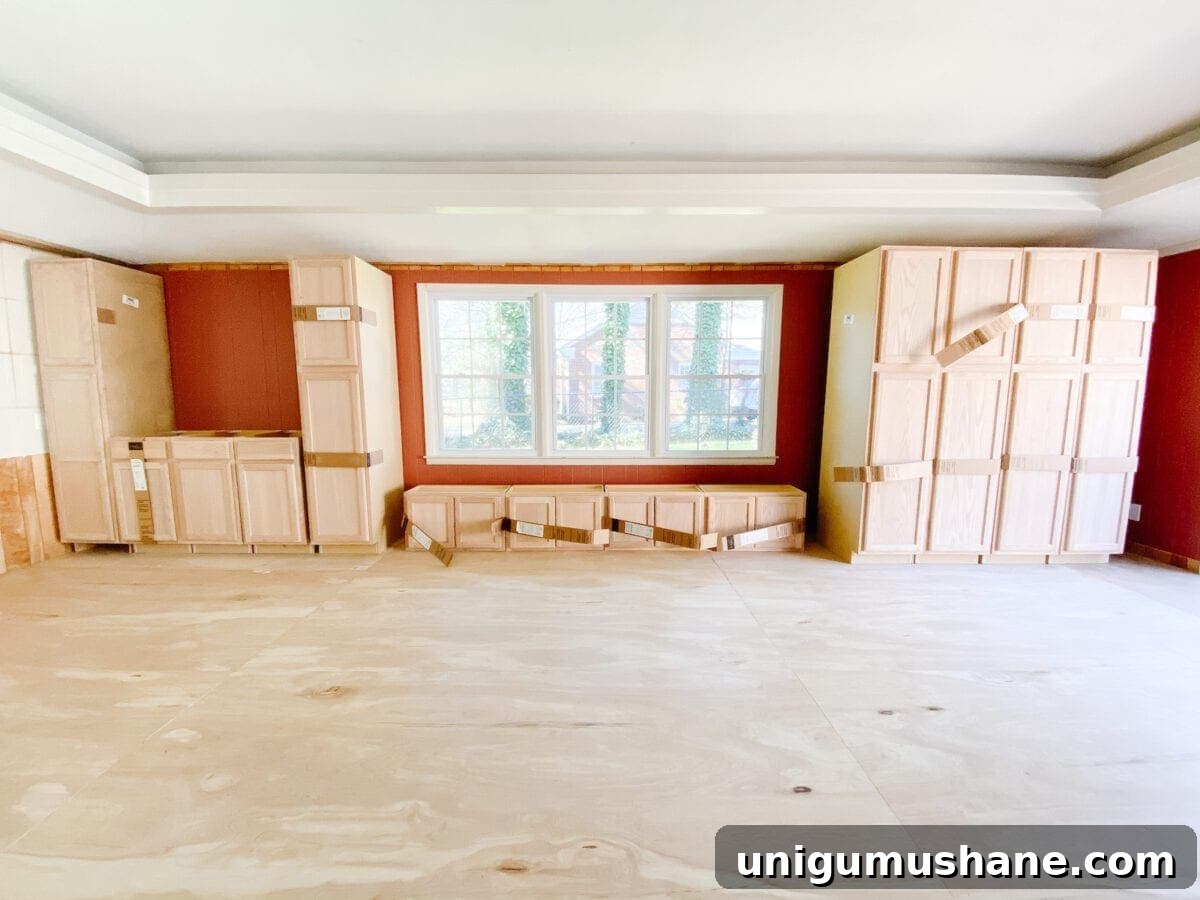
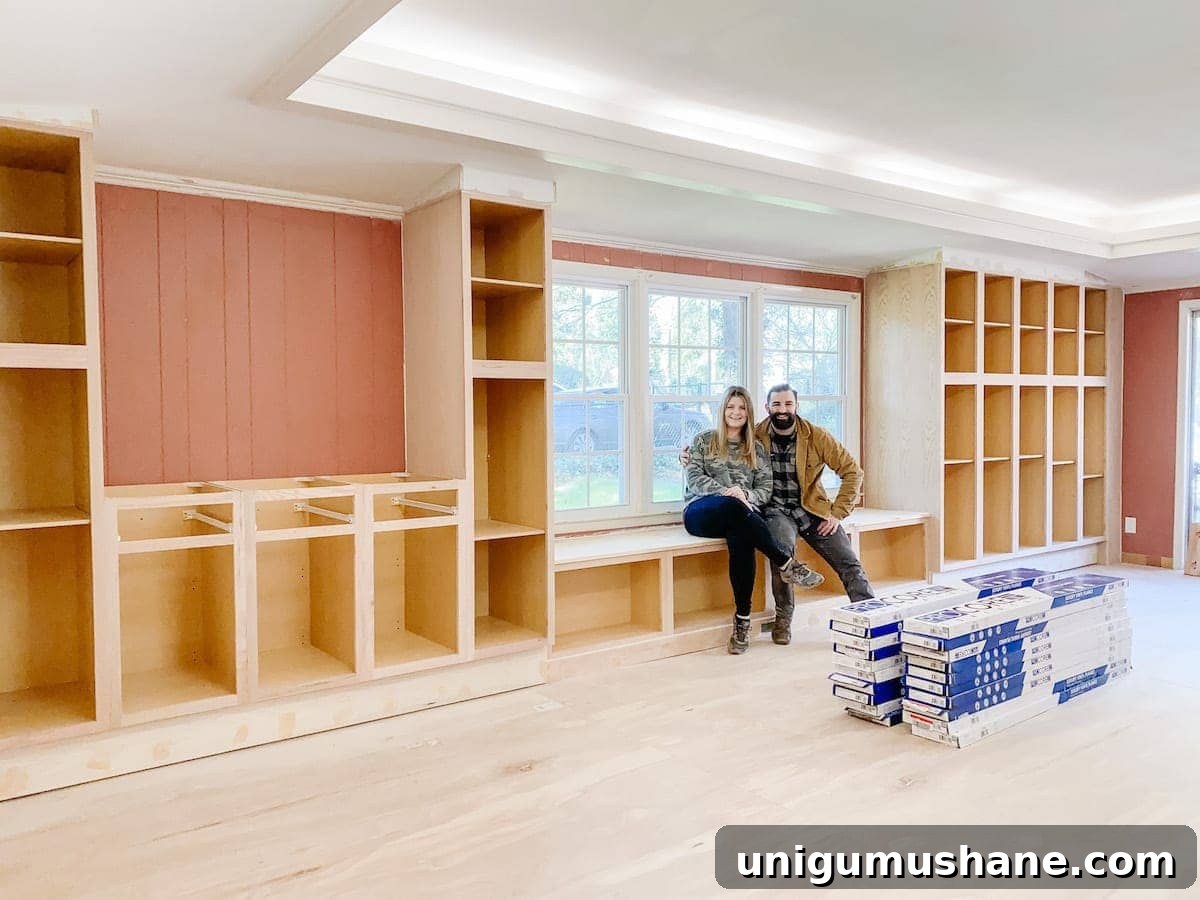
After about a week of work, the structure started to look official — even before doors, paint, and flooring were finished.
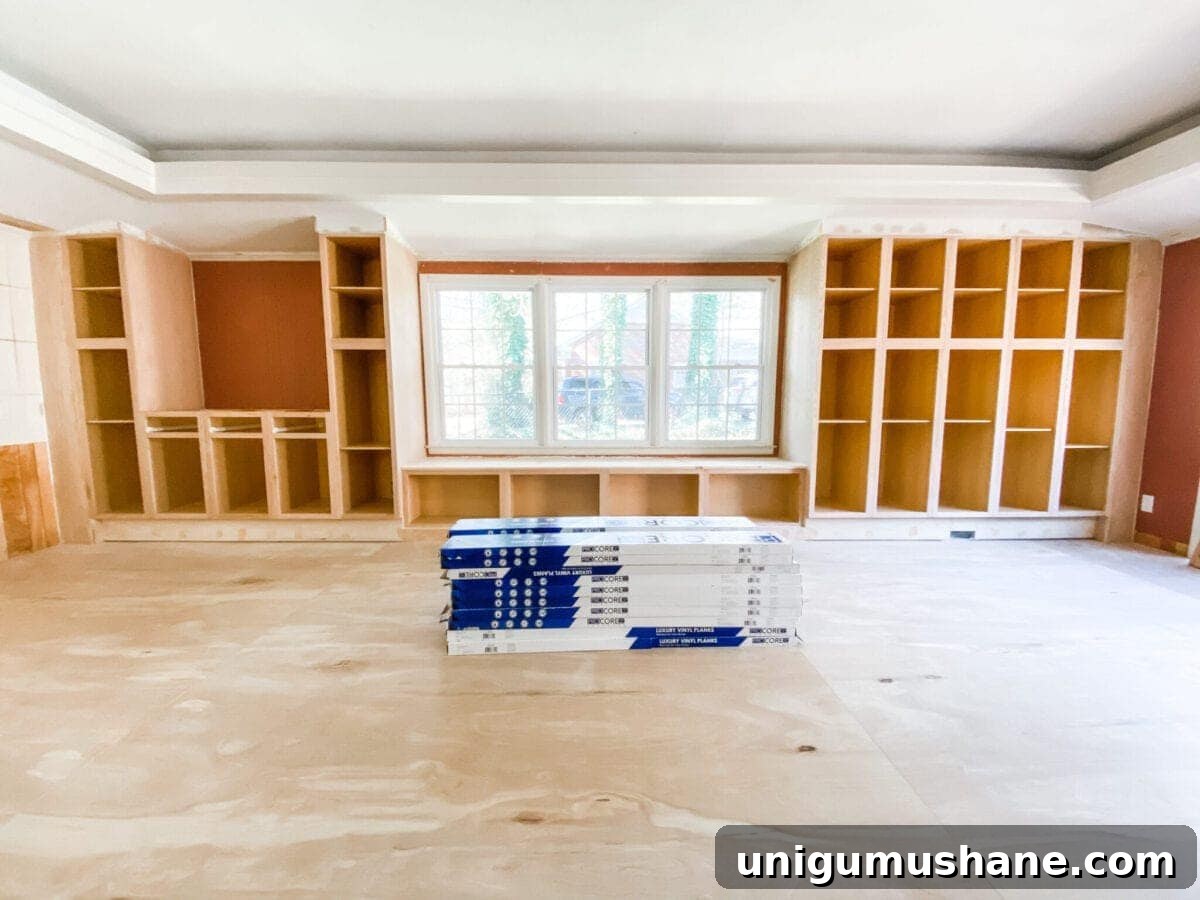
(The flooring boxes pictured are staged around the corner.)
I documented as many steps as possible while Robert and I completed the build in a week. Below is a concise, practical guide to recreate these built-ins and window seat using affordable stock cabinets and common carpentry techniques.
DIY Built-In Cabinets
Supplies Used:
- Stock pantry cabinets (we used 7)
- Stock refrigerator cabinets (we used 4 for the window seat)
- Stock base cabinets (we used 3)
- Stock cabinet side panels (we used 4 for exposed sides)
- 15 pieces of 2×4 lumber
- 2 pieces of 1×12×8 poplar board
- 1×10×10 pine board
- 1×12×10 pine board
- Four 1×4×8 pine boards
- Three 1×8×10 pine boards
- #8 1 1/2″ cabinet screws
- #8 1 5/8″ deck screws
- Wood shims
- Toe ductors (to reroute vents)
- Wood filler
- Paintable caulk
Tools Used:
- Clamps (4)
- Speed square
- Tape measure
- Chalk line
- Drill and bit set
- Cordless finish nailer
- Cordless crown nailer
- Level
- Utility knife
- Miter saw
- Jigsaw
- Oscillating multi-tool
- Orbital sander
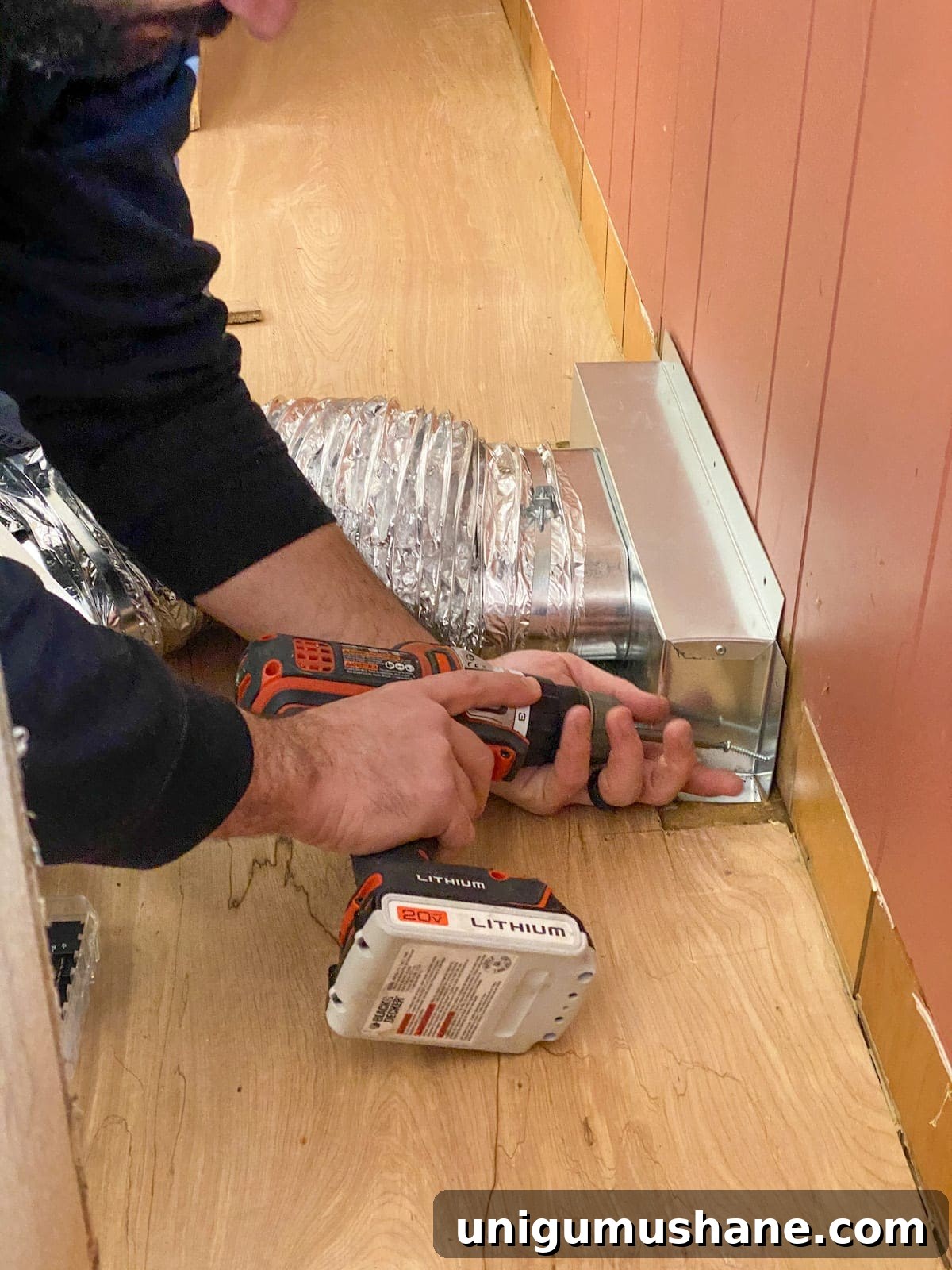
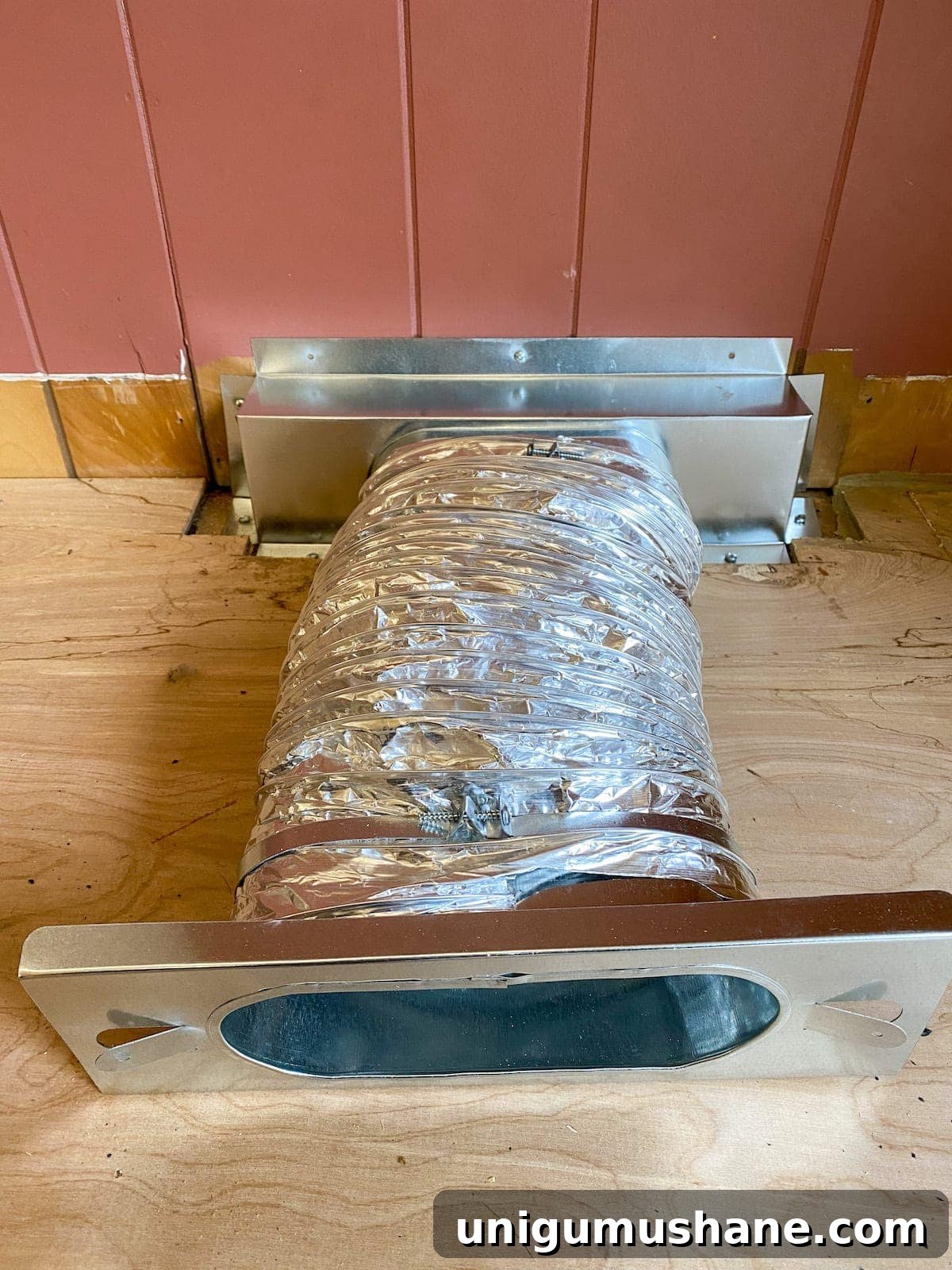
The main obstacle was that the wall planned for built-ins had baseboard vents. Rerouting HVAC in the room wasn’t a feasible or cost-effective option, so we installed toe ductors to route airflow underneath the new cabinets and keep vents accessible.
The Base
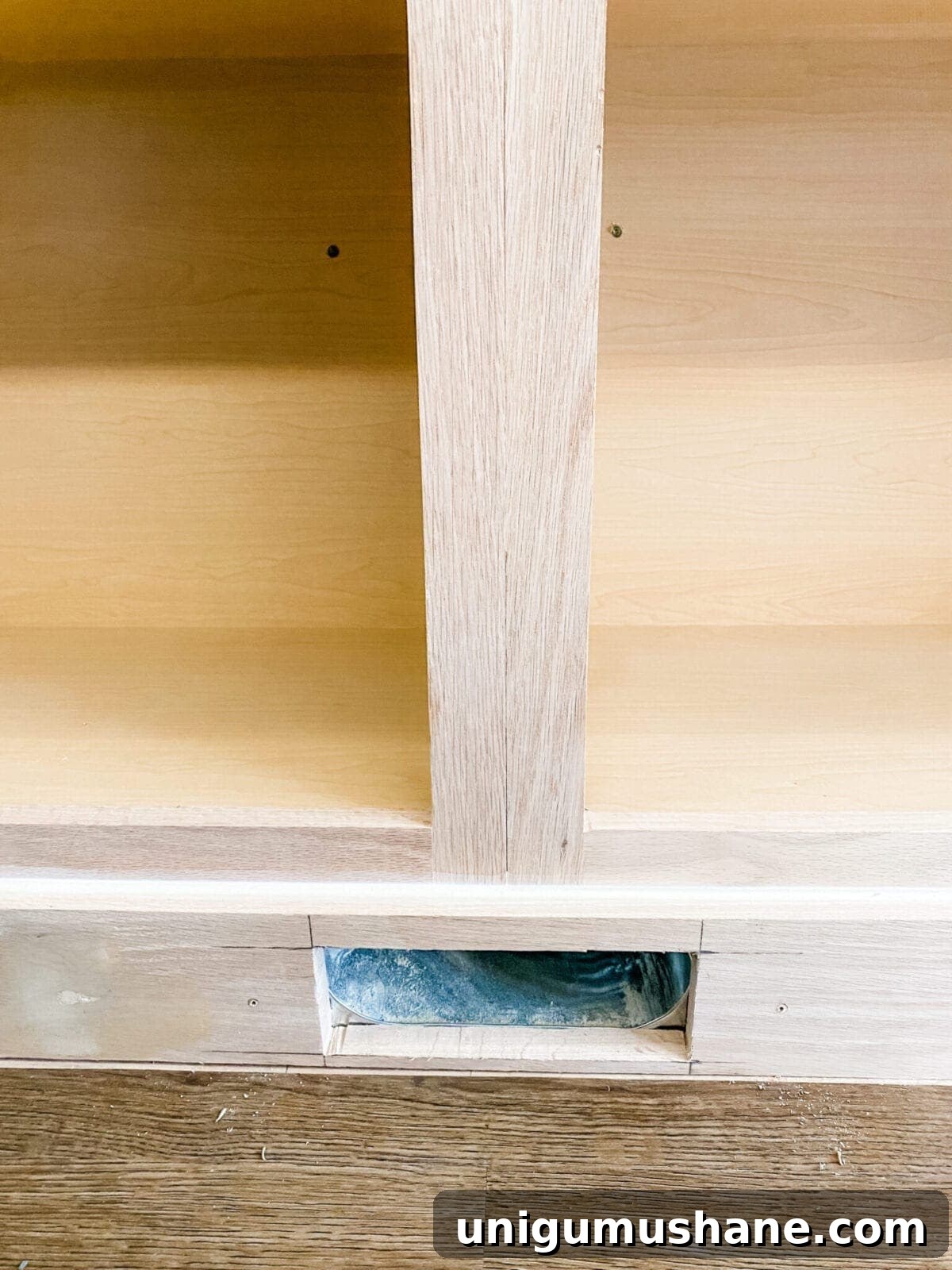
1. Install toe ductors where baseboard vents exist so airflow can be routed under the built-ins and out the front toe kick.
2. Measure the depth required for the cabinets to sit flush against the wall, and snap a chalk line along the length of the wall at that distance.
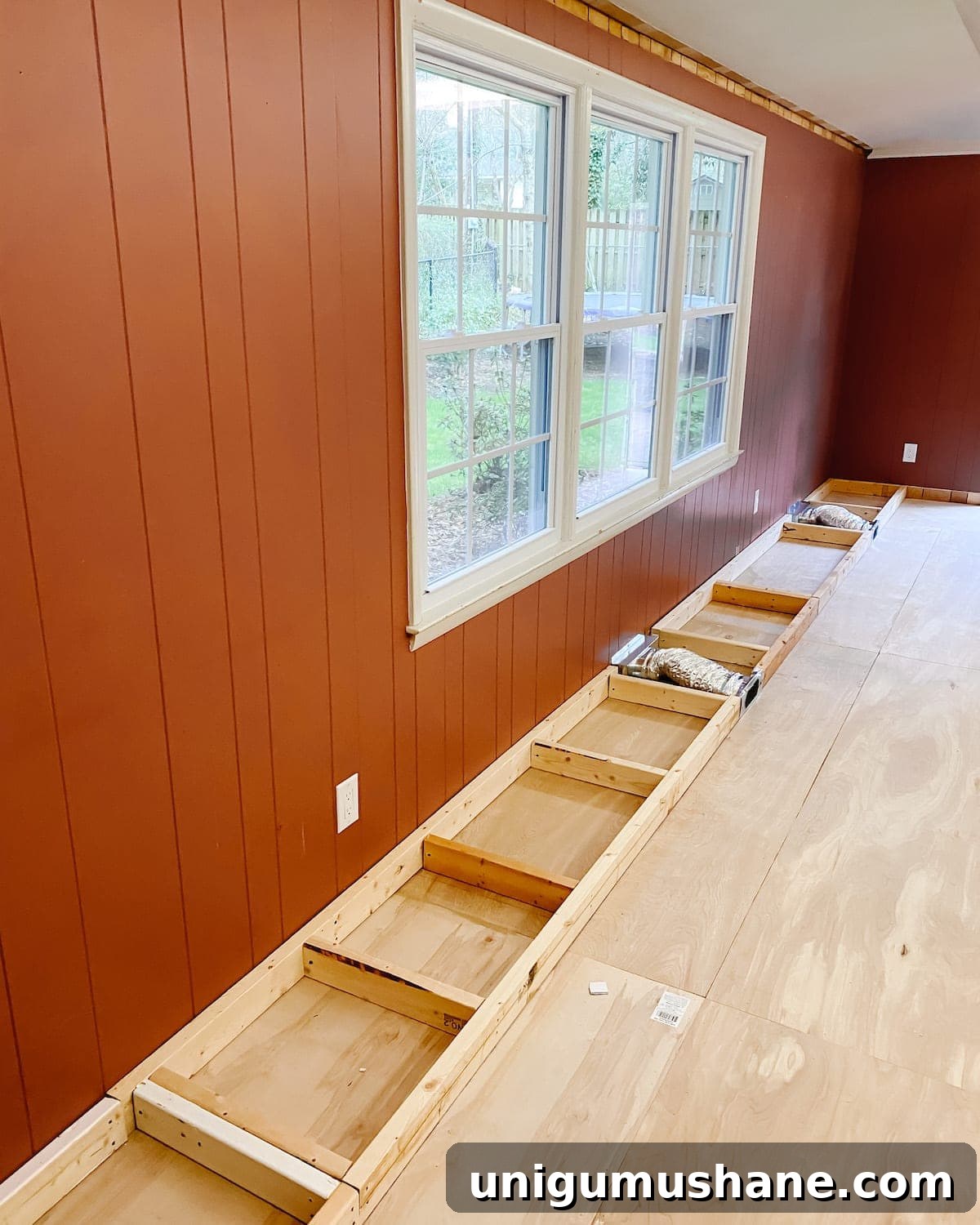
3. Build a continuous base frame from 2x4s along that chalk line, screwing the frame together and fastening it to the wall and floor with #8 deck screws.
4. Position 2×4 supports on either side of the toe ductors so the airflow channels forward through the base instead of being trapped beneath cabinets.
The Window Seat
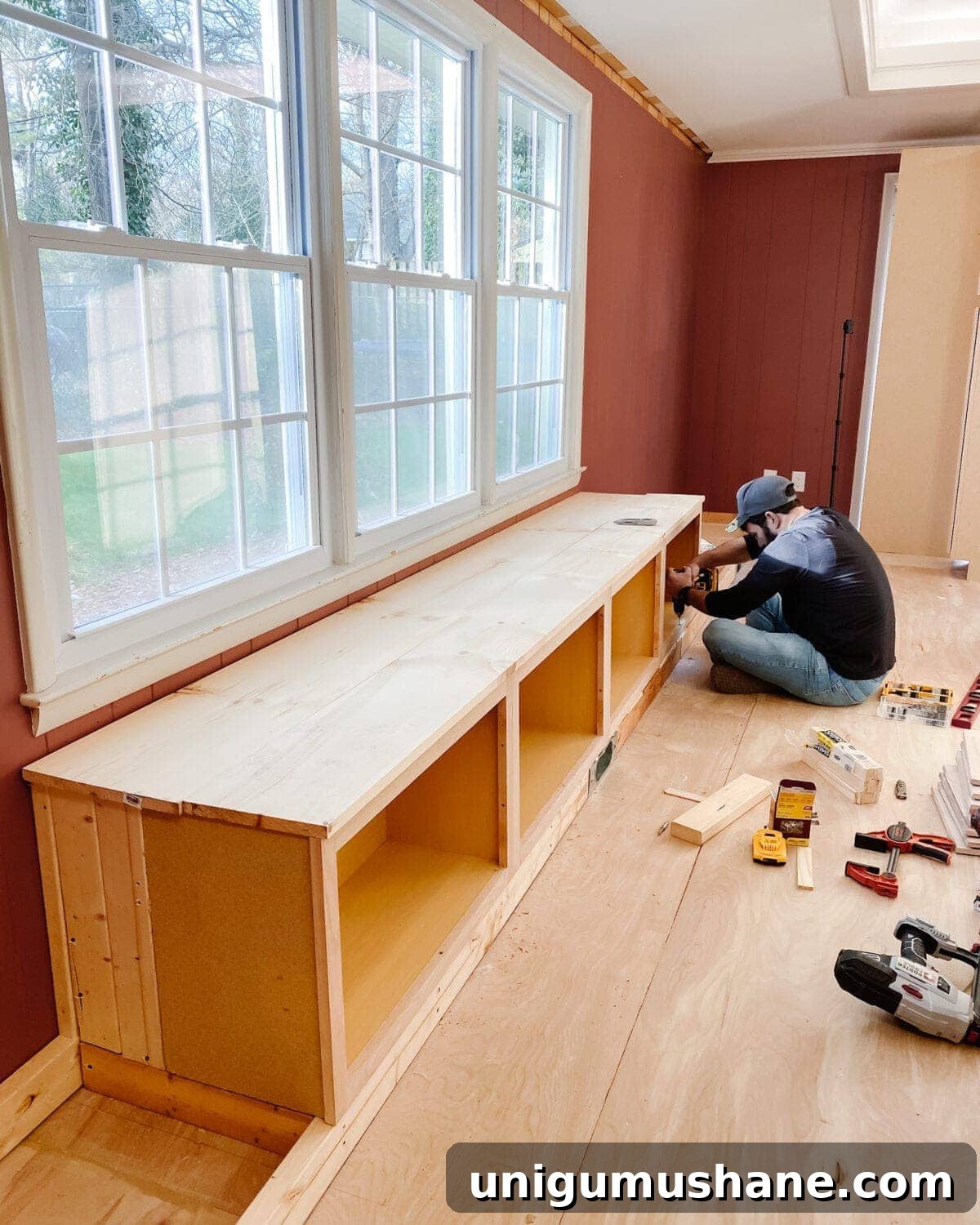
5. To build the window seat, add rear support framing behind the cabinets using 2x4s. Because stock refrigerator cabinets aren’t deep enough for a comfortable seat, the added framing creates the necessary depth while aligning the seat height with the tall cabinets on either side.
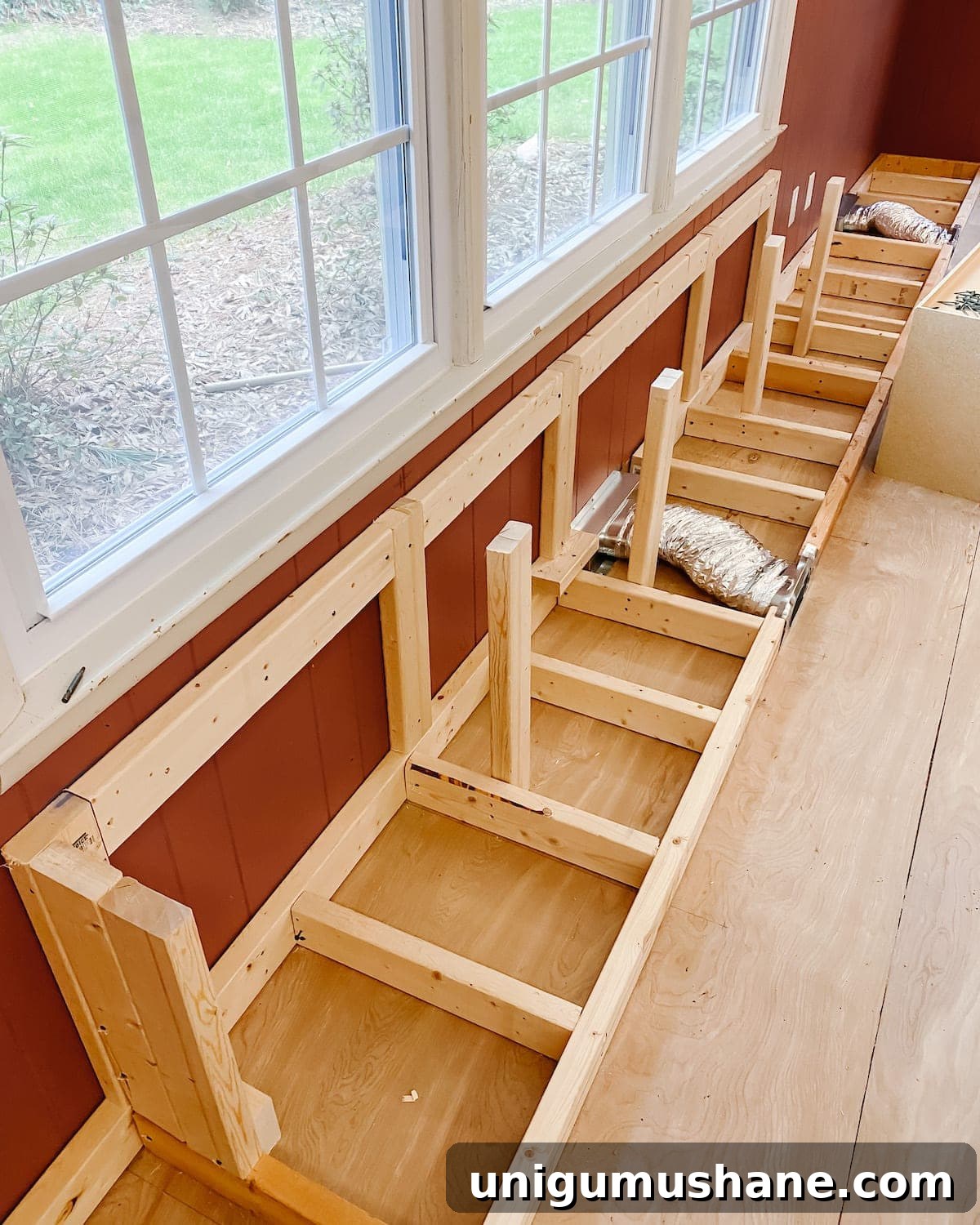
6. Set the cabinet backs into place and secure each cabinet to the rear 2x4s with one #8 cabinet screw to allow later adjustments while squaring the fronts.
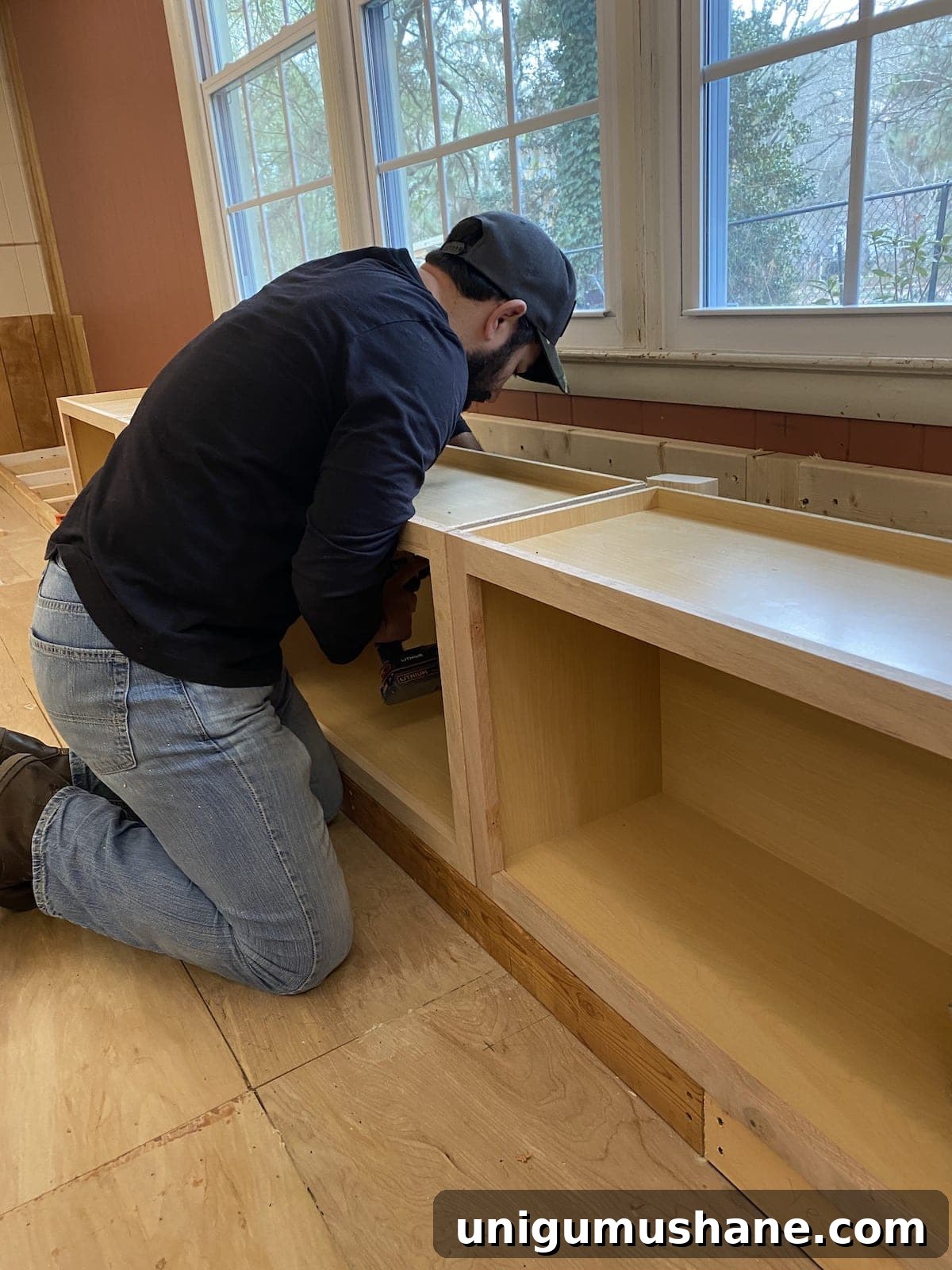
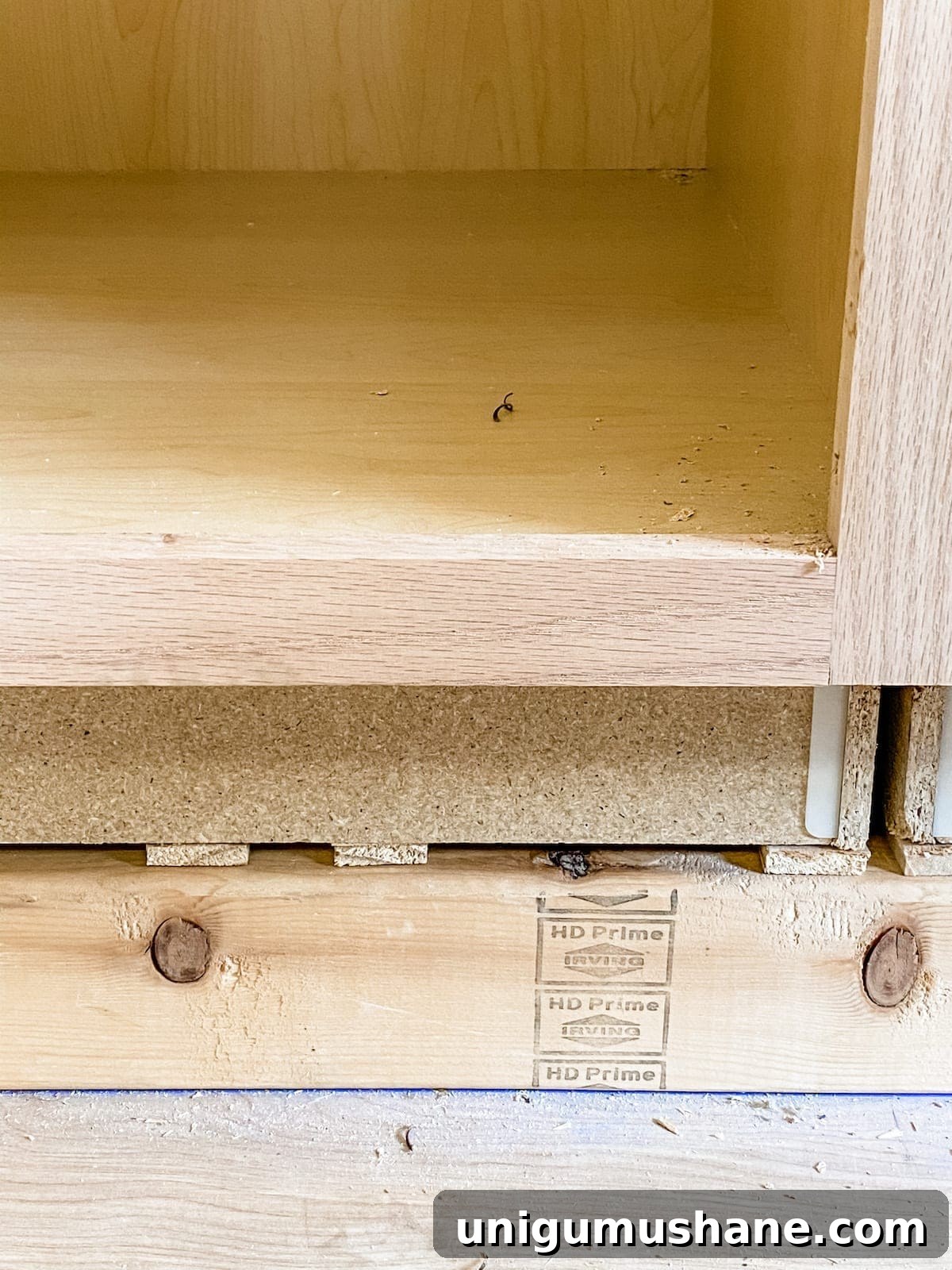
7. Use shims between the cabinet bottoms and the base to level each cabinet precisely.
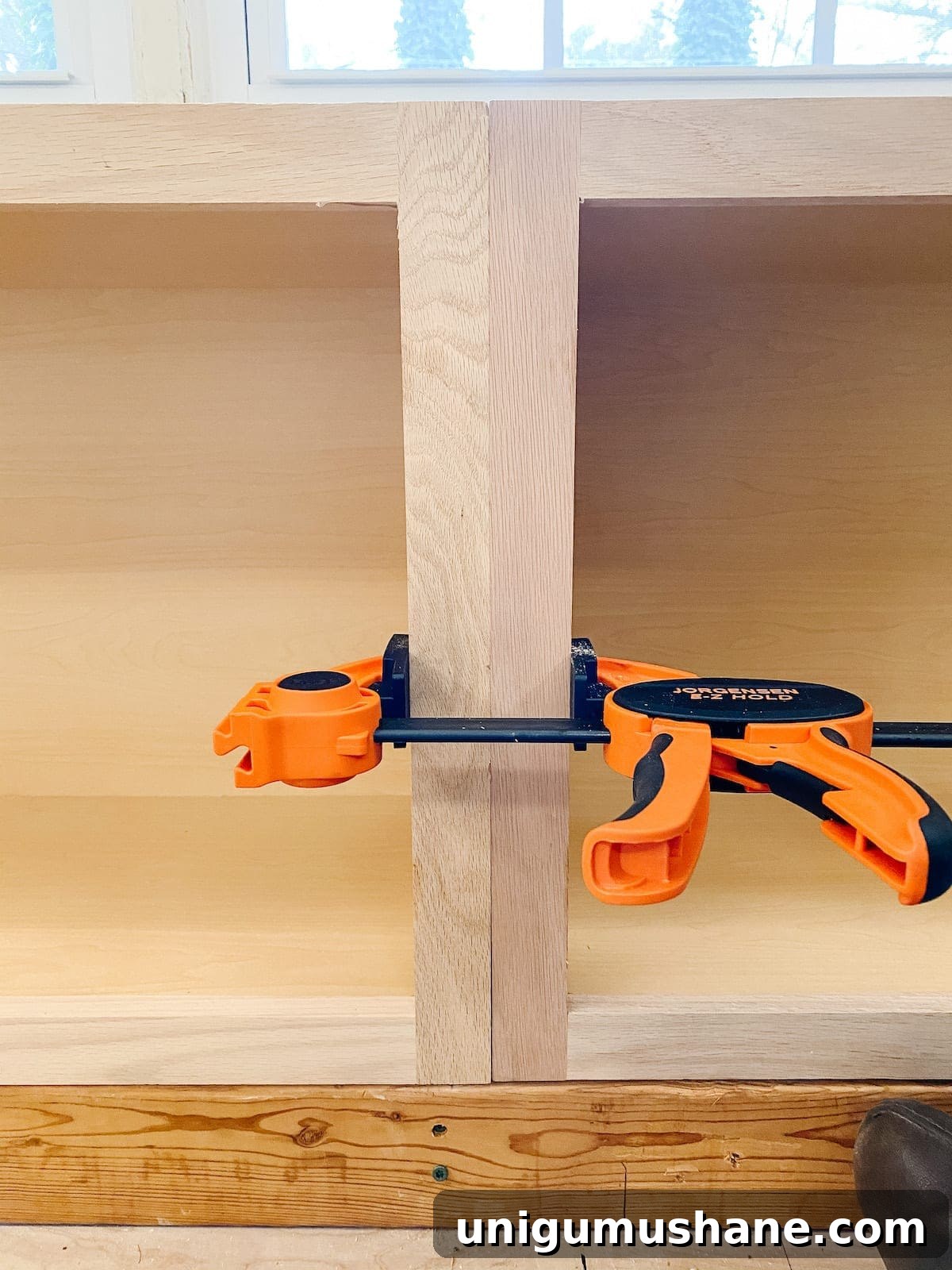
8. Clamp cabinet faces together and adjust until the frames are flush. Pre-drill pilot holes through adjacent cabinet sides and screw the cabinets together with cabinet screws.
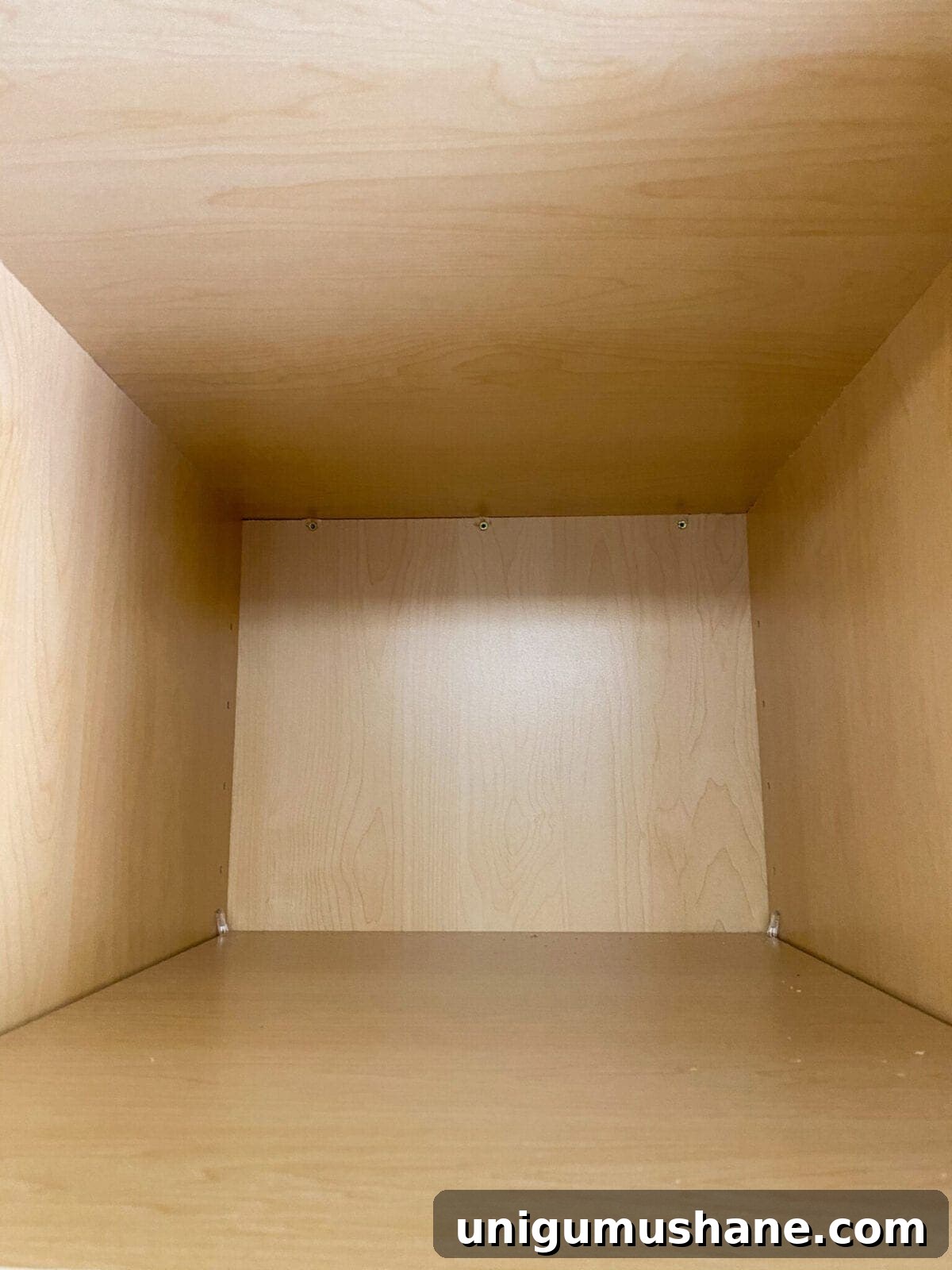
9. Once cabinets are aligned, add two additional screws into the backs to firmly secure each cabinet to the rear framing.
10. Confirm all cabinets are level before attaching the seat top. Cut a 1×10 and a 1×12 pine board to length and screw them down to create a solid window seat surface.
The High Cabinets
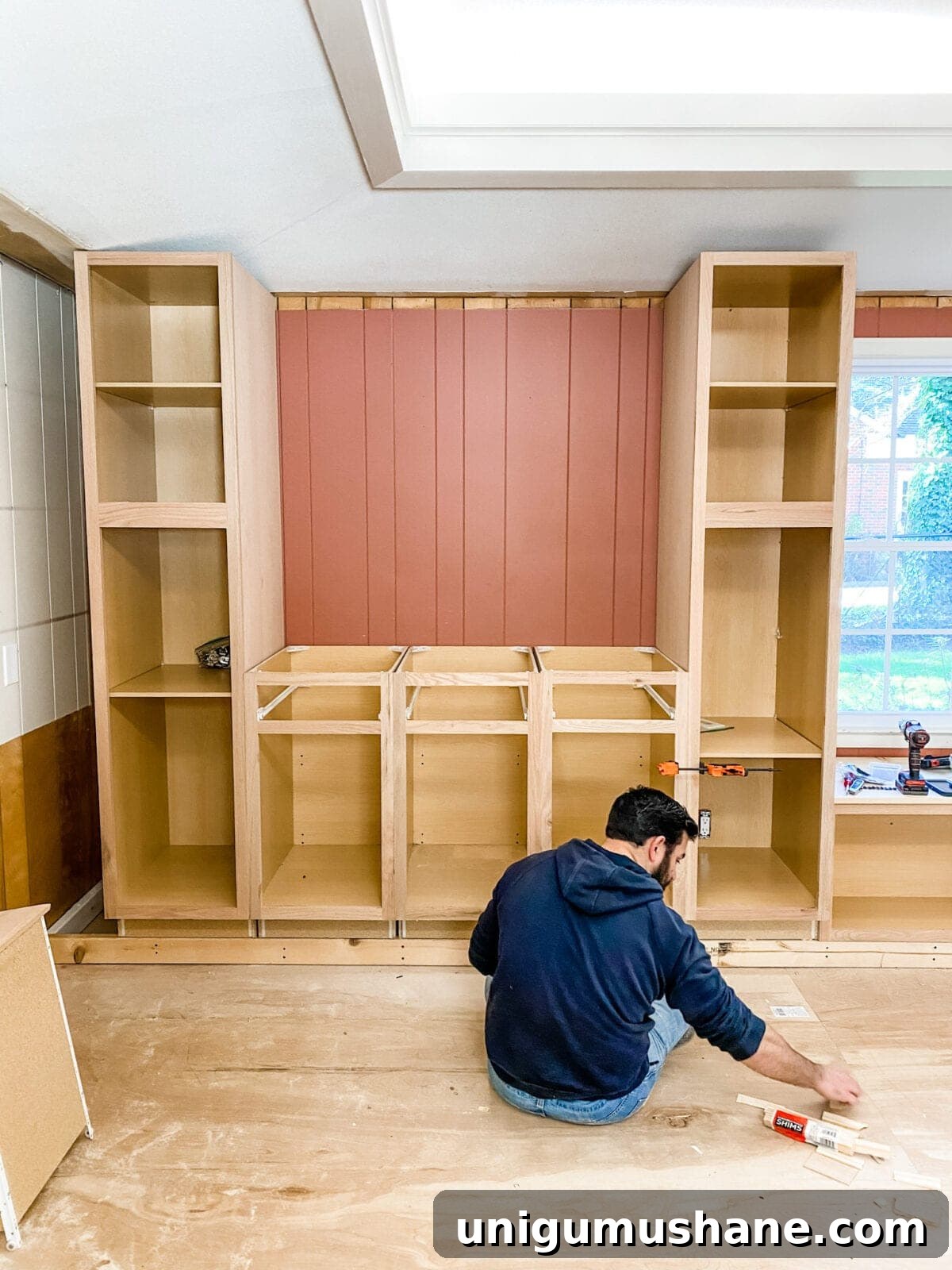
11. Repeat the same set-and-level process for the tall cabinets on each side of the window seat. Fasten them securely to wall studs where possible.
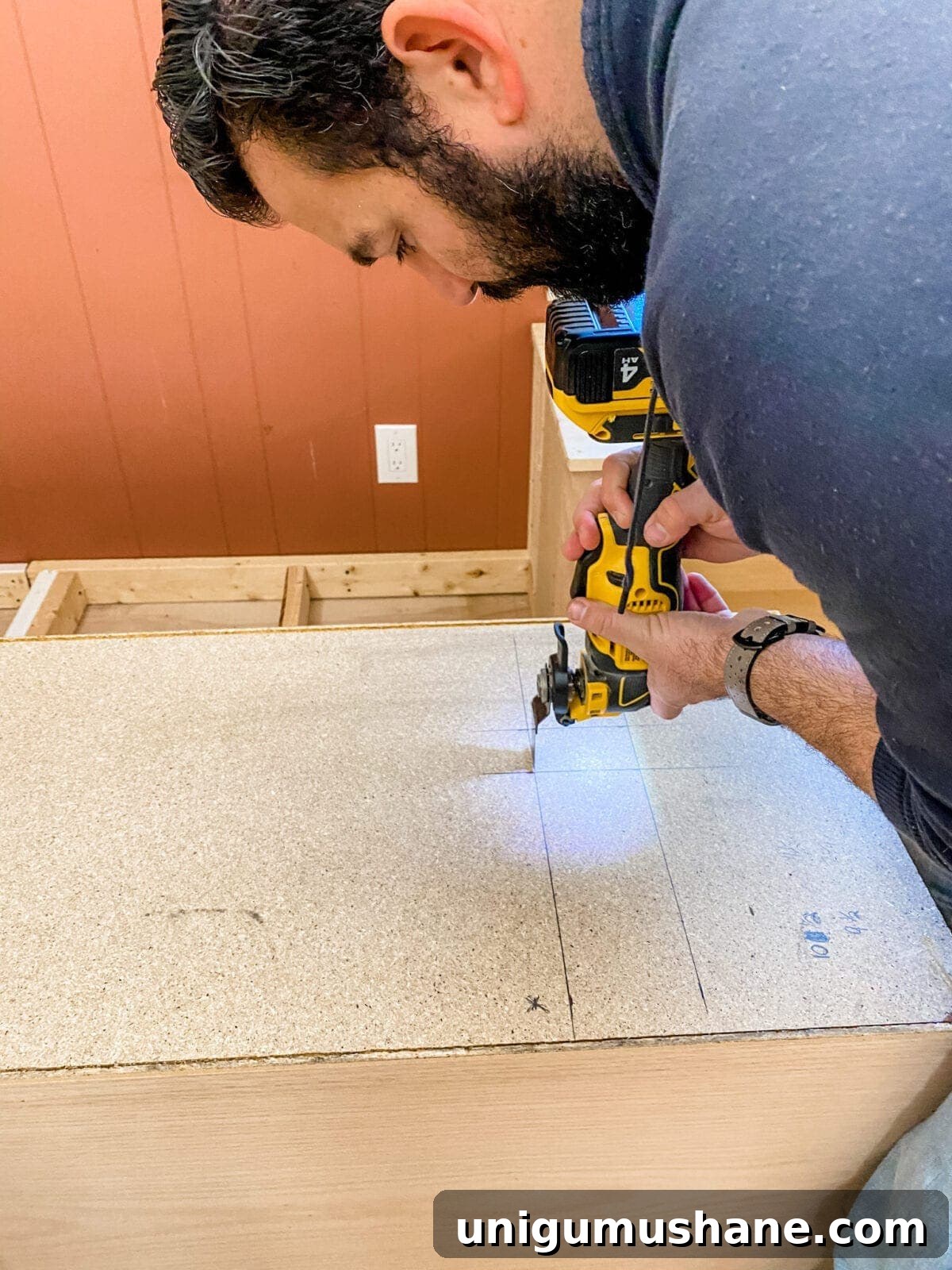
12. When you encounter electrical outlets on the wall, cut access holes in the cabinet backs with an oscillating multi-tool and use outlet spacers so the outlet remains accessible and the faceplate attaches properly inside the cabinet.
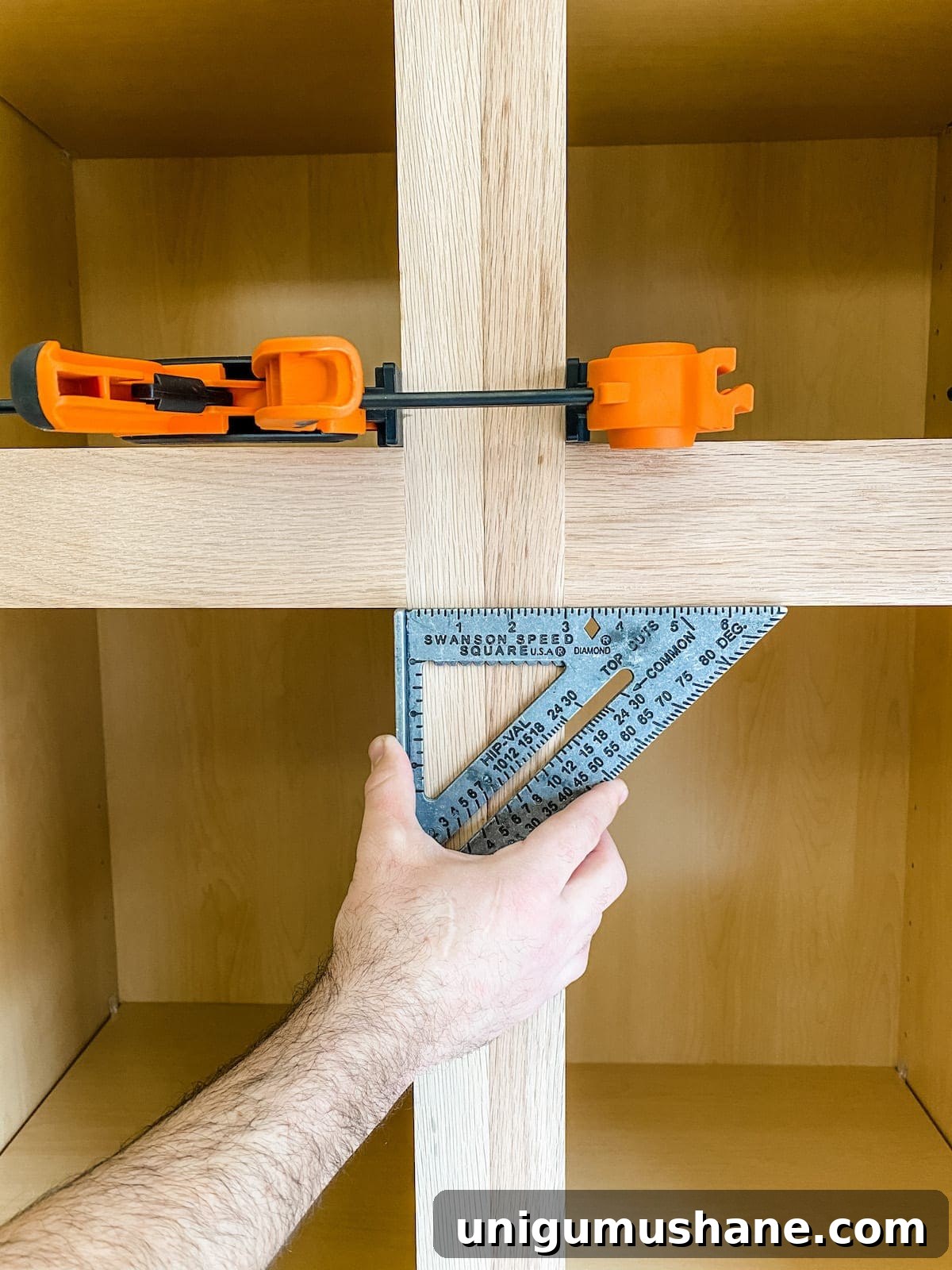
13. Use a square and clamps to close gaps and align cabinet faces. Once they’re perfectly flush, pre-drill and screw cabinets to each other for a seamless appearance.
Trimming Them Out
14. To make the cabinets feel built-in, attach 2x4s between the cabinet sides and the wall where gaps exist, then install a 1×12 poplar board across the front to close the voids and create a continuous built-in look.
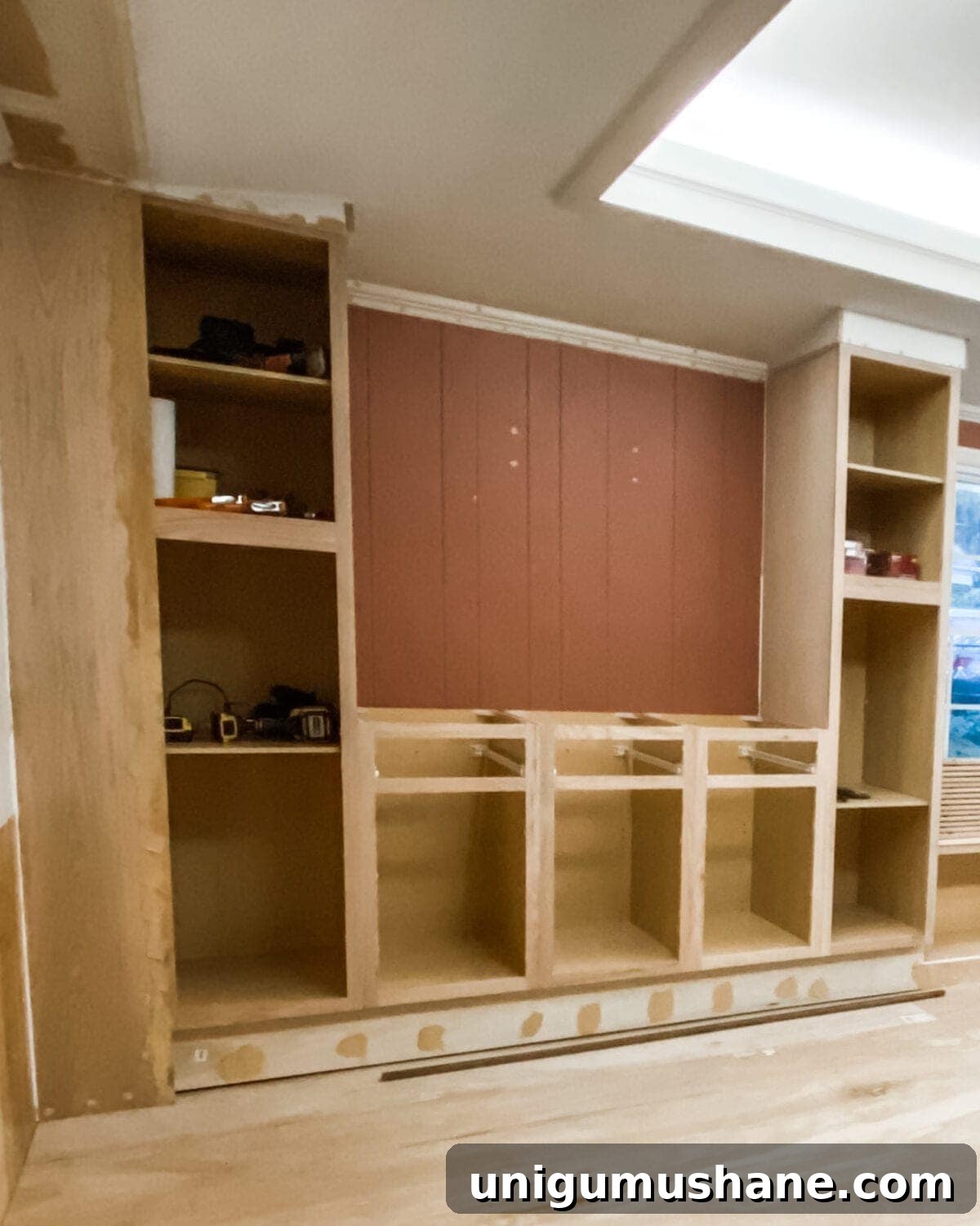
15. Add 1×4 trim across the top of the cabinet frames, mitering corners at 45 degrees for clean joins. For the baseboard area, attach 1×8 boards as a toe kick in front of the 2×4 base.
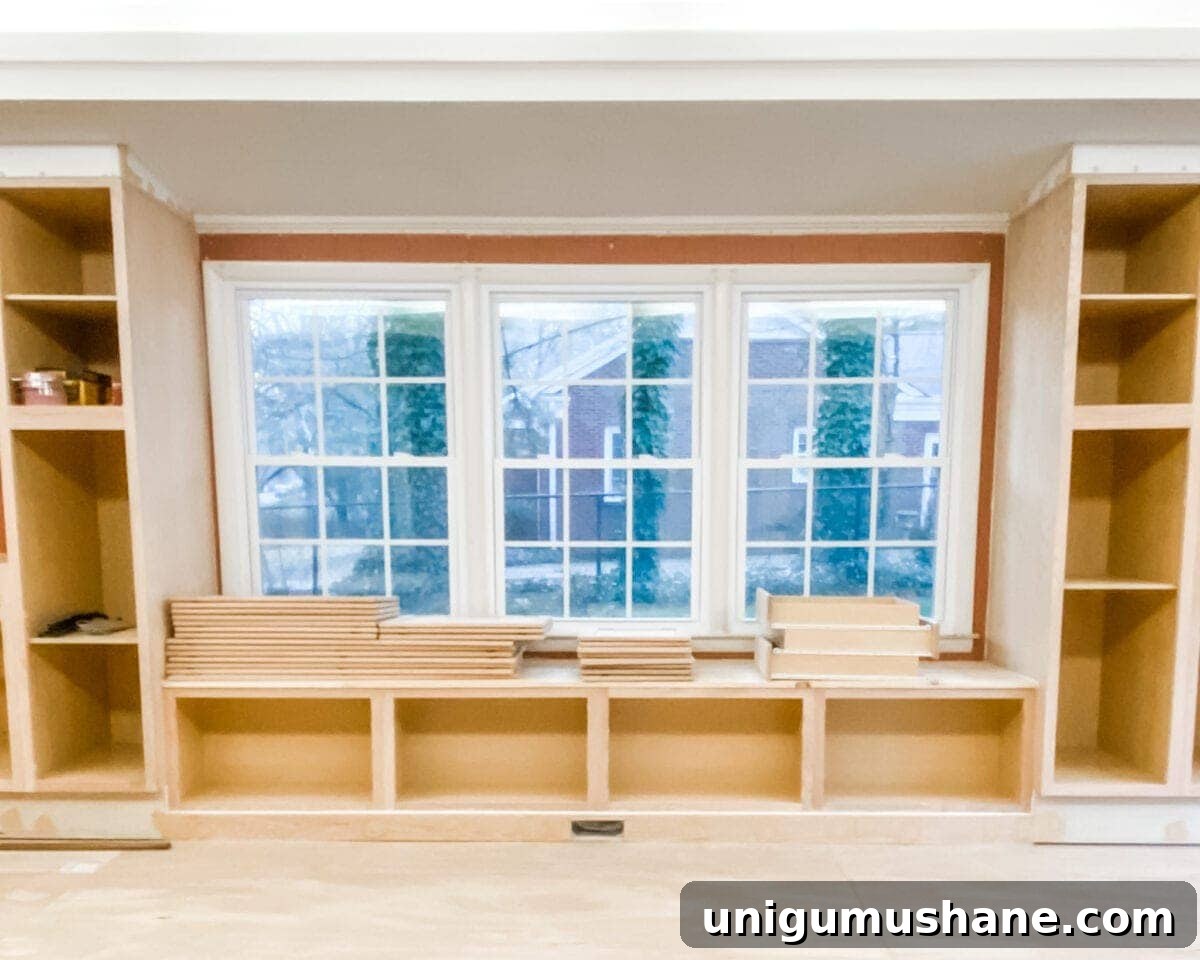
16. Fill nail holes and seams with wood filler, then caulk all gaps between trim, cabinets and walls for a smooth finish.
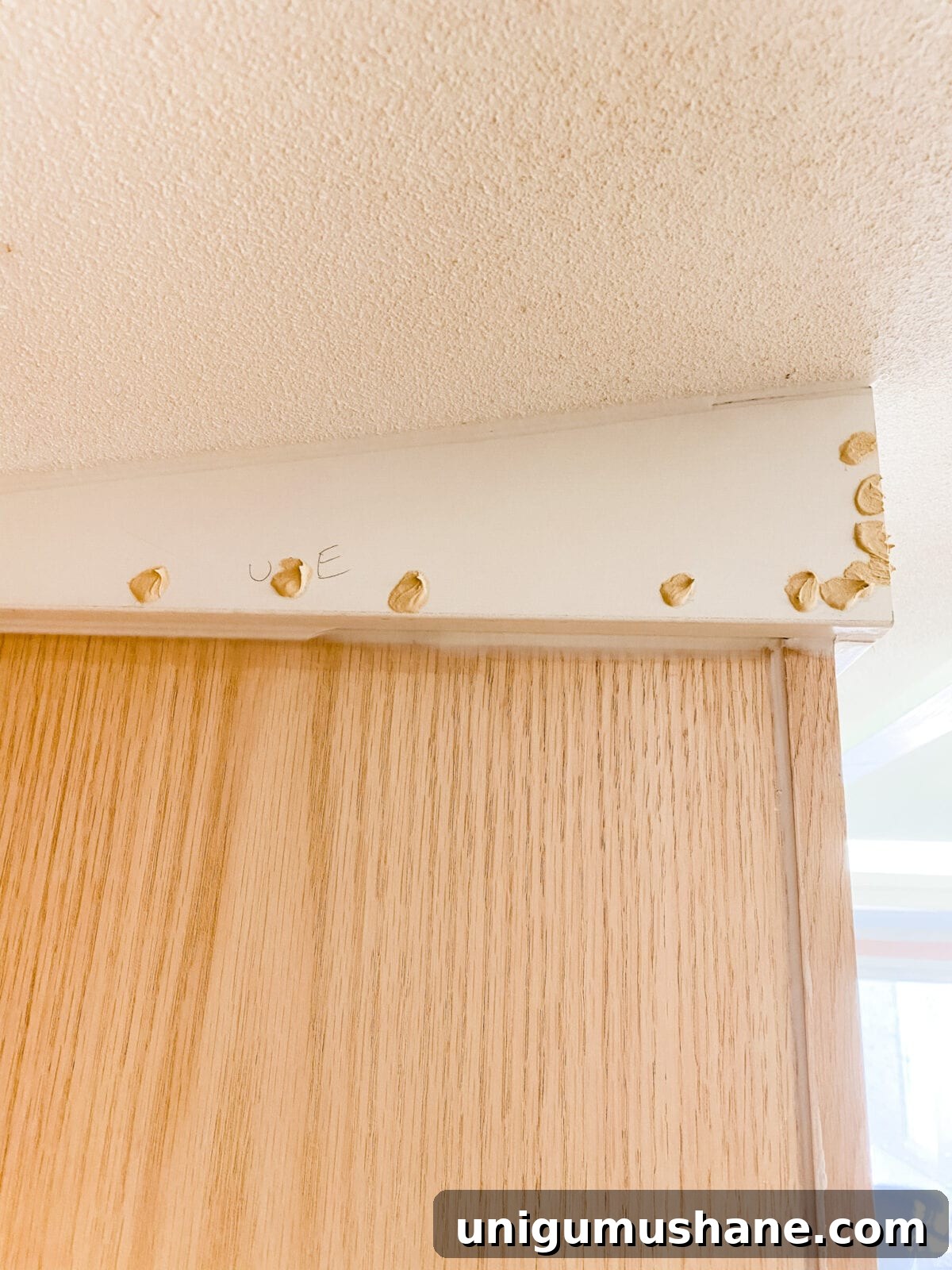
17. After the wood filler dries, sand surfaces smooth and prepare for paint. Finally, attach vent covers over the toe ductors so the HVAC remains functional and discreet.
The Finished Built-Ins!
Done. These built-ins were a workout, but the payoff is enormous: tons of hidden storage, a functional window seat, and a room that now reads much larger.
We haven’t attached the cabinet doors yet because everything will be painted soon, and new floors will be installed next. Once the floors and paint are complete, the room will finally look finished.
We’ll be sharing progress and the final reveal on Instagram Stories while we finish painting and install the new floors. If you tackle a project like this, focus on accurate measuring, leveling each cabinet carefully, using clamps to eliminate gaps, and planning around vents and outlets before you secure cabinets permanently.