
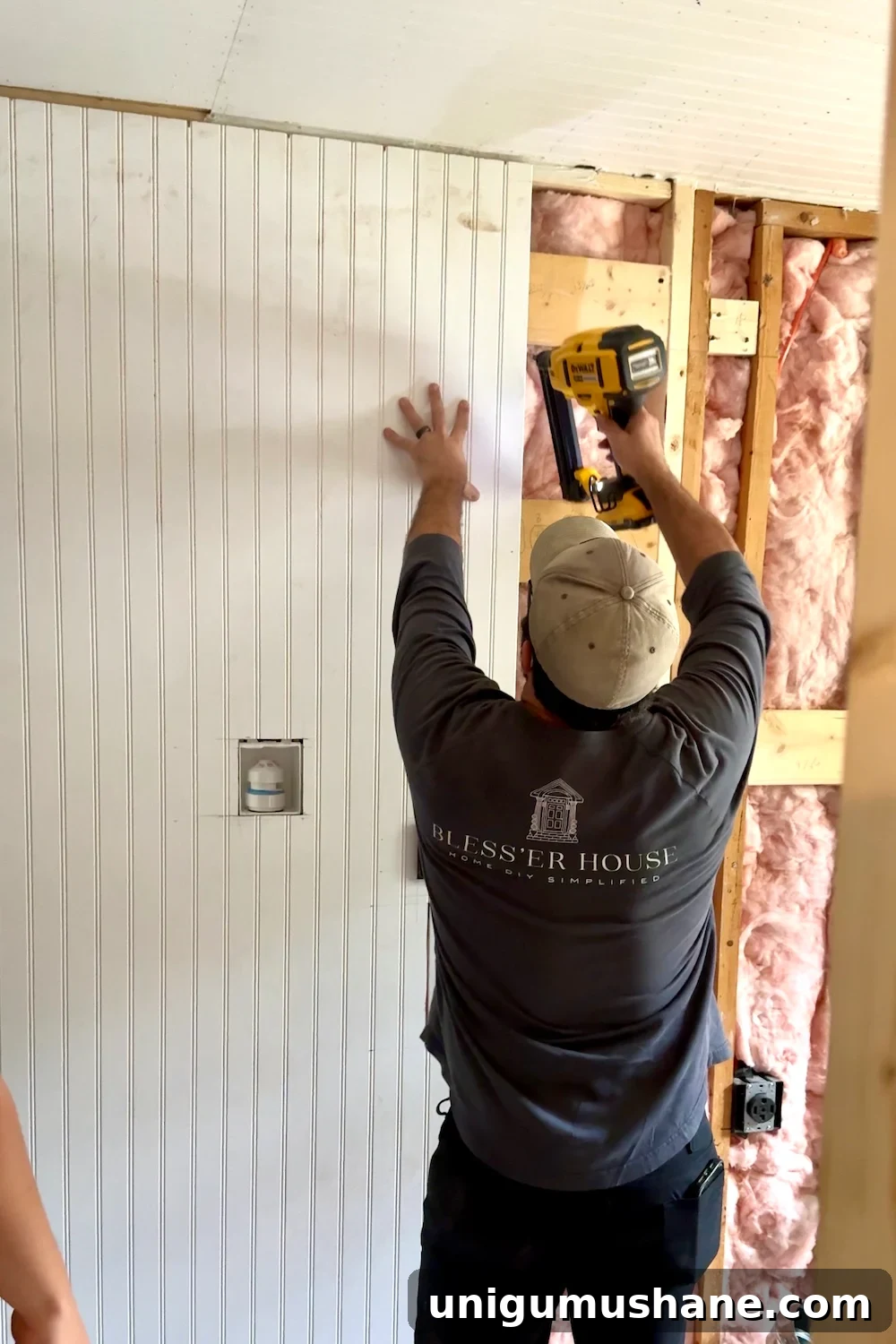
When we stripped our laundry room to the studs, hanging drywall felt like the default next step. But as we stood in that narrow space measuring for cabinets, it quickly became clear that drywall wasn’t the smartest choice for this particular renovation.
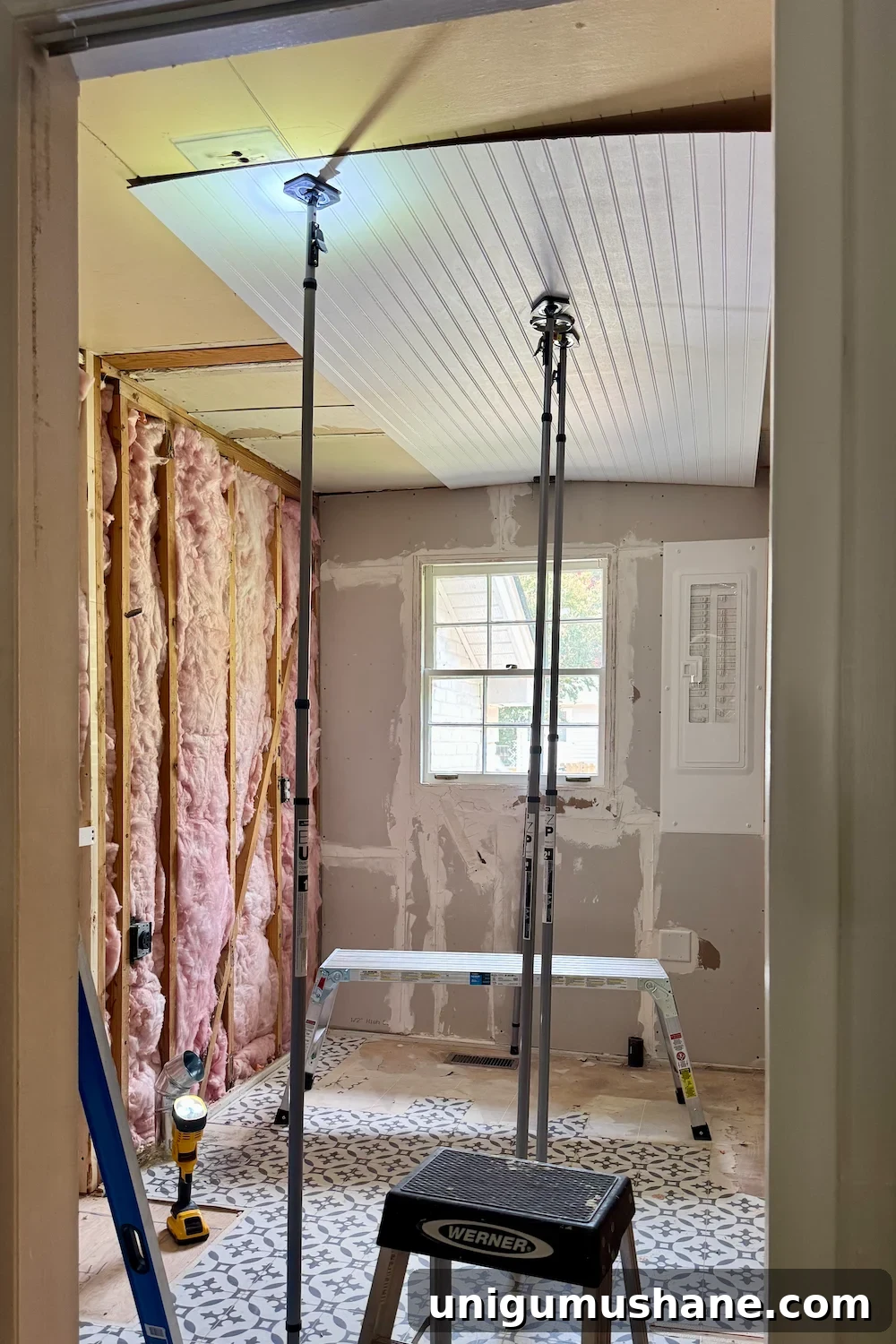
In a tight laundry room every fraction of an inch matters. Standard drywall would have eaten into cabinet depth and cost us precious storage. We were also running behind schedule, and the prospect of mudding, taping, and sanding—plus the dust that follows—was something we wanted to avoid.
That’s when beadboard became the clear alternative. It addressed our main concerns and brought a style upgrade at the same time:
- Thinner than drywall, preserving cabinet space and layout flexibility.
- Much faster to install—no taping, mudding, or extensive sanding required.
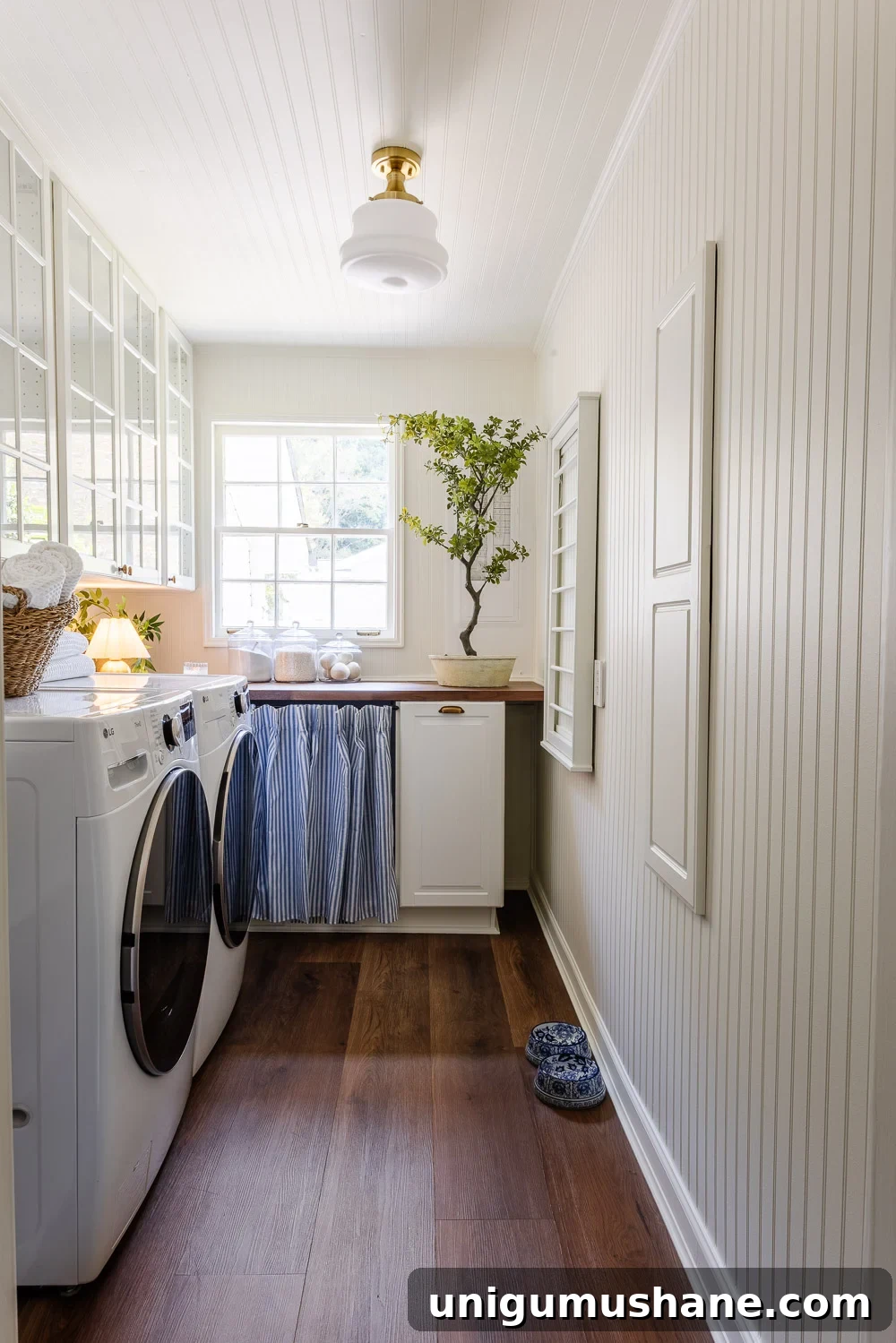
- Instant vintage cottage charm that fits the look we wanted for a cozy laundry room.
Choosing beadboard turned out to be one of the best DIY decisions for this project: practical, time-saving, and attractive.
Related: DIY Shiplap Ceiling With Crown Molding
Related: How to Install DIY Stair Wainscoting the Easy Way
How We Installed Our Beadboard Wall
Disclaimer: Use fire-rated MDF or PVC beadboard where required and verify local building codes before starting. Materials and codes vary by region.
Step 1: Measuring and Cutting
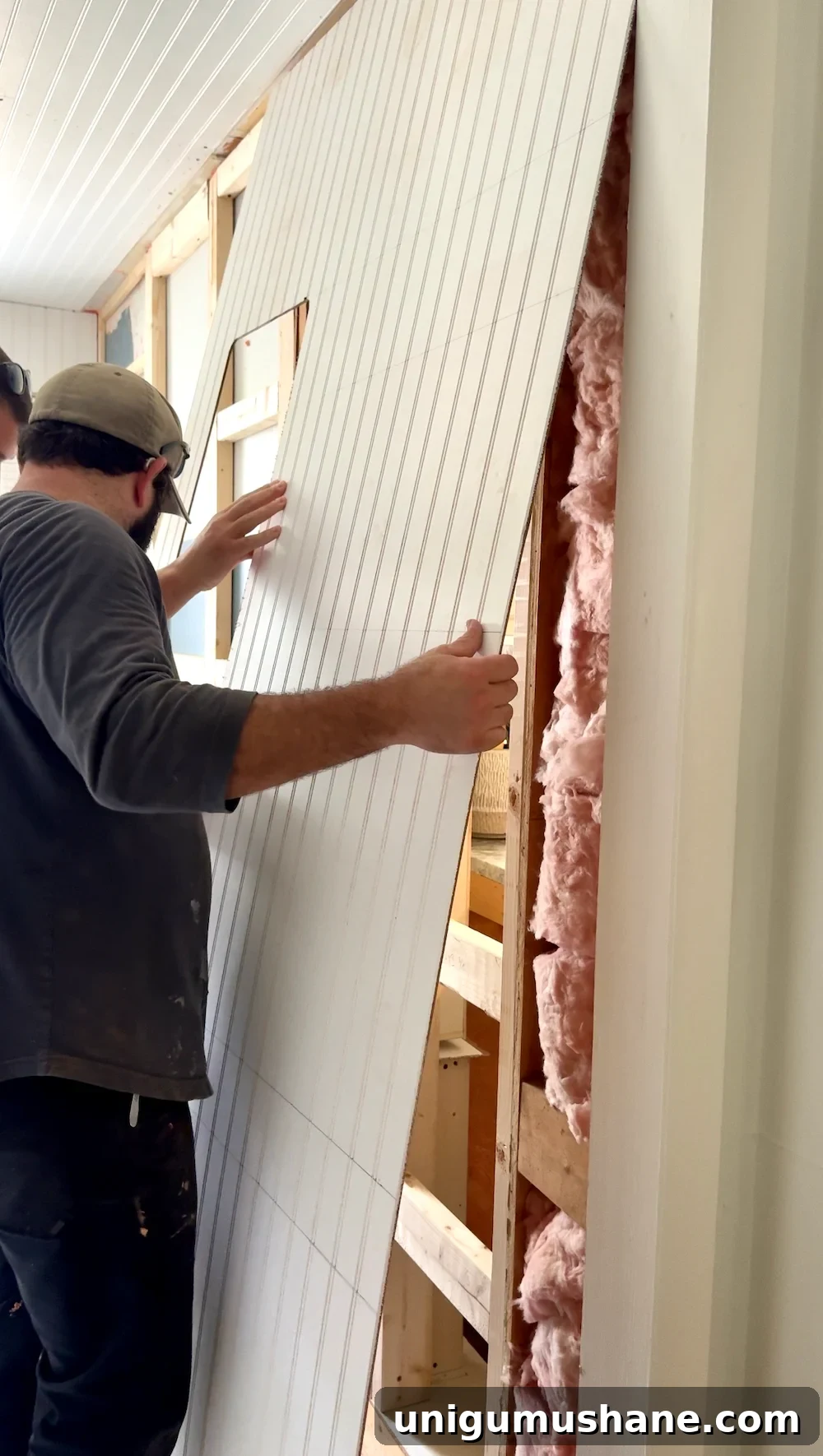
We started by measuring the full wall height and transferring those marks to each beadboard panel. For straight edge cuts we used a circular saw with a fine-tooth blade to minimize splintering. Outlets and tricky curves were cut with a jigsaw. The panel cuts were simple and fast when you take your time measuring first.
Step 2: Prepping the Wall
Before mounting any panels we located and penciled in the studs with a stud finder. This ensures nails or screws bite into solid framing rather than empty space. We also removed any loose debris and made sure the wall surface was clean and reasonably even so the beadboard would sit flat.
Step 3: Installing the Panels
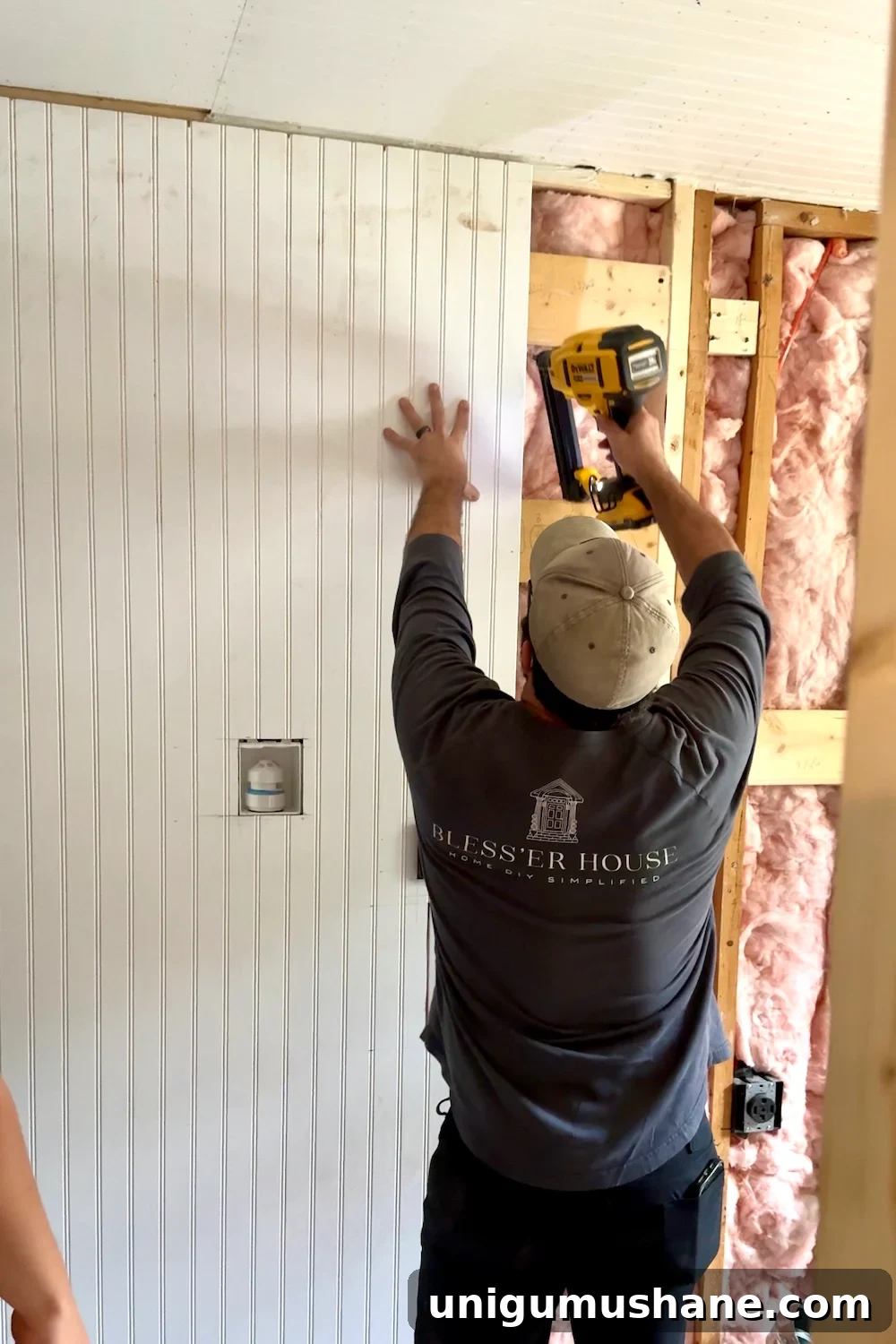
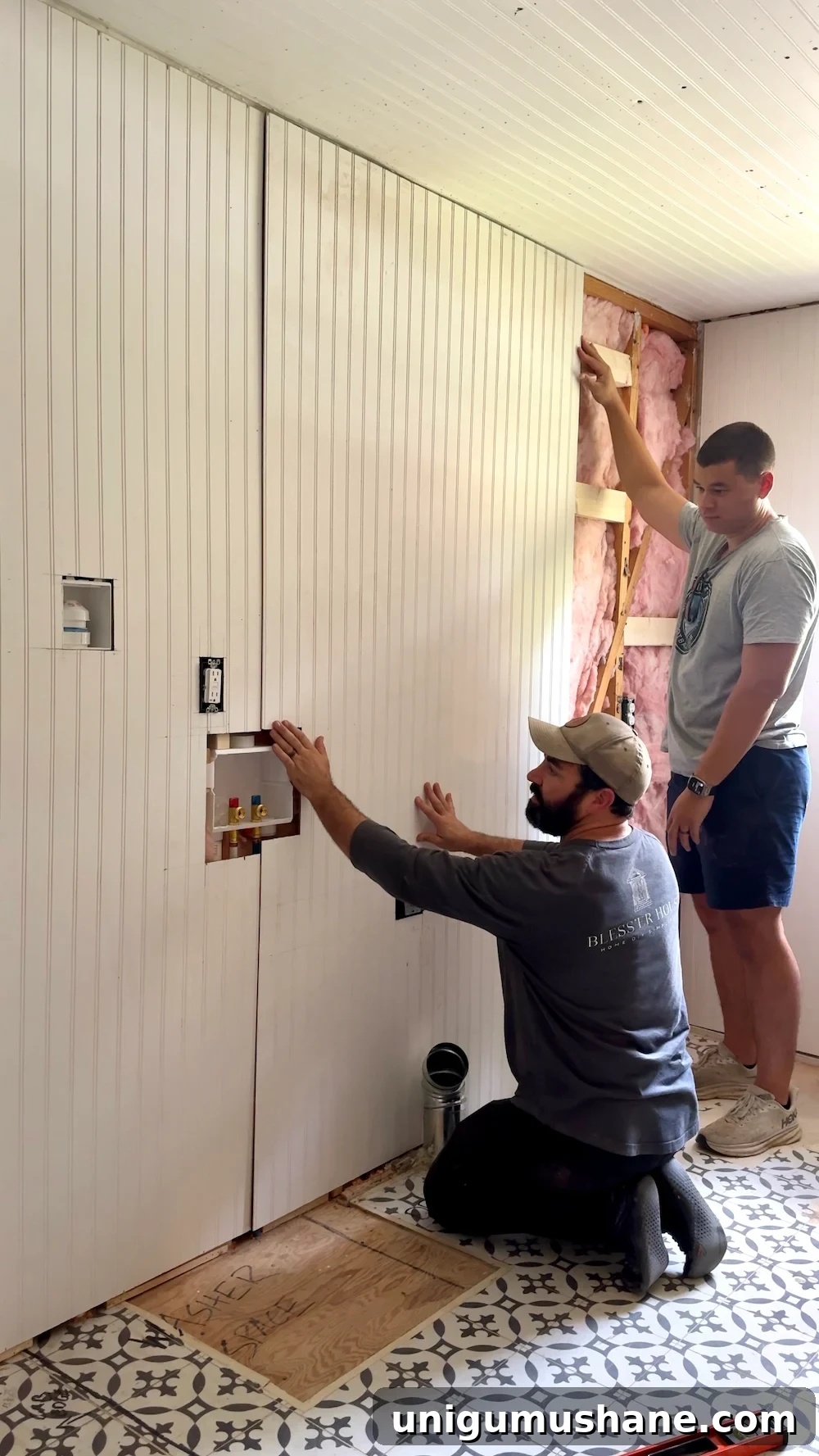
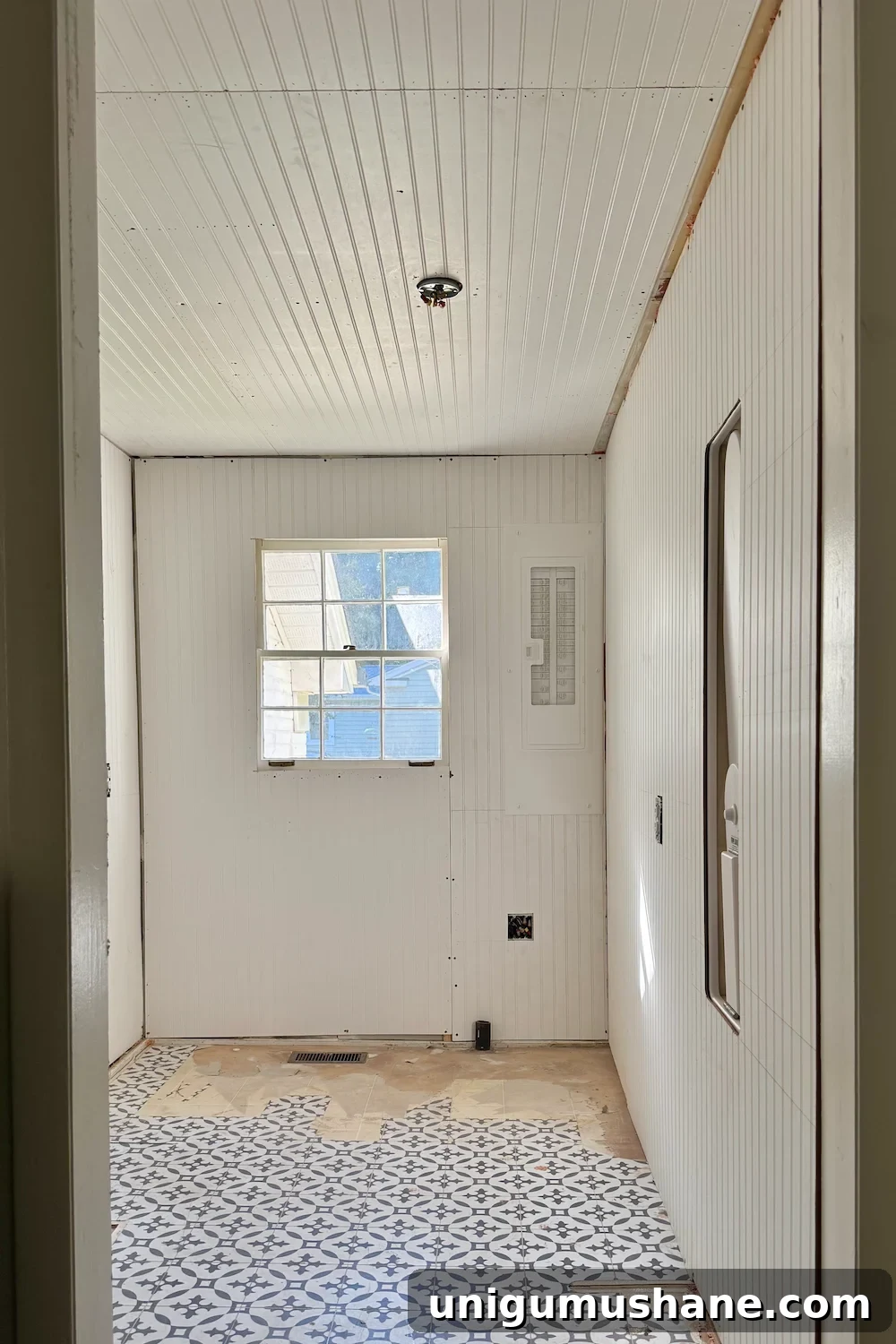
Each panel received a generous ribbon of construction adhesive on the back before we pressed it into place. While the adhesive set, we secured the panel to the studs with finishing nails spaced along the studs we’d marked. The tongue-and-groove-style edges on the beadboard made the panels snap together cleanly, and by afternoon we had the room fully covered.
Related: Inexpensive DIY Batten Wall Using Lattice Strips
Step 4: Caulking the Seams
Caulk is what gives beadboard a finished, built-in look. We ran a bead of paintable caulk along all inside corners and along the seams where panels meet, then smoothed it with a damp finger for a seamless joint. After the caulk set we filled nail holes with wood filler and lightly sanded those spots smooth to prepare for paint.
Related: DIY Faux Wall Planking for $20
Step 5: Painting for the Finish
With seams sealed and filler dry, we rolled on a coat of trim-matching paint. The vertical grooves of the beadboard naturally draw the eye up, adding perceived height and architectural interest to the narrow room. A second coat ensured even coverage and a durable finish for a high-traffic laundry area.
Why We’d Choose Beadboard Again
For a small, fast renovation where space and time were limited, beadboard delivered on every promise. It saved us inches compared to drywall, avoided dusty mudding and sanding, and brought an instant, classic character to the room. The installation was straightforward for two DIYers with basic tools, and the finished wall feels custom and cohesive with the rest of the space.
Related: DIY Faux Brick Walls
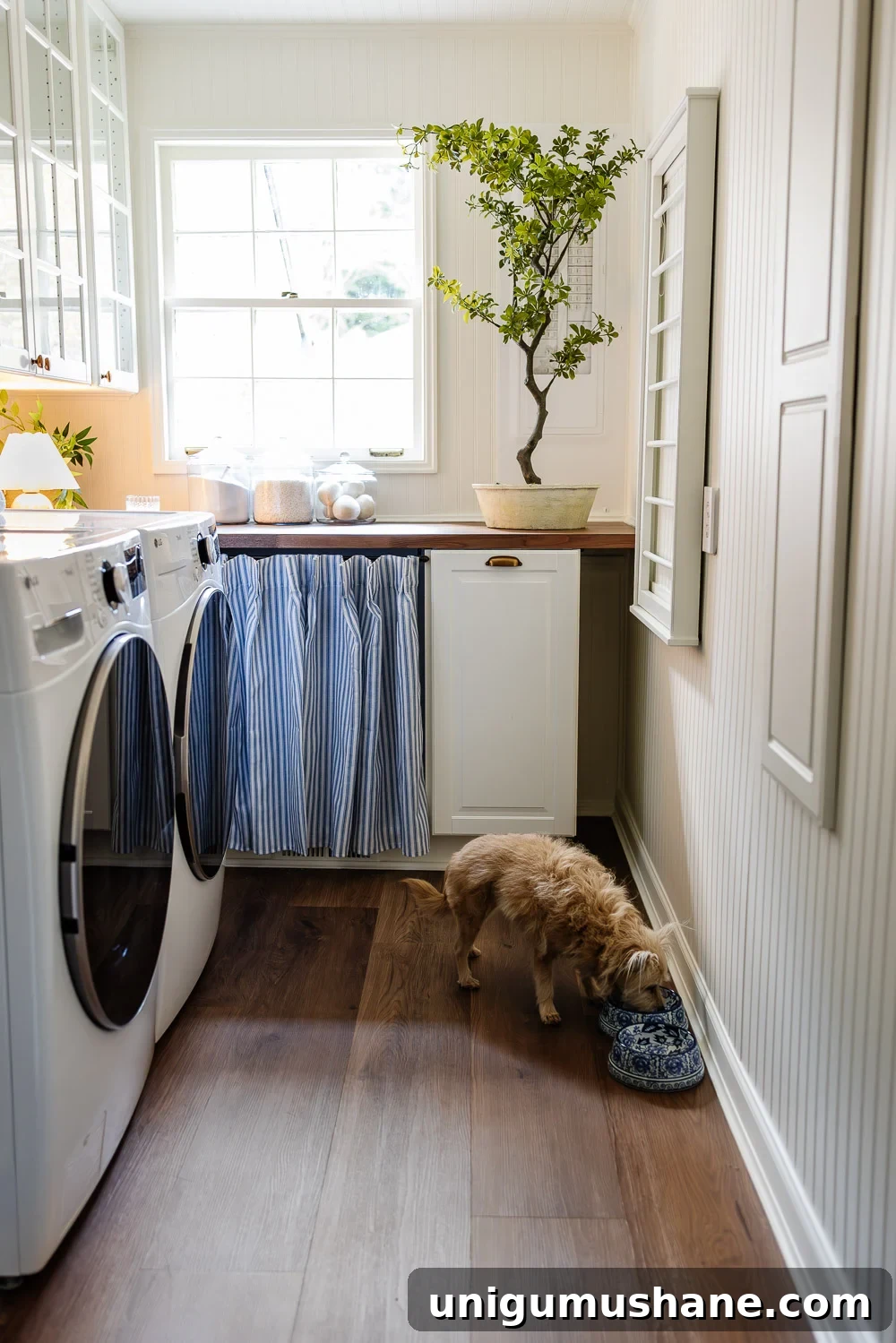
As DIYers we sometimes learn the hard way that the obvious path isn’t always the best one. In this case, taking the less conventional route by installing beadboard instead of drywall was faster, cleaner, and more practical for our narrow laundry room. If you’re remodeling a tight space and want a quick, stylish wall treatment, beadboard is an excellent option to consider.