
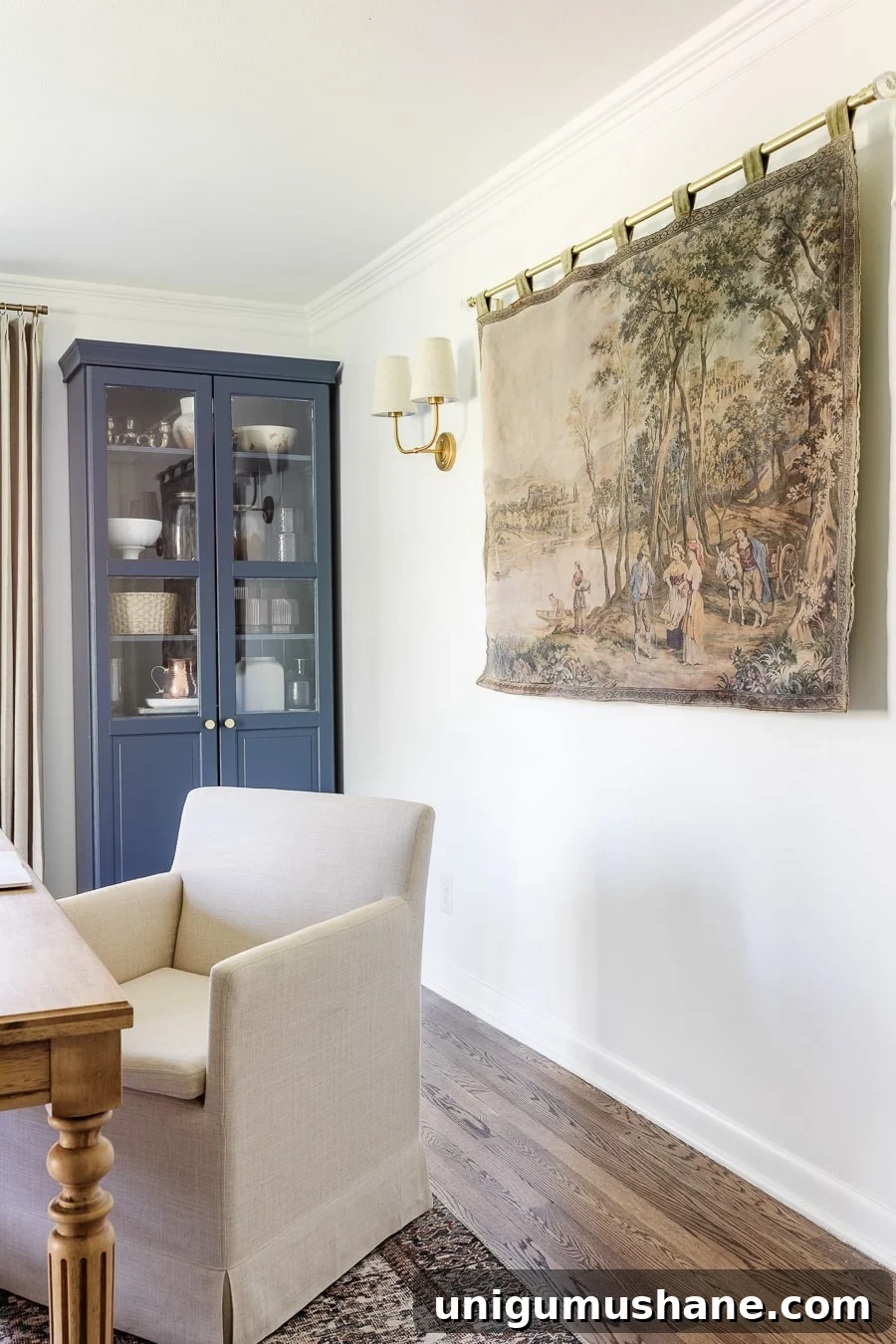
Tapestries have become a popular choice in interior decorating. Their texture, color, and timeless feel make them an easy way to create a focal point on a bare wall and bring warmth and personality to any room.
You can find tapestries secondhand, buy them new at many price points, or even make your own. After sharing my recent eBay tapestry find, I got a lot of questions about how to hang them. Below are several reliable methods, with tips to help you choose the best approach for your space and the weight of the textile.
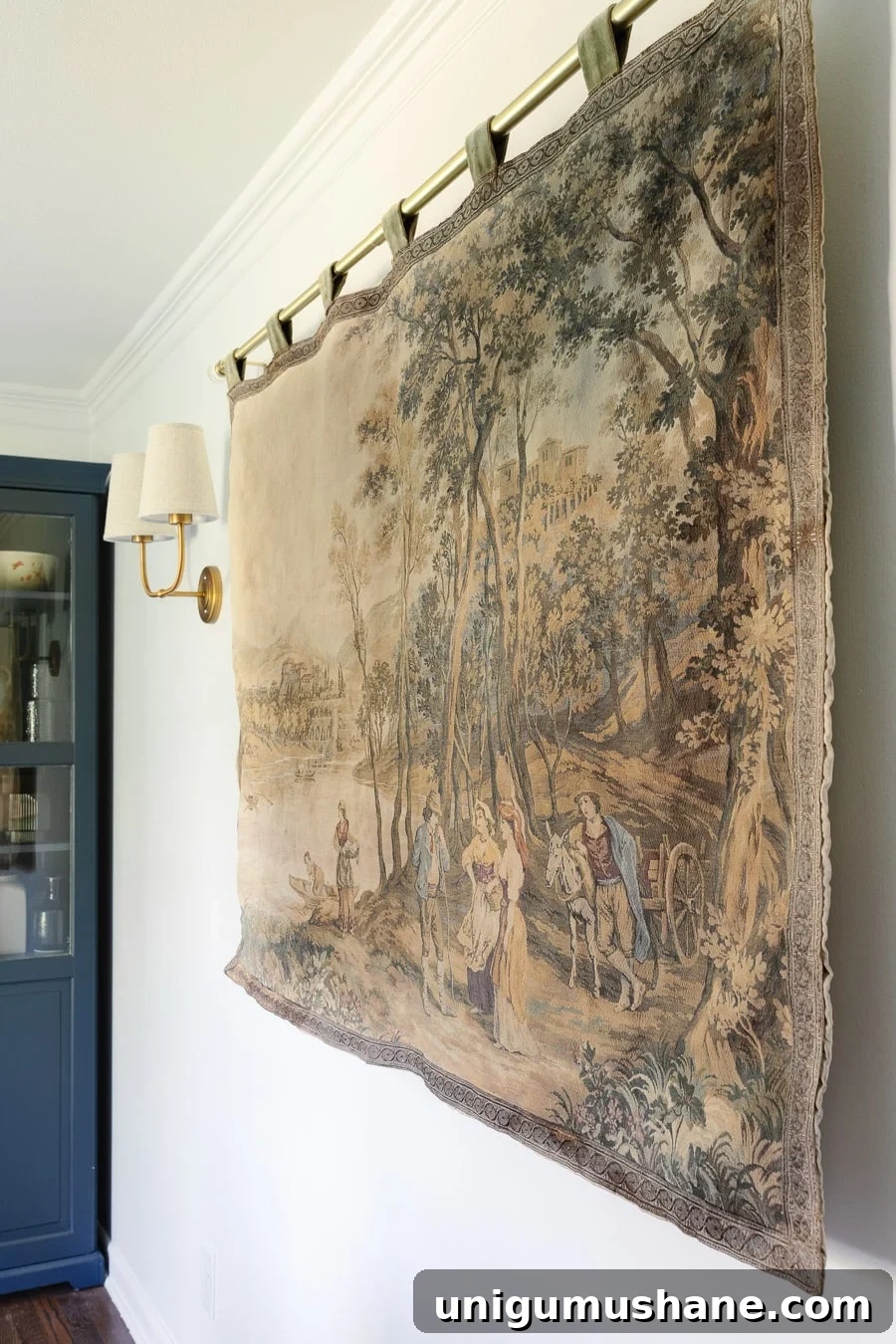
Use a Curtain Rod
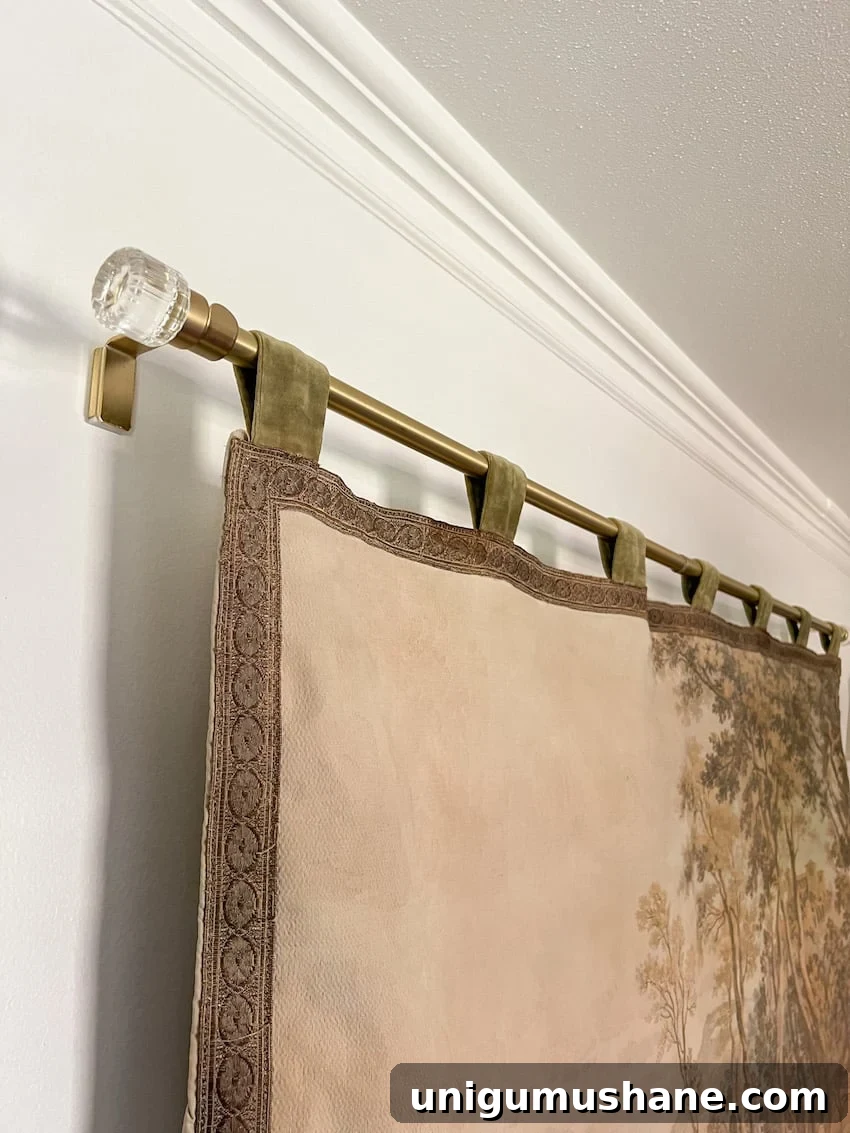
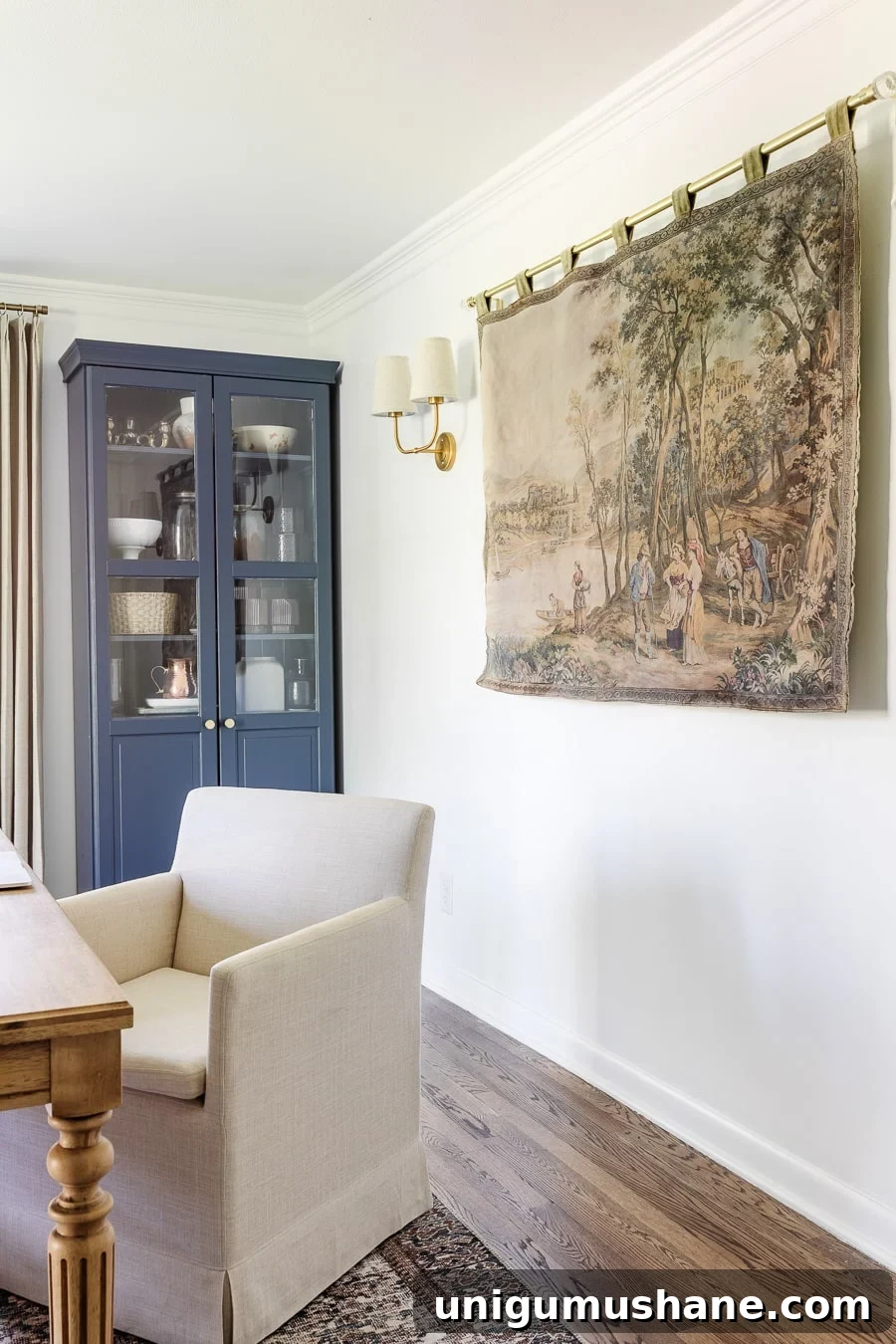
A simple curtain rod is one of the easiest and most versatile ways to hang a tapestry. You don’t need a specialized tapestry rod—basic curtain rods work well and are widely available. This approach is especially useful when you want the tapestry to float slightly off the wall to conceal a thermostat, cable box, or other hardware.
For a secure installation, attach the brackets into wall studs whenever possible. If the tapestry is heavy and you can’t hit a stud, use appropriate wall anchors rated for the load. If your tapestry lacks a rod pocket or hanging tabs, clip-on curtain rings make it simple to hang the textile from the rod without sewing.
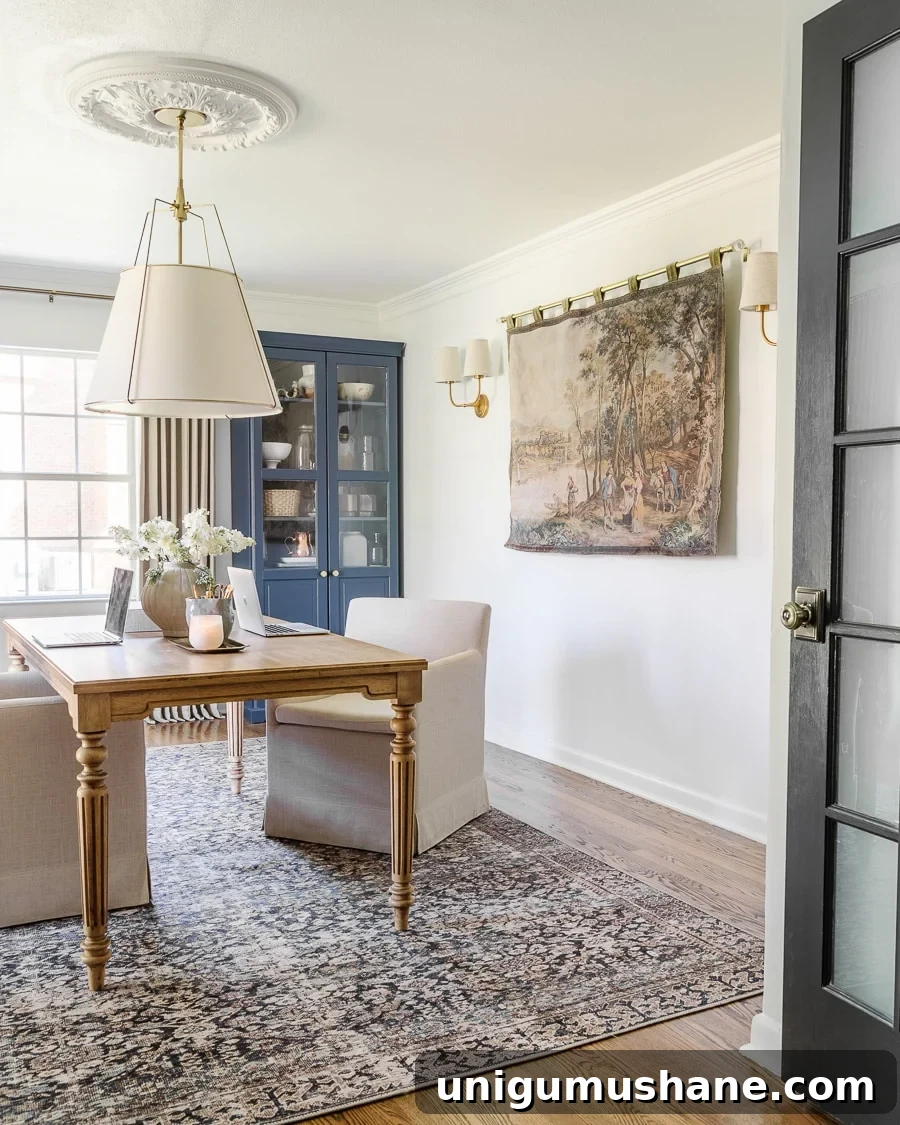
I used a brass curtain rod with clear ribbed finials to hang a vintage tapestry found on eBay. It required careful cleaning, but the finished look added a lot of visual interest to our home office.
Hang a Rod From Command Adhesive Hooks
If you’re renting or prefer not to drill into the wall, heavy-duty adhesive hooks can support a curtain rod and a lightweight tapestry. Follow the adhesive manufacturer’s instructions carefully for the best hold. A typical process looks like this:
- Attach the adhesive strips to the hook and press firmly for the time recommended by the manufacturer.
- Press the hook with the adhesive onto the wall, holding as directed.
- Allow the adhesive to set for the recommended period before adding any weight.
- Hang the rod and then the tapestry.
Note: adhesive hooks are best for light-to-moderate weight tapestries. For heavier textiles, a more secure, hardware-based solution is safer.
Hang From a Banner Pole
A banner pole is a clean, minimalist alternative to a curtain rod. With a single center hanging point, banner poles are easy to install and are often telescopic so you can adjust the width to suit your tapestry. Poster hangers offer a similar slim-profile look and are especially handy for lightweight fabrics.
Stretch a Tapestry Over a Frame
Stretching a tapestry over a wooden frame gives it a finished, gallery-like appearance and works well for both tapestries and shower curtains repurposed as wall art. This method creates a taut, framed piece that hangs like a canvas.
- Construct a simple frame from 1×2 boards cut to your desired dimensions.
- Center the tapestry over the frame and pull it tight, smoothing any wrinkles.
- Staple the fabric to the back edges of the frame, trimming excess if needed.
- Optionally, add thin lattice strips or trim over the stapled edges for a polished look.

Place In a Shadow Box
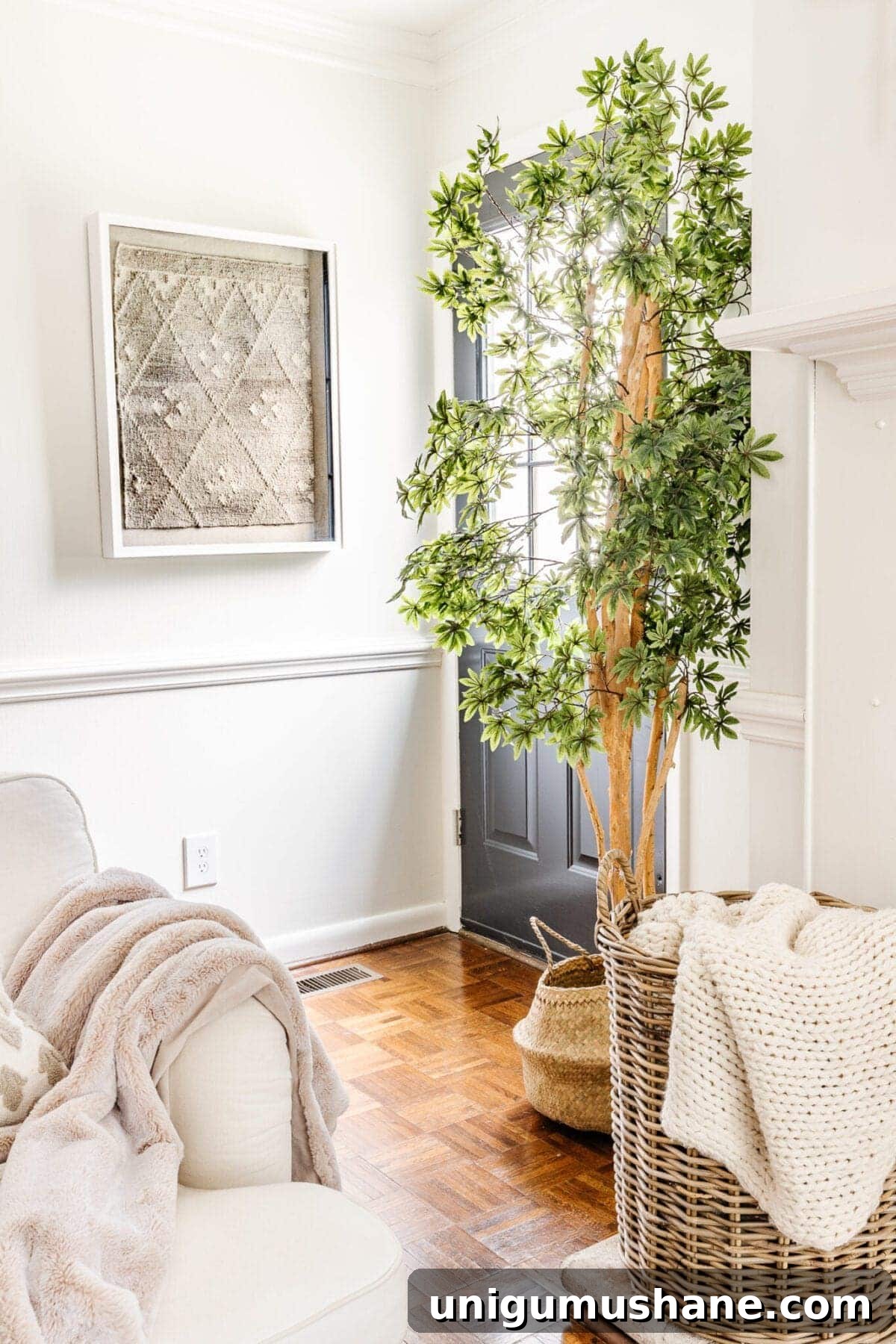
For smaller tapestries or rug remnants, mounting the textile inside a shadow box turns it into a contained piece of art. This protects the fabric and gives it presence on the wall. In rentals, heavy-duty picture hanging strips can often support framed shadow boxes without drilling.
Use Quilt Hangers
Wooden quilt hanger clips are a simple, non-permanent solution that lets you swap textiles quickly. The clips hold the top edge and usually hang from a single hook or nail, making rotation and replacement effortless.
Use Heavy Duty Push Pins, Nails, or Staples
If you don’t mind making small holes, push pins, nails, or a staple gun can secure a tapestry directly to the wall. This works particularly well with modern, lightweight fabrics often sold as wall tapestries. It’s a quick option for dorm rooms, kids’ bedrooms, or rental spaces where the look is intended to be casual.

Frequently Asked Questions
You can find woven tapestries in many places: online marketplaces, specialty home decor retailers, artisan marketplaces, and thrift stores. Popular sources include secondhand sites and local thrift shops for unique vintage finds, as well as well-known retailers and independent sellers for new designs.
More DIY Wall Decor Ideas
How to Hang a Gallery Wall Perfectly Every Time
Mistakes Most People Make When Hanging Picture Frames
DIY Large Art Memo Board
Find more DIY wall decor ideas in home decor tutorials and project roundups.