
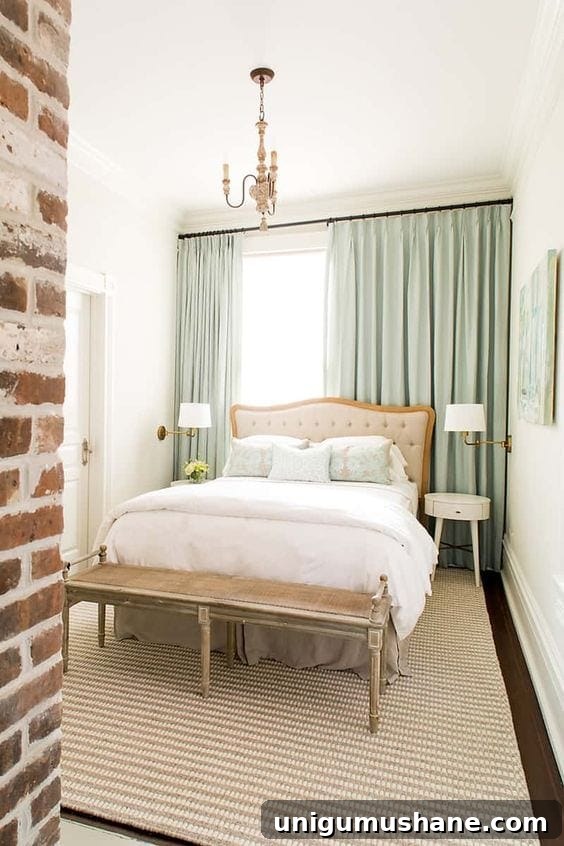
3 ways to decorate a small guest bedroom with an off-centered window to maximize function, comfort, and space.
I love the excitement that comes with planning a room makeover. The early stages feel a little like Christmas — the anticipation is almost as fun as the reveal.
We still have several rooms to finish in this house (and honestly, is a house ever truly finished?). The space I’m tackling now is a small room that used to be Robert’s office and will become our future guest bedroom. It needs attention — thoughtful, budget-friendly changes to make it functional, comfortable, and welcoming for visitors.
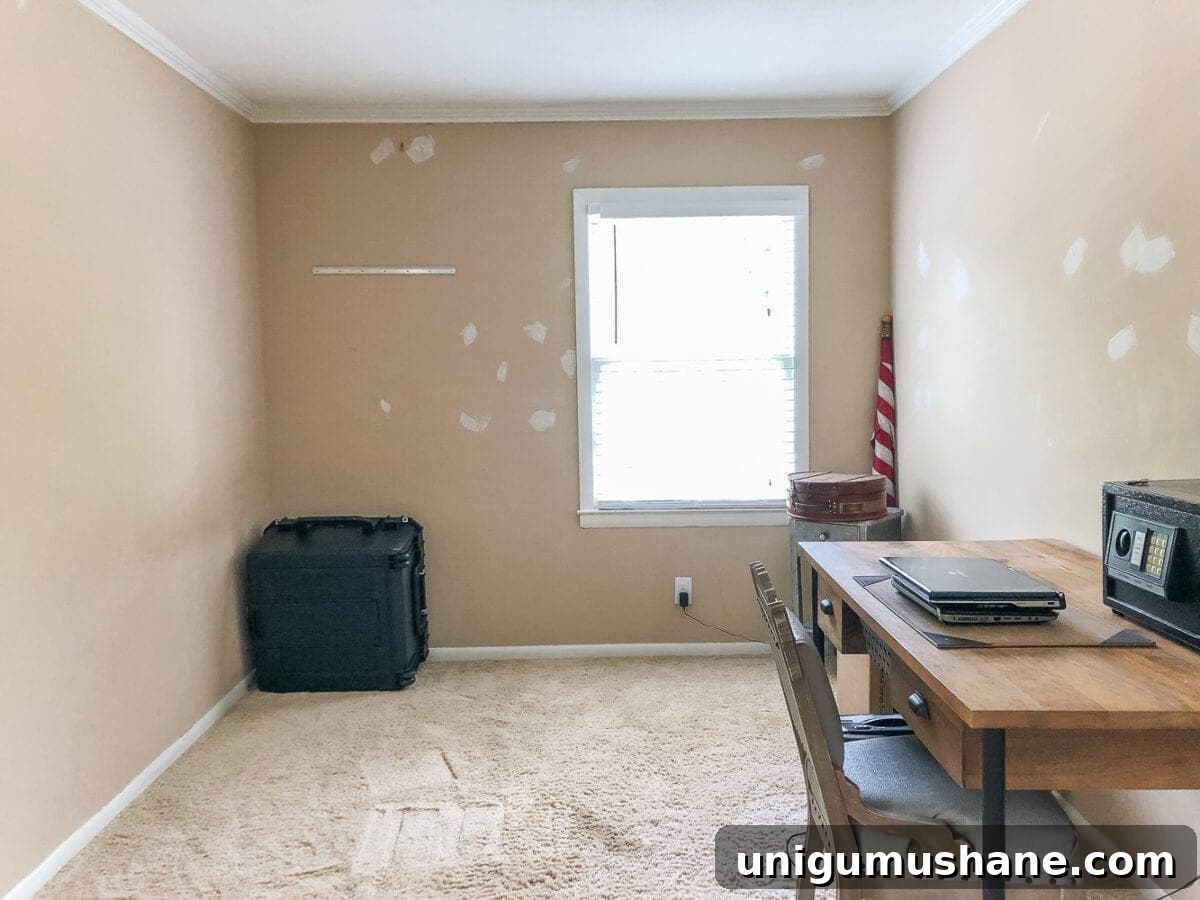
The layout is tricky: it’s a modestly sized, oddly shaped room with a window that sits off-center on one wall. That off-centered window complicates furniture placement but also gives us an opportunity to get creative. Below are three practical layouts that prioritize sleep space, storage, and flexible function.
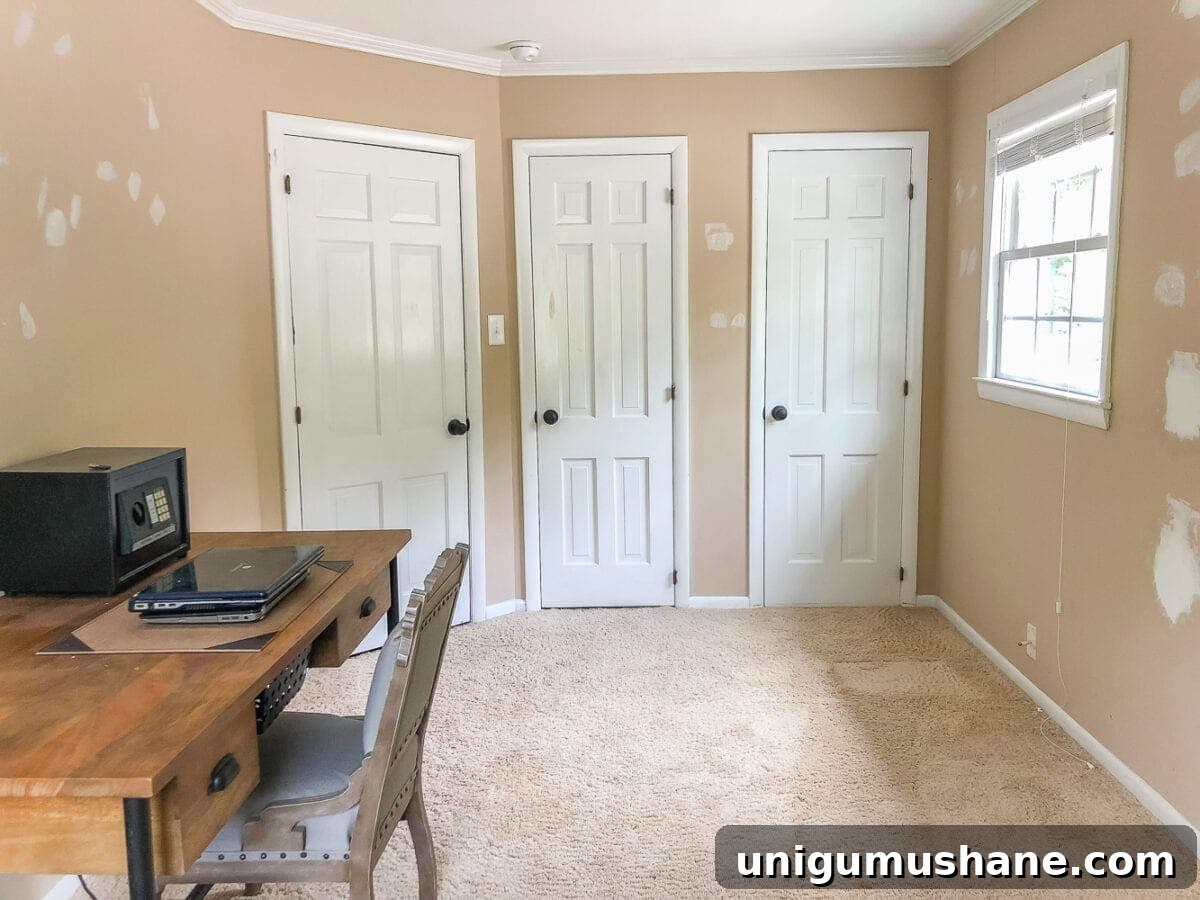
We need this room to serve guests without breaking the bank. Ever since we converted our old guest room into a nursery for our daughter, a proper guest bedroom has been on the to-do list. Robert hardly used his office, so converting it makes sense — and saves us from having an underused room.
1. Layout #1 – Full-sized daybed with a trundle
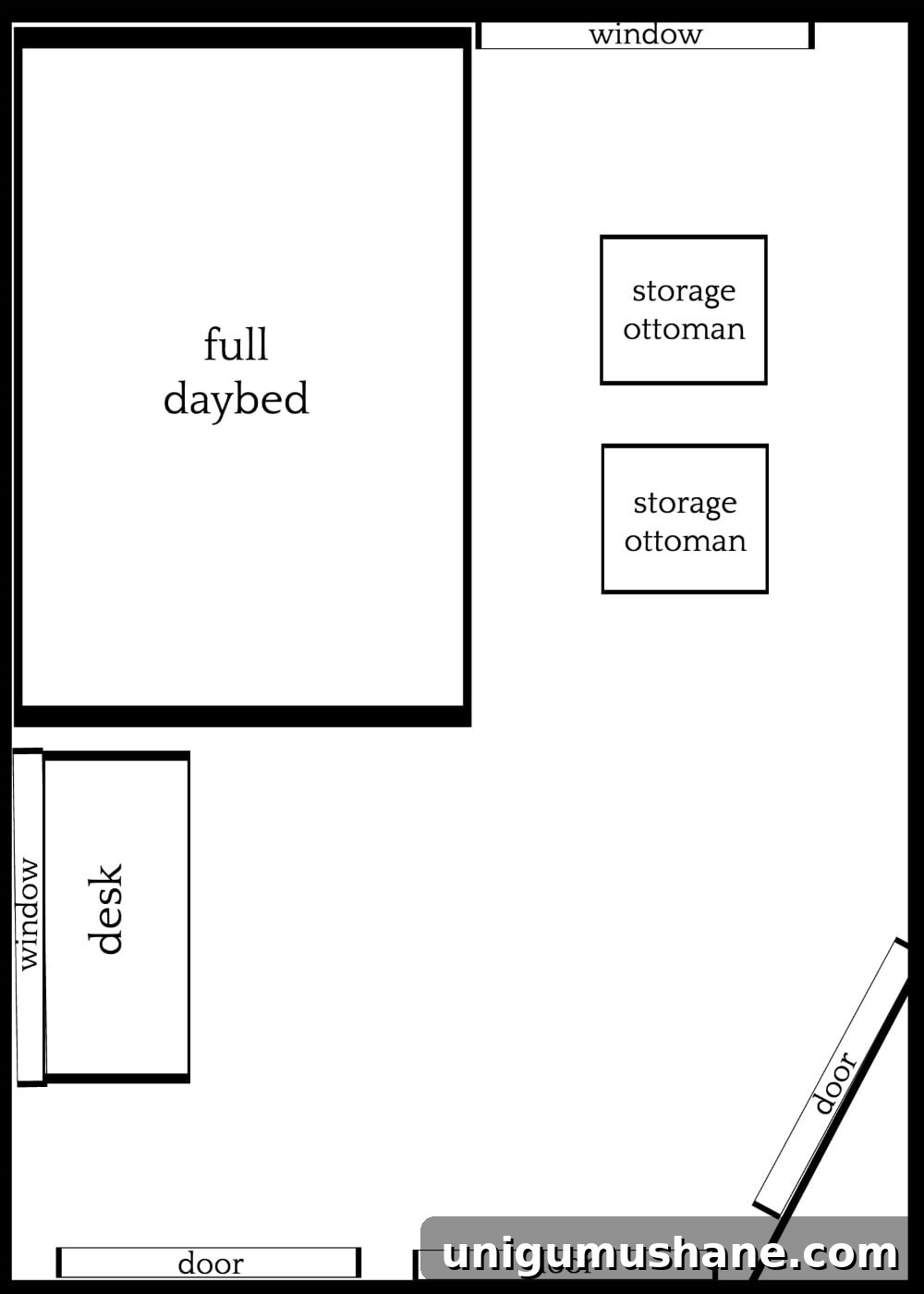
A full-sized daybed placed along the long wall with a twin trundle tucked underneath gives maximum sleeping flexibility while keeping the room feeling open. During the day, the daybed reads as a small sofa or lounge, which makes the room multi-functional — perfect for reading, relaxing, or a quiet workspace.
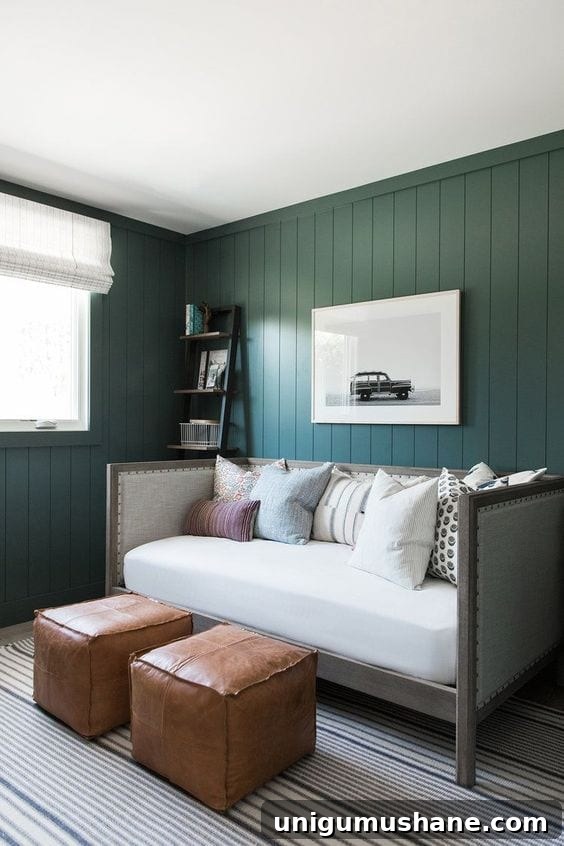
Source: Studio McGee
Styling tips for this setup:
– Choose a daybed with a low or open frame to keep sightlines clear and avoid a cramped feel.
– Add compact storage ottomans or baskets for linens and blankets instead of a full dresser.
– Layer pillows and throws to make the daybed both inviting and couch-like when not used for sleeping.
This layout is an ideal balance of seating and sleeping space for a small guest room.
2. Layout #2 – Full bed against the wall with a desk that doubles as a nightstand
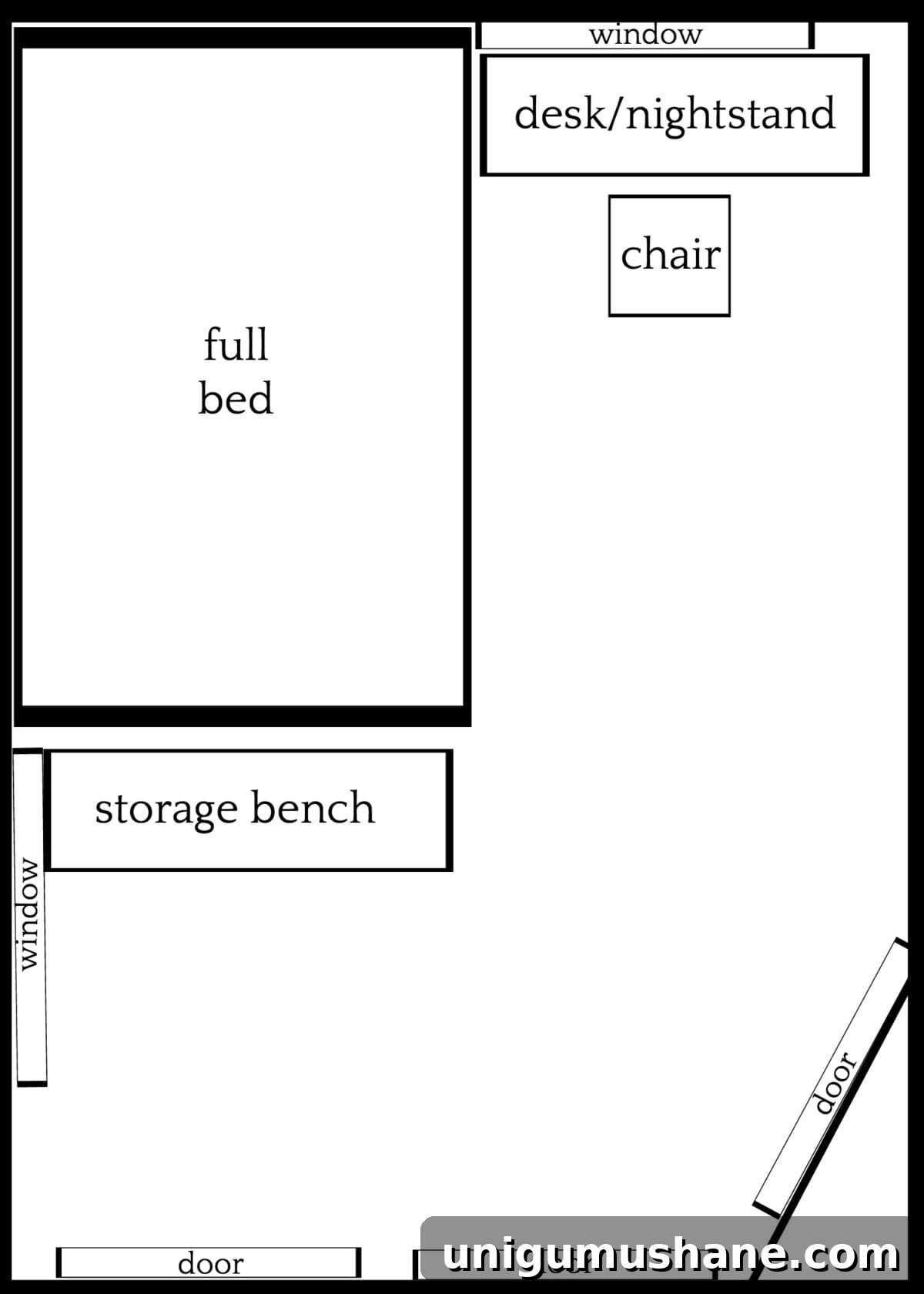
Placing a full bed against one wall and using a small writing desk as a nightstand creates a functional combo for guests and occasional remote workers. My mother-in-law occasionally works from our house, so a simple desk in the guest room would let her set up when she needs privacy. The desk can hold a lamp, phone charger, and a few personal items, serving both needs without crowding the room.
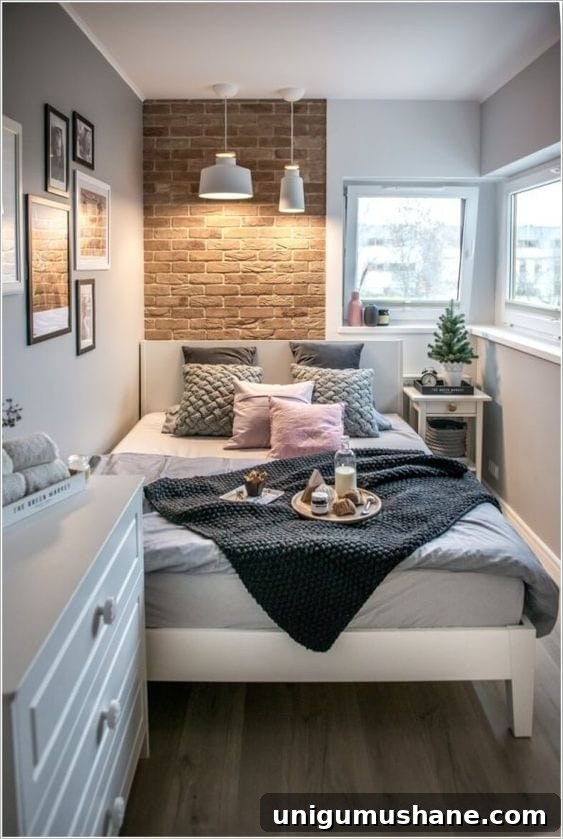
This layout suits guests who prefer a conventional bed while keeping useful workspace available. Consider:
– A narrow desk with drawer space or a slim floating shelf to save floor space.
– Wall-mounted lighting or sconces to free up the desk surface.
– Under-bed storage or a shallow dresser if more storage is needed.
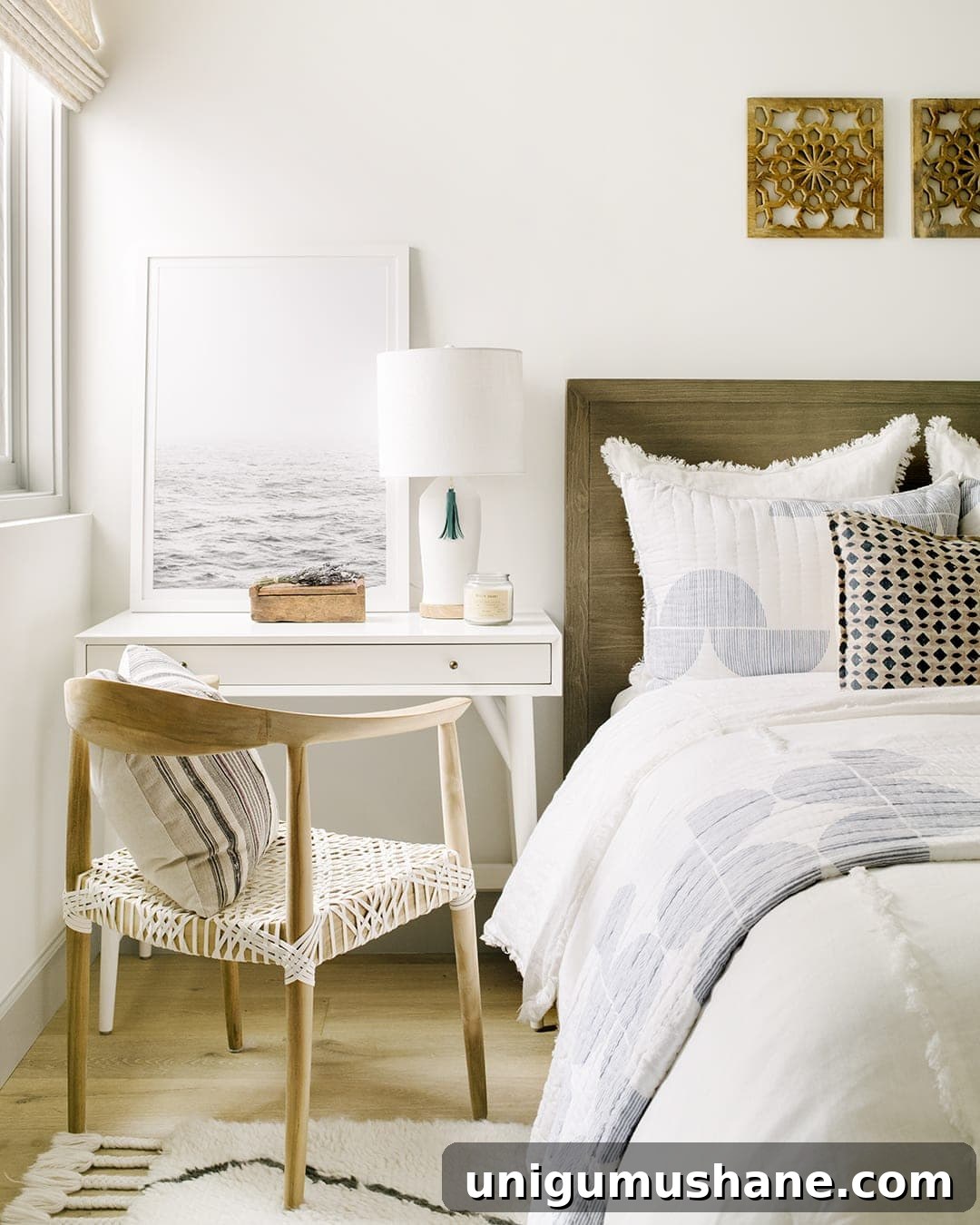
Source: Kate Lester Interiors
3. Layout #3 – Queen bed centered in front of the off-center window
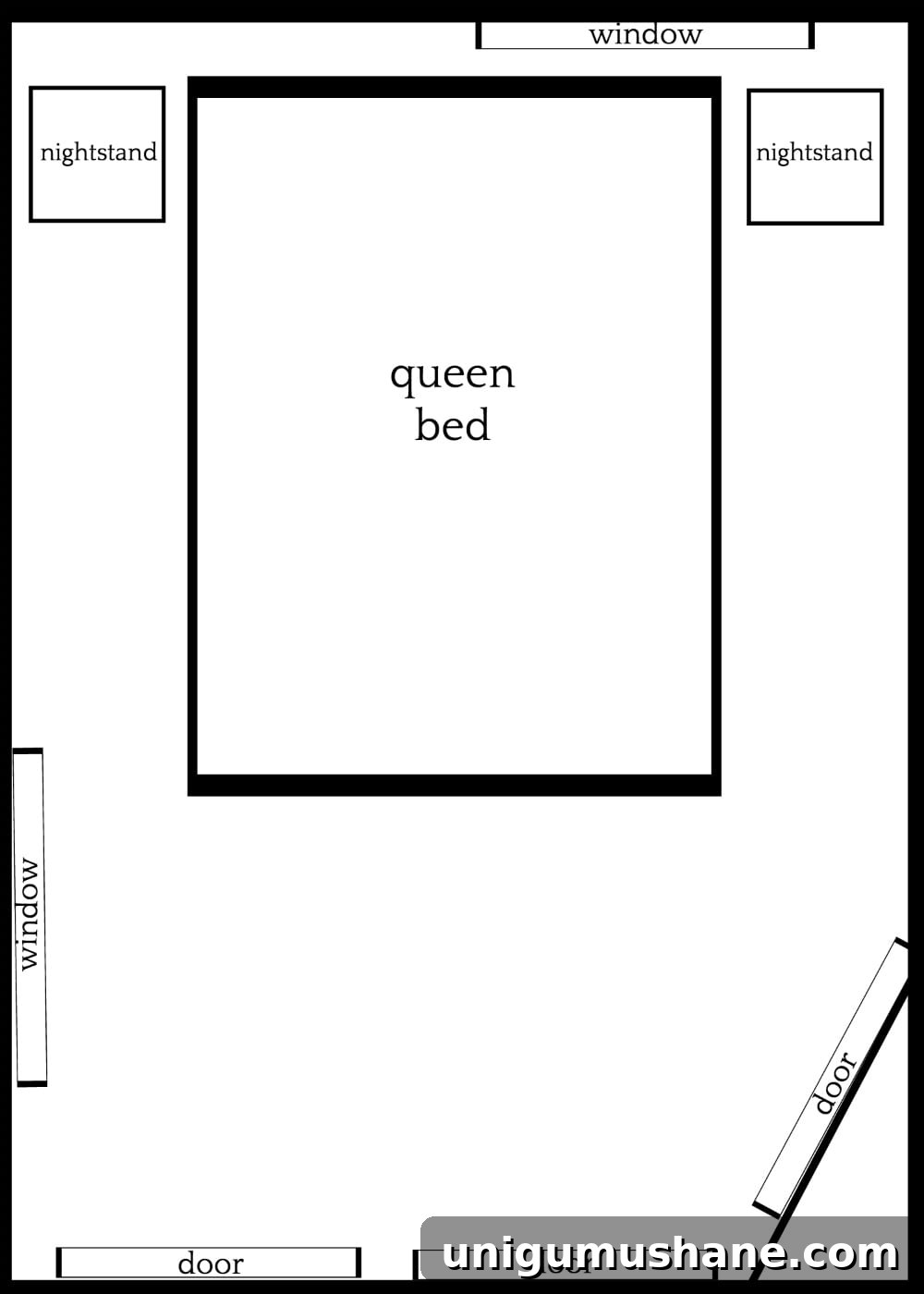
A queen bed gives guests more space to spread out and can make a small room feel more luxurious. Placing the bed in front of the off-centered window is unconventional but can work beautifully when balanced with floor-to-ceiling curtains or a long curtain treatment that visually centers the window area. Using a headboard that spans the width of the bed and a continuous curtain panel helps the window read as intentional rather than awkward.
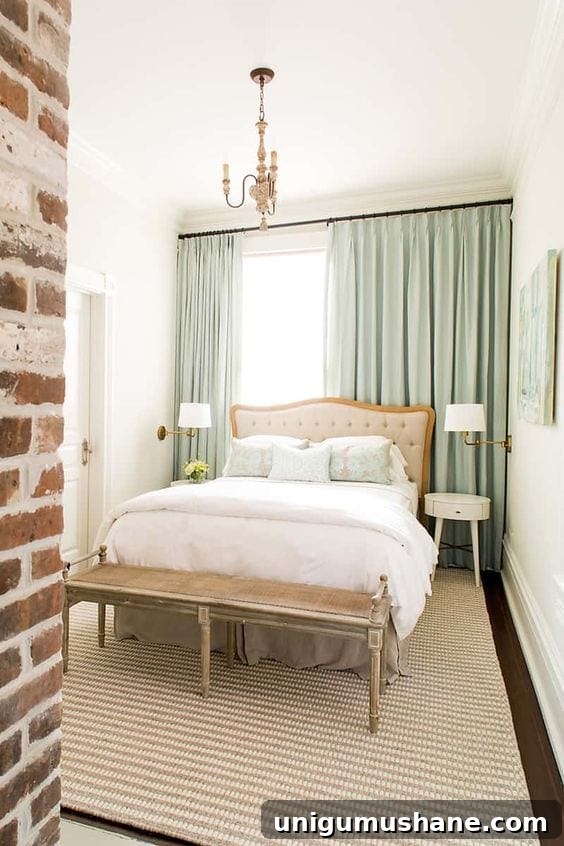
Source: Rethink Design Studio
Tips for making this layout work:
– Use curtains that extend beyond the window to give the illusion of a larger, centered window.
– Keep bedside surfaces minimal — narrow floating shelves or small wall-mounted lamps work well.
– If a desk won’t fit, add a slim luggage bench or a wall-mounted fold-down table for occasional use.
Each layout has pros and cons: the daybed gives versatility and space-saving sleeping options; the bed-plus-desk combines comfort with function for occasional work; the queen-centered option maximizes sleeping comfort and can feel more polished with the right treatment. Consider who will use the room most often, what kind of storage you need, and whether the space should double as a lounge or workspace.
So that’s the thinking behind these three furniture arrangements. My brain is buzzing with ideas and too many open tabs — classic design mode.
Which would you pick for a small guest bedroom with an off-centered window: layout 1, layout 2, or layout 3?