
Gallery wall DIY tricks to get your wall decor right like a professional interior designer every time + simplified gallery wall layout ideas.
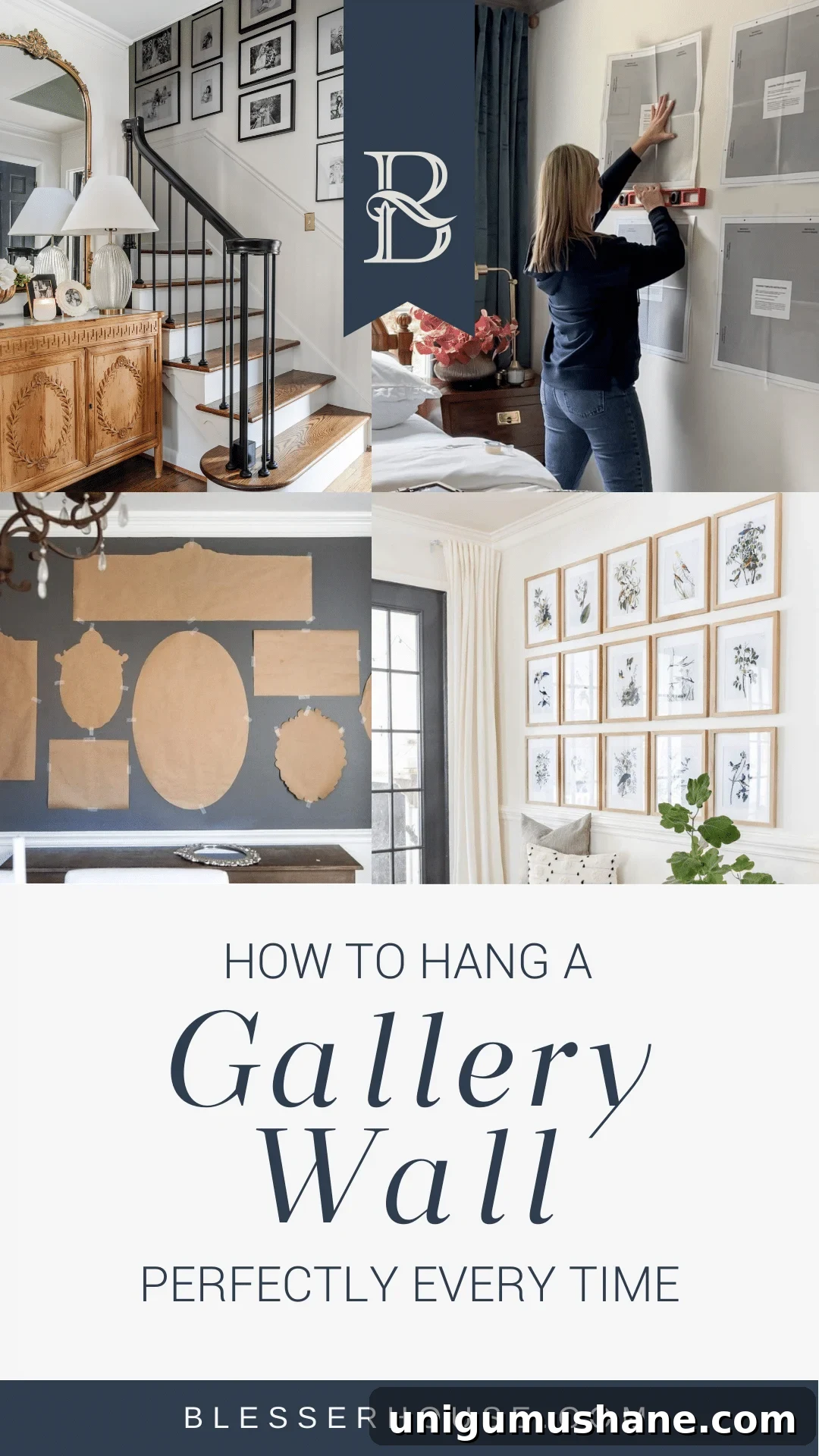
How to Hang a Gallery Wall Like a Pro
Over the years we’ve put up many gallery walls, and through trial and error I’ve perfected a few reliable methods that prevent extra holes and make the whole process easier. Whether you’re arranging family photos, artwork, a mix of framed and unframed items, or objects like baskets and hats, a well-planned gallery wall brings personality and warmth to any room.
If the thought of aligning multiple pieces feels intimidating, don’t worry. This clear, step-by-step guide will show you how to plan, place, and hang a gallery wall with professional results.
Supplies
- Picture frames and artwork: Gather the pieces you want to display and make sure they work together in style and color.
- Measuring tape: For accurate spacing and placement.
- Pencil: For marking the wall and tracing templates.
- Level: To keep everything straight.
- Hammer and nails or wall anchors: Choose hardware that suits the frame weight and wall type.
- Transparent tape: Useful when testing layouts—less visually distracting than colored tape.
- Wrapping paper or kraft paper and scissors: For making templates of frames and objects.
Step 1 – Make Frame Templates
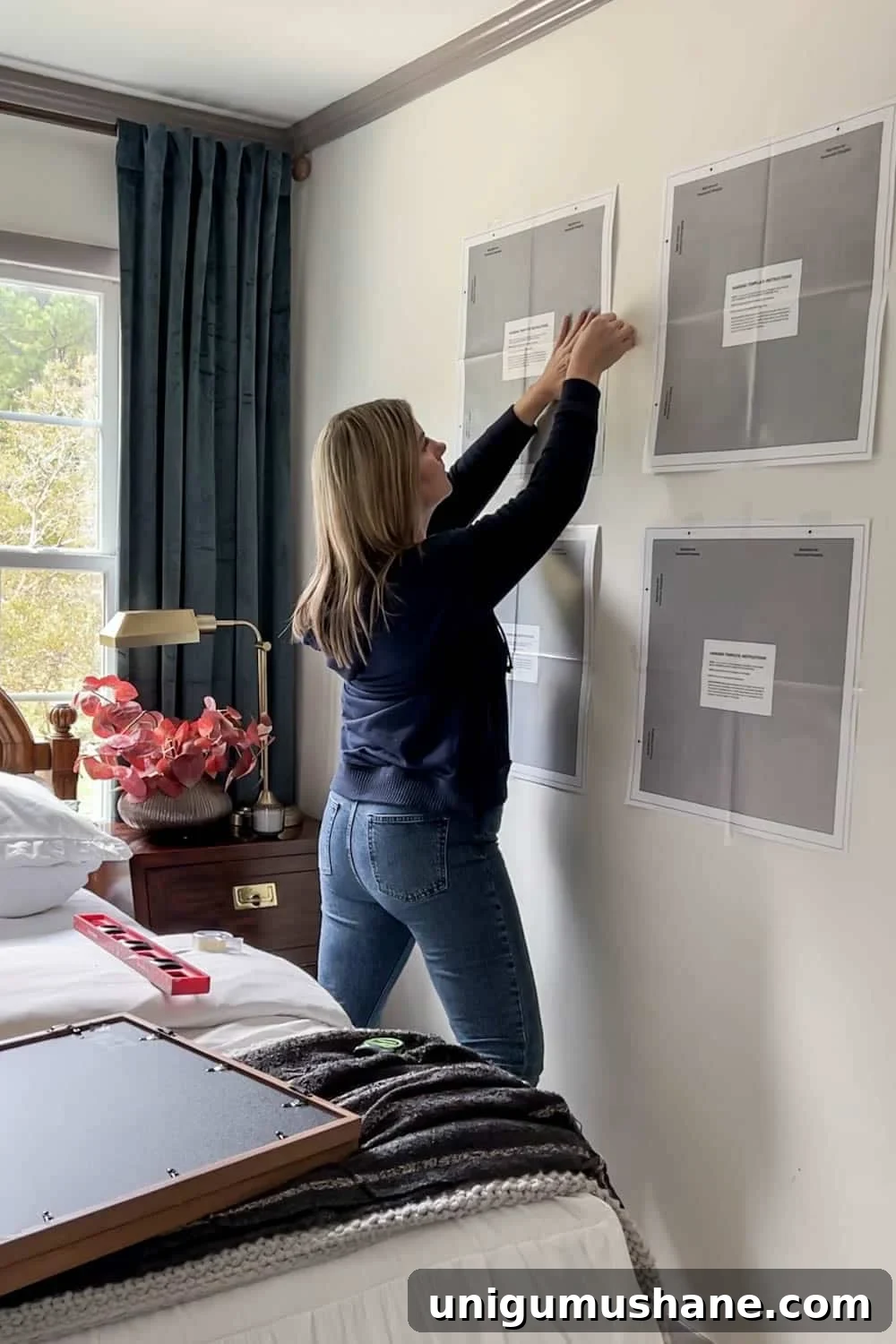
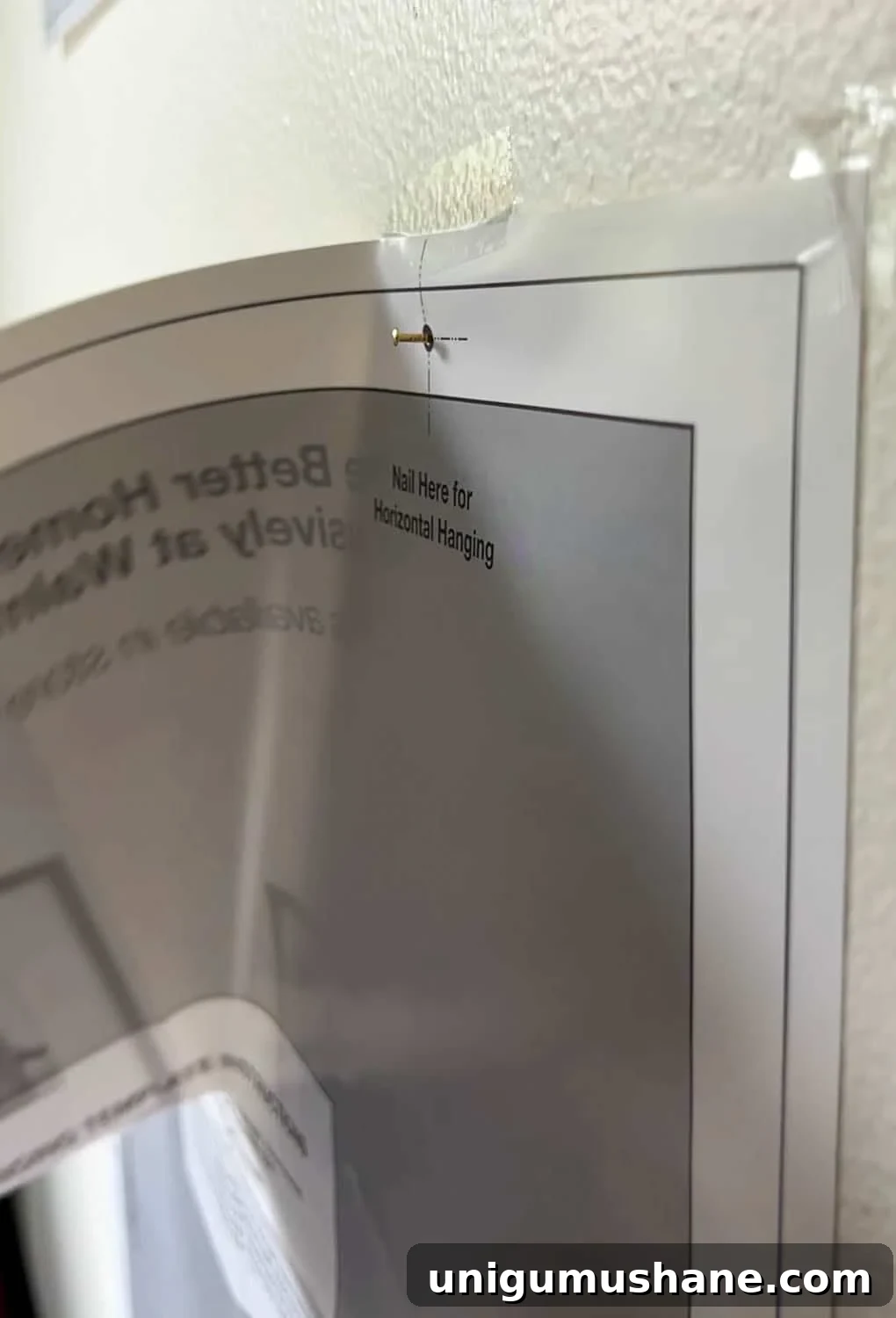
Don’t try to eyeball a gallery wall—tempting as it is, that approach often leads to unnecessary nail holes. Instead, cut templates from wrapping paper or kraft paper by tracing each frame and marking where the hangers sit on the back. These paper templates let you experiment freely without committing to holes in your wall.
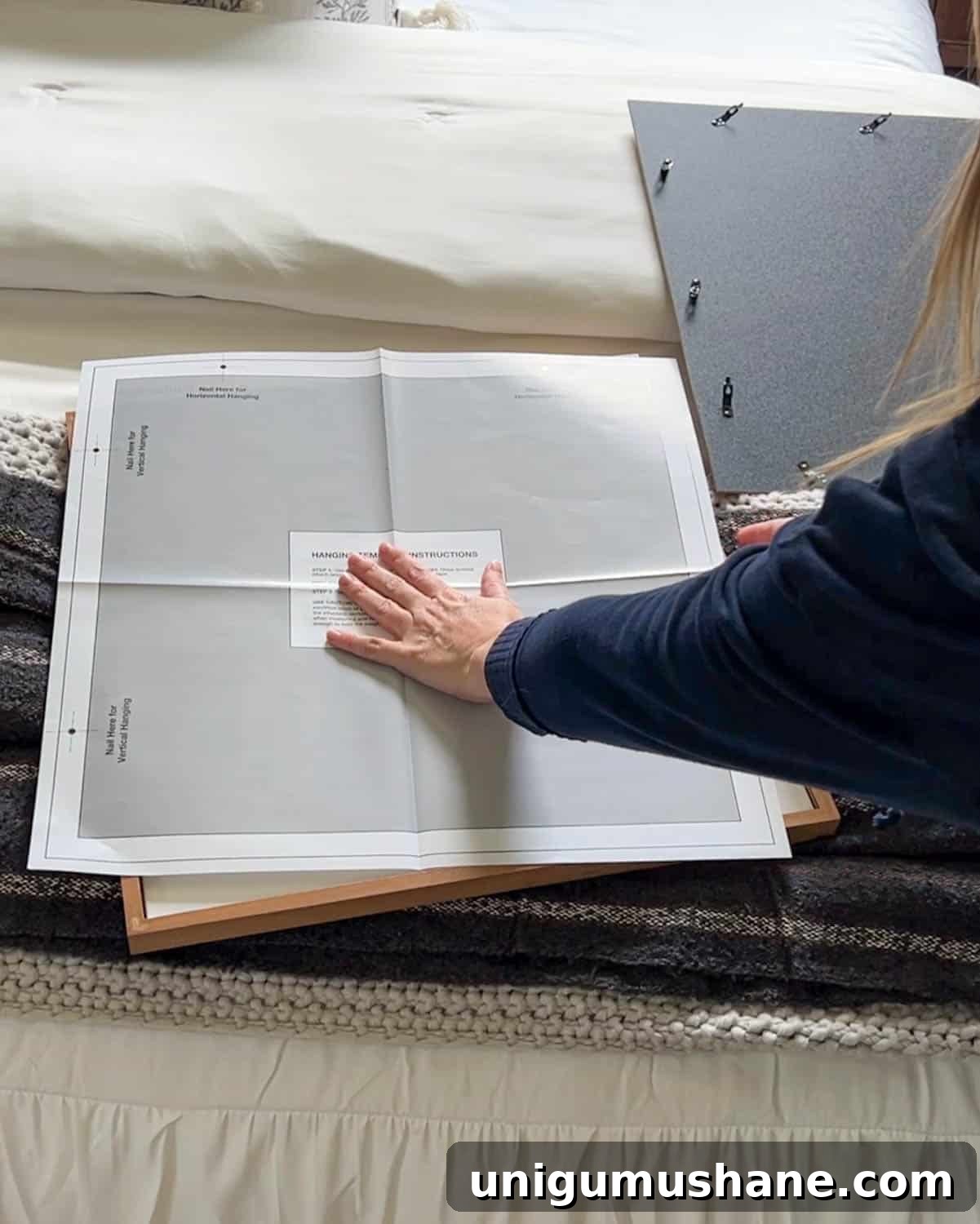
Picture Frames With Templates for Hanging
Some modern frames come with templates included, which saves time. If you’re working with thrifted frames, tracing them on paper is quick and effective. Mark hanger locations on each template so you can transfer them directly to the wall when you’re ready to hang.
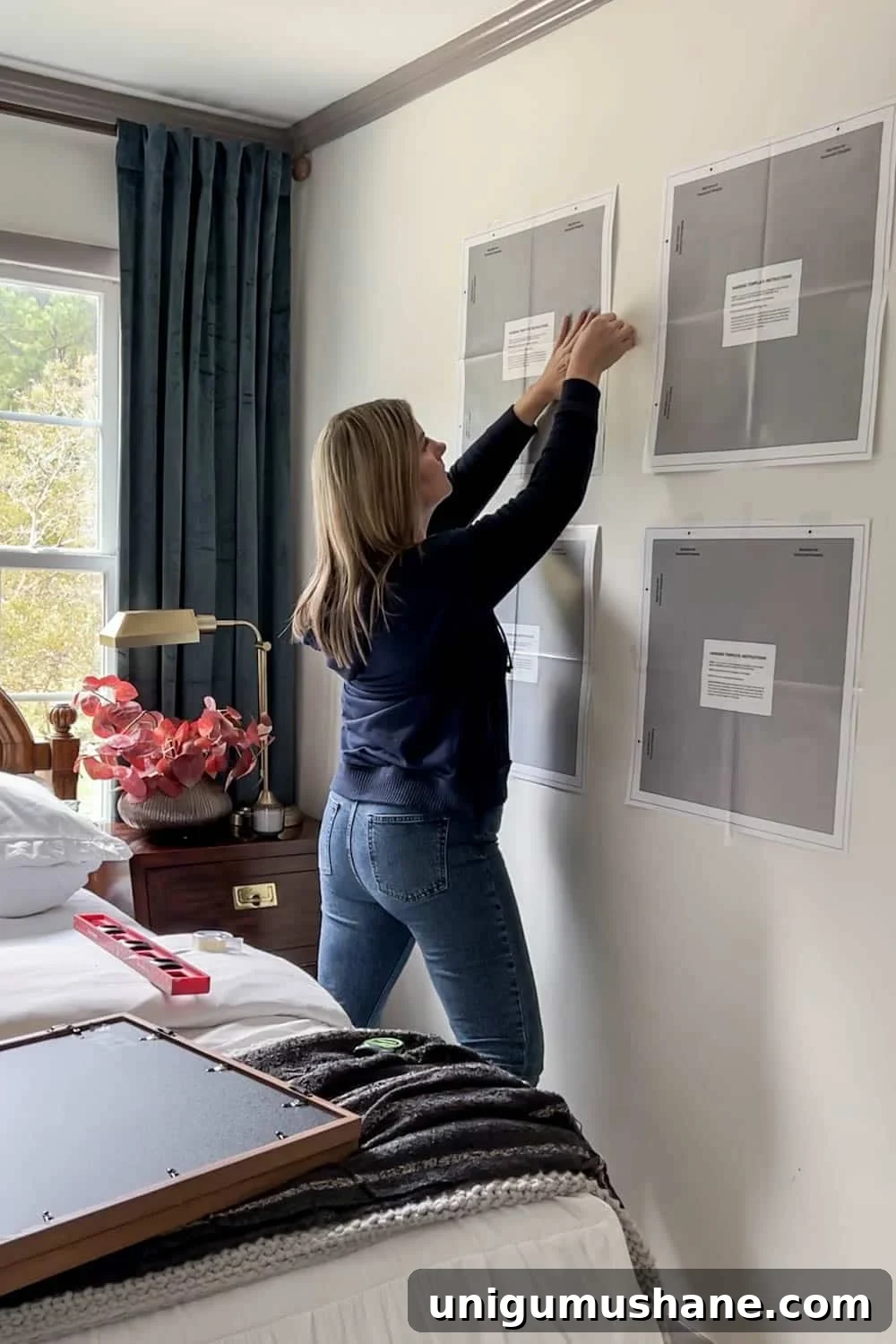
Step 2 – Tape Up Templates to Test Layouts
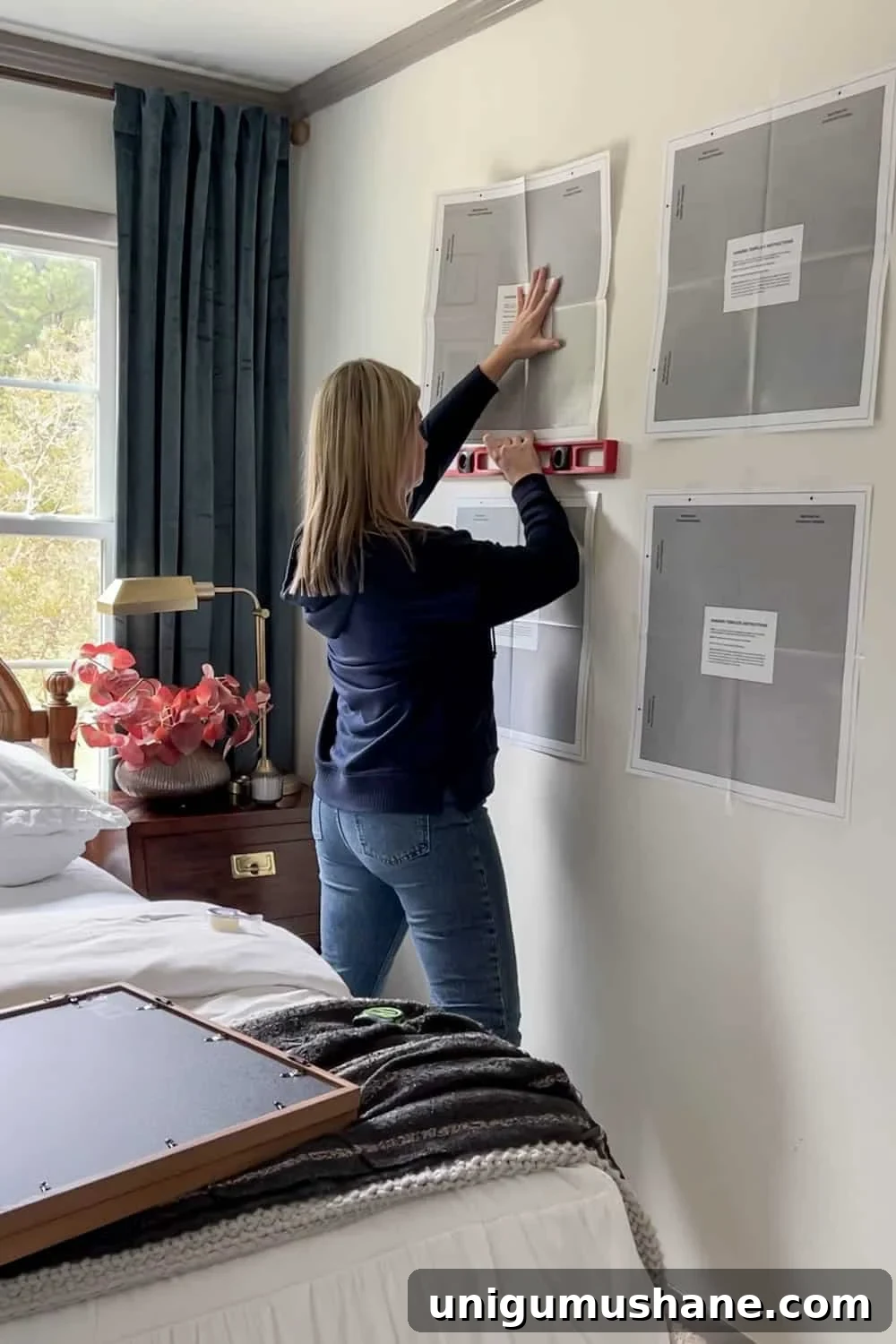
Use transparent tape to attach the paper templates to the wall so the focus stays on the layout rather than on bright tape colors. For stairways, it helps to tape a long diagonal guideline along the base to align the corners consistently with the slope.
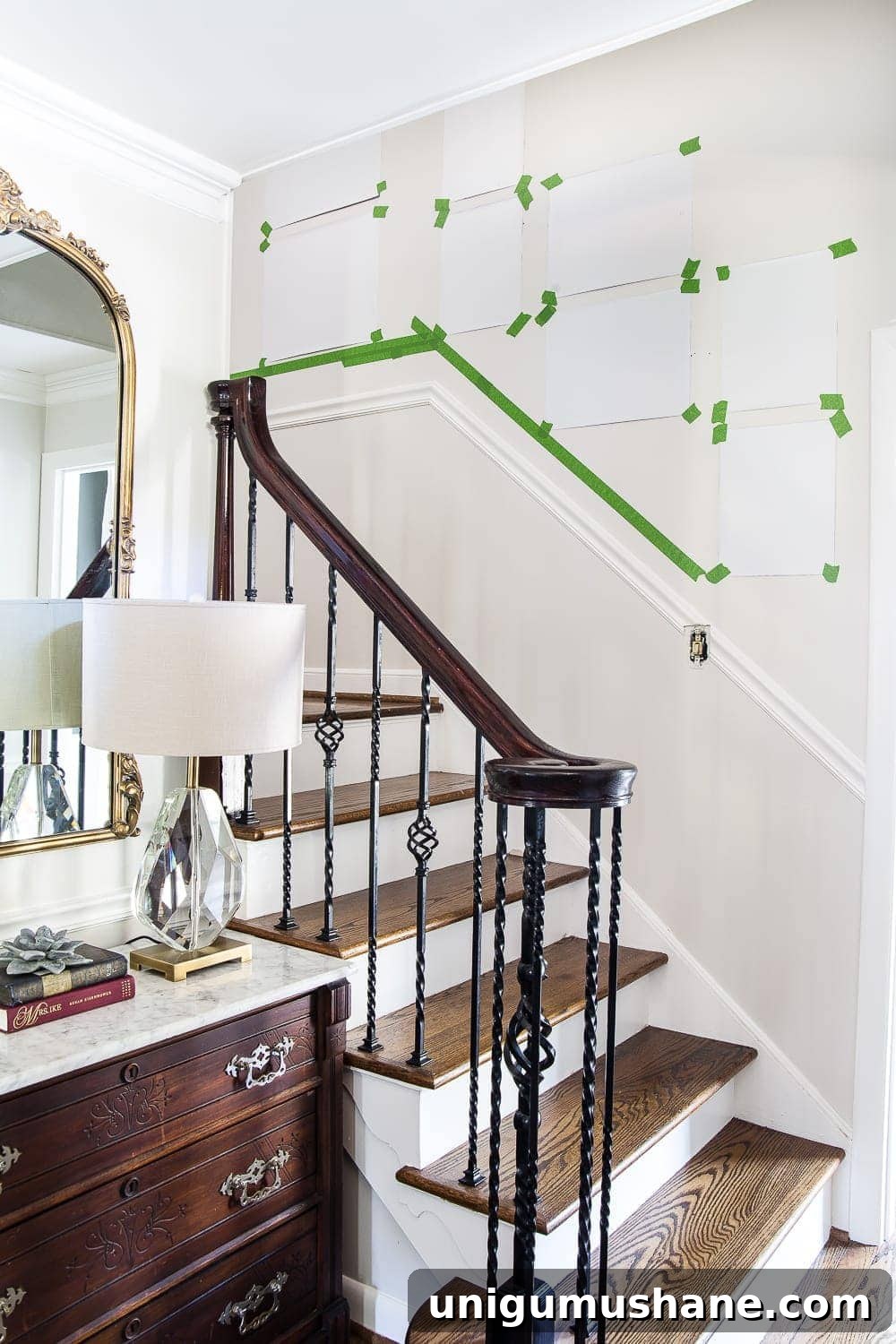
I prefer transparent tape for most rooms because it’s less distracting when you’re arranging pieces. With templates in place, you can step back, adjust spacing, and find a composition that feels balanced before making any marks on the wall.
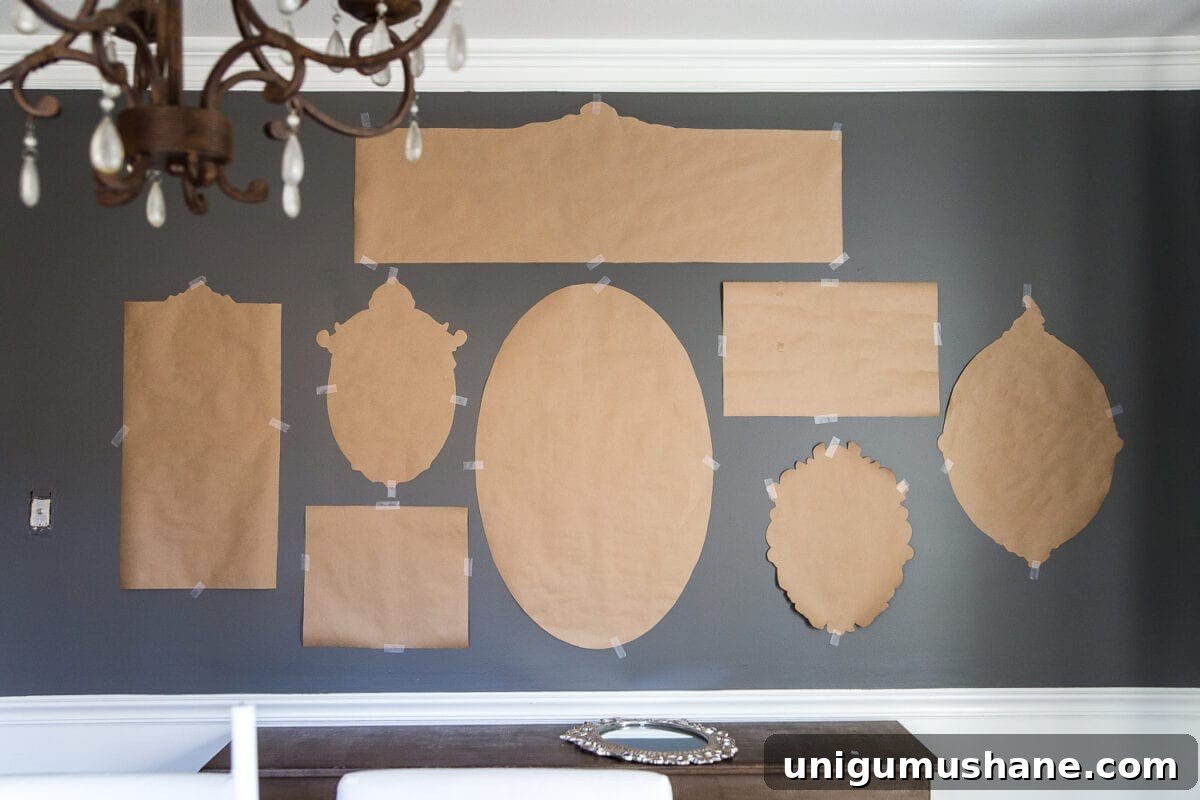
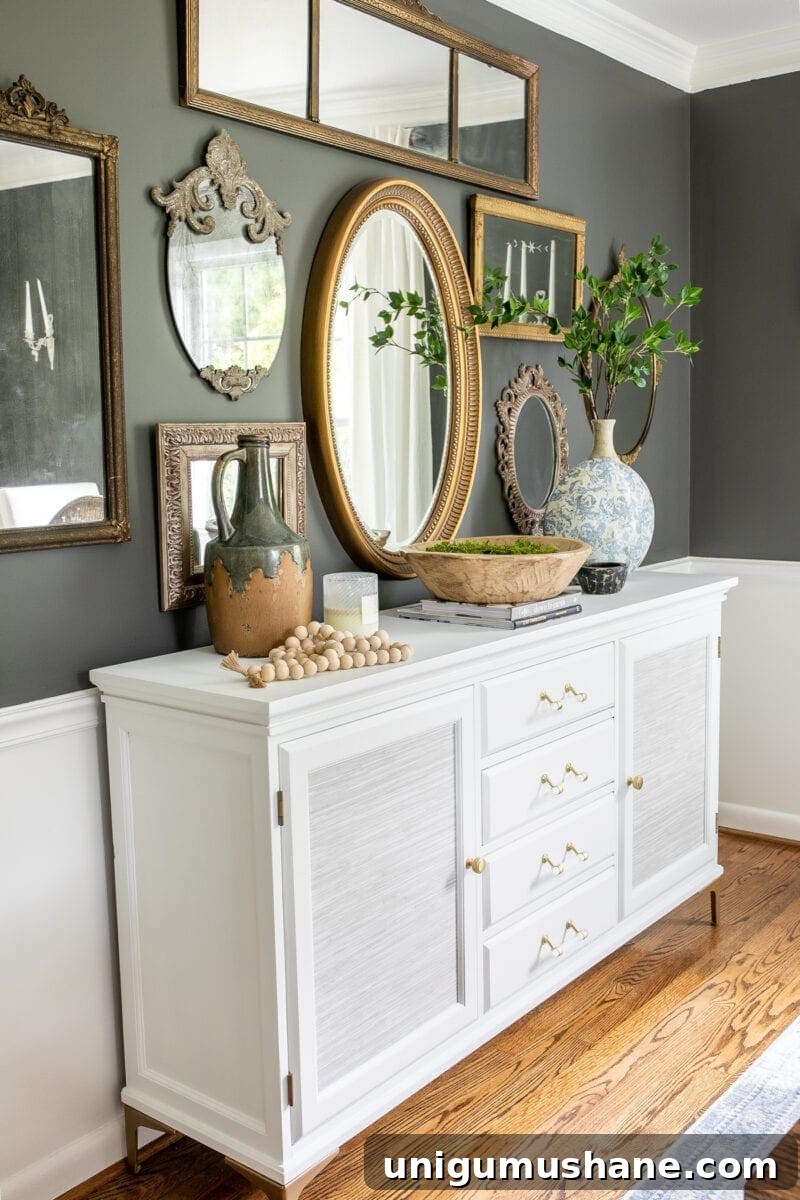
Tips for Choosing the Right Gallery Wall Layout
Start Bigger
Avoid filling a wall exclusively with many small frames—that often reads as cluttered. Begin with larger pieces to anchor the arrangement, which is especially important in rooms with tall ceilings. Common starting sizes are 11×14, 16×20, and 20×24, depending on your wall.
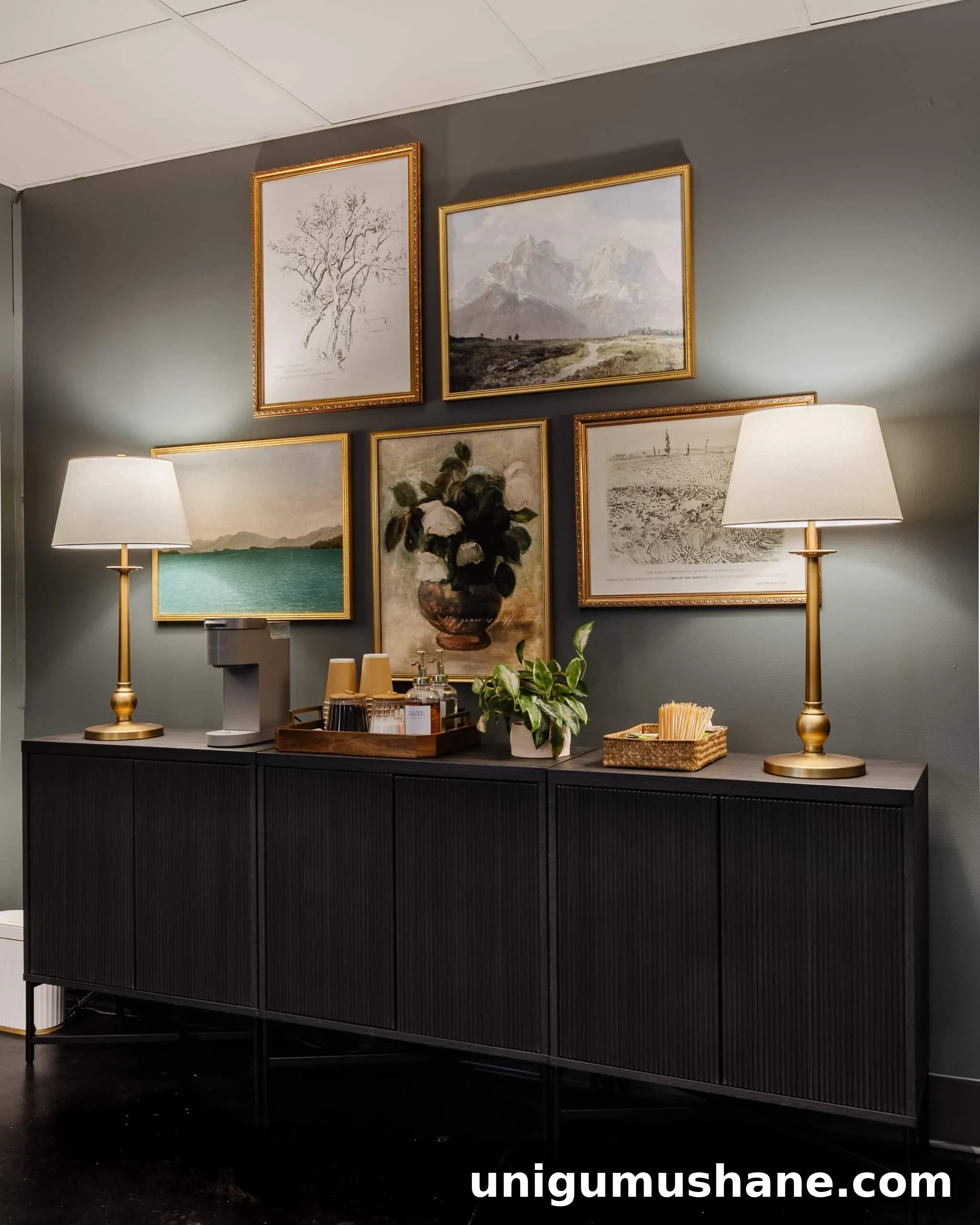
Fill In With Smaller Frames
Place your largest frames first, then fill in the gaps with smaller pieces to create a cohesive composition. This approach keeps the design grounded and prevents a chaotic appearance.
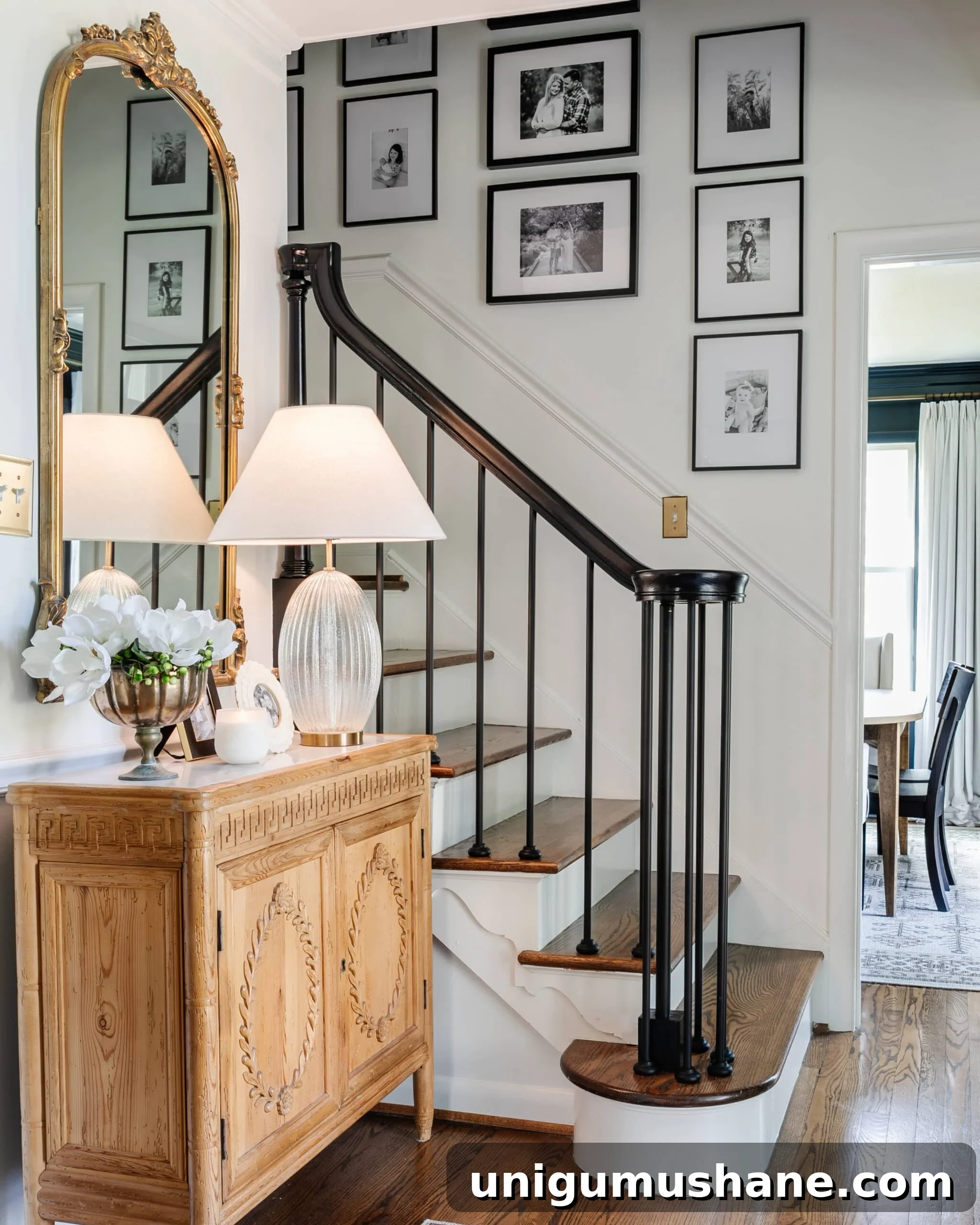
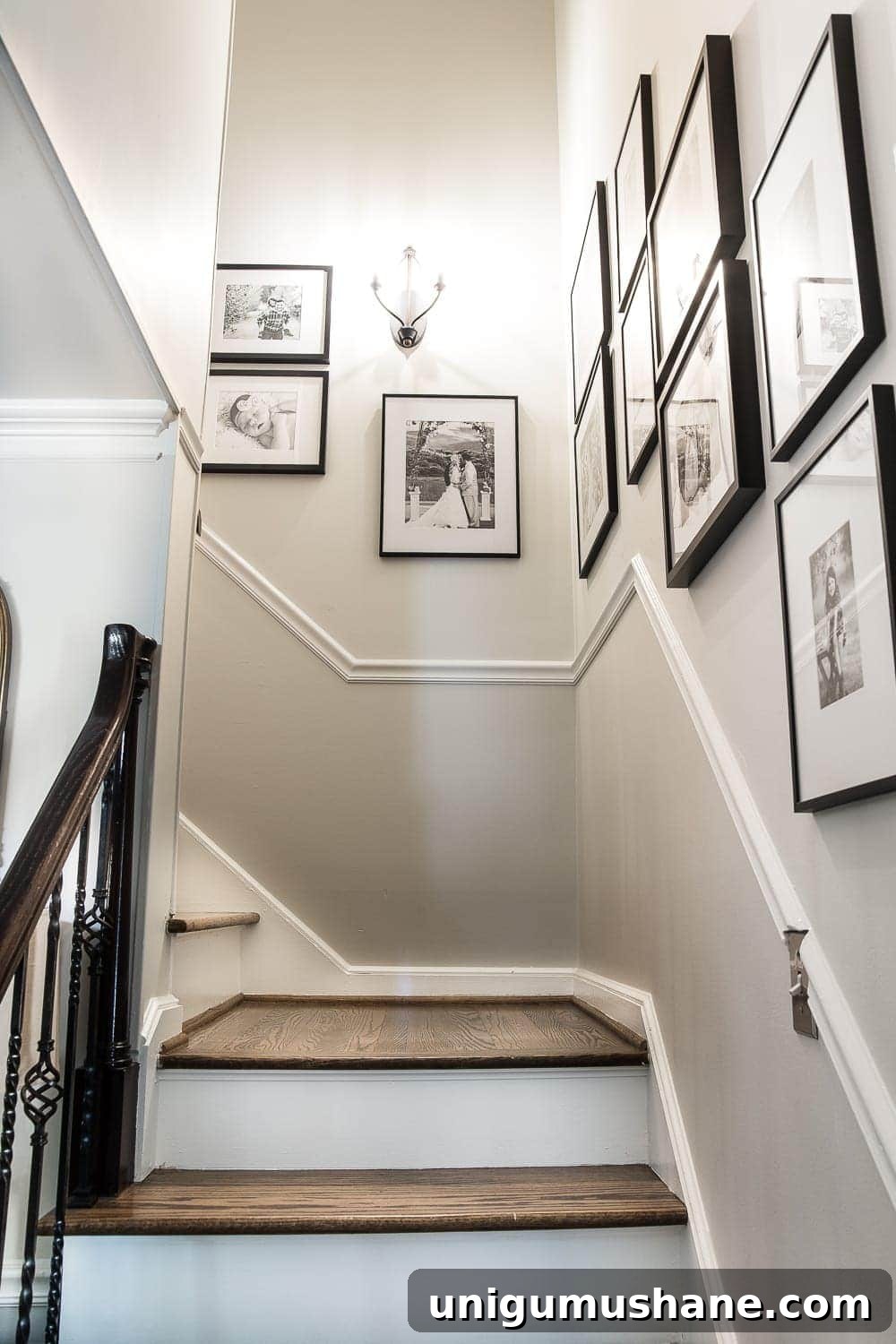
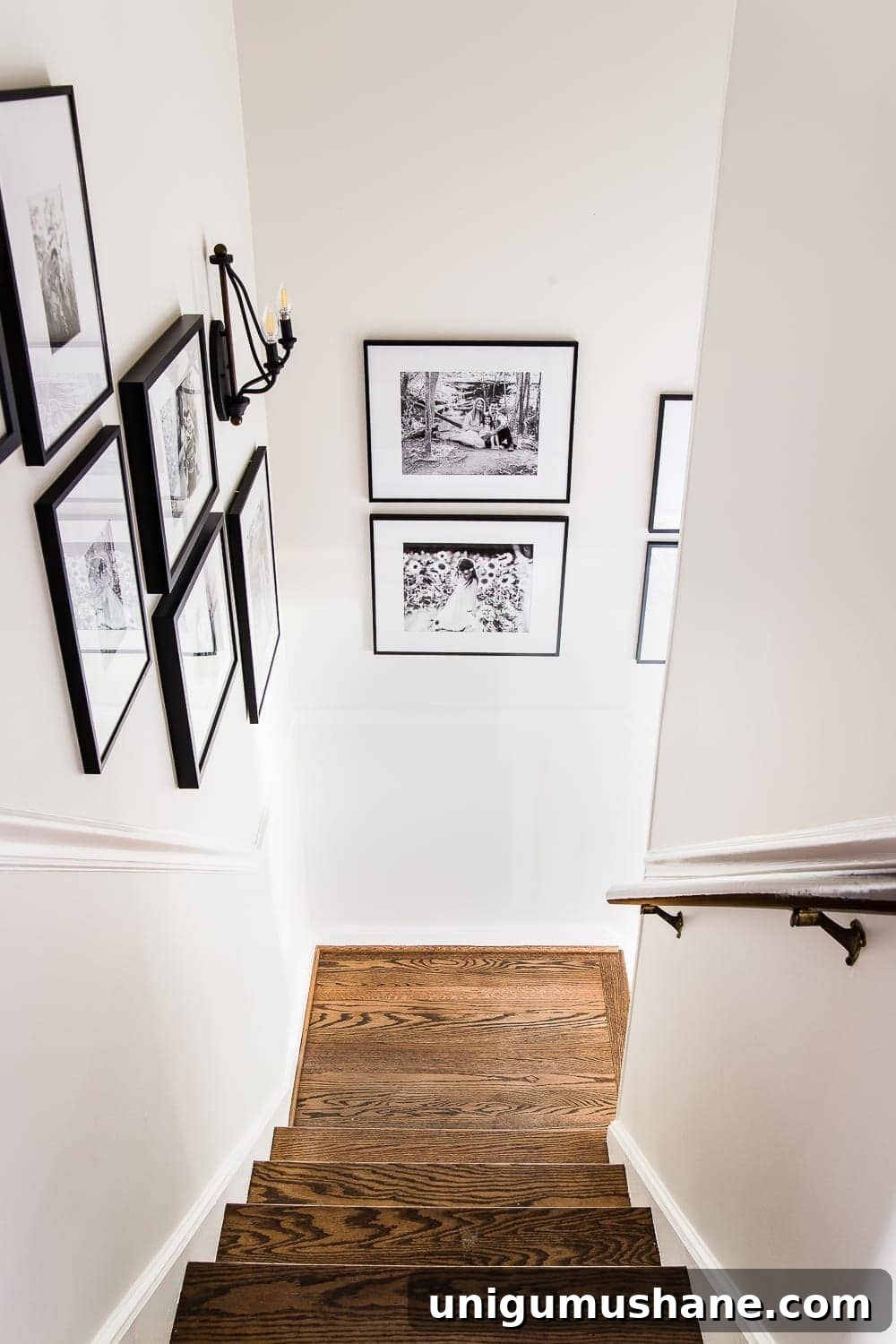
For a stairway, for example, start with a larger cutout at the landing and build around it down the steps.
Add Unframed Objects for an Eclectic Look
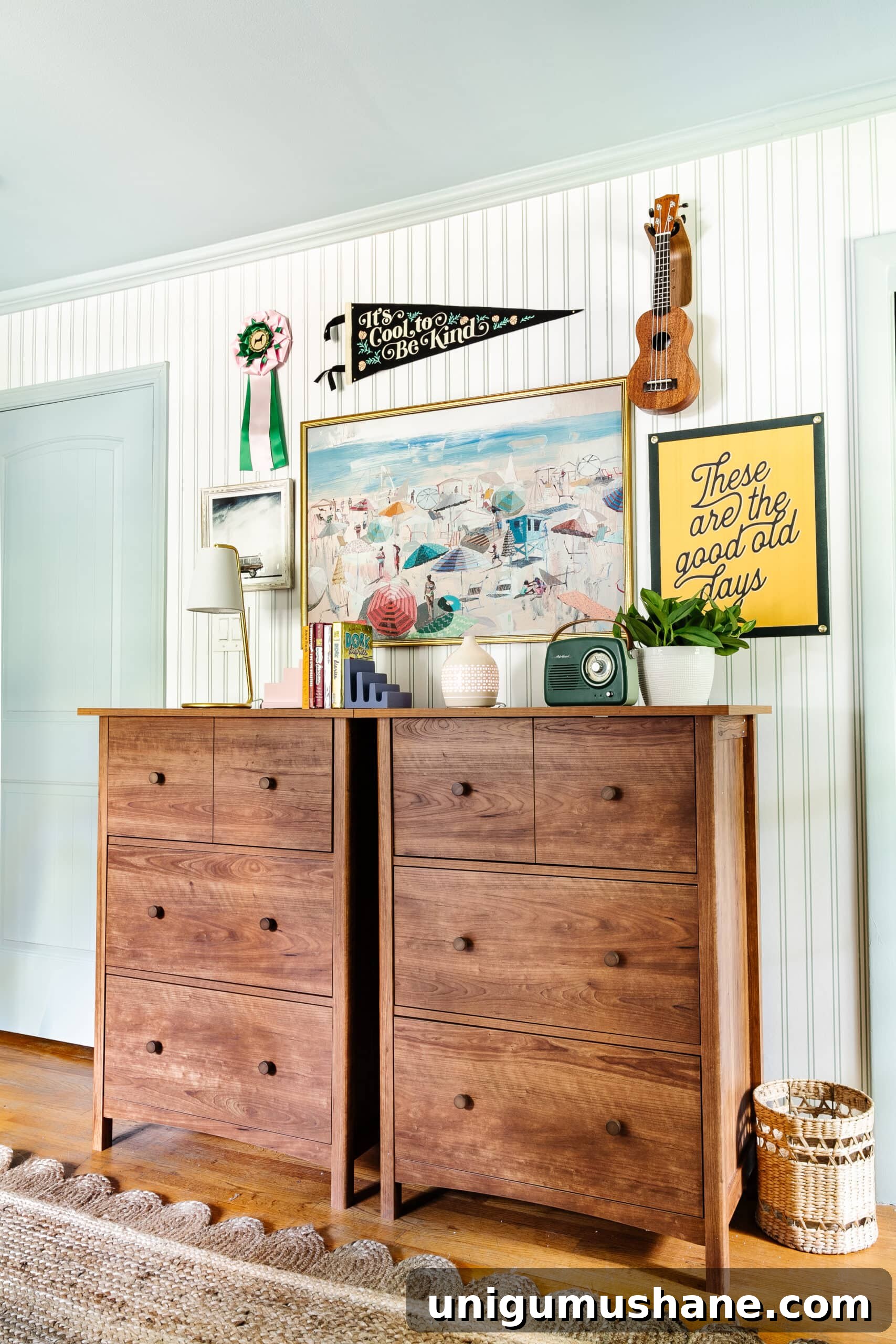
To make a gallery wall feel personal and eclectic, introduce non-traditional items like hats, baskets, musical instruments, or textiles. These elements soften grids of rectangles and add texture and whimsy—especially effective in kids’ rooms and casual spaces.
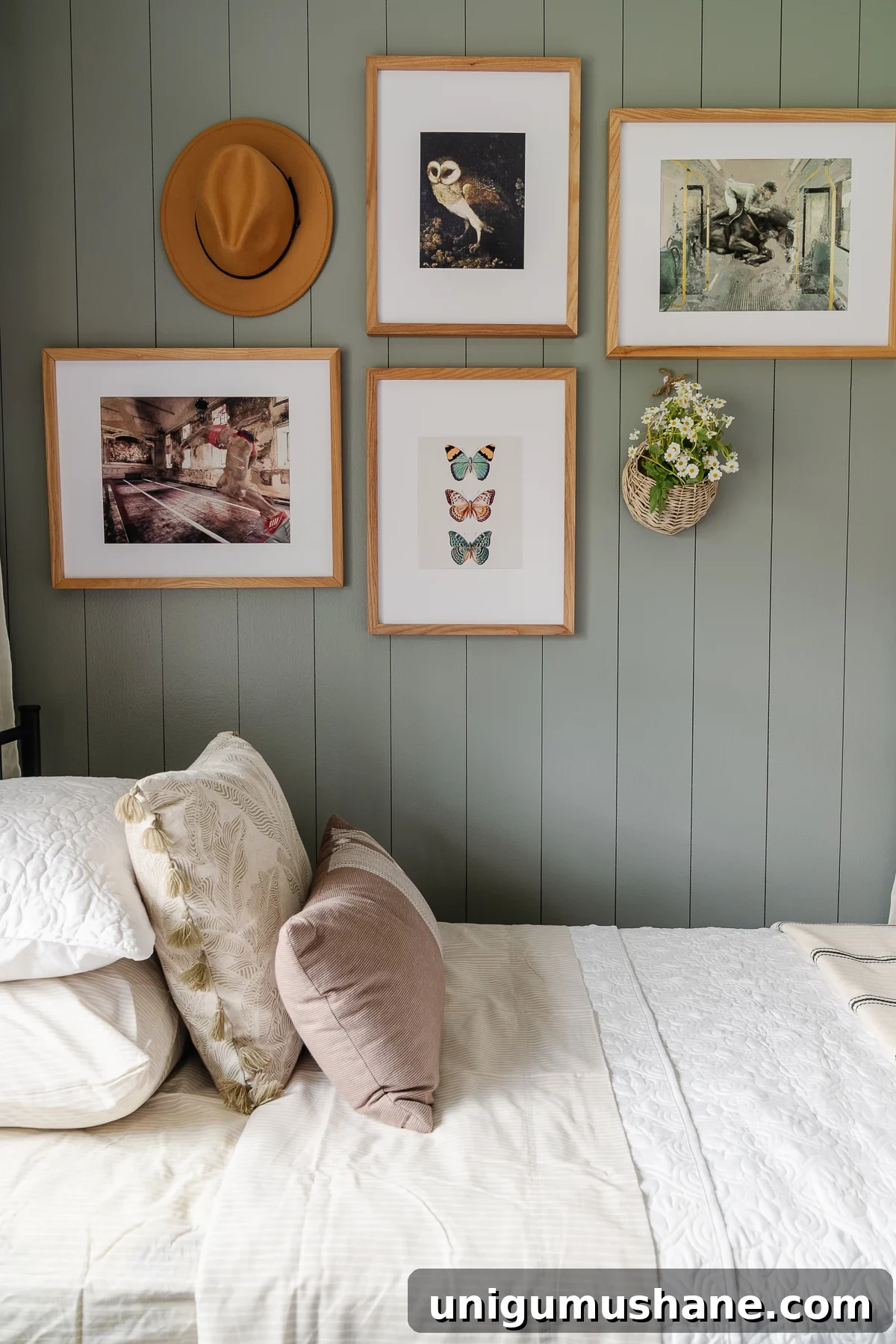
In a beach-themed bunk room, for instance, adding a ukulele, pennants, or ribbon can make the gallery feel curated and joyful. Mixing framed and unframed items is a great way to personalize a wall without overwhelming it.
Focus on a Color Scheme
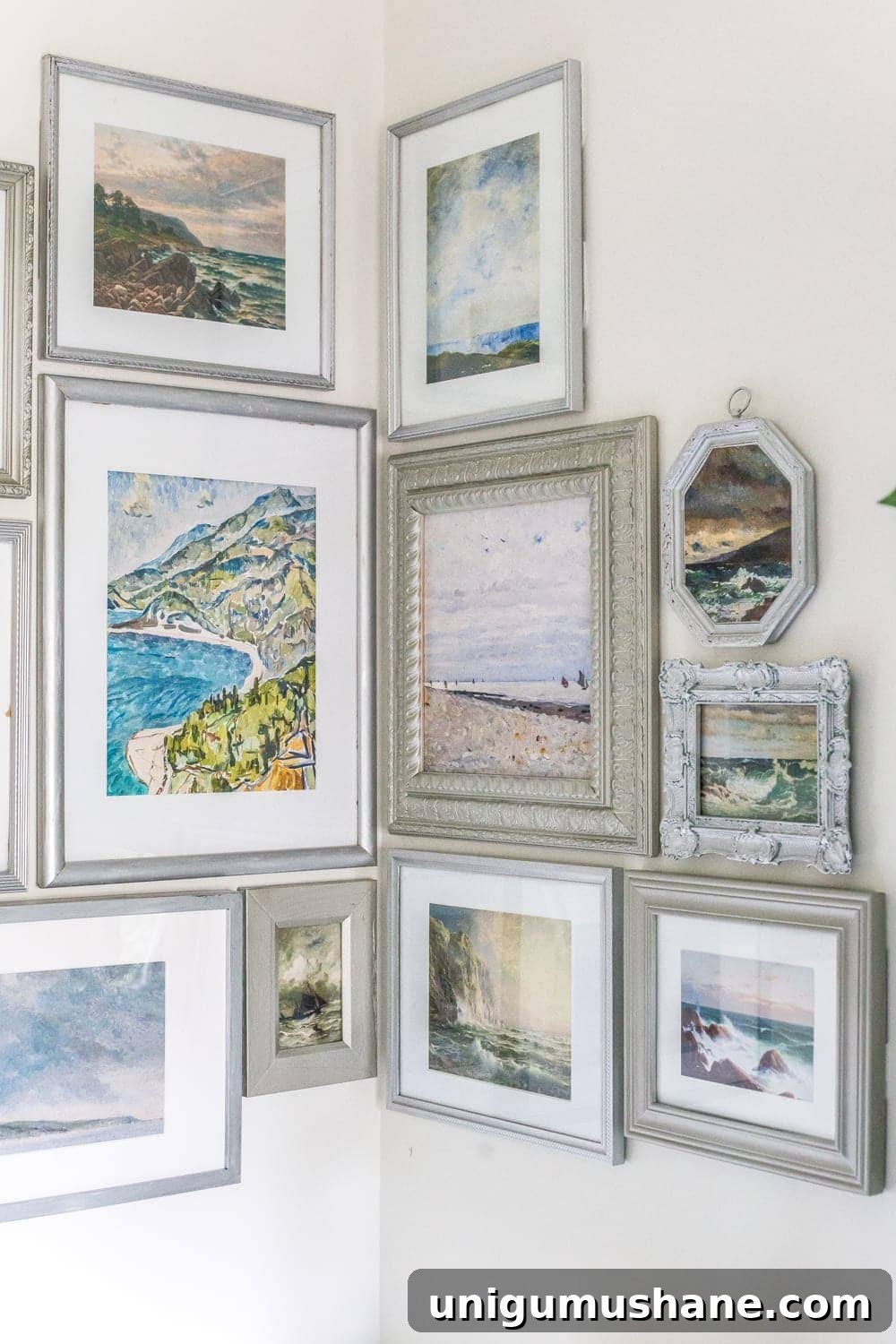
Choose a consistent color palette to make the arrangement look intentional. A monochrome scheme—like black-and-white—or a limited palette of pastels or blues keeps a collection from appearing chaotic. Consistency in color and frame finishes helps the eye read the gallery as a single, cohesive installation.
Consider Matting
Matting gives photos and prints a gallery-quality look. A crisp white mat paired with a clean frame elevates inexpensive or thrifted finds, while ornate frames provide a more traditional appearance.
Many retailers sell pre-matted frames, and pre-cut mats are an affordable option if you want to mat thrifted pieces. You can also unify mismatched frames by spray-painting them the same finish for a cohesive, classic look.
Gallery Wall Layout Ideas
Here are a few simple layout approaches to consider: start with a central anchor piece and build outward, use a symmetrical grid for a minimalist look, or layer eclectic sizes and shapes for a collected, organic feel. Below is a visual reference to inspire your arrangement choices.
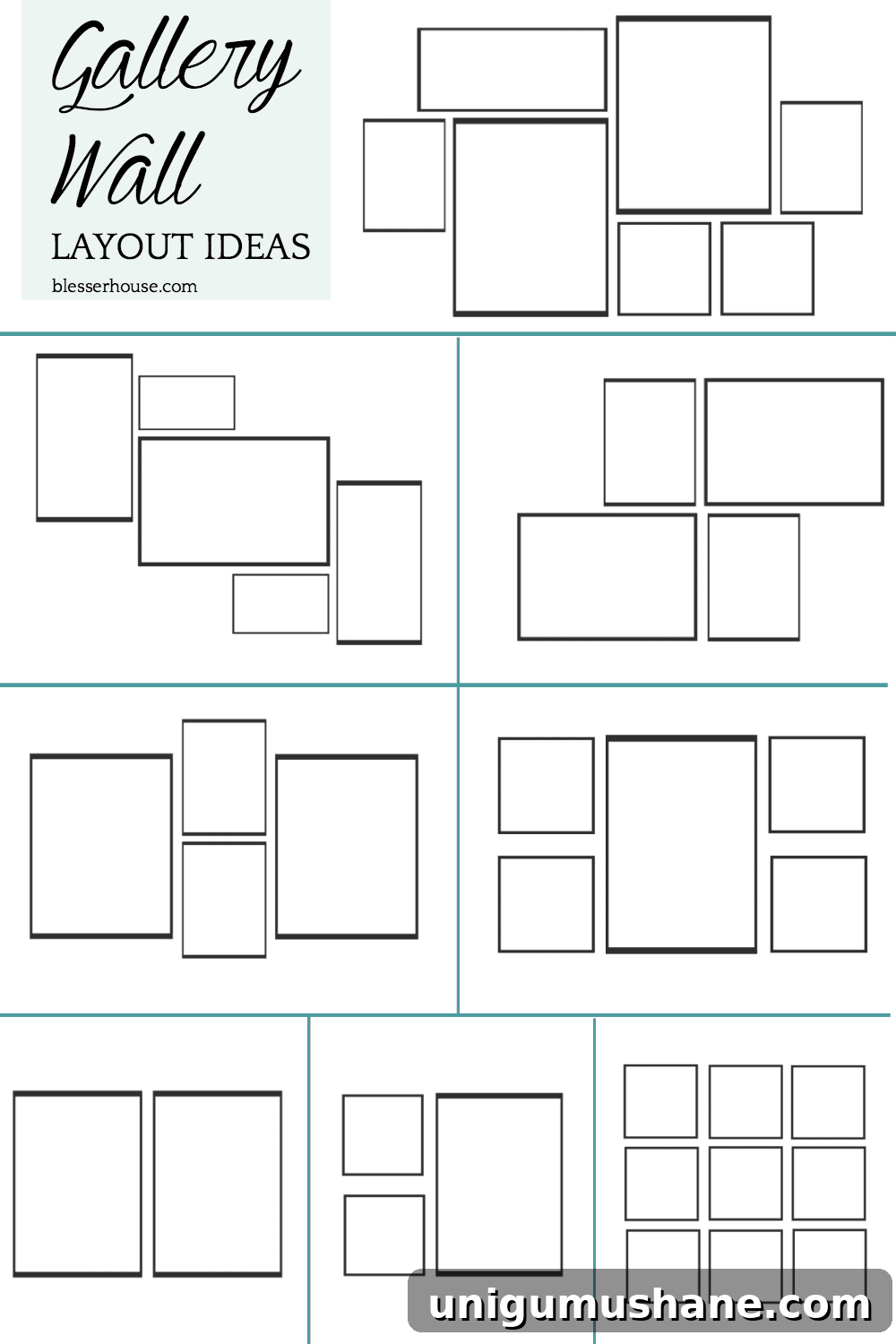
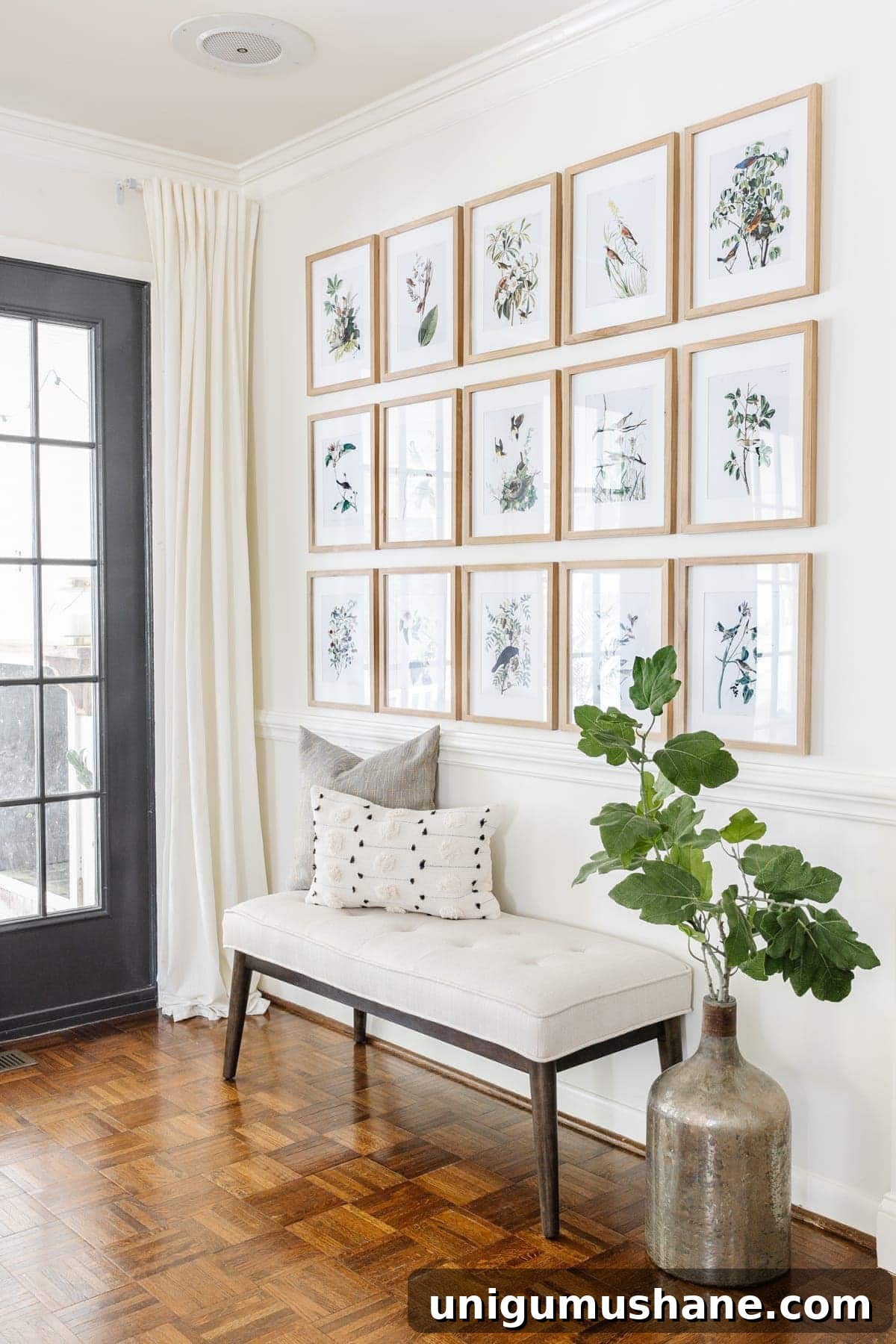
A clean grid is a foolproof option when you want a tidy, minimalist gallery. It’s also easy to scale: select matching frames and evenly space them for instant cohesion.
Step 3 – Measure and Level
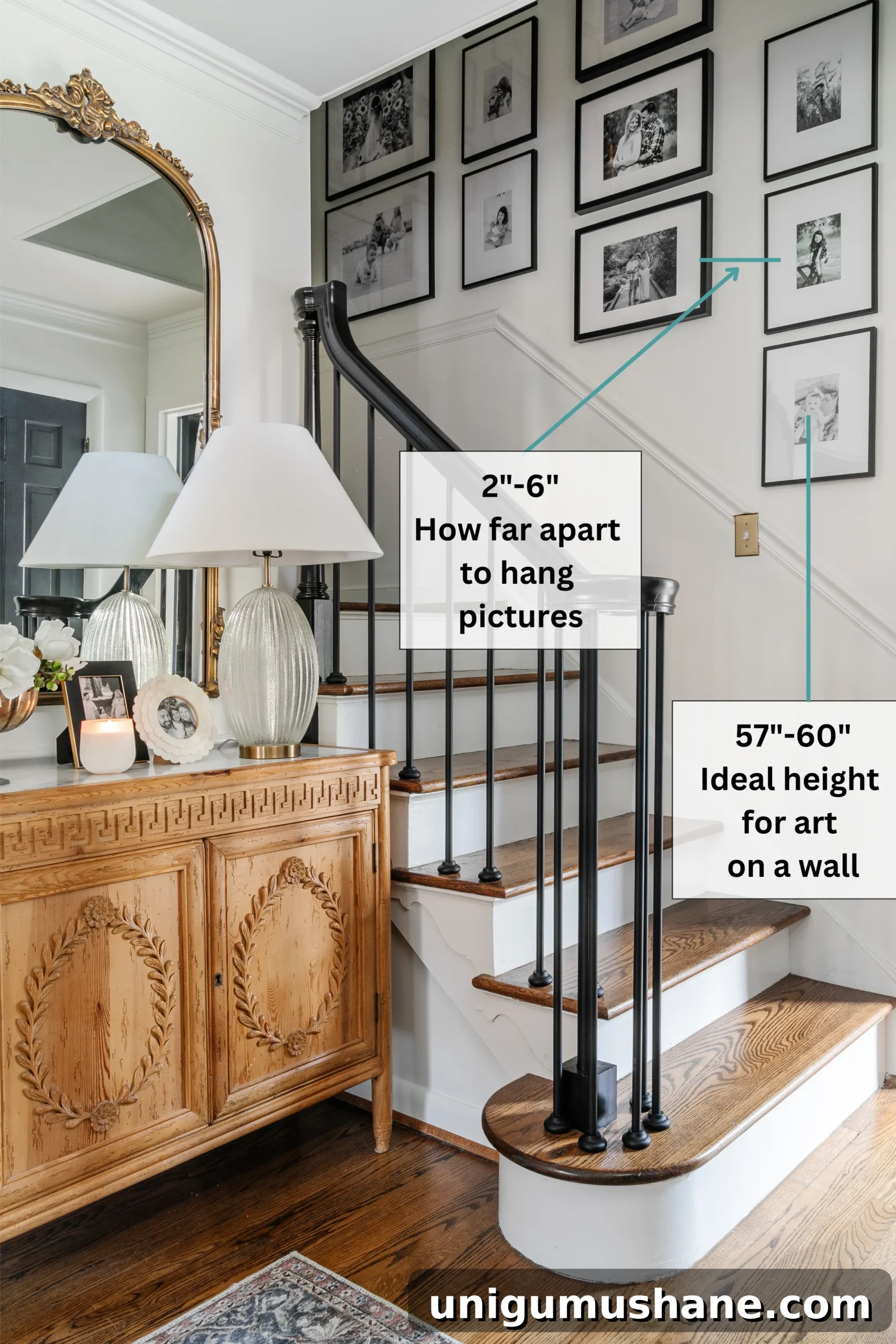
Keep spacing between frames roughly 2–6 inches so the arrangement reads as a single unit. Aim for the center of the gallery to sit near eye level—about 60 inches from the floor to the center for most viewers—unless you’re tailoring the height for specific furniture or sightlines.
Before you put any nails in the wall, use a level to double-check the alignment of your templates and make any final tweaks.
Step 4 – Hang Your Frames
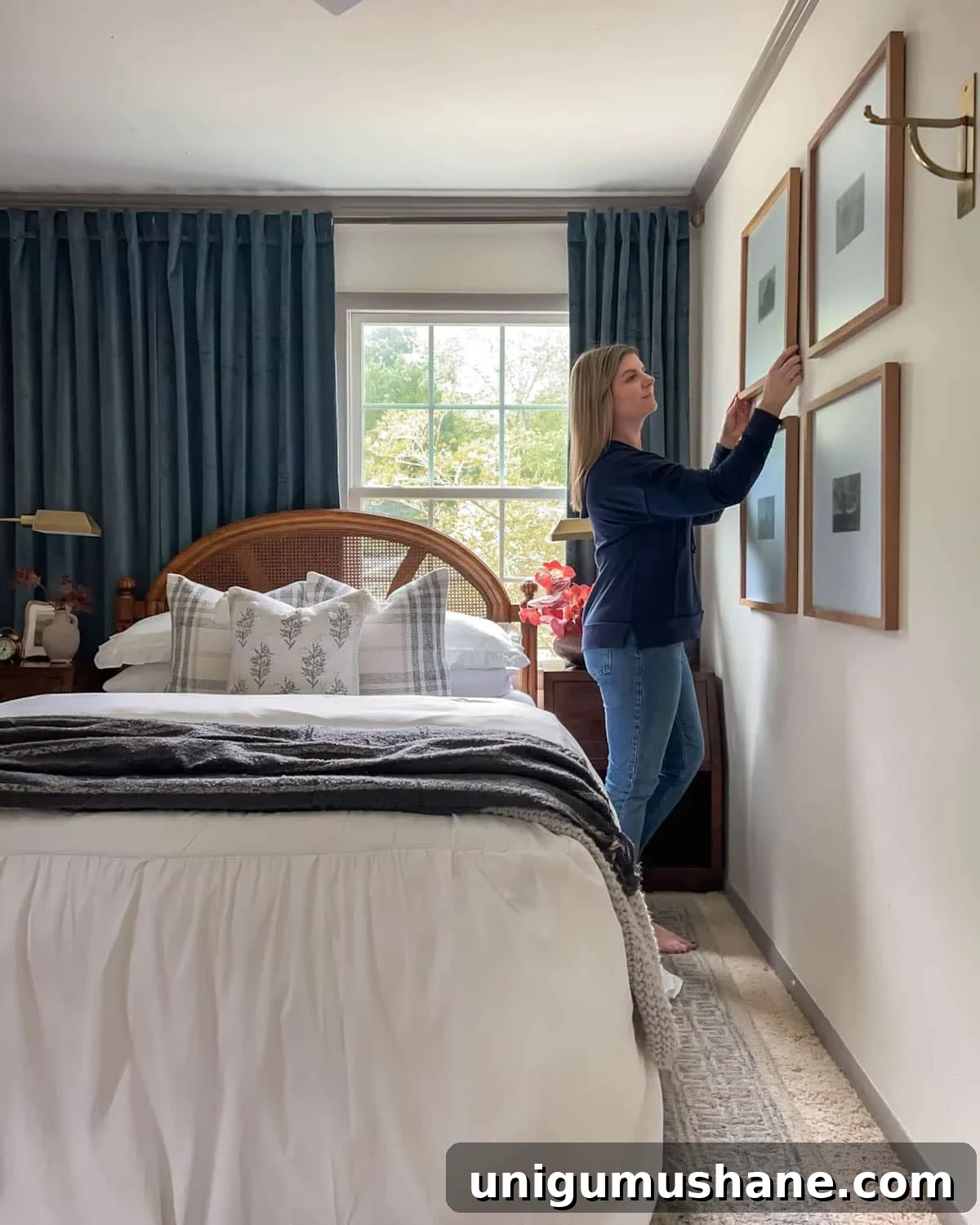
With templates taped up and hanger locations marked, hammer nails through the template at each hanger point. Tear the paper away and hang the frame on the nail—the nails will be perfectly placed. This method eliminates guesswork and keeps your wall free of extra holes.
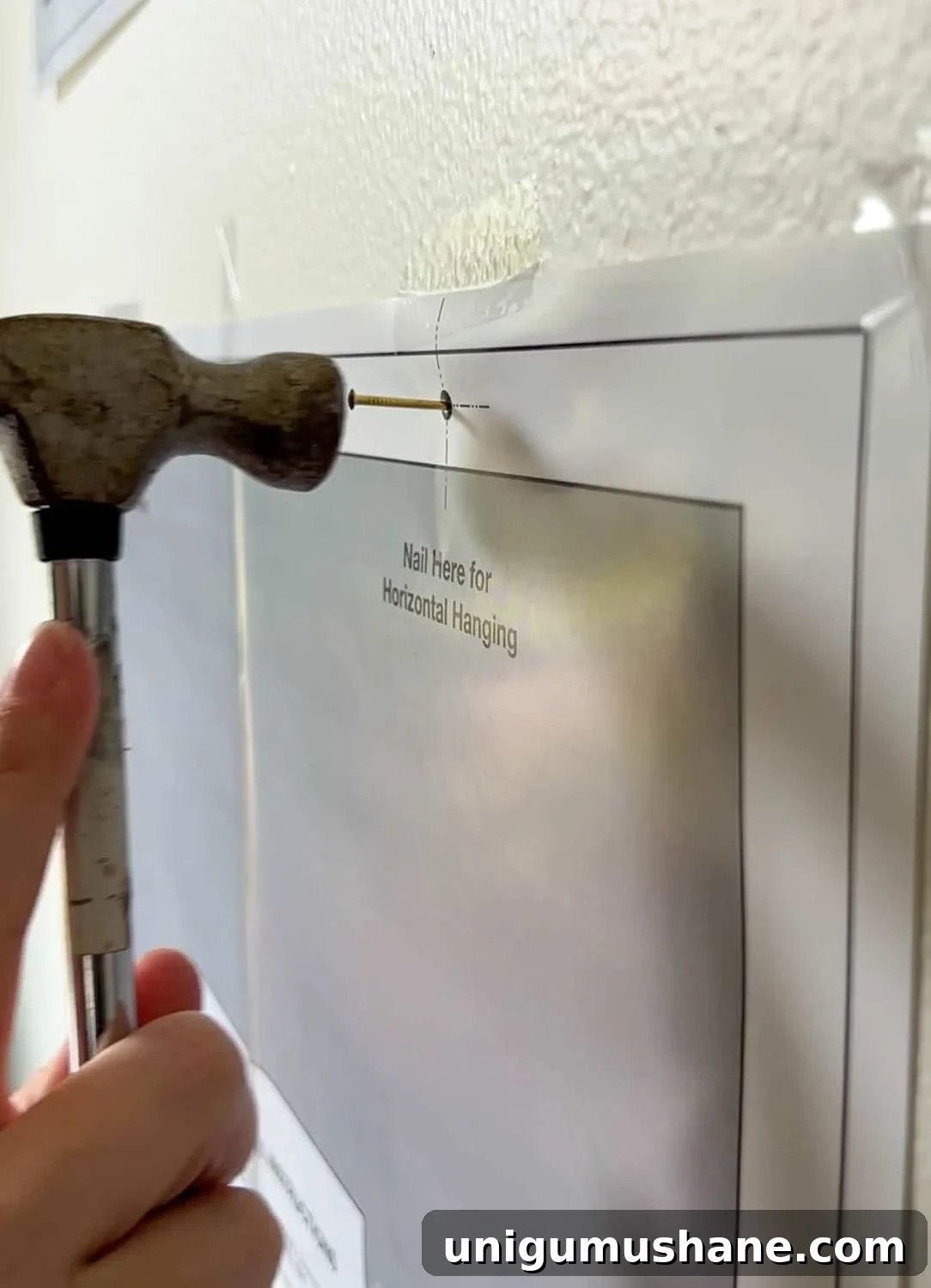
If using templates that came with frames, the same process applies: align, mark or nail through the hanger spot, remove the template, and hang.
More DIY Wall Decor and Gallery Wall Ideas
- 20 creative DIY wall decor ideas for blank walls (visual inspiration and tutorials)
- Printable art sets and themed gallery concepts—use matching prints for a cohesive look
- Mirror gallery walls—great for reflecting light and making spaces feel larger
- Pressed leaf and botanical displays for seasonal or natural-themed walls
- Makeovers using thrifted frames and simple matting to create a high-end look on a budget
Gallery walls are a beautiful way to showcase memories and style. Our staircase displays family moments from the last decade—engagement photos, wedding portraits, and early baby snapshots—so every trip up the stairs becomes a small walk through our history. Thoughtful placement and a few simple techniques can transform a plain wall into a meaningful focal point for your home.
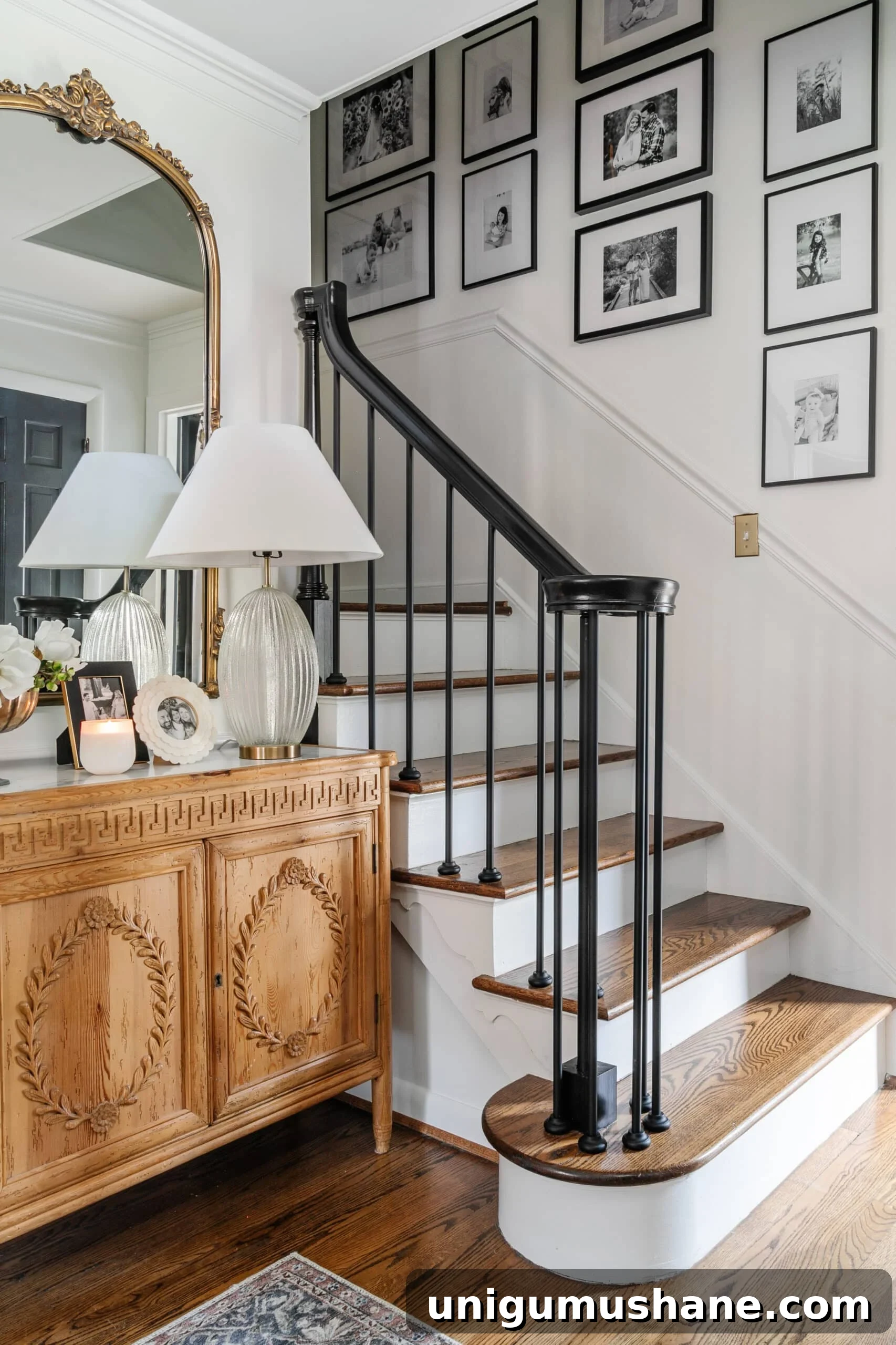
I try to keep the most important memories and favorite pieces in the center of our home—it makes the space feel personal and grounded. Do you have a favorite trick for hanging a gallery wall, or a memorable arrangement at your house? Once you begin, it’s easy to get hooked on curating spaces that tell your story.
Get started with one wall, try templates and a simple color scheme, and refine from there—you’ll be surprised how quickly a gallery wall becomes the focal point of a room.