Tips to convert a backyard shed into an affordable DIY home gym using secondhand equipment and clever storage solutions.
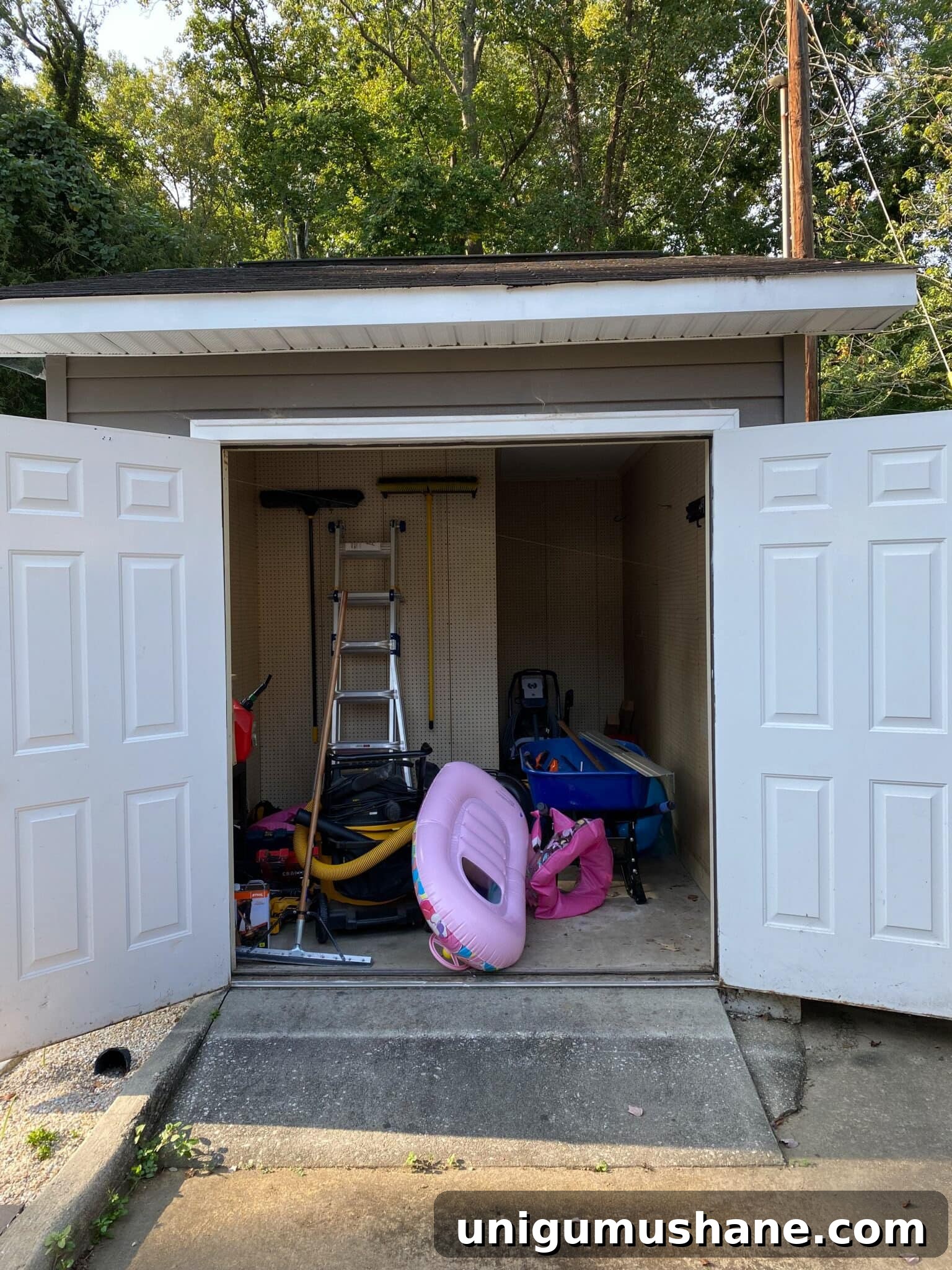
If your backyard shed is currently stuffed with junk, it’s an ideal candidate for a compact workout space. With some elbow grease and a modest budget, a cluttered shed can become a convenient, motivating place to train.
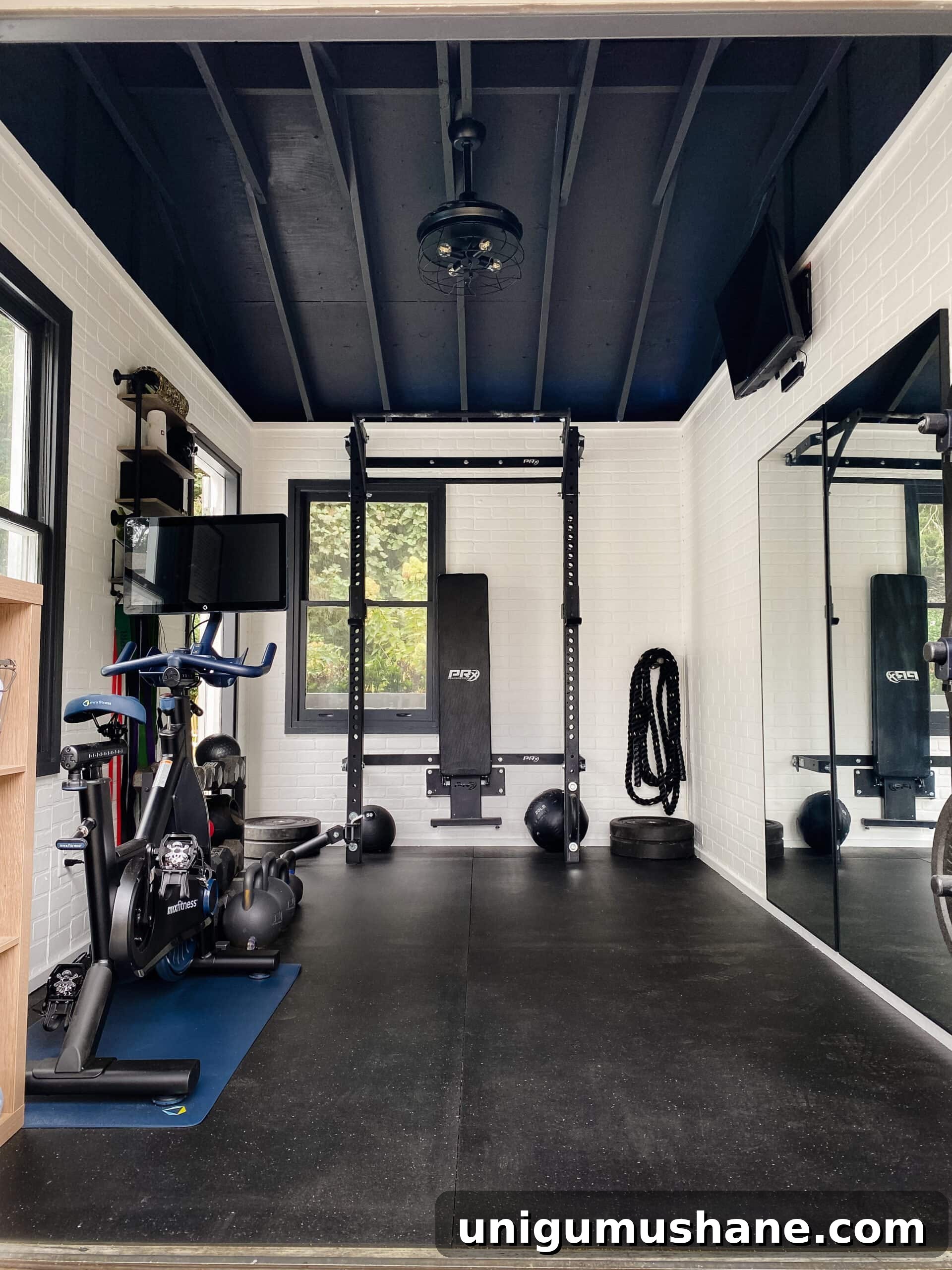
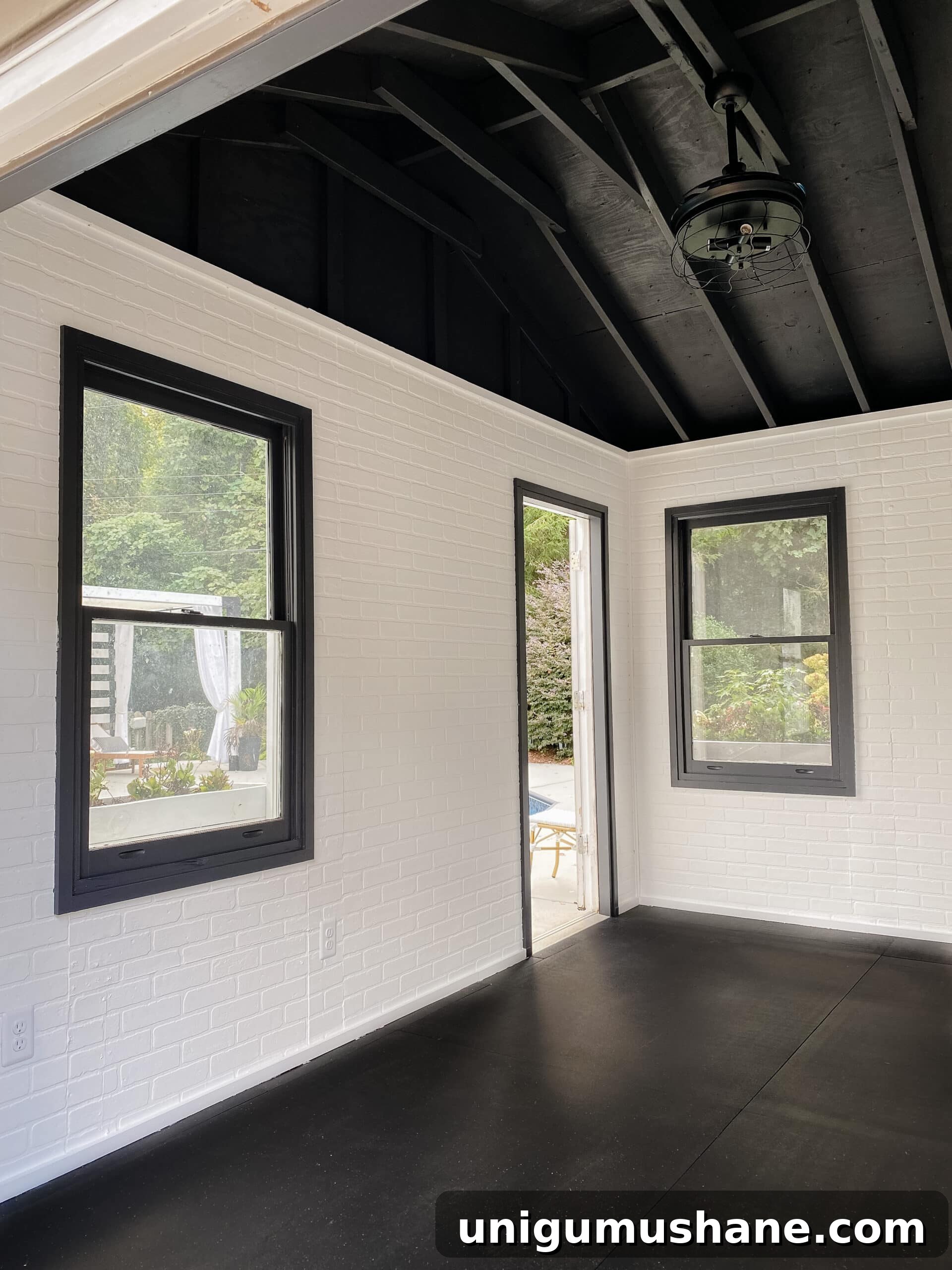
In about two weeks of intermittent work—reusing lumber, mixing leftover paint, and installing inexpensive faux brick panels—we transformed our shed into a fully usable home gym.
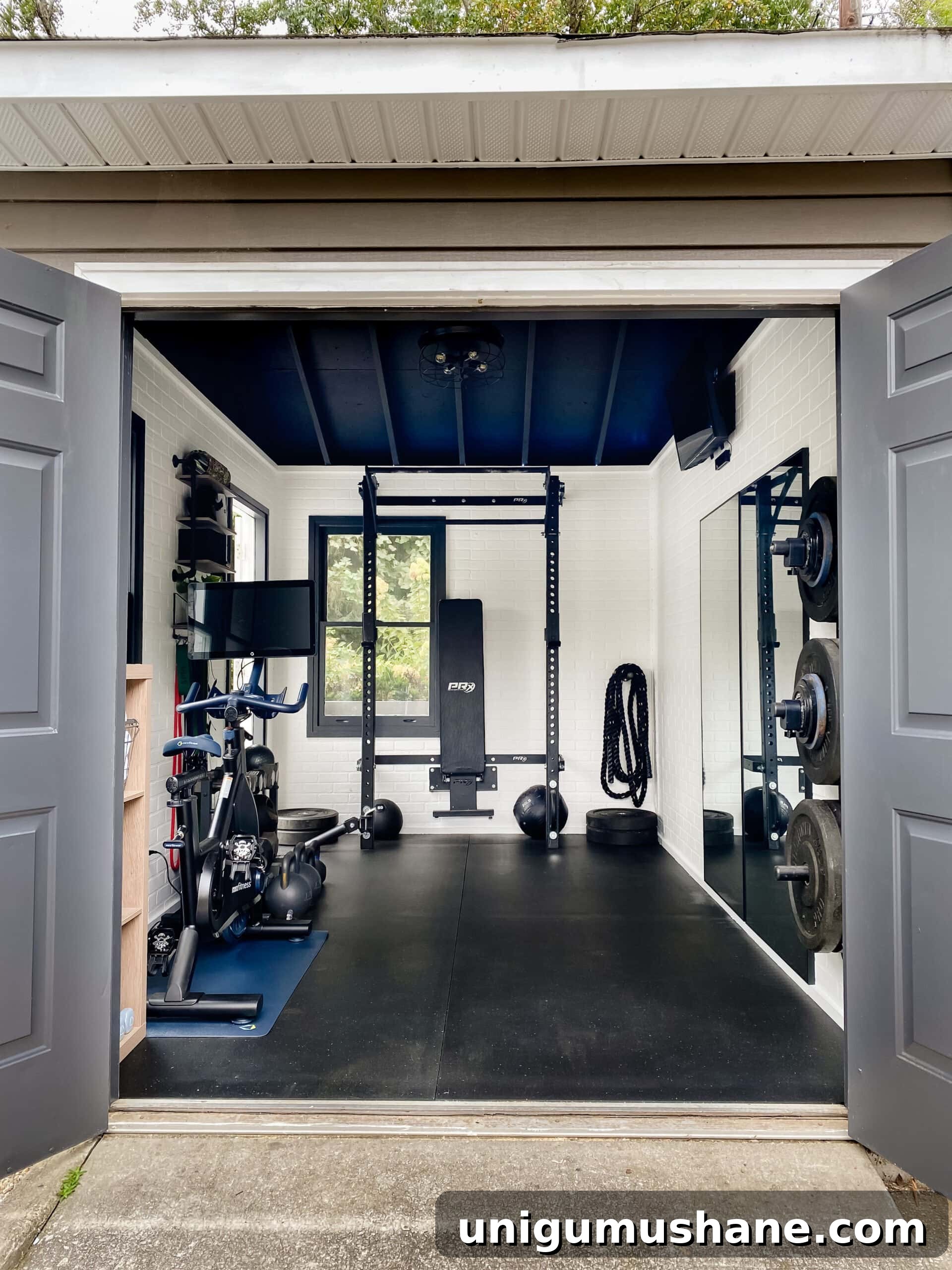
Turning a garden shed into a workout room can be remarkably budget-friendly. Over time you’ll likely save more than the cost of a gym membership, and you’ll gain the convenience of exercising at home.
Creating a dedicated, distraction-free space makes it easier to stick to a routine. For us, much of the equipment was acquired secondhand over the years from local marketplaces and thrift stores, so repurposing those items made this project very affordable.
With a few organization pieces and small comforts, the shed now feels like a tiny backyard fitness studio. Below are practical tips we used to arrange equipment and storage so your own gym shed will function efficiently.
Home Gym Storage
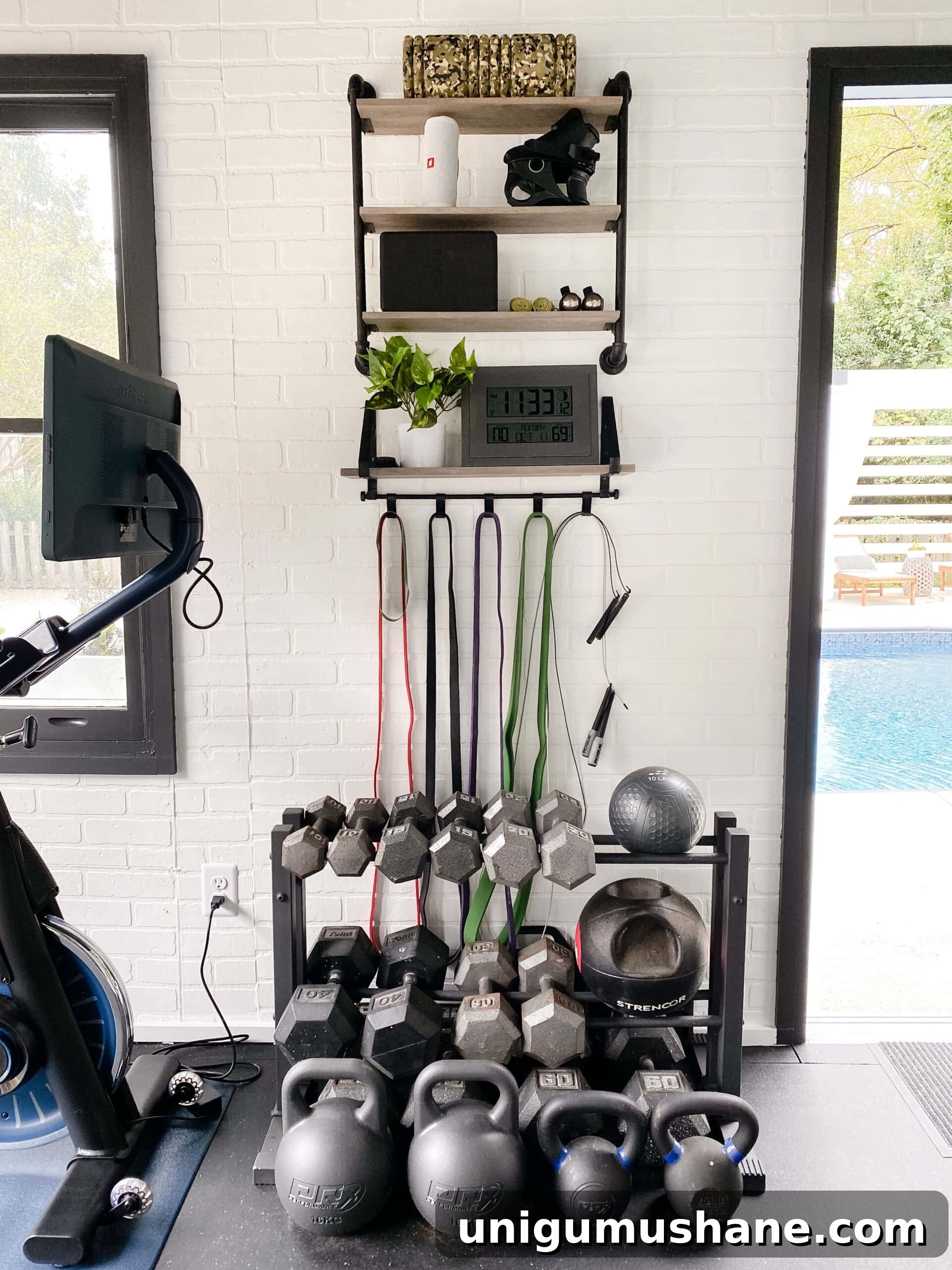
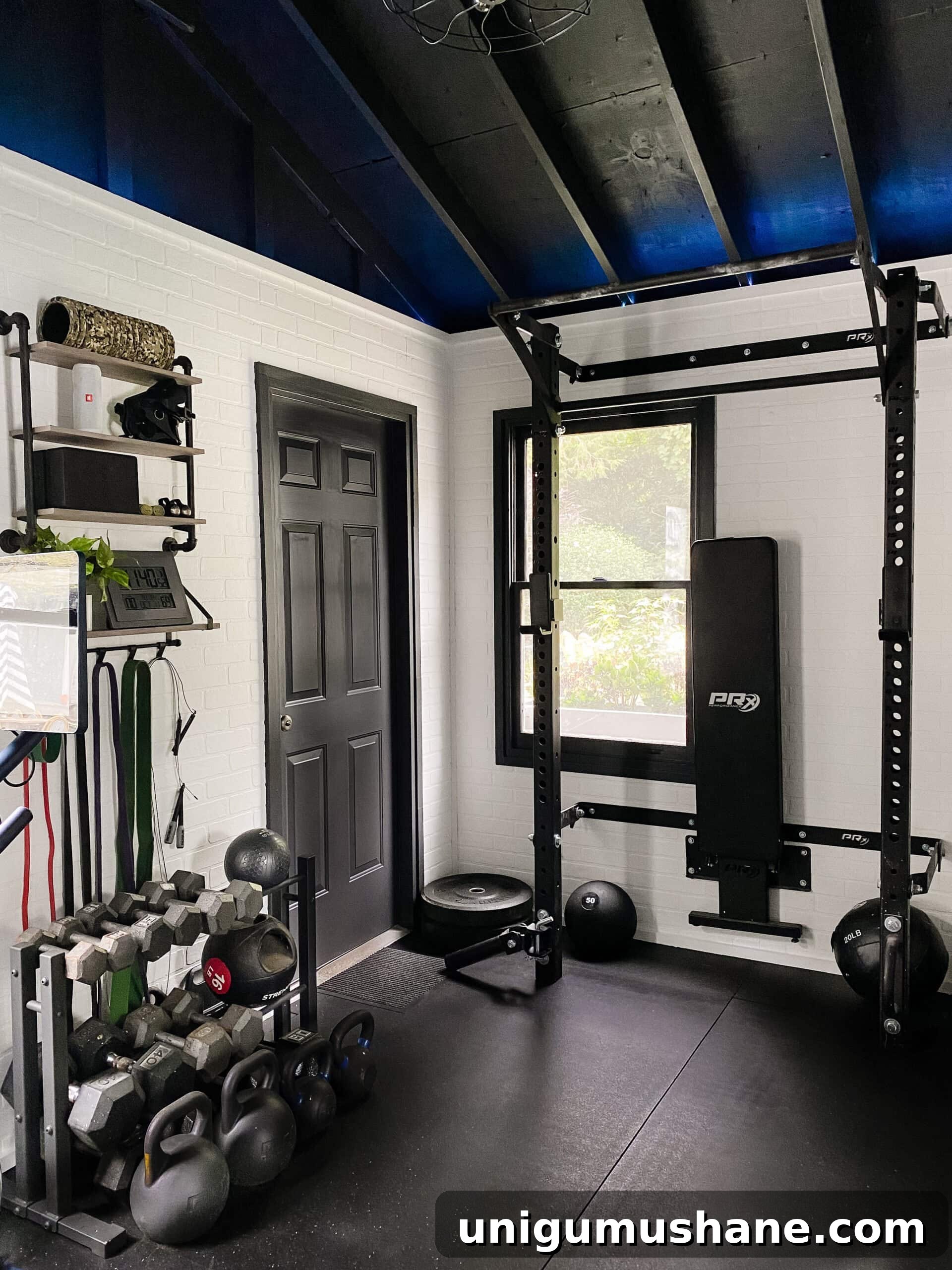
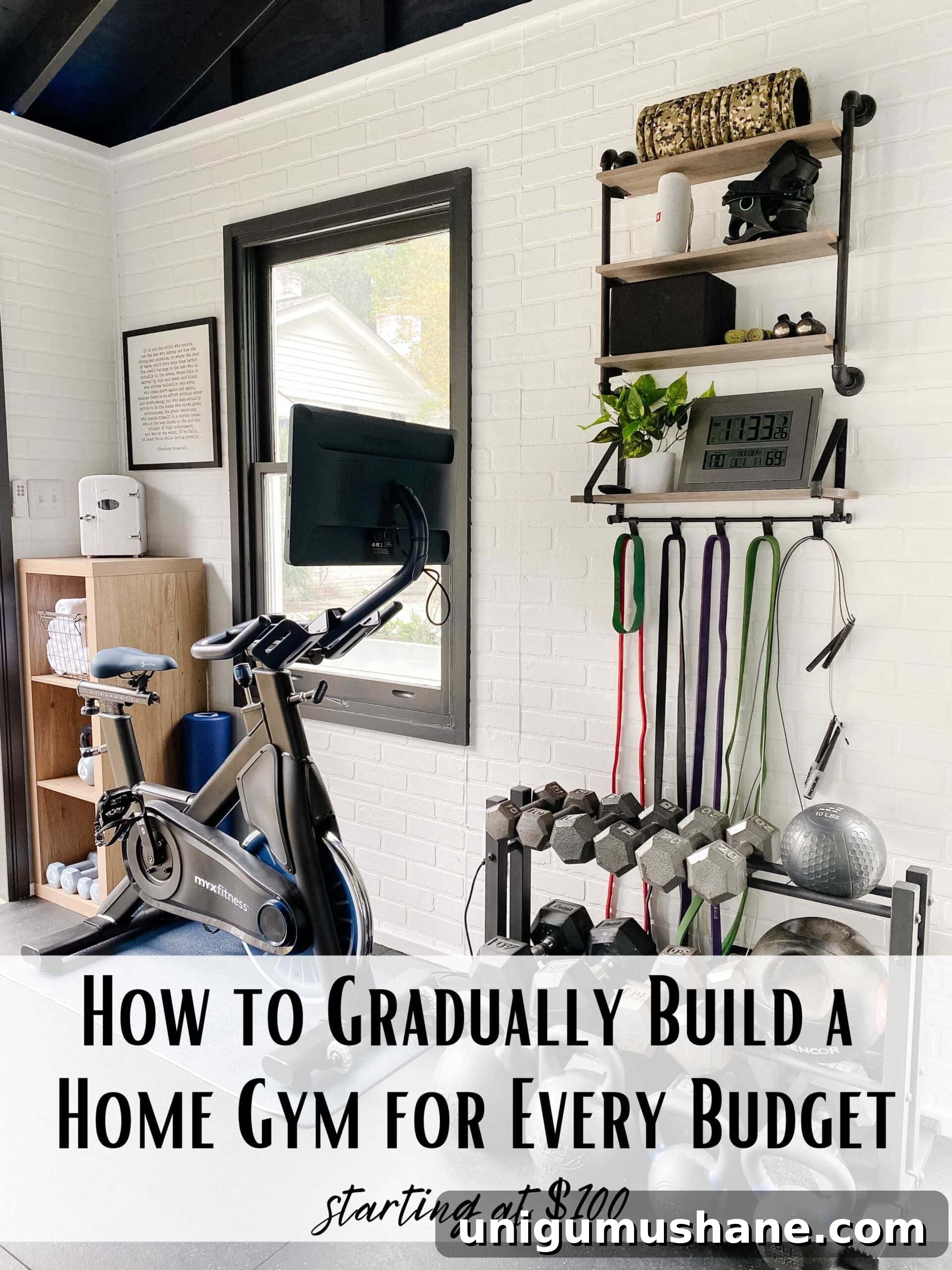
Install shelves and hooks to keep frequently used items within reach—yoga mats, resistance bands, small dumbbells, a Bluetooth speaker, and jump ropes. Open shelving with hooks is especially useful for maximizing vertical space in a small shed.
We added a metal shelf with hooks for small items and an industrial pipe shelf that holds our speaker, yoga blocks, foam roller, and a small clock. A single plant adds life and makes the space feel more inviting.
Near the door we placed a small three-cube shelf for hand weights, a wire basket for towels, and a mini fridge for cold water bottles—perfect for grabbing essentials on the way out after a workout.
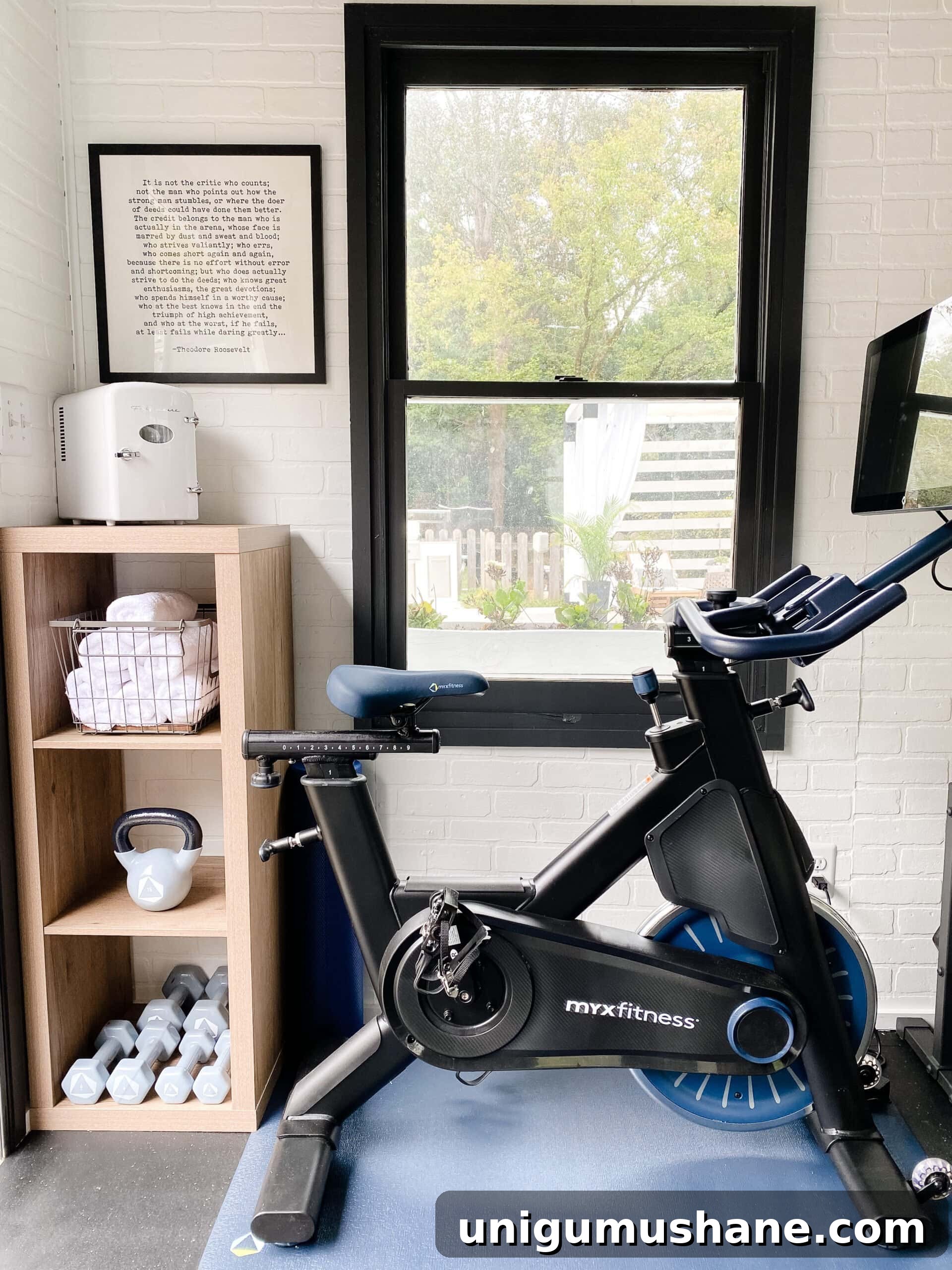
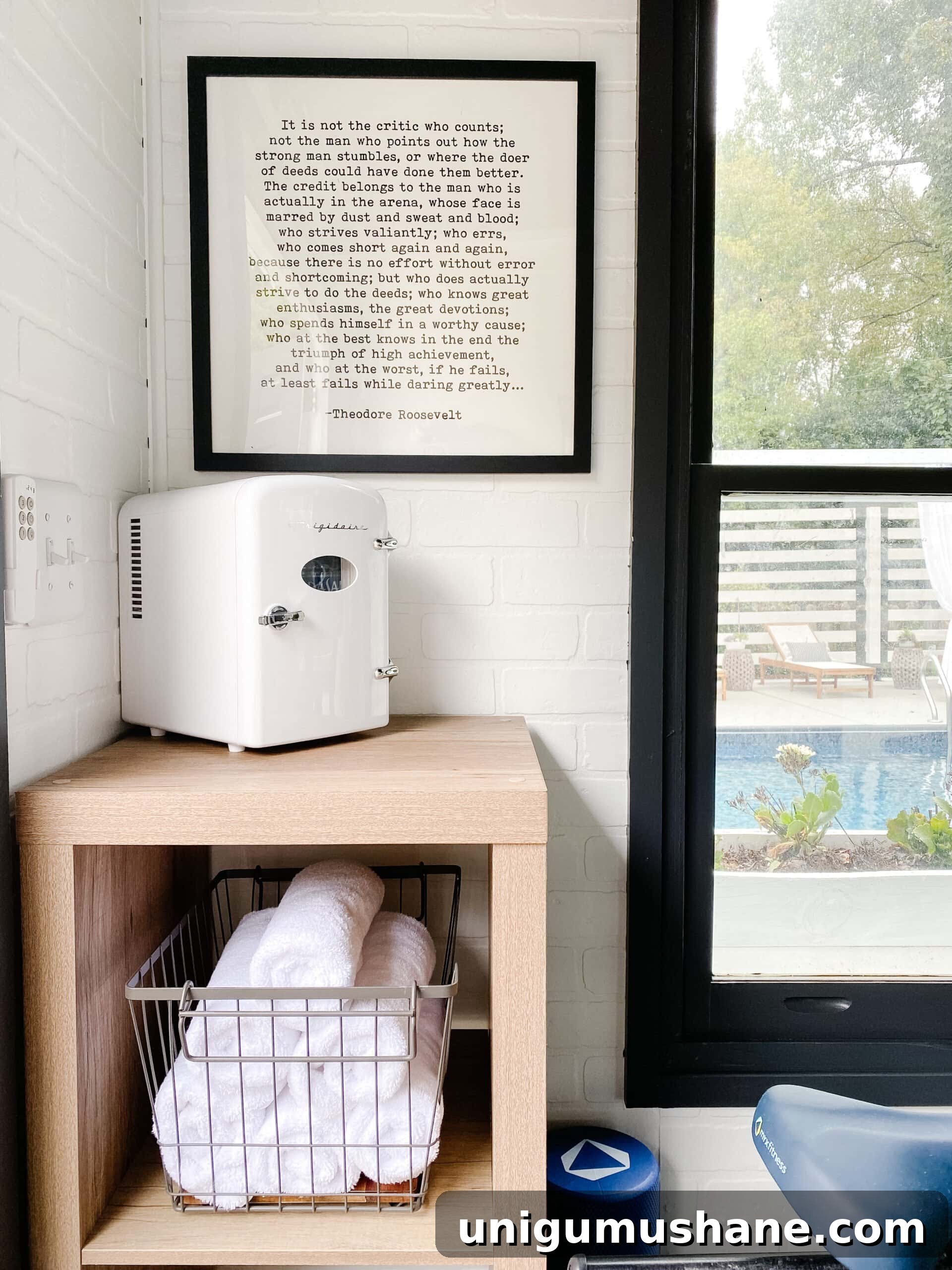
(A framed motivational quote in the corner is a simple touch that keeps energy high.)
Home Gym Floor and Workout Area
We covered the concrete slab with heavy-duty rubber mats purchased secondhand. These mats provide cushioning for joints and protect both the floor and equipment. Many people also use horse stall mats from farm supply stores as an economical alternative.
Tip: Place heavy equipment and free weights around the perimeter so the center space remains open for bodyweight work, stretching, and mobility drills.
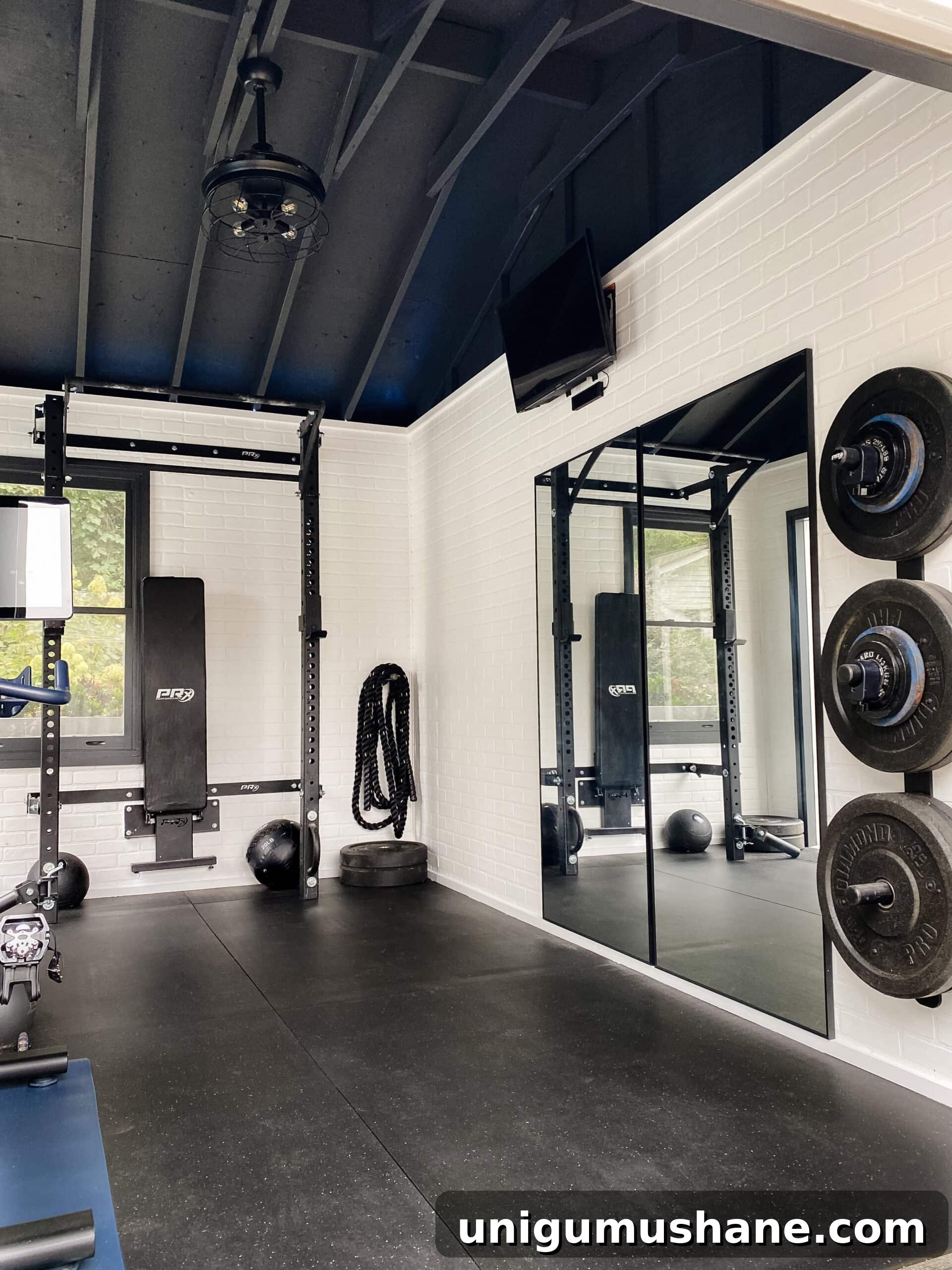
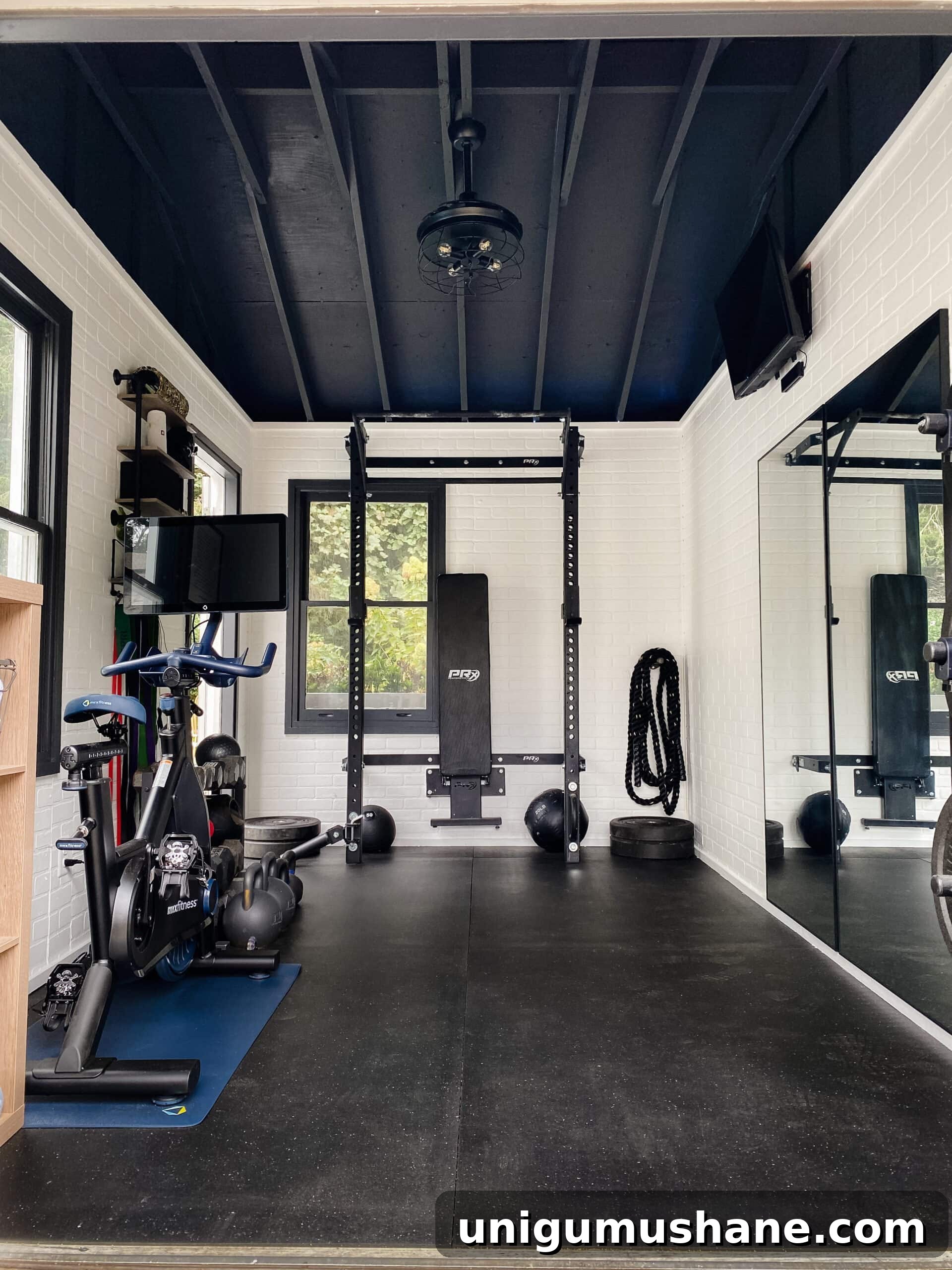
We mounted two large framed mirrors to check form during lifts and yoga sessions. Mirrors help with technique and make a small space feel larger. You don’t need an entire room to get a solid workout—just a few square feet can be enough for effective strength and cardio routines.
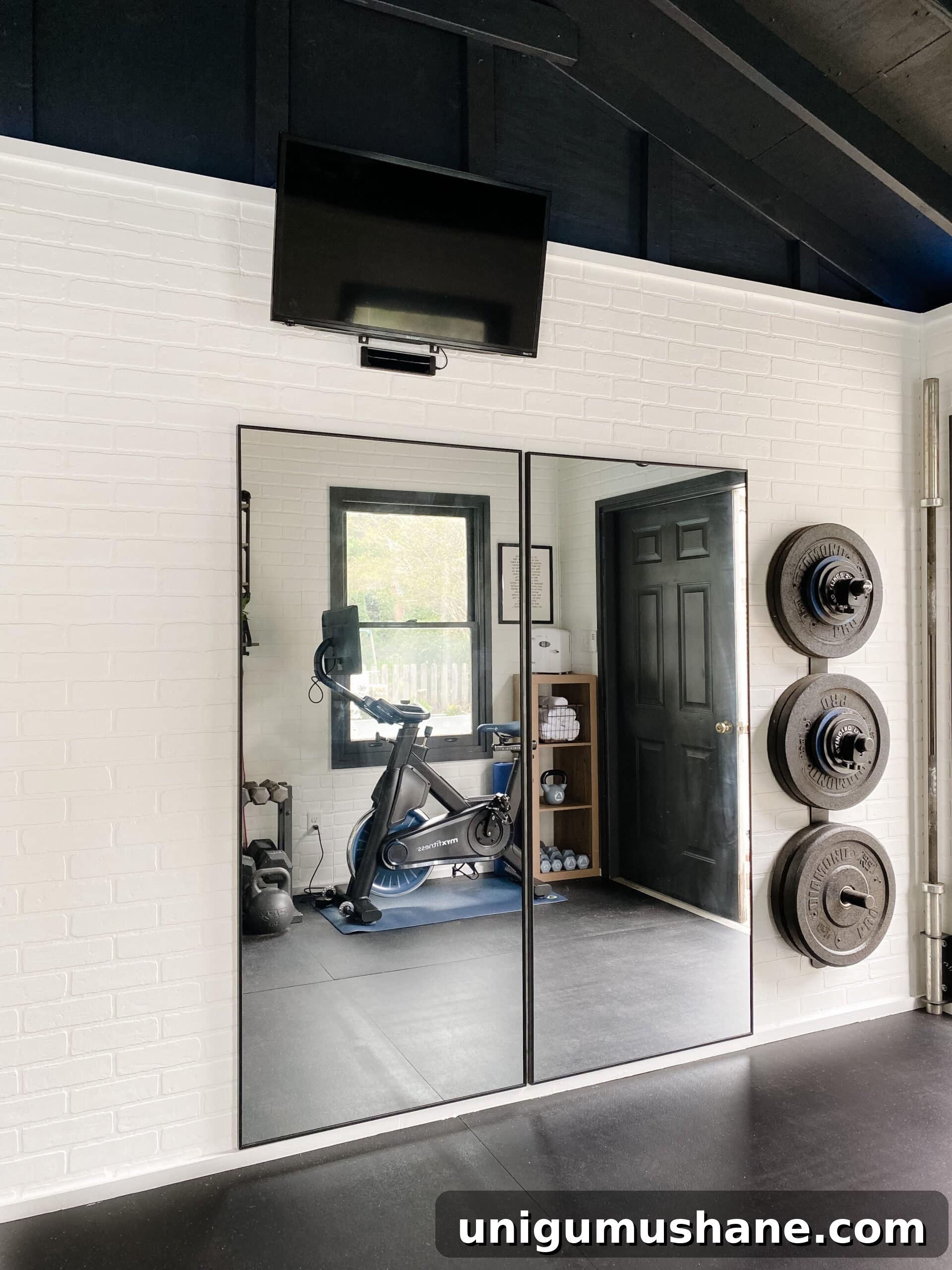
Lighting and Ambience
One of our favorite features is the color-changing LED strip lighting along the top ledge of the fake brick walls. Battery-operated LED strips are easy to install and can be run with rechargeable batteries to reduce ongoing costs. They add energy to early-morning workouts and can create a fun atmosphere for music-driven sessions.
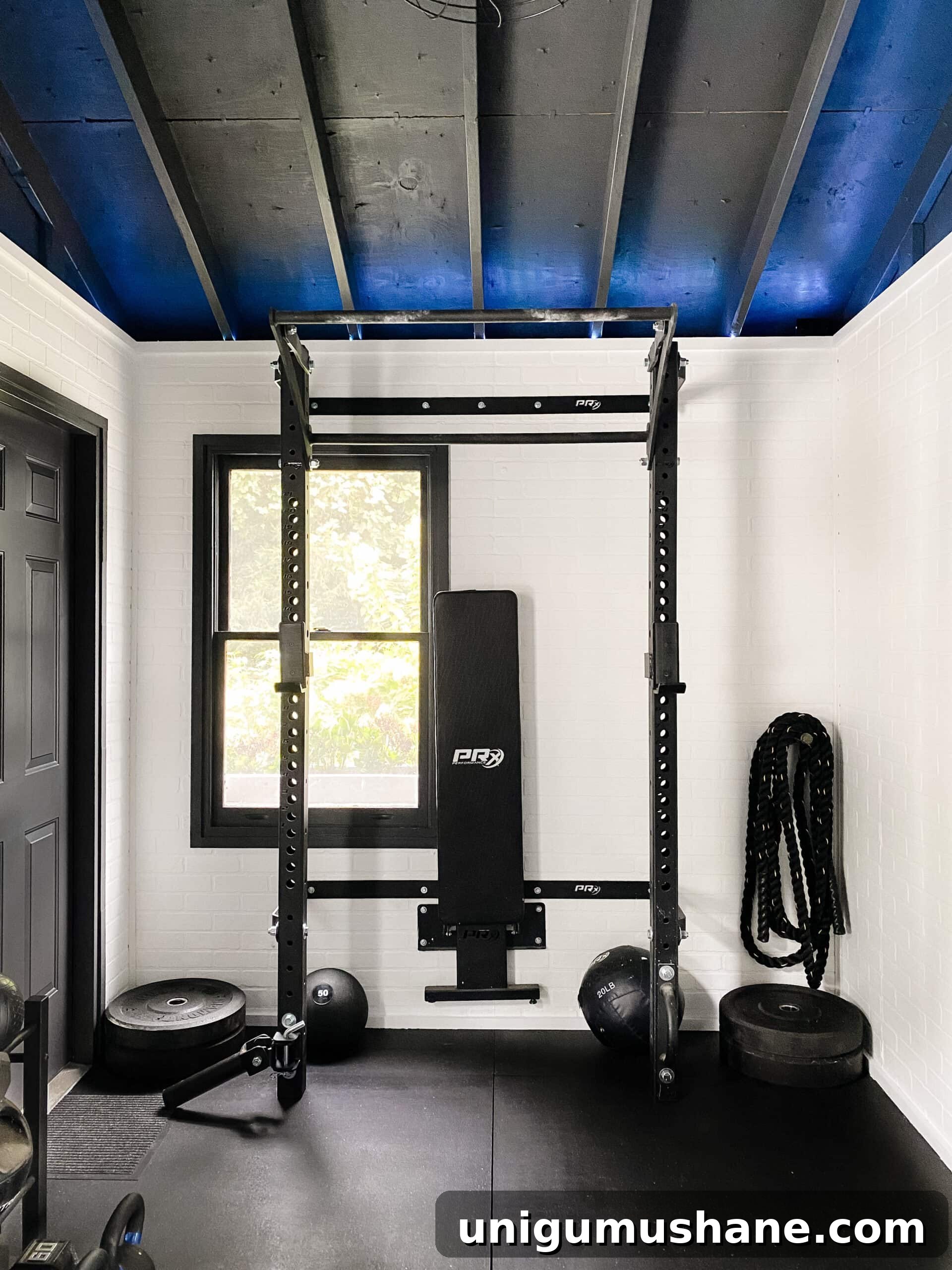
We also installed an industrial-style ceiling fan with lights and retractable blades to improve airflow. In hotter months, you might consider adding a wall-mounted air conditioner if needed.
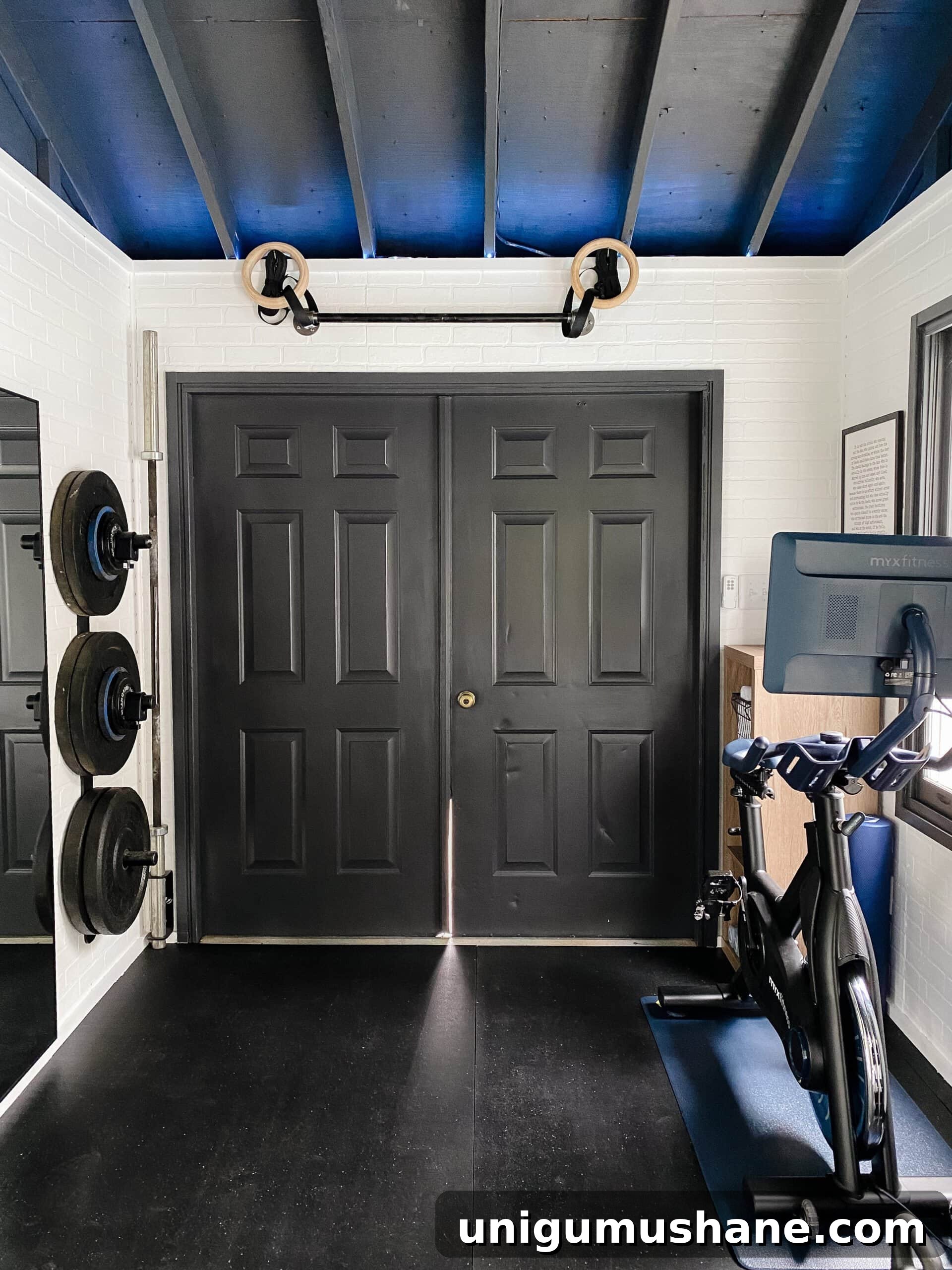
Cardio Area
Our only new purchase was an exercise bike, placed by the window so rides overlook the backyard and pool. Position cardio machines near natural light or a view when possible to make sessions more enjoyable.
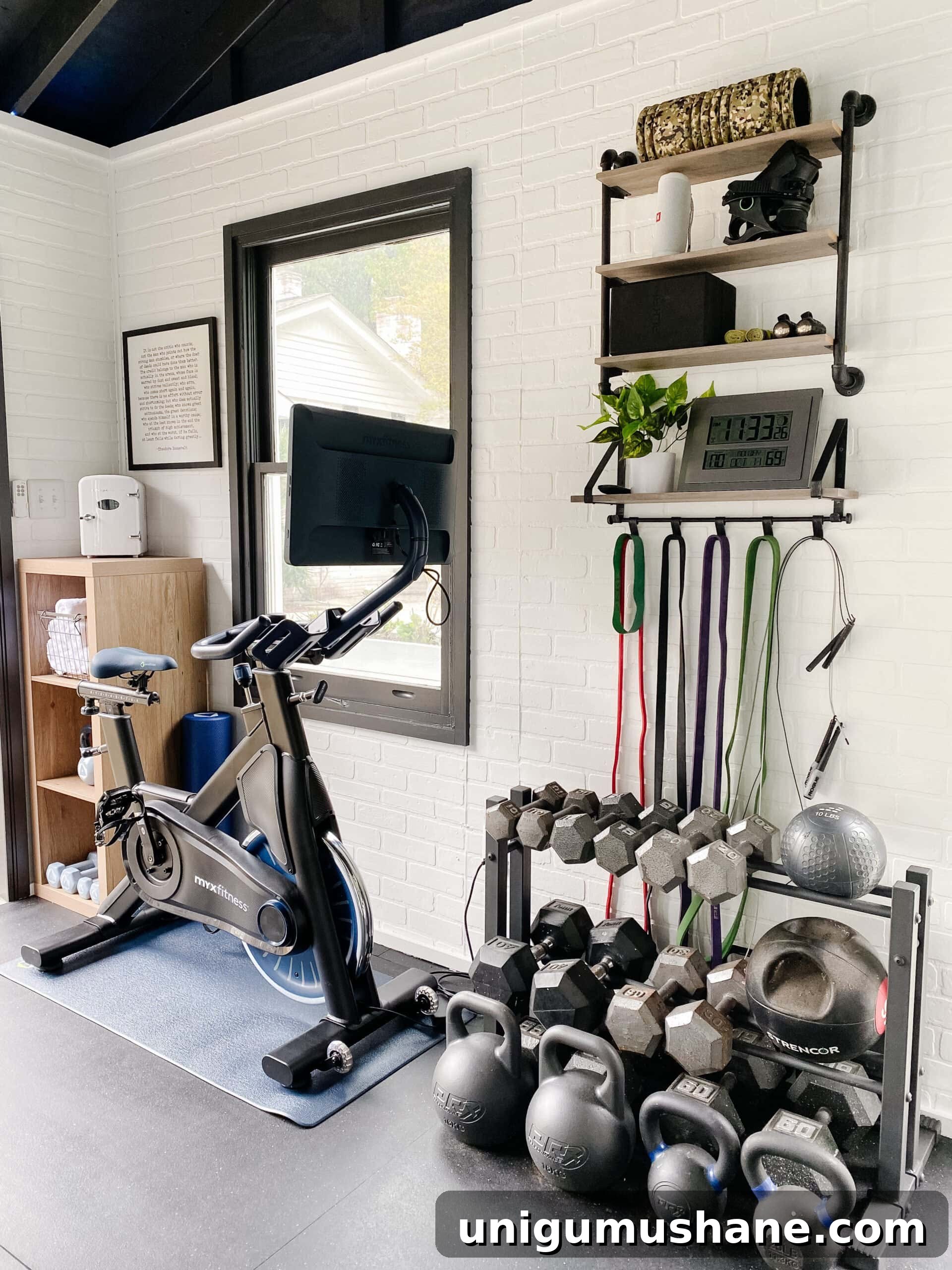
Weight Lifting Area
A squat rack and bench found a permanent home in the shed after years in our crowded garage. Organizing a designated strength corner helps keep heavy gear accessible and makes progressive training easier.
We plan to add a chalkboard for tracking workouts, circuits, and goals—simple tools that increase accountability and progress. If you have training education or certifications, this space is a great place to put that knowledge into practice.
Tips for Creating a Home Gym on a Budget
Shop Used
Look for secondhand equipment through local classifieds and secondhand sports stores. Over the years we collected most items this way, which kept costs low.
Add Interest to Walls Inexpensively
Use paint, stencils, or inexpensive wall panels to make the space feel intentional. A single focal wall or framed poster can transform the mood without a big investment.
Hang Shelves for Small Equipment
Shelves and hooks keep small items organized and ready to use. This prevents clutter and extends the life of equipment.
Use Rubber Floor Mats
Durable rubber mats protect joints and the floor while absorbing noise. Stall mats from farm stores are a budget-friendly option for many shed gyms.
Start Small
If you’re beginning from scratch, basic resistance bands, a jump rope, and a solid pair of training shoes can deliver effective cardio and strength workouts until you build a larger collection.
Gym Shed Sources
Below are the non-equipment items that helped finish our shed gym and make it functional:
- DIY faux brick wall panels
- Large framed mirrors
- 3-cube shelving unit
- Wire storage basket
- Hand towels and towel storage
- Wall shelf with hooks
- Industrial pipe 3-tier shelf
- Small wall clock
- Battery-operated LED strip lights
The transformation from messy storage to an organized workout space was dramatic and rewarding. With a mix of used equipment, smart storage, and a few finishing touches, a backyard shed can become a comfortable and effective home gym.
More Gym Shed Ideas
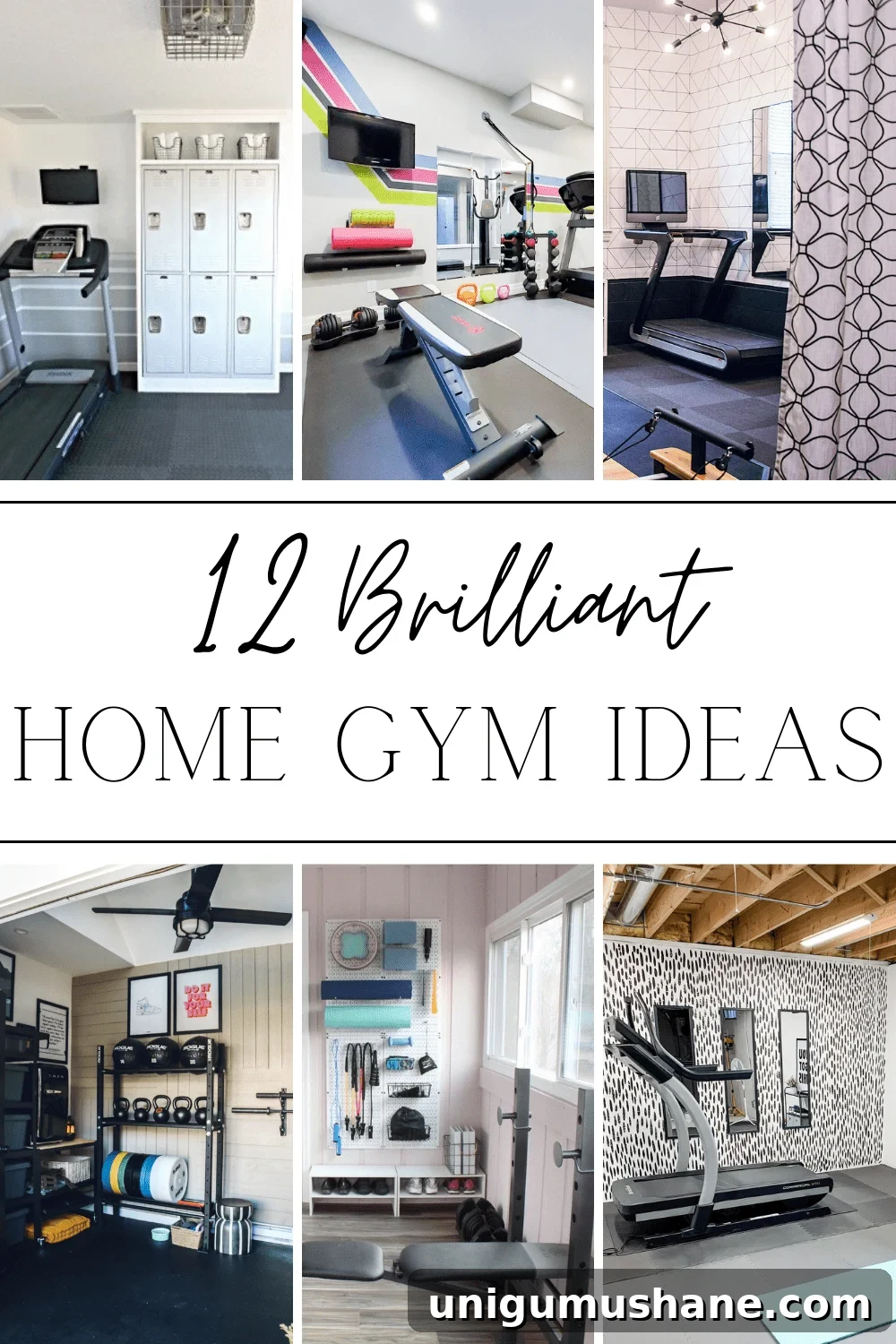
For additional inspiration, consider photo-driven examples of faux brick feature walls, layout ideas for compact strength setups, and creative storage hacks to tailor a shed to your preferred workouts.
Frequently Asked Questions
The required size depends on the equipment and the amount of floor space you want to use. A modest home gym can fit comfortably in 50 to 200 square feet, depending on whether you prioritize cardio machines, free weights, or open floor space.
Building a shed yourself usually saves on labor costs, while purchasing a pre-built shed saves time and can be less stressful. Consider whether you value saving money or saving time, and look into shed kits as a middle ground.