
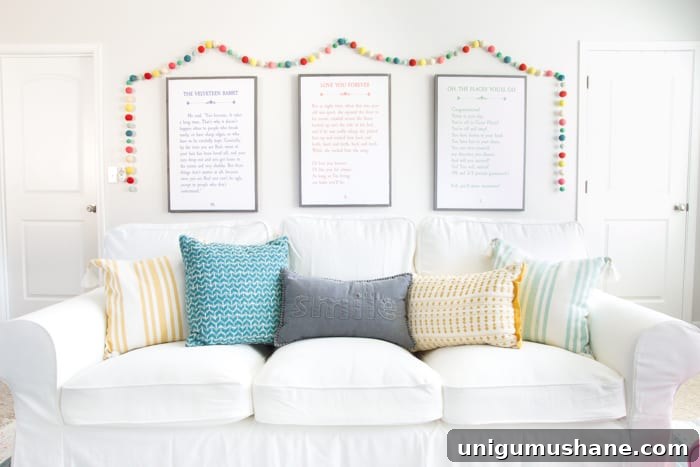
DIY Storybook Art Tutorial for a Colorful Playroom Accent
After sharing the big playroom reveal last week, several readers asked for a step-by-step tutorial for the DIY storybook art we used on the wall. It’s one of my favorite, most budget-friendly projects—each sign cost me about $28 to make—and it adds a meaningful pop of color without being overpowering.
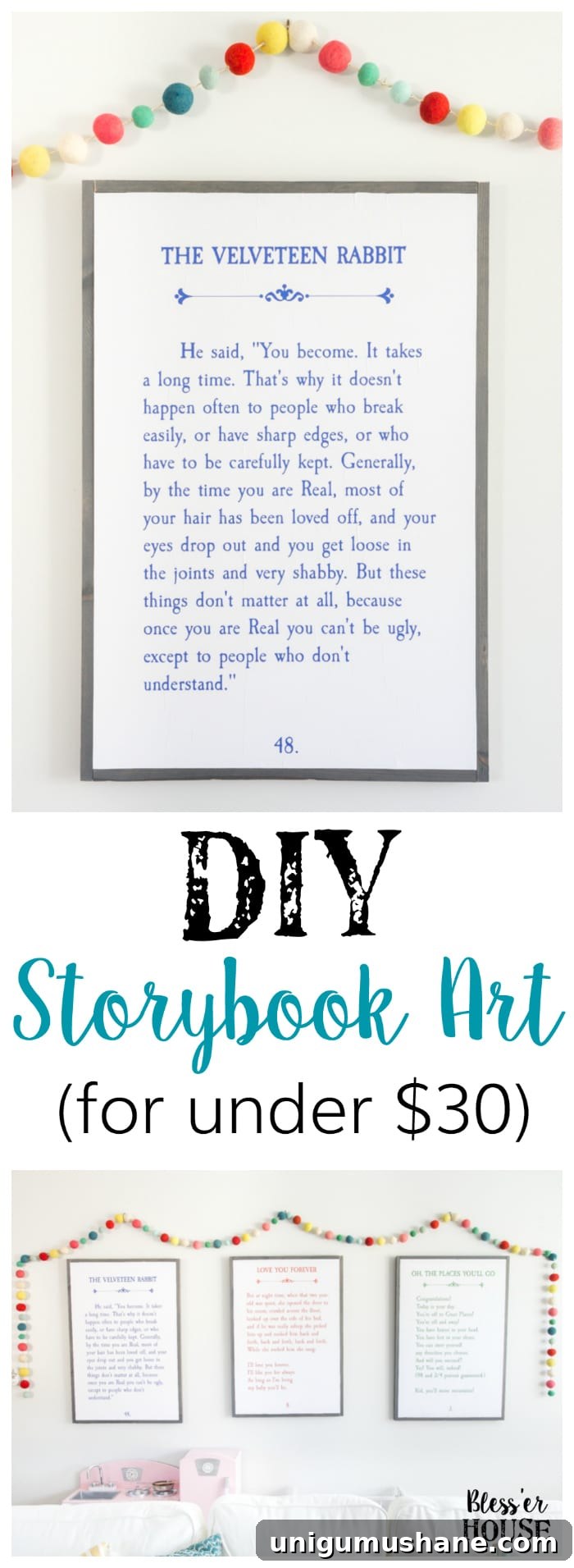
I wanted something sentimental and affordable that would last. The process is straightforward: cut the plywood to size, stain and frame with 1×2 boards, attach a colored engineer print, and add hanging hardware. The result is a durable, framed piece of storybook art perfect for a playroom, nursery, or kid’s corner.
Supplies Used: (I list the items I used for convenience.)
- 1 sheet of 1/2″ 4’x8′ hardwood plywood (smaller pieces available in some stores if you only need one sign)
- 5 1″x2″x8′ boards (about one and a half boards per 24″x36″ sign)
- Circular saw
- Stain (I used General Finishes Gel Stain in Gray)
- 2 sponge brushes
- A couple of clean, dry rags
- Colored engineer prints (one per sign)
- Tape measure
- Approximately 30 wood screws (1-5/8″, about 10 per sign)
- Approximately 42 finishing nails (1-1/2″)
- Old plastic card (credit/library/hotel key card works well for smoothing)
- Power drill
- Hammer
- Hanging kit
- JPG files of your storybook page images
- A partner to help (highly recommended for the glue step)
You can download the printable storybook page files from the printable link included in the original post. I’ve made a few signs like this before—the oversized sheet music art and an Irish blessing sign—and every time it gets easier. Practice helps, and so does a good plan.
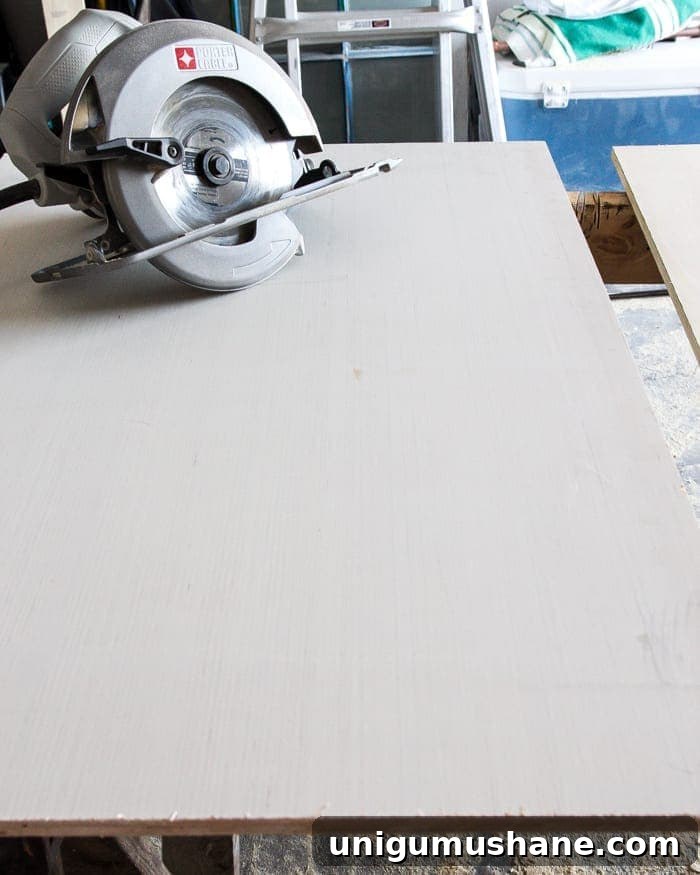
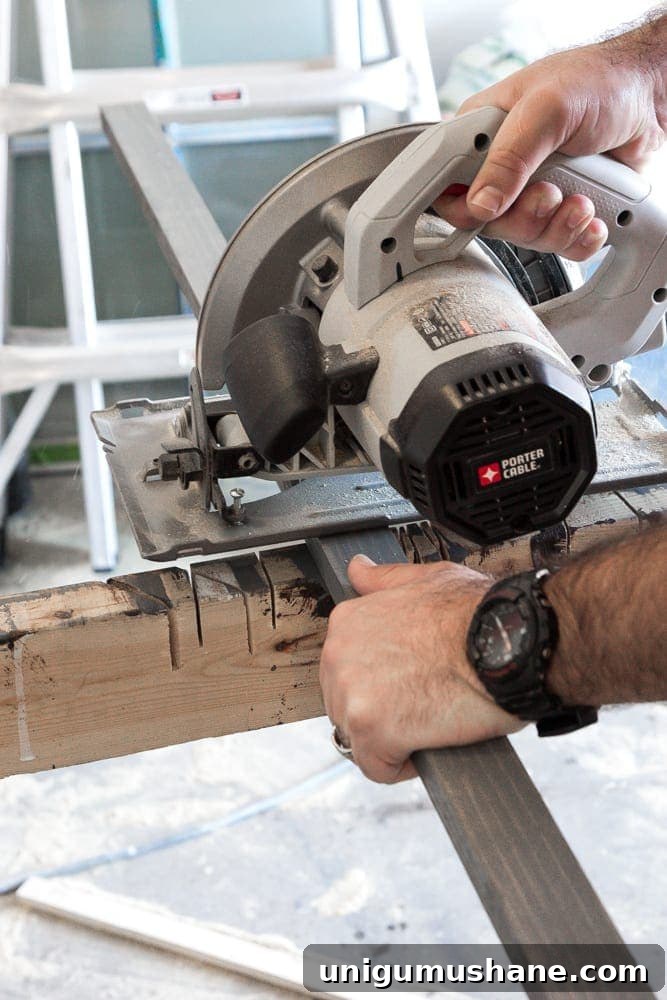
For a 24″x36″ sign, measure and mark the plywood and cut it with a circular saw. From one sheet of 4’x8′ plywood you can typically get about four pieces of that size, so the material is efficient and cost-effective.
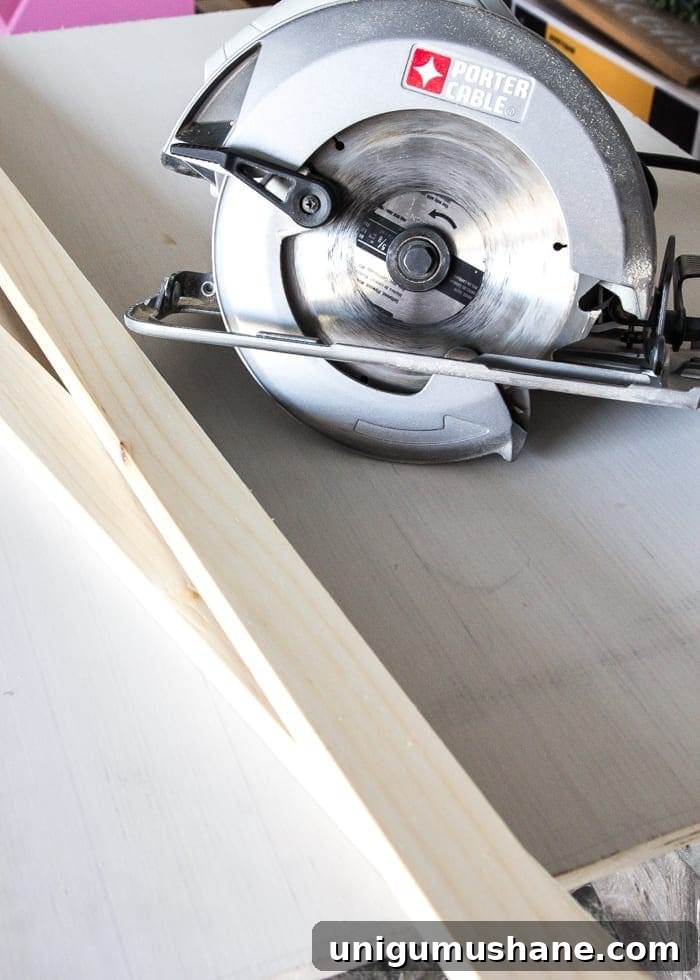
Before cutting the 1″x2″ boards for the frame, give them a coat of stain and wipe off the excess with a clean rag. Let them fully dry—this saves time later and keeps the edges consistent.
I discovered that colored engineer prints are now affordable at many print shops—larger format prints with color often cost less than $4. I designed the text in PicMonkey for a high-resolution export, and used the Caslon Antique font for a classic storybook feel. Choose a high-resolution JPG for best results when ordering large prints.
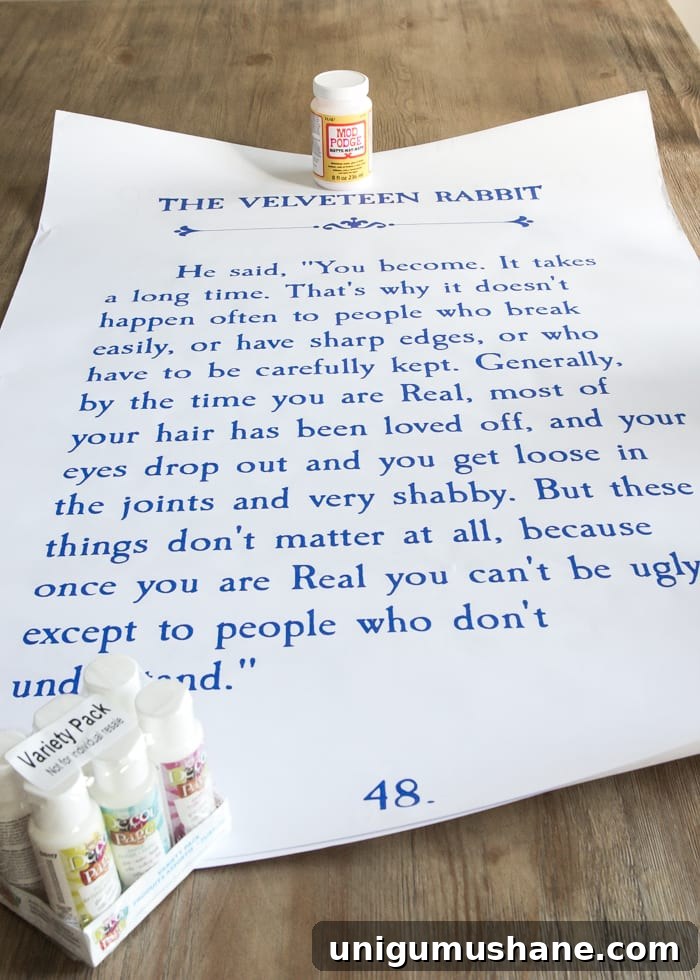
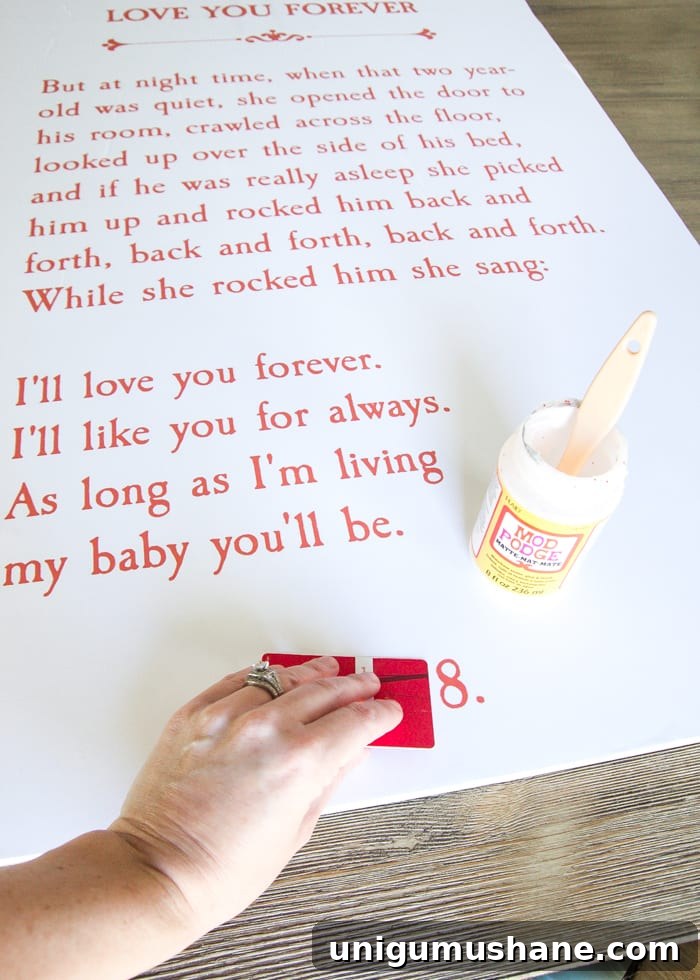
Attaching the engineer print to the plywood is a two-person job for the cleanest result. Line the print up on the plywood, then lift one end while your partner holds the other. Use a sponge brush to apply Mod Podge or another decoupage adhesive in a 2–3″ strip along the plywood edge. Lay the print down carefully, and smooth with a plastic card like a squeegee to remove bubbles as you work down the sheet. Move slowly and keep the paper taut so it doesn’t crease. A few tiny creases may remain, but they’re usually not noticeable from a normal viewing distance.
To build the frame, attach the top and bottom 1″x2″ pieces to the plywood using wood screws; these are hidden behind the frame and provide strong support. Then measure and cut the side pieces to fit between the top and bottom, and secure them with finishing nails for a cleaner look. Countersink nails slightly and use wood filler if you want a seamless finish.
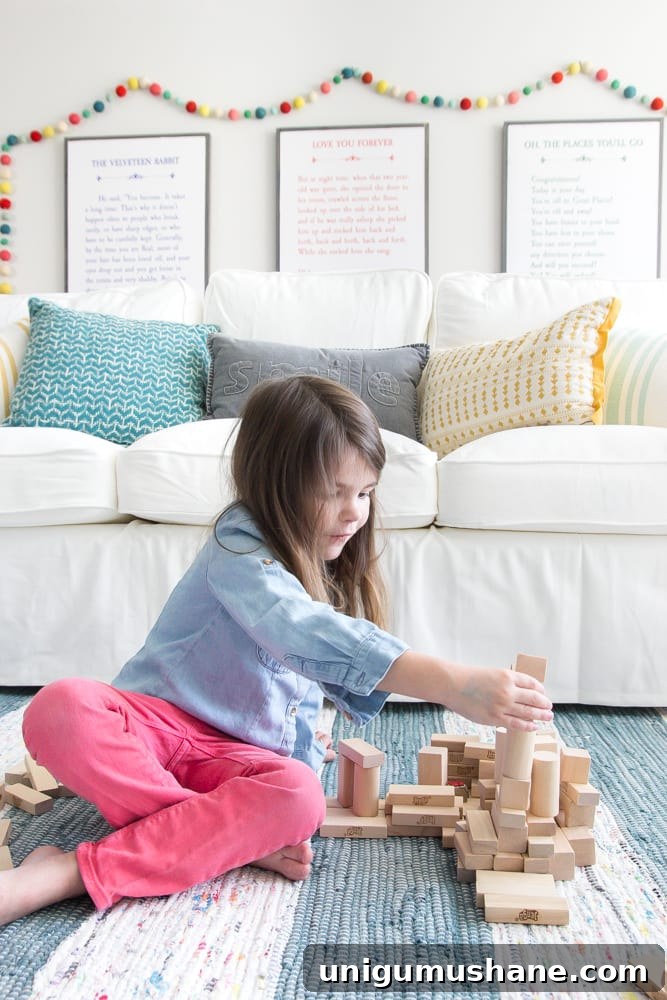
Finish by attaching a sturdy hanging kit, place the sign on the wall, and add any decorative accents like a pom-pom garland for a playful touch.
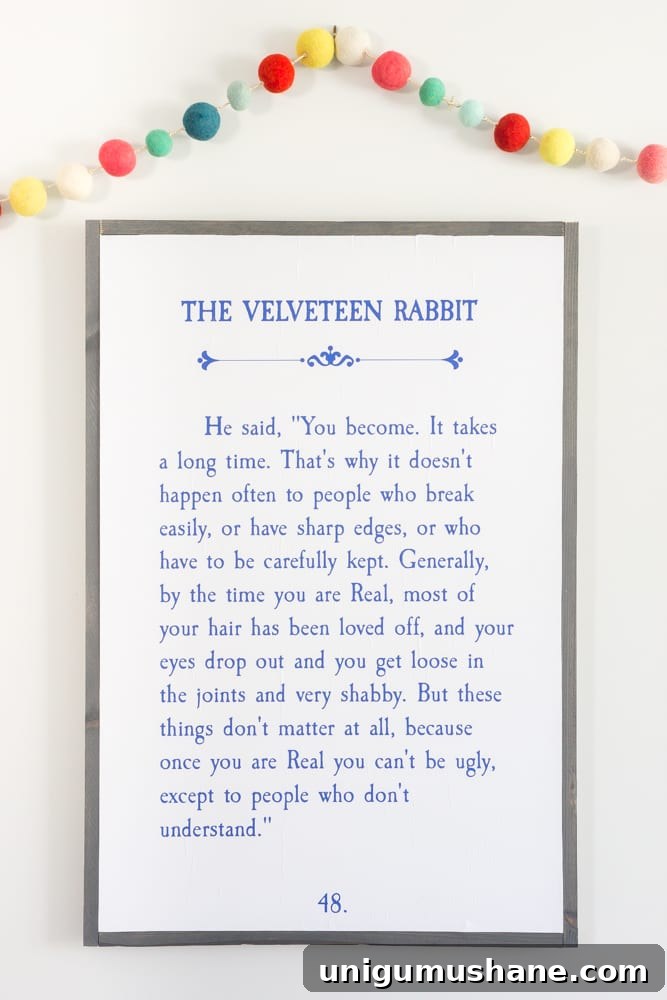
For the playroom, I chose three short excerpts from classic children’s books that carry messages I want Olivia to remember:
- The Velveteen Rabbit — a reminder that true beauty comes from within.
- Love You Forever — a note that she’ll always be our baby, no matter her age.
- Oh, the Places You’ll Go — encouragement to pursue dreams with determination.
This project is more than decor; it’s intentional art that reinforces values in a space where kids play, learn, and grow. Even in a room filled with crayons, dolls, and noisy percussion instruments, I wanted a visual reminder of kindness, perseverance, and love.
If you decide to make a storybook sign, think about which book passages mean the most to you—there are so many wonderful options. I’d love to hear which story you’d choose for your wall.