
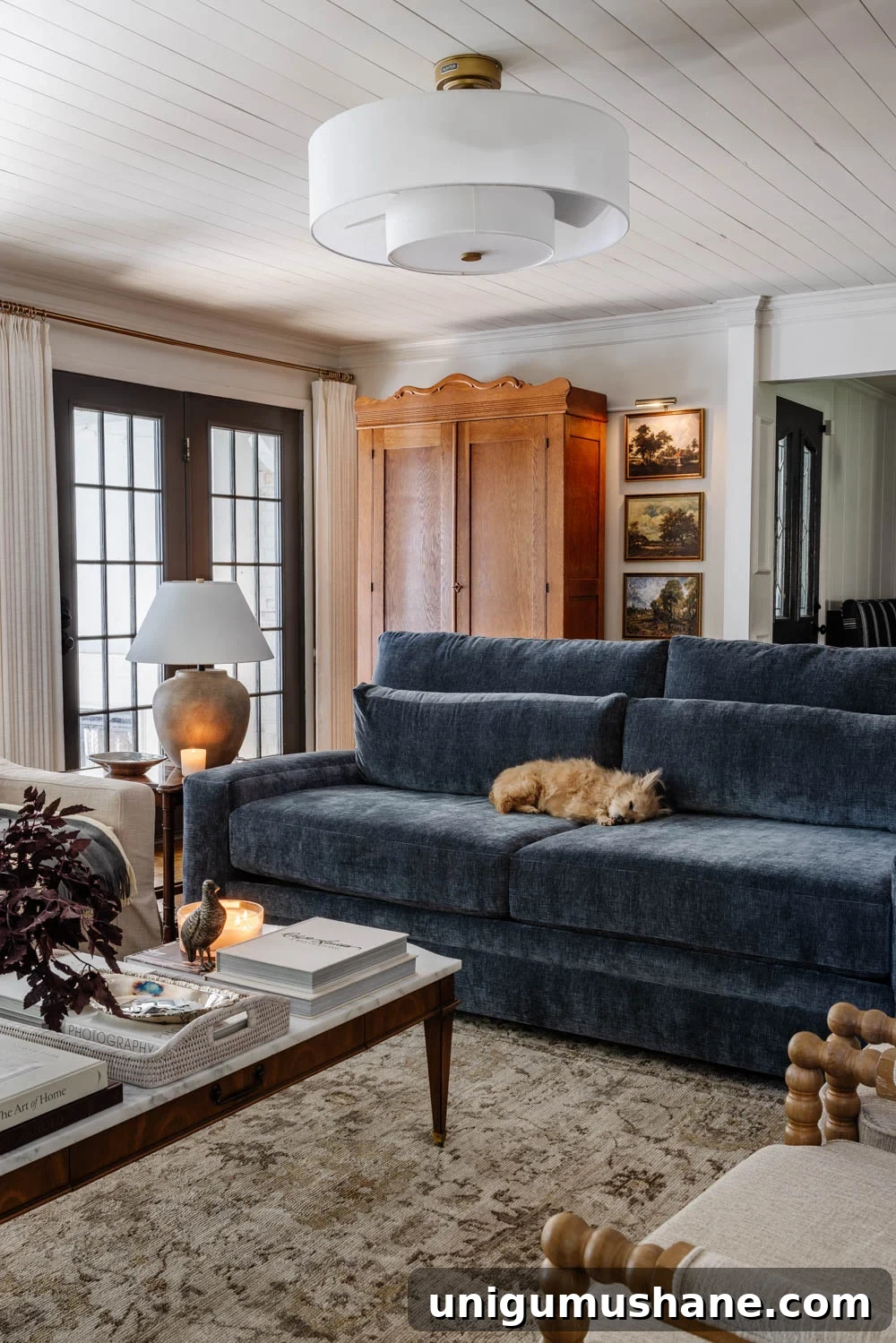
It’s hard to believe we’ve lived in this house for more than eight years. When we first moved into this 1960s Colonial, the living room felt like a blank canvas—and it’s been through so many changes since then. Each update tells a little story about where we were in life at the time and how our style slowly evolved from farmhouse to a mix of modern and traditional.

The Early Days: Yellow Walls and Farmhouse Beginnings
Walking into the living room the day we closed on the house, the bright yellow walls immediately stood out. The room had great bones—the parquet floors, the French doors and the brick fireplace—but it needed direction. I almost covered the floors at first, then decided to live with them and gradually fell in love with their warmth. That early farmhouse look set the tone for our first round of updates.

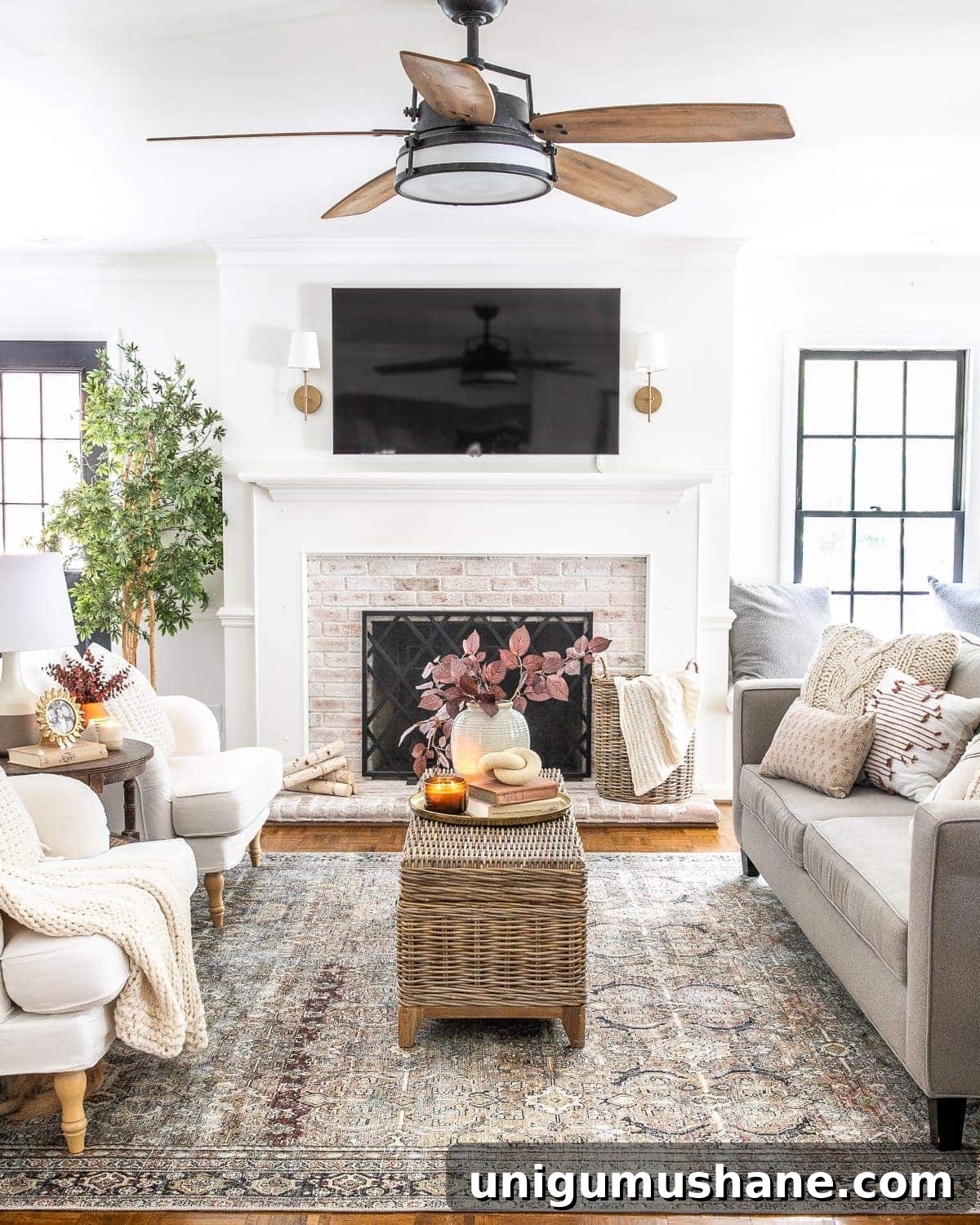
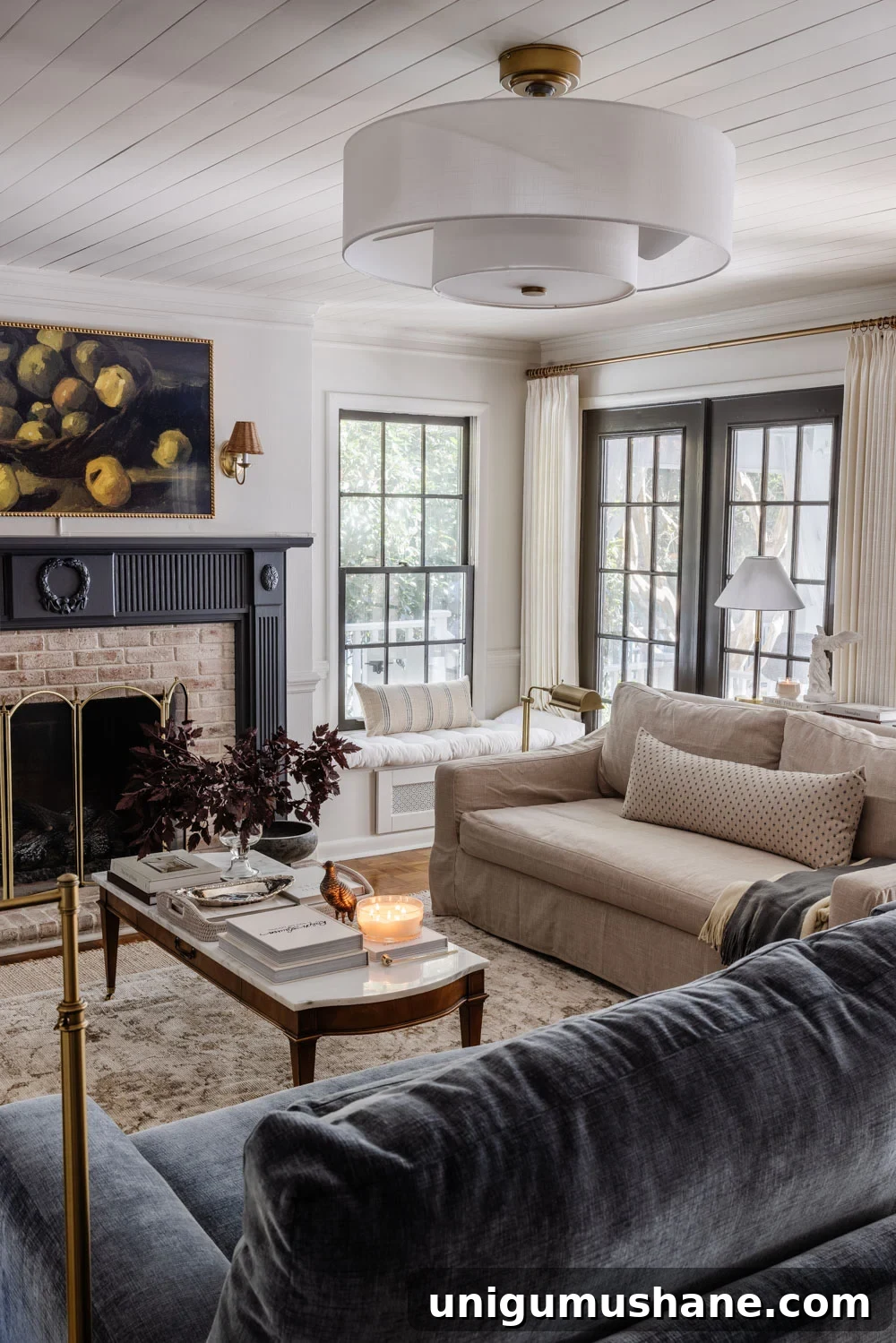
In 2017 we completed our first major refresh: painting the walls Benjamin Moore Swiss Coffee, painting the French doors and windows Benjamin Moore Wrought Iron, and limewashing the brick fireplace with Romabio Avorio White. That one-week project transformed the space—suddenly the room felt brighter, airier, and cozier all at once.
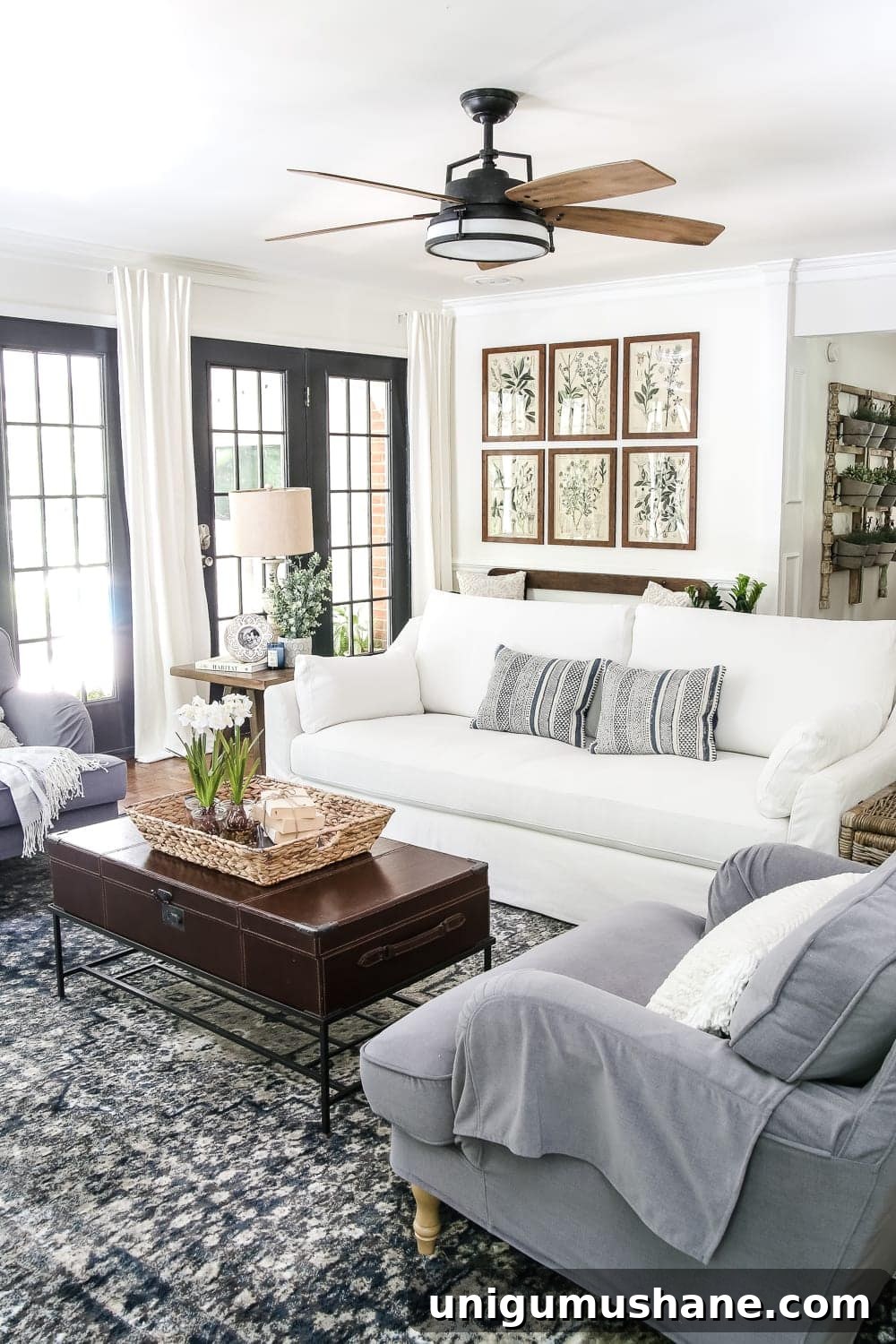
We furnished it with the farmhouse pieces we’d brought from our previous house: rustic woods, neutral textiles, and layered textures. It felt like home—comfortable and lived-in. We also experimented with layouts, trying to open the space up. The downside was that TV sightlines suffered; with windows and doors surrounding the room, the fireplace was the only realistic spot to mount the television.
When Traditional Crept In
Over time, a vintage marble coffee table I found on Facebook Marketplace changed my tastes. It nudged the room toward more traditional details—richer finishes, refined silhouettes, and an elevated feel. Little by little, farmhouse elements gave way to pieces that felt more classic.
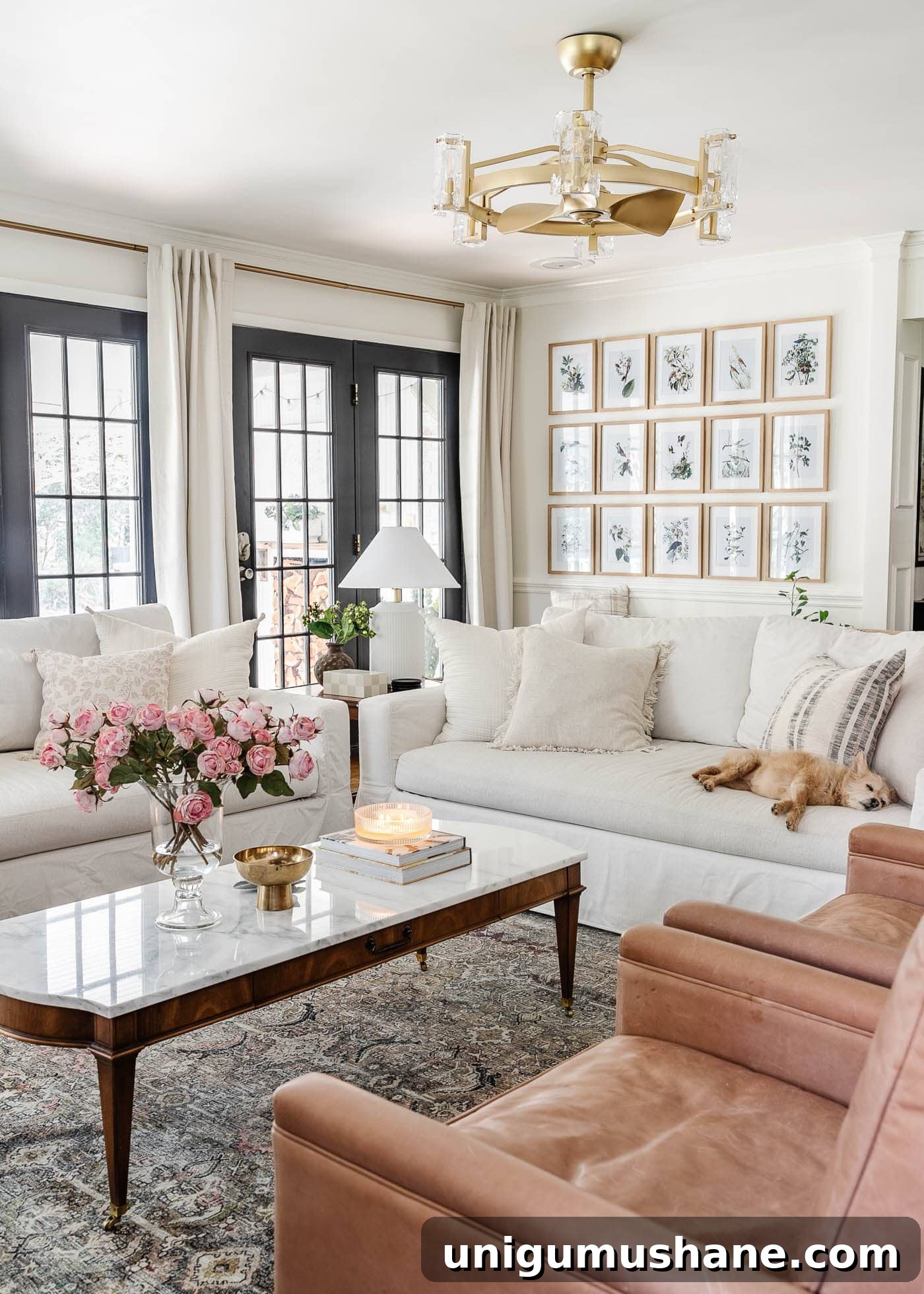
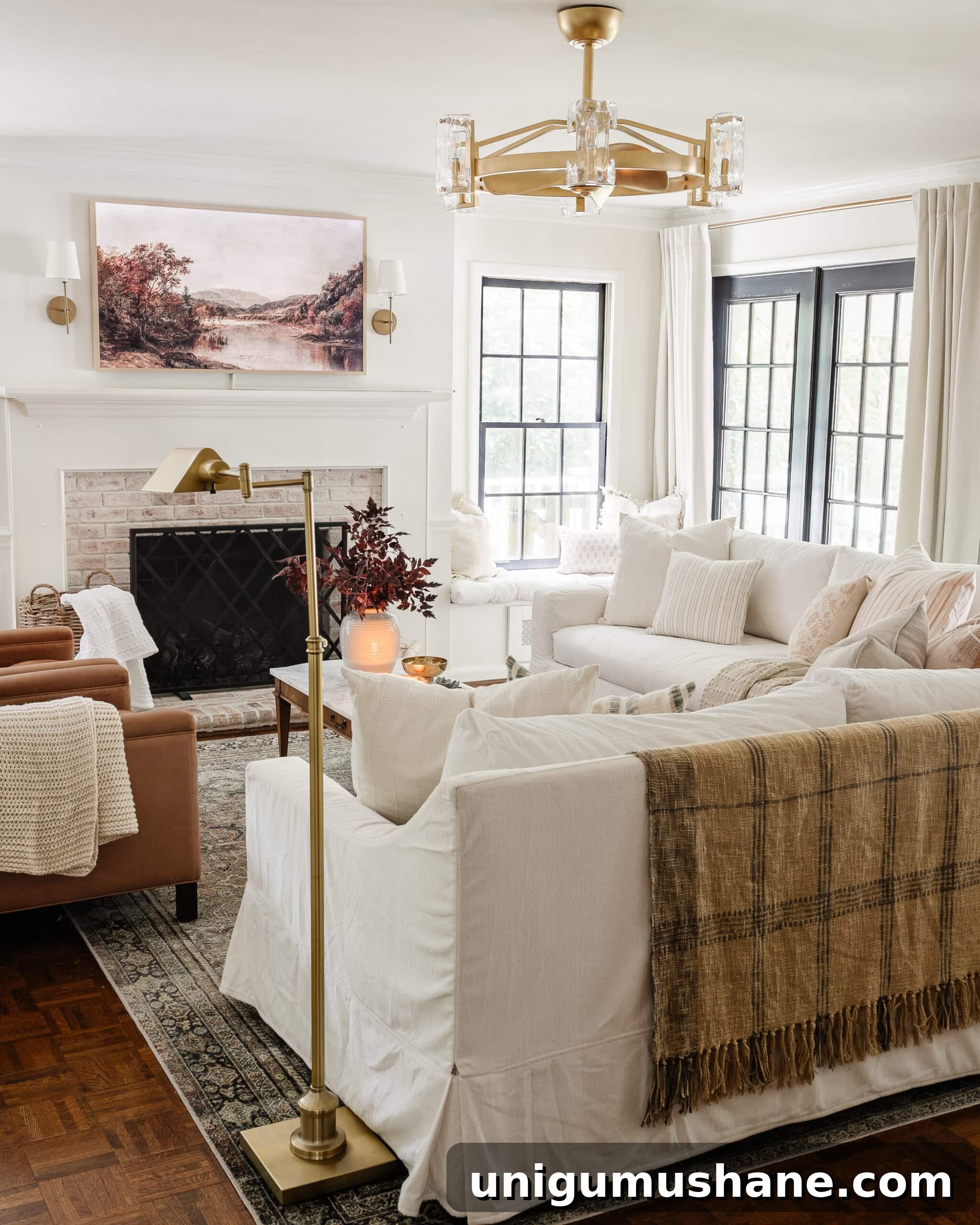
We added Pottery Barn York sofas and Pottery Barn Tyler recliners, and while the furniture was beautiful, I made the common mistake of prioritizing seating quantity over flow. The room started to feel crowded and traffic patterns suffered. Even so, the setup functioned well enough while our family was focused on the busy years with young kids.
Adding Charm and Function
As time allowed, we began making thoughtful upgrades that added personality and function. I added ornate molding around the fireplace to give it a more classical, built-in look—just a few trim pieces made the surround feel original to the house. That small change added instant character and a touch of elegance.
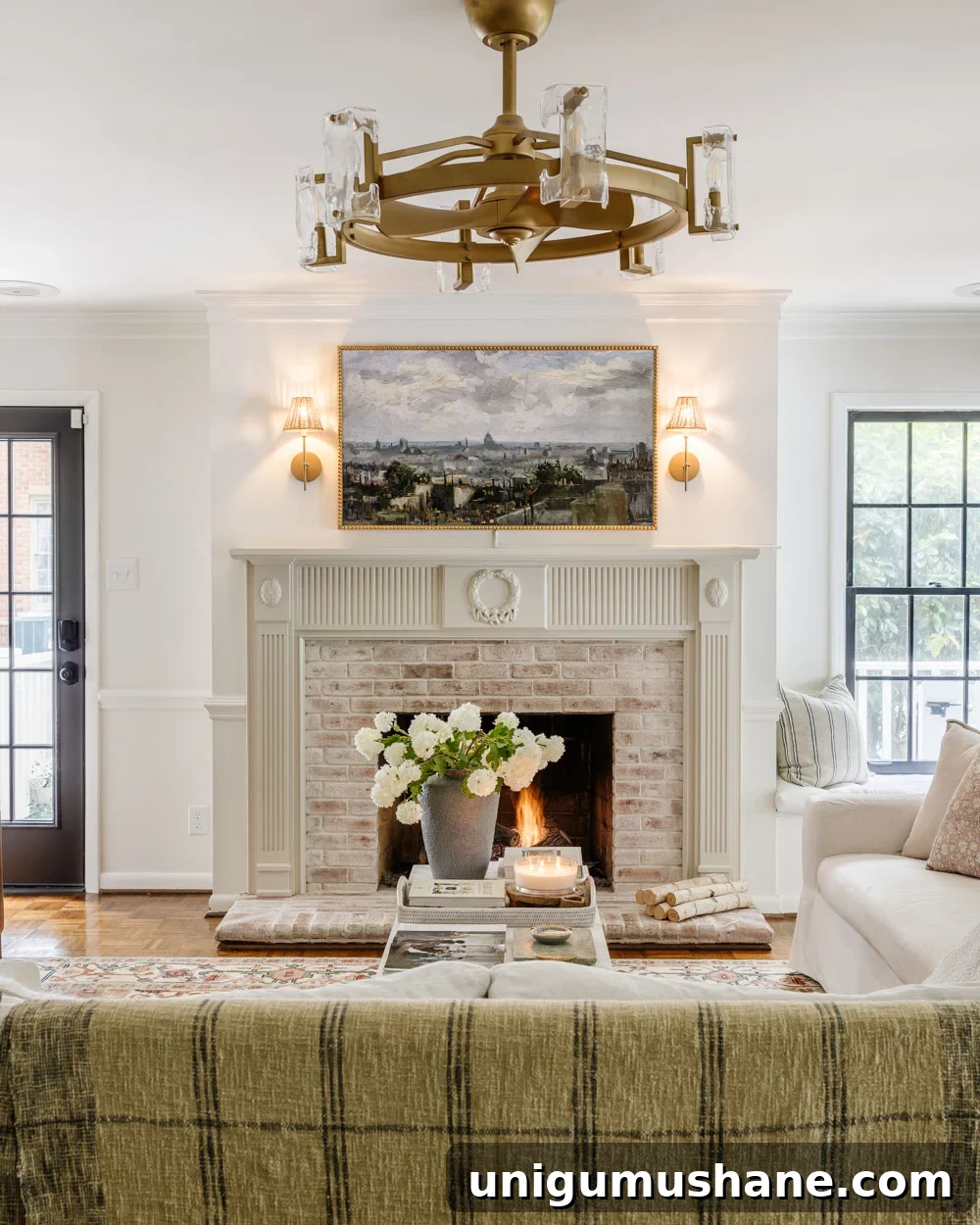
Earlier this year I also found a wardrobe on Facebook Marketplace and placed it against the back wall. It functions as a practical landing spot for backpacks, shoes, and outerwear—our improvised mudroom—which makes daily life easier with kids in the house.
The Ceiling Makeover and a Whole New Mood
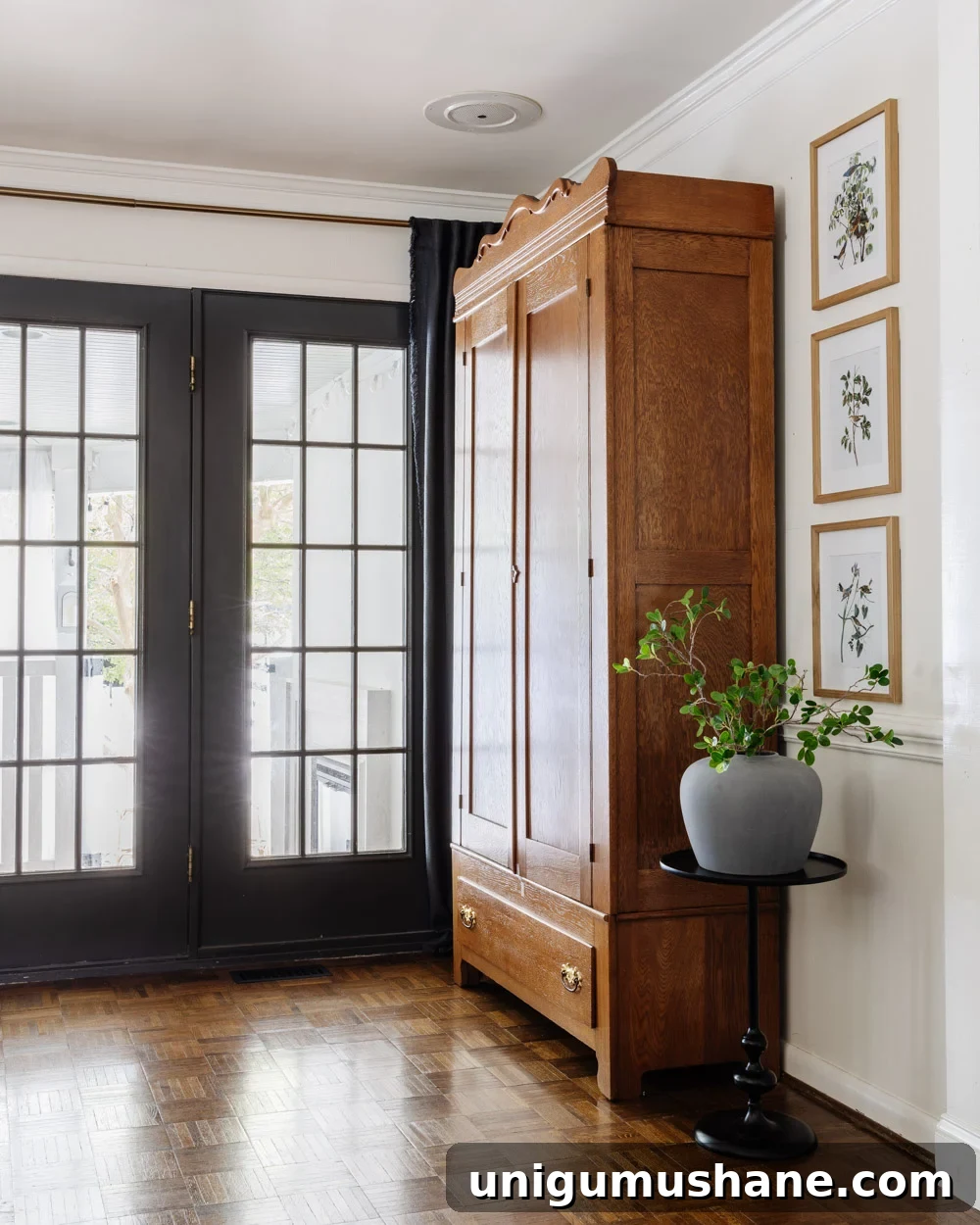
This summer we finally tackled the ceiling—a change that had been on our wishlist for years. We removed old vents and a pair of non-functioning speakers, then installed tongue-and-groove planks. The new ceiling brought cottage charm and a lighter visual plane, lifting the overall mood of the room and adding the texture it had been missing.
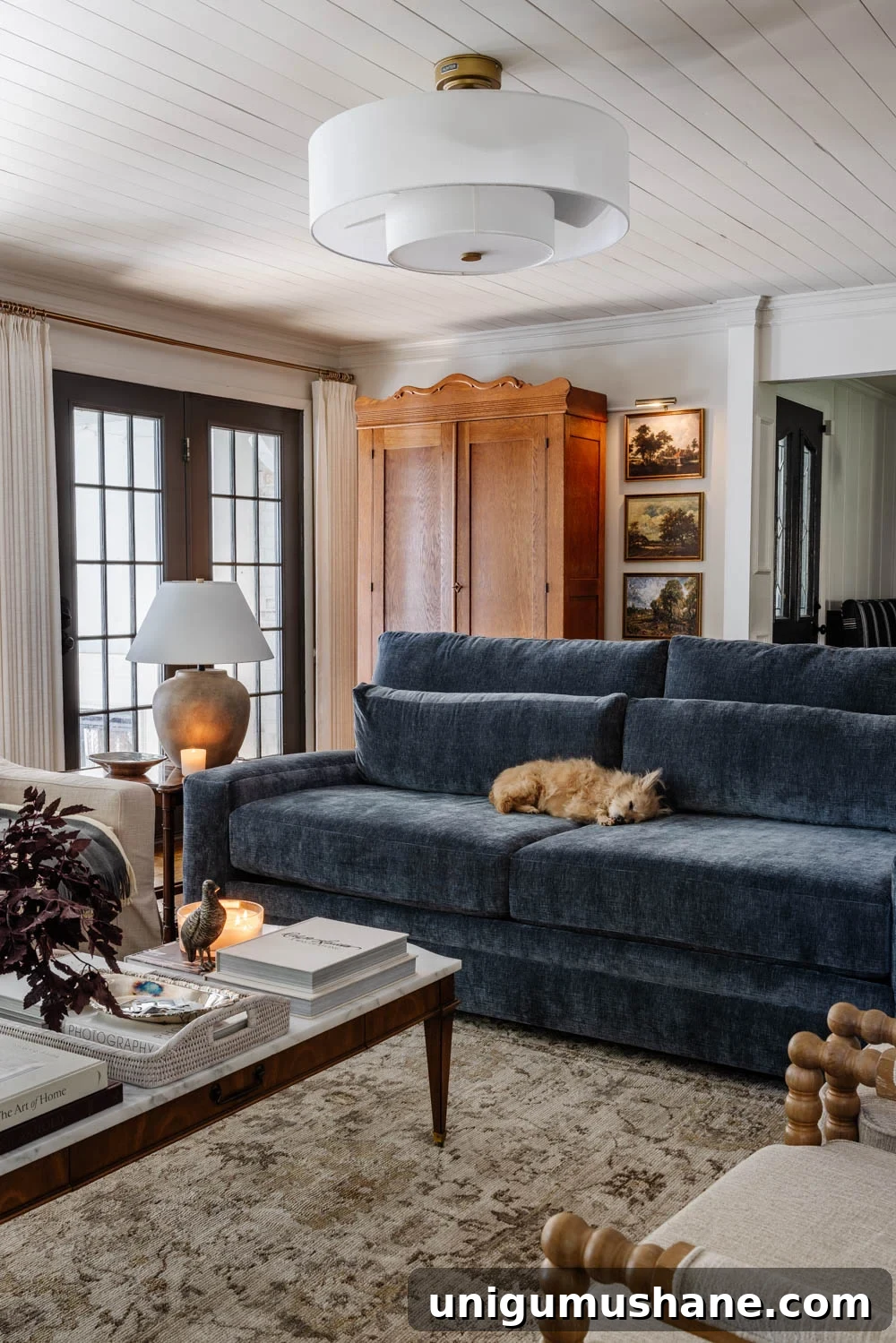
To unify the palette with the rest of our home, we painted the fireplace mantel Benjamin Moore Temptation, a deep navy that reads as both dramatic and calming. The walls went to Sherwin Williams Shiplap, a creamy white that adds warmth without yellowing, and we finished trim and doors in Sherwin Williams Urbane Bronze for contrast and depth. These paint choices helped create a cohesive, intentional look across the space.
Finally Feeling Like “Us”
One of the lessons learned was about upholstery. I originally chose white slipcovers for our Pottery Barn sofas, and they looked great—briefly. With kids and pets, they showed wear quickly even though they were Sunbrella. Replacing them with a beige linen slipcover from Comfort Works made the sofas far more livable while keeping a soft, neutral look.
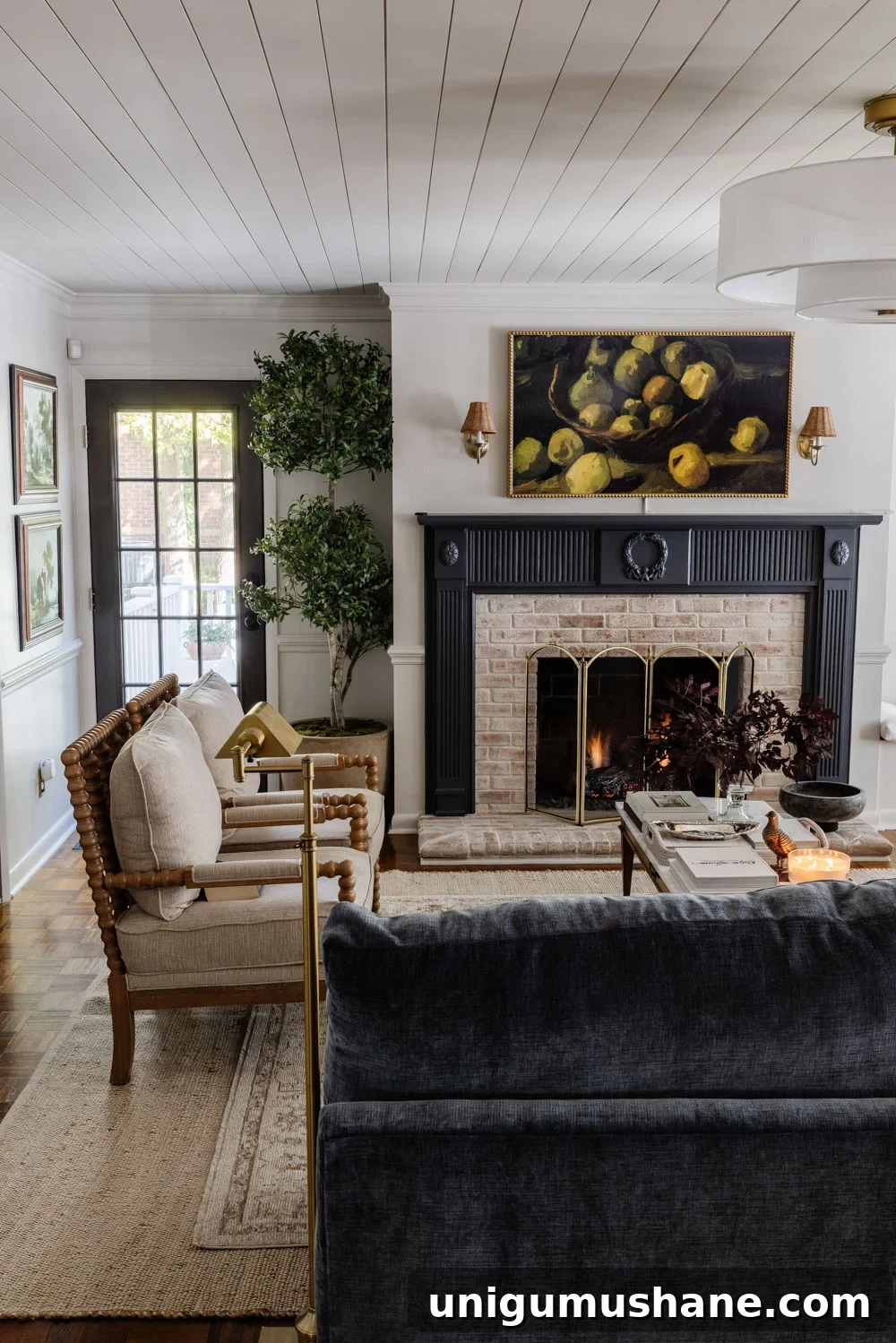
We sold one of the oversized sofas and brought in a Winston sofa in Contessa Shadow to add contrast in furniture shapes. To achieve a warm, layered atmosphere I added multiple light sources—picture lights, table lamps, sconces, and floor lamps—so the room can feel intimate and inviting at night or bright and open during the day.
Our Living Room Sources
- Wall color: Sherwin Williams Limewash
- Door color: Sherwin Williams Wrought Iron
- Fireplace color: Benjamin Moore Temptation
- Brick limewash color: Romabio Avorio White
- Fandelier and lighting
- Rugs: patterned and jute options
- Sofas: blue and beige options; slipcovers for durability
- Accent chairs, pillows, and accessories
- Fireplace screen and TV frame
- Various lamps, picture lights, and sconces
Now when I walk into the living room it finally feels balanced and complete: a thoughtful blend of modern and traditional, comfortable for everyday family life, and layered with personality. After eight years of experimenting—painting, swapping pieces, and refining the layout—the space reflects both our tastes and the life we lead here. I don’t think a room is ever truly finished, but for now this one feels like home.
More Living Room Decorating Resources
- Avoid this common mistake when placing a sofa table behind a couch
- DIY trim and upholstery updates for sofas and chairs
- How to frame a TV for a cleaner, built-in look
- Top reclining sofas with modern style for family rooms
- Where to start when decorating a living room