
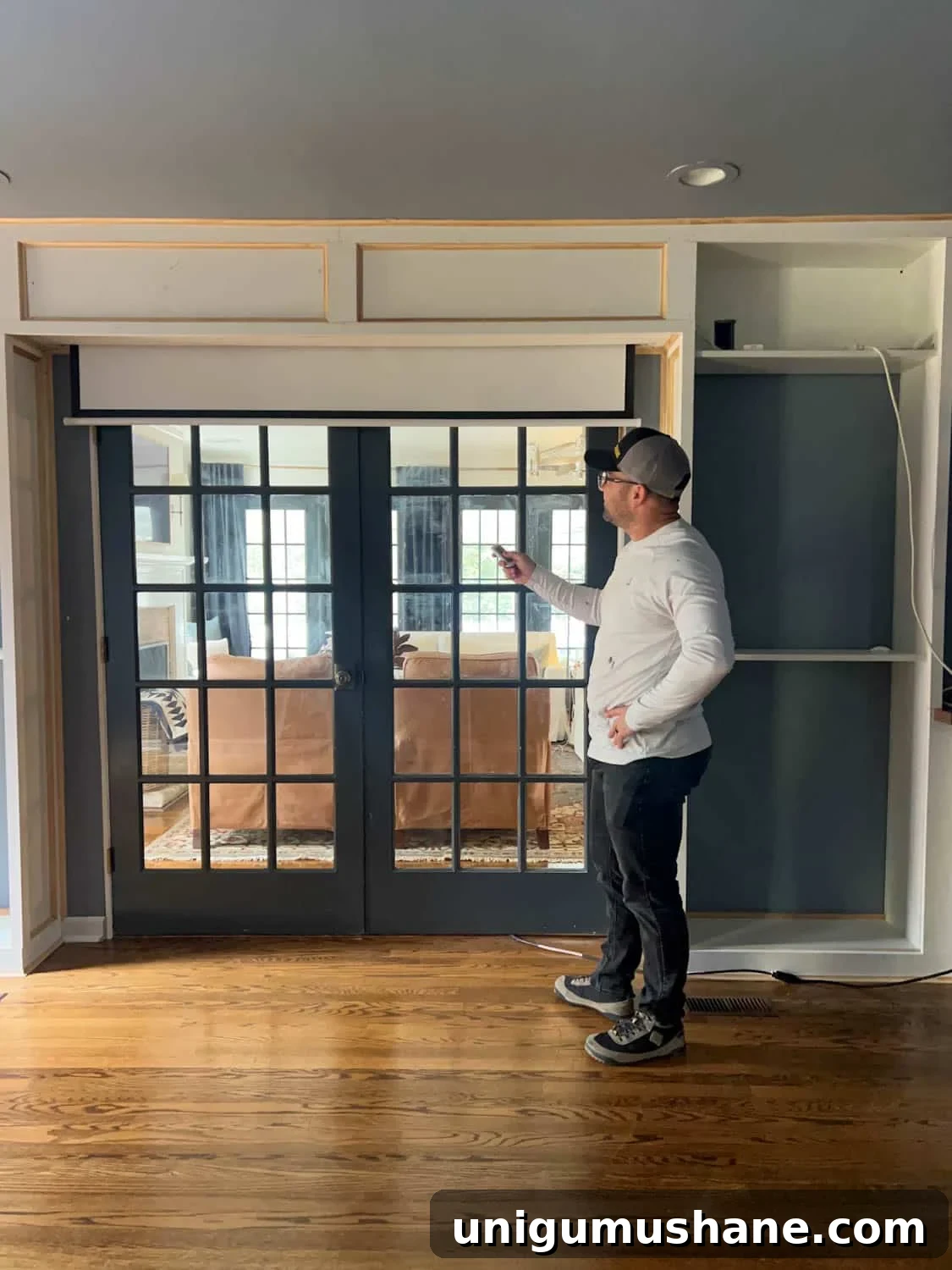
How to build a box to hide an electric projector screen between built-in IKEA shelves for the ultimate home media room.
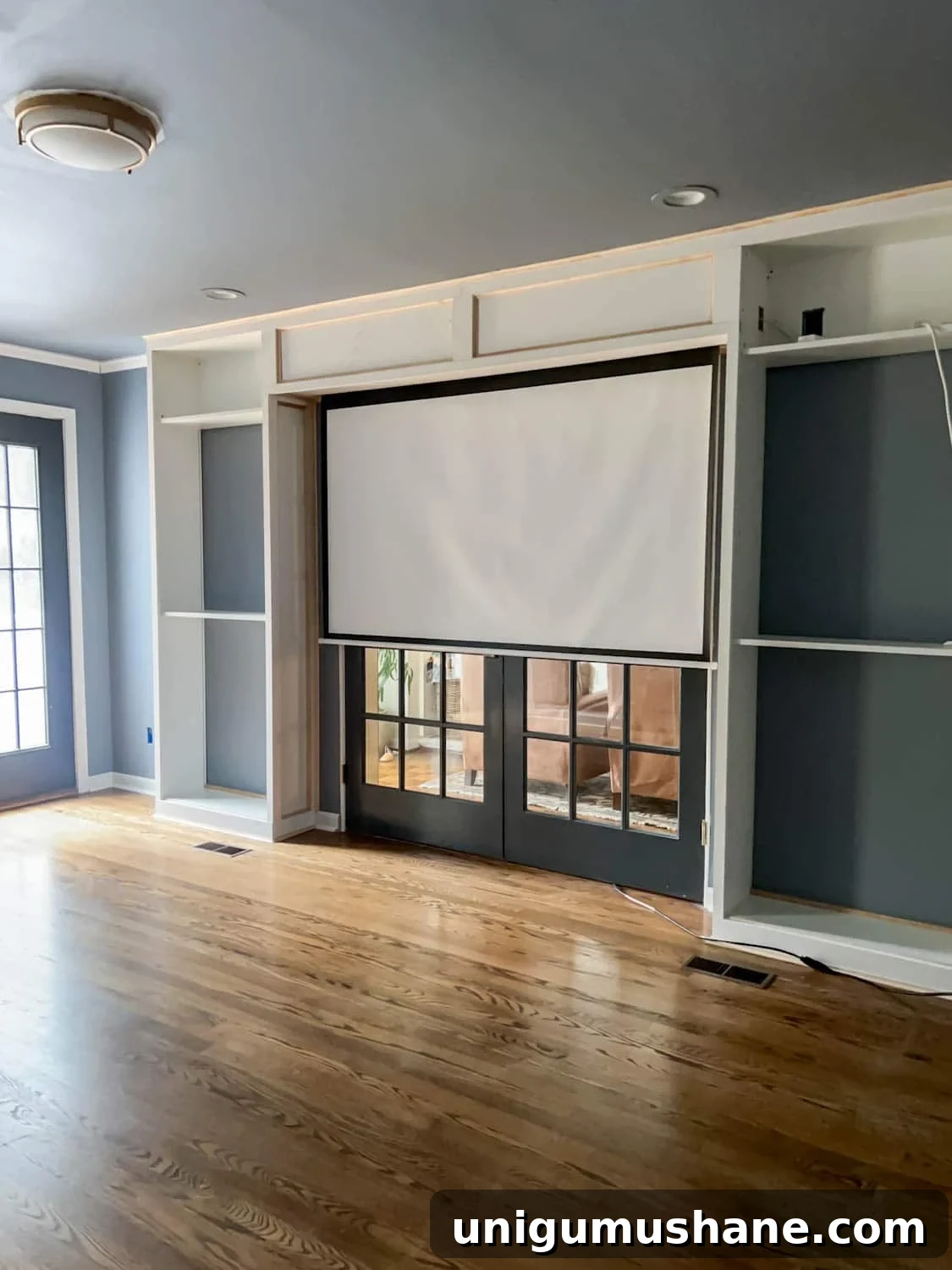
This is one of the most exciting DIY projects we’ve completed: a motorized projector screen that hides inside a custom-built box between built-in shelves. With the push of a button the screen appears for movie night and disappears cleanly when not in use—perfect for a polished home media room.
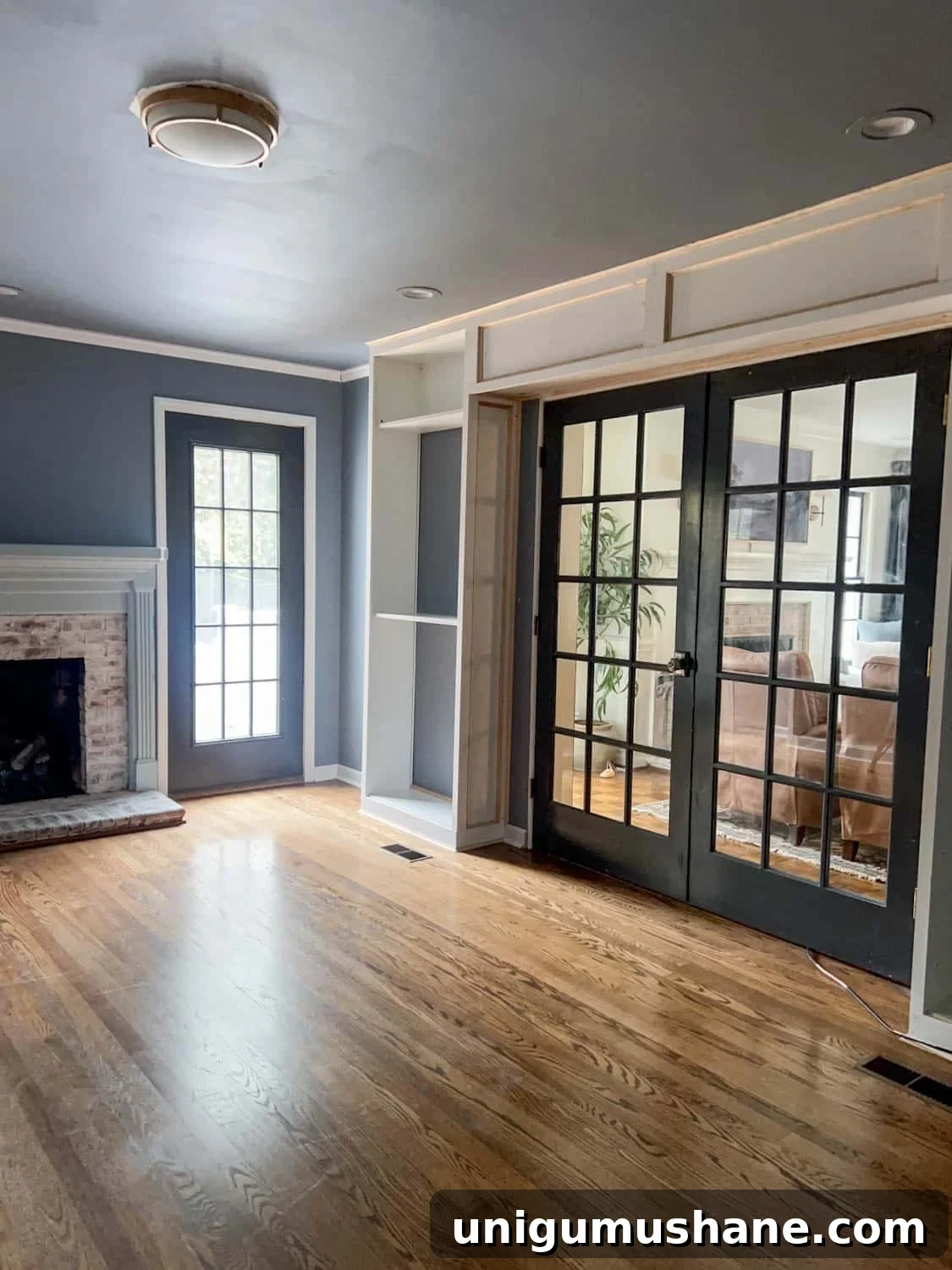
We incorporated the screen into a built-in shelving layout using the IKEA Billy bookcase hack to create symmetrical storage on either side of French doors. The screen sits recessed above the doors and tucks away into a finished box so the room functions normally the rest of the time.
As an Amazon Associate, I earn from qualifying purchases. Please read our disclosure policy.
How to Hide a Projector Screen
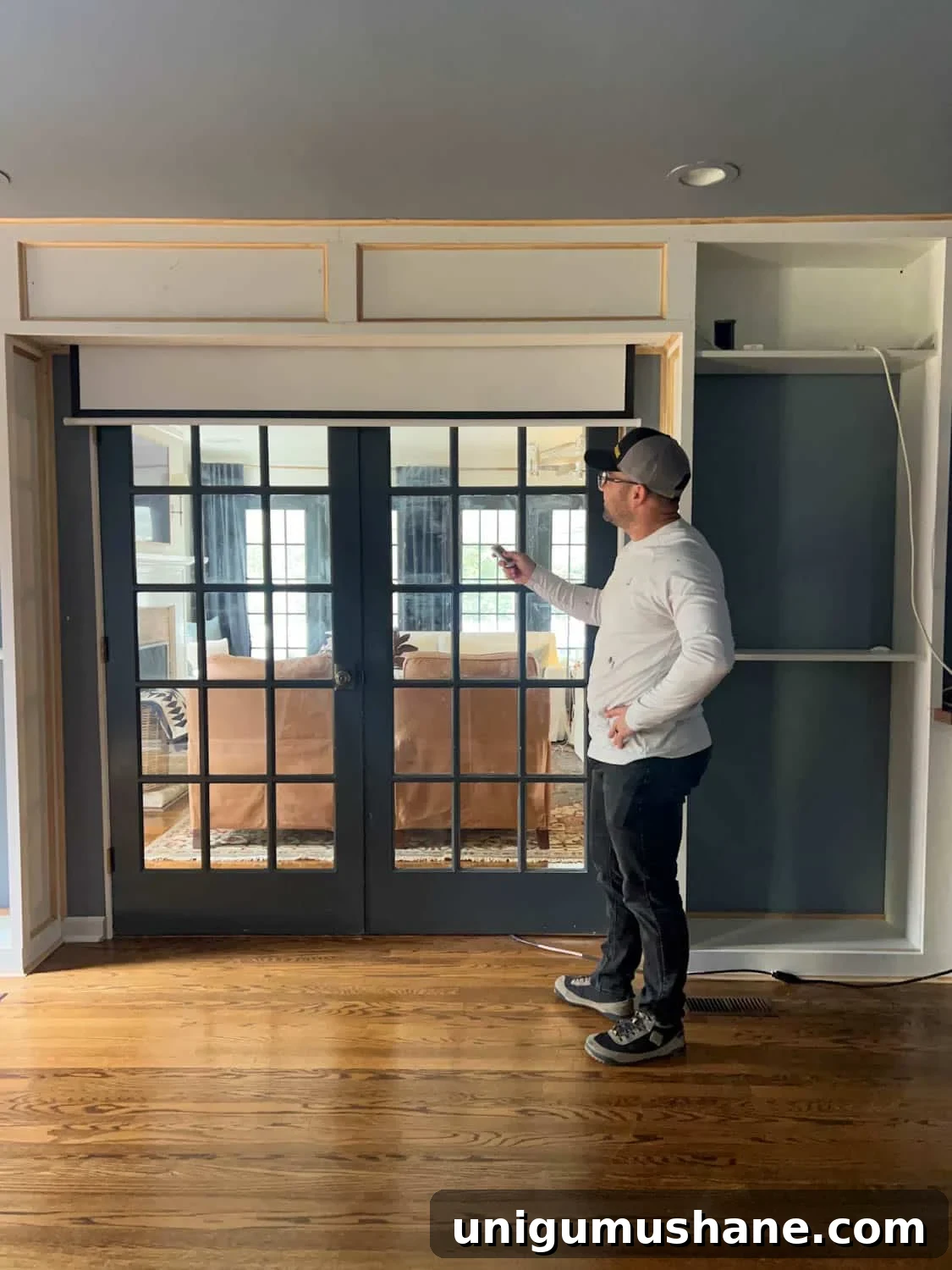
This hidden projector screen box is designed to be installed between two bookcases, creating a seamless built-in look. We used an 84″ motorized electric projector screen that operates via remote control so it can be raised or lowered from anywhere in the room.
Plan for power: make sure there is an outlet close by to plug in the screen motor. If an outlet isn’t available, you can run an extension cord or use a manually operated screen instead, though motorized operation delivers the best experience.
Our room has 8′ ceilings; if your ceilings are taller, adjust the height by adding extra height extenders to the Billy bookcases so the finished box aligns properly.
Supplies
- 2 IKEA Billy bookcases with height extenders
- Motorized electric projector screen (84″ size used here)
- 2 pieces 2x4x8 studs
- 2 pieces 1x12x8 boards
- 1 piece 1x4x8 board
- 14 pieces 1x2x8 boards
- Approximately 20 pieces of 8′ cove molding
- 18 gauge finishing nails
- 2 1/2″ wood screws
- Wood filler
- Sandpaper
- Caulk
Tools
- Nail gun (a cordless finishing nailer makes trim work fast)
- Power driver with a set of bits
- Jigsaw
- Miter saw or miter box with hand saw and circular saw
- Coping saw
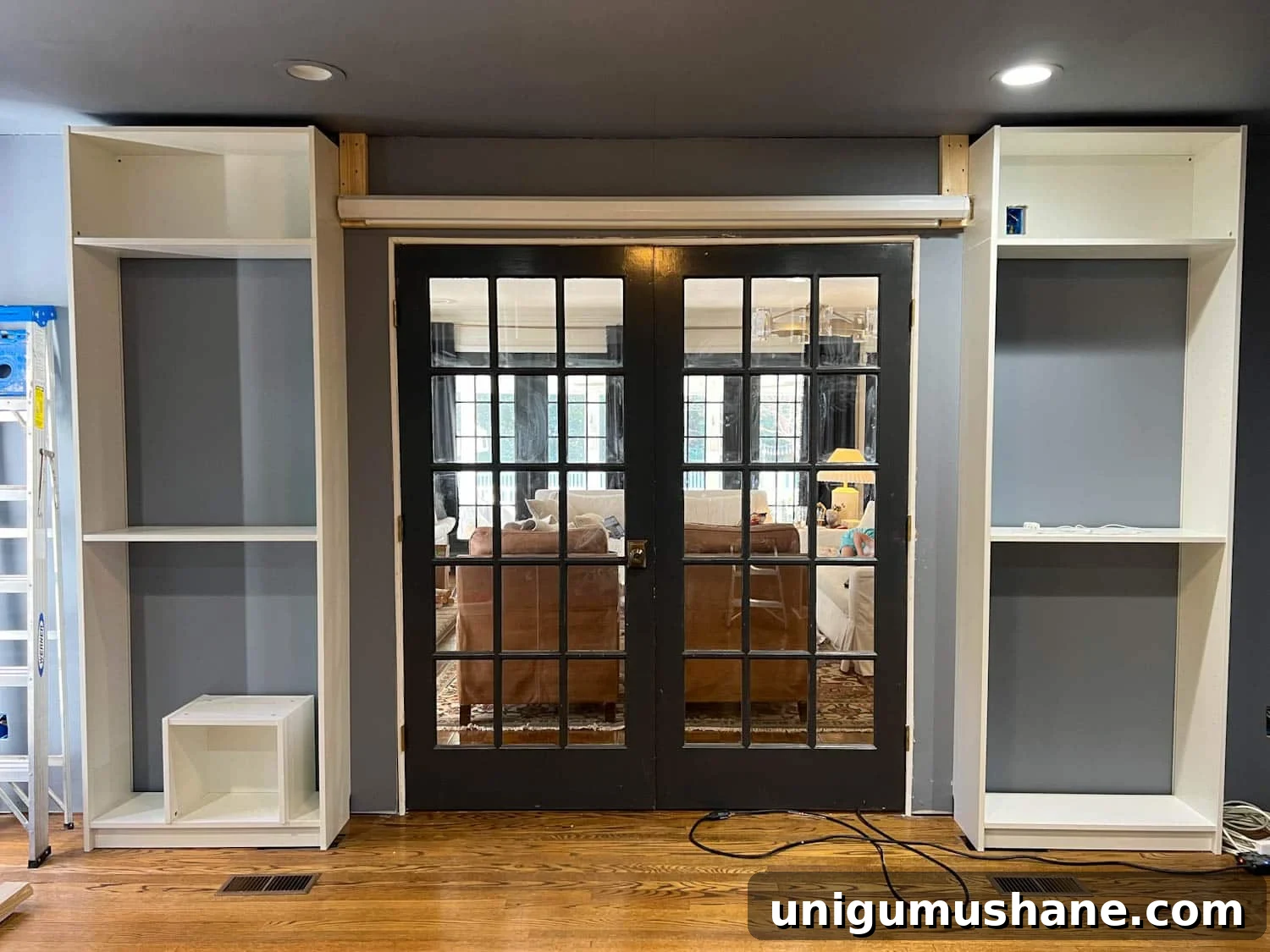
Step 1 – Anchor Bookcases and Make Outlet Access
Assemble the Billy bookcases and position them where the finished built-in will sit. If you need power access for a motorized screen, mark and cut an access hole in the back or side panel of the bookcase using a jigsaw so the screen’s plug can reach an outlet.
Secure the bookcases to wall studs with wood screws so the units are stable and aligned for the screen box framing.
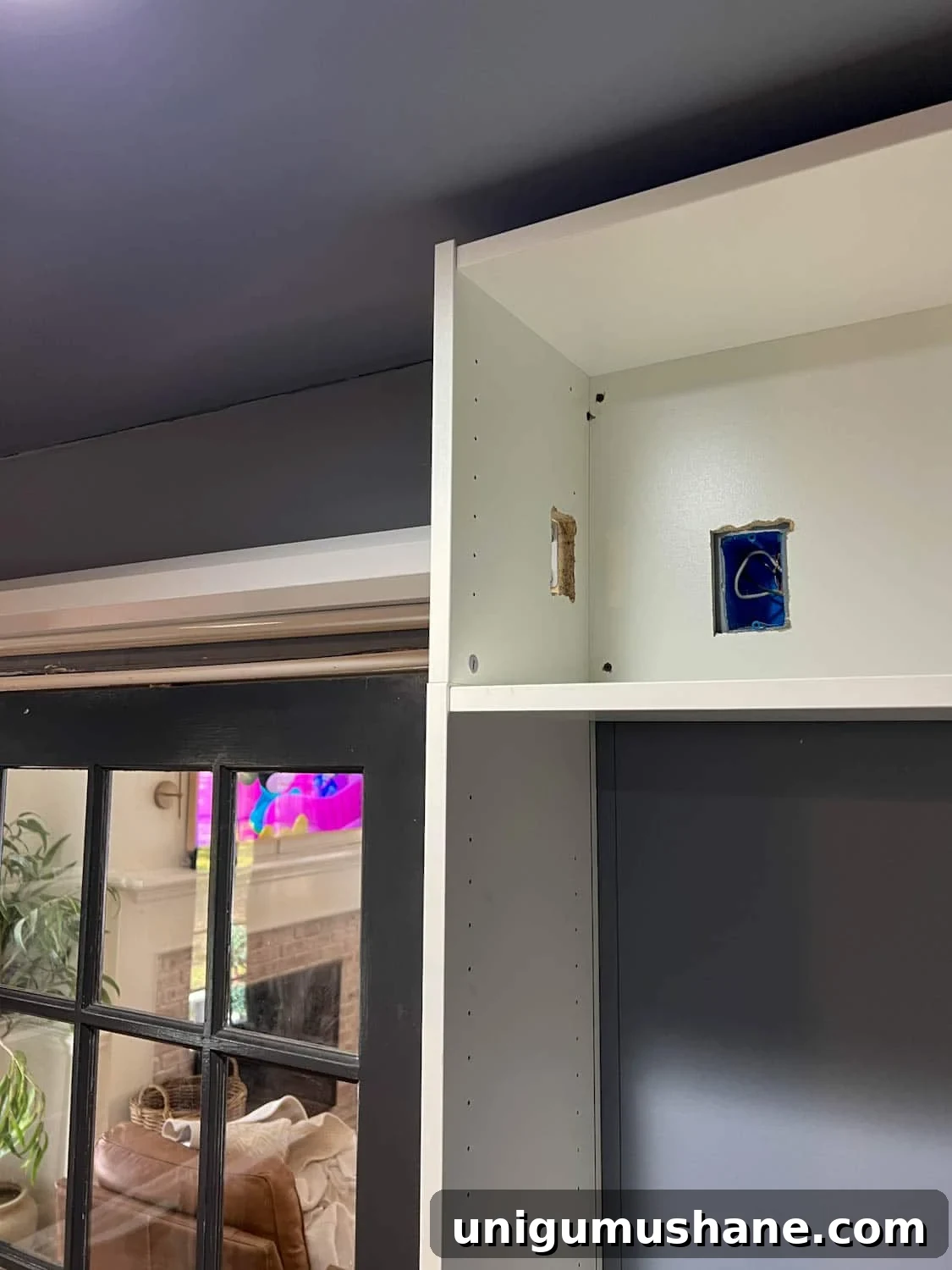
Step 2 – Anchor the Screen to 2×4 Backing
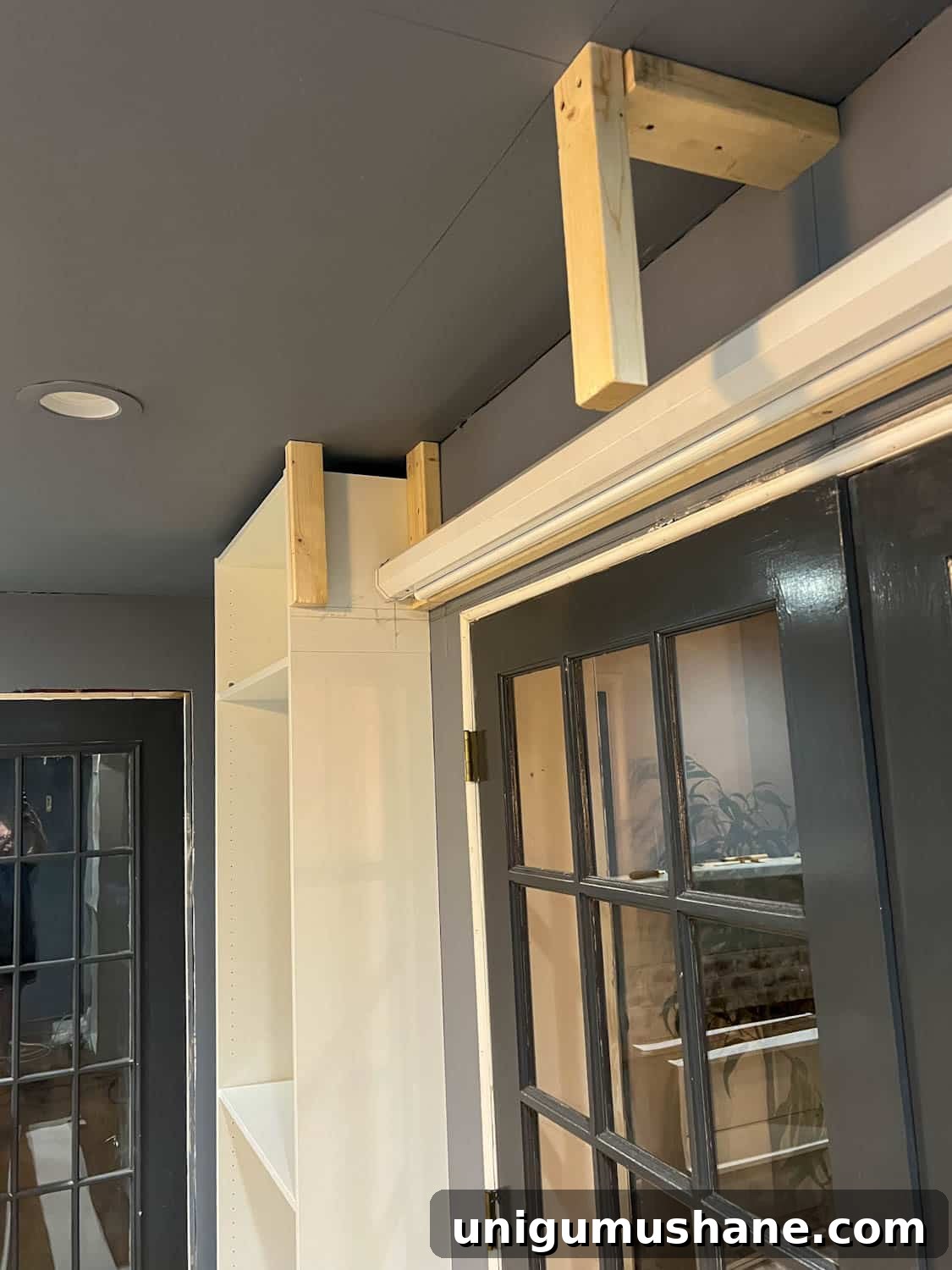
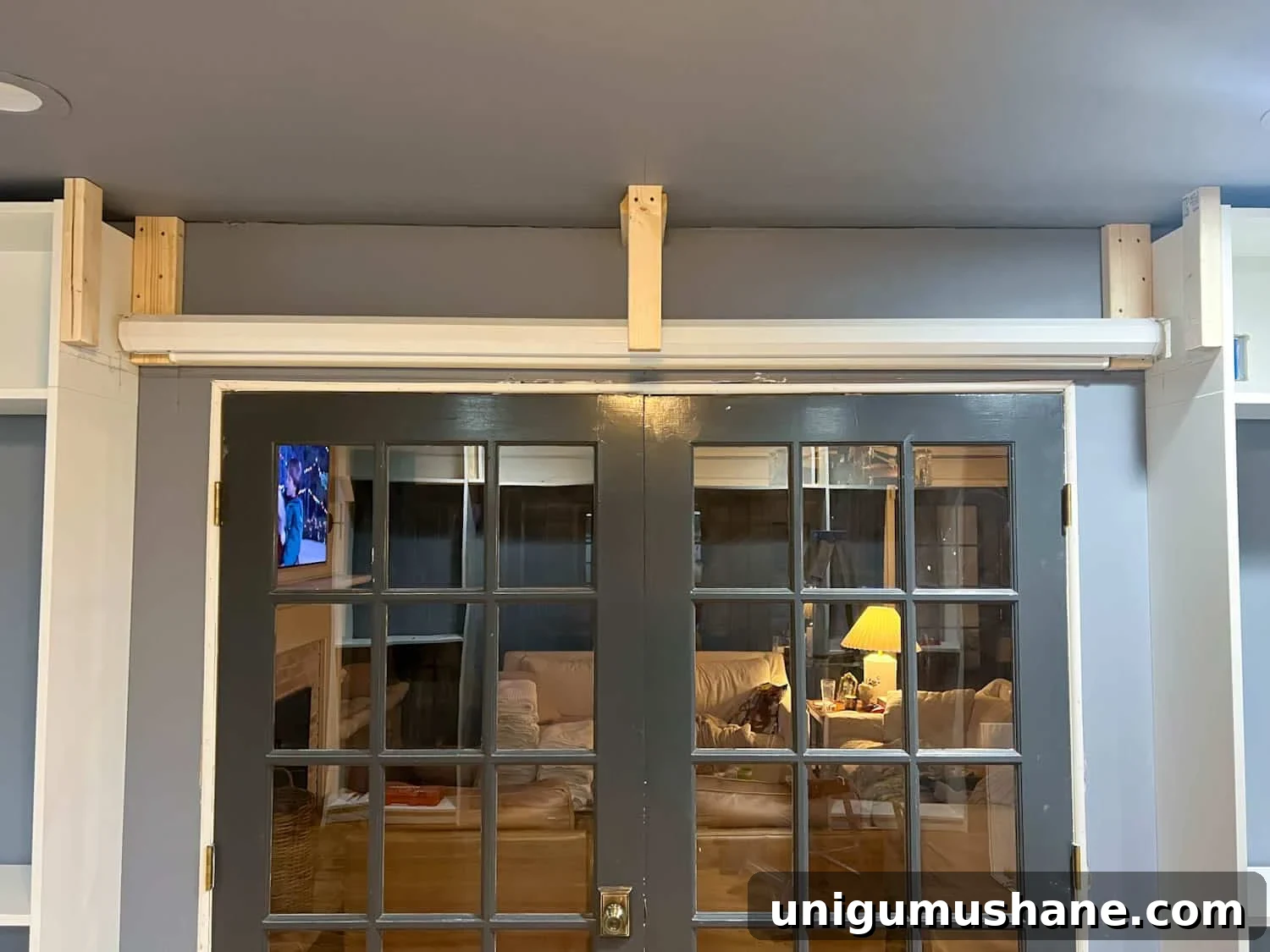
Cut two 12″ lengths and one 74″ length of 2×4. Fasten the 2×4 backing between the bookcases and anchor it into studs using wood screws. Mount the projector screen to these 2x4s so it sits slightly proud of the wall; this gap ensures the screen can lower smoothly without rubbing the wall surface.
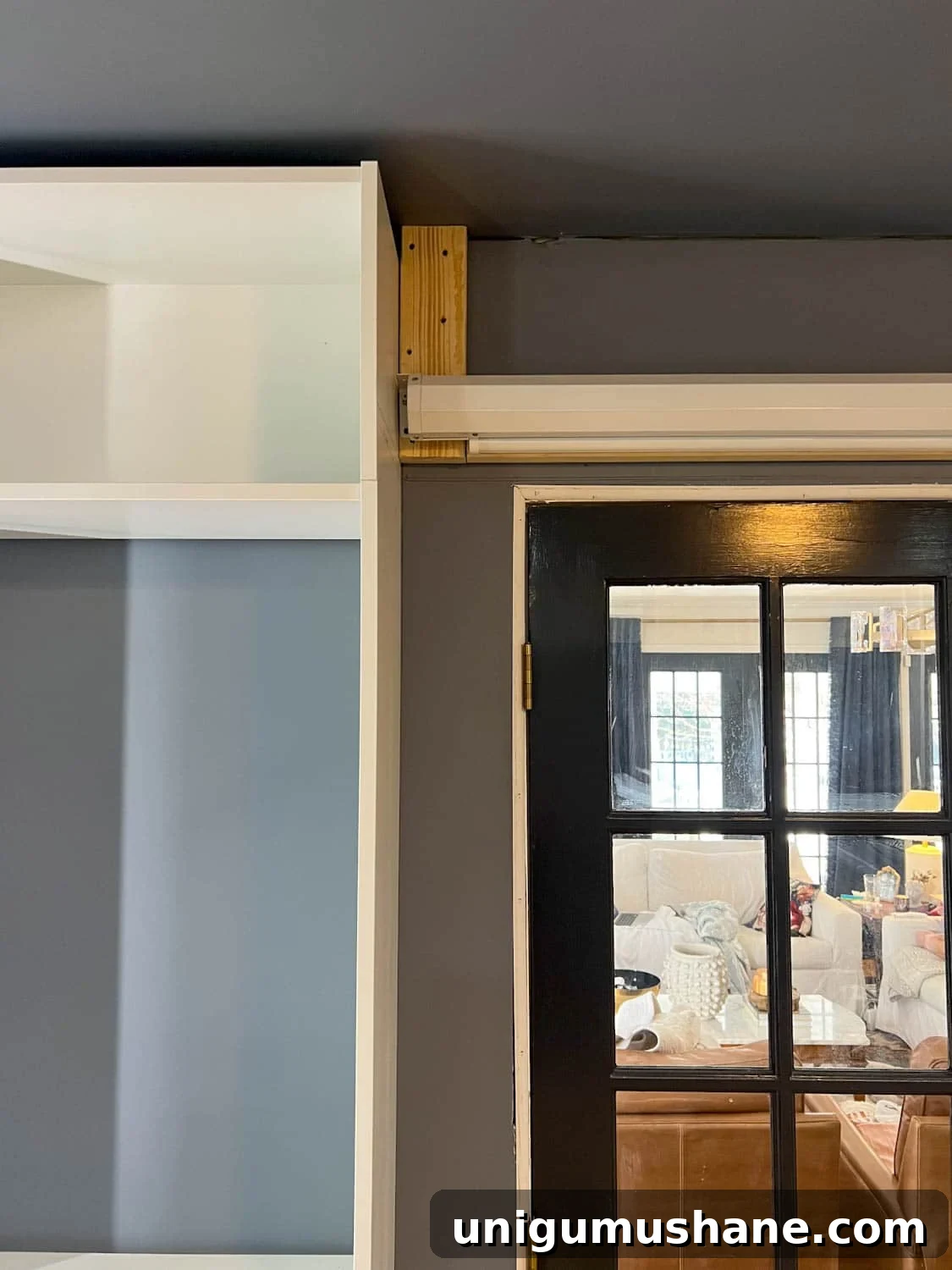
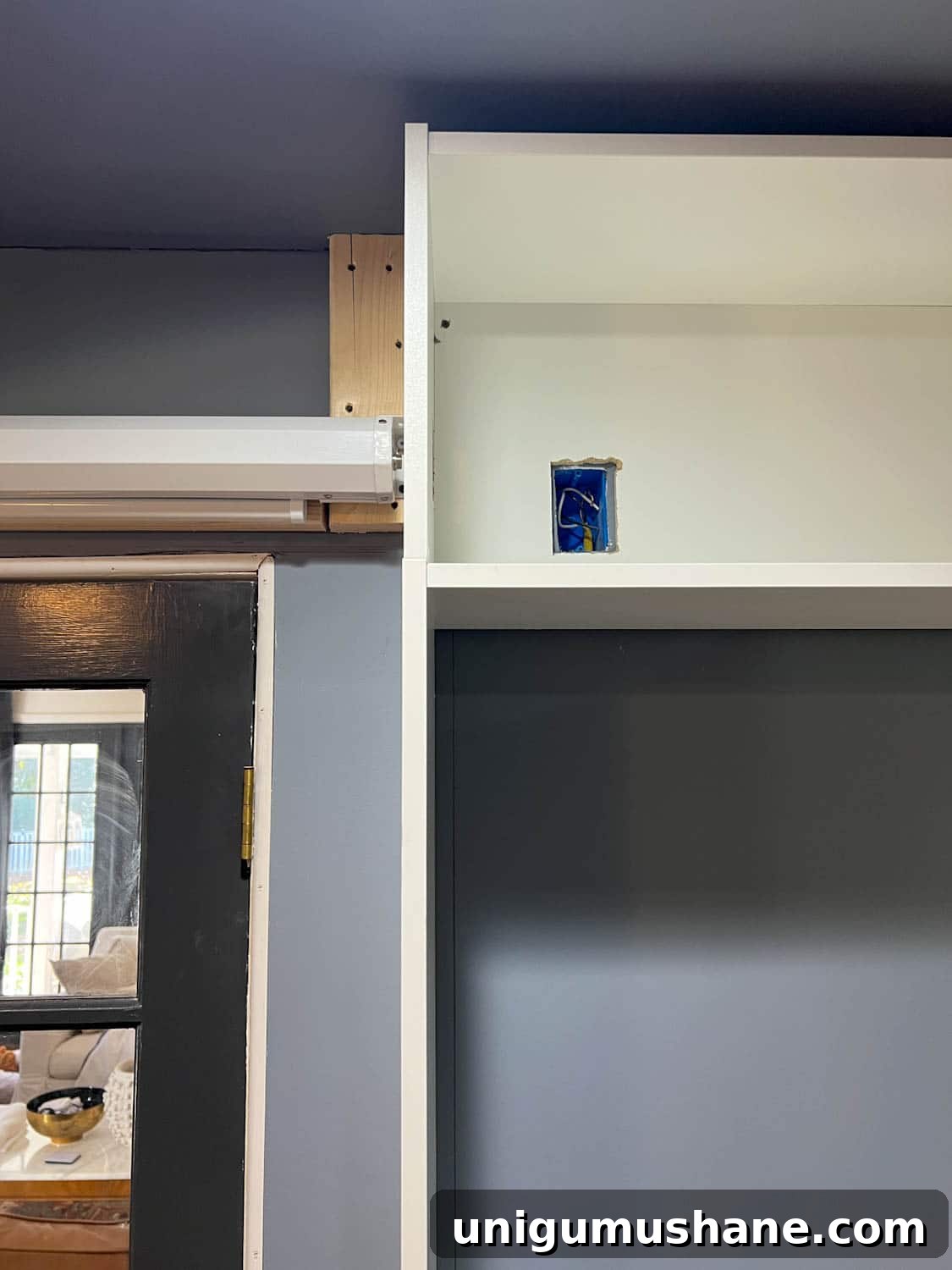
Step 3 – Brace the Front of the Box
Cut four 12″ lengths of 2×4 and attach them with wood screws to form a solid front framework. Secure these braces to the ceiling, to the sides adjacent to the bookcases, and to the front edge of the center section to create a reliable structure that will support the box and screen housing.
Step 4 – Create the Bottom Opening
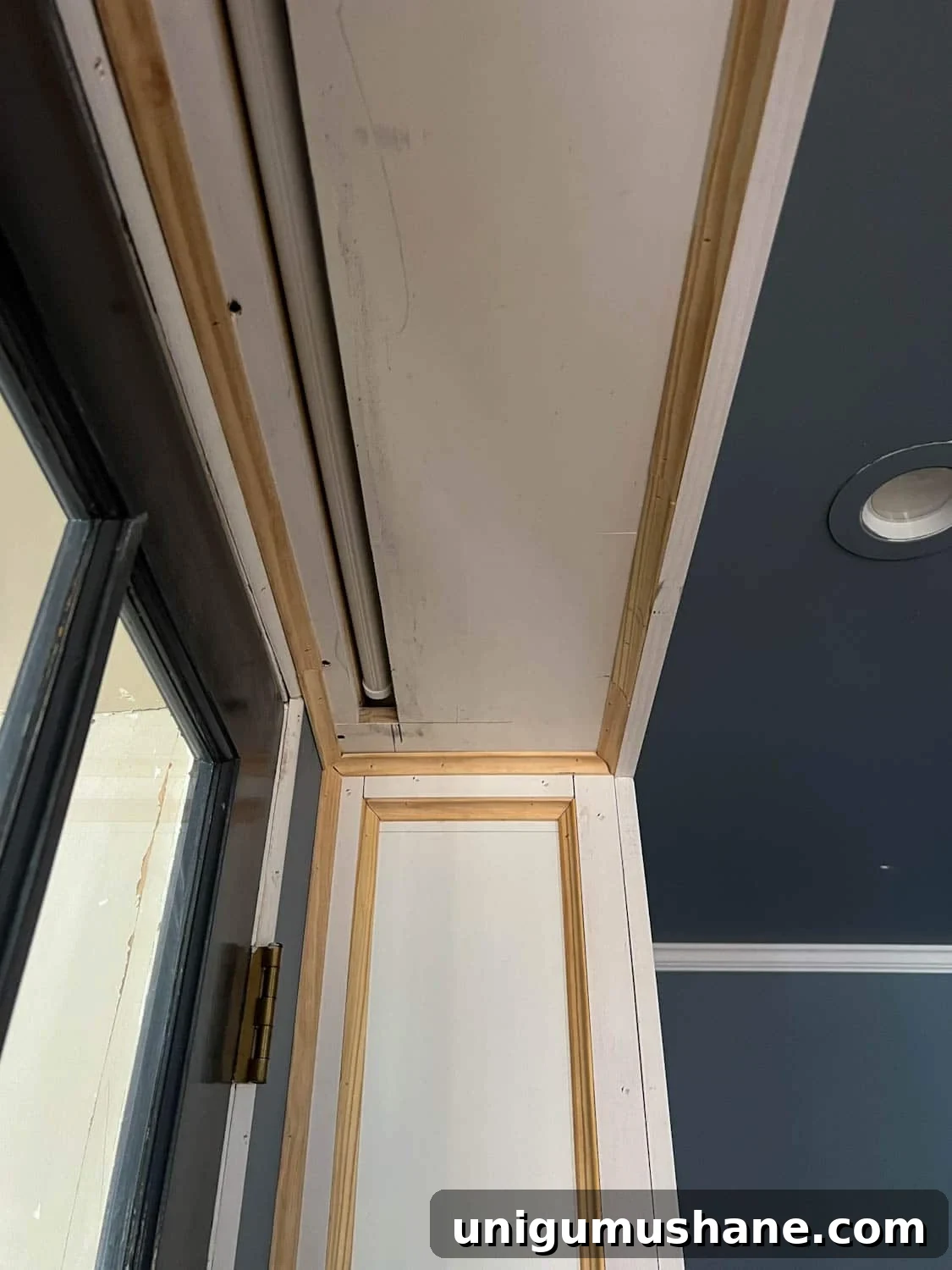
Use a 1×12 board and cut an opening with a jigsaw so the screen can extend and retract without obstruction. Fasten that board underneath the 2×4 braces with wood screws to form the bottom of the box. Add a 1×2 trim piece beneath the 2×4 against the wall to conceal the screen’s mounting and provide a clean reveal when the screen is up.
Step 5 – Close the Front of the Box
Attach the second 1×12 board to the front of the 2×4 framework to complete the box enclosure. This creates a neat, framed cavity for the screen and provides a surface for your trim work to tie into the bookcases.
Step 6 – Add Trim for a Finished Look
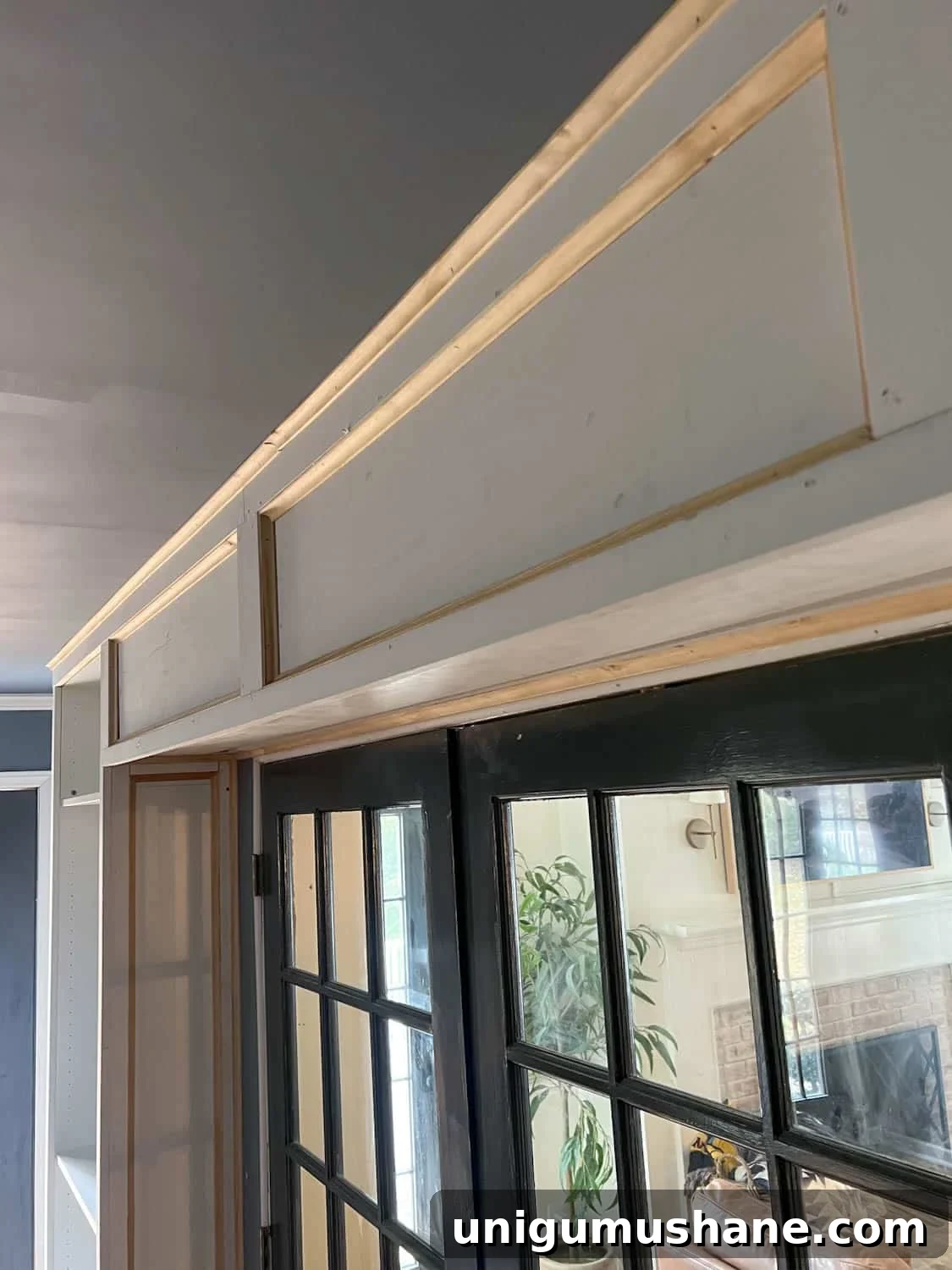
Attach 1×2 trim to the top and bottom of the box and 1×4 boards to the sides using a brad nailer. Add 1×2 trim to the fronts of the bookcases so everything reads as one continuous built-in. For a more traditional look, apply cove molding along the edges of the trim and carefully cope the corners for tight joints.
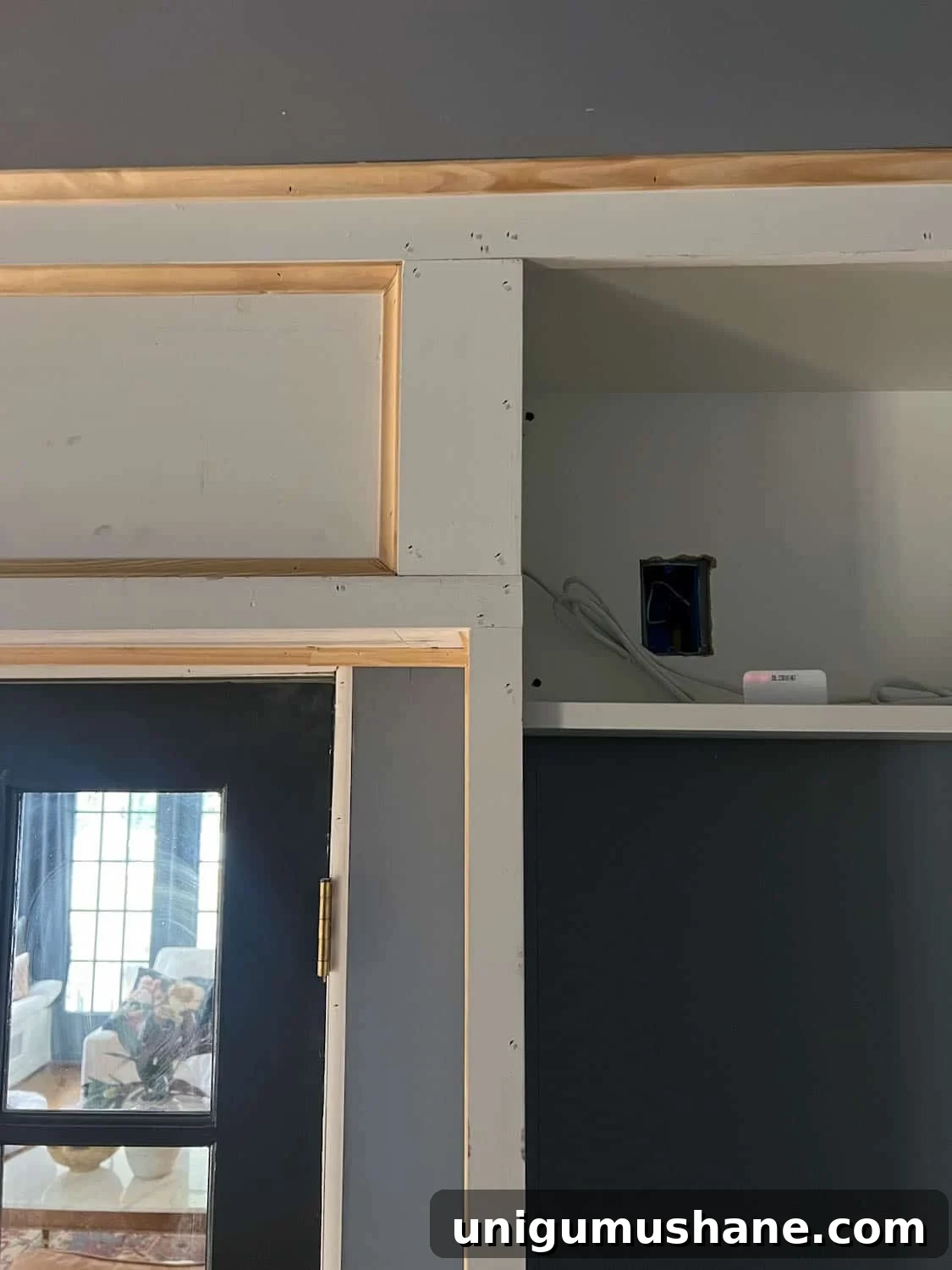
Step 7 – Wood Fill, Caulk, and Paint
Fill nail and screw holes with wood filler and sand smooth once dry. Caulk seams and any minor gaps, then prime and paint the built-in to match the rest of the room. A quality paint finish will integrate the screen box seamlessly with the surrounding bookcases.
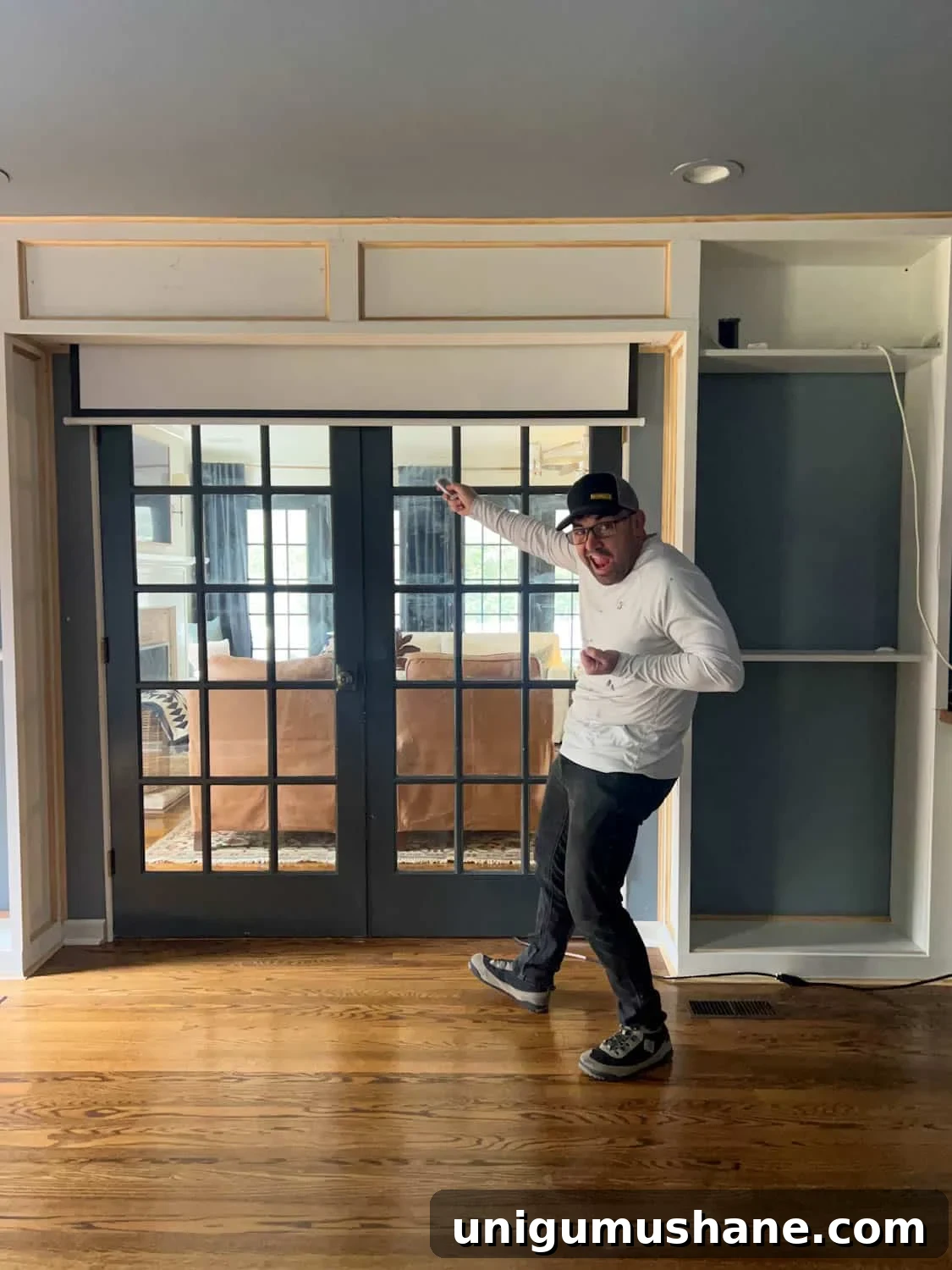
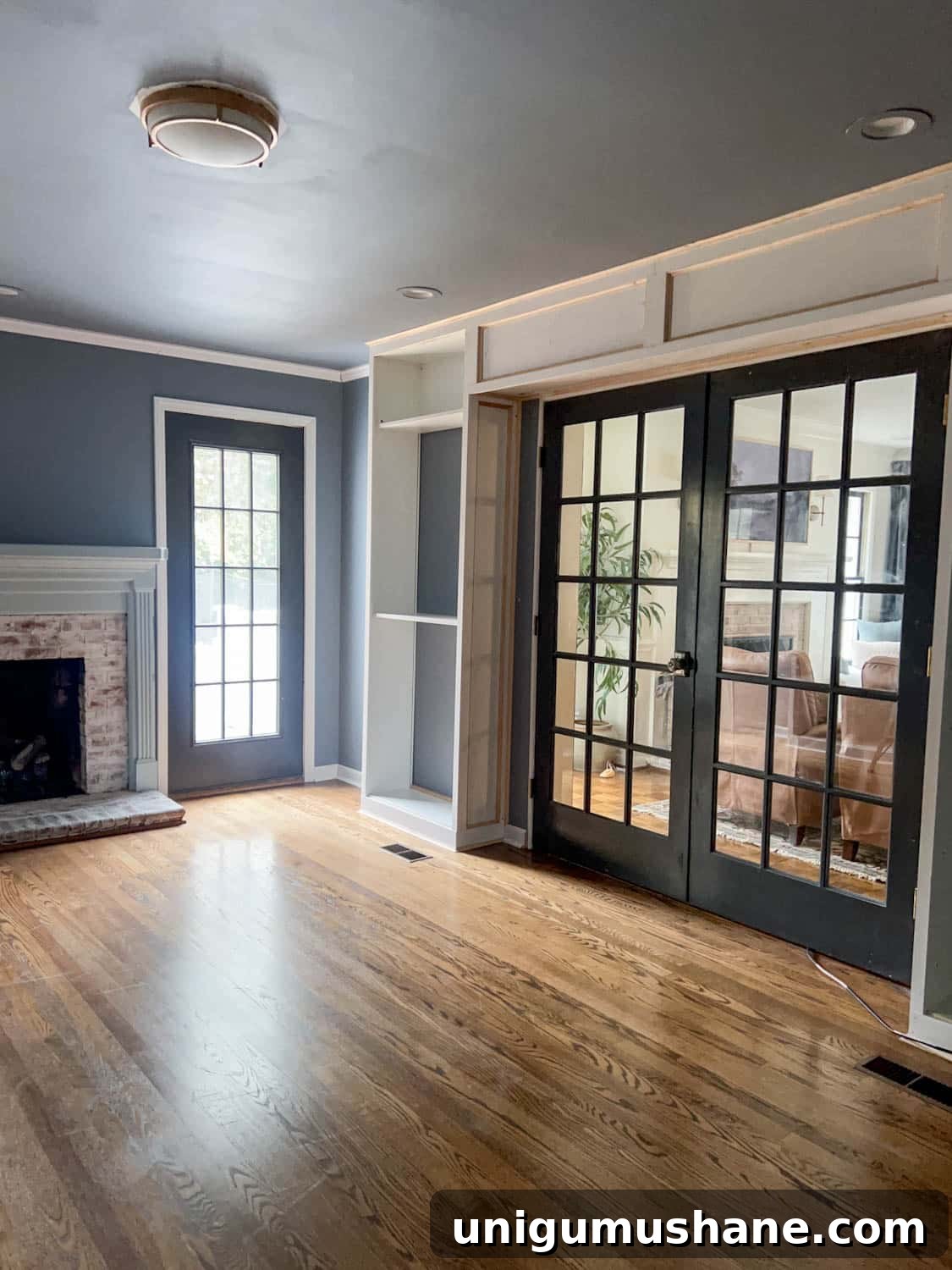
We’re still completing final paint and plan to add glass-front doors to the bookcases, but the hidden screen is already transforming the space. When lowered, it provides a cinematic experience for family movie nights; when retracted, the double doors and built-ins function as an elegant everyday room.
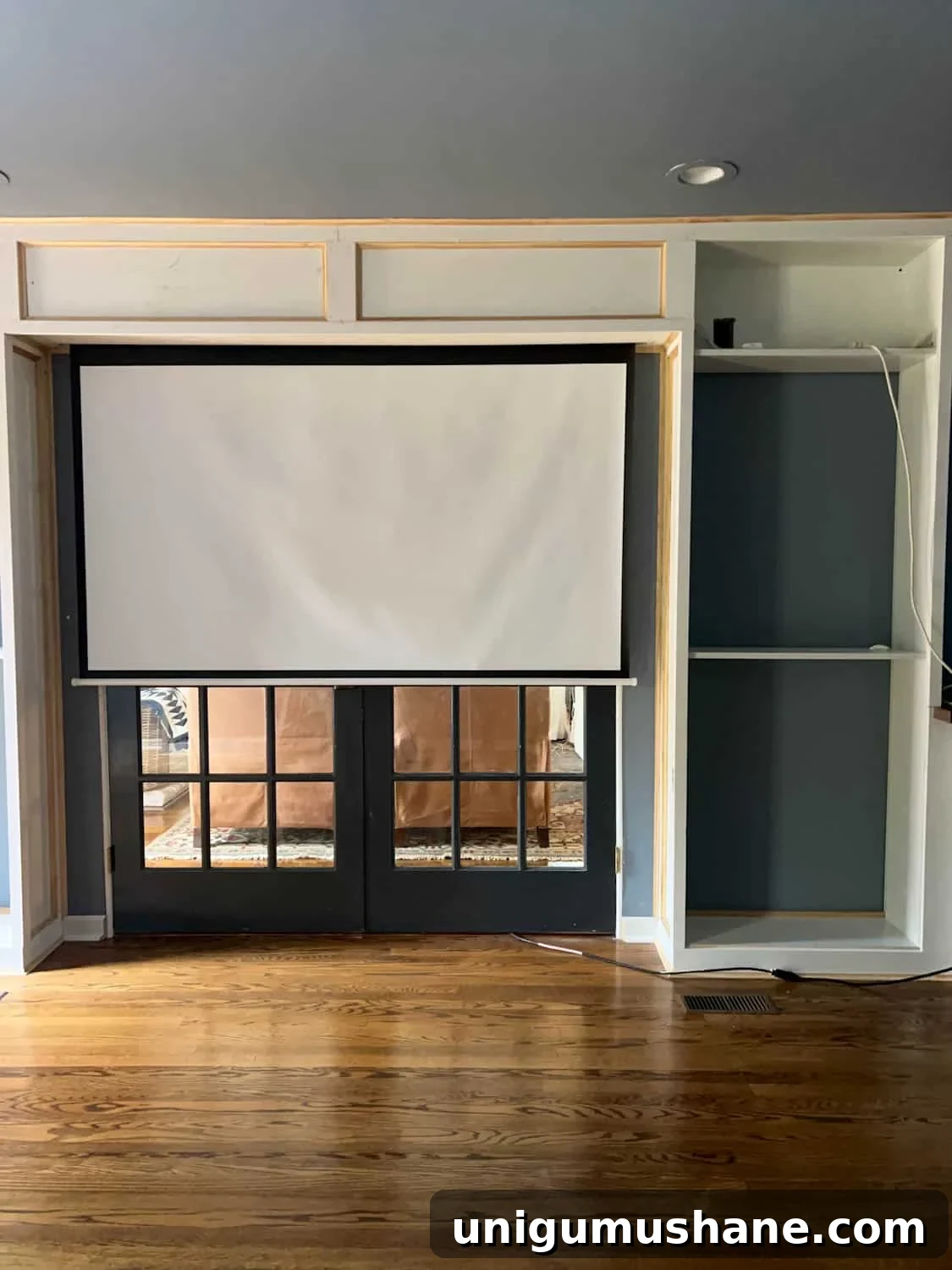
The full media room will be painted a deep blue-green and we plan to add a playful wallpaper to the ceiling to keep the space lively. Additional built-ins on the other walls will provide storage and display—this hidden projector solution is one part of a larger home theater and storage plan.
Follow the project progress through our updates and visual planning to see how the built-ins, paint, and trim come together for a cohesive media room design.
DIY IKEA Hack Ideas
More ideas for hacking IKEA storage to create built-ins and custom closets:
- DIY Built-In Bookshelves using the IKEA Billy bookcase hack
- Five DIY IKEA Storage Hacks we’ve used and recommend
- DIY IKEA Closets using Billy bookcases
- 20 Inspiring IKEA Pax Closet Makeovers
- DIY Built-Ins from IKEA Bookcases
- DIY IKEA Pantry Cabinet using Hemnes
Frequently Asked Questions
Alternatives include a shower curtain liner stretched tight for a temporary outdoor screen, a plain white bed sheet, a painted white wall, a white plastic tarp, or a canvas drop cloth. Each option has pros and cons for reflectivity and image clarity, but a proper motorized screen will deliver the best picture quality for a home media room.