

A candid, unbiased review of the Pottery Barn Tyler recliner: pros and cons, whether it’s worth the price, and why it may not suit everyone.
Two years ago we added Pottery Barn recliners to our living room, and I’m glad I lost that furniture argument with my husband. We’ve lived with these chairs for a couple of years now, so here is an honest, unsponsored assessment of how they perform day to day.


Rug | Coffee Table | Recliners | Lamps | End Tables | Fan | Sconces | Tree | Basket | Statue Planter | Pillow | Blanket | Fireplace Screen | TV
Before these, we used IKEA Stocksund chairs for about four years. They were comfortable for the price, but my husband wanted a proper recliner from the start.
How to Choose a Good Recliner Chair
Everyone has different preferences, so look for a recliner that matches your style, comfort needs, and daily routine. Here are the key factors to consider:
- Aesthetic fit — choose a chair that complements your room’s decor and doesn’t clash with existing furnishings.
- Comfort — evaluate how it feels when sitting, reclining, and resting; test in-store if possible.
- Usability — consider features such as swivel, power operation, lift, or a simple stationary design depending on your needs.
- Durability — select durable upholstery like performance fabric or top-grain leather rather than materials that stain or wear quickly.
- Price vs. value — recliners span a wide price range; decide whether you value long-term quality or prefer a lower upfront cost.

Why We Chose a Pottery Barn Leather Recliner
We selected the Tyler Square Arm down-blend leather recliner in Churchfield Camel because it met our priorities. Our chairs were delivered in July 2021.
- Low profile — they look like armchairs rather than bulky recliners when upright.
- Comfort — down-blend cushions are soft yet supportive, allowing you to sink in comfortably.
- Quality materials — top-grain leather and down-blend fill promise longevity when maintained.
- Classic style — clean lines and a timeless silhouette that fits many interiors.
We wanted to live with them for a while to see how they held up with kids and pets before giving a full review. There are things we love and aspects that aren’t perfect, so below is our detailed pros and cons list.

We purchased these recliners ourselves; this review is our honest, unsponsored perspective.

Pottery Barn Recliner Pros
Comfort
This is easily the most comfortable high-leg recliner I’ve tried. We tested it in-store and immediately knew it suited us.
Supportive, Soft Cushions
The down-blend cushions are plush but still supportive. They offer a sink-in feeling without losing structure, though occasional fluffing helps maintain shape.
Soft Leather
The top-grain leather is very soft and breaks in nicely. The Churchfield Camel tone adds warm, inviting color to the room.

Sleek Design
The high-leg profile and tailored lines make these chairs look modern and refined rather than bulky recliners. They fit gracefully into our living room and don’t overwhelm the space.
Delivery Experience
We had a smooth white-glove delivery: the team arrived on time, set up the chairs, and confirmed everything with us. Experiences may vary by location, depending on proximity to distribution centers.

Pottery Barn Recliner Cons
Wear Over Time
Leather Patina
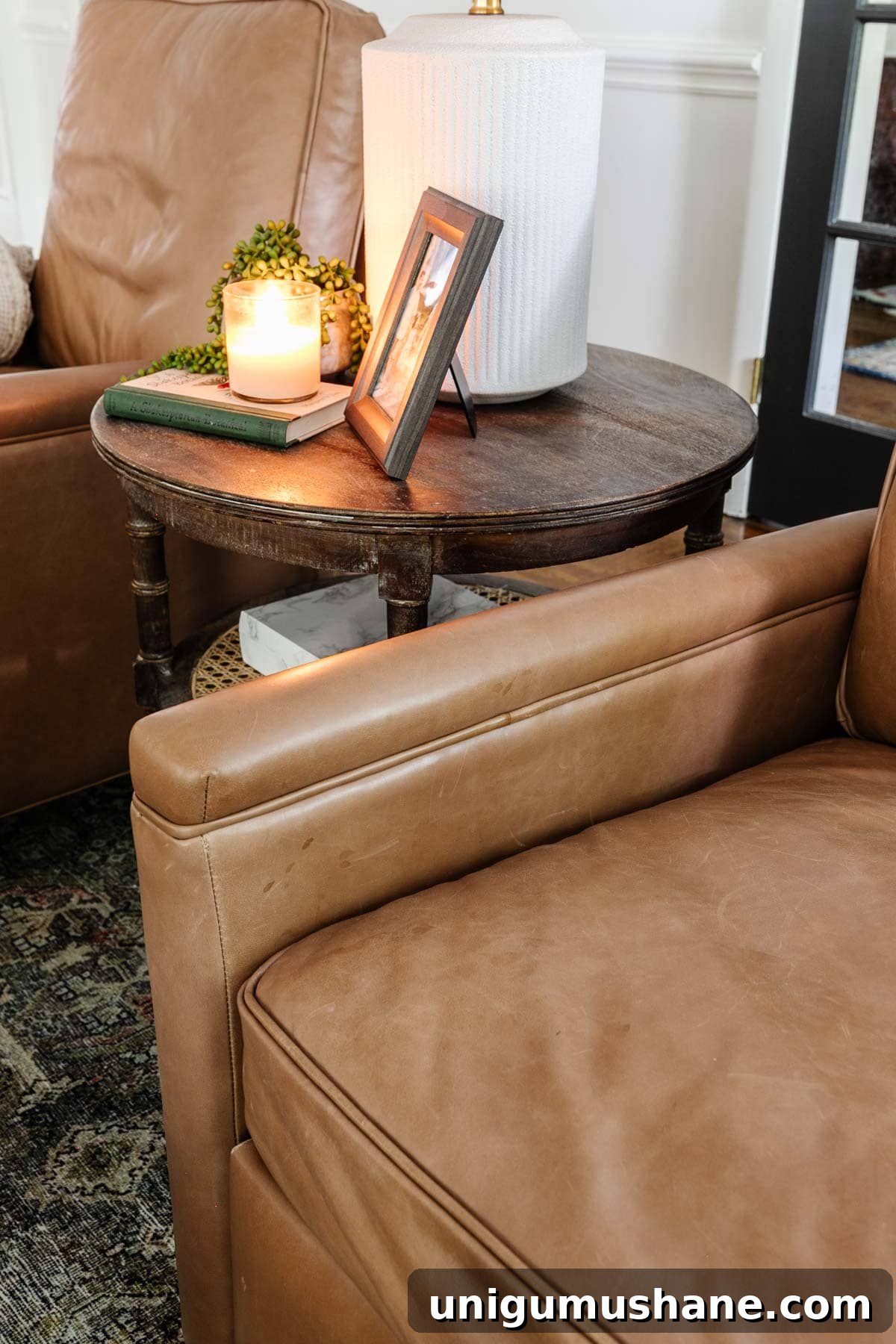
If you prefer a pristine, unblemished look, these may not be for you. Top-grain leather develops scuffs and a rich patina over time. With kids and a small dog in our home, our chairs show normal signs of use. That natural aging is expected with this material and many people appreciate the character it gains.
Maintenance tip: Use a leather protector or care kit periodically to extend the leather’s life and keep it looking its best.
Cushion Sagging
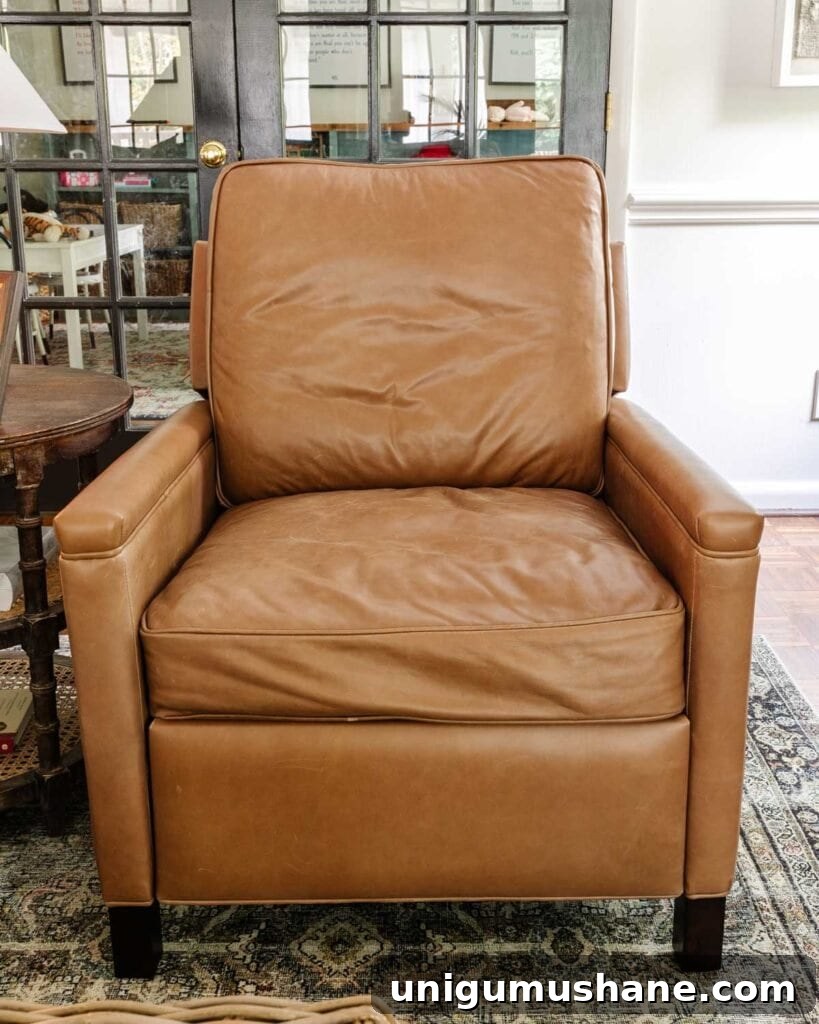
Down-blend cushions need occasional fluffing and can look a bit less structured over time. However, down-blend often outlasts typical foam cushions and retains comfort for years.
Limited Reclining Features
The manual version of this chair offers only three positions. It’s a push-back design without a lever, so reclining requires a bit of arm strength. If you need precise adjustments or want ease of use for someone with limited strength, consider a power recliner option instead, which offers more positions and gentler operation.

Size and Weight
Those taller than about 6 feet may find the standard back height short. Pottery Barn now offers taller size options, but the standard chair worked for us (we are around 5’7″). Also, these chairs are heavy, so moving them is not easy.
Price
This is a premium purchase: when we bought ours the price reflected the top-grain leather and down-blend cushions. Pottery Barn frequently has sales, so timing a purchase can reduce cost significantly.
Warranty
Pottery Barn does not offer a long-term furniture warranty, though they provide a 30-day satisfaction window. Other brands may include more extensive warranties on mechanical parts and frames. For us, the design and material quality justified choosing Pottery Barn.

Overall Pottery Barn Tyler Recliner Chair Review
Overall, we’re very pleased with our decision. Movie nights are far more comfortable, and the chairs have worn in gracefully while still looking stylish. They meet our needs for comfort, material quality, and classic design.
After one month, the chairs fit seamlessly into our living room.

After two years, they’ve developed a natural patina and remain comfortable and functional.

If you own a recliner you love, please share your recommendations or leather chair experiences in the comments—this helps others looking for real-world feedback.
The warm leather also adds a cozy, seasonal tone to our room, which I appreciate even during renovation chaos.
More Product Reviews for Your Living Room
- Pottery Barn sofa review and what to know
- Honest review of a popular framed TV
- Review: washable rug systems and how they hold up
- IKEA sofa update: how it’s performing months later
Frequently Asked Questions
Top-rated recliner brands vary by review source, but many shoppers consider Pottery Barn, West Elm, La-Z-Boy, and several well-known furniture retailers to be among the best depending on priorities like style, warranty, and price.
A quality recliner can last as long as a sofa—typically 7 to 15 years. High-quality leather chairs, with care, can last even longer.
Power recliners often experience gentler, controlled movements that can reduce mechanical wear, which may help them last longer than some manual recliners, though build quality and maintenance are major factors.