
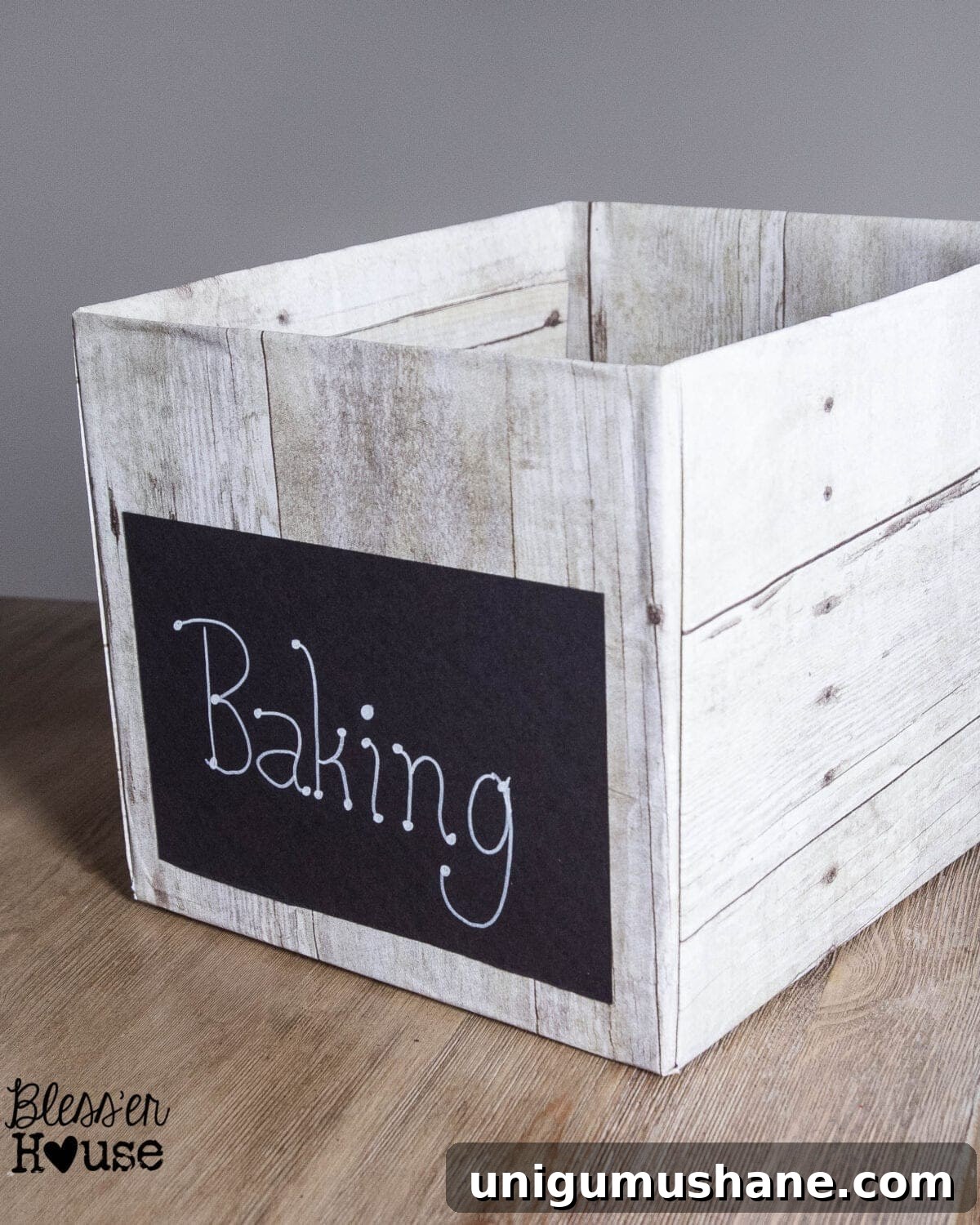
DIY Weathered Wood Pantry Crates from Diaper Boxes — Affordable Pantry Organization
I’ve tried yoga just once in my life, and it was an experience I won’t forget. My friend convinced me to go with her to a class that was definitely not for beginners — the room was tiny, overheated, and full of contortion. I ended up passing out on the floor. Mortifying, yes, but it taught me something useful: sometimes a humbling first attempt is followed by a much better second try.
That same lesson applied to organizing my home. For years I’d stand in front of an overflowing pantry or closet and completely shut down because the task felt impossible. I’m a committed pack rat, but I finally learned to use that tendency to my advantage by turning free materials into practical storage. The result: a set of convincing, weathered wood pantry crates made from empty diaper boxes.
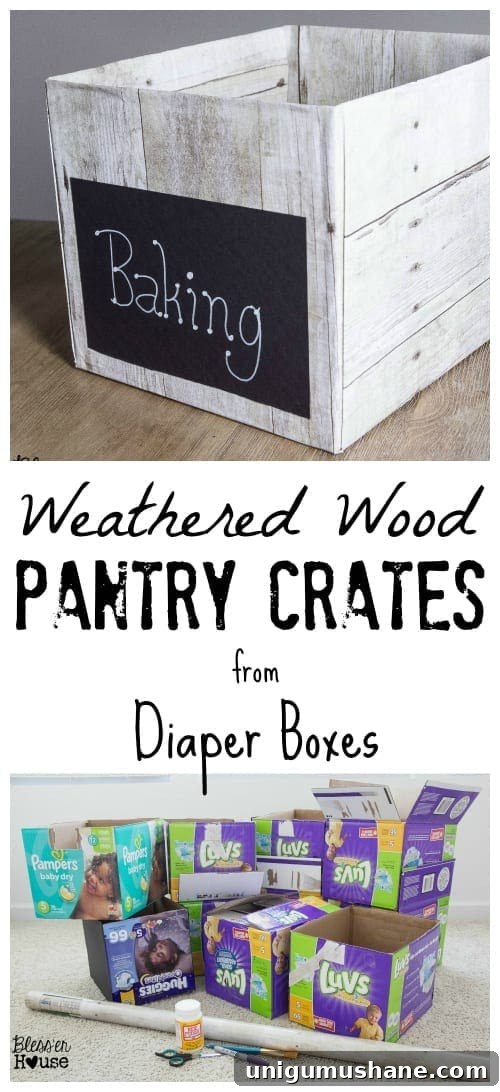
There are people who happily spend hundreds on a polished storage system. I am not one of those people. I’d rather spend on something fun, so I looked for a frugal route. Over several months I collected empty cardboard diaper boxes with the idea of turning them into sturdy pantry crates. If you have a toddler, you might already have a few boxes sitting around — they make excellent, free raw material for DIY storage.
Materials I used
- Empty cardboard diaper boxes (I used 10)
- Faux wood printed craft paper (a wide roll or sheets)
- Scissors and a ruler
- Sharpie or pencil for marking
- Paint brush for adhesive
- Mod Podge or similar decoupage glue
- Black cardstock for chalkboard-style labels
- Permanent chalk marker
- Removable adhesive strips for labels
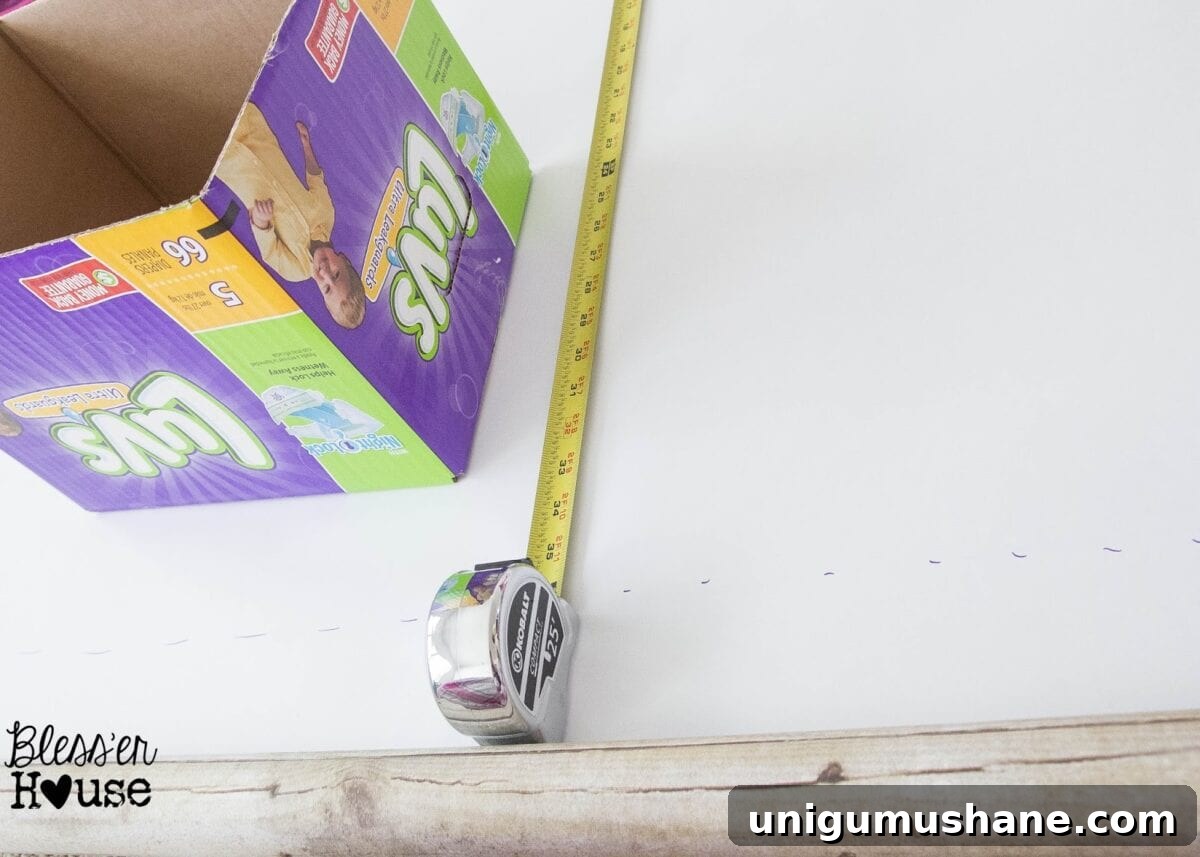
The process is simple and repeats for each box, so once you have a rhythm the work goes quickly. First, cut off the top flaps of each diaper box so you are left with a rectangular open-top crate. Measure the width and height of the box, then add together the measurements needed to cover the bottom and both sides plus a bit of overlap. For my boxes I measured and cut a strip of craft paper about 40 inches long to wrap around each box.
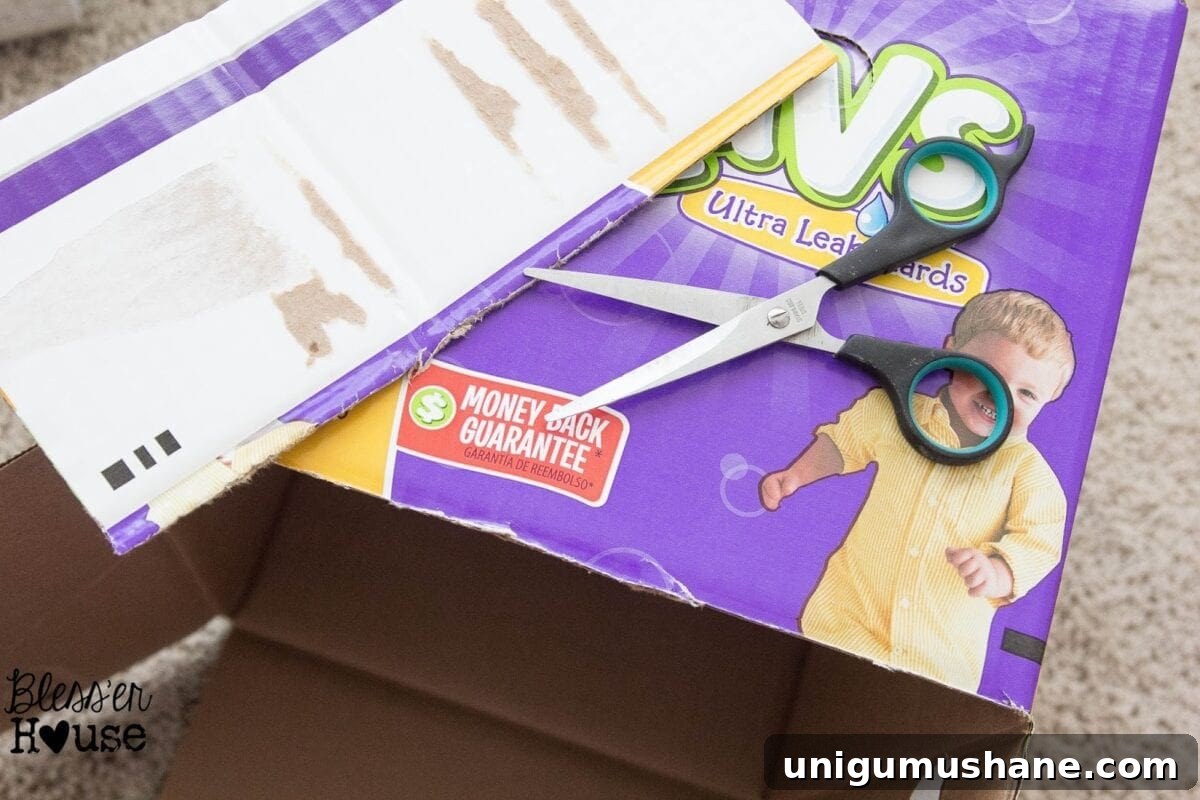
Trim the faux wood paper to the correct width and lay it with the printed side down. Using a ruler, mark where the box corners will fold so you can create neat panels. Cut small diagonal notches — about 2–3 inches — at each corner of the paper to form four flaps that fold cleanly into the inside corners of the box.
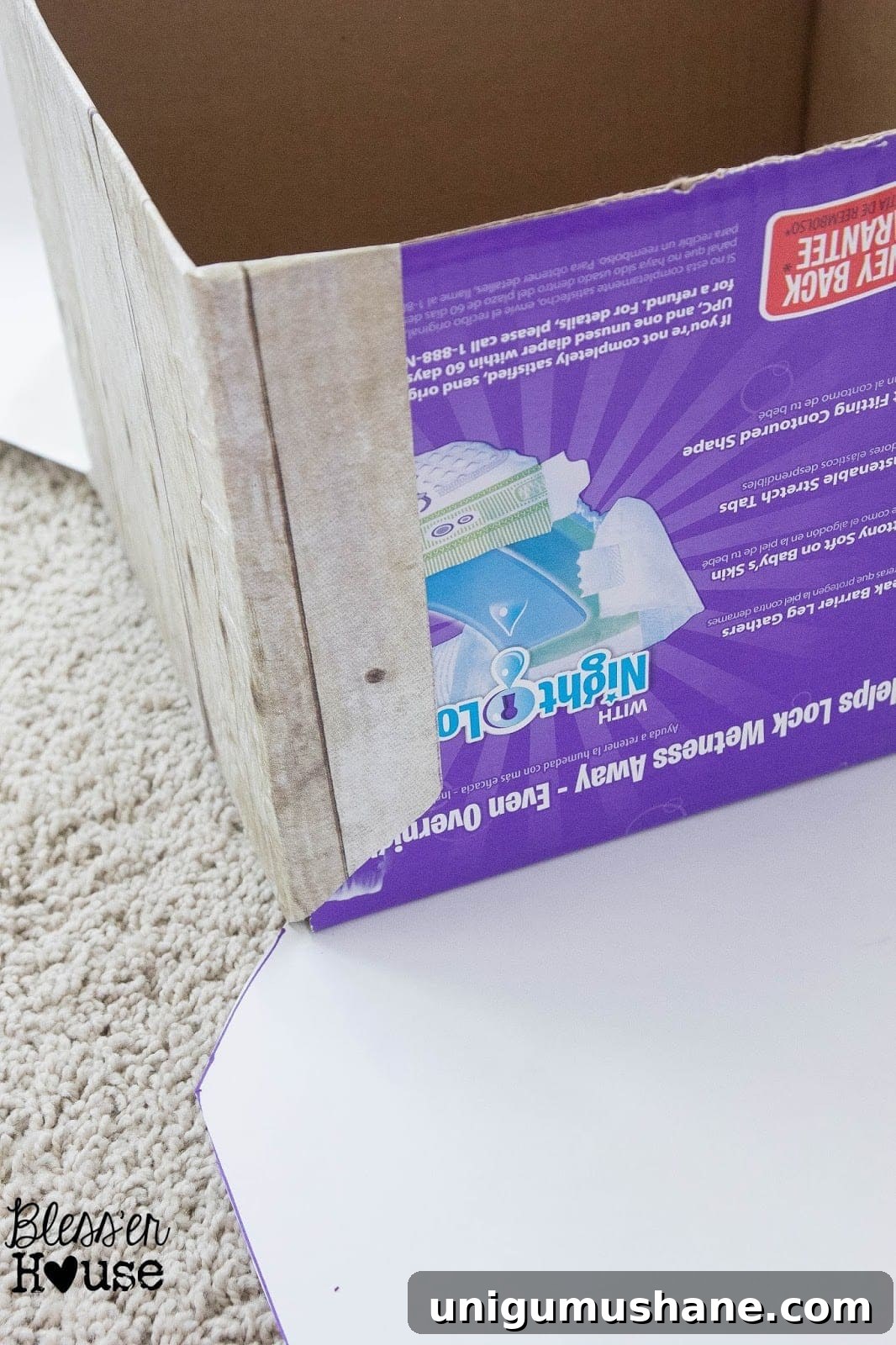
Brush a thin layer of Mod Podge around the front perimeter of the box and press the paper into place, smoothing as you go to avoid bubbles or wrinkles. For the inside top edge, cut diagonally at the paper to fold and glue the edges neatly, then apply Mod Podge to secure the interior seams. Repeat this process on the other side so the paper wraps smoothly around the box and the seams are glued down both inside and out.
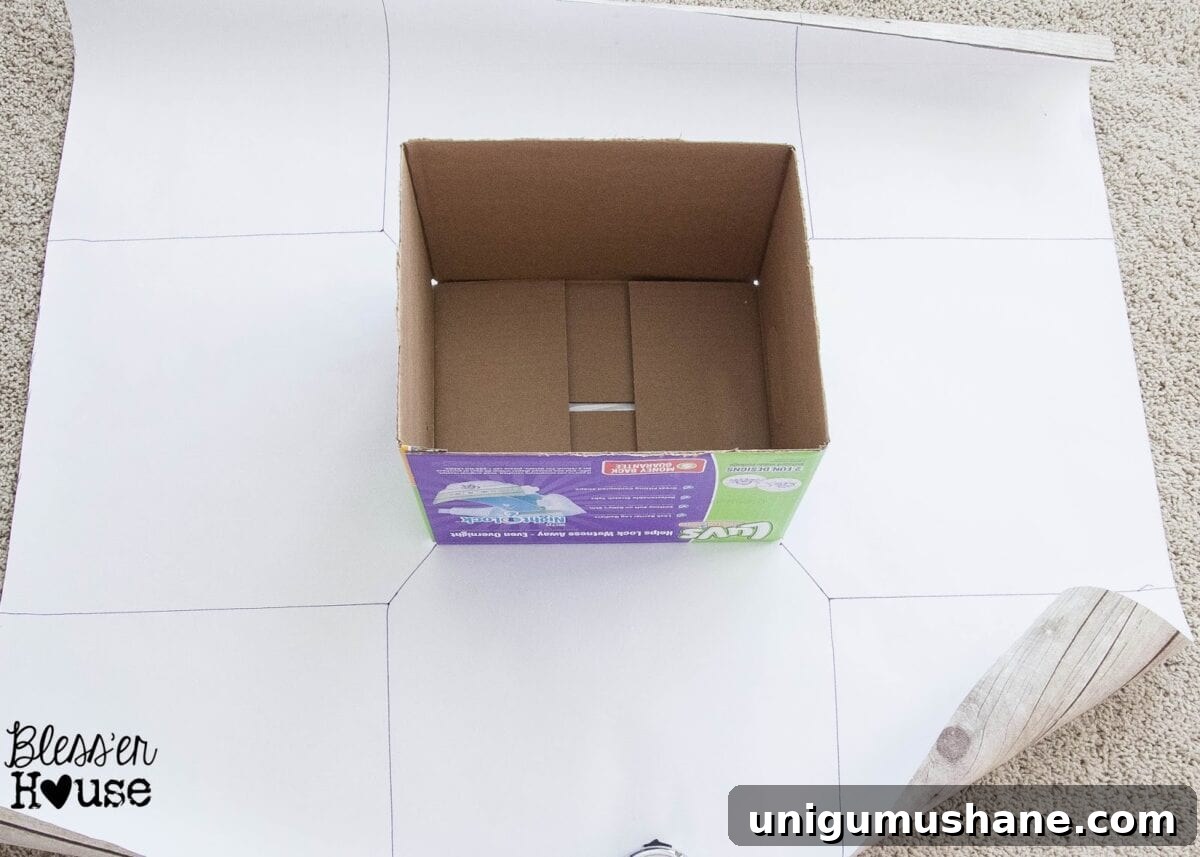
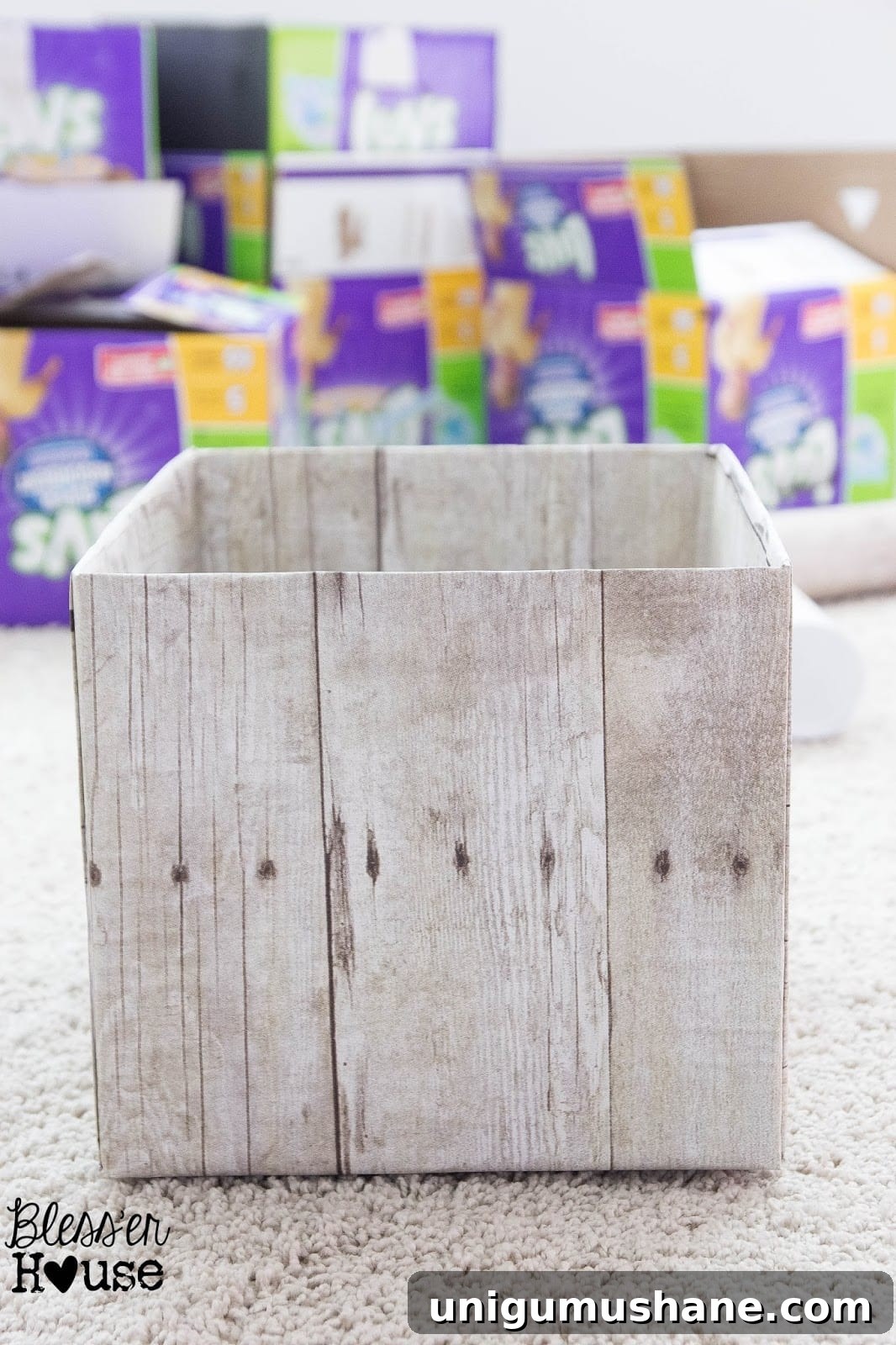
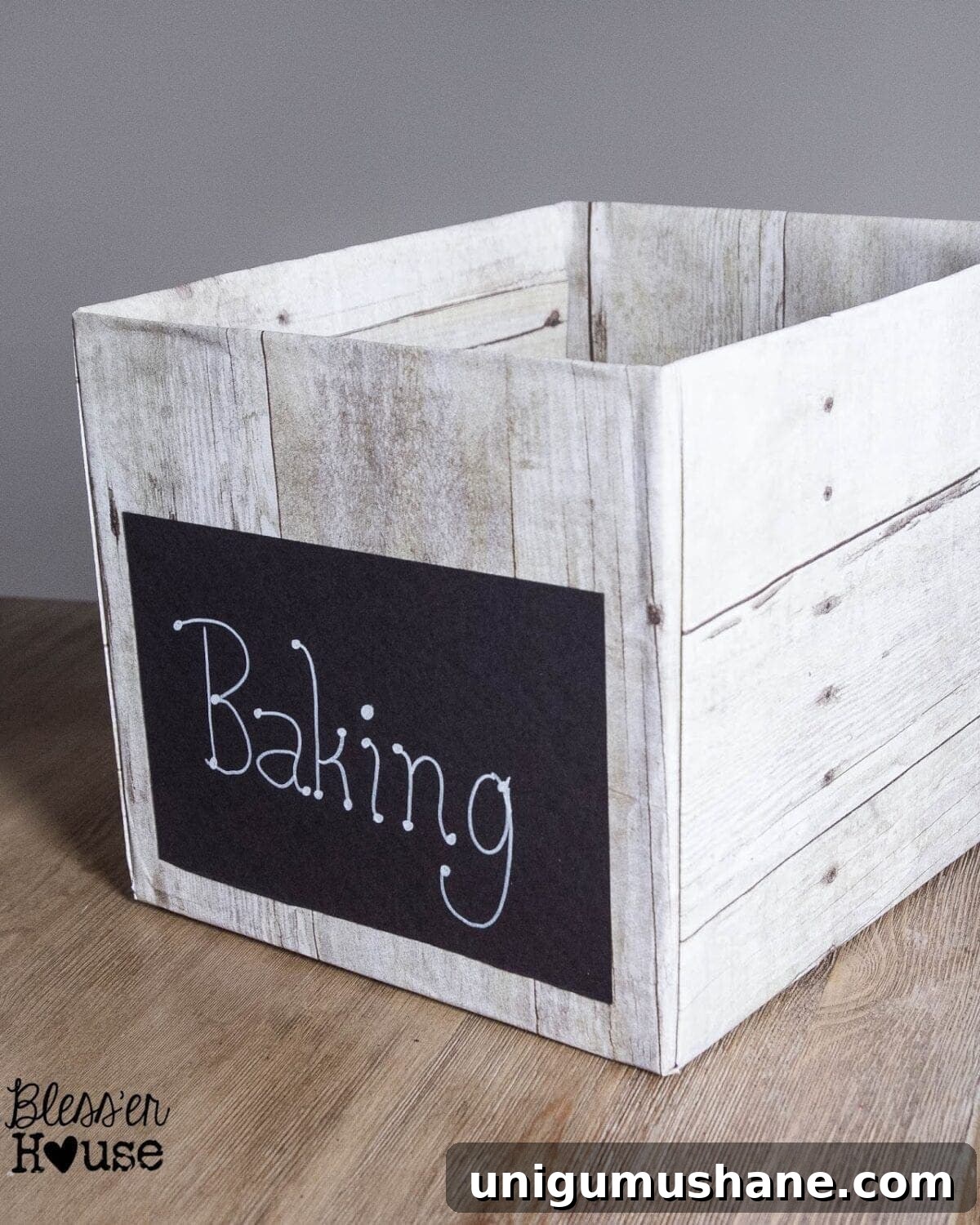
For the final two sides, fold the paper edges into the corner and Mod Podge in place. Let the glue dry thoroughly before handling. The finished crates look surprisingly like real weathered wood in person; the pattern photographs a little more obvious, but in your pantry they will read as authentic rustic crates.
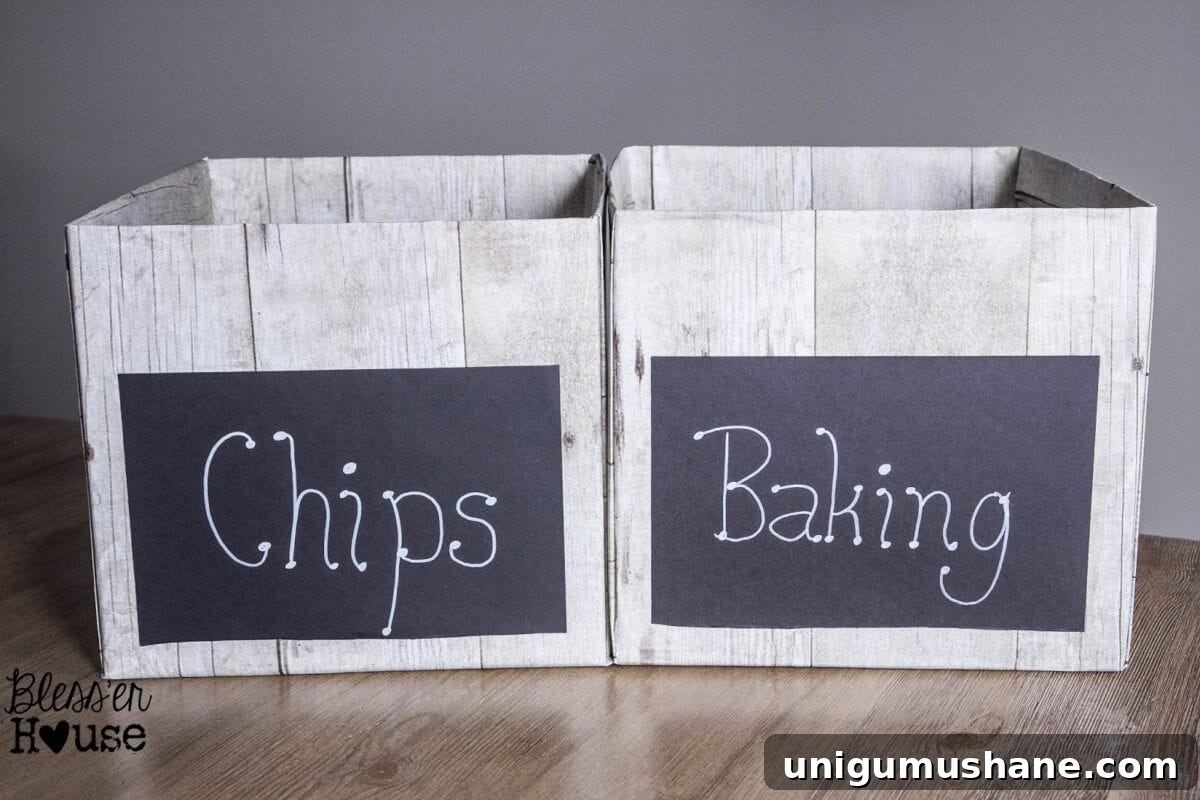
To make chalkboard-style labels, fold black cardstock in half and cut tags to size. Attach them with removable adhesive strips so you can relabel without damaging the faux wood finish. Write on the labels with a permanent chalk marker for a tidy, farmhouse look.
I considered buying real wooden crates or inexpensive retail versions to stain, but even the cheaper options often cost $15 each. Ten crates would cost more than $150, whereas these DIY crates cost only the price of craft paper and a little Mod Podge. For free boxes and a modest materials budget, you get ten attractive, functional storage bins.
My kitchen is still a bit chaotic while I finish organizing the pantry, but these crates have already helped me corral clutter and see what I actually own. Once the pantry is finished I’ll share more organization tips and a full reveal — but this project alone was a big leap forward. Using what you already have to create stylish, functional storage is a simple and satisfying way to make progress without overspending.
I’m finally getting the hang of organizing, and it feels a bit like yoga for the brain — calming and clarifying. With fewer visual distractions, I think better and feel more productive. Maybe I’ll give yoga another try someday — but this time I’ll hydrate properly before class.
Namaste,

Follow me on Bloglovin or find me on Facebook, Twitter, Pinterest, and Google+