
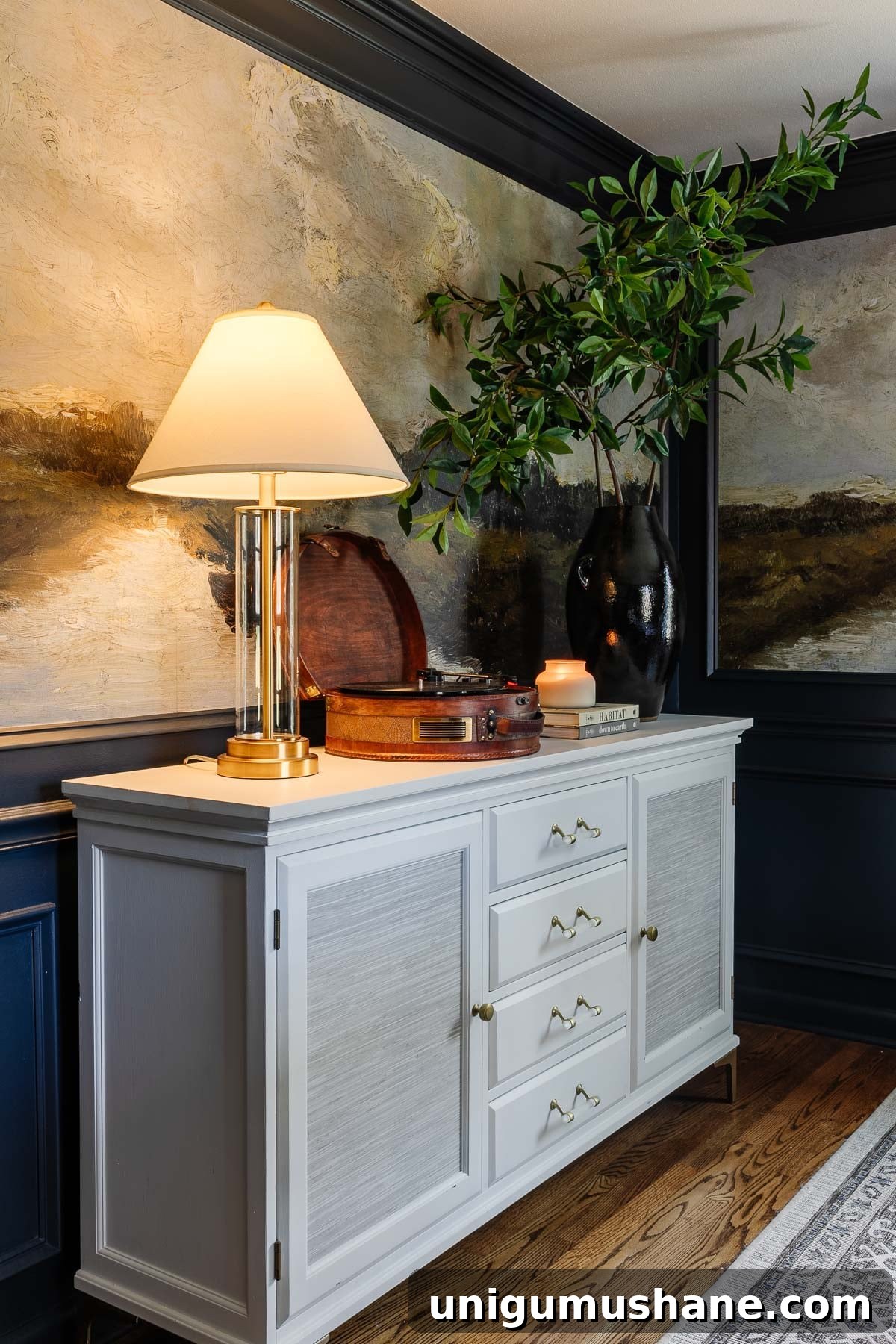
The sun set before 8pm last night, and while shorter days can feel a little melancholic, they also mean cozy lamp season is right around the corner. The change in light invites us to rethink how our homes feel and function — and that often starts with the simple question I get in my Instagram DMs: “What light bulb should I use?”
I’m answering that here with practical, room-by-room advice and clear explanations of the key terms — lumens, kelvin, and watts — so you can choose bulbs that make your home feel inviting, functional, and well-lit without the guesswork.
I’m also sharing the bulbs I recommend most: dimmable, color-adjustable LED bulbs that work in almost every room. They’re affordable, versatile, and make switching moods or tasks as easy as flipping a switch.
Sources
As an Amazon Associate, I earn from qualifying purchases. Full disclosure
Lighting has a surprising impact on mood and perception. Think about the difference between a clinical hospital room and a dim, intimate restaurant — the bulbs you choose instantly change how a space feels. The right light can make a room feel warmer, larger, calmer, or more focused. Choose incorrectly, and the space can feel harsh, sterile, or flat.
Spoiler: I use versatile, dimmable, color-adjustable LED bulbs almost everywhere. They allow me to change the color temperature and brightness without swapping bulbs, and they’re typically very budget-friendly.
Setting the Mood with Light Bulb Changes
Lighting can transform how people experience a space. For example, we redesigned a meeting room used by a women’s shelter that originally felt cold and clinical with 5000K daylight bulbs. By switching to 3000K soft-white bulbs, the room immediately felt warmer and more welcoming — more like a cozy coffee shop than an office. That subtle change helped make the environment feel safer and more relaxed for counseling and conversations.
When lighting supports the purpose of a space — whether that’s calming conversation, focused work, or relaxed socializing — the room performs better and feels more intentional.
Below I break down the essential terms and provide room-specific recommendations so you can choose bulbs with confidence.
Related: Budget Friendly DIY Home Media Room Ideas
The Difference Between Lumens, Kelvin, and Watts
Lumens
Lumens measure brightness. The higher the lumen number, the more light the bulb produces. For reference, a 450-lumen LED is roughly equivalent to a 40-watt incandescent.
Think about the task: kitchens and home offices need bright, clear light (often 800–1,600 lumens depending on fixture and room size), while living rooms and bedrooms usually feel best with softer lighting (450–800 lumens) for a relaxed atmosphere.
Kelvin
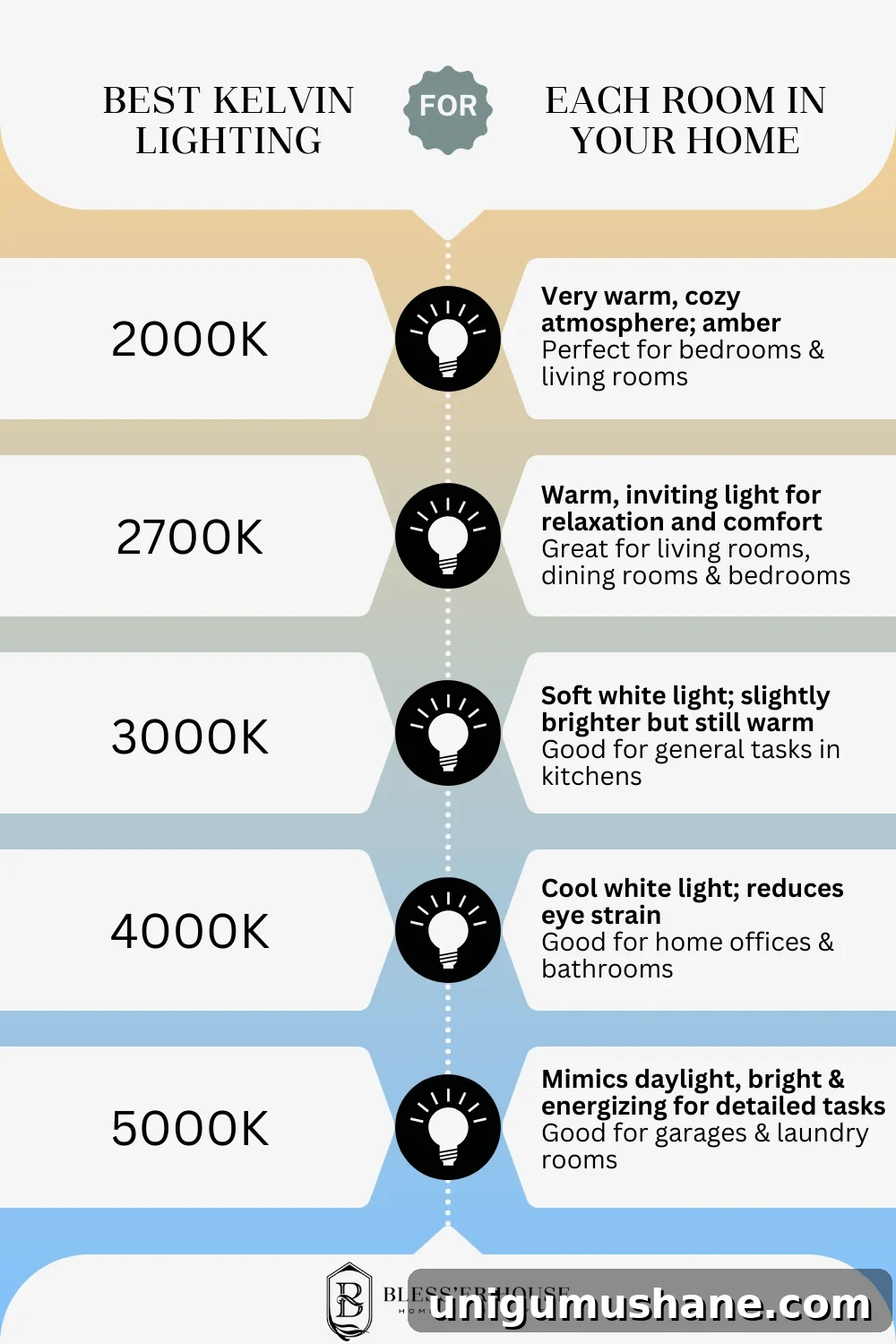
Kelvin (K) indicates color temperature. Lower Kelvin numbers (around 2,700K) read as warm and yellowish, while higher numbers (4,000–5,000K) look cooler and bluer.
For cozy spaces like living rooms and bedrooms, aim for 2,700–3,000K. For task-focused areas like kitchens and bathrooms, 3,500–4,000K generally provides better clarity. I personally find 5,000K too blue for most residential spaces and tend to prefer 3,500–4,000K for task lighting.
In our media room we use 3000K soft-white bulbs for everyday coziness and flip on 5000K daylight bulbs in can lights when we need extra visibility. Lately I’m moving those task lights toward 4000K to reduce the blue cast.
Watts
Watts measure energy use rather than brightness. With LED bulbs, wattage is low even when brightness is high. A typical LED that replaces a 60-watt incandescent might only use 8–12 watts while producing equal lumens.
When choosing LEDs, prioritize lumens and color temperature; watts are useful mainly to estimate energy consumption and compare efficiency.
Best Lighting by Room
Living Room
Use warm, soft light (2,700–3,000K) and dimmable LEDs at roughly 800–1,100 lumens for versatility. Table lamps and floor lamps layered with overhead fixtures create depth and a cozy atmosphere.
Kitchen
Choose bright, functional light with 1,100–1,600 lumens and a color temperature between 3,000–4,000K. LEDs are ideal for clear visibility during prep and cooking.
Dining Room
Go warm and inviting (2,700–3,000K). Use dimmable bulbs around 800–1,100 lumens in chandeliers or pendant fixtures so you can adjust the mood for dinner versus everyday use.
Bedroom
Opt for soft, warm light (2,000–2,700K) with dimmable bulbs in the 450–800 lumen range. Layer bedside lamps and overheads to create a calm, cozy retreat.
Bathroom
Choose clear, bright light for grooming: 3,000–4,000K and 800–1,100 lumens are a good target. Daylight or cool-white LEDs help with tasks, especially in windowless bathrooms.
Home Office
For focused work, choose bulbs that mimic daylight (4,000–5,000K) to reduce eye strain. Aim for 800–1,600 lumens across task lighting and overheads so the space feels bright and productive.
Hallways and Entryways
Choose inviting light (2,700–3,000K) with moderate brightness (450–800 lumens). LED bulbs save energy and keep running costs low while making these transitional spaces feel welcoming.
How to Estimate How Much Light a Room Needs
Room size and available natural light determine how many lumens you need. I use an online lighting calculator to estimate lumens per square foot and the number of fixtures required for a particular room. This helps match bulb choices to tasks — whether it’s a desk lamp, kitchen ceiling lights, or bedside reading light.
My Favorite Light Bulb
When I’m unsure, I reach for 3000K bulbs as a baseline and choose lumens based on the room’s function. My go-to bulbs are dimmable, color-adjustable LEDs that let me change color temperature and brightness from the same fixture. They simplify lighting decisions and are a great value for most homes.
If you want one reliable, versatile option: pick dimmable, tunable white LED bulbs around 3000K with adjustable lumens. They’ll handle most rooms well and let you tweak ambiance without changing fixtures.
More Lighting Tips for Your Home
Layer ambient, task, and accent lighting to create depth and flexibility. Use dimmers where possible to control mood, and choose LEDs with a high Color Rendering Index (CRI) for truer color and better visual comfort. Finally, match bulb shape and base type to your fixtures and consider smart bulbs if you want remote control and scheduling.
4 Best Flame Light Bulbs for a Gas Lantern Look: Ranked
How to Install a Picture Light Without Hardwiring
The Best Wireless Lights from Amazon