
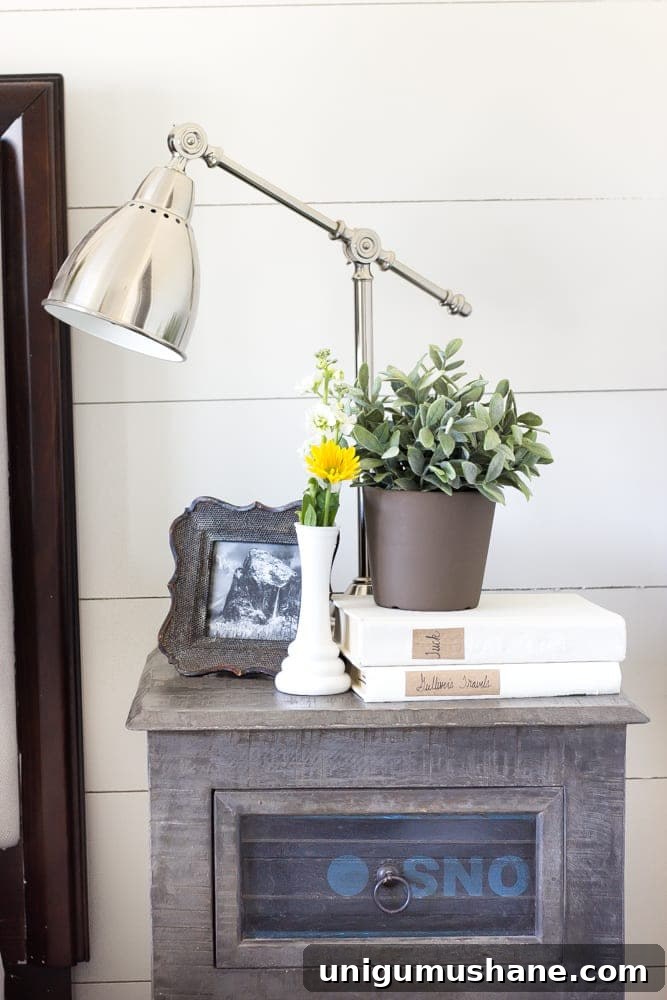
Tips for Styling Vignettes Like a Designer: Simple Rules for Mantels, Tabletops, Shelves, Dressers, and Nightstands
I’m putting my teacher hat on today.
It was tucked way in the back of my closet behind a bridesmaid dress I’ll probably never wear again and a pair of skinny jeans that haven’t fit since 2009. (Closet cleanup might be coming soon.)
Even though I haven’t taught in a classroom in a while, I asked you all a question earlier this week and many of you asked for clear, step-by-step styling tips. I get it—staring at an empty mantel or shelf can feel intimidating. The good news is that most of the pieces you need are likely already around your home.
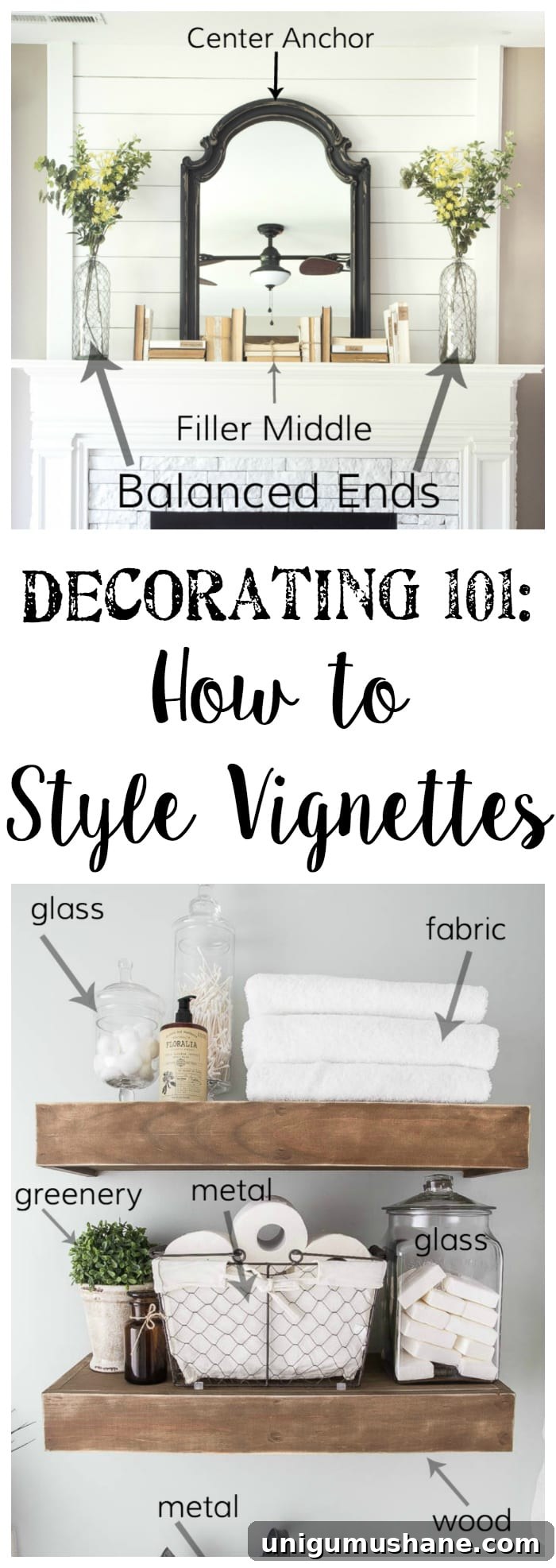
I don’t claim to be a formally trained interior designer. I study what inspires me and I’ve developed a simple system that makes styling any flat surface—mantels, tabletops, shelves, dresser tops, nightstands—much easier. Master these six core rules and you’ll be able to create balanced, intentional vignettes that look designed rather than cluttered.
How to Style Vignettes: Six Practical Rules
- Symmetry is your best friend.
When you want a calm, curated look, aim for symmetry. Designers use it all the time because it’s visually satisfying. Start by choosing an anchor or focal point in the center—an artwork, a mirror, or an oversized object. Then place two pieces of similar height and scale on either side. Lanterns, vases, or candlesticks work well as balanced end pieces. Fill the center with books, a bowl of greenery, or a small curated collection to complete the arrangement.
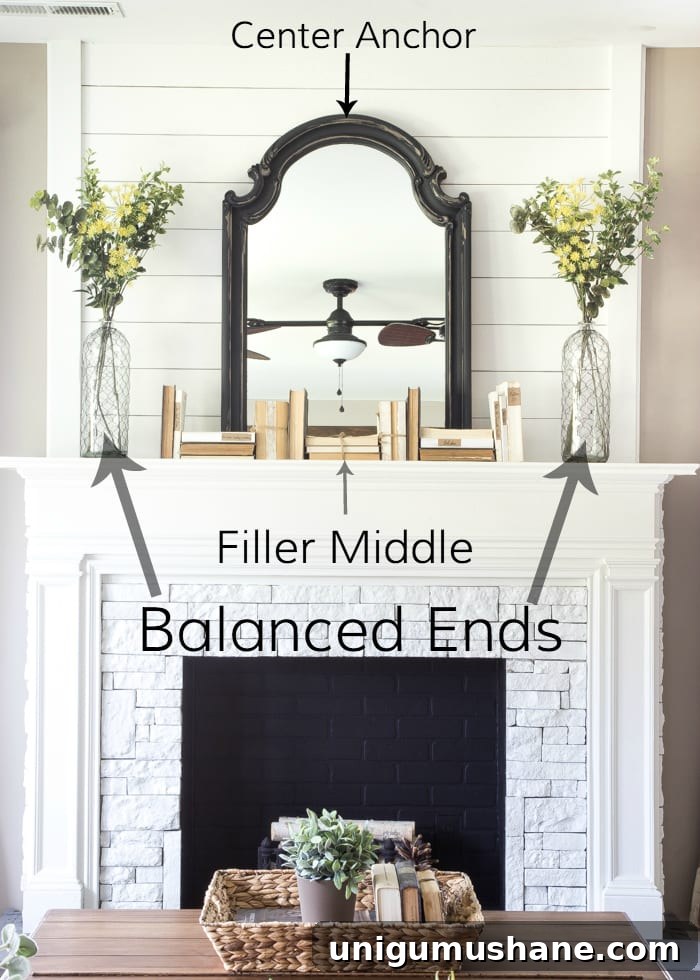
(From post: Thrifted Charcoal Mirror Makeover)
- Use groups of three or five.
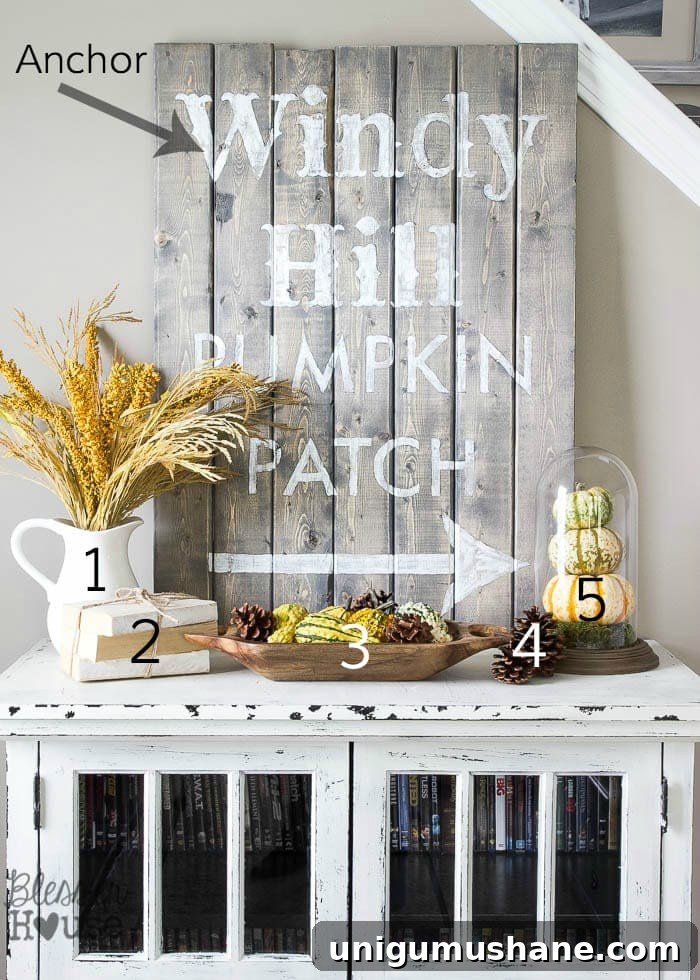
Odd numbers—especially three and five—create natural balance and rhythm. For example, use three identical candle holders as anchors and add smaller items like bottles or blooms between them. If you prefer five, arrange them so two items on each side balance a central anchor. The odd grouping makes a vignette feel intentional and layered without crowding the space.
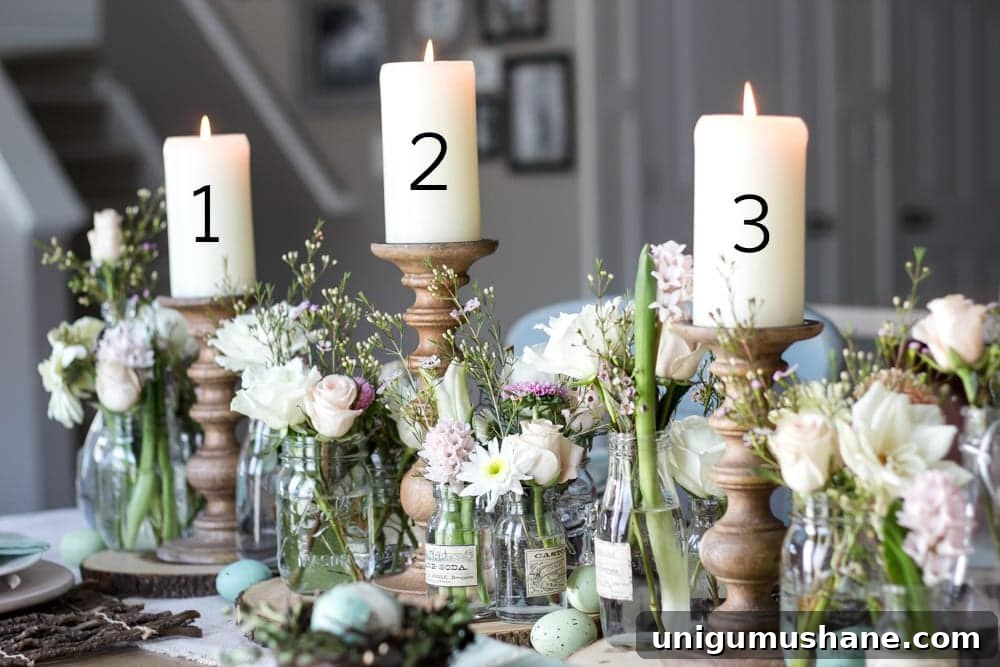
(From post: Easter Brunch Tablescape)
Another example: a wooden sign as the focal point, tall pitchers or terrariums at the ends, and books or bowls as filler. Together, those five elements feel balanced and curated.
3. Mix materials for texture. If your vignette reads as flat, introduce different materials. Aim to include wood, glass, metal, and greenery whenever possible. Paper, woven fibers, and ceramics add additional tactile interest. A variety of materials creates depth and prevents the display from feeling one-dimensional.
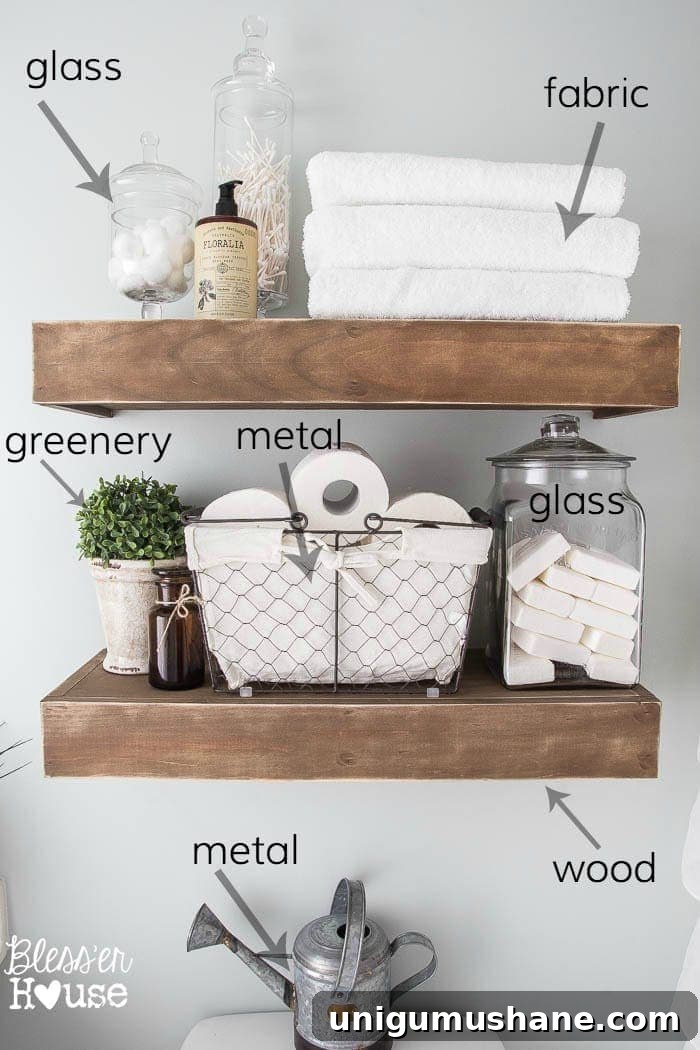
(From post: Modern Farmhouse Bathroom Makeover)
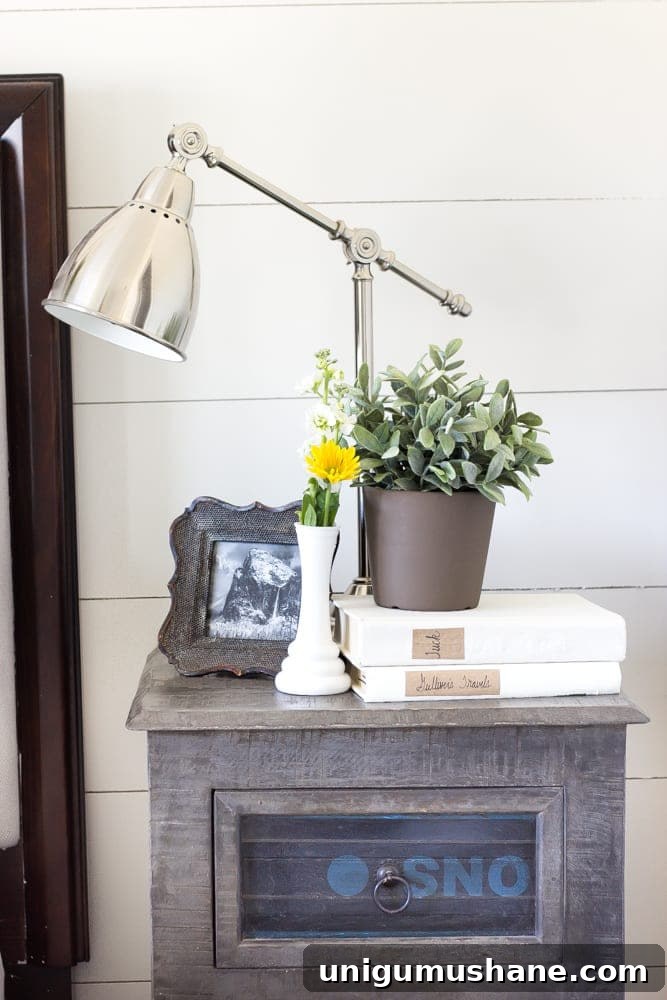
4. Always include something from nature. A sprig of greenery, a small plant, or a simple bloom instantly enlivens a vignette. Swap natural elements with the seasons—spring blossoms, summer blooms, autumn leaves and pumpkins, winter evergreens and pine cones. Natural pieces bring freshness and make styling feel effortless.
5. Layer different shapes and sizes. Include small, medium, and large items to create visual interest. Mix shapes—round, square, and vertical—to create contrast. For example, hang a circular wreath above a pair of rectangular shutters to add dimension and warmth to a buffet or mantel.
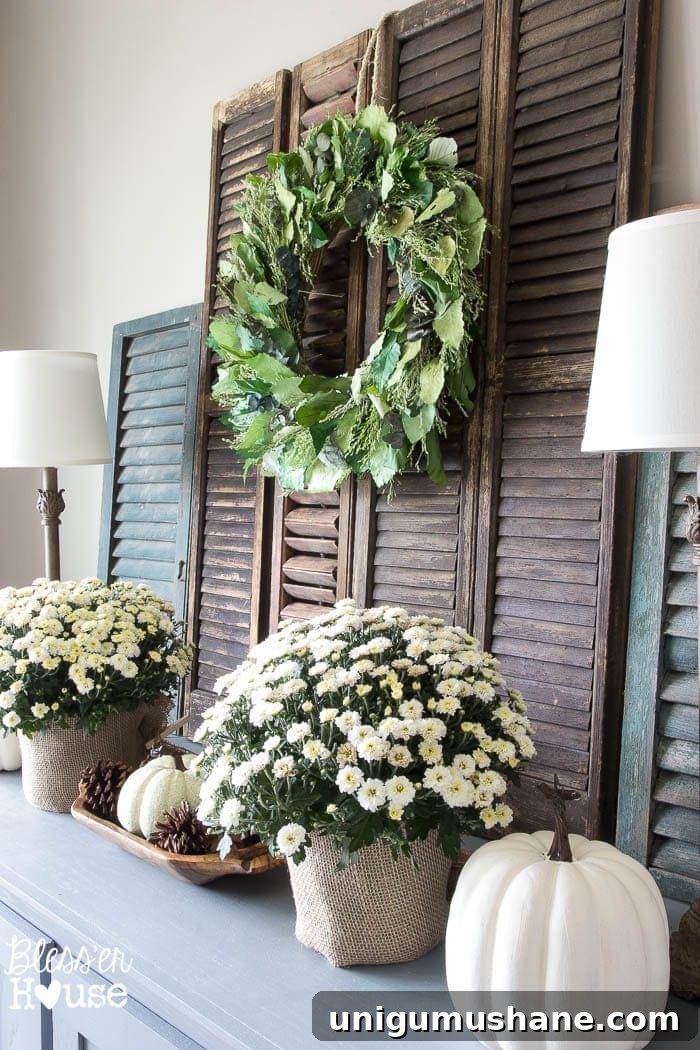
(From post: Fall Home Tour 2015)
6. Create balance. Think of a shelf like a seesaw: if you place a tall item on one side, counter it with a similar visual weight on the other. Balance doesn’t mean perfect matching, but equal visual weight. A tall frame opposite a hanging dress, or a stack of books countered by a taller vase, keeps the composition feeling grounded and intentional.
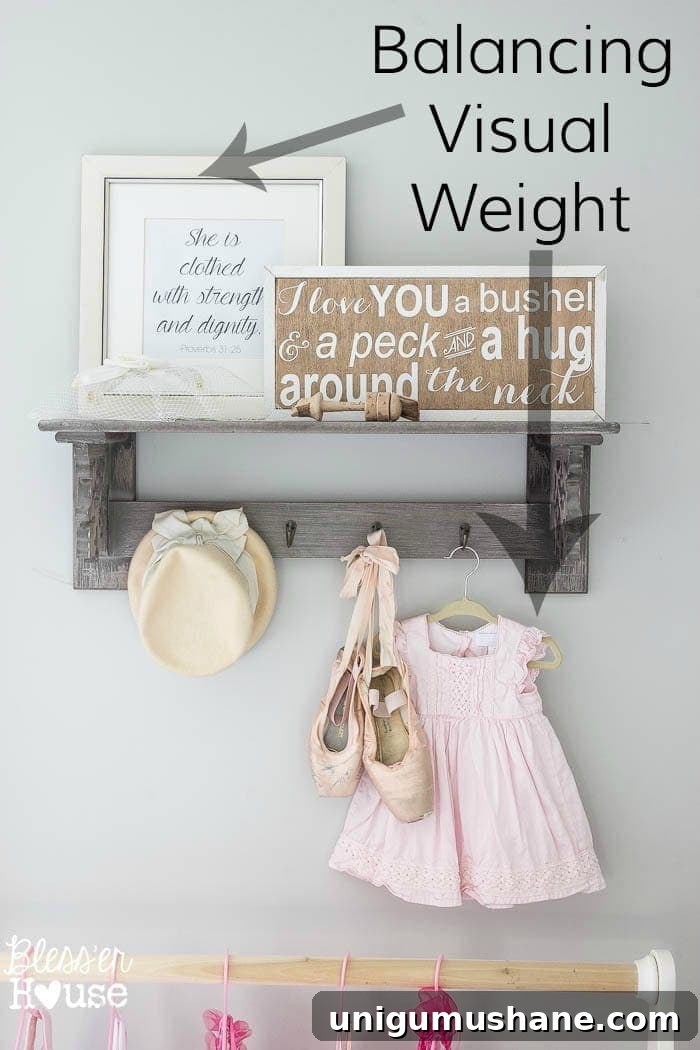
(From post: Ballerina Girl Bedroom Makeover)
Did you find these tips helpful? If you have a favorite styling trick or your own decorating rule, share it—I’m always eager to learn new approaches and see how others create beautiful, functional vignettes.