

The best way to clean a fabric sofa in 7 steps without solvent-based cleaners + a DIY sofa-cleaning solution to make upholstery bright and fresh.
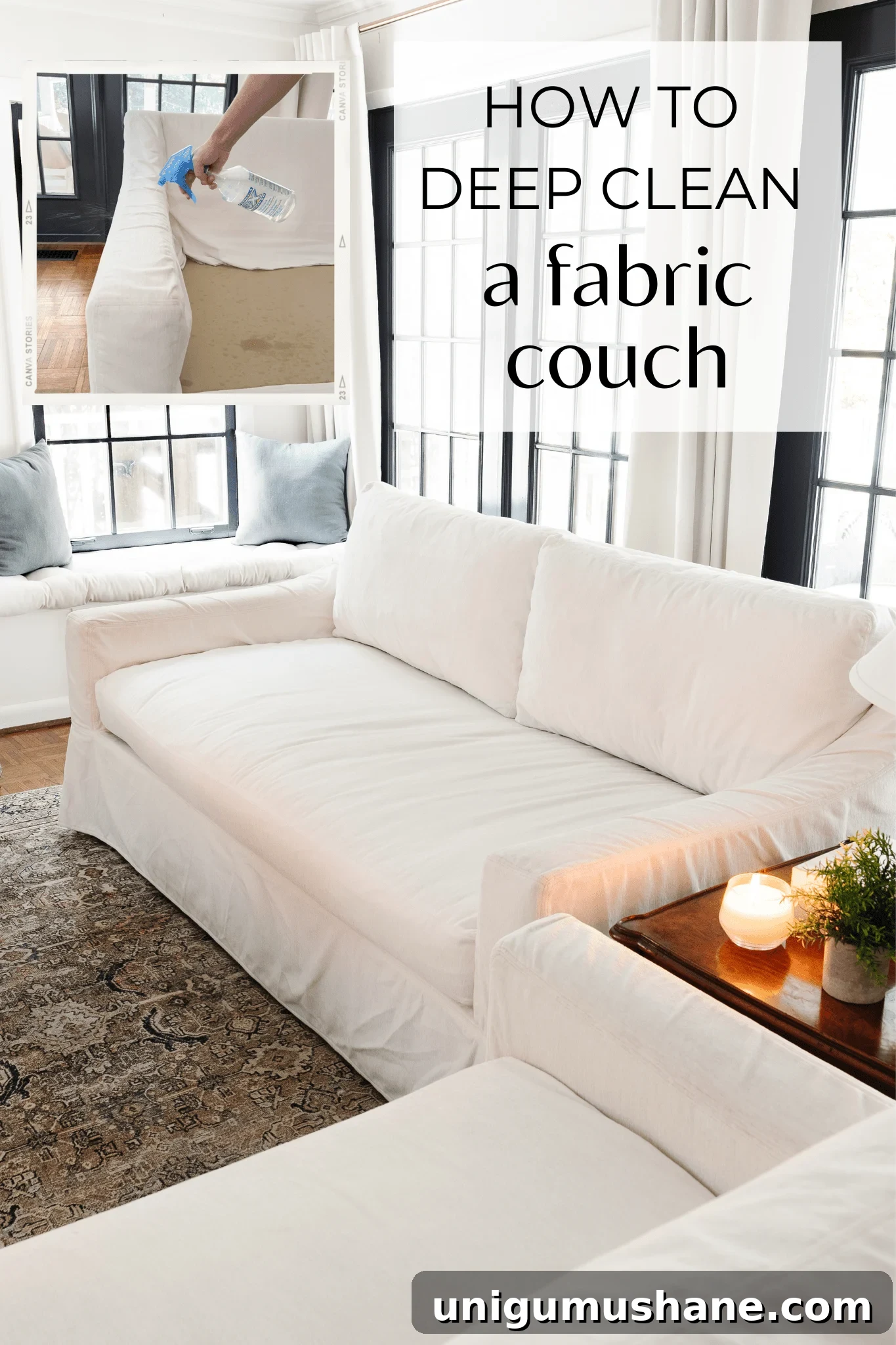
Cleaning a fabric sofa can feel like a big chore—right up there with oven scrubbing and deep bathroom cleaning—but the payoff is worth it. A thorough cleaning refreshes the upholstery, improves the room’s look, and can extend the life of the sofa. Below is a simple, effective, solvent-free method to deep clean fabric sofas and upholstery, plus a DIY cleaner you can mix at home.
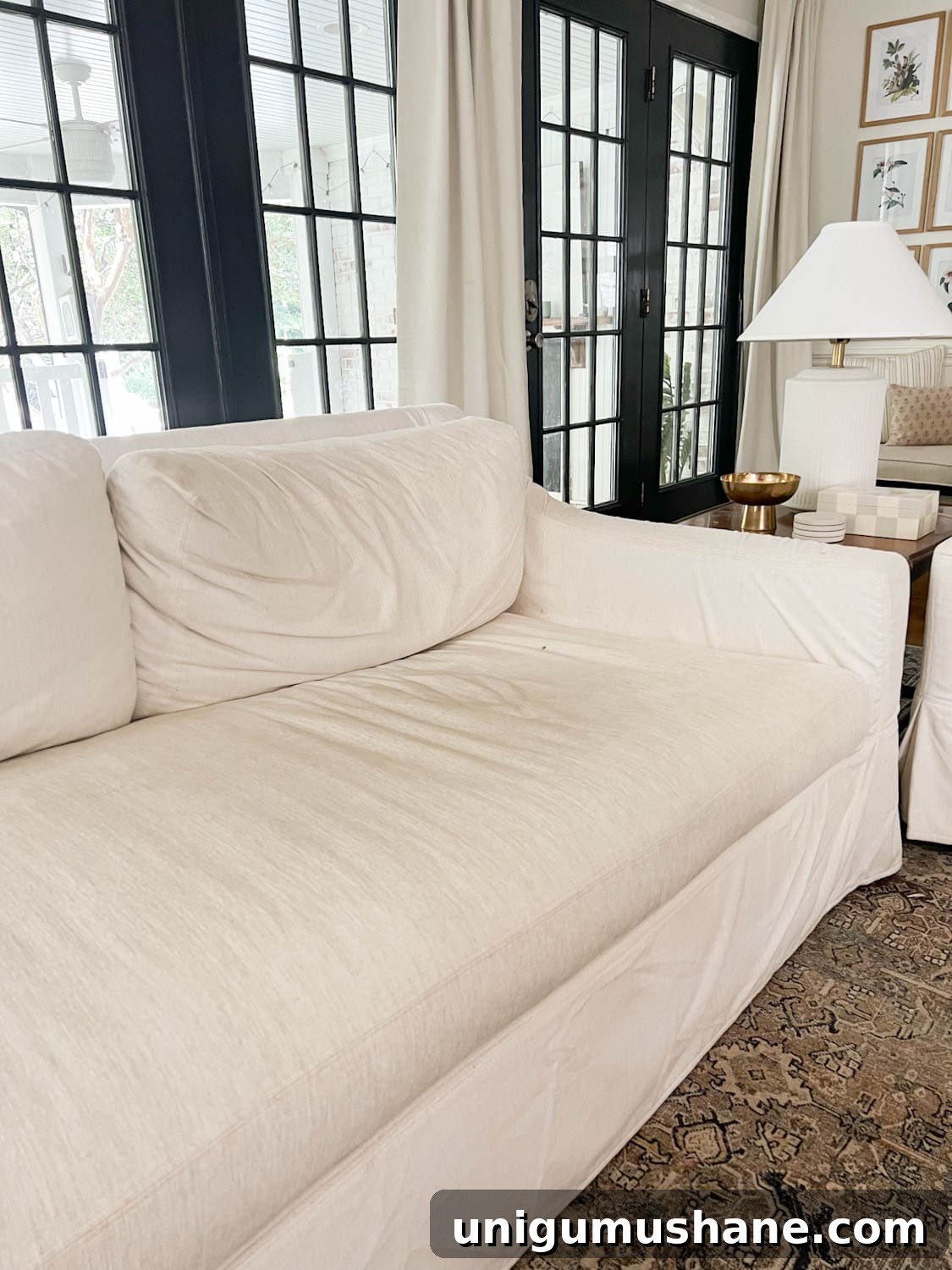
Over the years we’ve tested many couches and cleaning approaches. I expected Sunbrella covers to stay bright with minimal care, but even performance fabrics will ding over time—especially in a household with kids and pets. Regular care and a seasonal deep clean will keep a fabric sofa looking and smelling fresh.

Step-by-step guide to clean a fabric sofa
Do a deep clean once or twice a year and vacuum monthly; spot-treat spills immediately to prevent permanent stains. This method works for removable slipcovers and attached upholstery alike and is especially useful for white or light-colored fabrics.
Supplies
- Vacuum with an upholstery wand or brush attachment
- Baking soda
- Oxi-type whitener (optional for removable covers)
- Spray bottle
- Distilled water
- Clear dish soap (mild)
- Distilled white vinegar
- Optional: upholstery cleaning machine for deeper extraction
Before you start
Spot-test any cleaner on an inconspicuous area first. Dampen a cloth with your solution and rub a small hidden patch; if color transfers or the fabric changes, stop and follow the manufacturer’s cleaning code on the sofa label.
Upholstered furniture cleaning codes
Check the care tag for these codes to decide what cleaners to use:
W – Water-based cleaners or foam are safe (use distilled water when possible).
S – Only use solvent-based cleaners.
S/W – Either water-based or solvent cleaners are acceptable; distilled water is preferred for water-based use.
X – Vacuum or brush only; do not apply liquids.
Step 1 – Remove cushion covers when possible
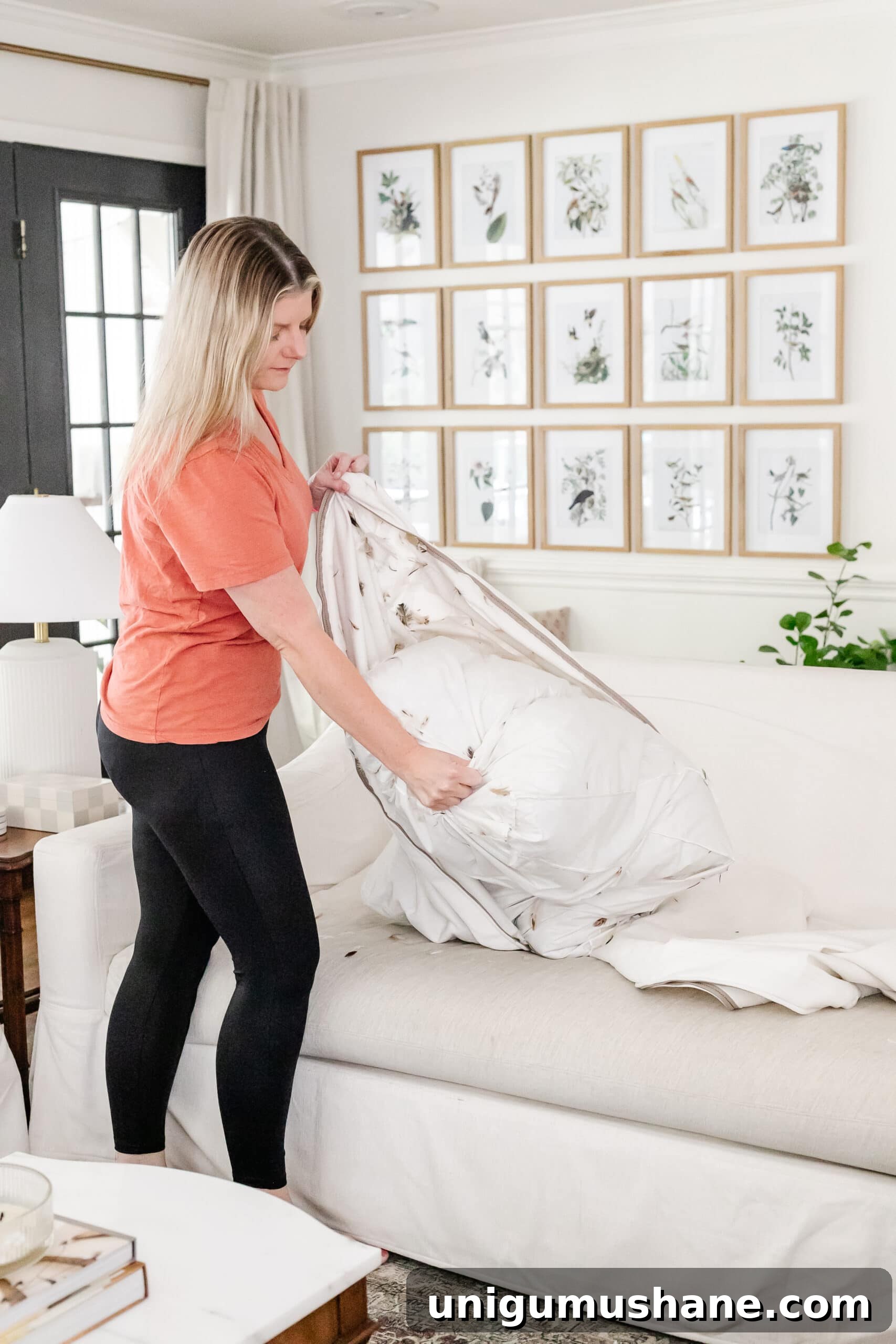
Unzip and remove cushion covers to wash separately. Shake out loose debris, and fluff the inserts. If you find pet stains inside the cushions, treat them with an upholstery steam cleaner or by hand-cleaning according to the fabric code. If covers are not removable, continue with the deep-clean steps for attached upholstery.
Step 2 – Wash removable covers on cold and gentle
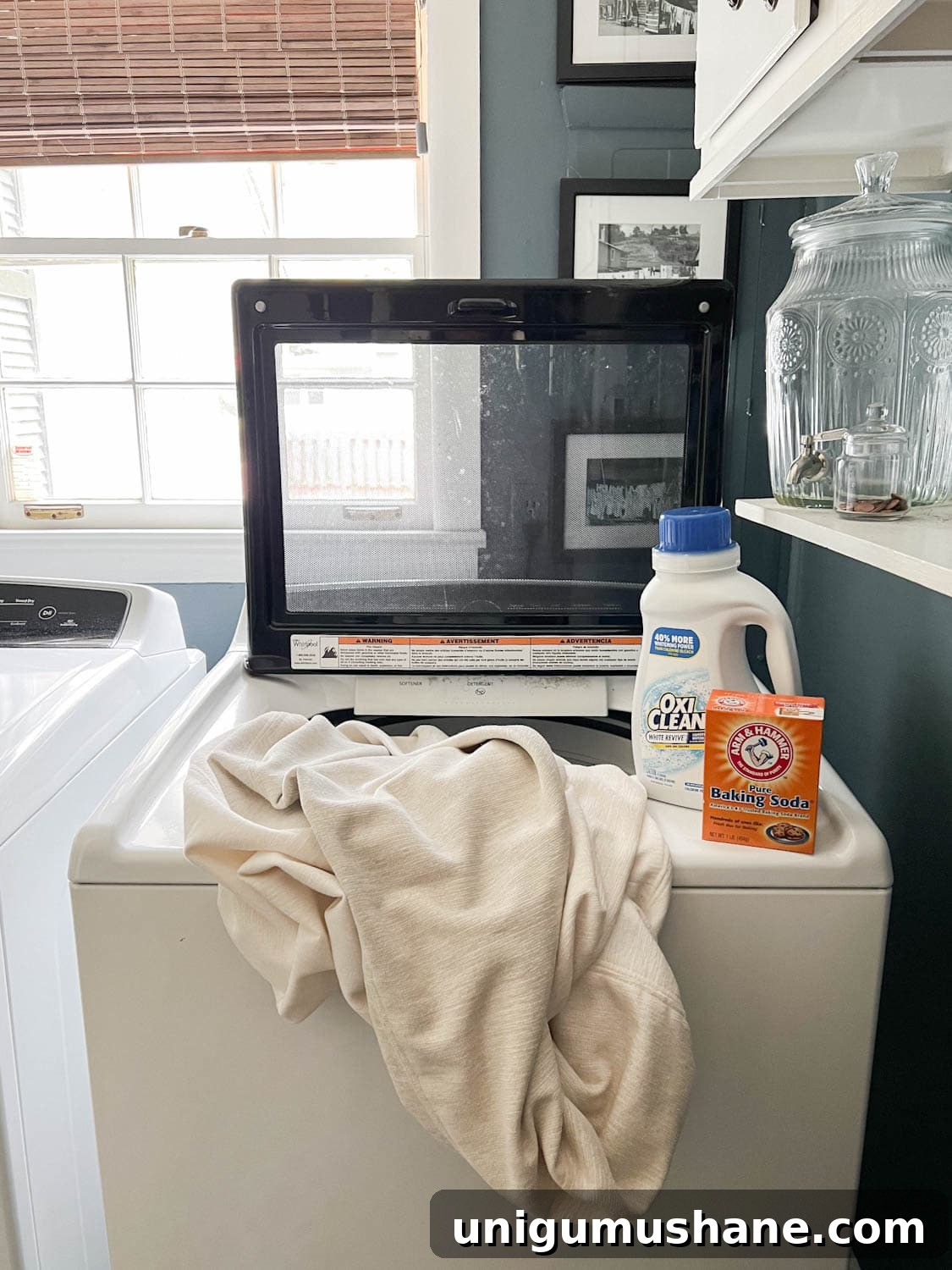
For white or light covers, wash on a cold, gentle cycle. Add an oxygen-based whitener and a cup of baking soda to brighten dingy whites without bleach. Avoid hot water, which can shrink covers. Line-dry until slightly damp—placing covers back on cushion inserts while still damp helps ease wrinkles and prevents shrinking.
If you must wash a full slipcover, do it separately to avoid overcrowding the machine.
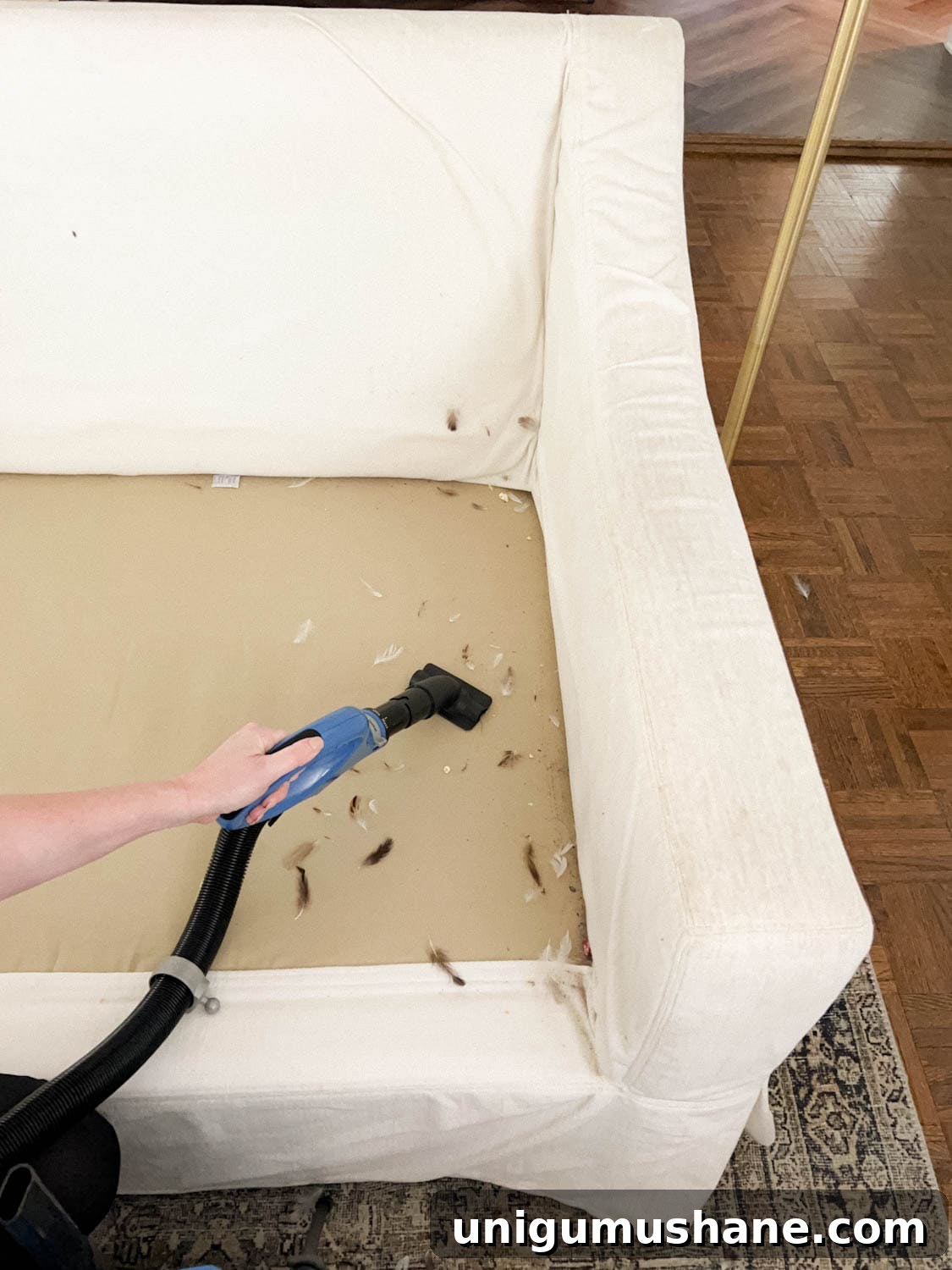
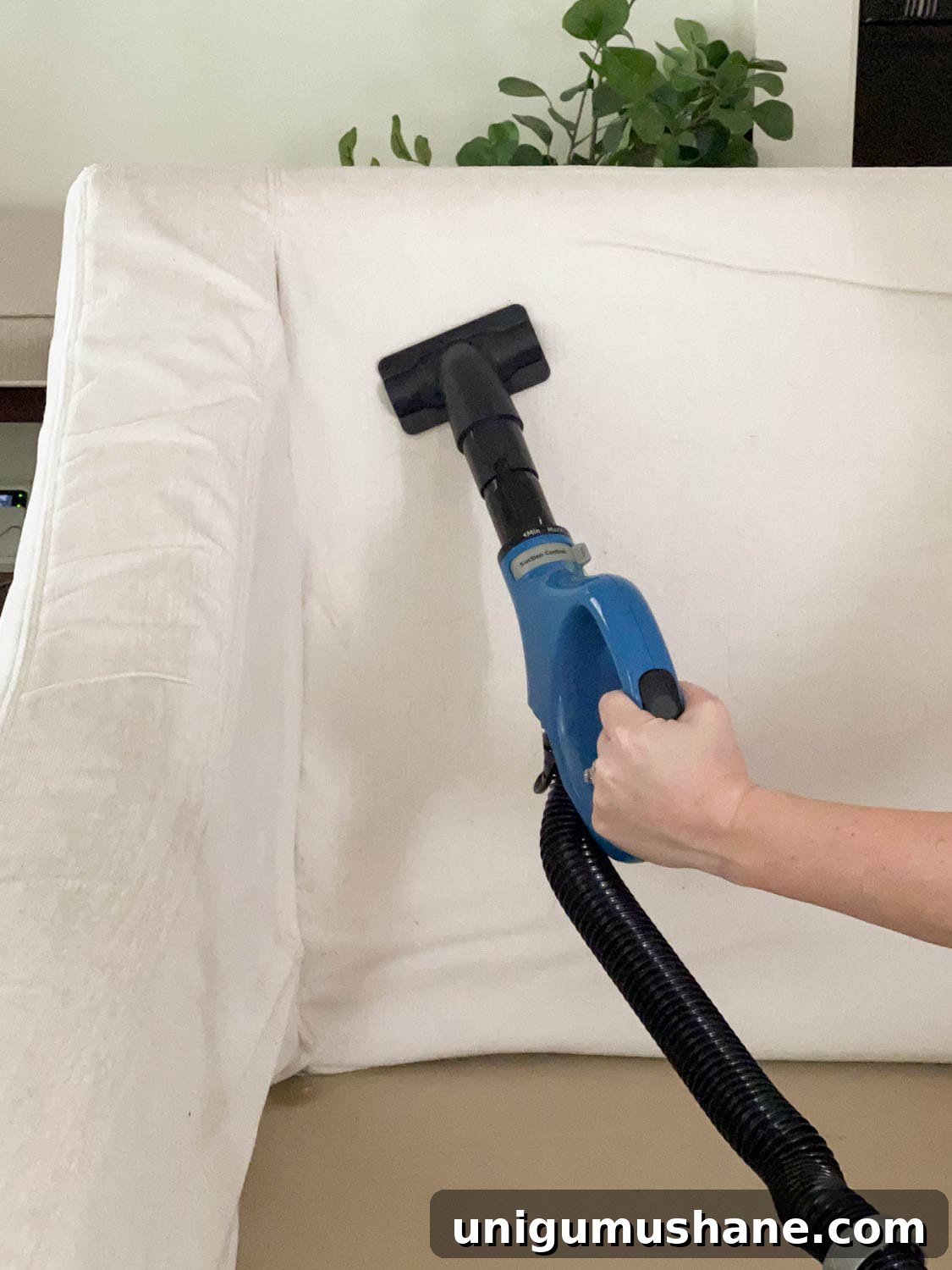
Step 3 – Vacuum the entire sofa
Use a vacuum wand or upholstery brush to remove crumbs, dirt, pet hair, and debris from the cushions, seams, and crevices. Thorough vacuuming prepares the fabric for spot cleaning and deodorizing.
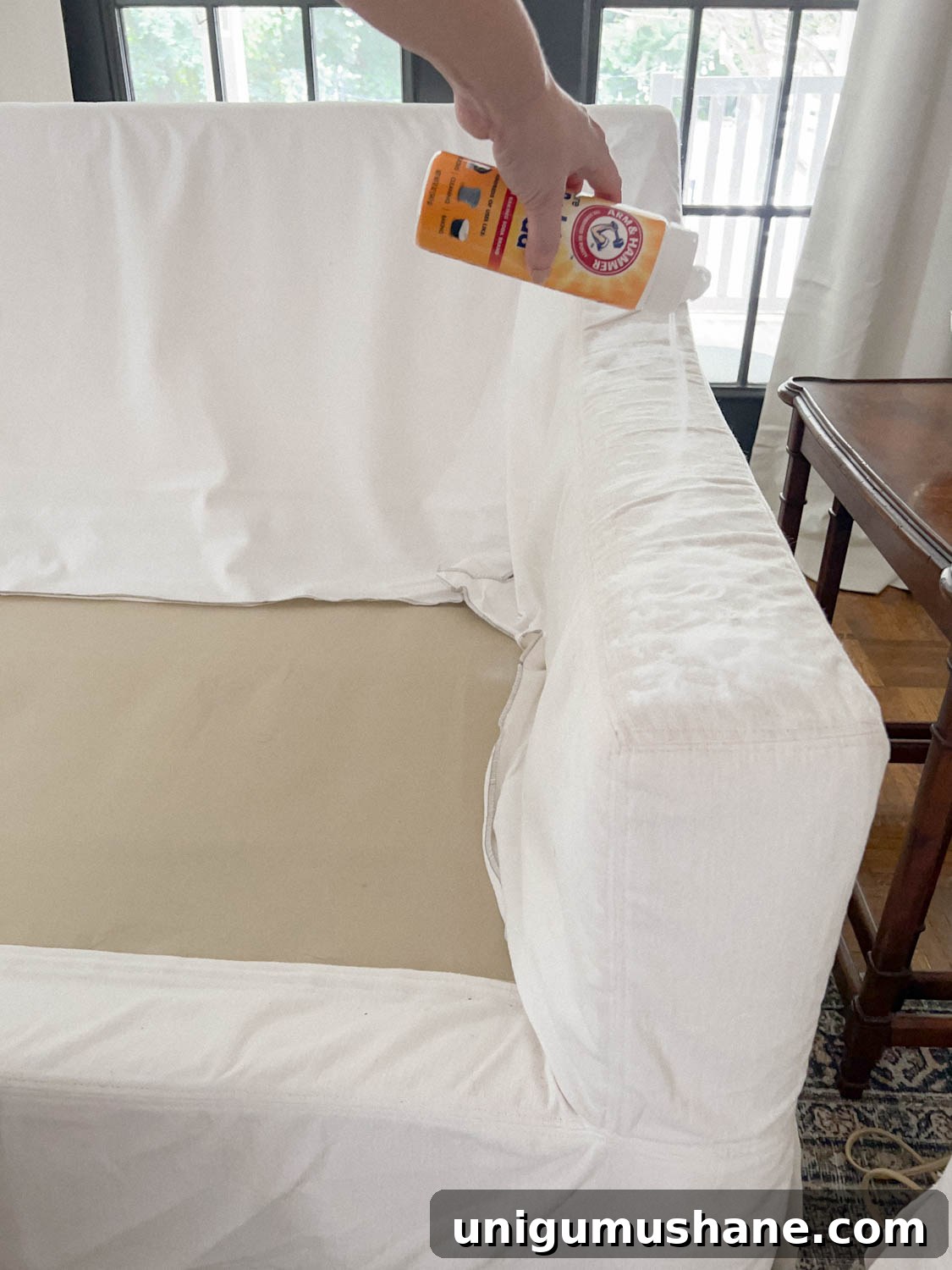
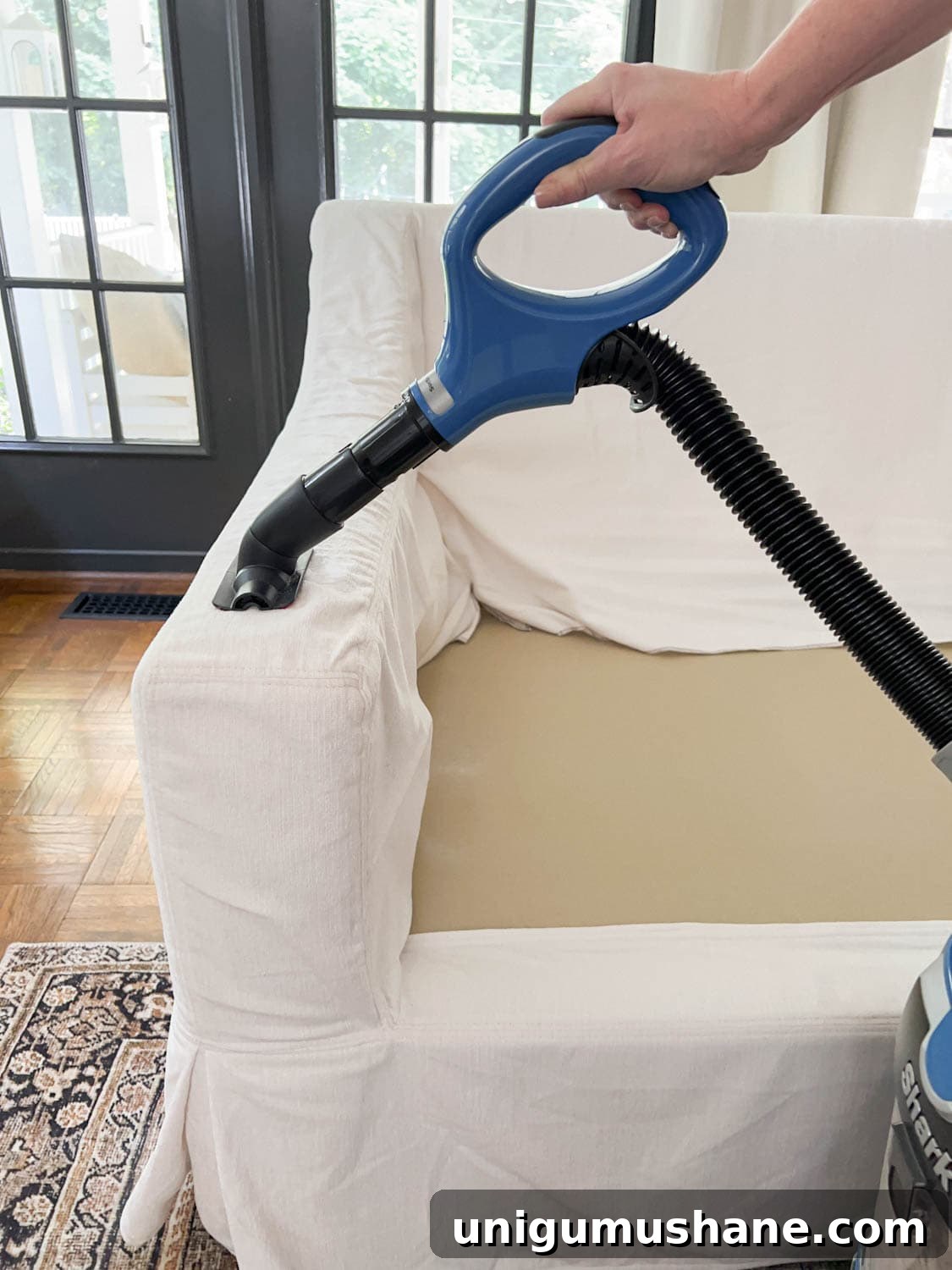
Step 4 – Deodorize with baking soda
Sprinkle baking soda over the whole sofa, concentrating on high-traffic areas like arms and seat edges. Let it sit for at least 30 minutes to absorb odors, then vacuum it up thoroughly with the wand attachment.
Step 5 – Make a DIY sofa cleaner
If the care tag allows water-based cleaning, mix a simple, effective cleaner in a spray bottle:
- 2 cups distilled water
- 2 tablespoons clear dish soap
- 2 tablespoons distilled white vinegar
This mild solution lifts everyday dirt and grime without harsh solvents. Always test a hidden spot first.
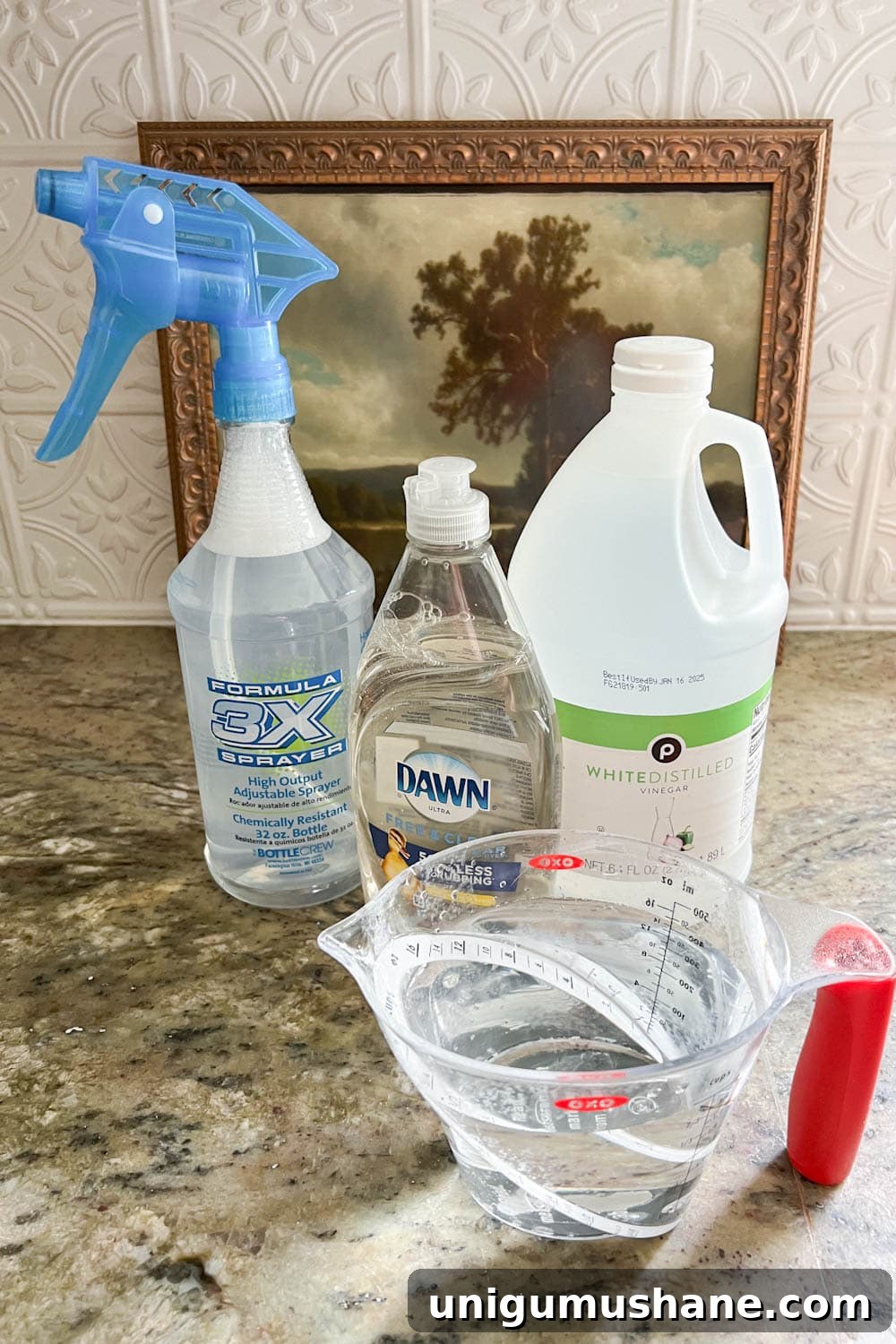
Step 6 – Apply the cleaner
Lightly mist the upholstery until just damp—avoid soaking the fabric or foam beneath. Work in sections so you can clean and dry each area before moving on.
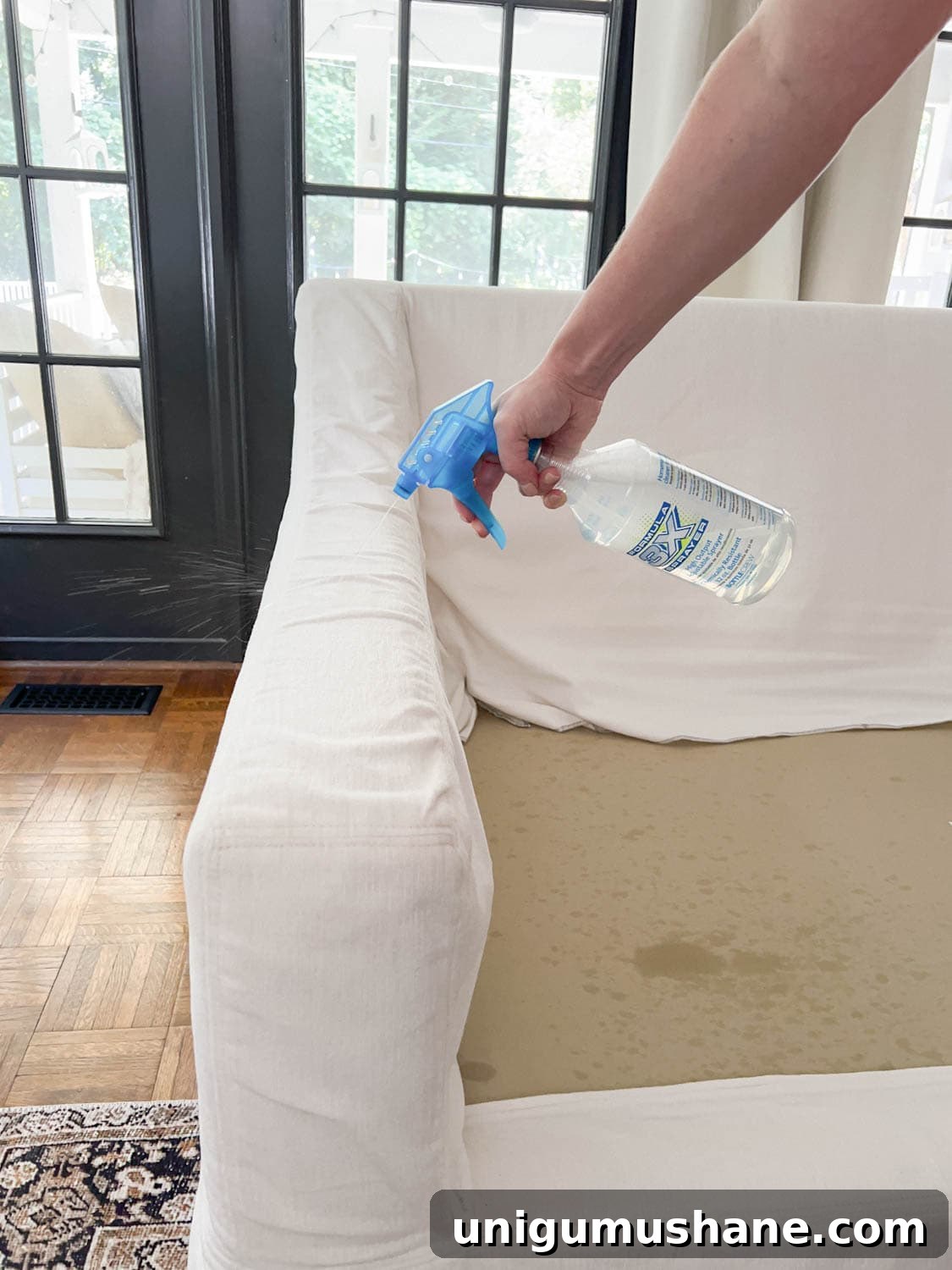
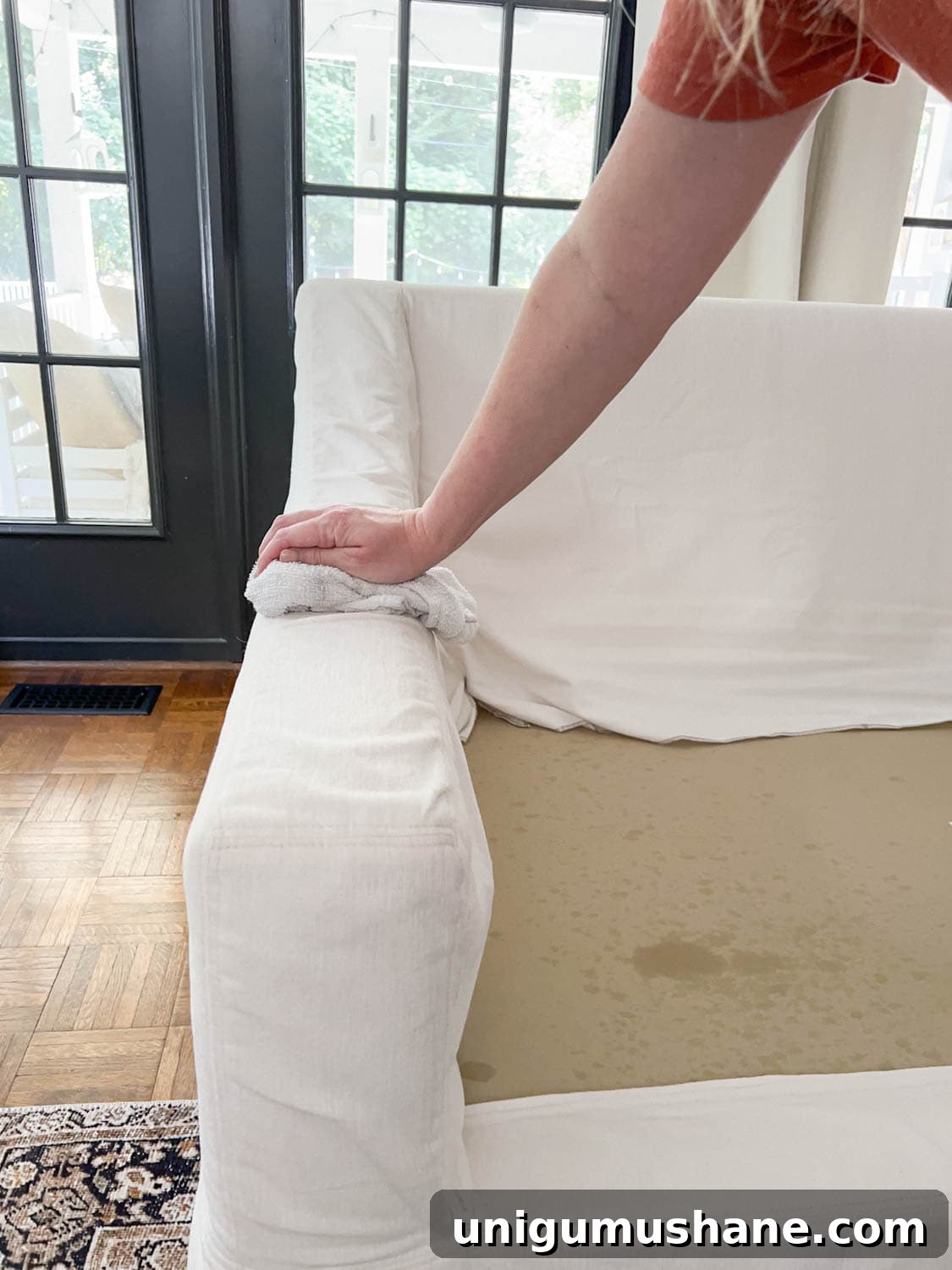
Step 7 – Wipe and dry
Use a dry, lint-free cloth to blot and gently wipe away loosened dirt and residue. For a deeper clean, follow with an upholstery extractor or portable cleaner if you have one. Allow the sofa to air dry fully before replacing cushion covers or sitting down.
After cleaning
A deep clean will restore brightness, reduce odors, and leave fabric feeling fresh and fluffy. Regular maintenance—vacuuming, spot-cleaning spills quickly, and seasonal deep cleans—helps protect the fabric and keeps your sofa looking newer longer.
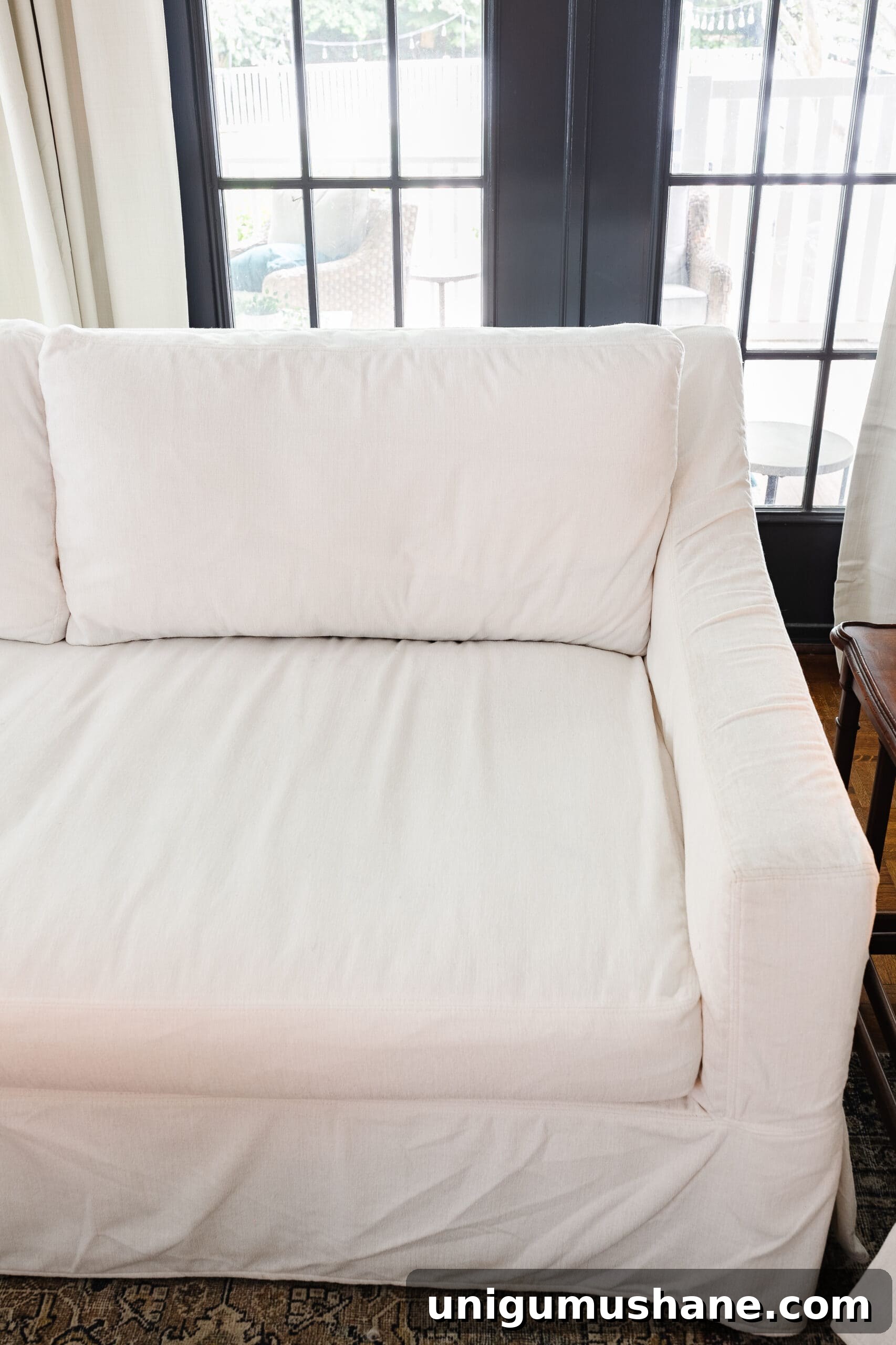
Cleaning a sofa is a satisfying project. Once finished, it’s pleasant to refresh the room with a few decor touches and enjoy a clean, comfortable living space.

Living room decor sources
- Wall color: Benjamin Moore Swiss Coffee
- Door color: Benjamin Moore Wrought Iron
- Trim color: Benjamin Moore Simply White
- Couches and slipcovers
- Curtains and curtain rod
- Area rug
- Coffee table and nesting end table (marketplace finds)
- Ceiling fan (painted finish)
- Table lamp and picture frames
- Audubon bird art prints

More house cleaning ideas
- How to remove stains from marble
- The best vacuums and cleaning tools
- Deep cleaning checklist printable
- How to clean wood furniture to make it look new
- How to clean outdoor cushions and furniture
Frequently asked questions
Synthetic microfiber sofas are among the easiest to clean and stand up well to households with children and pets.
Vacuum the entire sofa thoroughly, then sprinkle baking soda across all surfaces and in crevices. Let it sit for one to two hours to absorb odors, then vacuum it up. Repeat as needed.