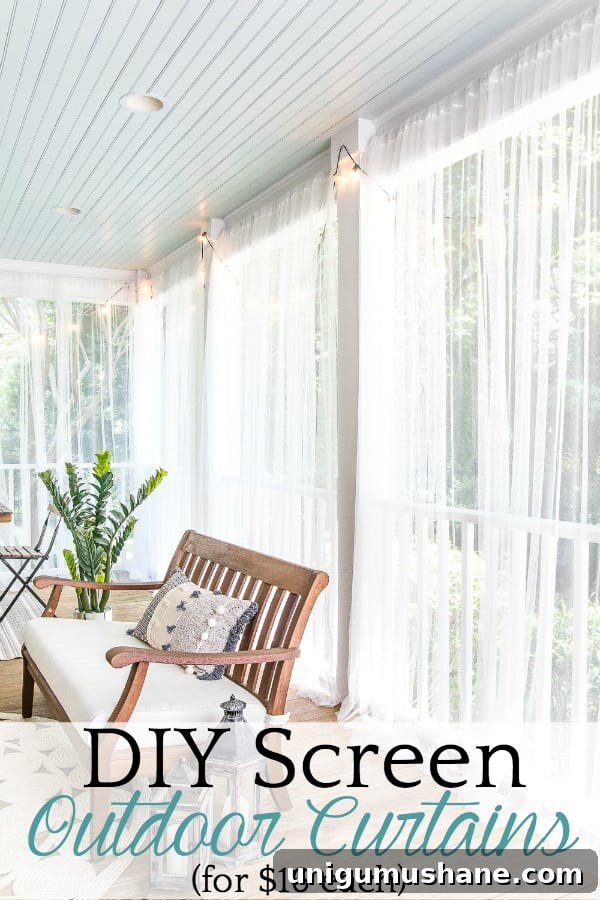
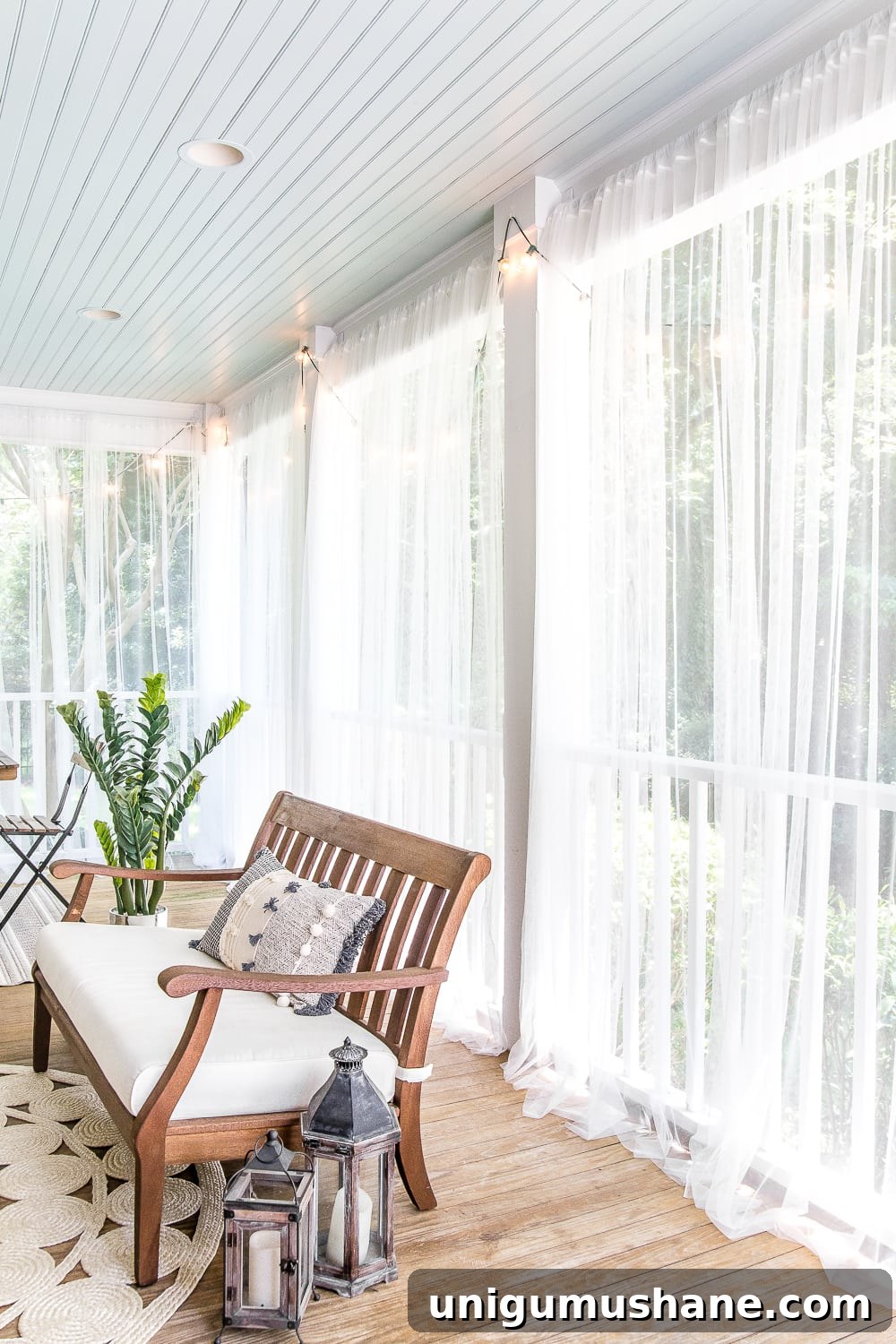
How to protect your porch from bugs using a quick, affordable DIY outdoor curtain solution.
If you’ve been following along on Instagram Stories, you might have seen this idea coming. I love when a simple lightbulb moment turns into something that works even better than expected. Over the past year we’ve been slowly refreshing our back porch, and this little hack made a huge difference.
After limewashing the brick and repainting the doors this winter, the porch felt brighter—but summer bugs were still a challenge, especially at dusk. We didn’t want to install permanent screens because we like the open, airy feel and the visual connection to the backyard.
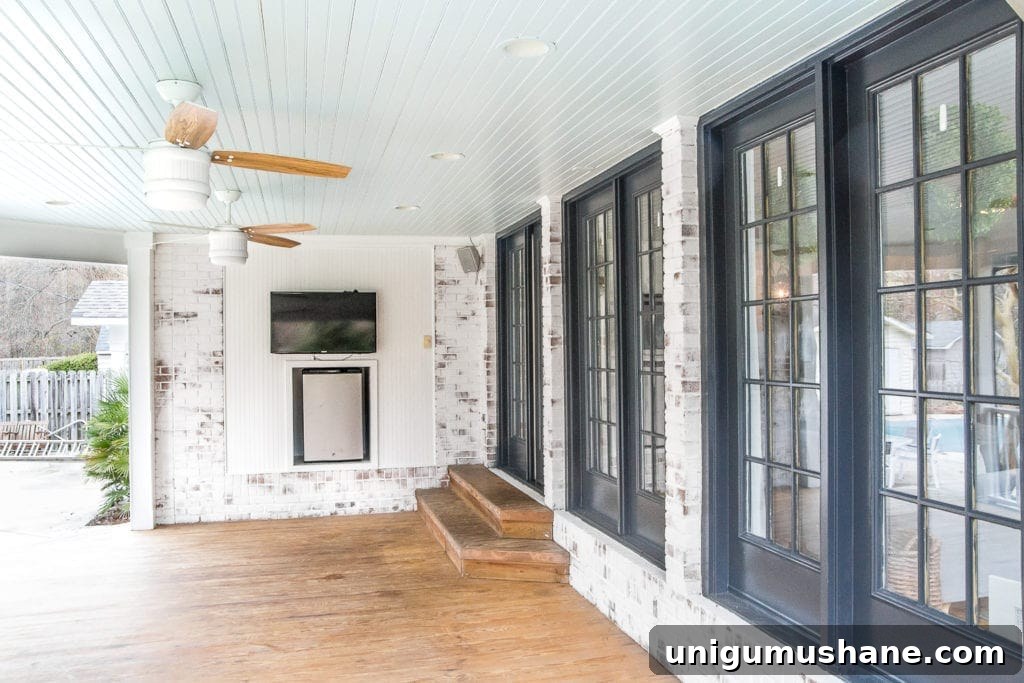
Curtains as a Screen Porch Alternative
I spotted inexpensive mosquito net curtains at IKEA for about $5 a pair and immediately thought: why not use lightweight netting as outdoor curtains that function like removable screens? The result is a porch that feels open but can be quickly closed off when bugs come out.
Supplies
(Some of these items were sourced affordably; names are provided so you can look for similar options locally.)
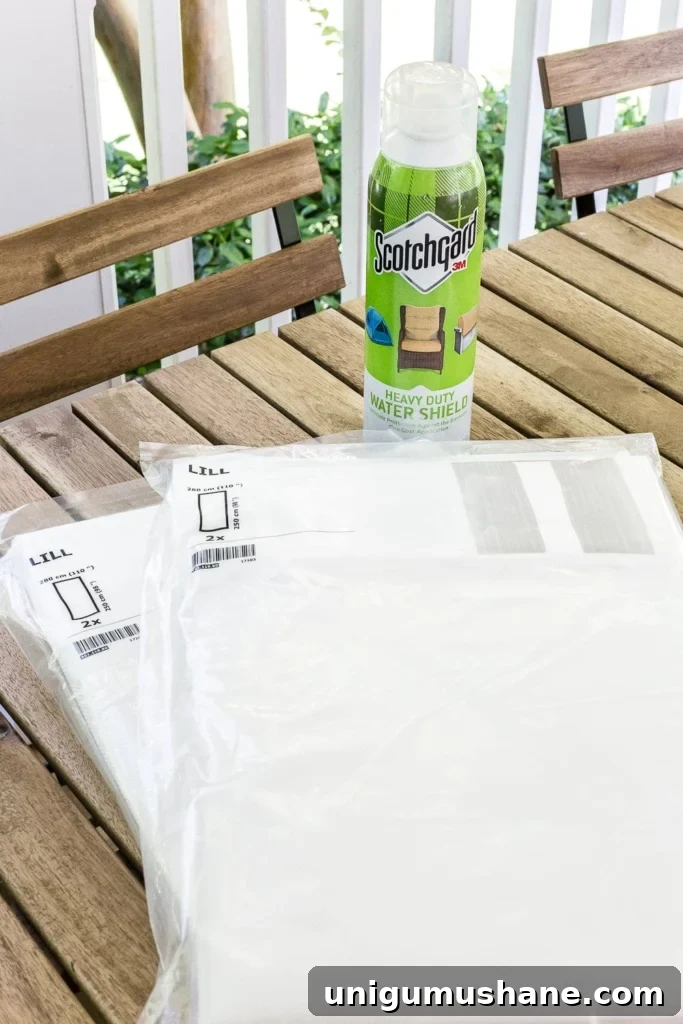
- IKEA LILL curtain panels (mosquito net-style)
- Scotchgard Heavy Duty Water Shield or similar fabric water and stain repellent
- Tension rods sized to fit your porch openings
- 5-pound Command hooks or equivalent removable wall hooks
Our total for six panels was under $100—about $16 per panel—making this a very budget-friendly way to create a screened effect without the cost and permanence of built-in screens.
Steps
Step 1 – Treat the netting with a fabric weather protector
Because these nets are lightweight and intended for indoor use, I treated each panel with a fabric protector designed for outdoor use to slow yellowing and repel moisture. I used a Heavy Duty Water Shield and sprayed both sides of each panel in a well-ventilated area, following the product directions for drying time.
Tip: Apply the spray on a warm, dry day and allow the fabric to cure fully before hanging. That reduces tackiness and gives the fibers time to absorb the protector. Reapply once a year or after heavy exposure to the elements for best results.
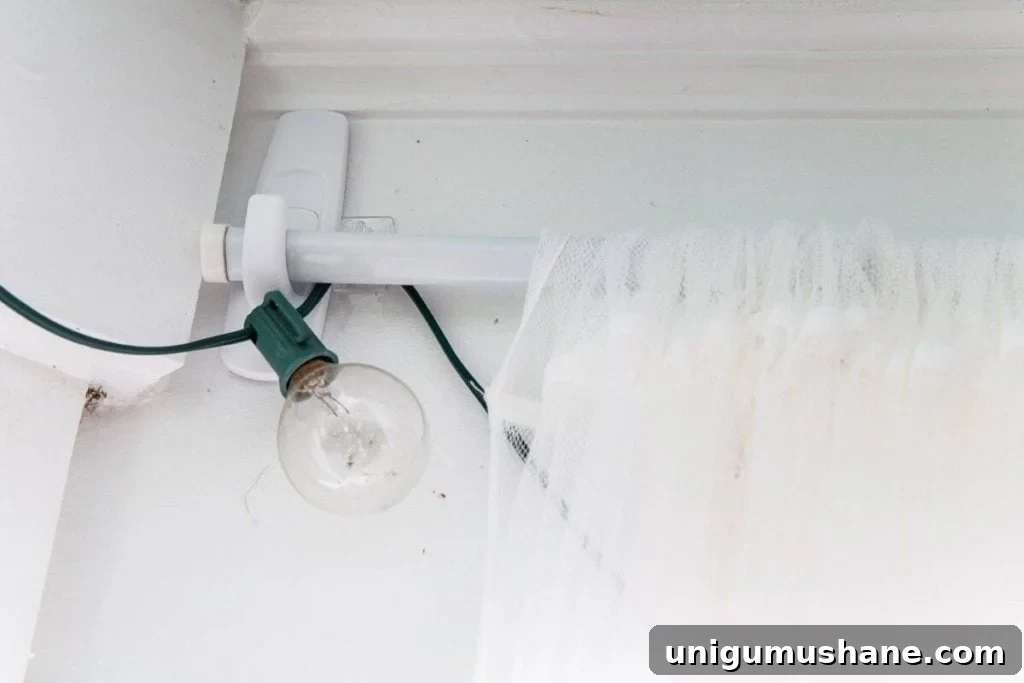
Step 2 – Hang tension rods using removable hooks
We installed six tension rods and mounted them as high as possible, close to the porch ceiling, so the curtains drape elegantly from top to bottom. Using 5-pound Command hooks to hold the rods was quick and left no permanent damage—no drilling required. If your porch has a ceiling or soffit that can support hooks, place rods near the overhead trim for a clean, built-in look.
Measure twice before mounting: check the width of each opening and the rod length, then position each hook so rods sit level. Because these curtains are lightweight, tension rods are sufficient; for heavier fabrics you’ll want sturdier hardware anchored into framing.
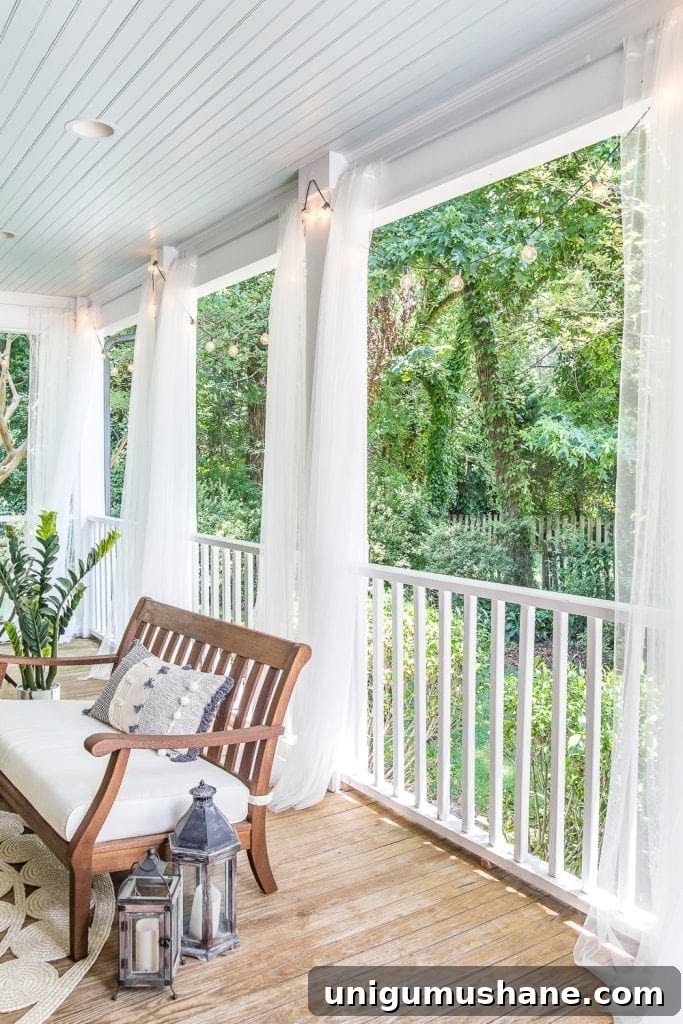
The change is dramatic—our porch looks more elegant and feels more intimate, while still being easy to open when we want full exposure to the yard. When dusk brings the mosquitoes, we simply close the panels and enjoy our evenings without the swarm.
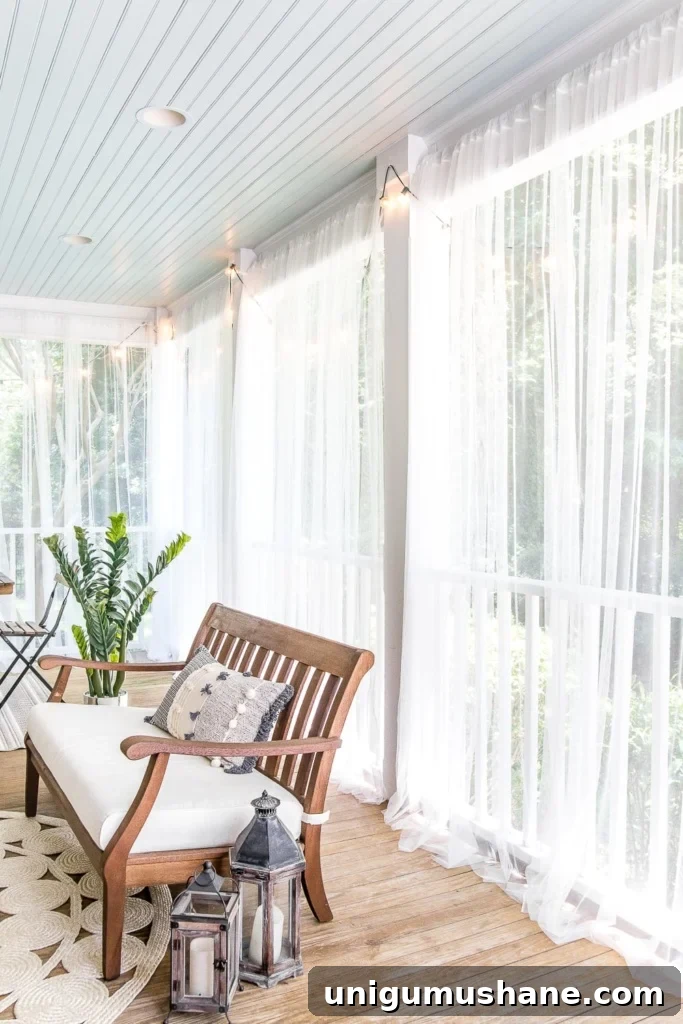
Step 3 – Optional: secure the panels against breeze
If windy evenings are an issue, there are a few simple options: loop ties around the panel corners and fasten them to porch posts, sew small pockets into the hem and add fishing weights, or use small clips at the base to anchor to porch floor hooks. Sewing weights into hems is a trick often used for bridal veils to keep fabric from flying during outdoor events.
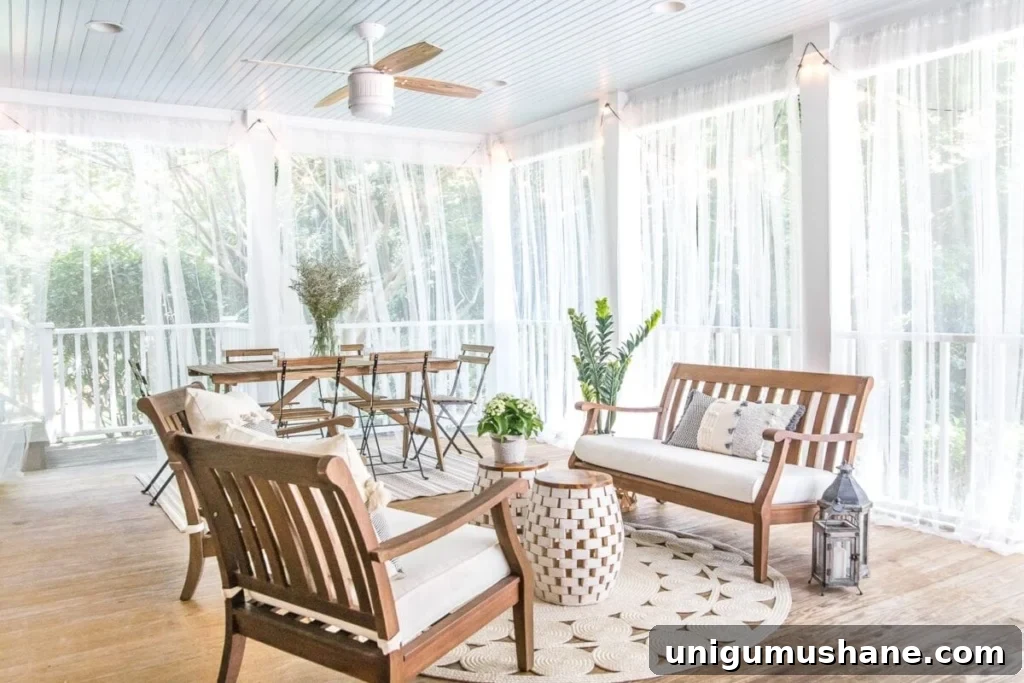
In addition to keeping bugs out, the net curtains visually enlarge the porch and add a soft, layered look. They’re easy to remove for washing or storage, and they cost a fraction of permanent screened enclosures. For maintenance, spot clean or hand wash the nets when needed and air dry; retreat with fabric protector seasonally if the panels stay outdoors.
I’ll be sharing more details on decor and sources for this space soon, but I had to share this particular trick because it’s one of my favorite, most practical upgrades. Have you tried a budget-friendly solution like this on your outdoor spaces to block insects while preserving an open feel? I’d love to hear what worked for you.