
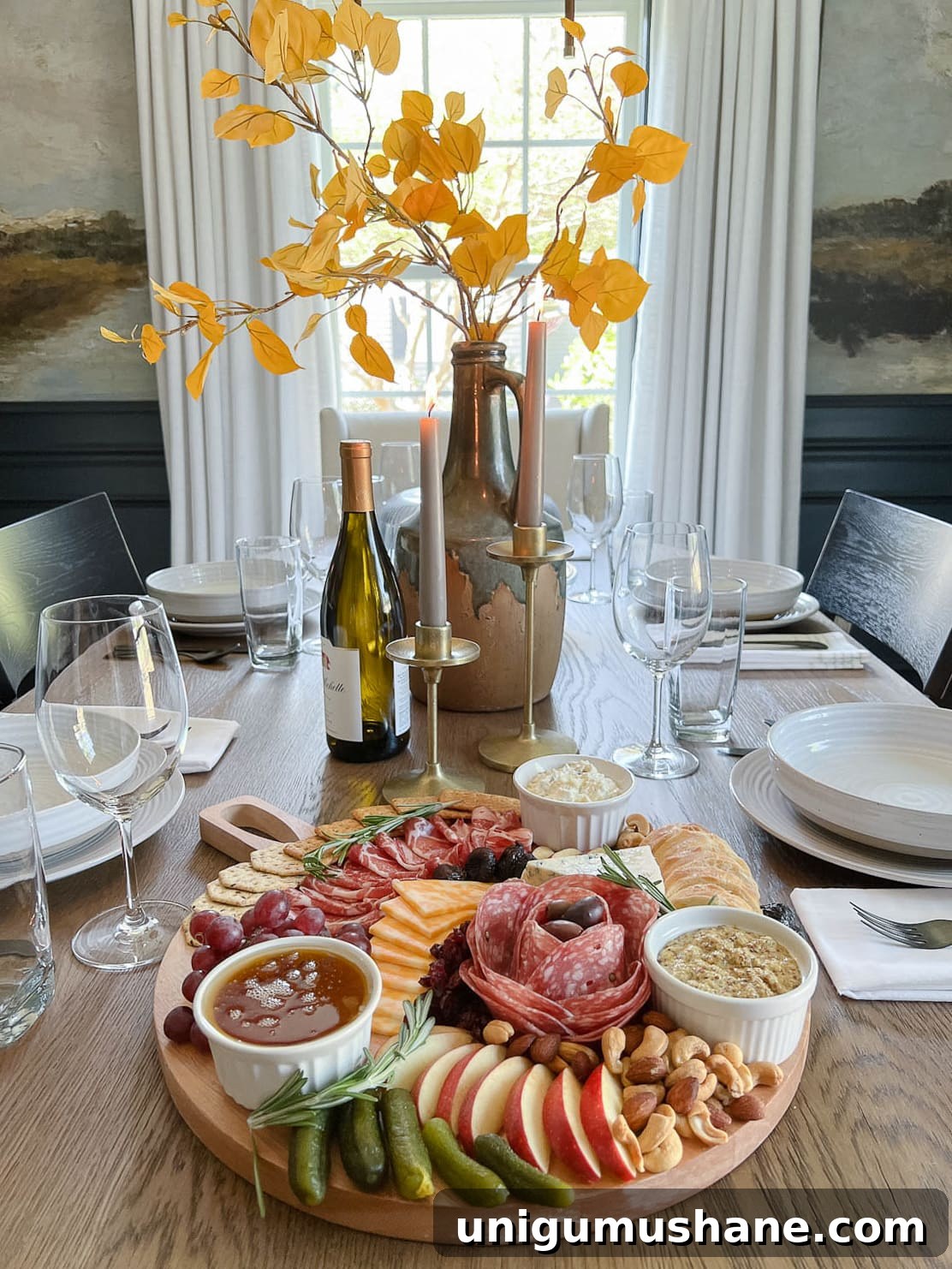
A beginner’s guide to creating a simple DIY charcuterie board in minutes for any occasion, with tips to make it look like a professional spread
For many, the cooler months mean cozy food and relaxed get-togethers — and for me, that often translates to creating easy, crowd-pleasing charcuterie boards that require minimal cooking and maximum enjoyment.
These spreads are perfect any time of year: by the pool, for backyard cookouts, family reunions, holiday parties, or a lazy night when you want something that feels special without a lot of fuss.
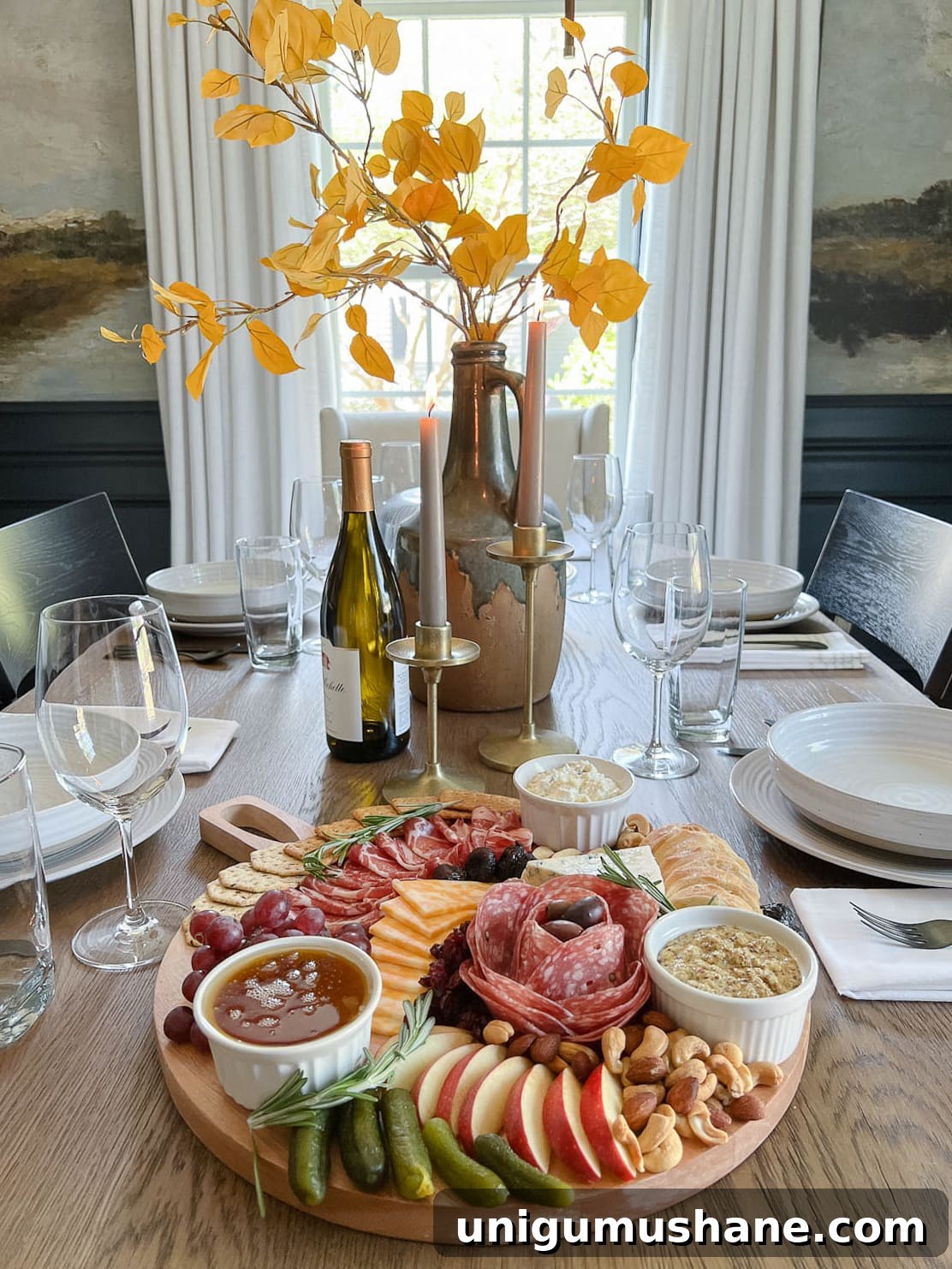
Charcuterie boards are adaptable and forgiving — you don’t need to follow a strict recipe. Below is a simple, beginner-friendly formula that you can customize based on what you have in your fridge, what’s in season, or guests’ dietary preferences.
How to Make the Perfect Simple Charcuterie Board in Minutes
Charcuterie Board Shopping List
- Cured meats
- Cheeses
- Crackers and/or bread
- Fresh and/or dried fruits
- Fresh and/or pickled vegetables
- Nuts
- Dips and/or spreads
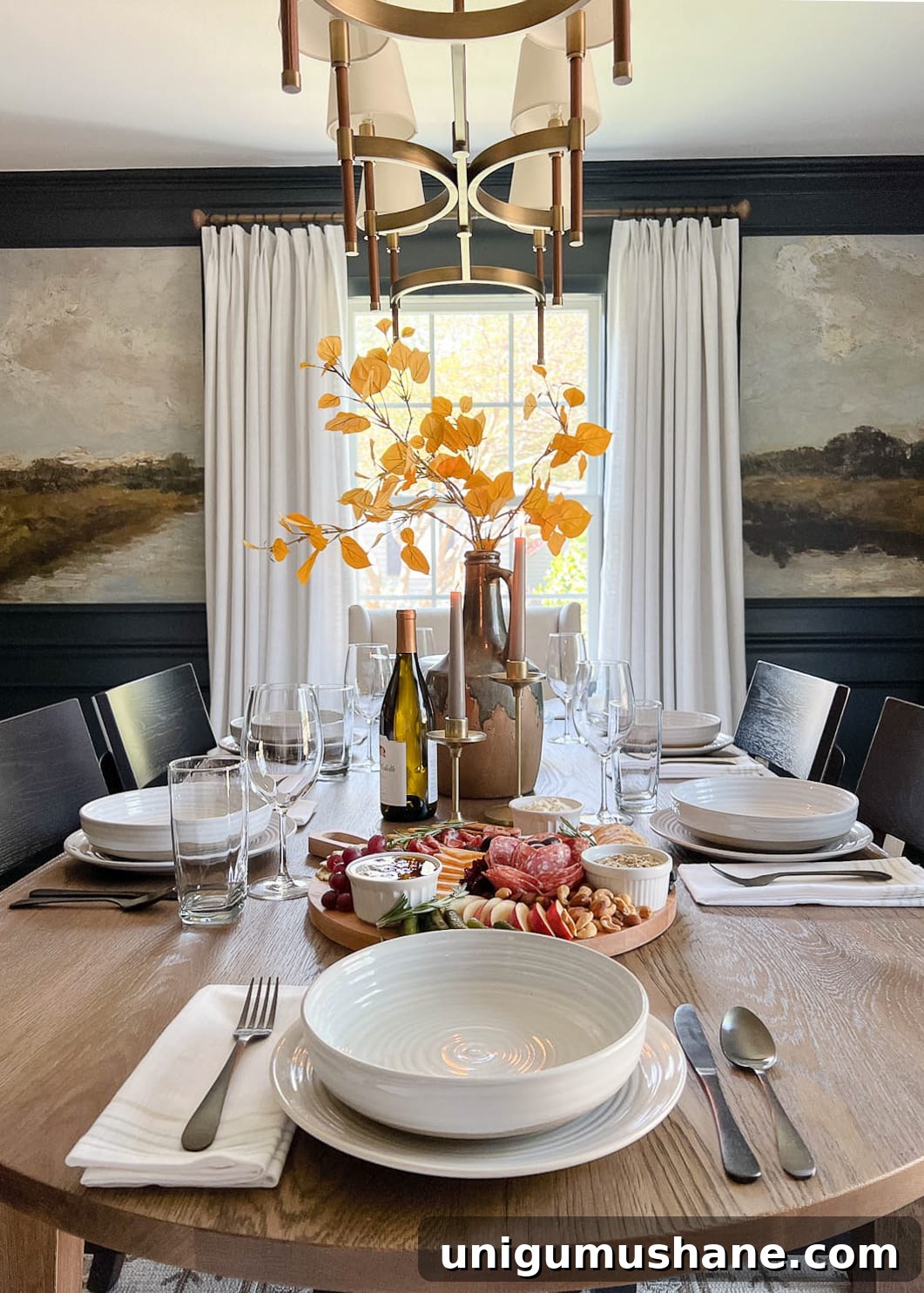
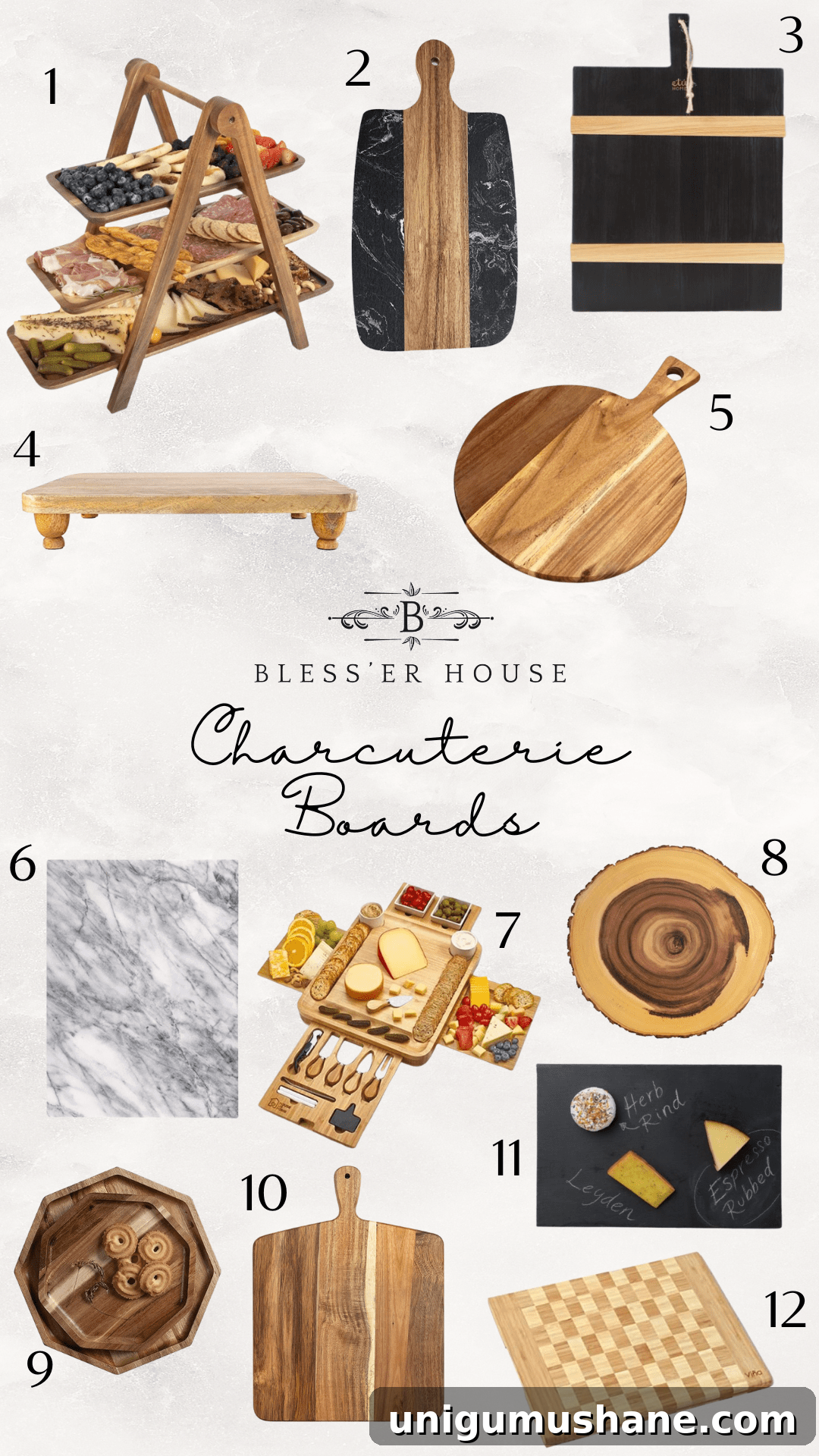
Choose a board or platter that suits the number of guests — a large wooden or slate board is ideal, but multiple smaller boards or even a roll of kraft paper work just as well. If you enjoy projects, a DIY cutting board made from scrap wood can be a fun option and adds rustic charm.
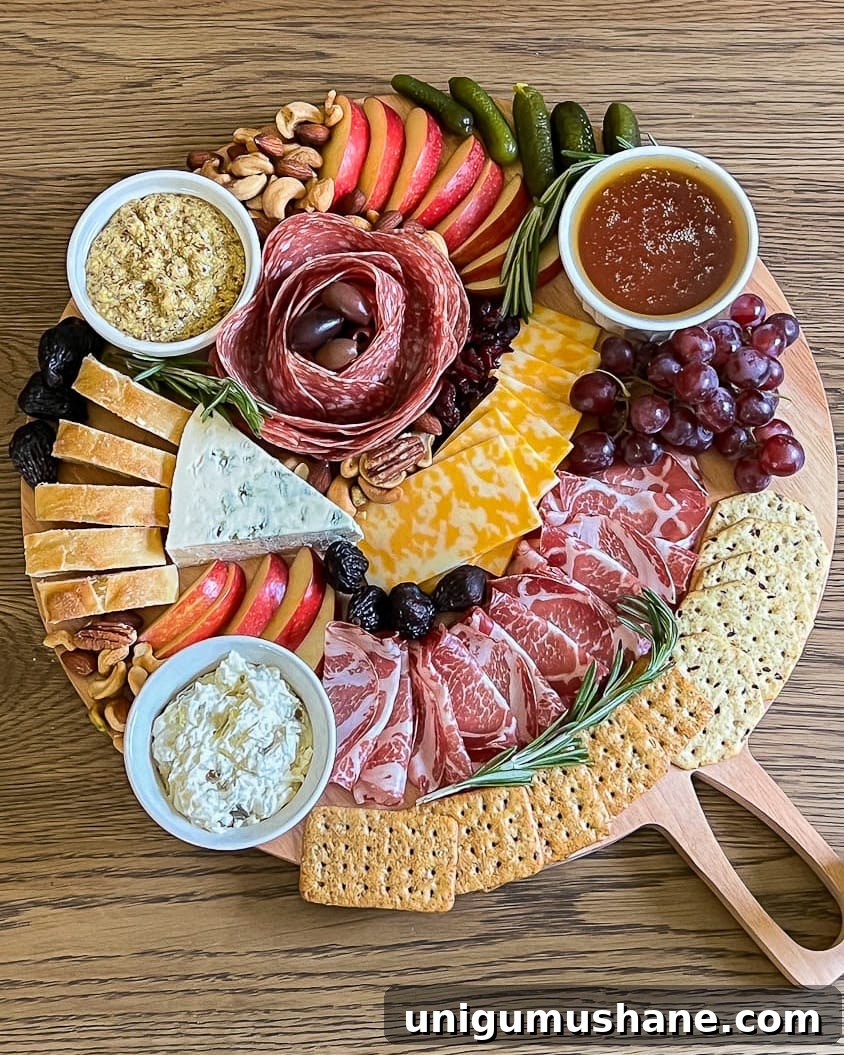
1. Place Your Meat First
Common choices: prosciutto, salami, soppressata, ham, capicola.
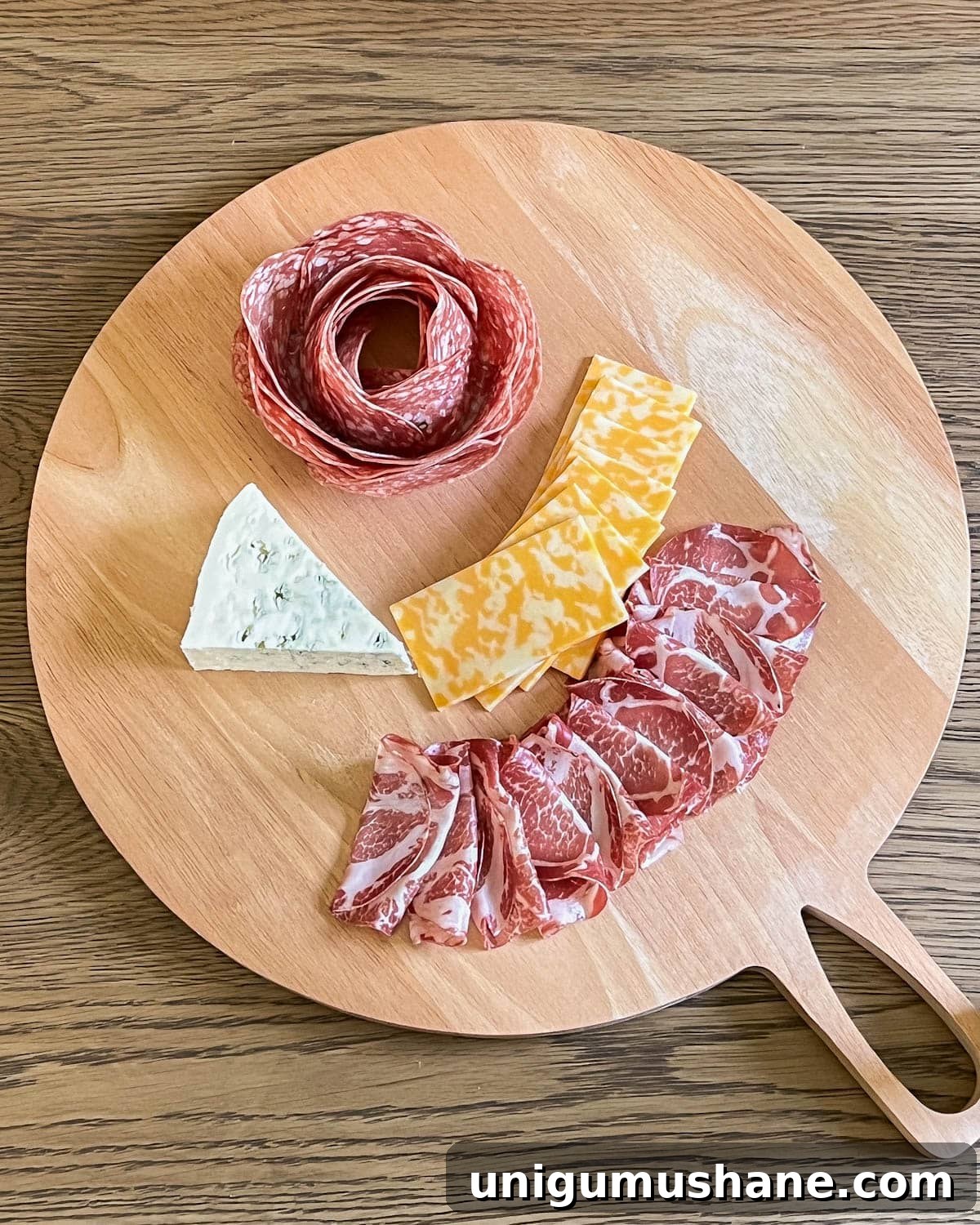
Start with 2–5 varieties of sliced cured meats. Arrange them in small piles or fan them out for easy grabbing — rolling or folding slices can create attractive texture and shape. A simple trick is to fold slices around the rim of a glass to form a flower, then transfer them to the board.
2. Cheeses
Hard cheeses: gouda, cheddar, manchego, gruyère. Soft cheeses: brie, goat cheese, burrata, blue cheese.
Select 2–4 types of cheese with different textures and flavors. Pre-slice or cube hard cheeses to make them easier to serve, and leave soft cheeses whole or partially sliced so guests can break off pieces. Distribute cheese around the board to create visual balance.
3. Bread and Crackers
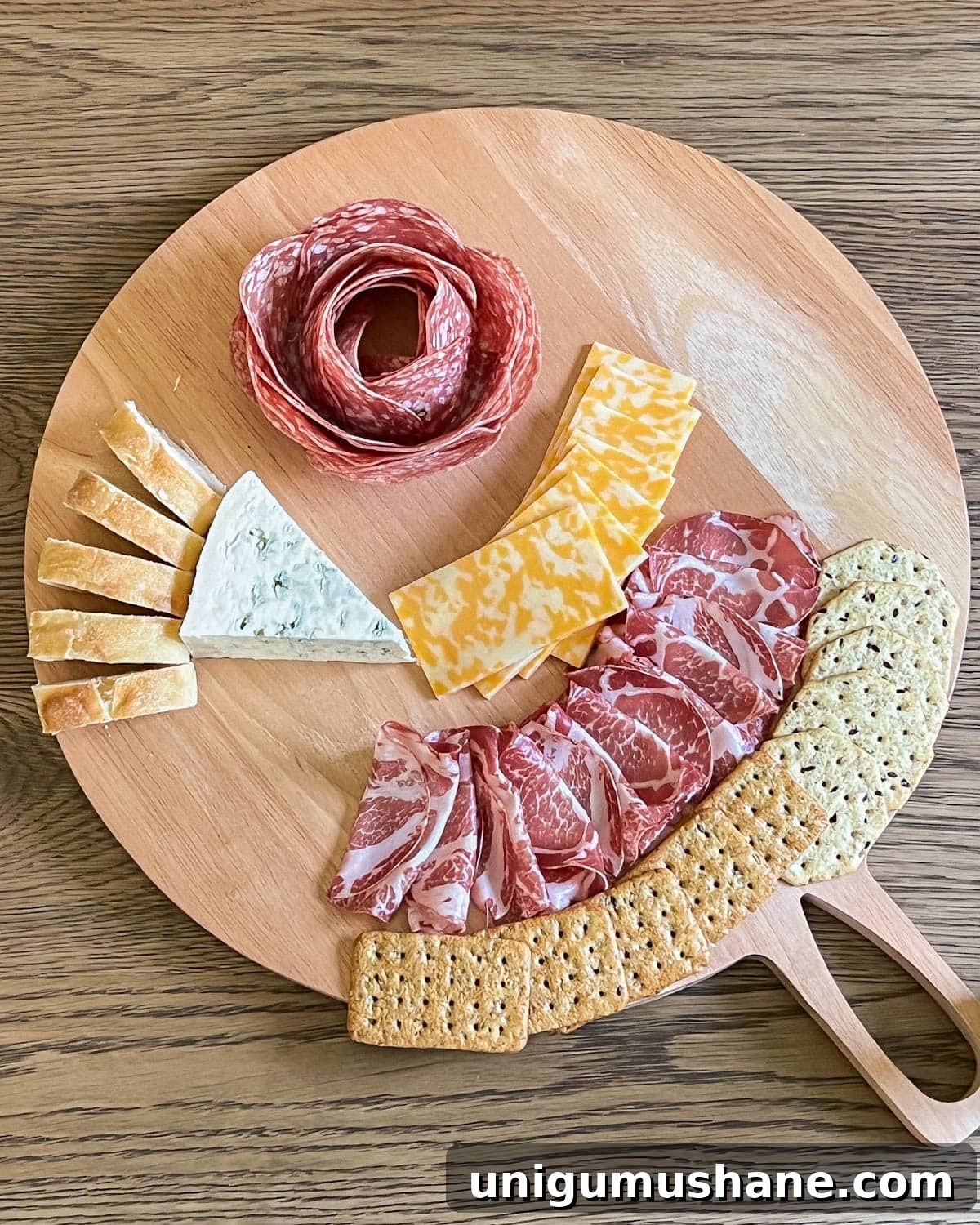
Include a variety of crackers, toasted baguette slices, and breadsticks.
Place breads and crackers around the edges of the board or in small stacks so they’re easy to reach. Choosing a few textures — crunchy crackers, soft baguette slices — gives guests options that pair differently with meats and cheeses.
4. Sweet Components
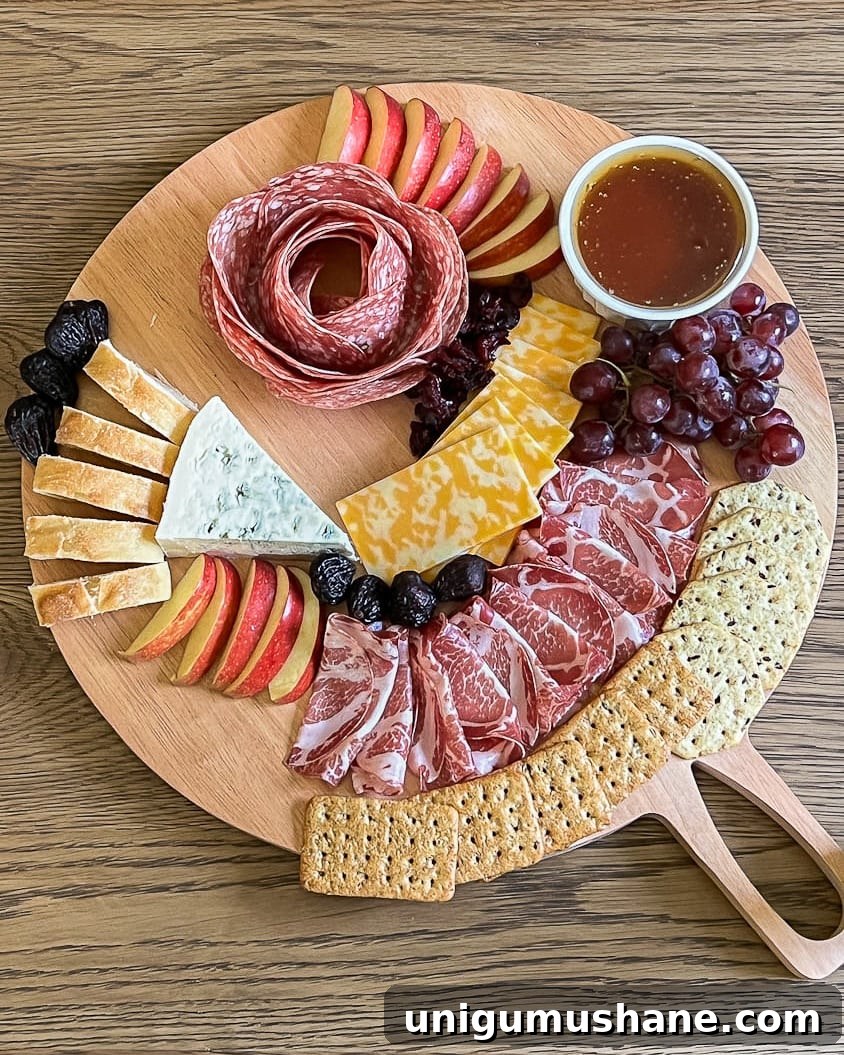
Fresh fruit: grapes, blackberries, raspberries, strawberries, apple, pear. Dried fruit: apricots, figs, cranberries.
Sweet spreads: honey, fig jam, marmalade, chocolate hummus.
Slice whole fruits and separate grape bunches into small clusters. Keep any juicy or wet items away from crackers to avoid sogginess, and place sweet spreads in small ramekins or bowls scattered across the board so guests can reach them easily.
5. Savory Components
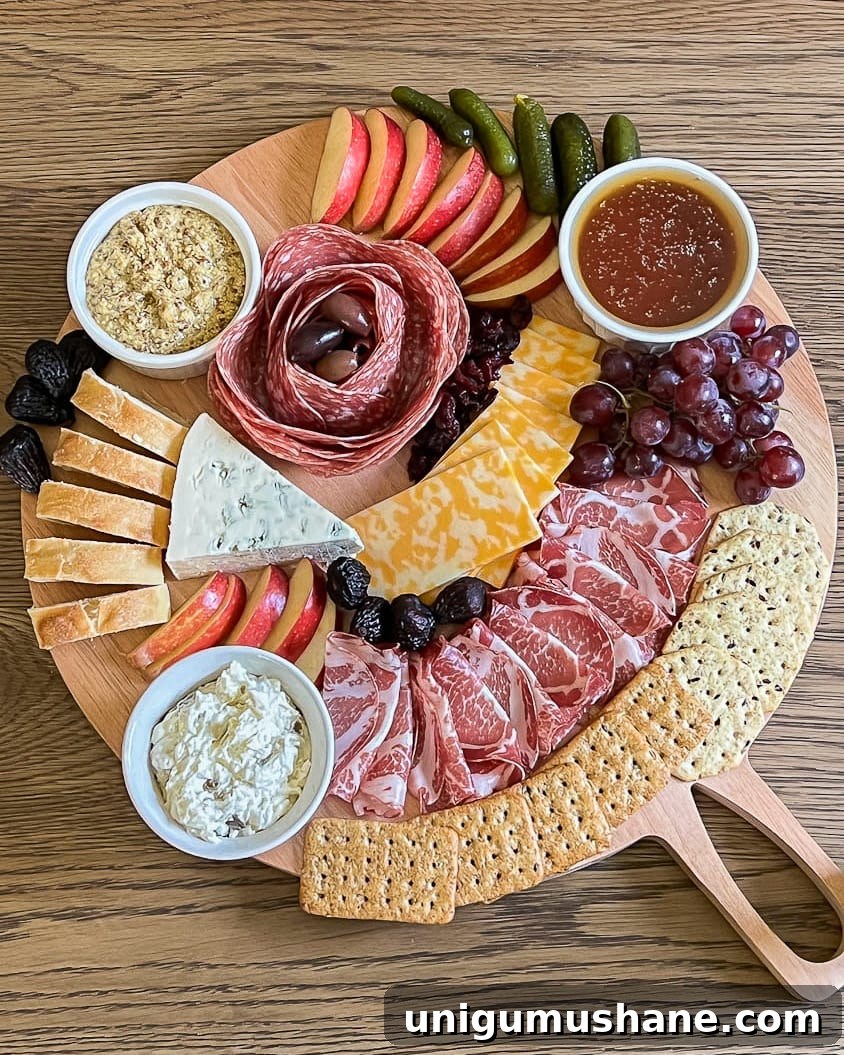
Fresh vegetables: peppers, cucumbers, baby carrots, cherry tomatoes. Pickled or brined: cornichons, olives, pickles, pepperoncini.
Savory dips: artichoke dip, whole grain mustard, olive tapenade, hummus.
As with sweet items, keep pickled or juicy vegetables separate from crackers or bread. Use small bowls or ramekins for savory dips and scatter them to balance the board visually and practically.
6. Fill in the Gaps
Use nuts, additional dried fruit, and fresh herb sprigs to fill empty spaces and add contrast. Add small spoons to dips and individual cheese knives so guests can serve themselves without hassle. The little gaps filled with texture and color make the board look abundant and finished.
Charcuterie Presentation Tips
Get Creative With Seasons
Adapt your display to the season: shape cheeses into pumpkins for Halloween, arrange items in a wreath for winter holidays, or choose bright, fresh produce for summer gatherings. Seasonal touches make the board feel intentional.
Lean Into Color
Use a variety of colors to make the board visually appealing. Bright fruits, colorful vegetables, and contrasting cheeses draw the eye and invite guests to dig in.
Focus on Balancing Flavors
Include a mix of textures and tastes: salty meats, creamy cheeses, sweet fruit, crunchy crackers, tangy pickles, and a spicy or savory element. This variety ensures there’s something for every palate and encourages fun flavor combinations.
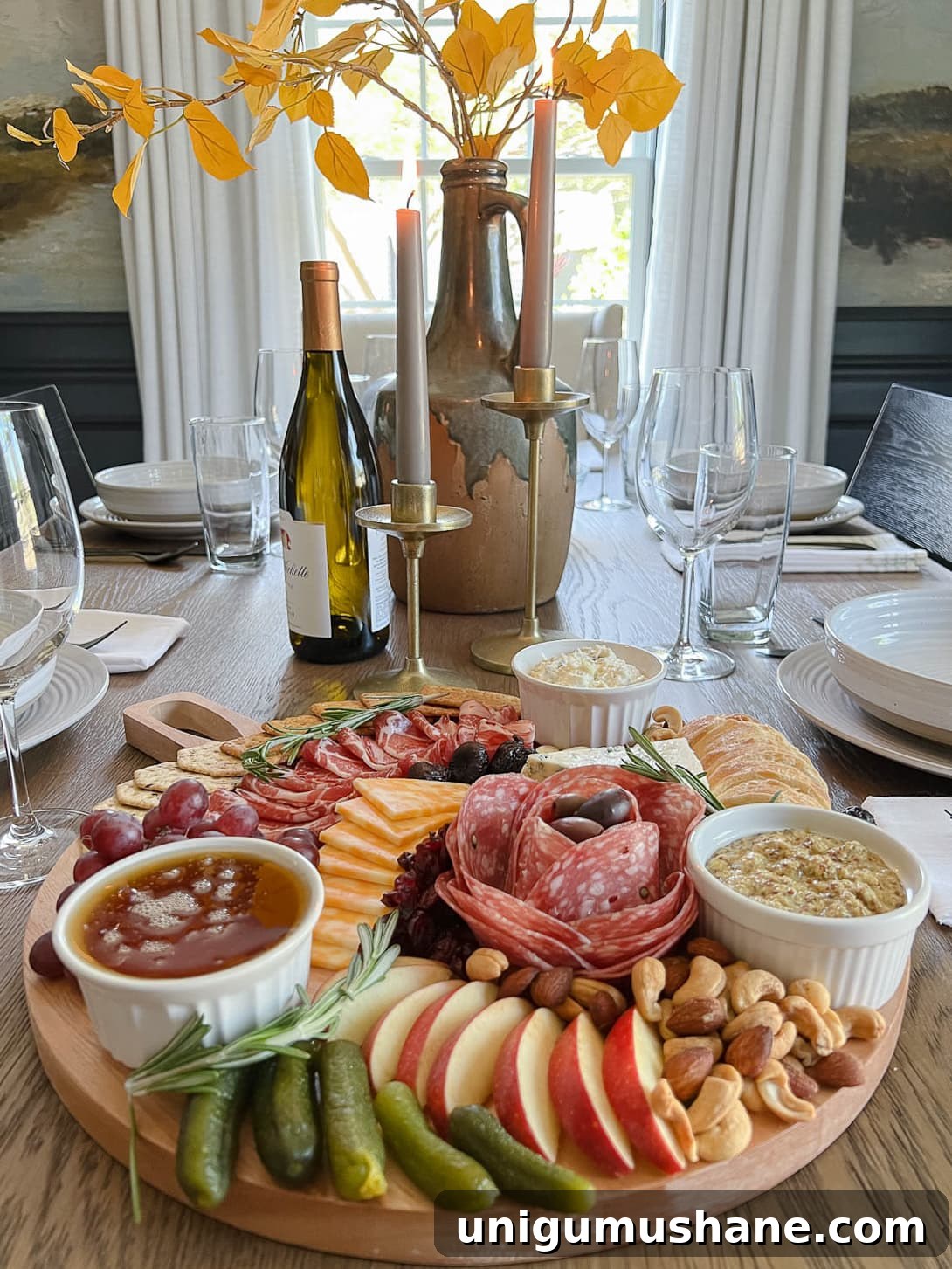
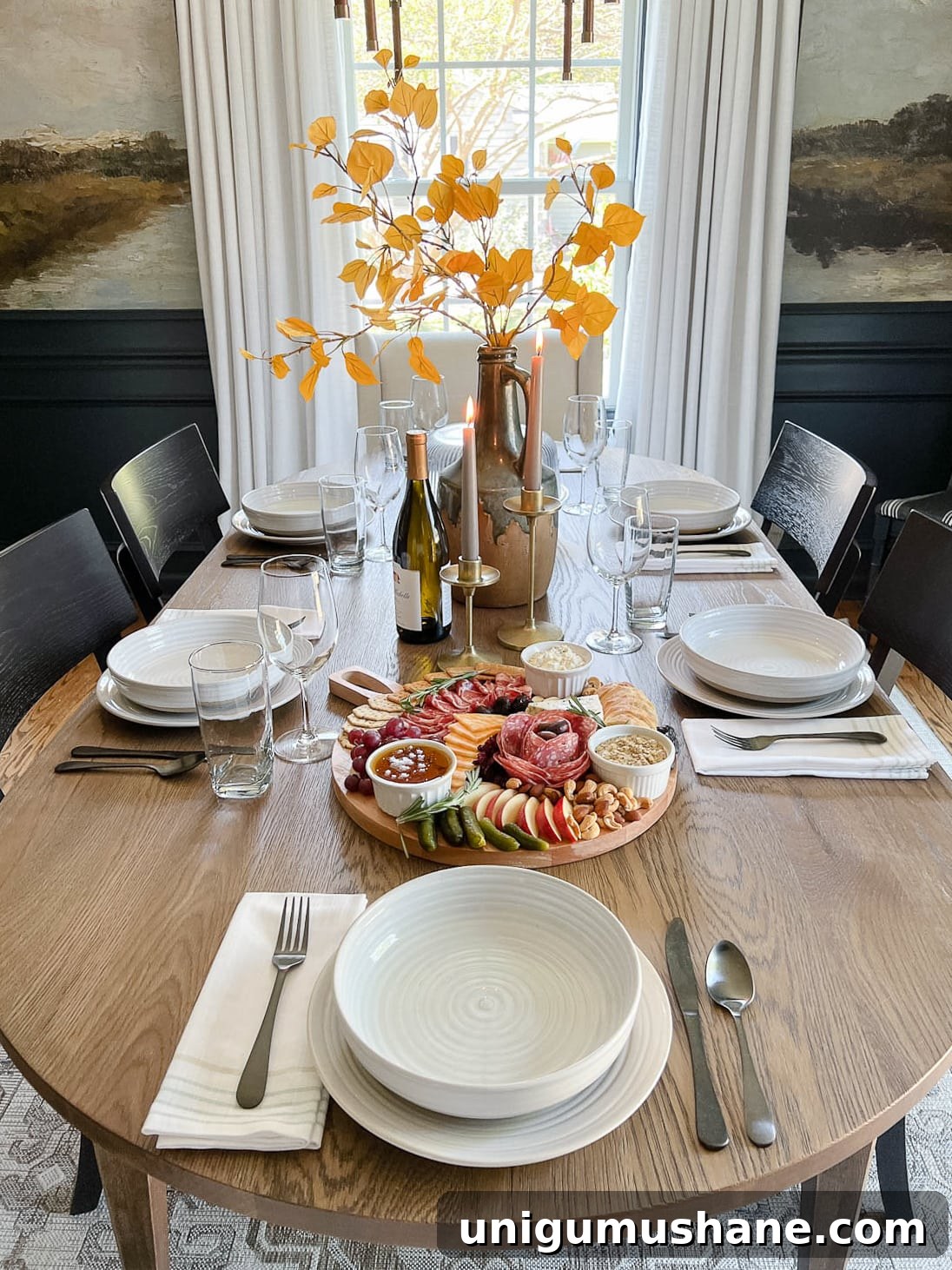
Often we’ll enjoy a board for dinner — it’s easy, social, and feels indulgent without a lot of effort. Charcuterie boards are one of the simplest ways to elevate casual entertaining and make guests feel welcomed.
Do you make charcuterie boards at home? They’re a go-to for us whenever we want an effortless, delicious spread.
More Hosting Ideas
- Simple Formula for Dinner Table Setting at Any Occasion
- Our Favorite Relaxing Dinner Music — The Cozy Home Playlist
- Simple DIY Fall Centerpiece Ideas + the Best Fall Branches
- Valentine’s Day Breakfast DIY Charcuterie Board
- DIY Cutting Boards from Scrap Wood