
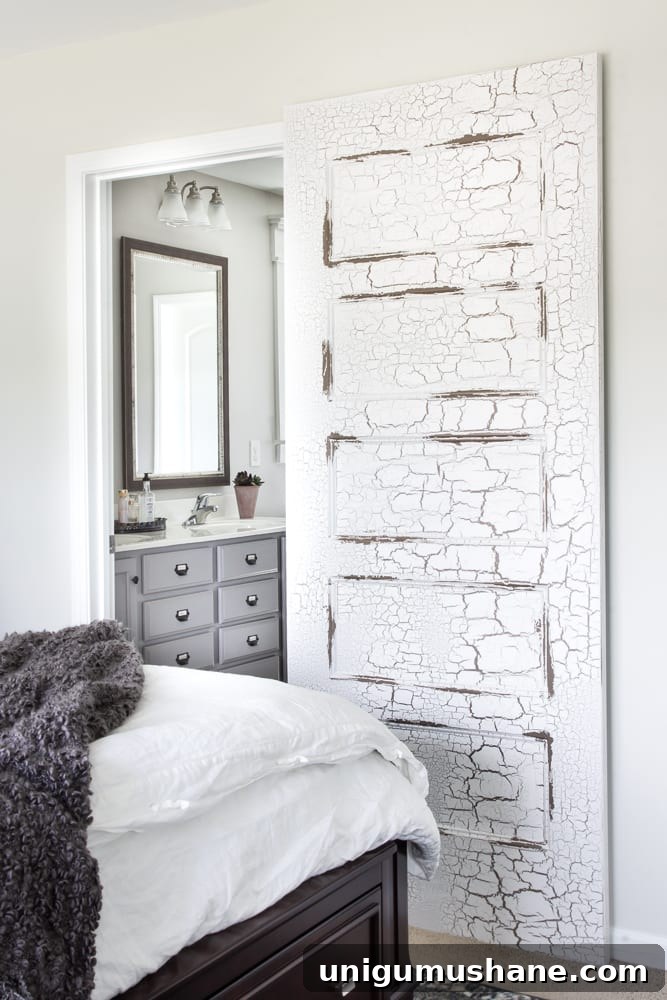
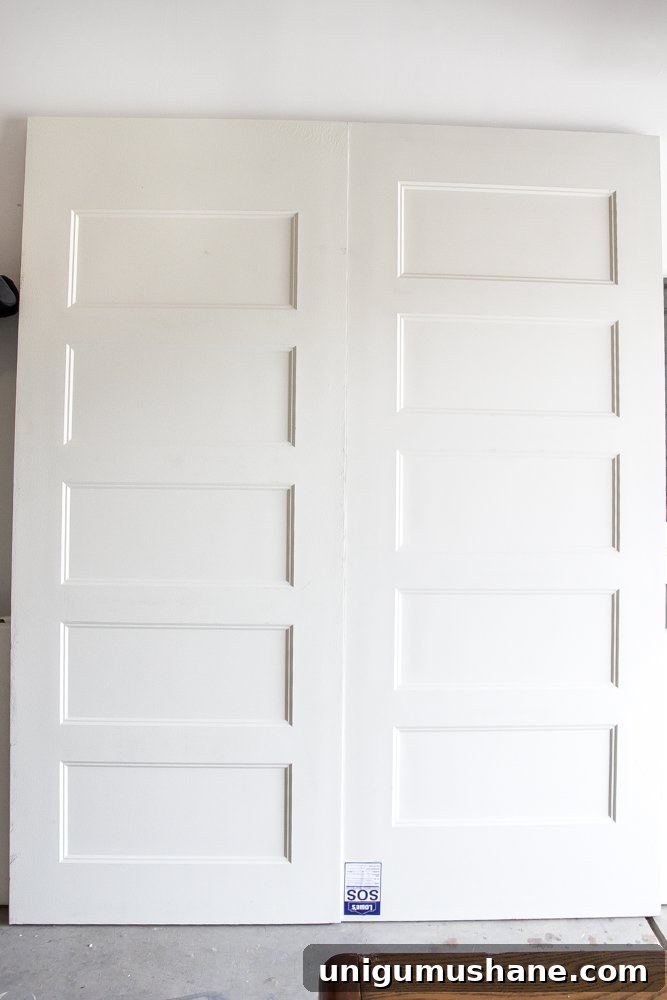
On today’s episode of Bless’er House flops: this deceptively innocent-looking yet treacherous door.
That oak-grained, antique-style door may look sweet, but it and I had a long battle. In fact, there were two of them.
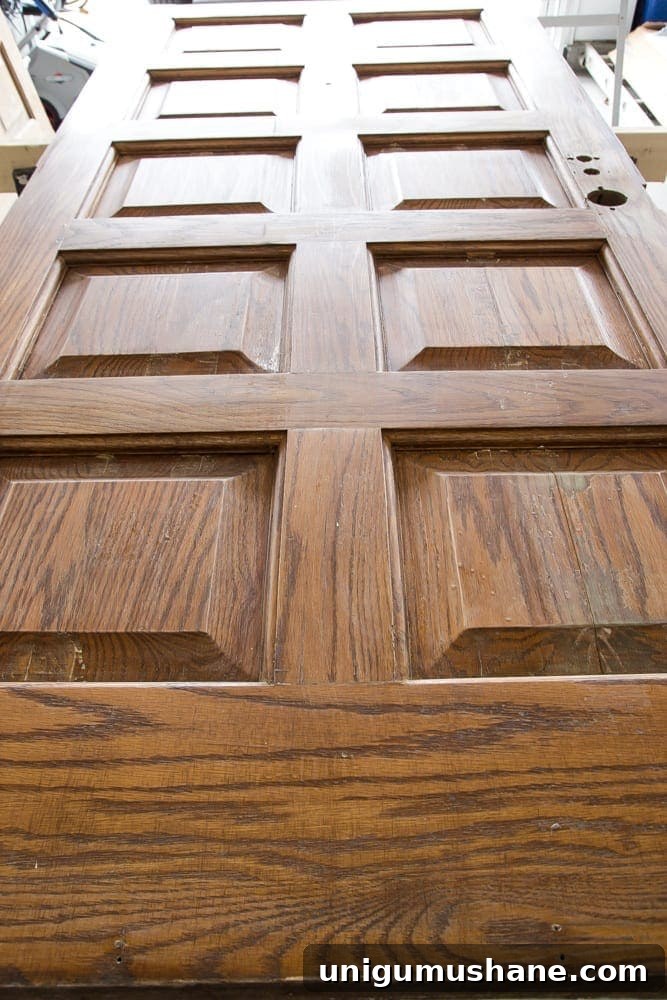
A couple of months ago, while we were in the middle of our master bedroom makeover, I mentioned finding what I thought was a Craigslist steal: a pair of old solid oak doors for $10 each. Initially I was thrilled. After hours of stripping varnish and sanding down to bare wood with a palm sander until my arms ached, I discovered they were in much worse shape than they looked—cracked in multiple places and extremely heavy. At roughly 200 pounds apiece, they would have been a disaster on the sliding track we planned to install. So I abandoned them and moved on to Plan B: hollow core doors.
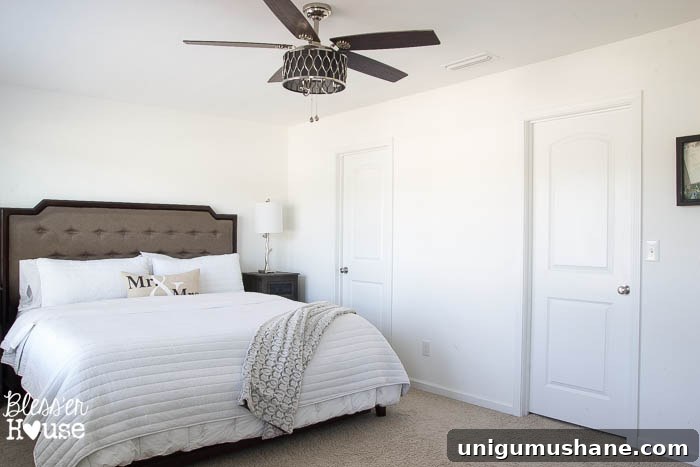
Because I couldn’t get the beautiful wood grain I wanted from hollow core doors, I focused on creating texture instead—a convincing chippy paint finish that reads like aged, painted wood. Hollow core doors are basically a thin veneer over a light core, so achieving authentic chippy texture takes some careful steps and the right products.
Supplies used:
- Fusion Mineral Paint in Algonquin (base color)
- Crackle medium (clear)
- Vaseline
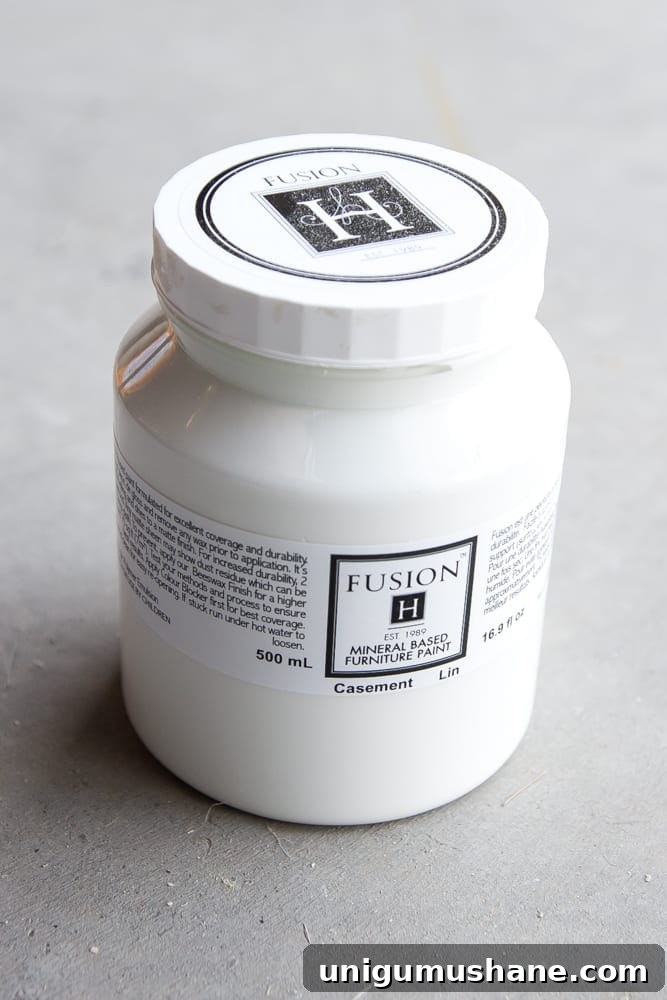
- Fusion Mineral Paint in Casement (top color)
- Quality paint brush
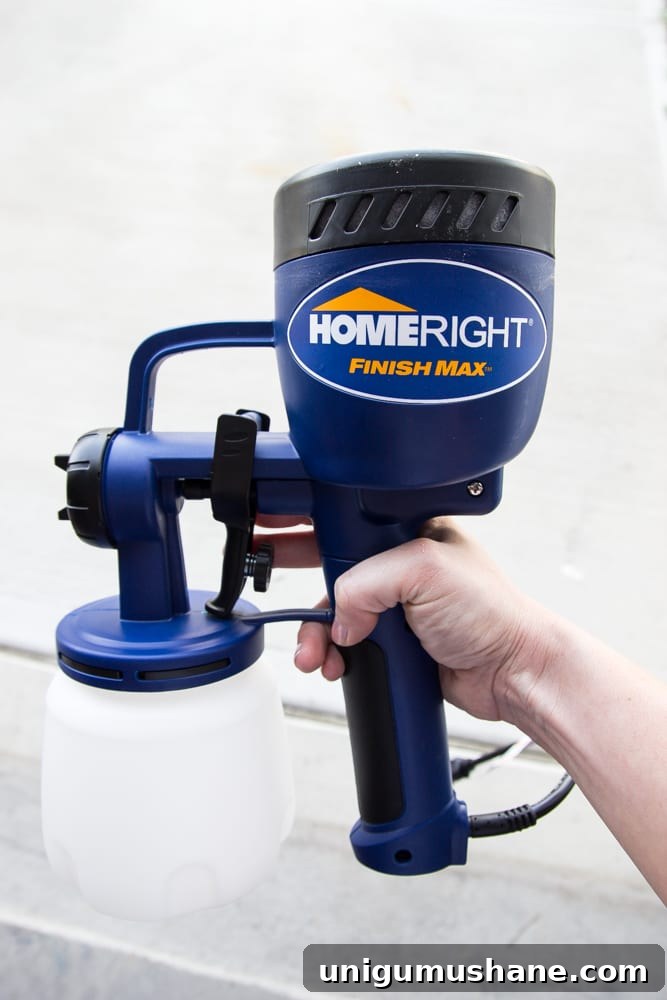
- Paint sprayer (I used a HomeRight sprayer)
- Hollow core five-panel doors (Lowe’s)
My goal was to make the doors look like solid painted wood with layers of age. I started by laying down a single coat of Algonquin as the base color. For this step you can brush or spray; I used a brush. The base coat doesn’t need to be perfect since much of it will show through the distressed areas.
Once the base coat was fully dry, I applied a generous layer of clear crackle medium. The thicker the layer, the larger the fissures in the top coat will be, so I applied it fairly thick and let the door lie flat so the medium didn’t run or puddle. Follow the directions on your chosen crackle medium—I used the CraftSmart brand and allowed about two to three hours for it to dry thoroughly.
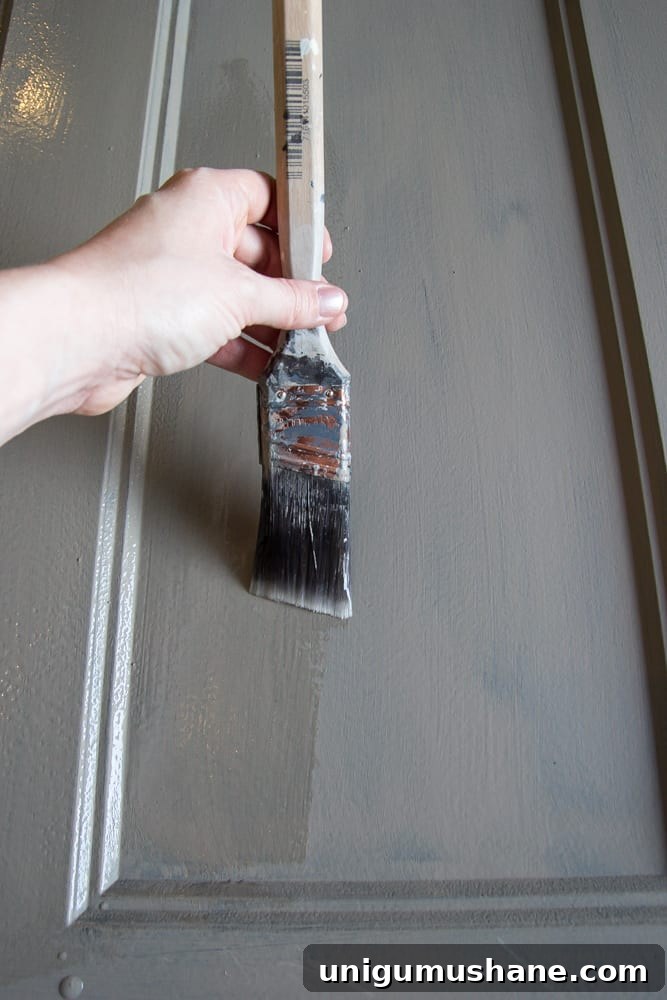
For realistic wear, I rubbed a bit of Vaseline along panel edges and corners where natural abrasion would occur over time. The Vaseline acts as a resist and helps the top coat lift off later to reveal the base layer beneath.
Next came the top coat. Because crackle medium can be temperamental—overbrushing can smear or prevent proper cracking—I used a paint sprayer for an even, smooth application. I poured a full 500 mL bottle of the Casement paint into the sprayer and thinned it with about 10% water. That amount covered one door, front and back, with a single decent coat. If you haven’t used a sprayer before, practice with water first to get a consistent, even pattern.
Spraying gave me a thick, consistent top layer without noticeable brush marks, and within minutes I started to see the crackle develop as the paint reacted to the crackle medium. It’s pretty satisfying to watch.
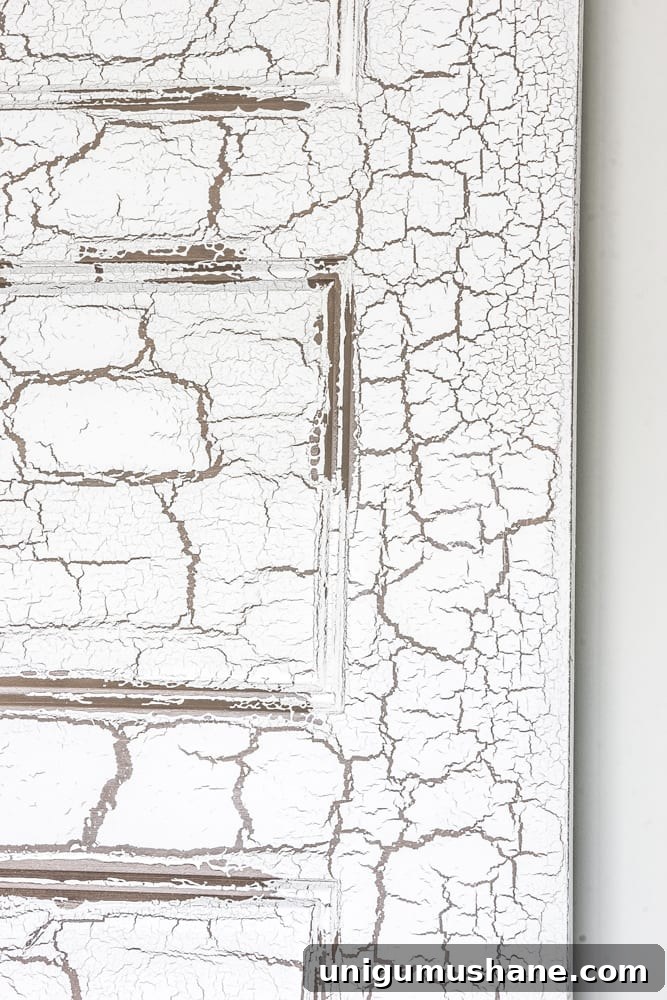
After the paint had dried completely, I wiped away the Vaseline from the panel edges with a clean rag, revealing the Algonquin base beneath and exposing authentic-looking wear patterns. The result was a convincing chippy finish with natural-looking cracks and paint loss concentrated where it would occur over time.
This project took some trial and error to get right, but I’m pleased with how the doors turned out. The chippy panels and the planned metal barn door hardware will complete the room’s farmhouse-inspired look while keeping the modern lines I already love in the bedroom.
Our next step is mounting the doors on a sliding barn track so they won’t slam into the bathroom door or clash with the shower door. I’m excited to wrap up this space and add the finishing hardware.
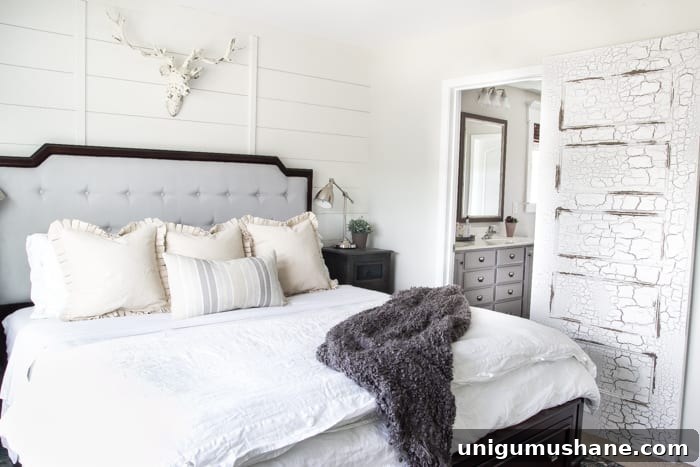
So: what do you think? Is this the right level of distressing, or too much? After several attempts to get this just right, I’m relieved to have it finished and to be moving on to hanging them.
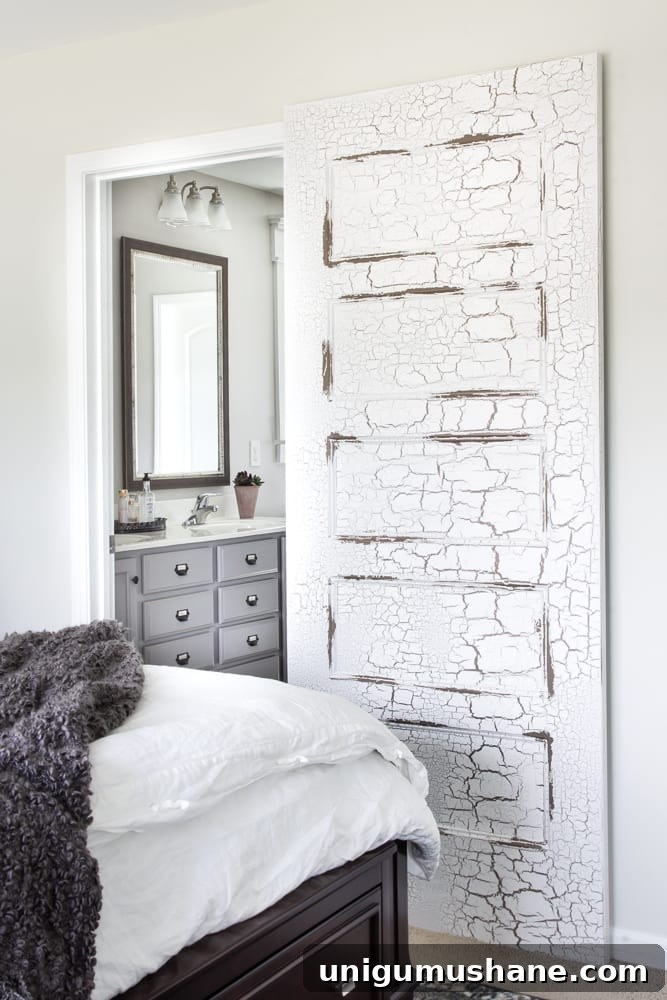
If you missed any of the master bedroom makeover projects from the beginning, here’s a quick list of posts to follow along with the whole transformation:
- Master Bedroom Design Plan
- How to Get Designer Paint Colors on the Cheap
- DIY Planked Board and Batten Focal Wall
- Quick and Easy Dresser Makeover
- 3 Tricks to Upgrade Plain Windows
- Choosing the Perfect Blue Vintage Rug
- DIY Metal Industrial Initial Sign
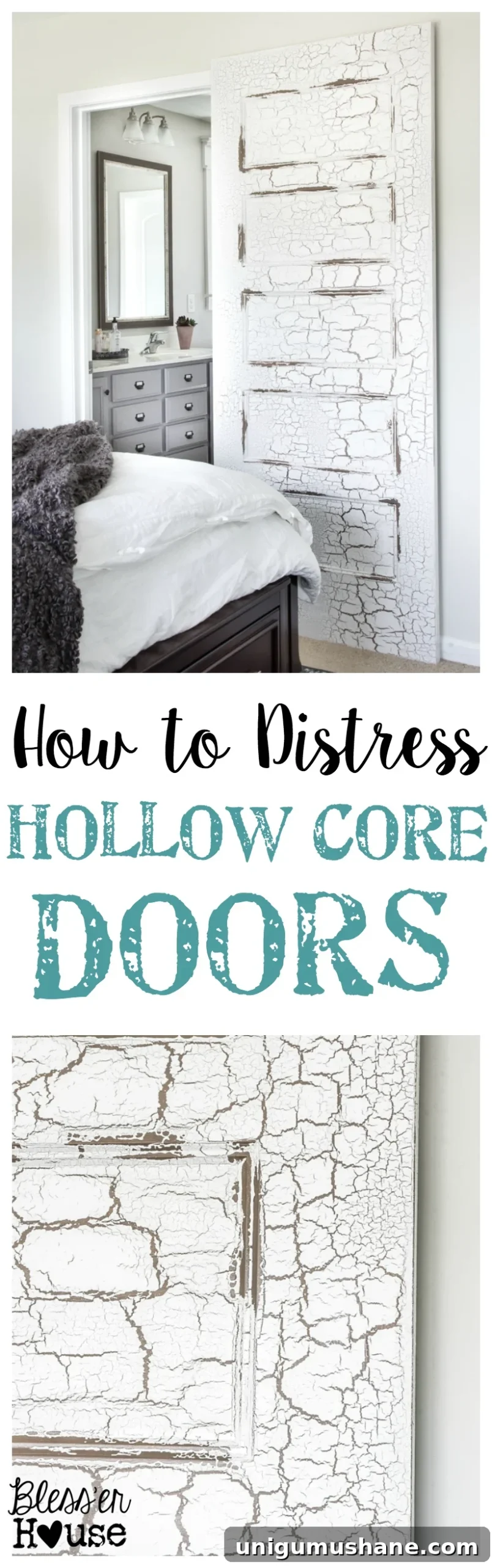
If you want to try this technique on hollow core doors in your own home, save or pin this post for reference. The right base coat, ample crackle medium, and a smooth spray application will get you a convincing chippy finish that reads like aged painted wood rather than flimsy veneer.
P.S. I’m so grateful for the encouragement on last week’s e-course launch—thank you! If you’ve taken the course, I’d love to hear your thoughts.