
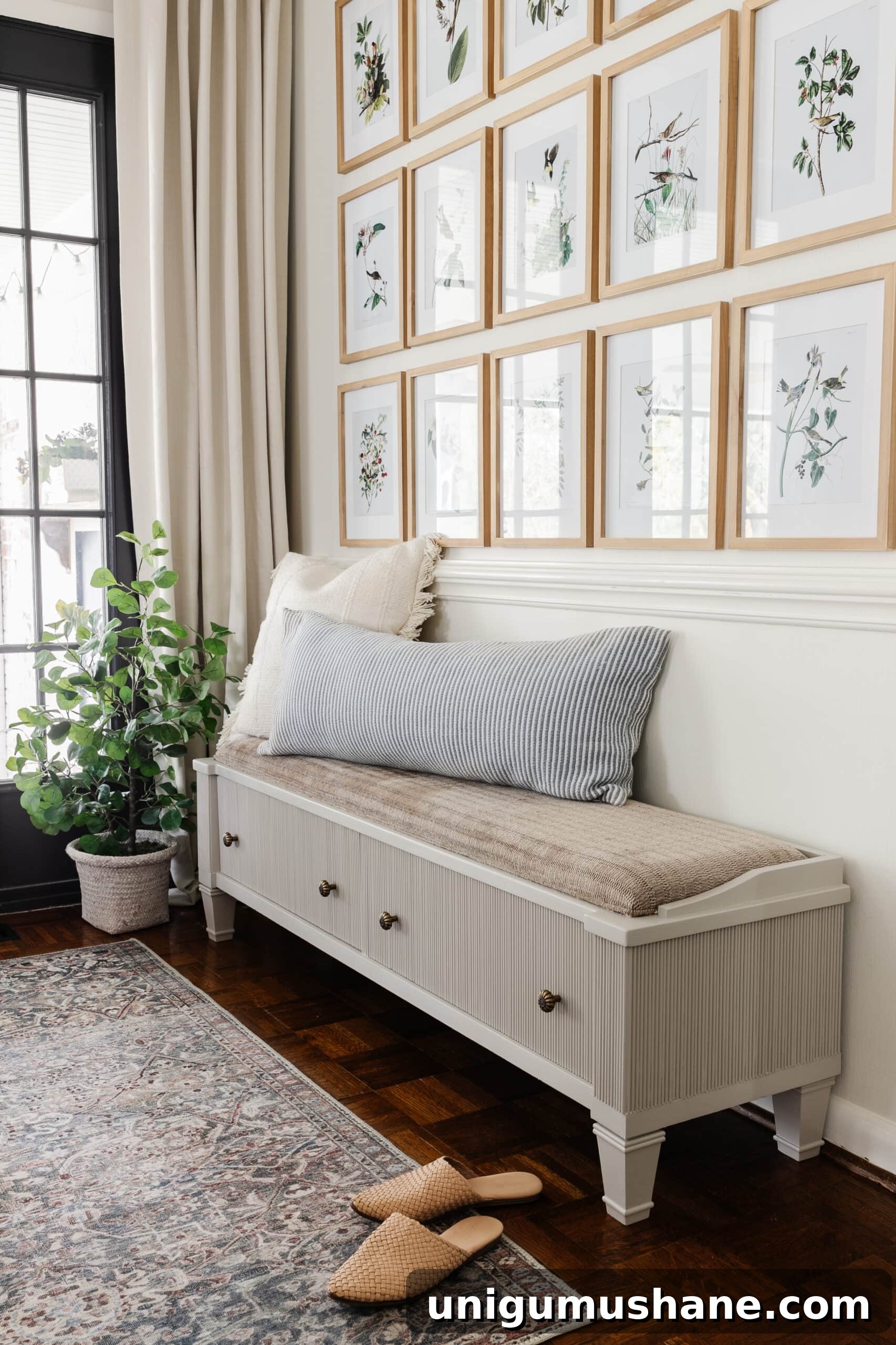
How to add decorative fluting or reeding to furniture for extra texture on a plain surface — plus a budget-friendly entryway shoe storage bench makeover.
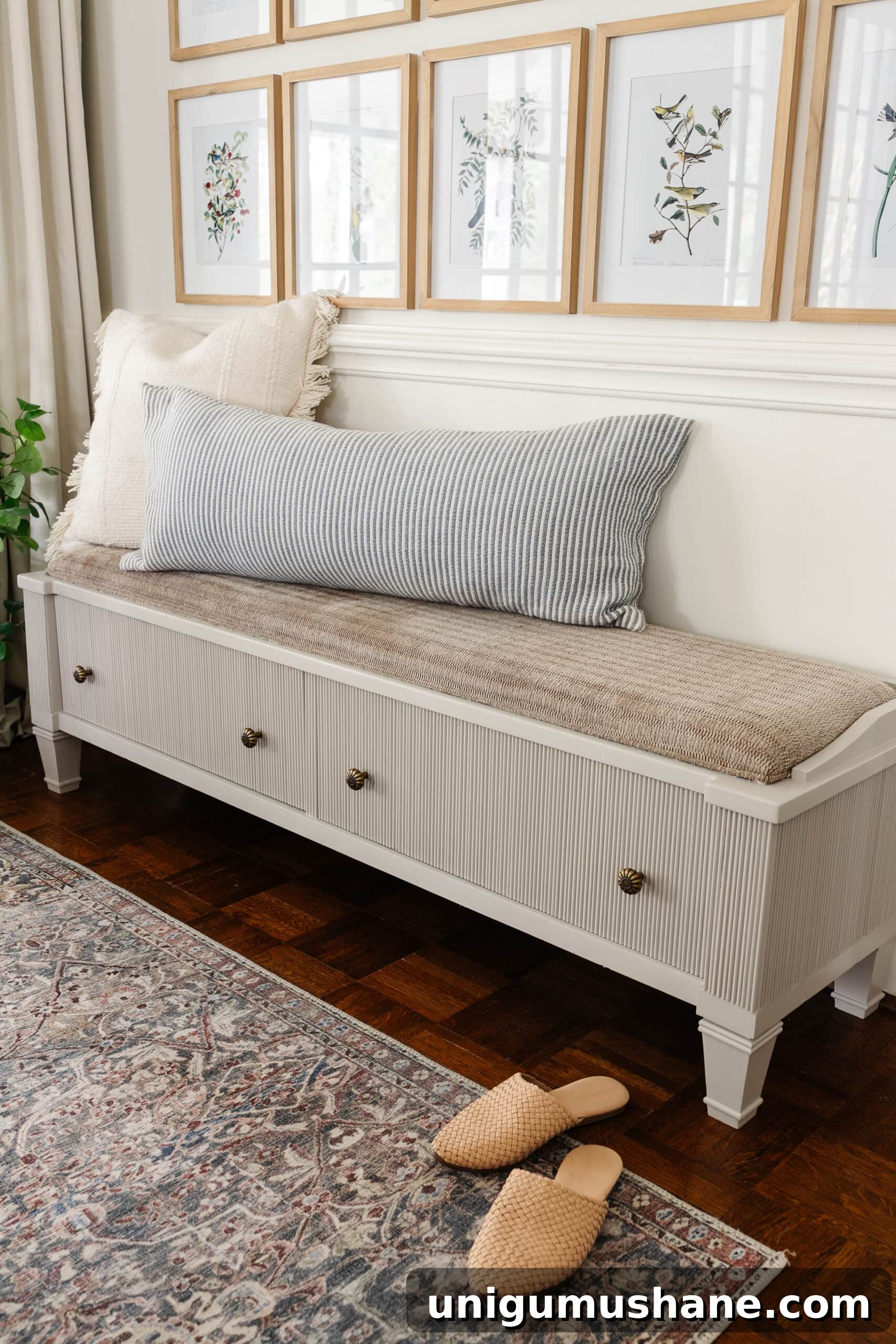
I believe in “work with what you’ve got.” Our house didn’t come with a mudroom, but it did give us an empty wall beside the back door. That made the perfect spot for a small entryway solution: a shoe storage bench that we upgraded with decorative reeding.
Reeded Shoe Storage Bench Before & After
Turning a plain, functional bench into a styled storage piece was a small project with a big payoff. Our entryway desperately needed shoe storage — the kids leave shoes scattered the moment they walk in — so we found an affordable bench, added reeded trim for visual interest, changed the legs, and painted it a muted taupe for a polished result.
This makeover is a great example of how to transform an ordinary dresser, console, nightstand, or bench into something with personality by adding texture and updating a few details.
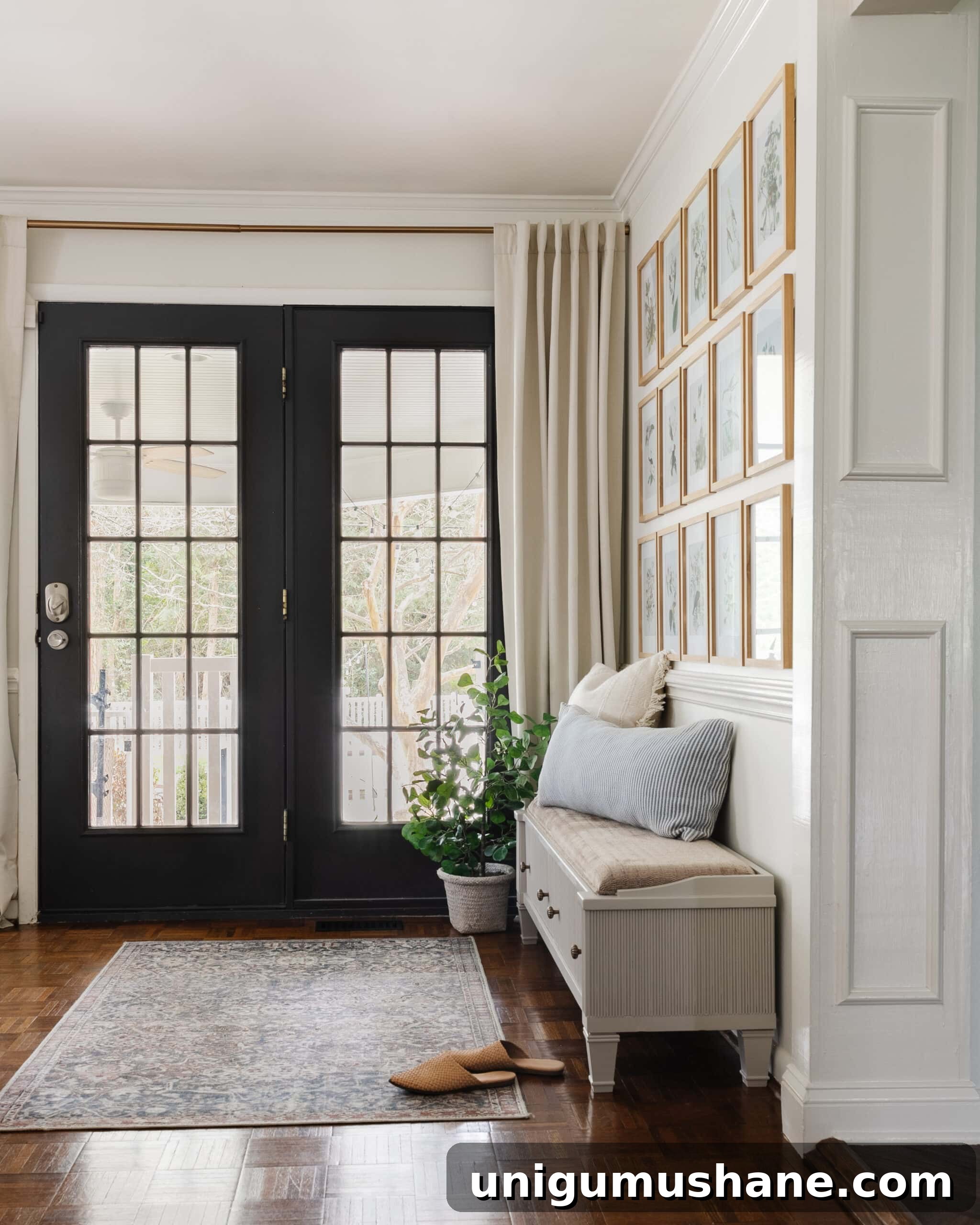
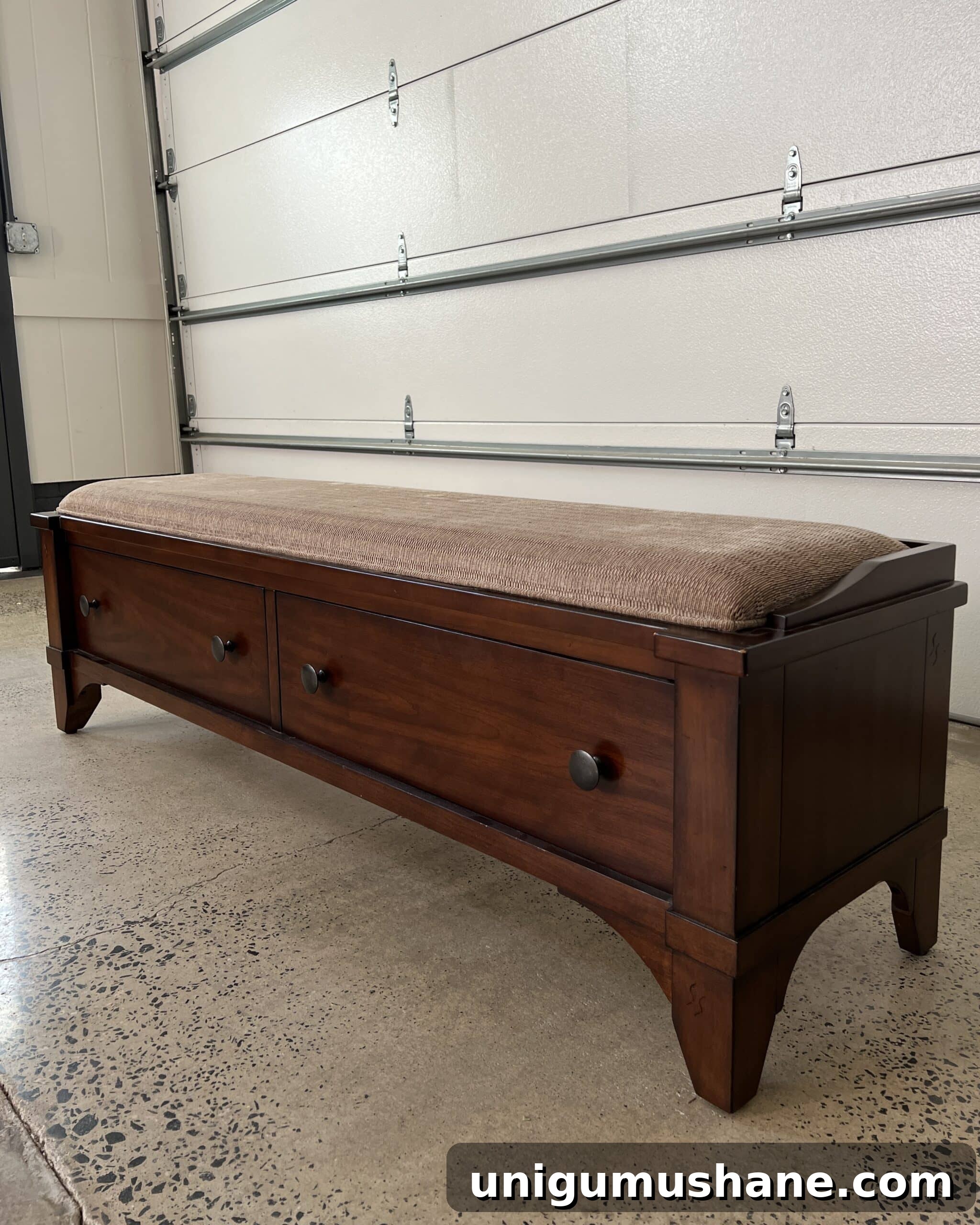
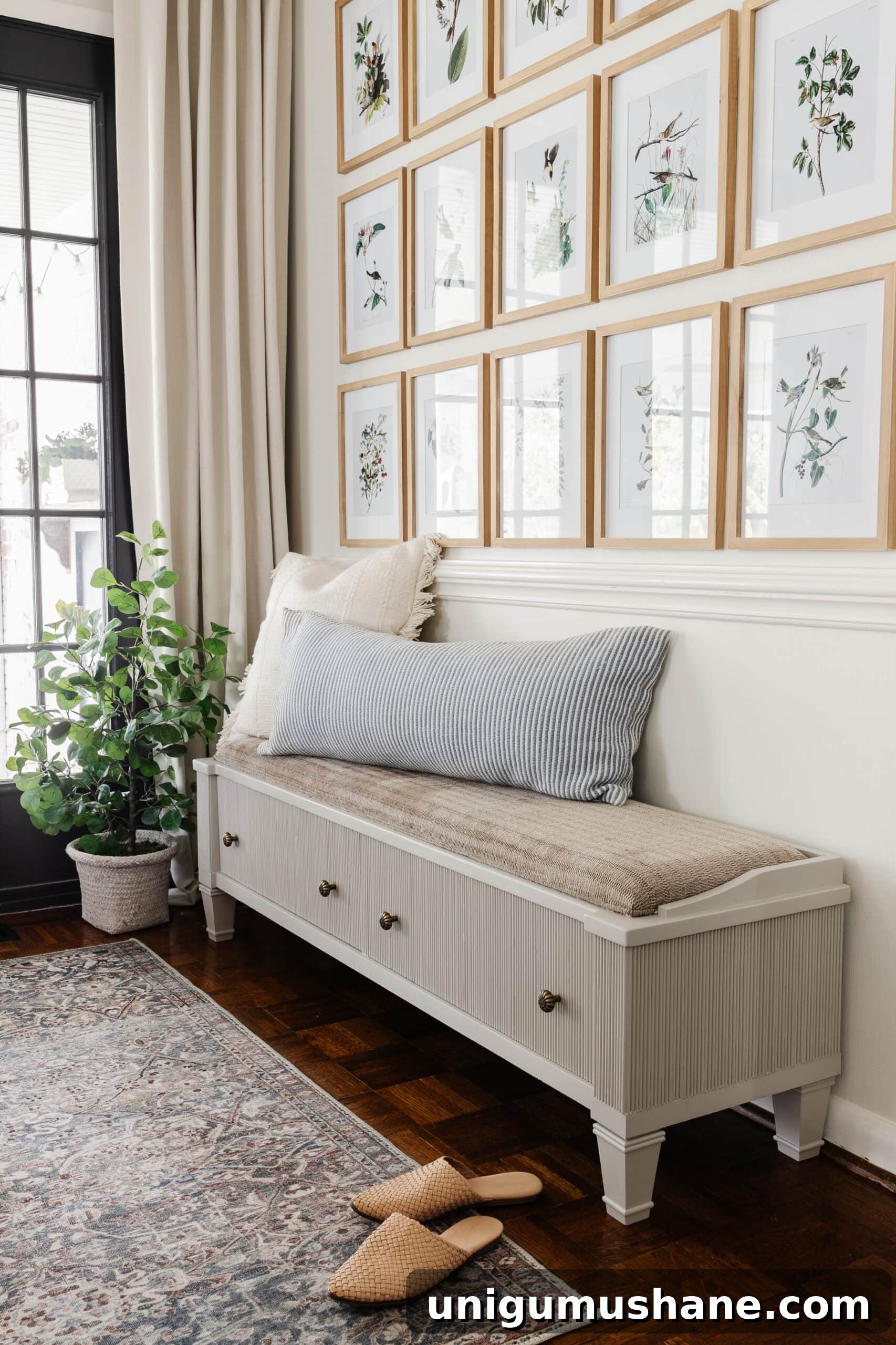
Replacing the feet, adhering reeded molding, and painting the bench in a warm taupe changed the piece dramatically. I may reupholster or paint the cushion down the line, but for now the bench functions well and looks cohesive in the space.
There are many ways to achieve reeded or fluted looks — from pole wrap to pre-formed molding strips. Below I share the technique that worked best for us using materials that were easy to source locally.
What is Reeding?
Reeding is a decorative molding detail made up of narrow, convex, semicylindrical ribs running in parallel. It’s often mixed up with fluting, which is concave and has a different shadow profile. You can create either look by choosing reeded or fluted molding depending on the effect you want.
Reeded Storage Bench Makeover Tutorial
Supplies / Tools
- Miter saw
- Drill and drill bits
- Electric sander (medium grit)
- Fine-tooth hand saw
- Speed square
- Construction adhesive
- Painters tape
- Shellac-based primer (recommended for red-based wood stains)
- Acrylic urethane enamel paint (we used a satin trim paint in a taupe shade)
- Paint brushes, including a small triangular or artist brush for crevices
- Reeded molding strips
- Pull knobs or drawer hardware
How to Replace Furniture Legs
Changing legs is one of the fastest ways to alter a piece’s style. For this bench we removed the chunky mission-style legs and installed tapered pyramid legs for a cleaner silhouette. The same process works for dressers, side tables, and buffets.
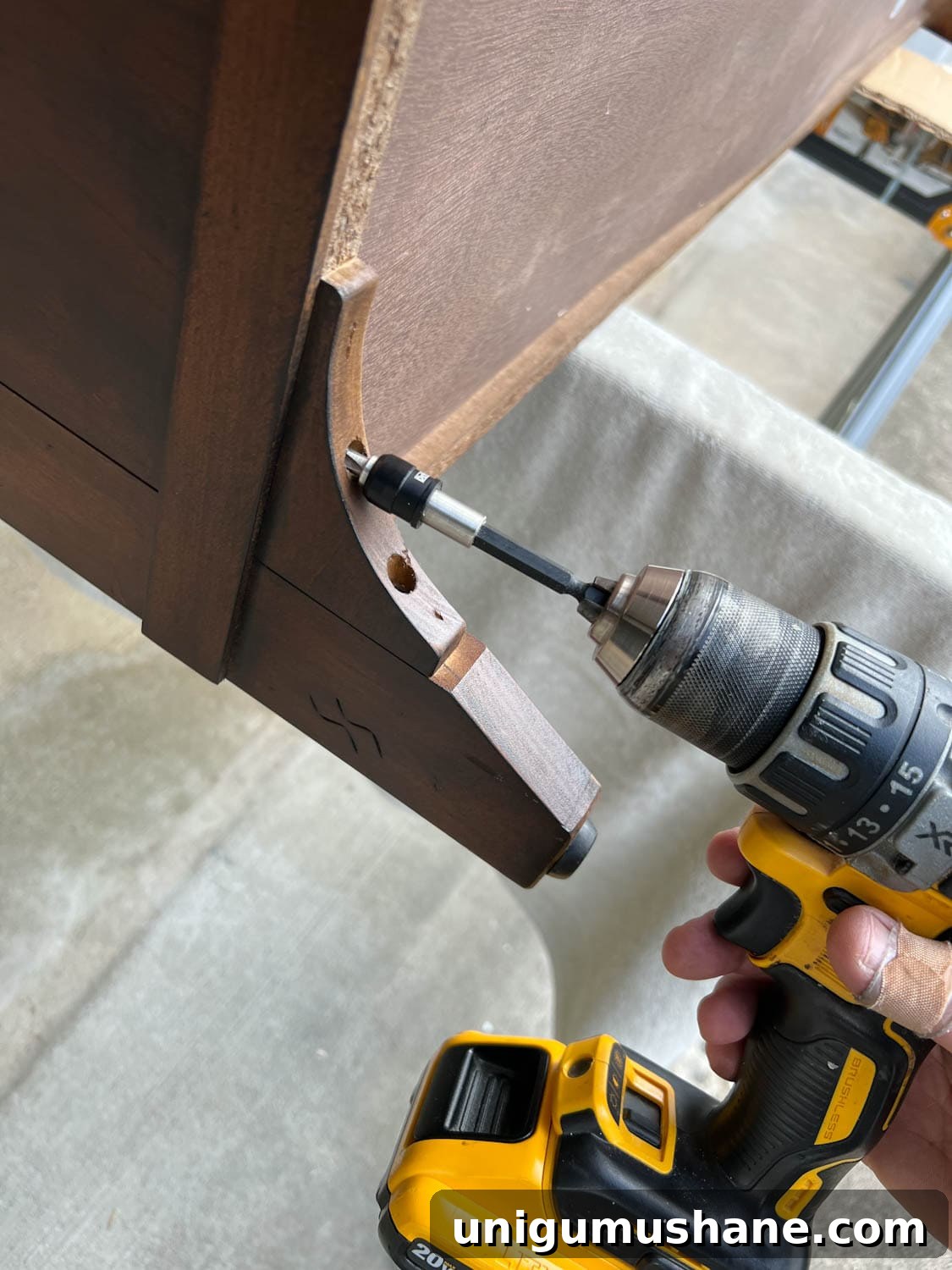
Step 1 – Remove Screws
Start by removing any screws that hold the existing legs in place with a drill or screwdriver.
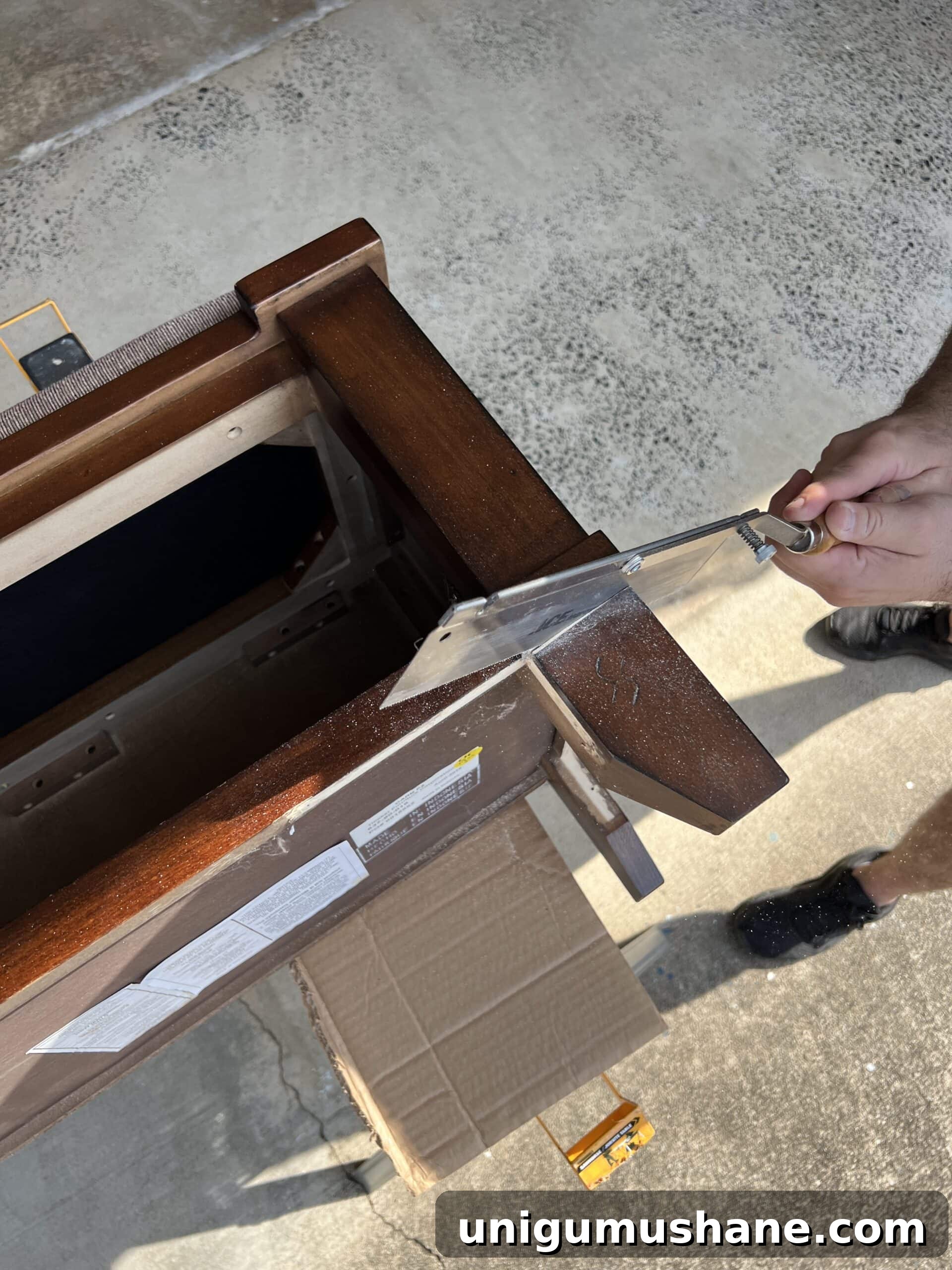
Step 2 – Cut Off Legs
If legs are glued or are part of the frame, use a fine-tooth hand saw for slow, precise cuts. A circular saw is faster but less forgiving; the hand saw prevents costly mistakes when working with thick wood.
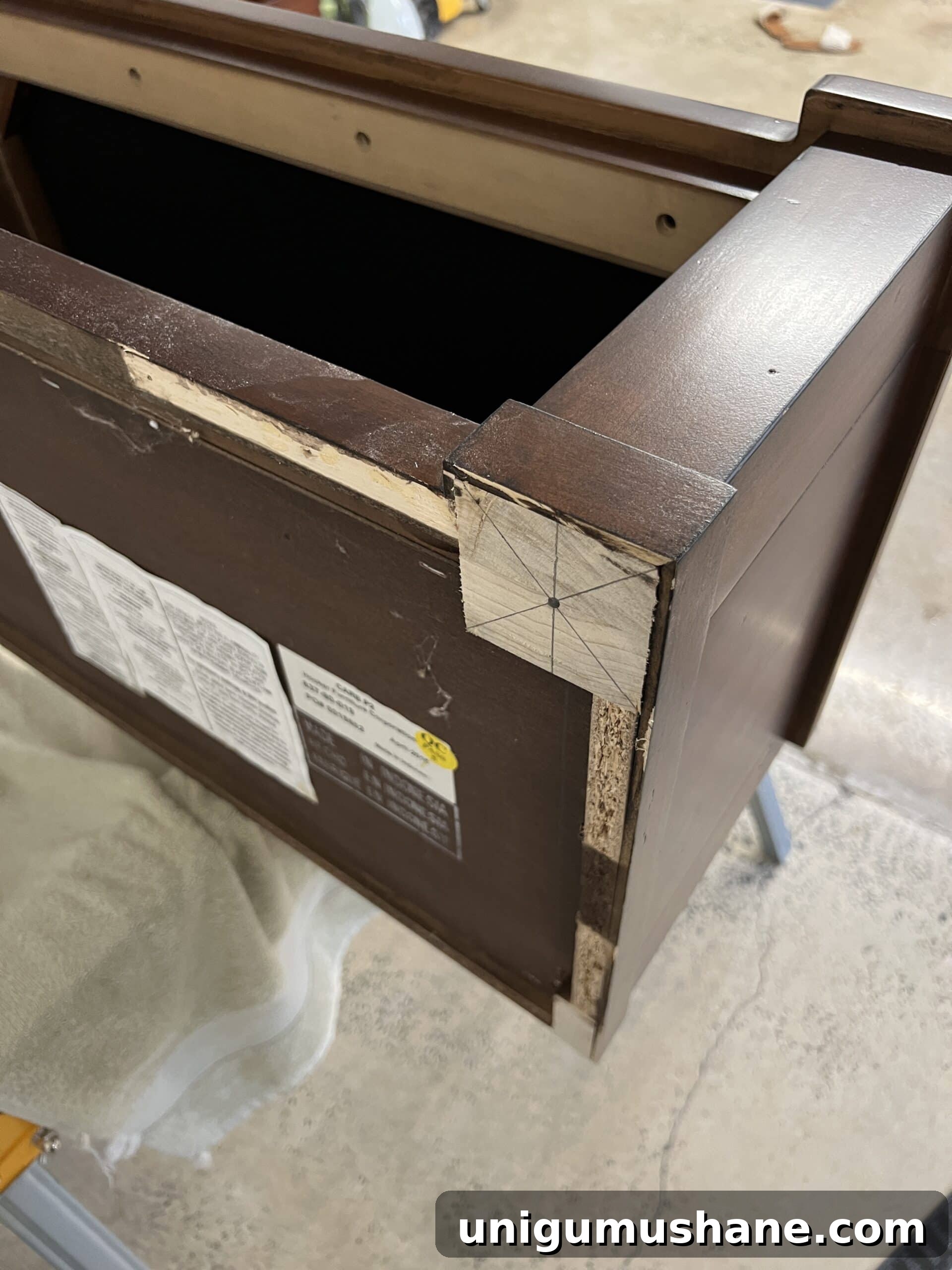
Step 3 – Mark Placements for New Legs
Use a pencil and speed square to mark the exact location for each new leg. Mark an X or center point at each corner so drilling and installation are straightforward.
There are countless leg styles available that can instantly update a piece. Choose a height and silhouette that complements the piece’s proportions.
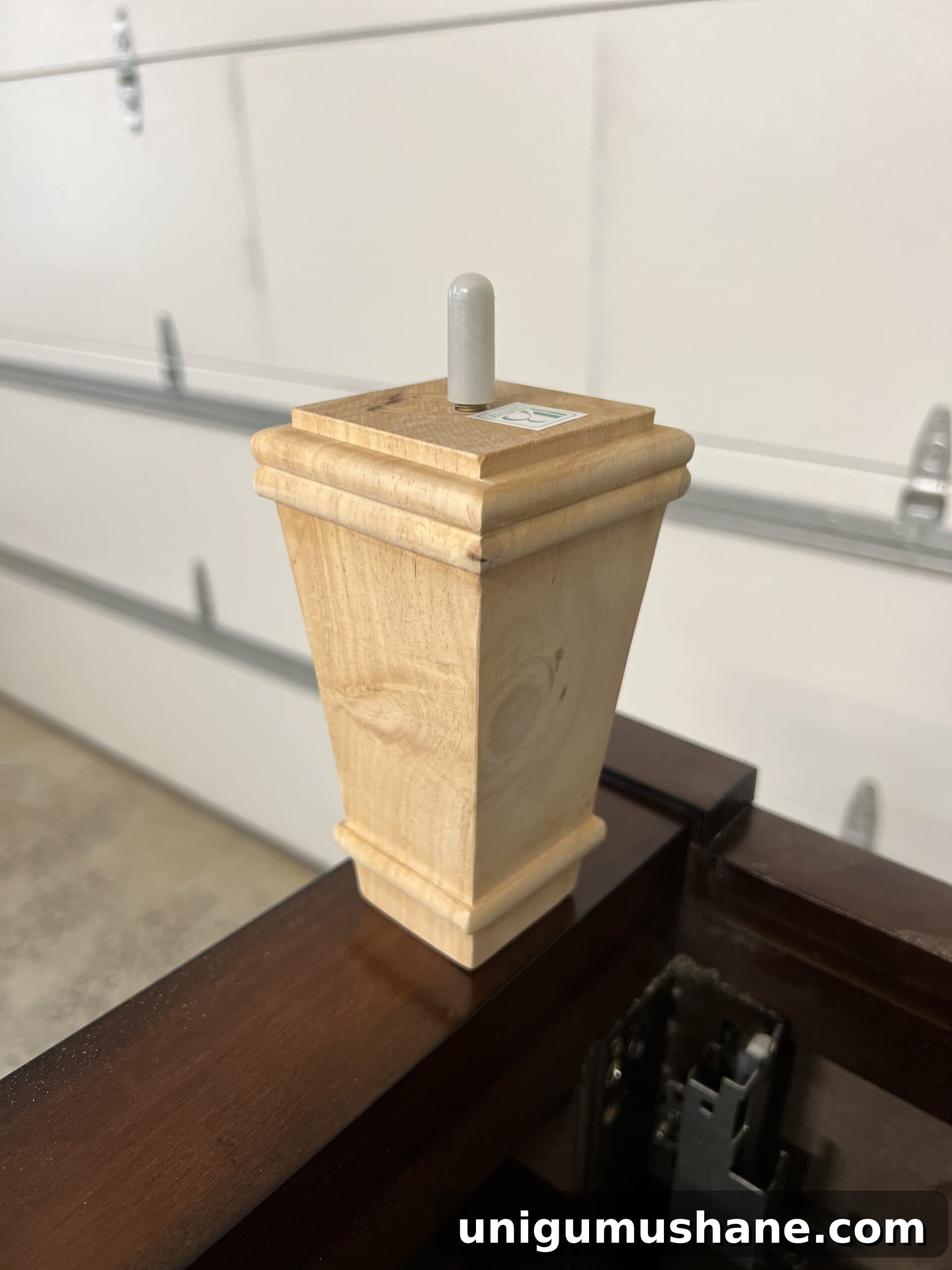
Step 4 – Drill Holes for New Legs
Select a drill bit that matches the new leg screws. Drill to the appropriate depth at each marked location, add a dab of construction adhesive for extra hold, and secure the legs with the provided screws.
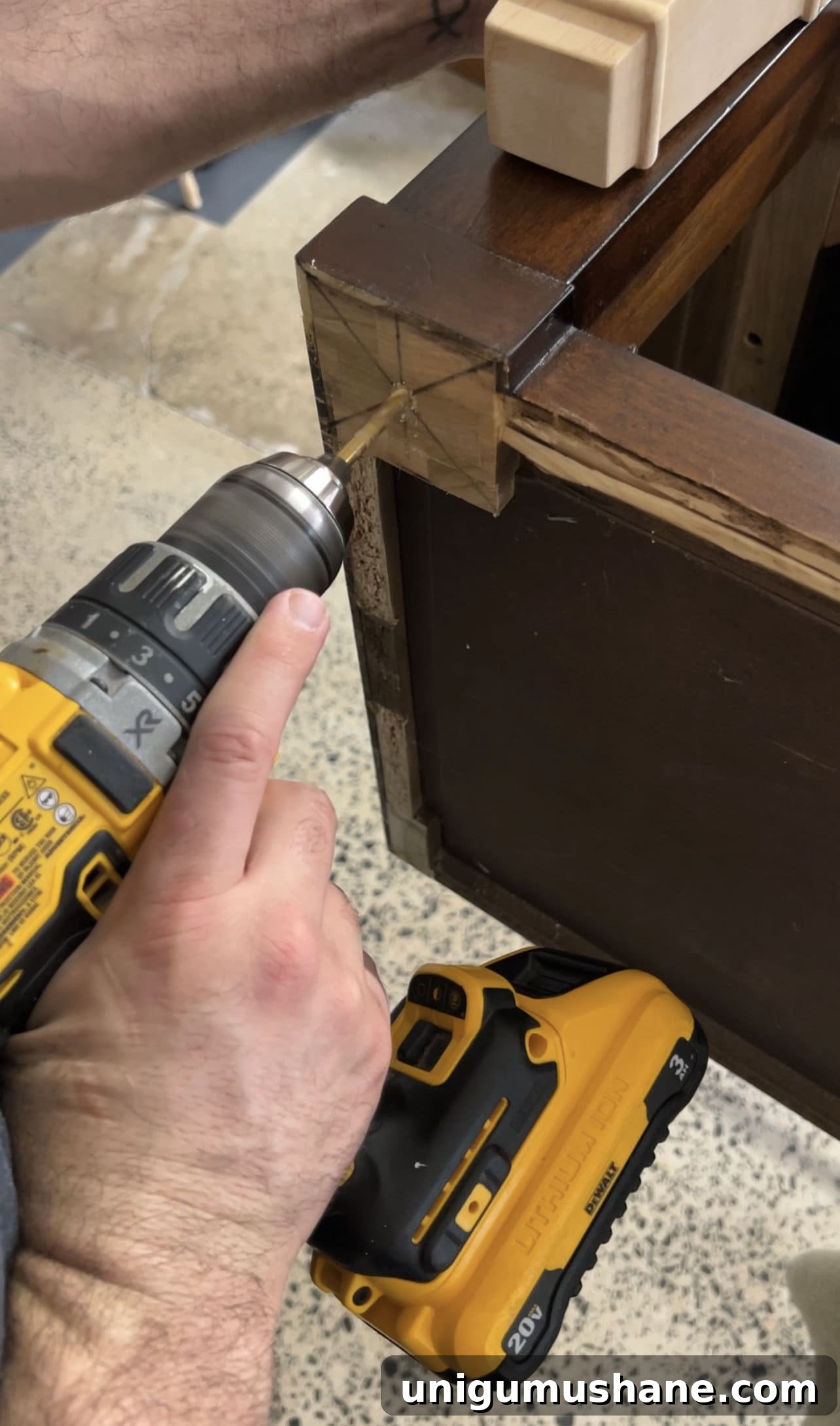
How to Add Reeded Molding to Plain Furniture
You can create reeded detailing with several materials. One popular option is pole wrap, but pre-formed reeded molding strips are another reliable, widely available choice. For this bench we used multiple molding strips to cover drawer fronts and panels.
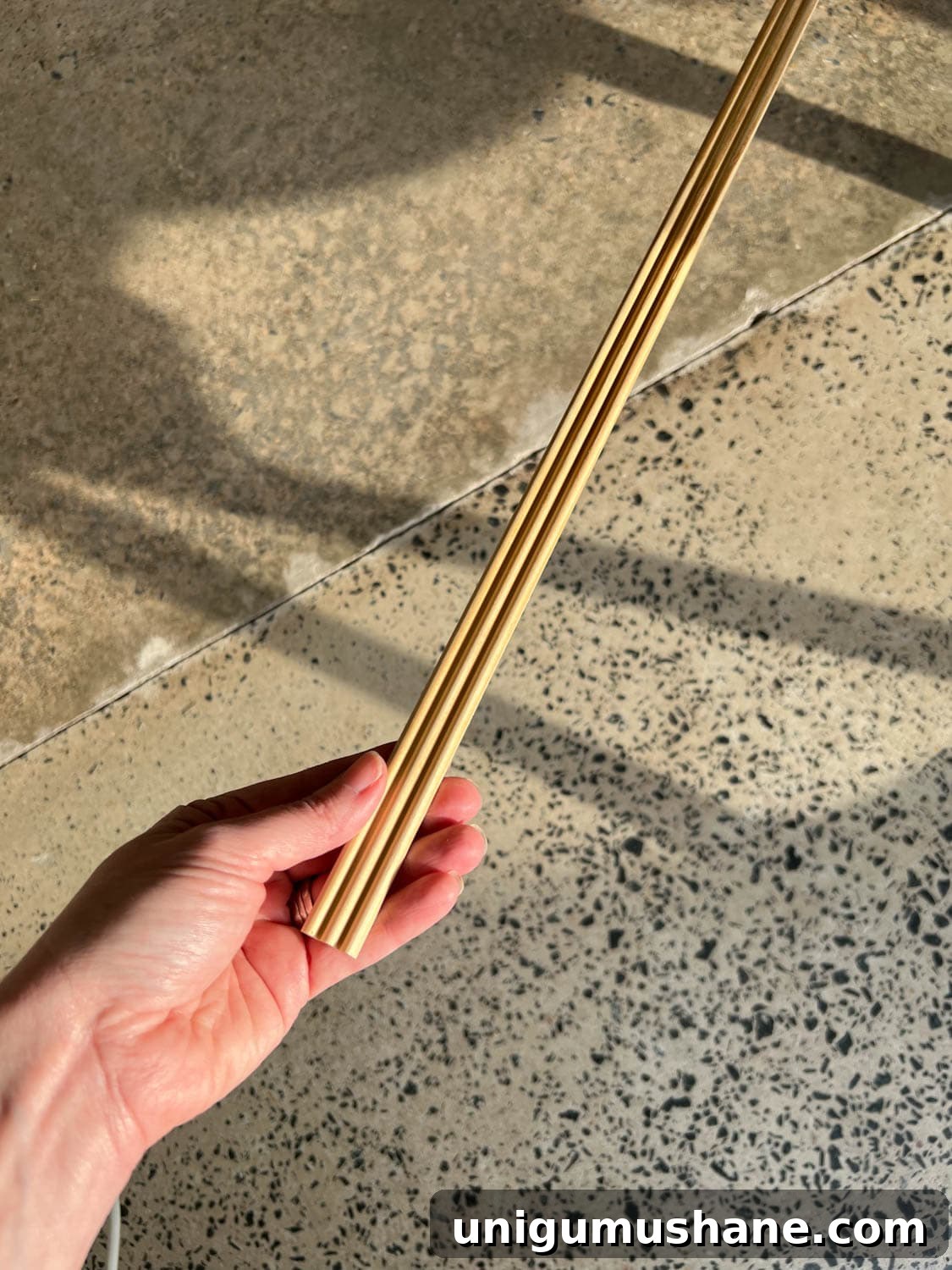
Step 1 – Measure Areas to Add Reeding
Measure the sections where you plan to add reeding and calculate how many strips you’ll need. Mark each molding strip where it will be cut to fit the furniture sections. We applied reeding to drawer fronts, side panels, and the bench’s front panel.
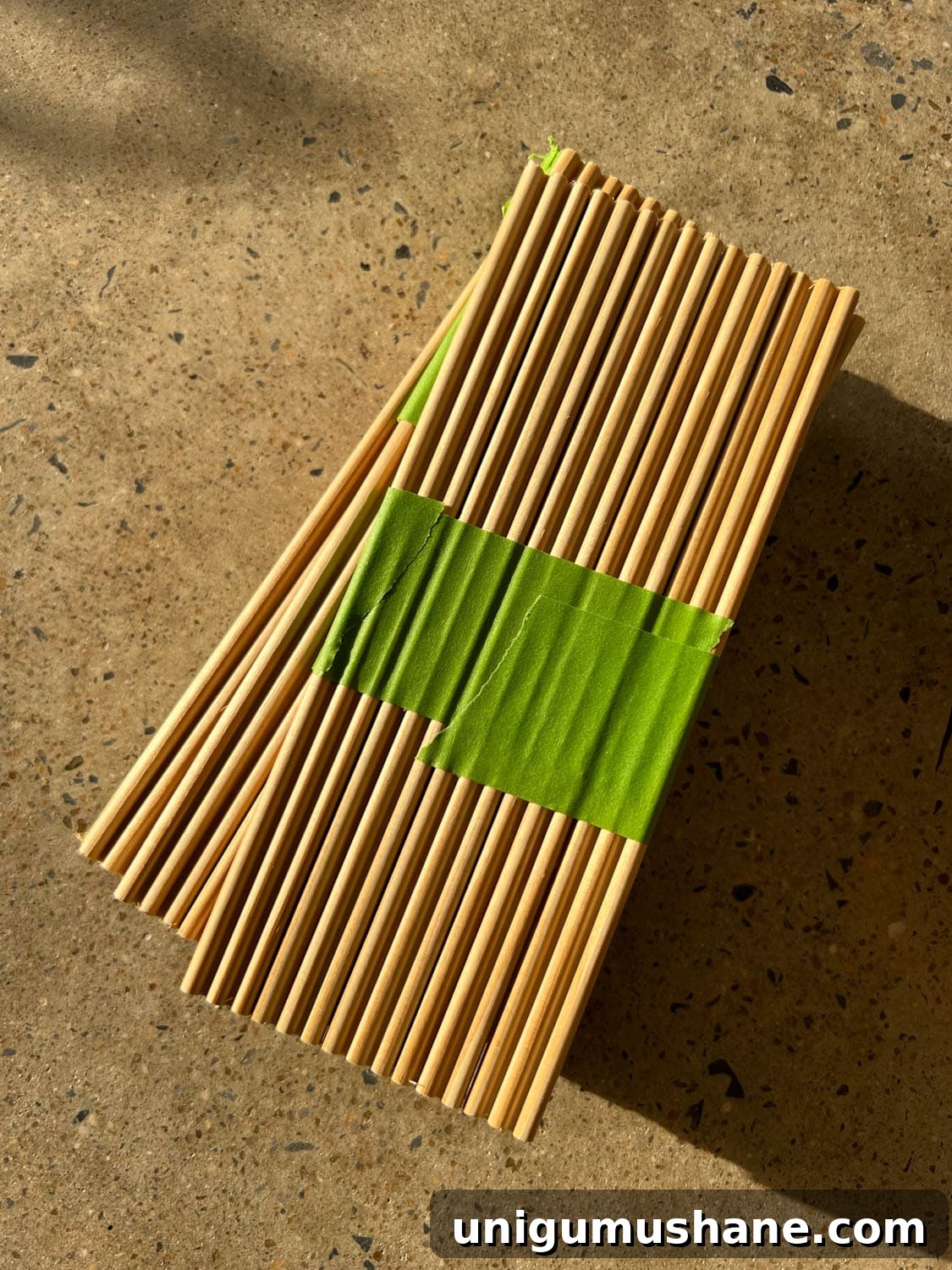
Step 2 – Tape 4 Molding Strips Side-By-Side
Group four molding strips together with painters tape, wrapping every 6–8 inches. Taping them makes it faster and more accurate to cut multiple strips to the same length on the miter saw.
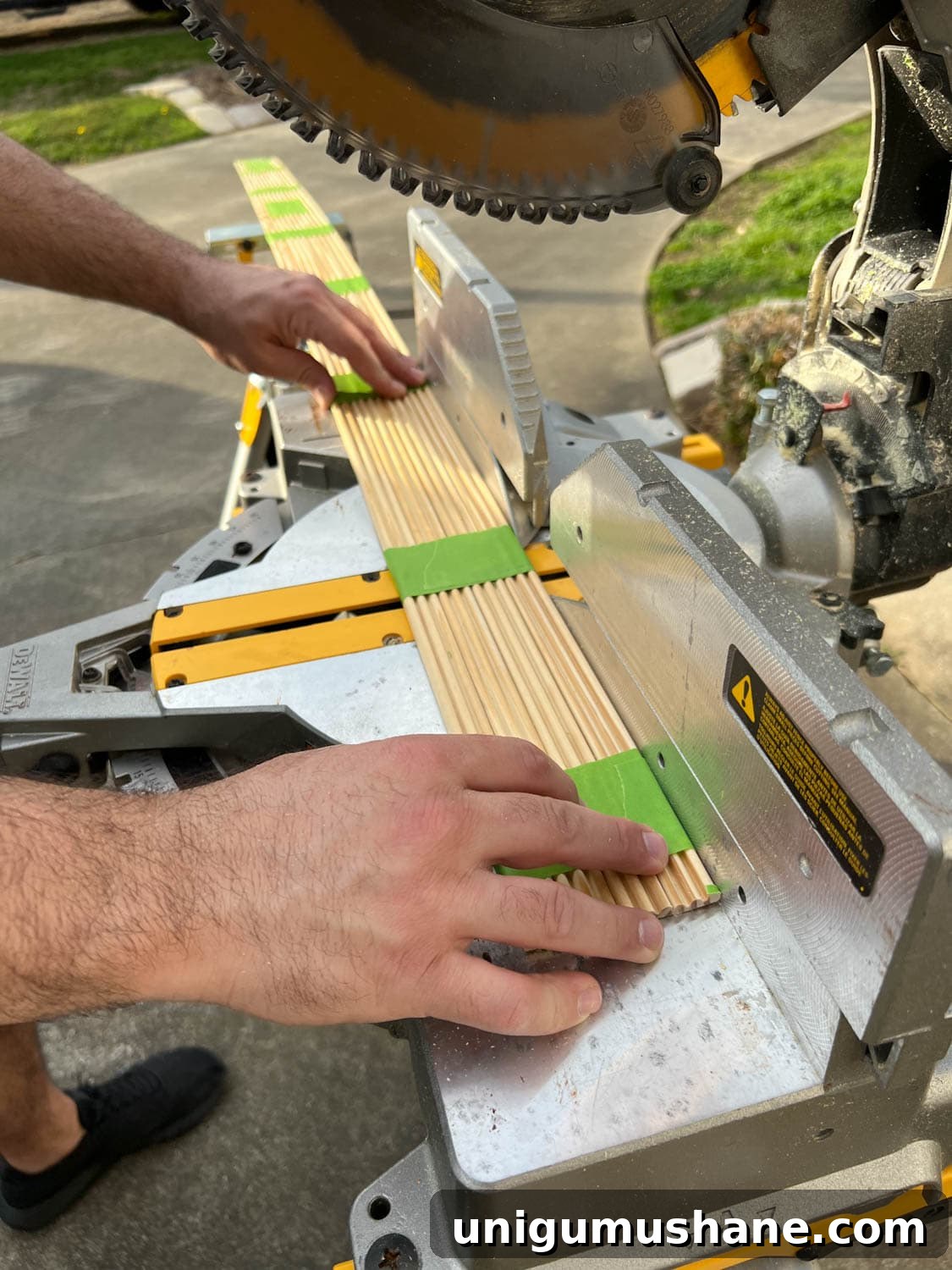
Step 3 – Cut Molding
Cut the taped molding bundles to the measurements you planned. Working in bundles speeds the process while ensuring consistent lengths.
Step 4 – Attach Molding With Adhesive
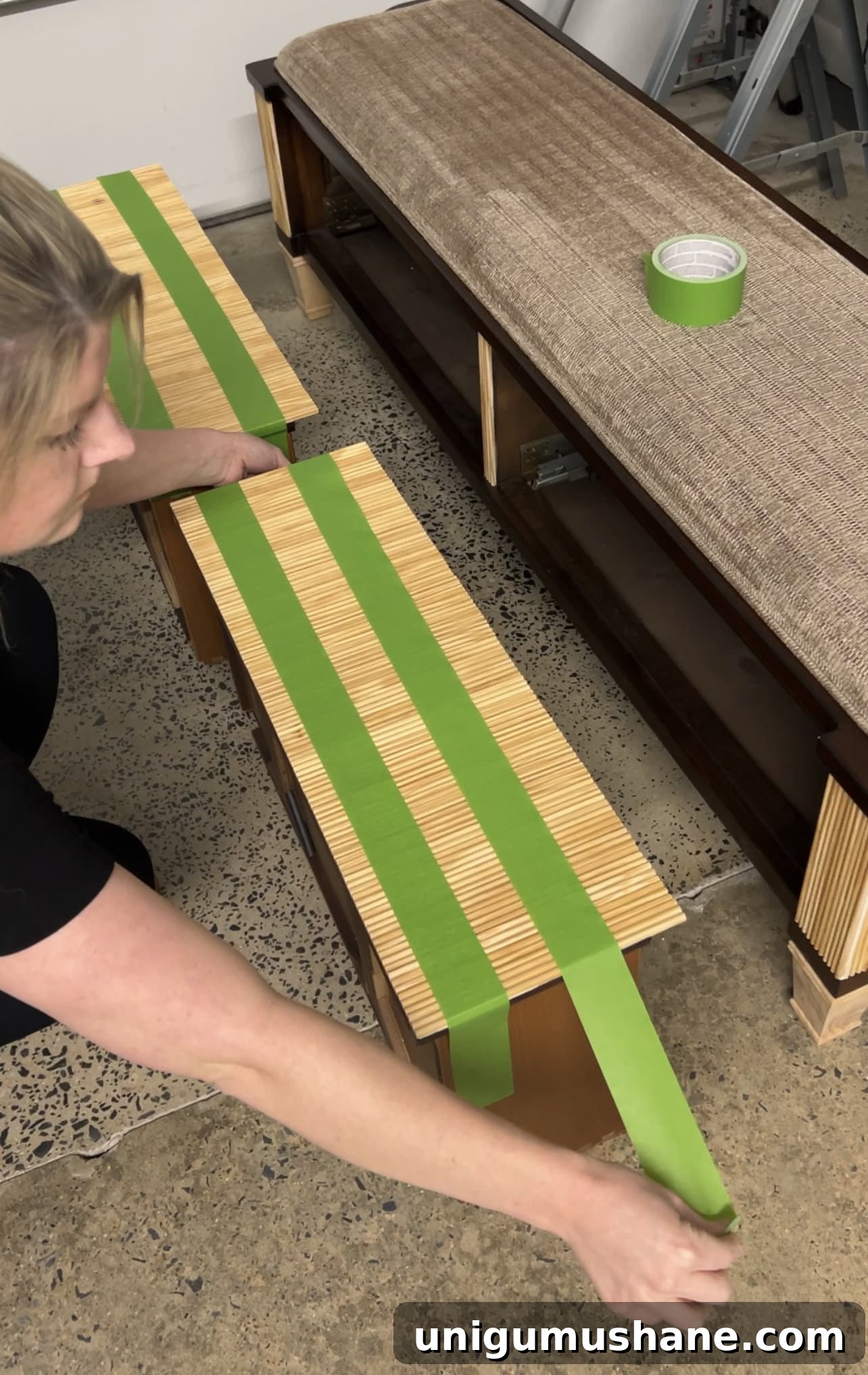
Apply construction adhesive to the back of each molding strip and press it firmly onto the furniture. Check that pieces are perpendicular and aligned with no visible gaps. Use painters tape across the trimmed surface to hold pieces snugly in place while adhesive cures, typically overnight.
Optional: If you prefer, a pin nailer can add mechanical support, but that requires filling any tiny nail holes later. Because those holes fall on detailed ribs, sanding and filling can be challenging — we found adhesive alone worked well.
Step 5 – Sand Reeded Areas Level
After the adhesive cures, lightly sand any uneven edges with an electric sander and medium-grit disc. Test drawer operation so no trim rubs on the case; sand additional high spots if needed.
Step 6 – Apply Primer
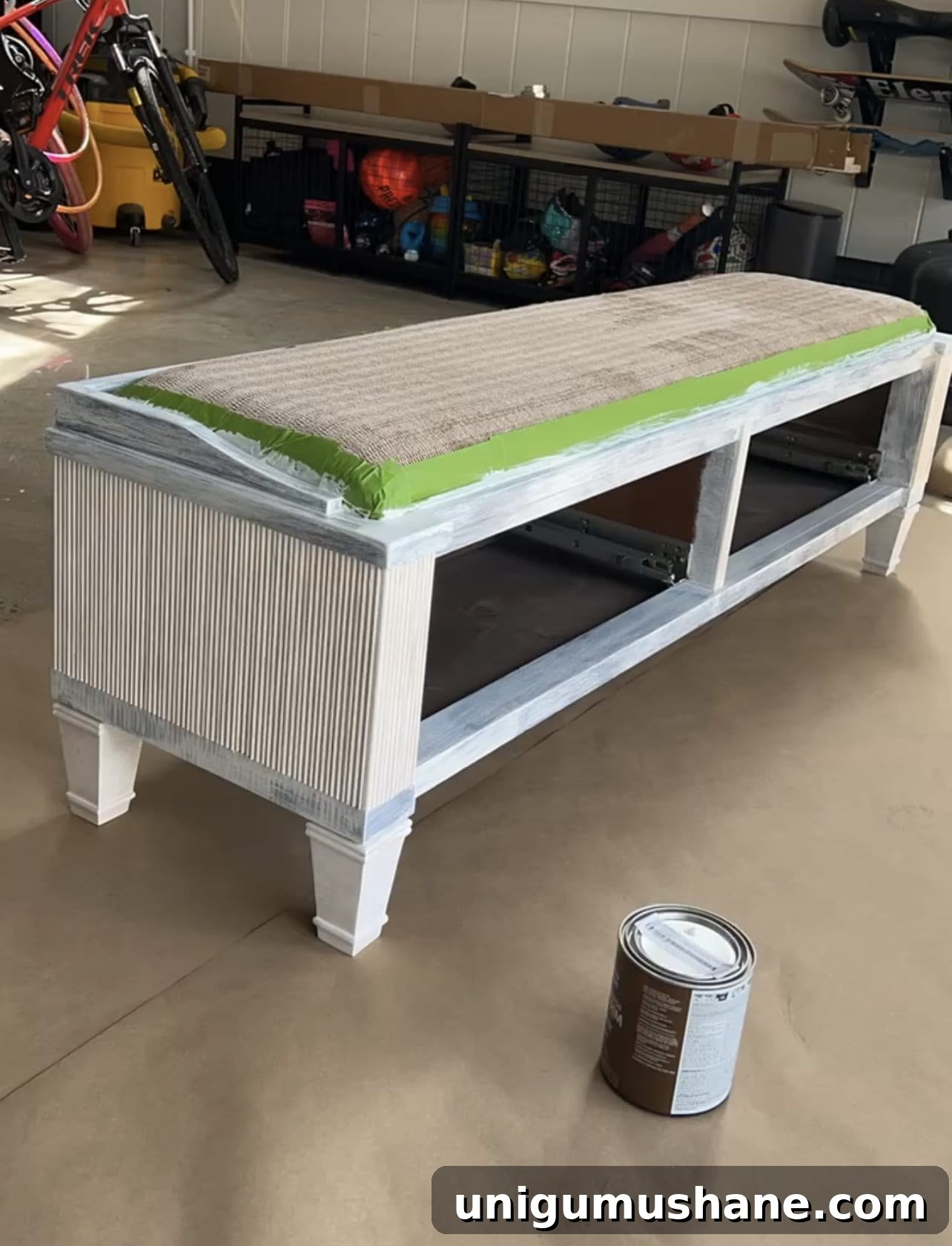
Prime the entire piece. For red-toned woods, use a shellac-based primer to block stains that can bleed through paint. It’s a smelly job but prevents undesired discoloration in the final finish.
Step 7 – Paint
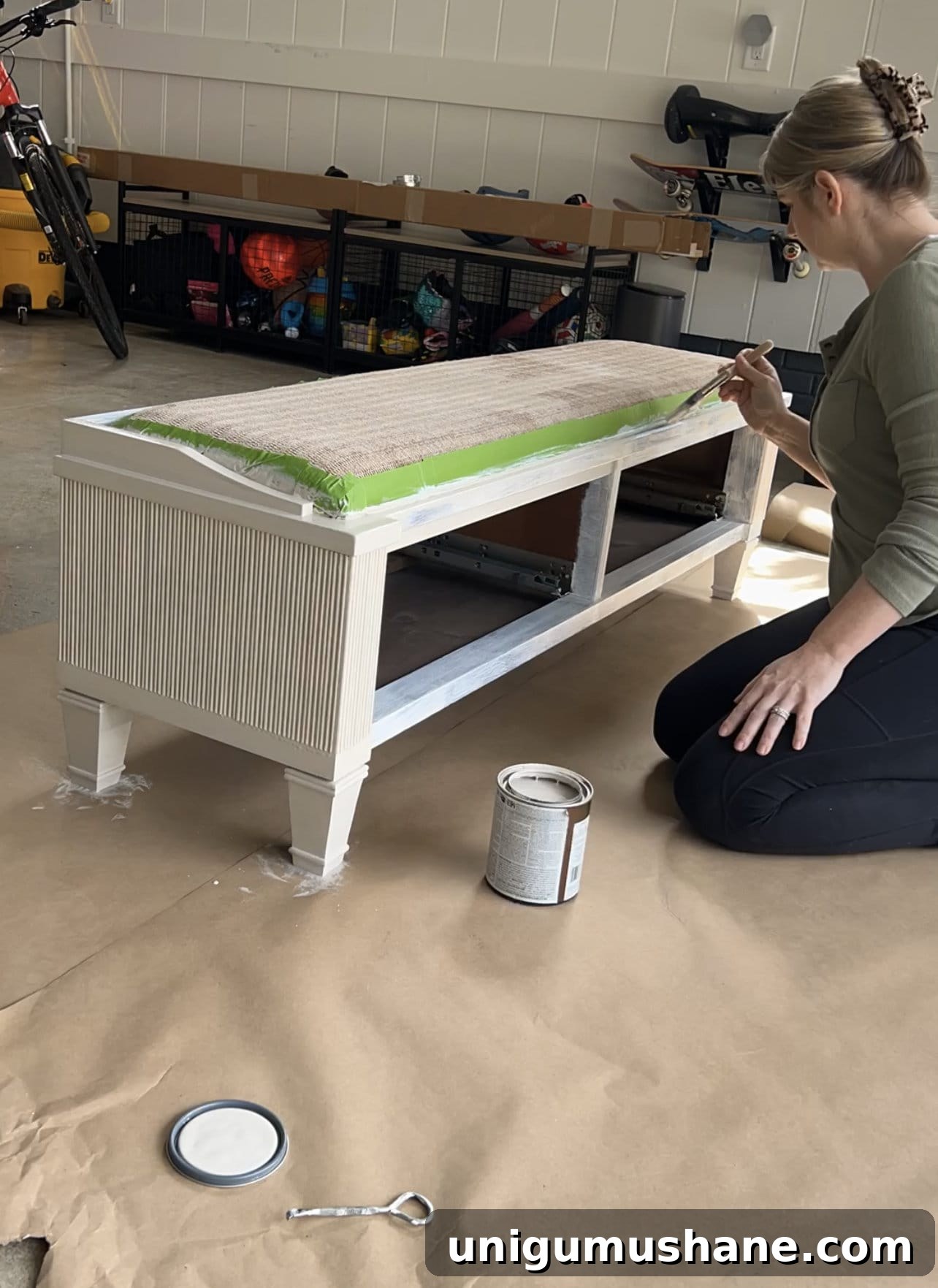
Apply two thin coats of a durable enamel or trim paint, brushing carefully into the grooves between the reeded ribs. Use a small brush to clear paint from tight crevices and remove any drips before they dry. Choose a paint formulated for high-traffic surfaces so the finish stands up to daily use.
Step 8 – Add Hardware
Once paint is cured, carefully drill through the molding for new knobs. Use existing holes as guides when possible and drill from the inside toward the outside to ensure clean entry points on the trim. Choose hardware that complements the finish—small brass pulls can elevate the look without costing a lot.
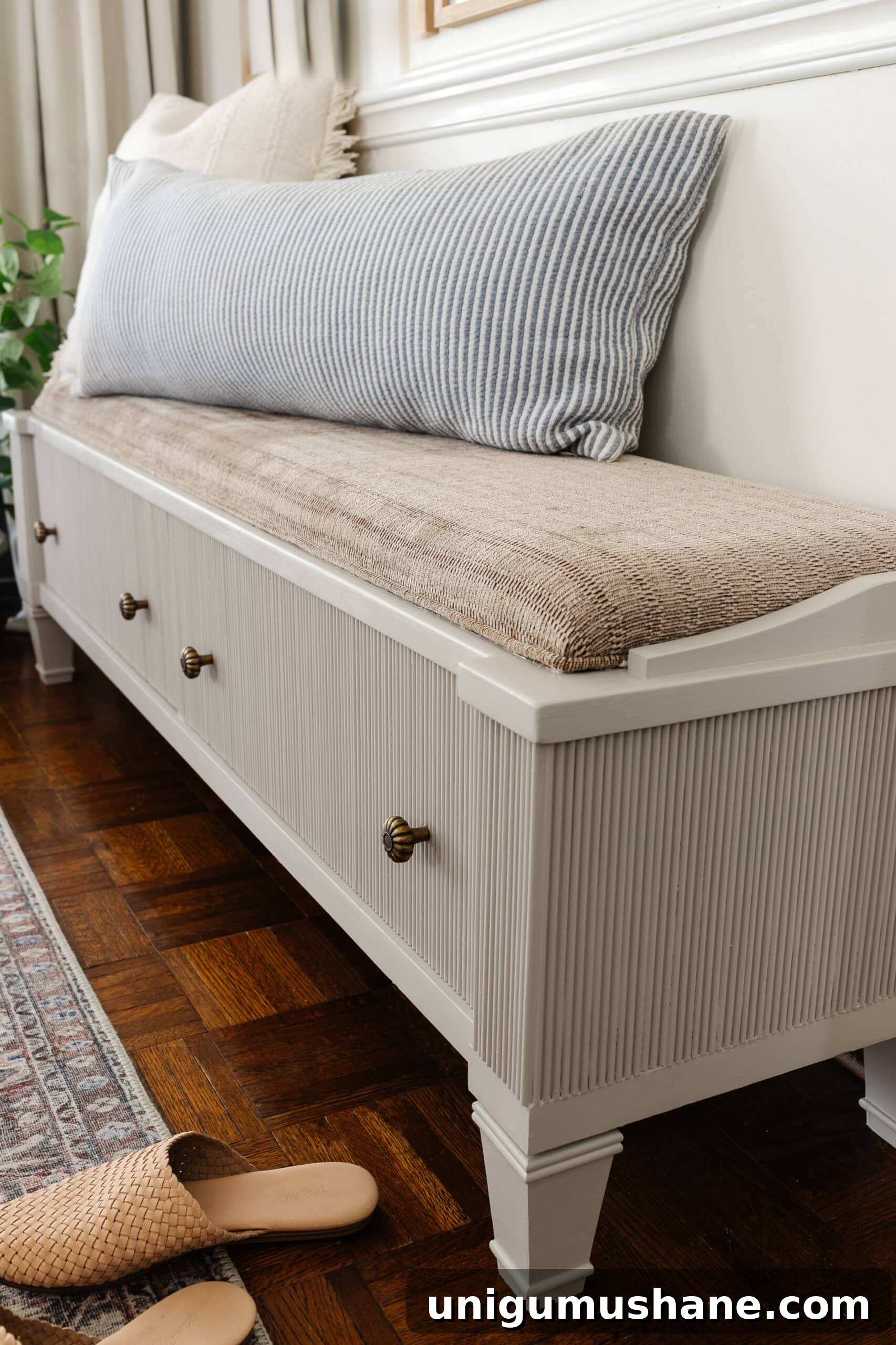
The result is practical and pretty — a functional shoe storage bench that fits the space and feels intentional. The next step is convincing the family to actually use it consistently.
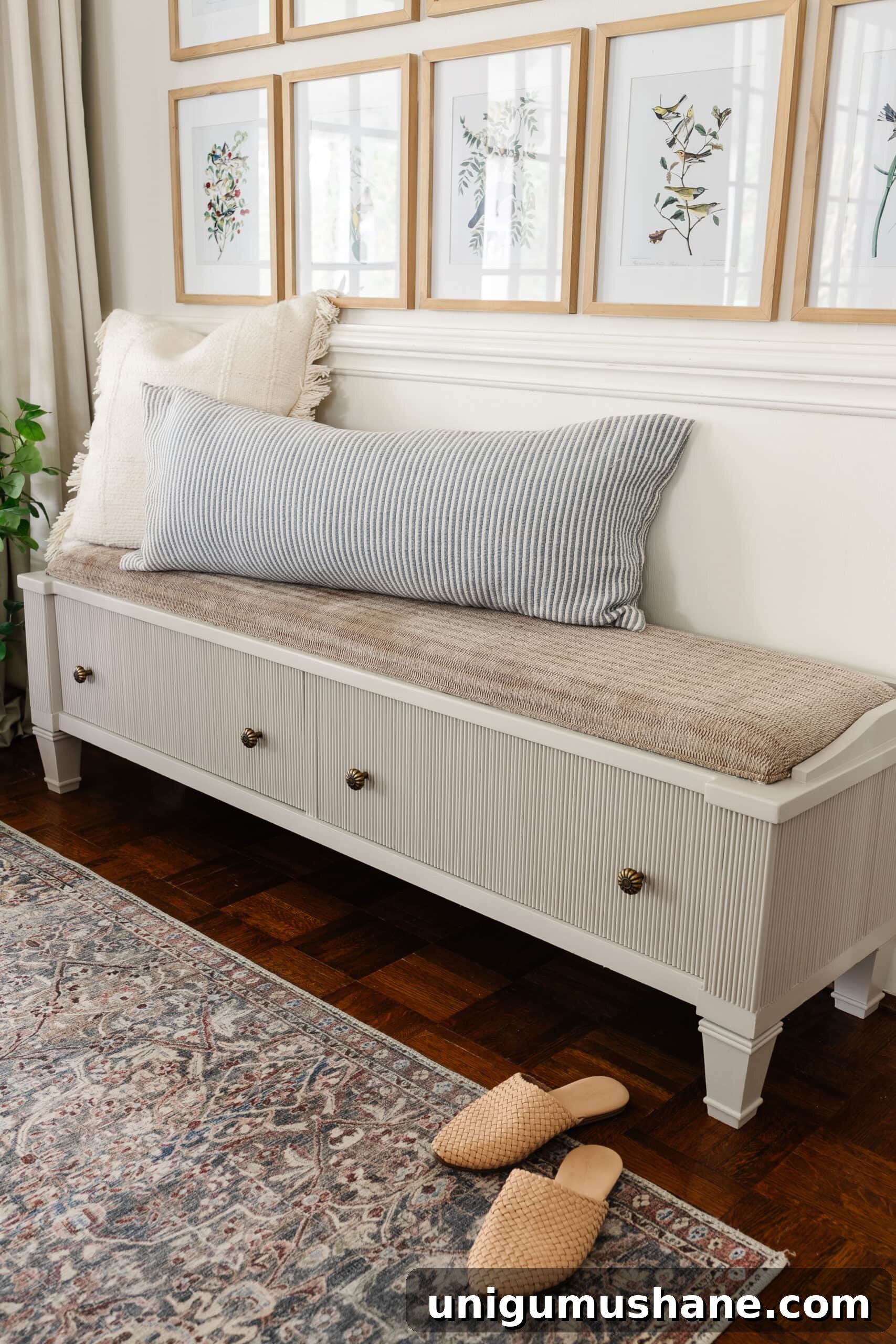
Reeded and Fluted Furniture Finds
For inspiration, consider store examples of reeded and fluted furniture across budgets. Comparing professional pieces to a DIY flip can help you refine proportions, paint choices, and hardware styles when planning your project.

- Consoles and chests with reeded fronts
- Fluted buffets and drum end tables
- Reeded console tables that add architectural detail
- Nightstands and dressers with subtle ribbed panels
Entryway Sources
Details that complete this entryway: neutral wall and trim colors, a dark door for contrast, layered textiles, and simple framed art. A gallery wall of natural history-style prints pairs nicely with the bench’s classic reeded detail.
- Wall color: a warm off-white
- Trim color: a crisp white
- Door color: a deep charcoal or black
- Bench finish: a neutral taupe that accentuates reeded shadows
- Layered pillows and a runner-style rug for practicality and texture
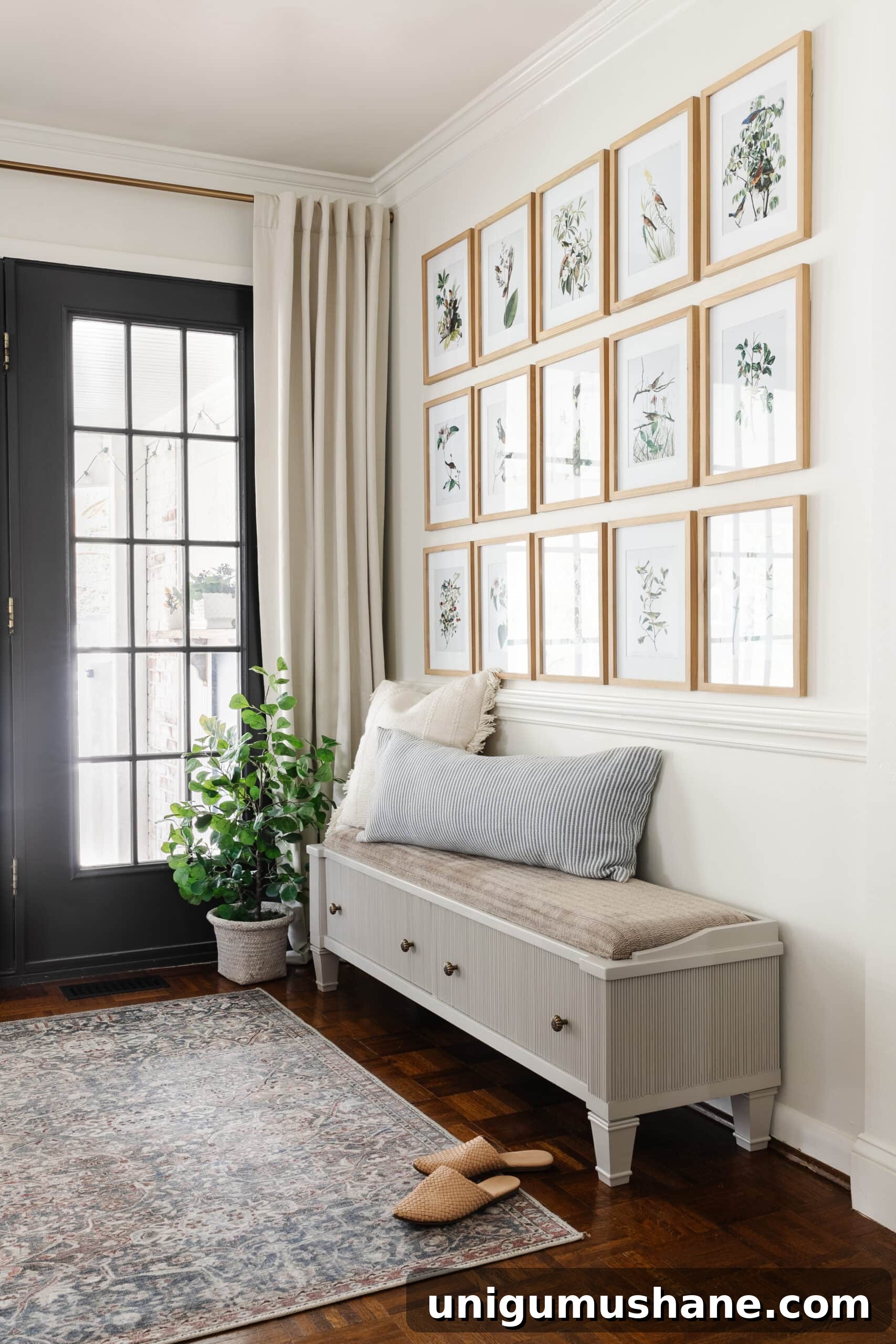
Now that the bench is finished, I’m debating whether to paint the upholstered cushion for a more cohesive look. It’s been cleaned and steamed; a faux-leather or deep rust-brown paint could create a different mood. For now, the bench does the job and the reeded detailing gives the entryway a refined, custom feel.
DIY Furniture Ideas
- Beginner’s guide to painting furniture
- Contact-paper hacks for a faux burl wood finish
- How to clean and refresh wood furniture
- Applique and molding hacks for IKEA dressers
- Where to find hardware and pulls for furniture projects