
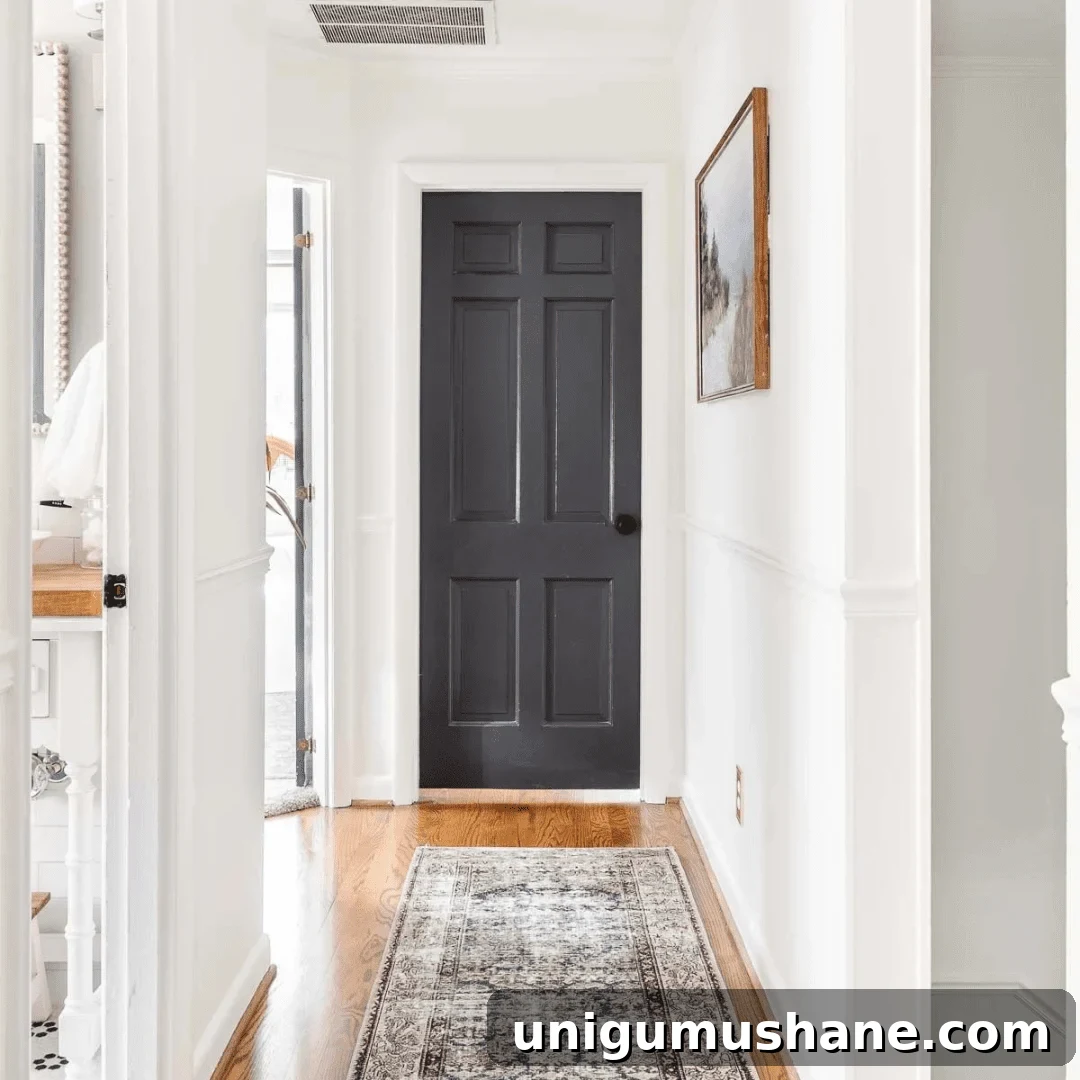
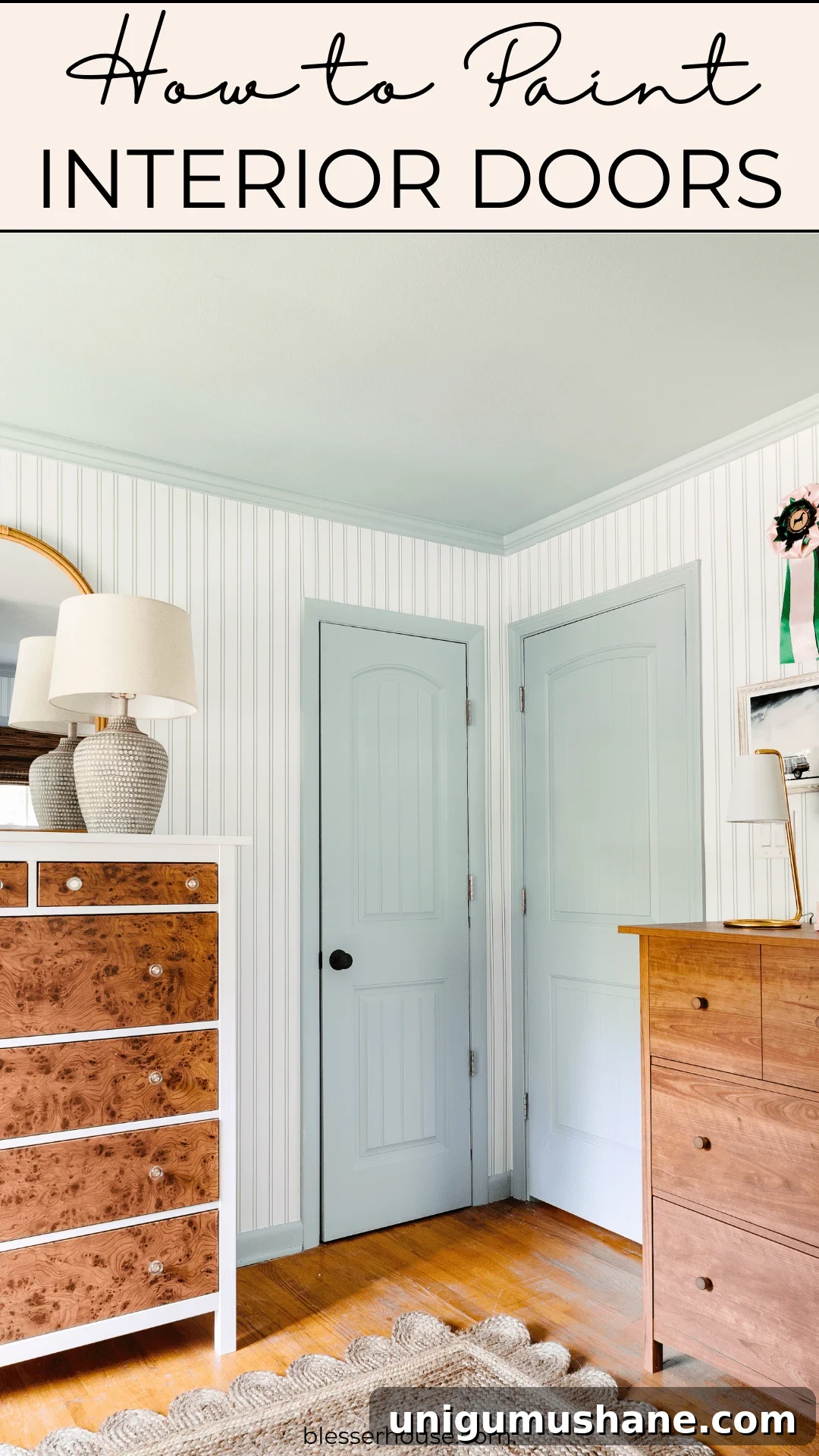
A practical, photo-led guide for painting interior doors that transform any room — plus the best paints and techniques to ensure a durable finish.
Giving an interior door a fresh coat of paint is one of the fastest, most affordable ways to change the feel of a room. Whether you want a bold contrast or a subtle, cohesive look, painting doors makes a dramatic impact with relatively little effort.
If painting doors feels intimidating, this step-by-step guide will walk you through the process and show you how to get a long-lasting, professional-looking finish.
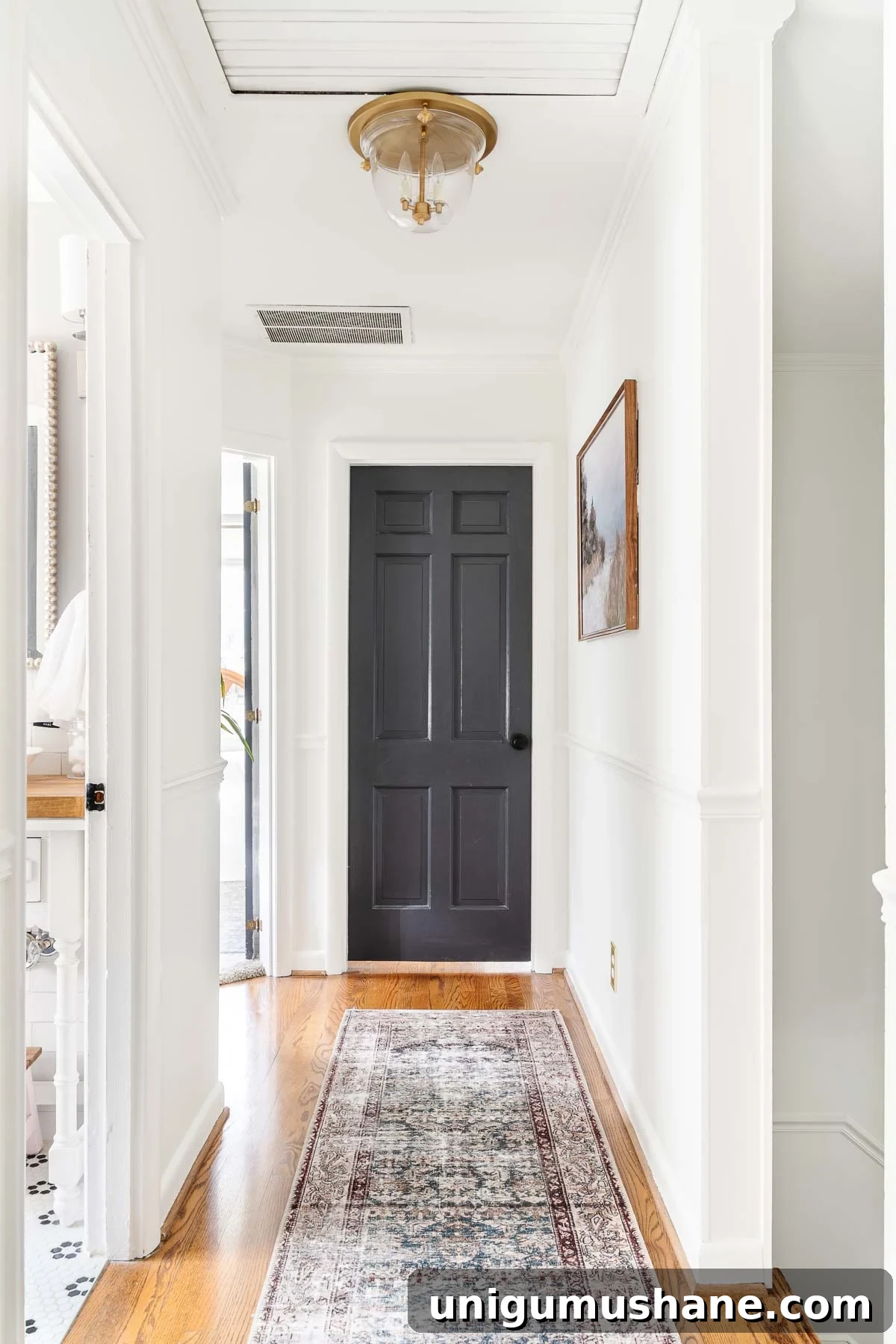
When I painted the first door in our home a deep charcoal, the change was instant and addictive. Since then, we’ve painted nearly every door Benjamin Moore Wrought Iron and noticed how each room instantly felt more finished and high-end — all for the cost of paint.
Whether you’re painting a single door or an entire houseful, the right color and method can elevate your space without a major renovation.
What Sheen to Use on Interior Doors
Pick a sheen based on the look and durability you want. Sheen determines how much light a painted surface reflects and affects how easy it is to clean.
Higher Sheen Options
Higher sheens are more durable and easier to clean but can highlight surface imperfections.
- High gloss
- Semi-gloss
- Satin
Lower Sheen Options
Lower sheens hide flaws better and feel more subtle, but they are harder to clean.
- Flat
- Eggshell
Semi-gloss is traditionally recommended for doors and trim because it balances durability and appearance. That said, satin or eggshell can create a softer, more modern look while high gloss delivers a dramatic, reflective finish — choose what matches your style and maintenance expectations.
Best Type of Paint for Doors
For interior doors, a waterborne alkyd like Benjamin Moore Advance is an excellent choice. It cures to a hard, furniture-quality finish that resists scuffs and stands up to cleaning, but it cleans up with water unlike traditional oil paints. Advance is self-leveling, which minimizes brush strokes for a smooth, durable result.
Why Avoid Regular Latex for High-Traffic Doors
Regular latex paint can look fine initially, but in high-traffic areas it’s more likely to show chips and wear. Investing in a waterborne alkyd will give you a longer-lasting finish that needs fewer touch-ups over time.
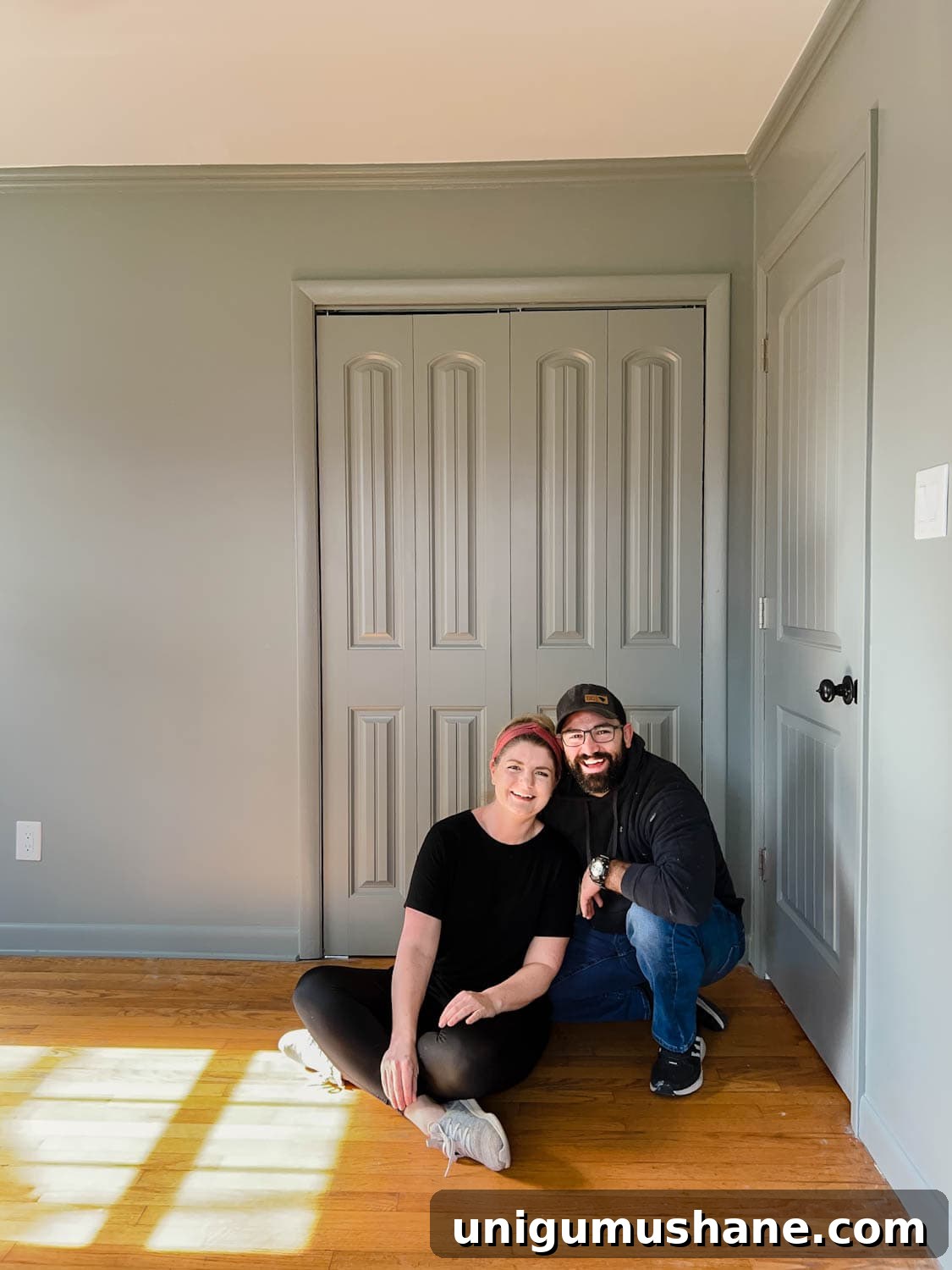
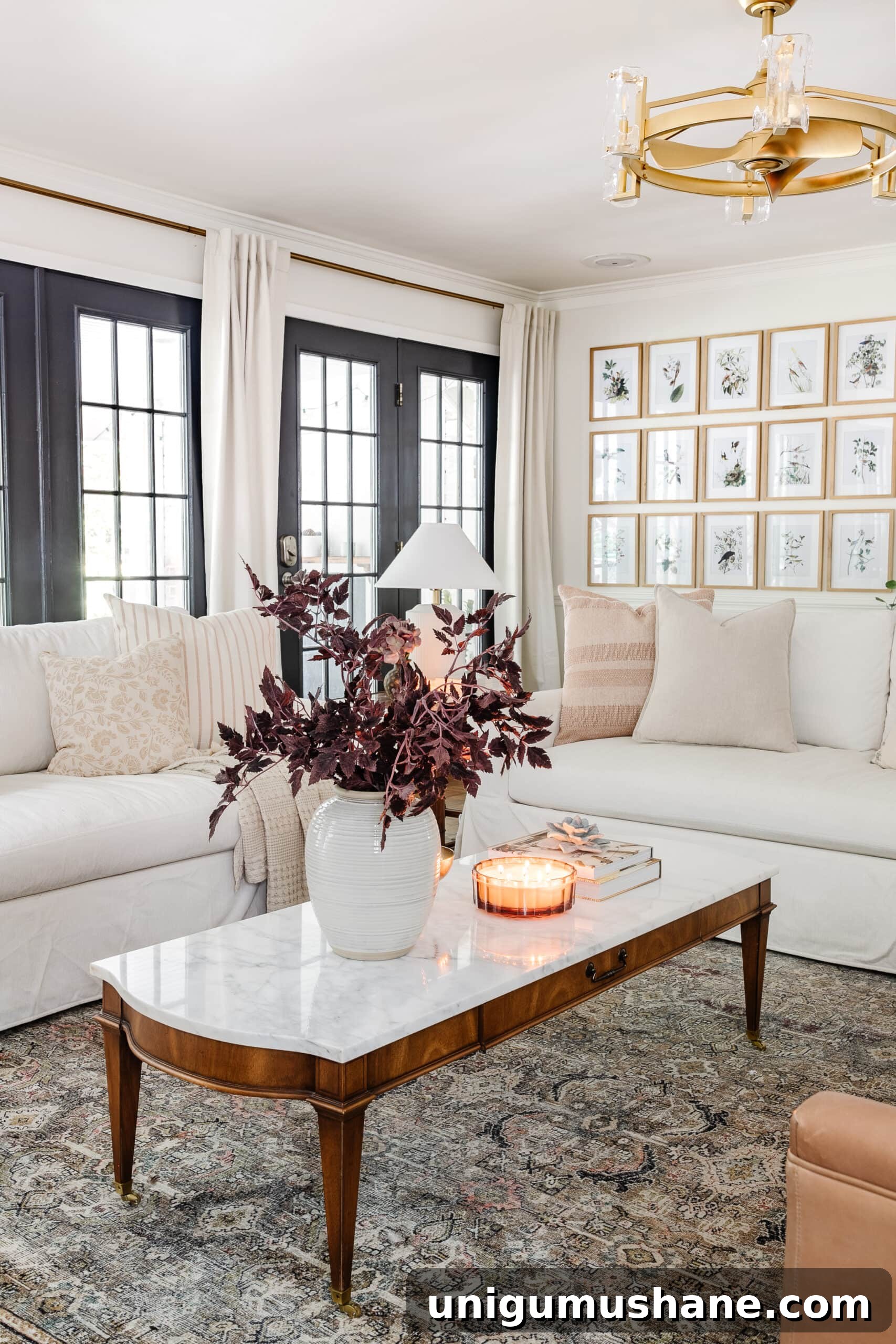
Painting doors the same color as the surrounding walls and trim — a technique called color drenching — can make rooms feel larger and more cohesive. In other rooms, a contrasting dark door adds depth and a luxe feel.
How to Paint Interior Doors Without Removing Them
This method lets you paint in place to save time and effort, though removing the door can still make certain steps easier.
Tools and Materials
- Liquid deglosser
- Clean rag or tack cloth
- Drop cloth
- Rubbing alcohol and cotton ball
- 120–150 grit sandpaper
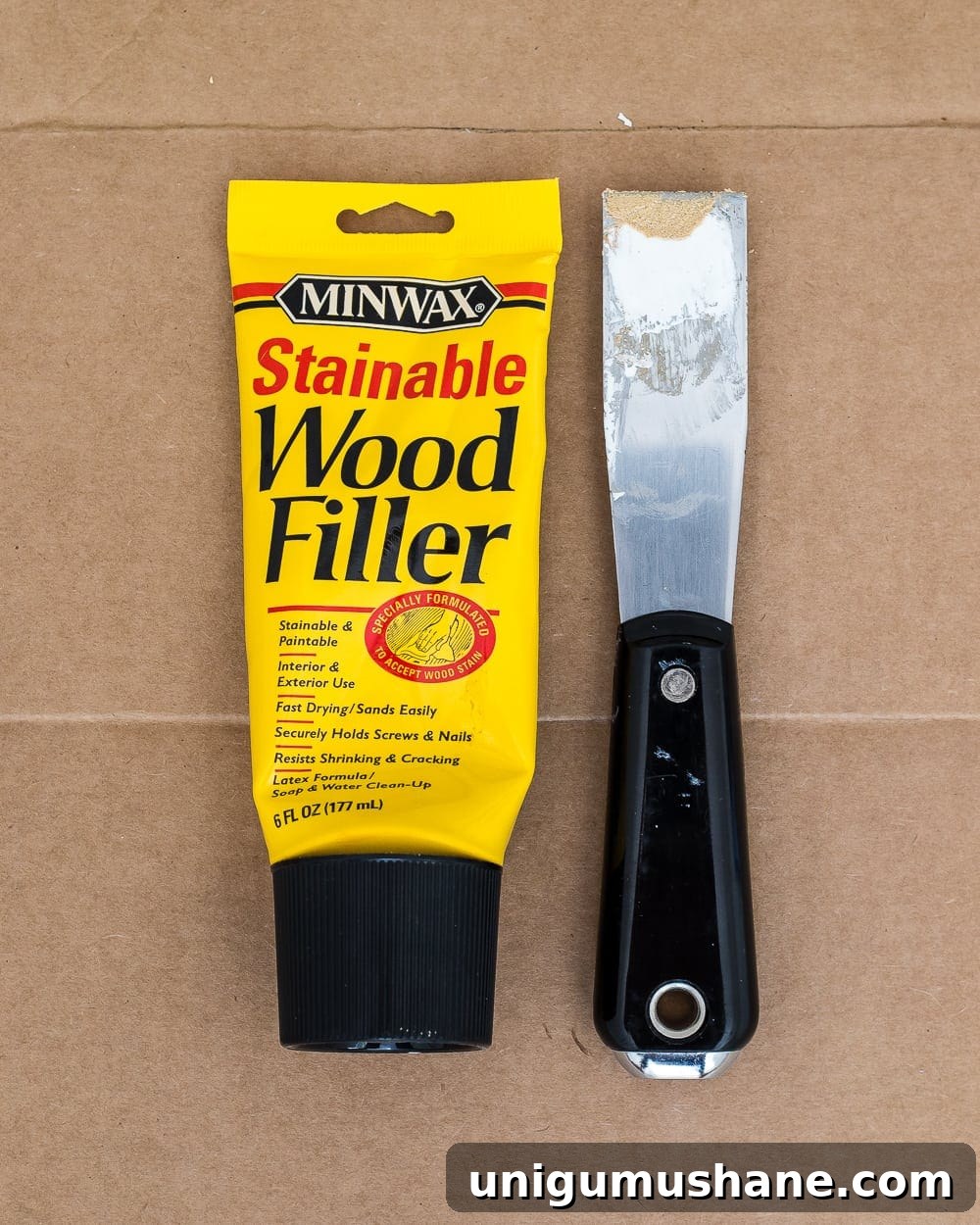
- Wood filler and putty knife
- Waterborne bonding primer (e.g., INSL-X STIX)
- Paint stir sticks
- Painter’s tape and aluminum foil
- Angled brush suitable for doors and trim
- Benjamin Moore Advance (semi-gloss or your chosen sheen)
- Masking liquid (Mask and Peel) and utility knife for doors with glass
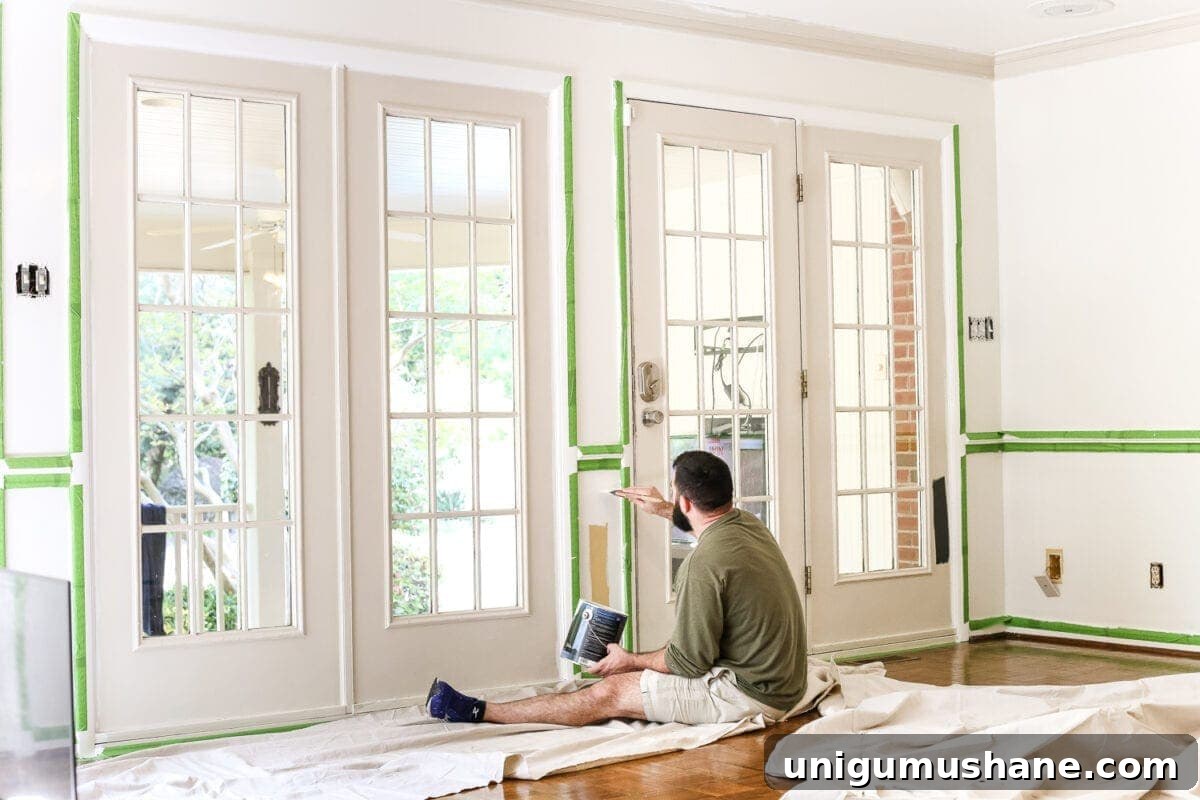
You can paint doors with them still on their hinges using careful prep and protection for hardware. For French doors or doors with glass panes, masking liquid (a peelable film) speeds up cleanup and produces crisp glass edges.
Painting French Doors or Doors with Glass
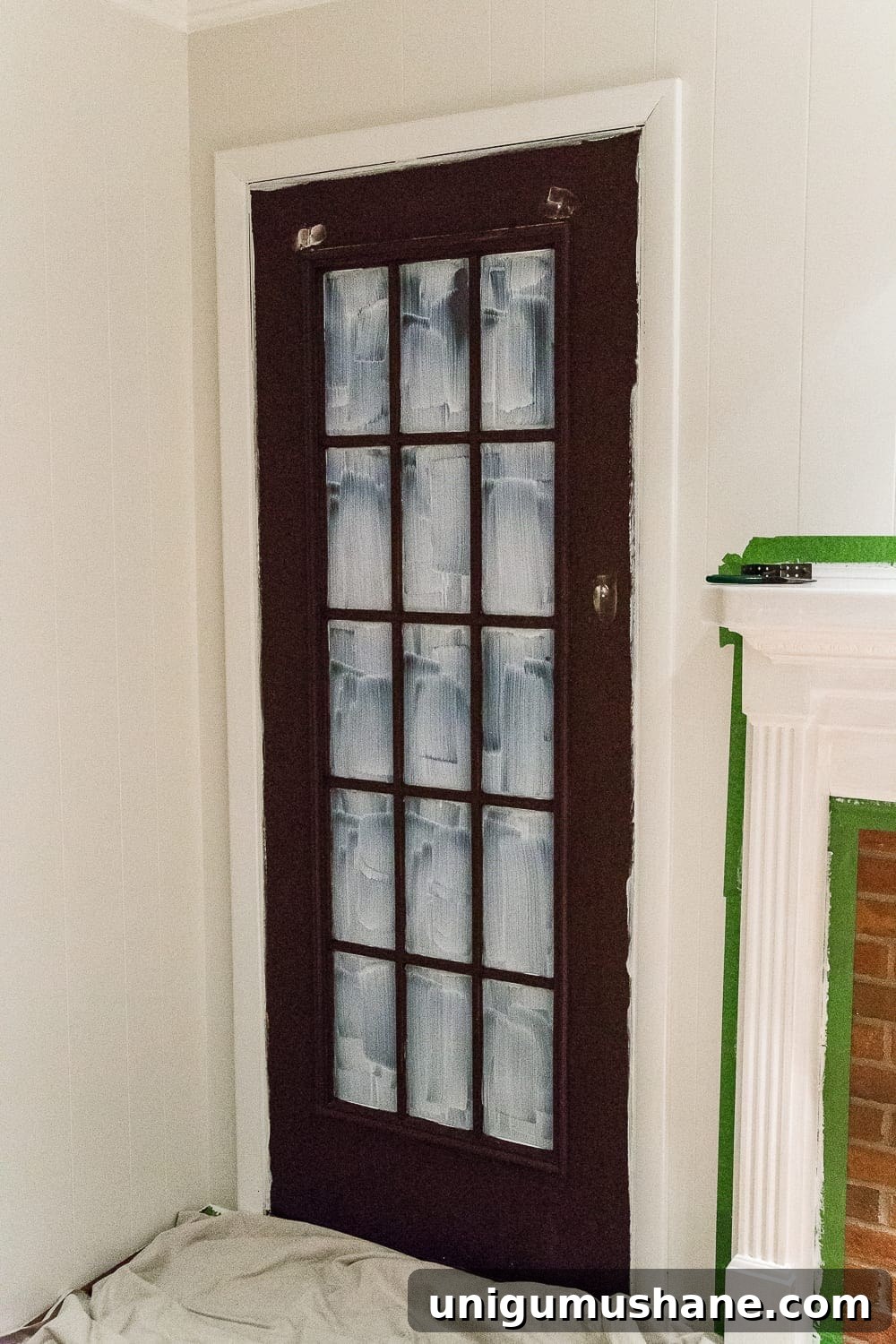
Apply masking liquid to each pane before you paint. It looks white at first and dries clear; once your paint job is finished you can score the film edges with a utility knife and peel it away to reveal clean glass lines.
Step 1 – Apply Masking Liquid
Coat each glass pane with a generous layer of masking liquid. Allow it to dry completely — it will go from white to a clear film — then continue with door preparation and painting.
Step 2 – Score Edges
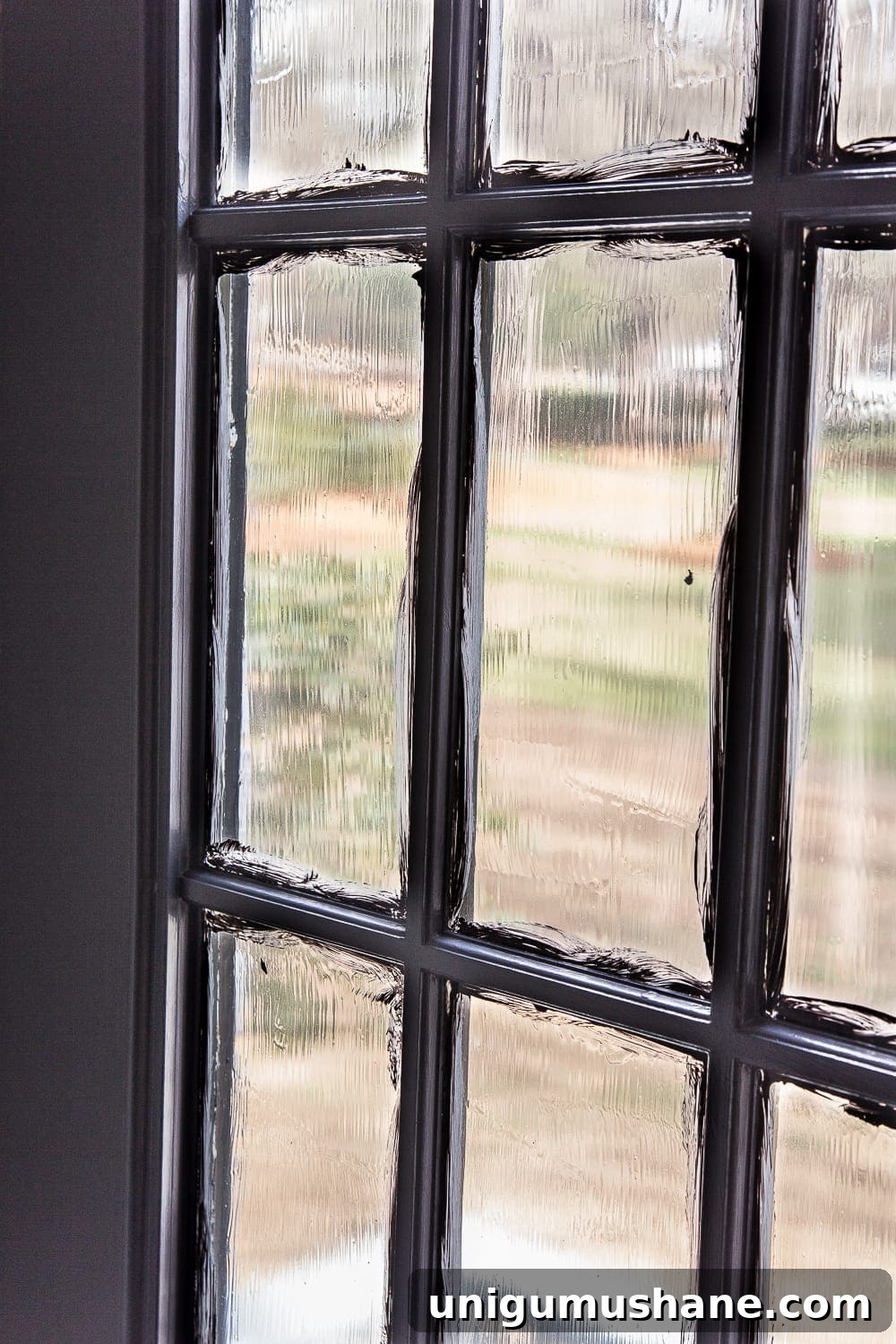
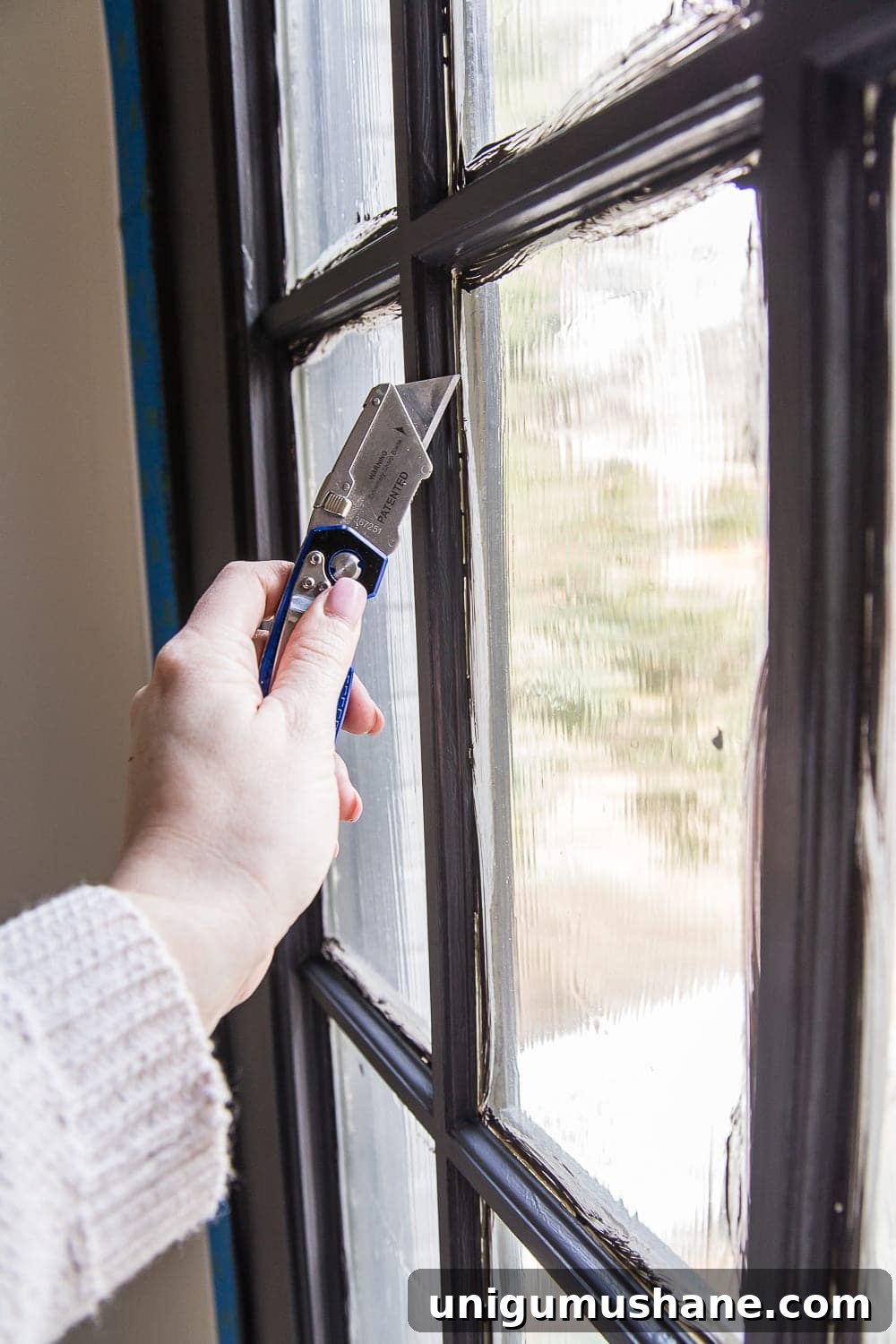
When ready to remove the film, score the edges of each pane with a utility knife so the film peels cleanly without pulling paint from the grille.
Step 3 – Peel Away Film After Painting
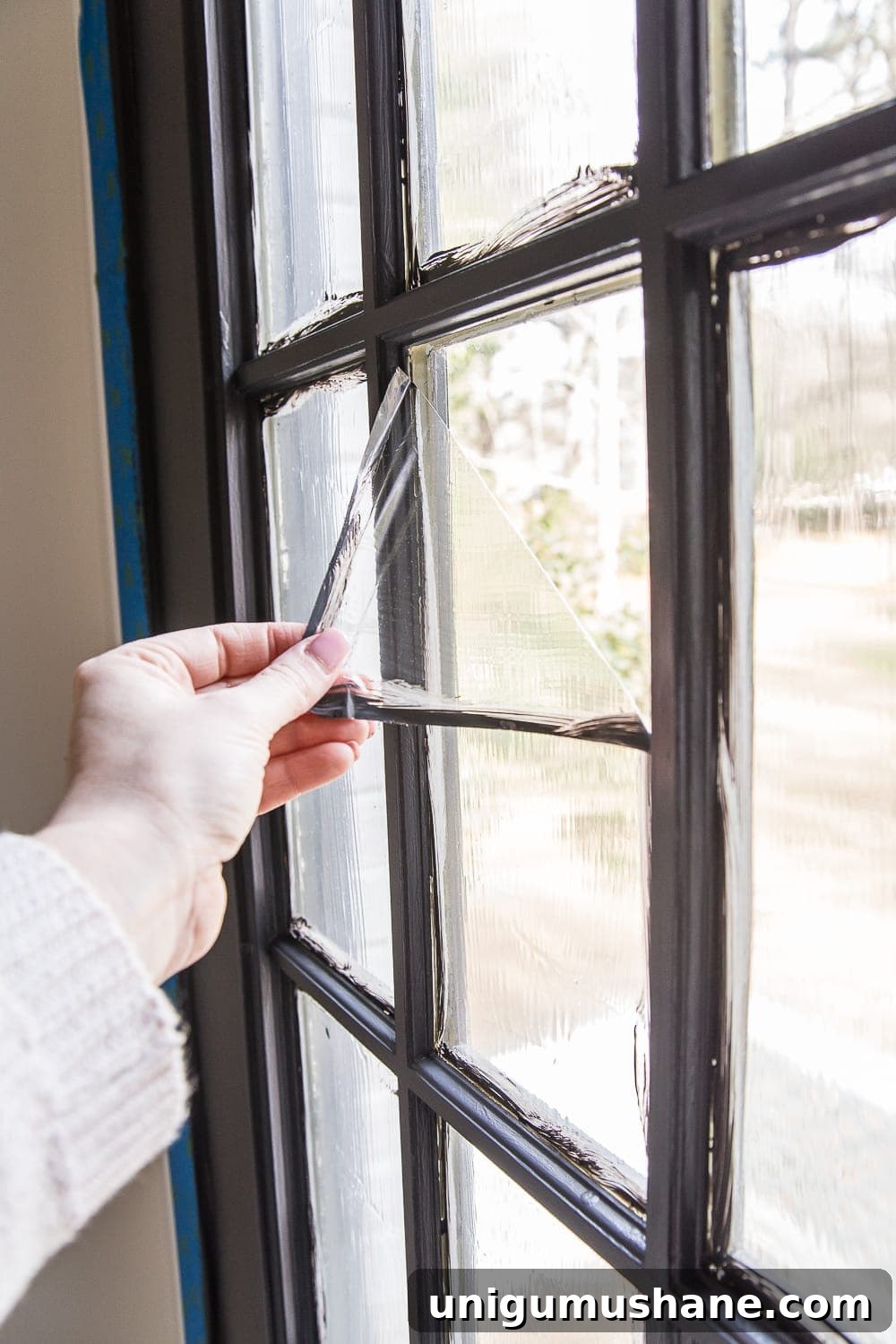
Peel the masking film back in a single sheet for crisp, professional-looking glass edges.
Step 4 – Test the Existing Paint
Determine whether the current finish is latex or oil-based: dab rubbing alcohol on a cotton ball and rub a small hidden spot. If pigment softens, it’s latex; if not, it’s likely oil-based and will need an oil-compatible primer. Older homes may contain lead paint, so test if you suspect it and follow safety guidance if present.
Step 5 – Lightly Sand
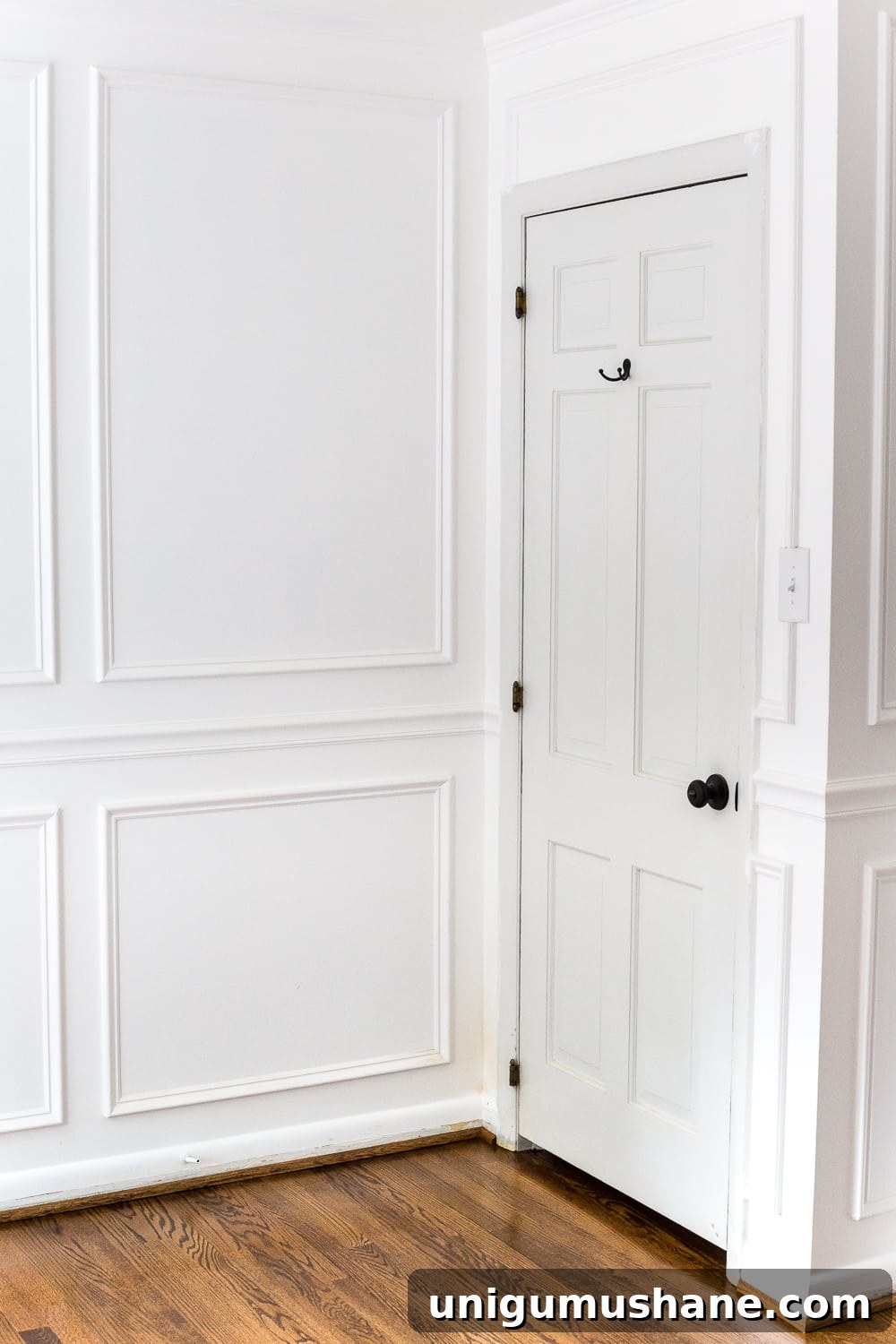
Lightly sand in the direction of the grain with 150-grit sandpaper to key the surface. Wipe away dust with a tack cloth or damp rag and allow to dry.
Step 6 – Degloss
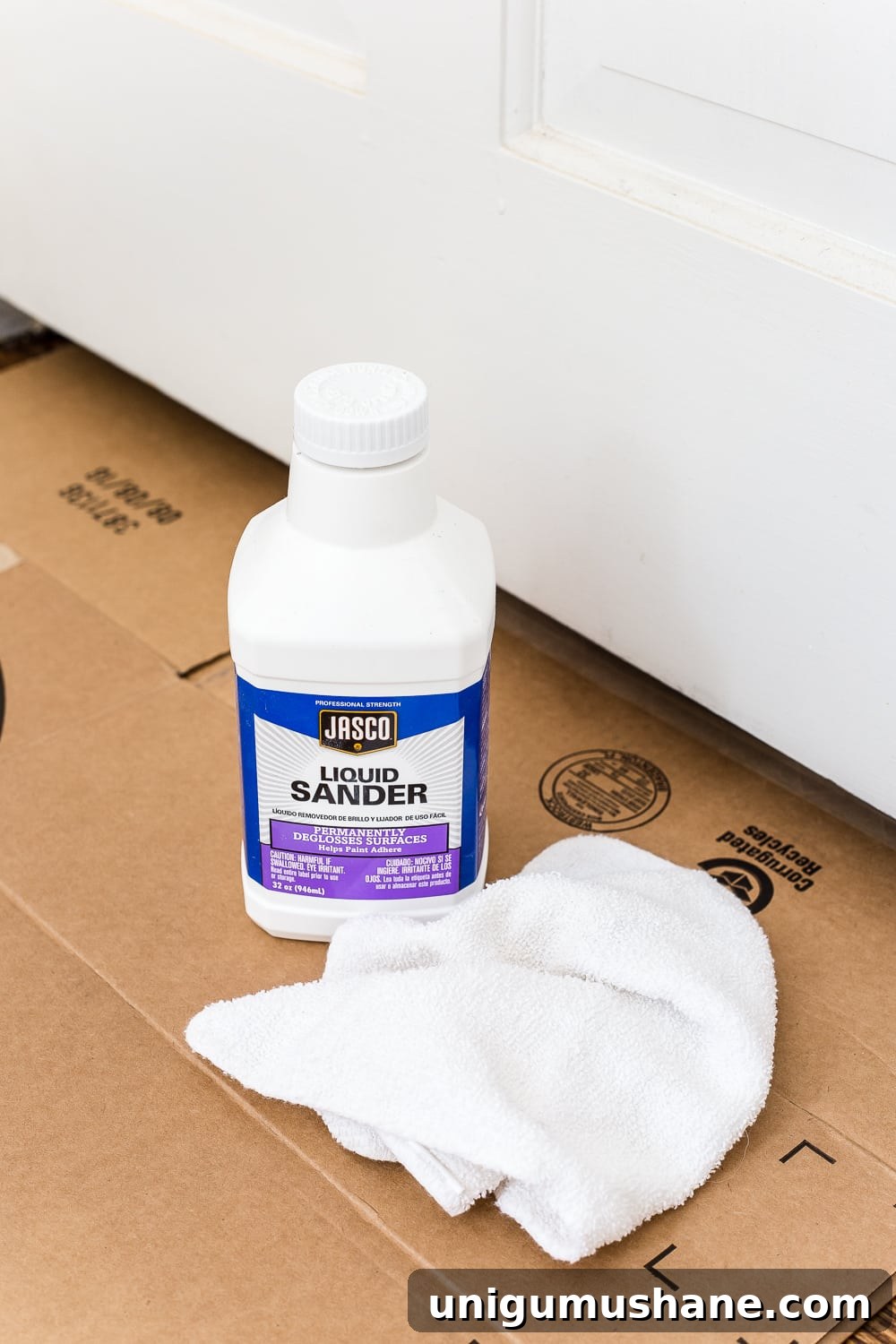
Wipe the entire surface with a liquid deglosser to remove residues, oils, and fingerprints — especially around handles and edges — so primer and paint adhere properly.
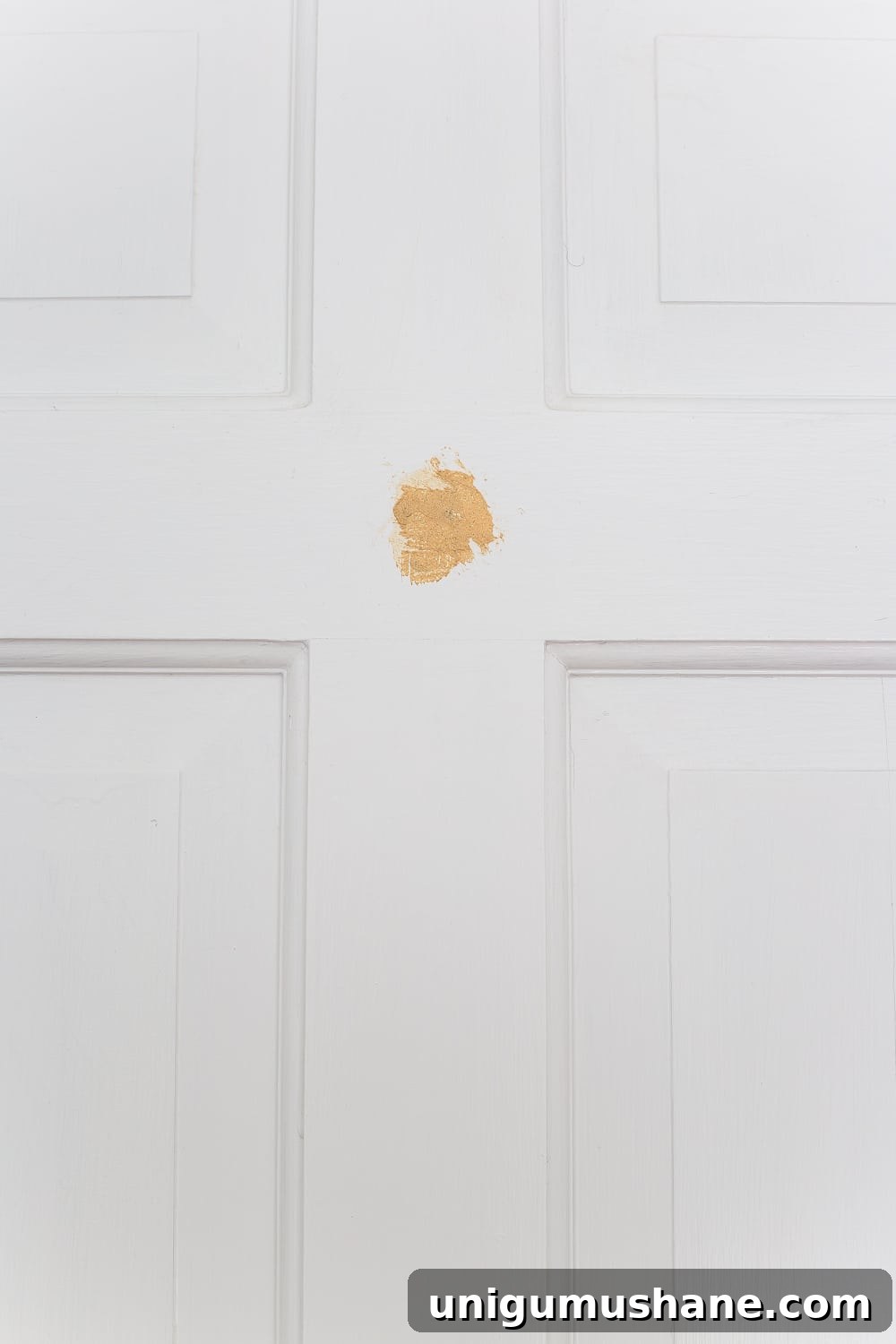
Step 7 – Patch Holes and Imperfections
Use wood filler to repair holes, dents, or gouges. Let it dry and sand smooth. Avoid caulk or spackle for door repairs, as they can shrink and crack over time.
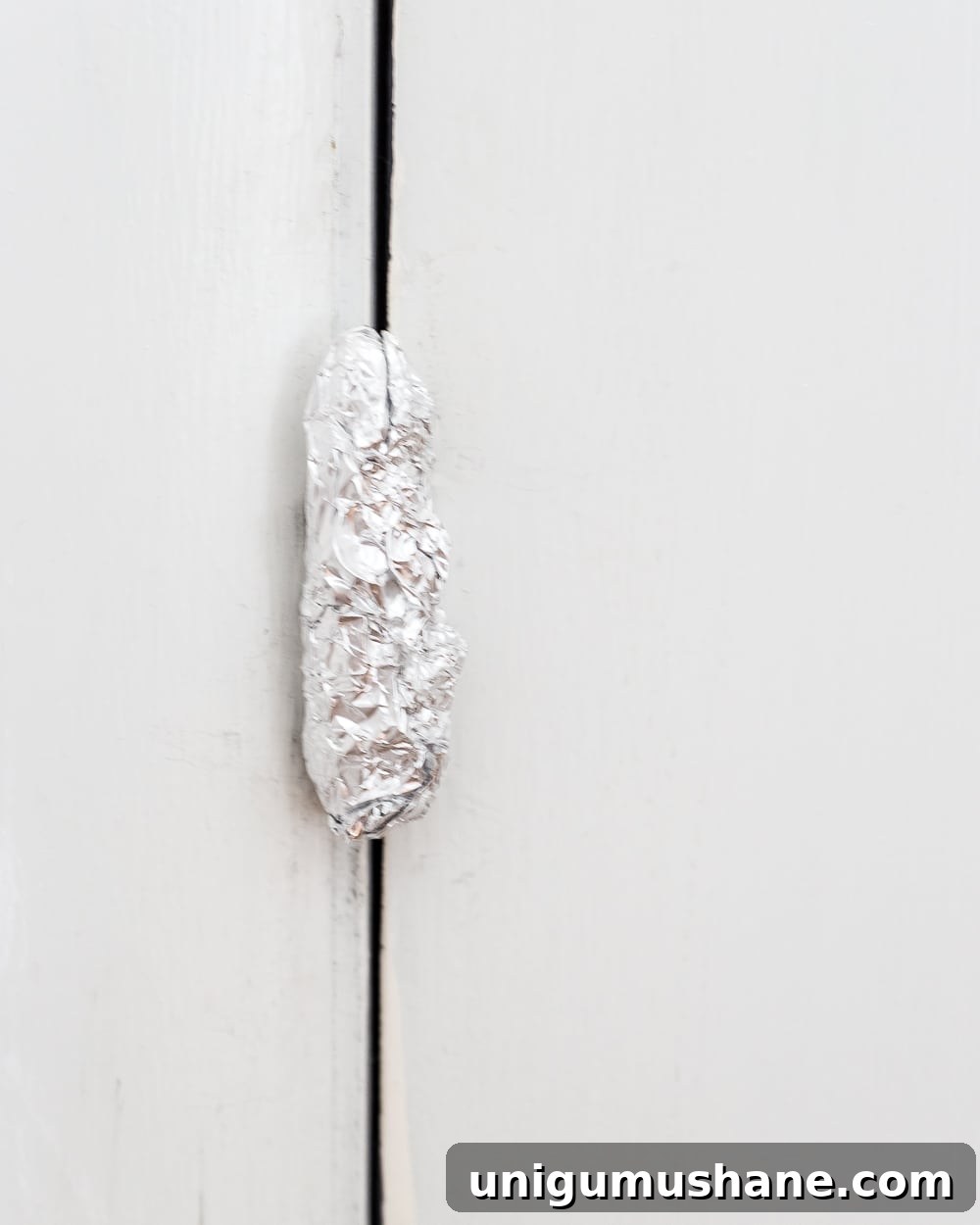
Step 8 – Protect Hardware
Either remove hardware or cover hinges and knobs with aluminum foil and painter’s tape. Foil molds easily to shape and makes cleanup quick.
Step 9 – Prime
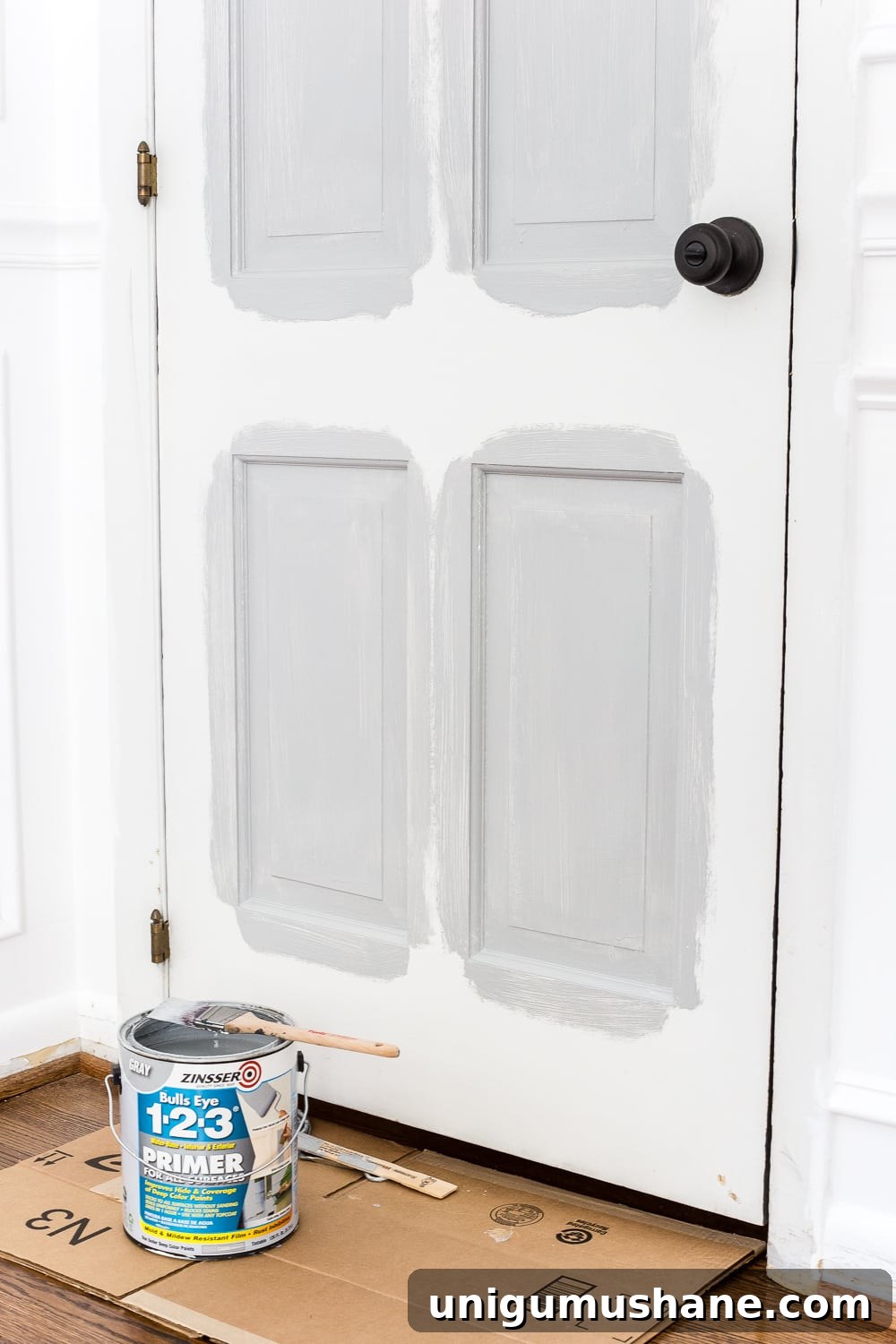
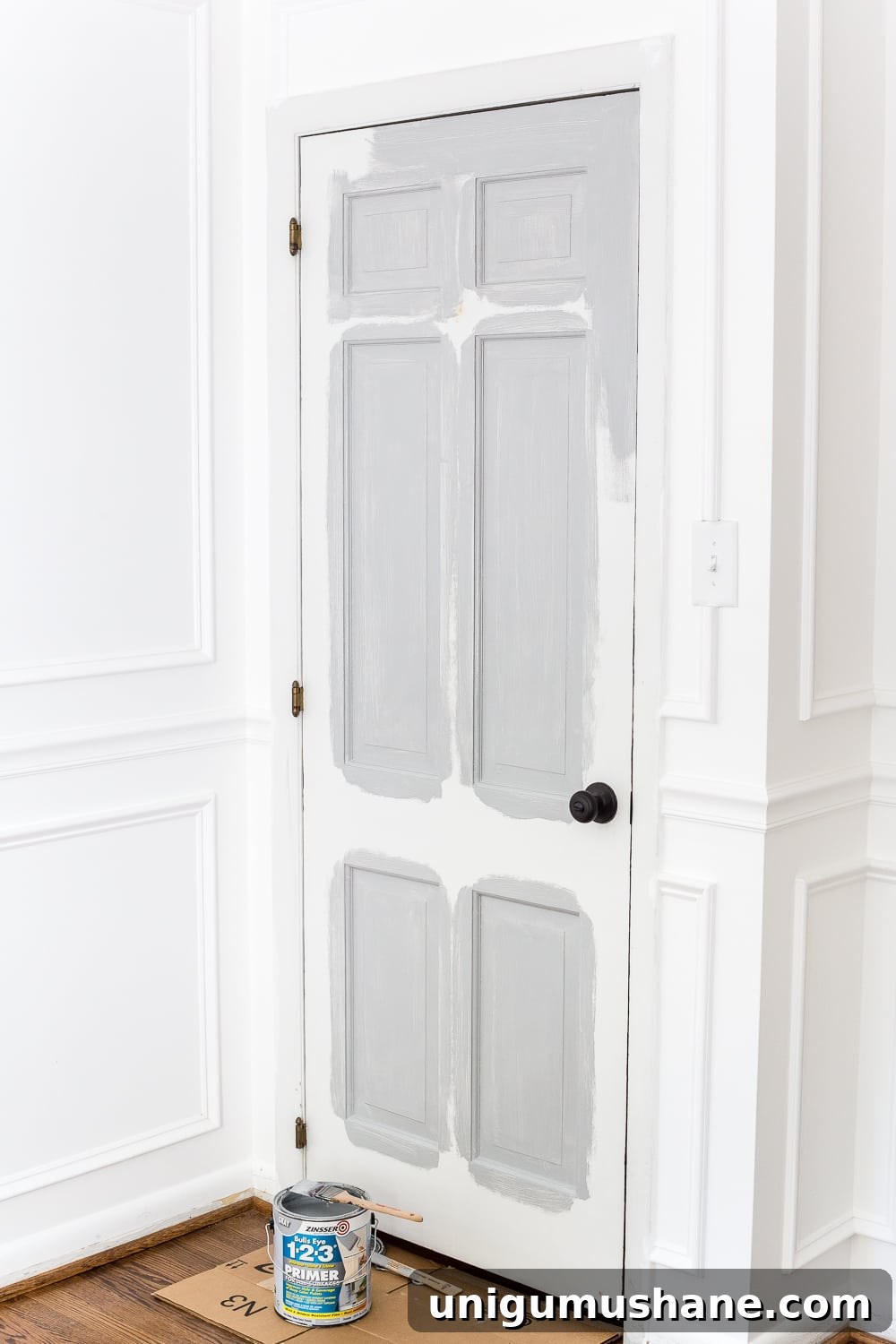
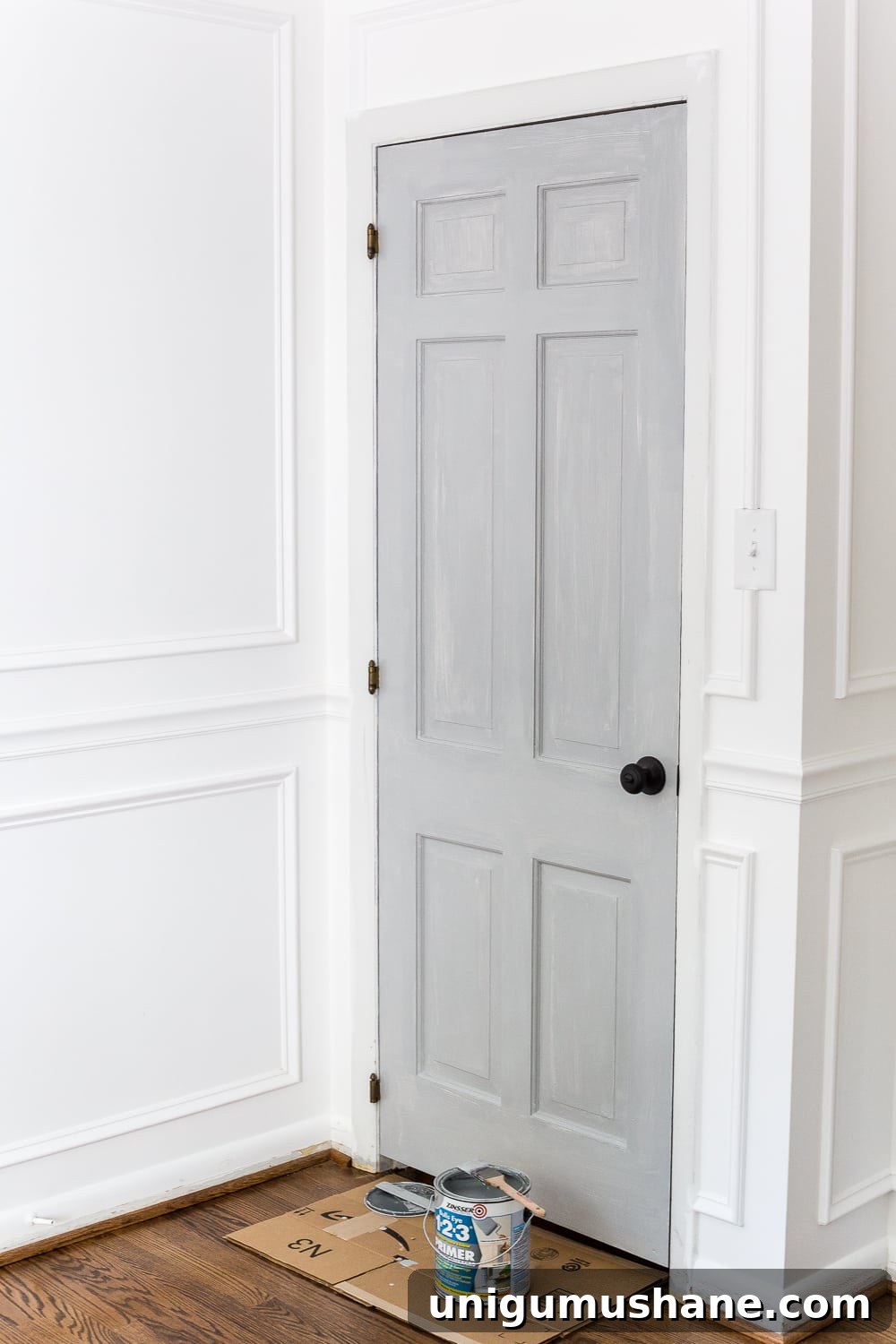
Prime unless the door is factory-primed. A bonding primer like INSL-X STIX works well. If painting a light door a dark color, ask for tinted primer to reduce the number of finish coats needed.
Prime edges first (they take longest to dry), then moldings, grooves, and flat surfaces. Watch for drips and smooth them out while wet.
Skipping primer on oil-based finishes will likely lead to peeling later, so don’t skip this step when required by the existing paint type.
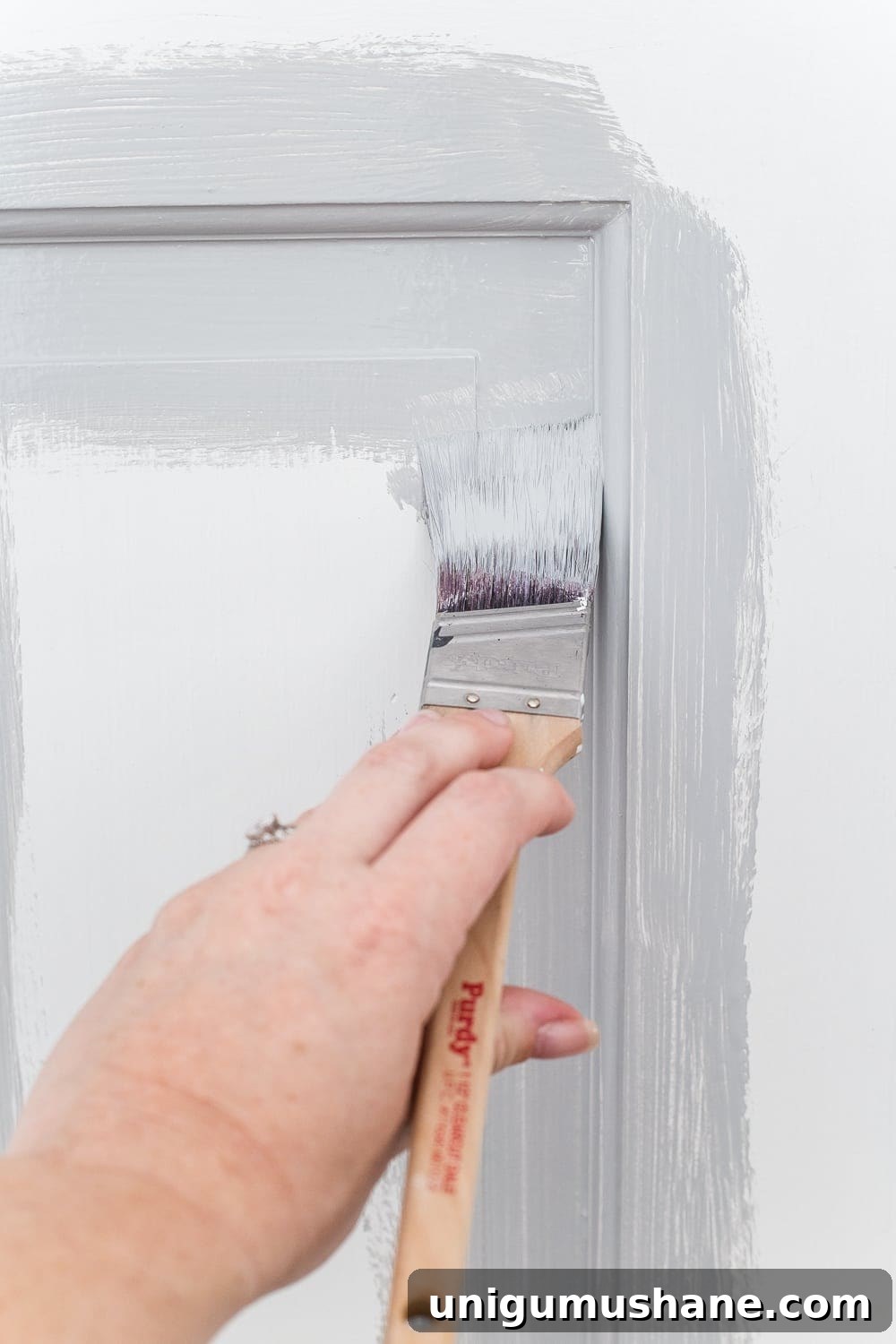
Step 10 – Lightly Sand Between Coats
After primer dries, lightly sand with fine-grit paper for a silky surface, then remove dust before painting. When painting: edges first, then grooves and panels, then flat areas for the cleanest finish.
Step 11 – Apply Finish Paint
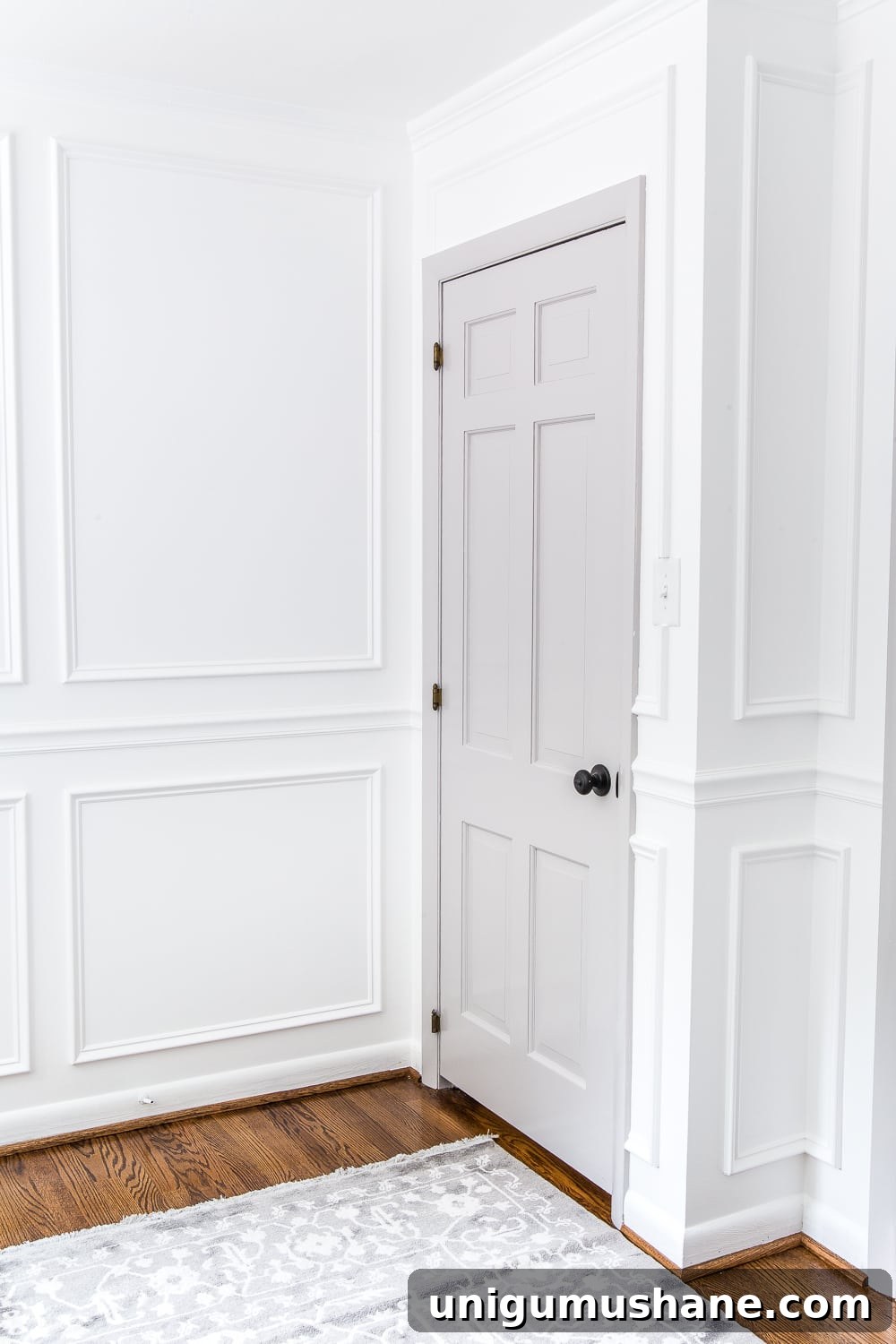
Use Benjamin Moore Advance or a similar waterborne alkyd paint for a tough, furniture-like finish. Apply thin, even coats and allow proper drying time between coats. Advance is self-leveling, so brush marks are minimal; many pros prefer an angled brush for details and a small roller for flats, or a sprayer for a flawless finish.
Apply additional light coats until you achieve full, even coverage. Lightly sand with fine grit between coats if needed, and remove dust before the next coat.
Step 12 – Remove Tape While Paint Is Still Slightly Wet
For the cleanest edges, remove painter’s tape or aluminum foil while the topcoat is still slightly tacky. If tape edges need scoring first, use a utility knife to avoid lifting the finish.
With practice, painting multiple doors becomes faster and more efficient. Take your time on the first few and you’ll develop a smooth workflow.
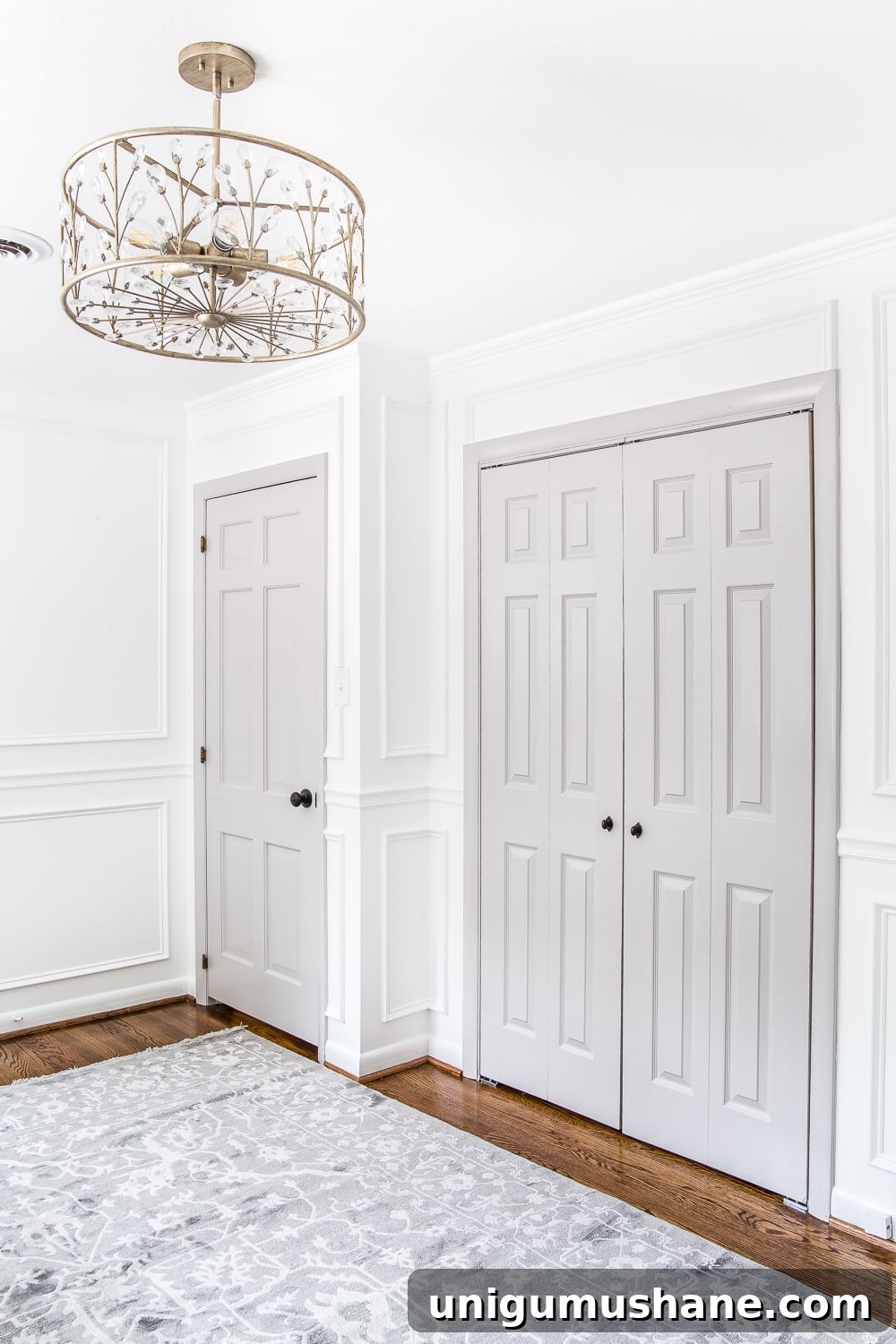
For a softer contrast in a bright room, I sometimes choose Benjamin Moore Stonington Gray instead of a very dark finish. It’s a warm, medium gray that pairs well with white walls and can also look beautiful on cabinetry.
Ready to transform plain doors into design features? Painting doors is an inexpensive update that delivers big visual impact.
Frequently Asked Questions
Both work. A waterborne alkyd paint helps minimize brush strokes. Use an angled brush for panels and trim, and a small foam roller for flat areas. A paint sprayer yields the most professional result.
Yes—clean the door, fill any holes with wood filler, then lightly sand with 120–150 grit paper and remove dust. Proper sanding ensures better adhesion and a smoother, longer-lasting finish.
Yes. Protect hardware with foil or tape, and follow the prep and painting order described here to get a clean result without removing the door from its hinges.
More Door Makeover Ideas
DIY Door Update to Change Hinge Colors Quickly
How to Turn a Bi-Fold Door Into Double French Doors
Easy DIY Mirrored French Bi-Fold Closet Door Makeover