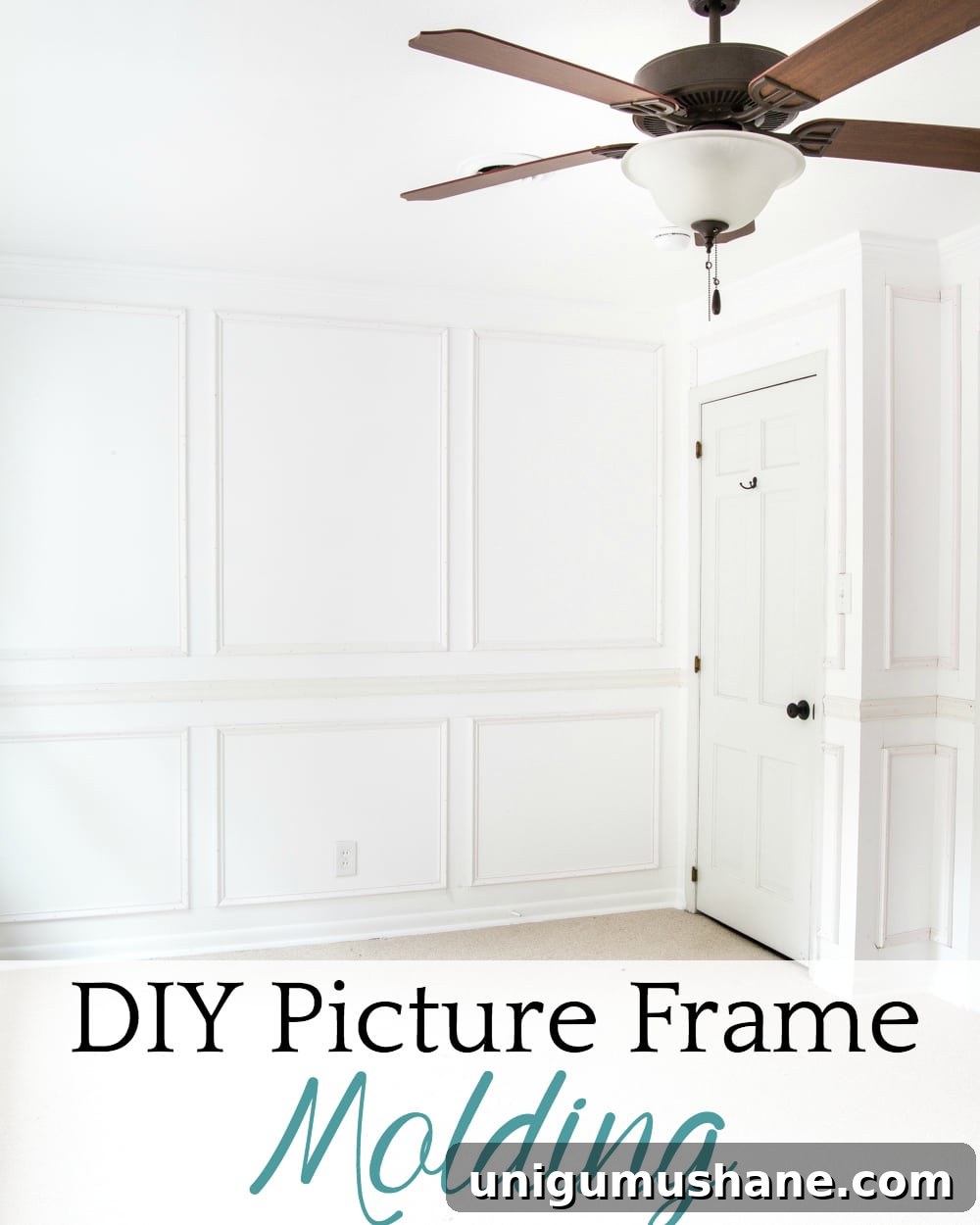
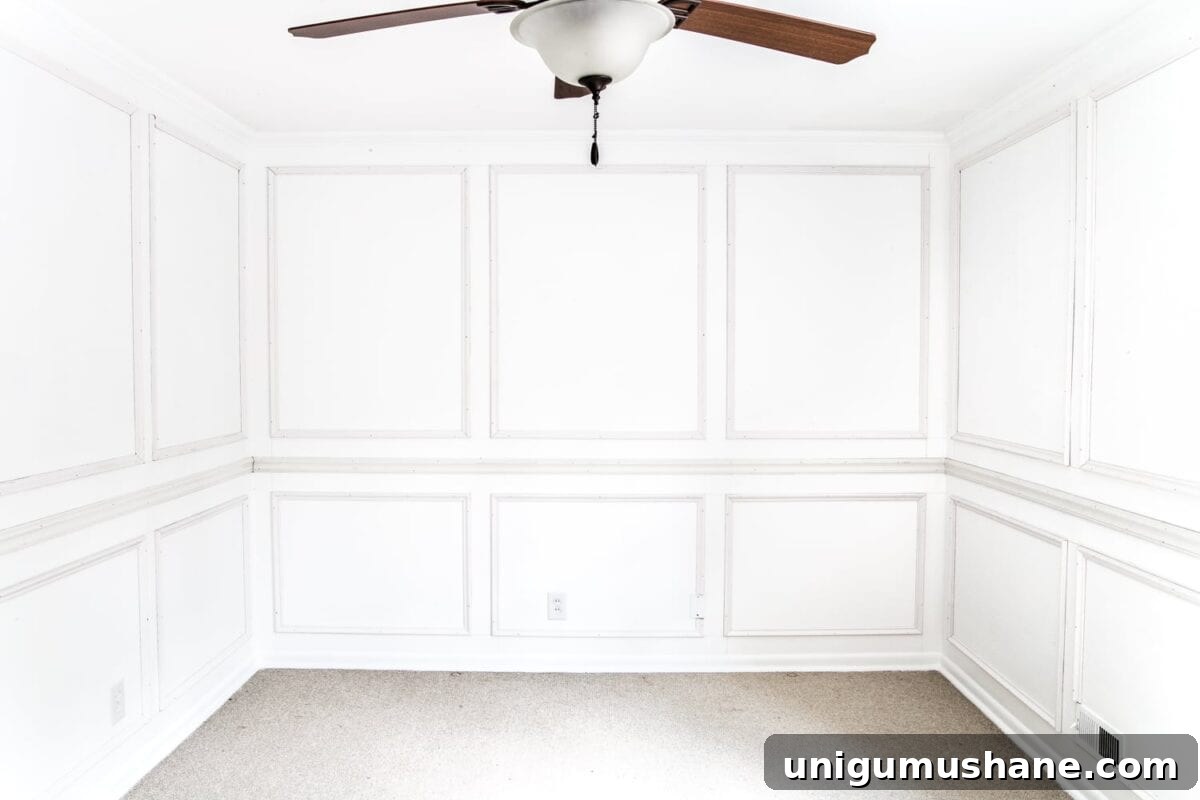
A step-by-step tutorial for installing DIY picture frame molding wainscoting, including a simple spacer shortcut to make the process easier.
The nursery makeover has officially begun, and the first major project is already making a dramatic difference.
From the beginning, I kept imagining classic white picture frame molding on the walls. You may call it picture frame molding, wall molding, or wainscoting, but the goal was the same: add architectural detail, make the room feel more polished, and create a soft, timeless backdrop for the nursery.
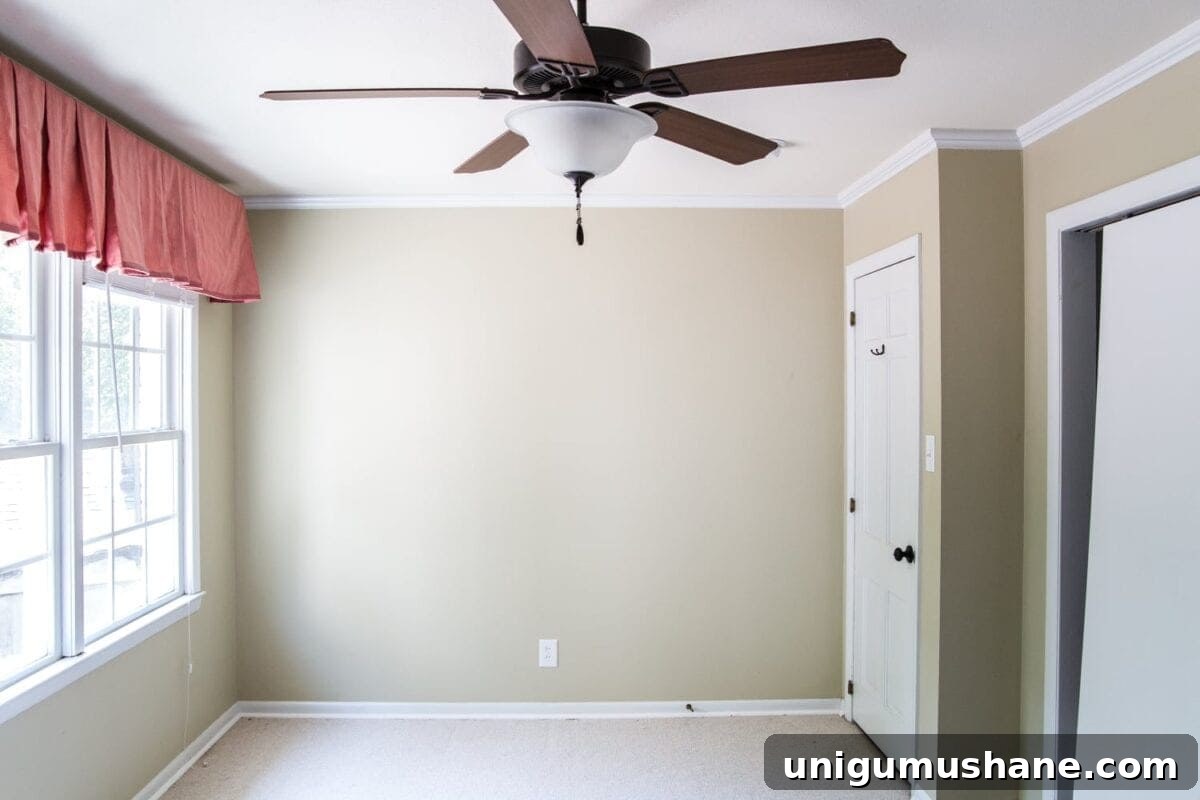
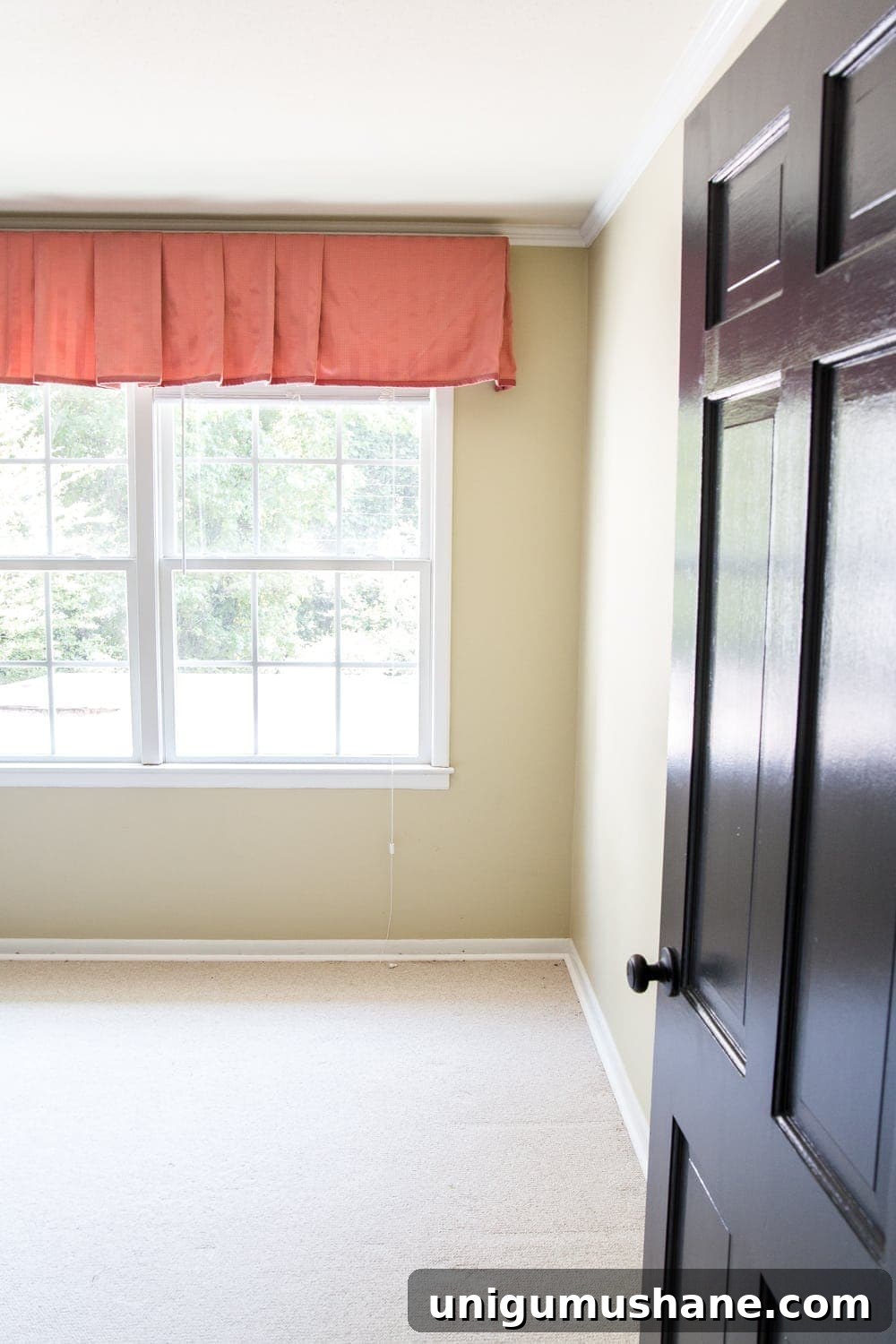
This is what the nursery looked like a few weeks before we started.
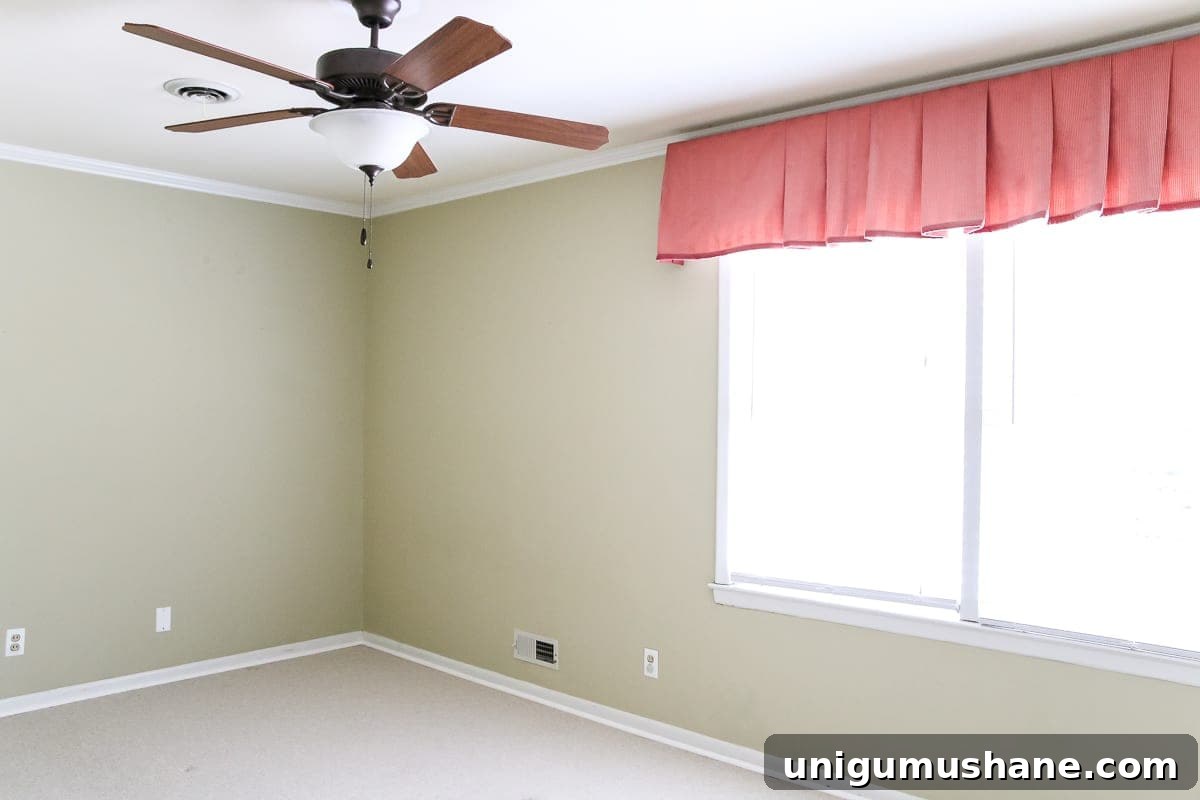
I will admit that this project felt intimidating at first. Picture frame molding involves a lot of measuring, planning, angles, and cuts, and that can make the whole process seem complicated before you even begin.
Fortunately, it turned out to be much more manageable than expected. We completed the installation in two days, and the result was absolutely worth the effort. The key was careful measuring, working one wall at a time, and using a simple spacer board to keep the layout consistent.
DIY Picture Frame Molding
Supplies Used:
- Level, preferably one long level and one shorter level for different wall widths
- Carpenter pencil
- 3/8″ x 4″ x 2′ board to use as a spacer; the actual width is about 3.5″
- Chair rail molding in your preferred width
- Coping saw
- Construction adhesive
- 1 1/4″ brad nails
- 11/16″ x 1 3/8″ finger-jointed molding
- Miter saw
- Tape measure
- Pneumatic brad nailer
1. We began by measuring the width of every wall in the room. This gave us the information we needed to plan the chair rail and the picture frame molding layout.
2. To install the chair rail, we measured 36″ up from the floor and marked that height on the wall. This line determined where the chair rail would sit around the room.
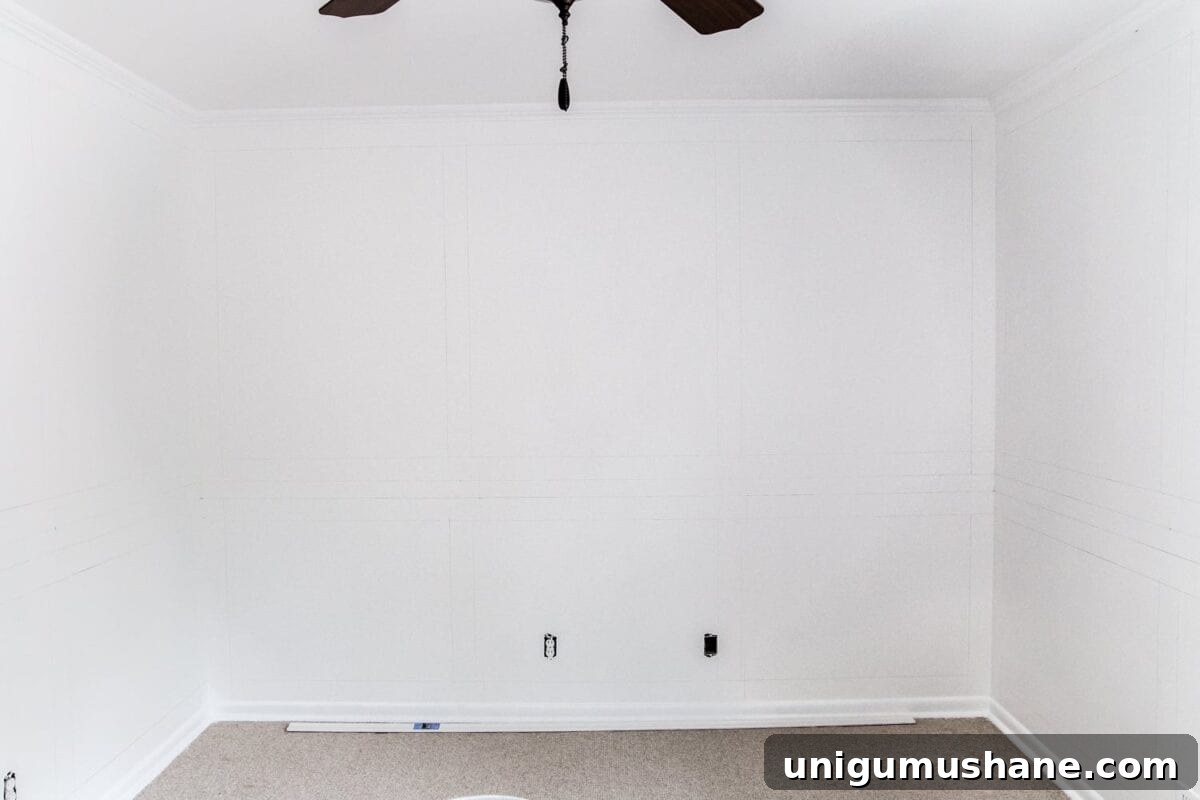
3. Using a level, we drew a horizontal guideline around the room at the 36″ height. Taking time with this step is important because the chair rail sets the visual line for the entire wall treatment.
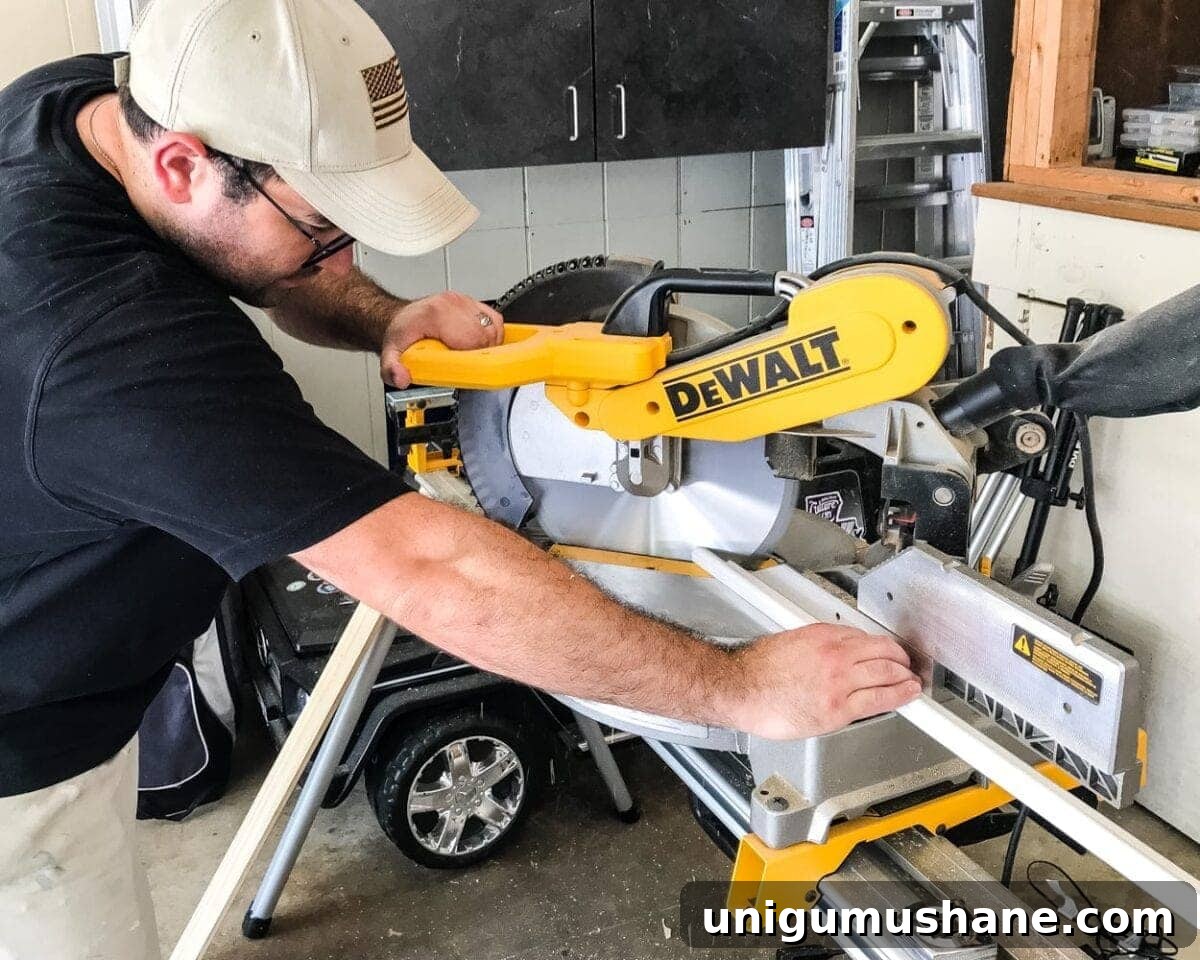
4. For the first section of chair rail, Robert measured the width of the first wall and made a straight cut with the miter saw.
5. We applied construction adhesive to the back of the cut chair rail, positioned it carefully along the level pencil line, and pressed it firmly against the wall.
6. Once the chair rail was aligned, we secured it to the wall with the pneumatic brad nailer.
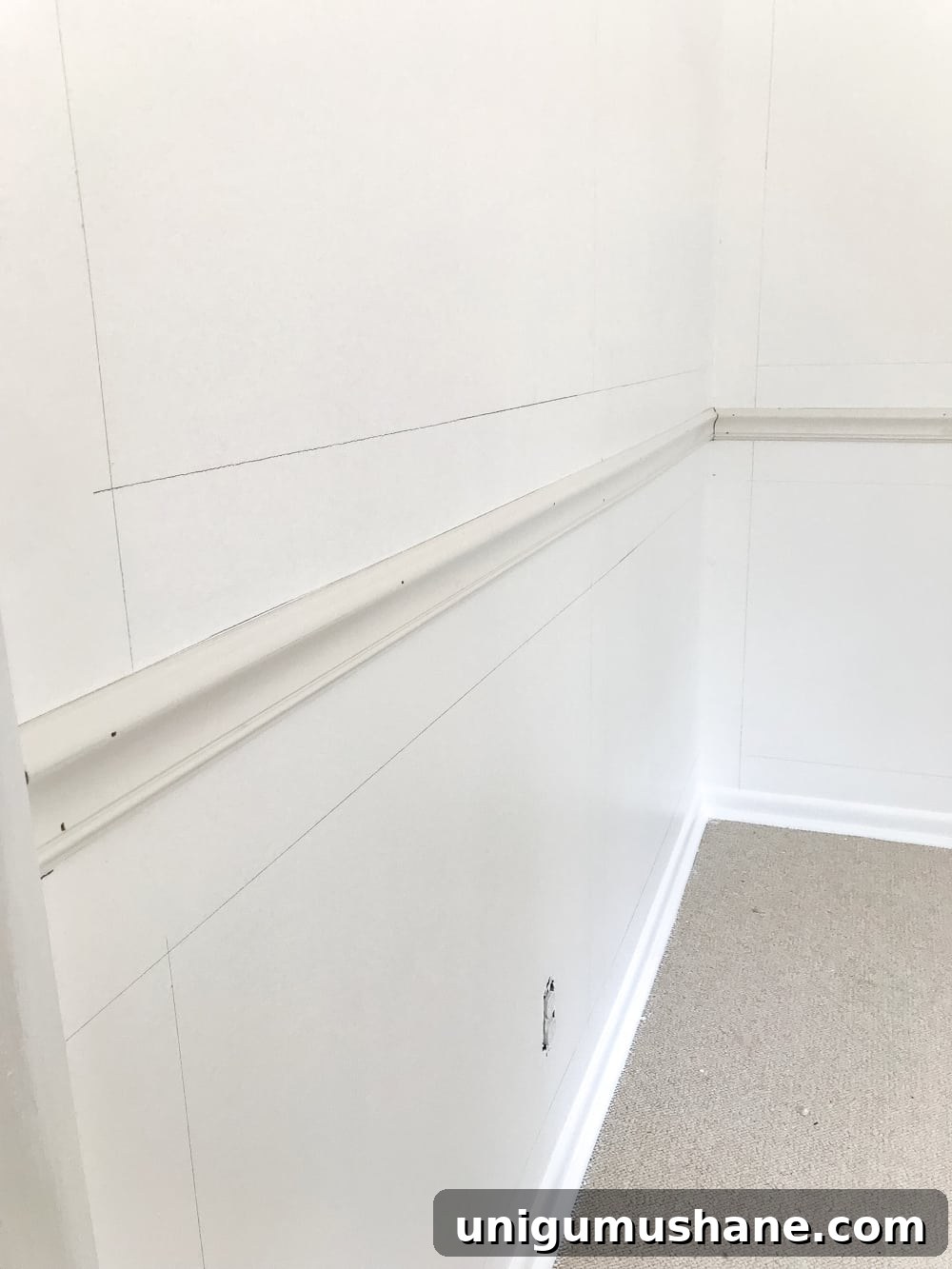
7. For the next piece of chair rail, which joined the first piece at the corner, Robert cut the molding to the width of the next wall with a 45-degree angle.
8. He then used a coping saw to cut along the profile of the 45-degree cut. Coping the joint allowed the new piece to fit tightly against the decorative shape of the chair rail that was already installed.
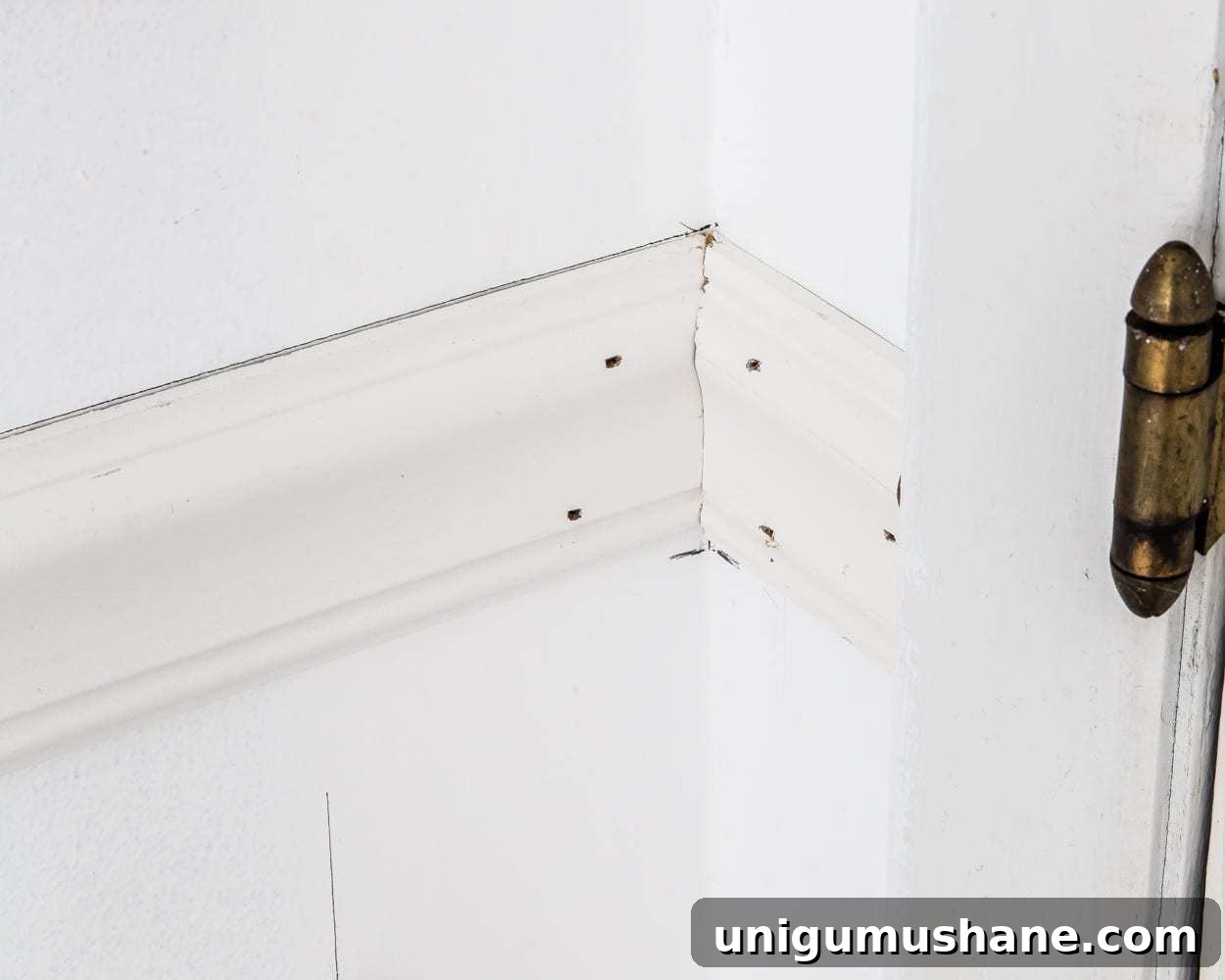
9. We repeated the same process around the room: measure, cut at a 45-degree angle where needed, cope the joint, apply construction adhesive, position the molding, and nail it into place.
10. After the chair rail was installed, we planned the picture frame molding layout. The number of frames on each wall depended on the wall width.
The frames do not have to be the exact same width on every wall in the room, but they should be consistent on each individual wall. That way, each wall looks balanced and intentional.
Our largest wall was 123″ wide. We decided to install three frames on that wall with 3.5″ spaces between them. Because our spacer board was technically 3.5″ wide, it made sense to use that measurement throughout the layout.
To calculate the frame width, use this formula:
(Total wall width – (3.5 x total number of vertical spaces between frames)) / total number of frames = width of each individual frame
For the 123″ wall, three frames worked out to about 36.3″ wide each. On an 81″ wall, we used two frames that were about 35.25″ wide. On a 94″ wall, two frames worked out to about 41.75″ wide each.
Although those measurements are not identical from wall to wall, they look very similar once installed because each wall is laid out evenly and the spacing remains consistent.
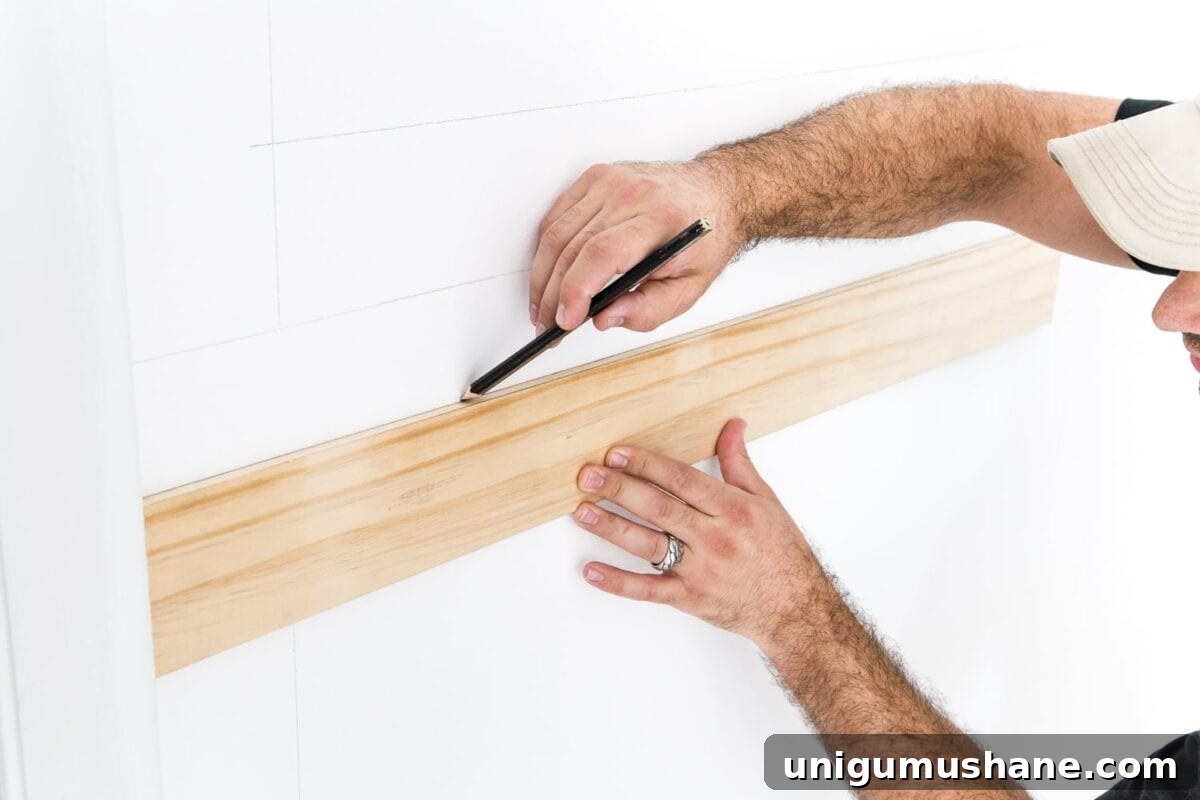
11. The spacer board made marking the walls much faster. We pressed the 3/8″ x 4″ board against the chair rail, baseboard, crown molding, and corners, then traced pencil lines to keep the spacing even.
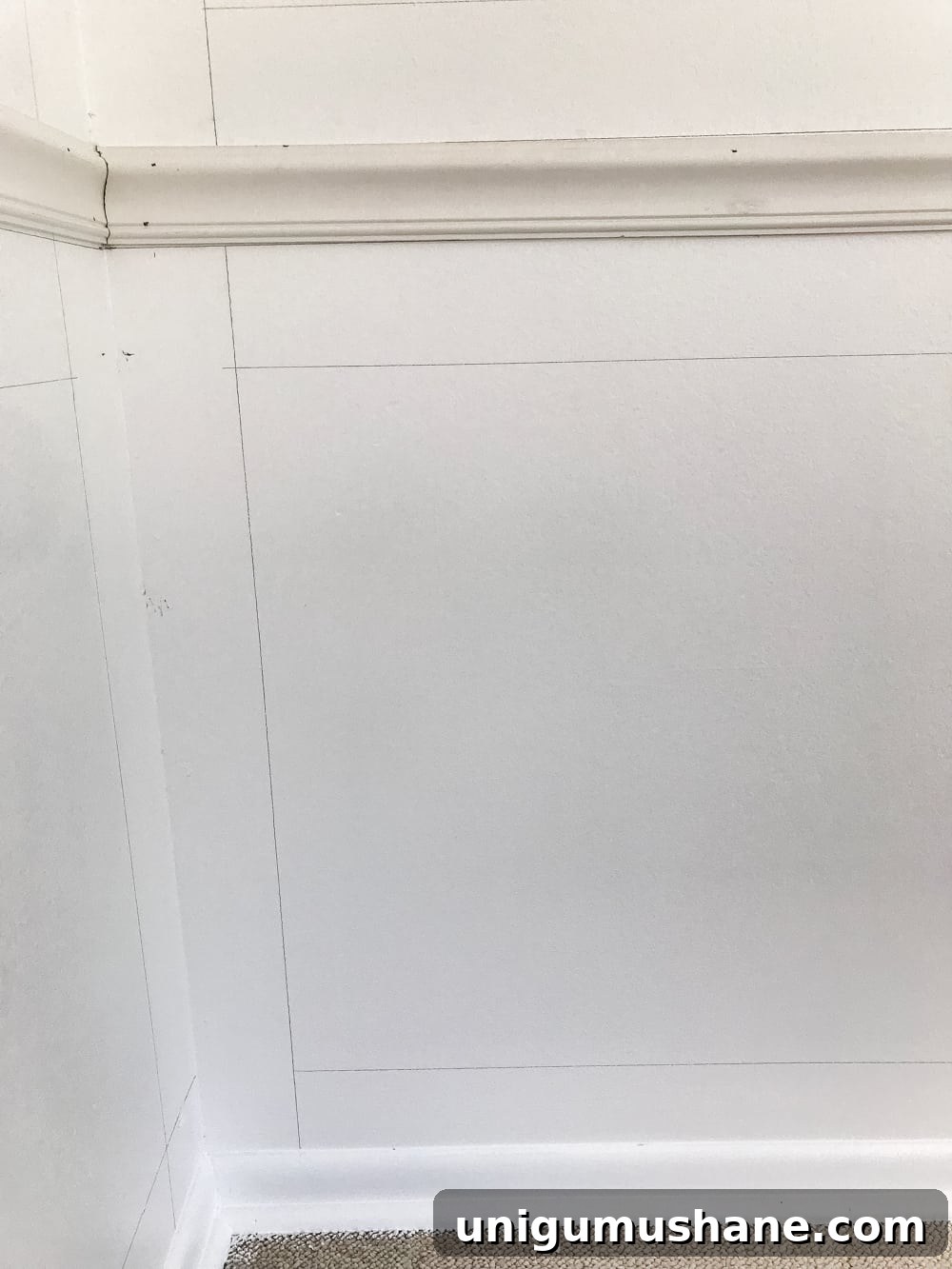
12. To mark the spaces between the frames, we divided the wall measurement by the number of frames. For example, the 123″ wall divided by three frames equals 41″. We made pencil tick marks at 41″ and 82″ to locate the spaces between the three frames.
Next, we placed the center of the spacer board on those tick marks and used a level to draw vertical lines. This created clean, even guidelines for each picture frame molding box.
13. Once every wall was marked with the frame outlines, we measured the horizontal lines for the top and bottom pieces of each frame.
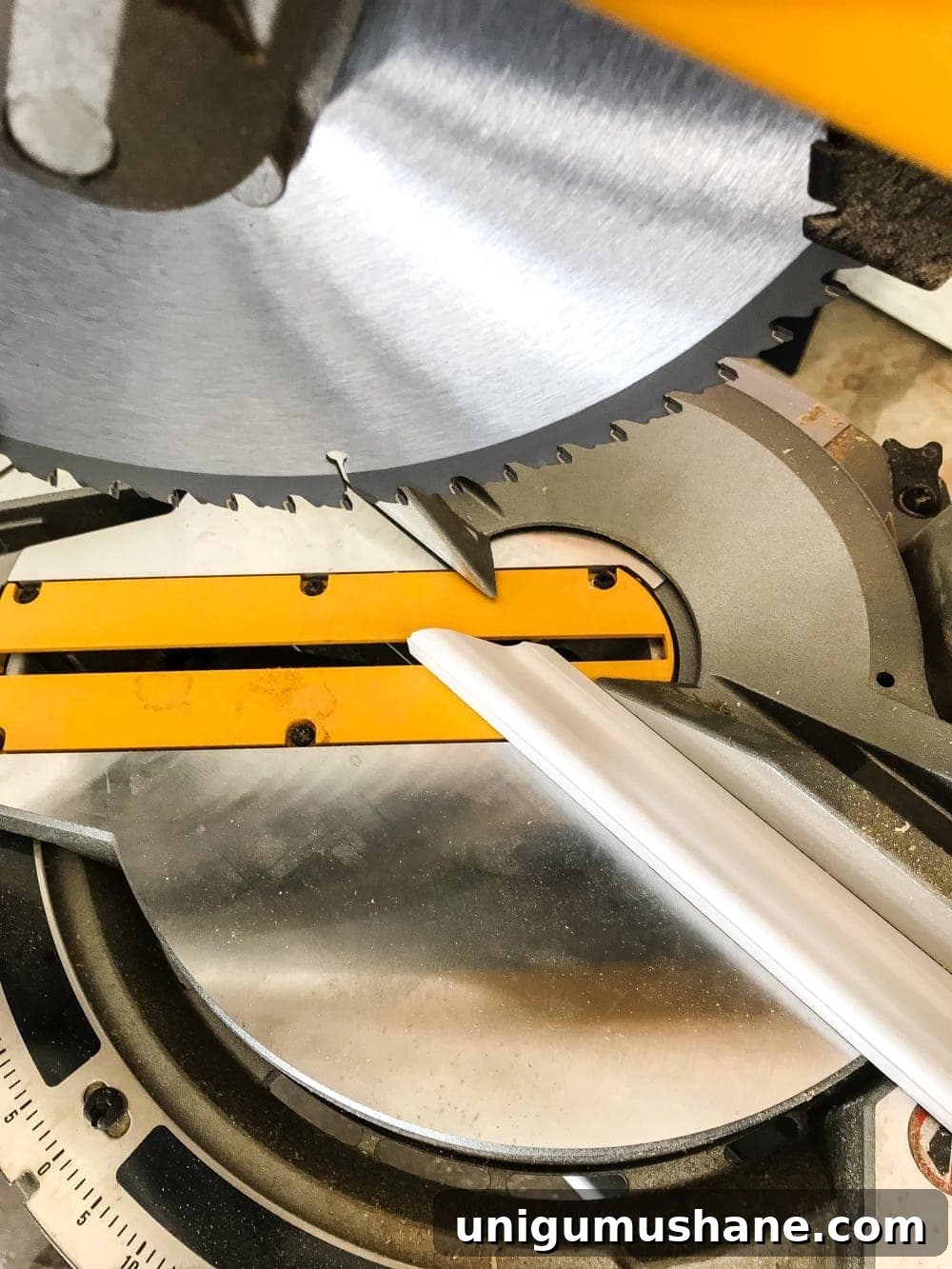
14. Using the miter saw, we cut each piece of finger-jointed molding to size with 45-degree angles at the ends. To stay organized, we worked in batches and cut the top and bottom pieces of the frames first.
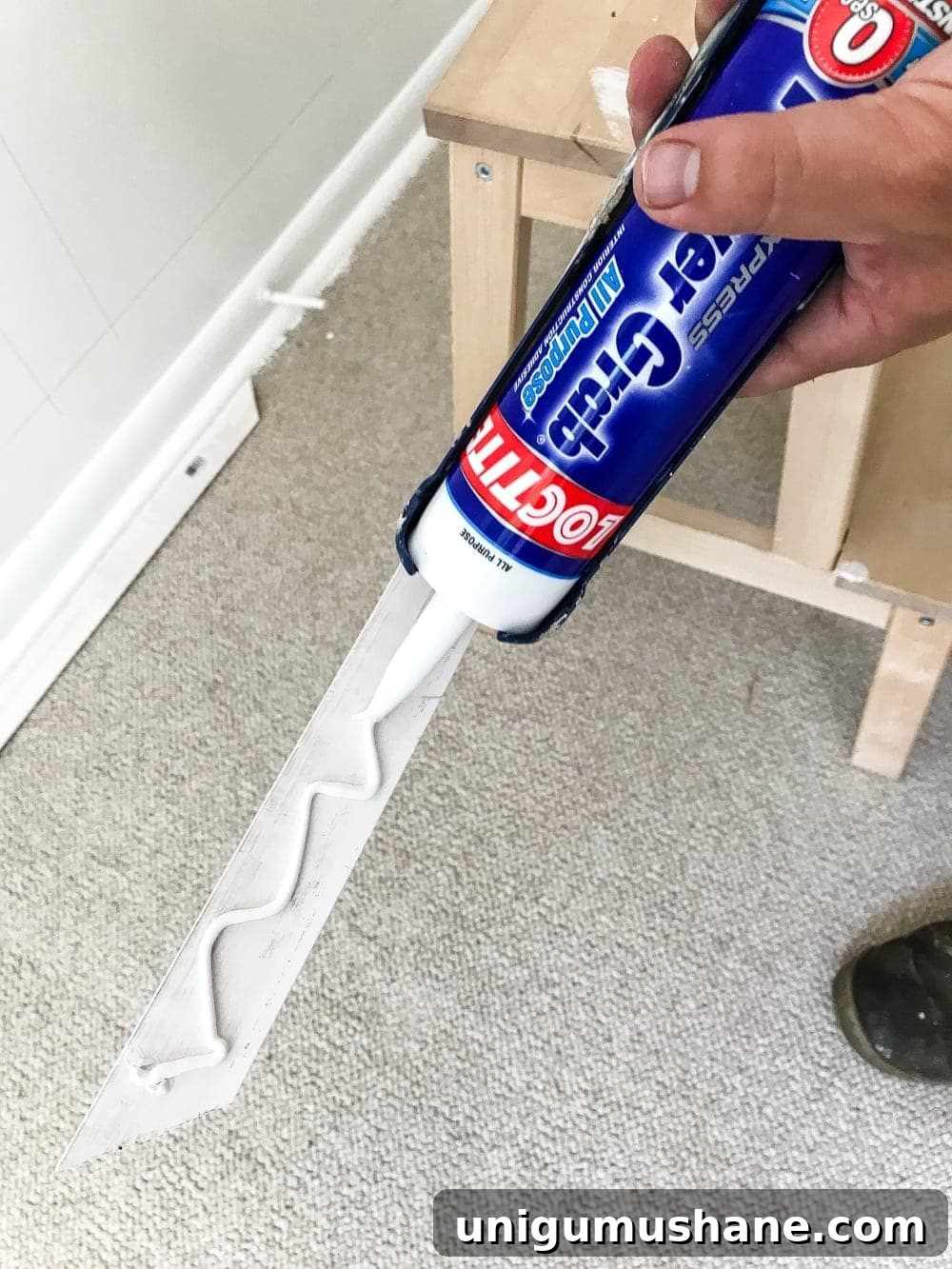
15. To attach the molding to the wall, we applied construction adhesive to the back of each piece, lined it up with the penciled guideline, and secured it with the pneumatic brad nailer.
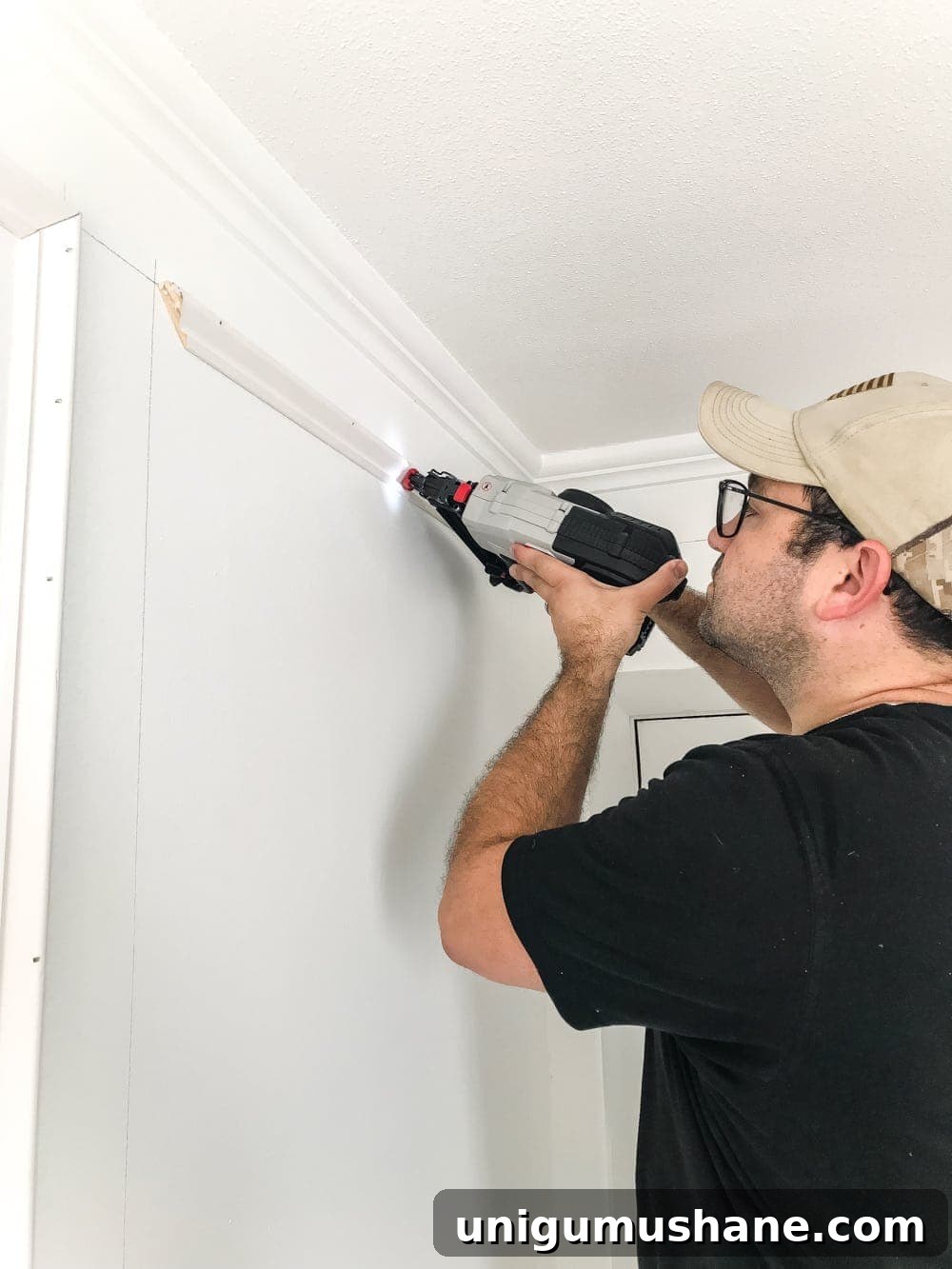
16. After the horizontal pieces were attached, we measured the vertical side pieces for each frame. We cut those pieces with 45-degree angles on the miter saw, applied construction adhesive, lined them up with the marked layout, and nailed them into place.
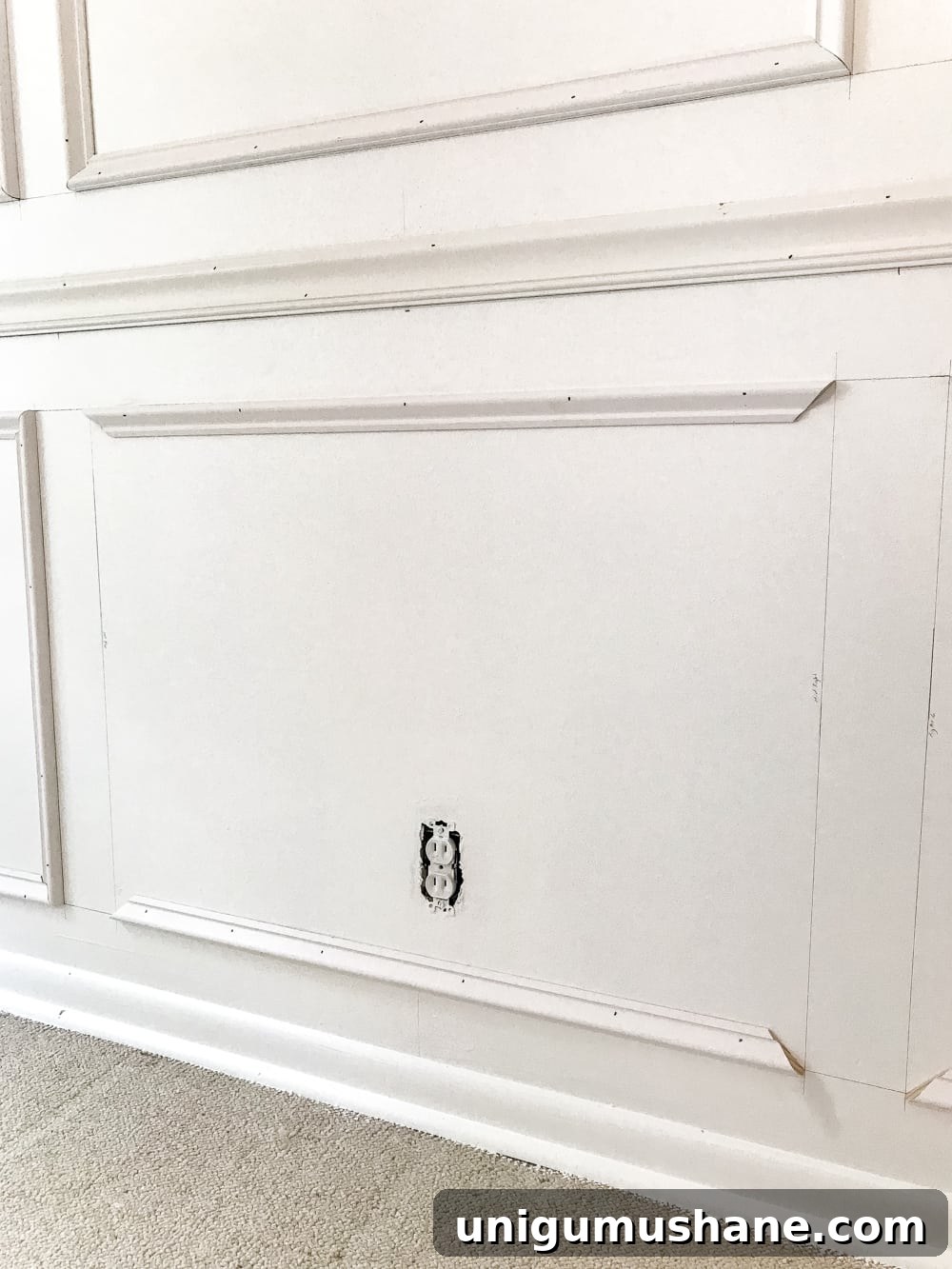
This DIY picture frame molding project involved a lot of measuring and cutting, but the spacer board helped remove much of the guesswork. Instead of measuring every single gap from scratch, we could use the board to keep the spacing consistent around the room.
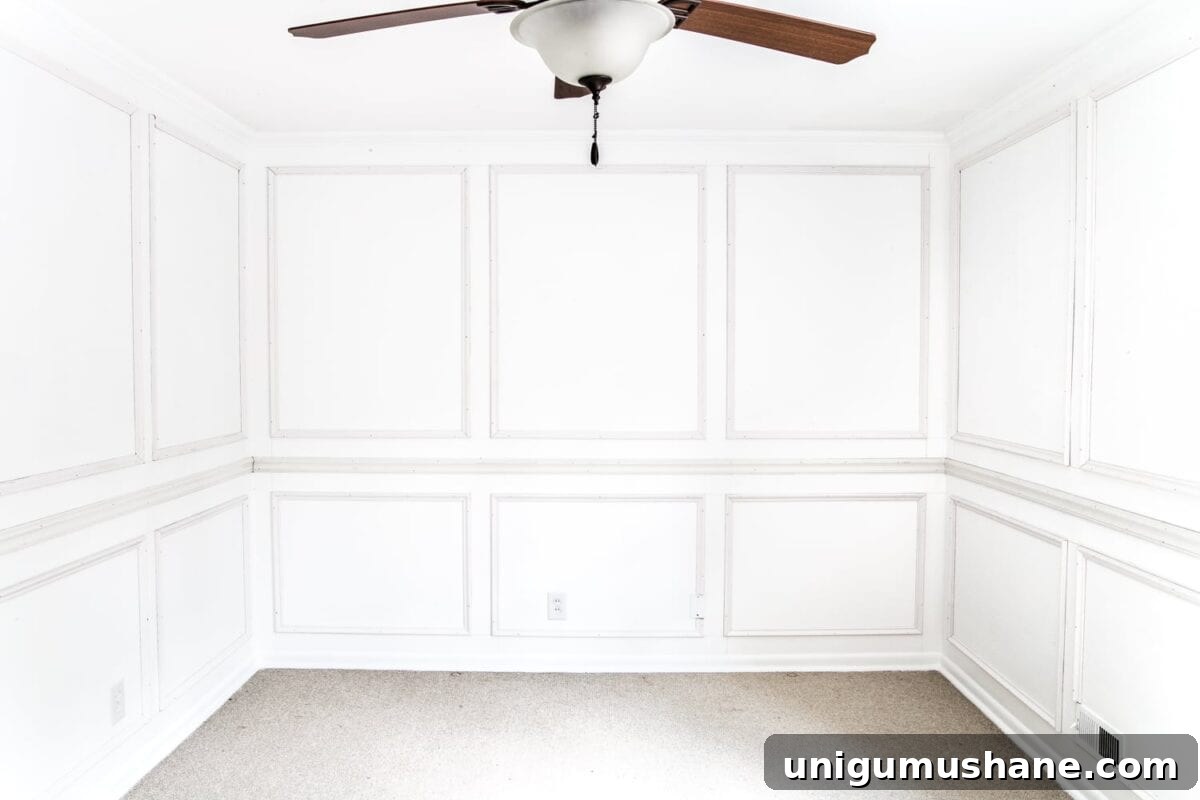
The work was detailed and repetitive, but the finished wall treatment instantly made the nursery feel more elegant, custom, and complete.
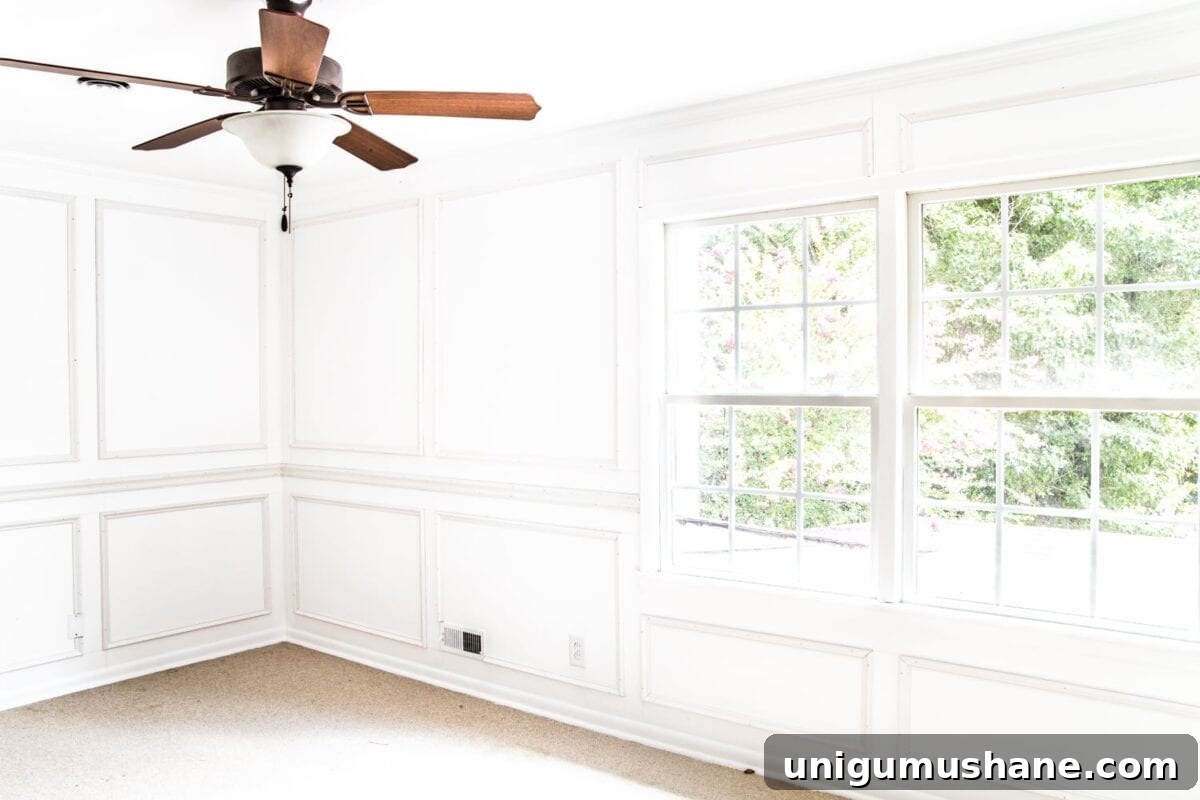
Here is a look at the dramatic before and the progress so far:
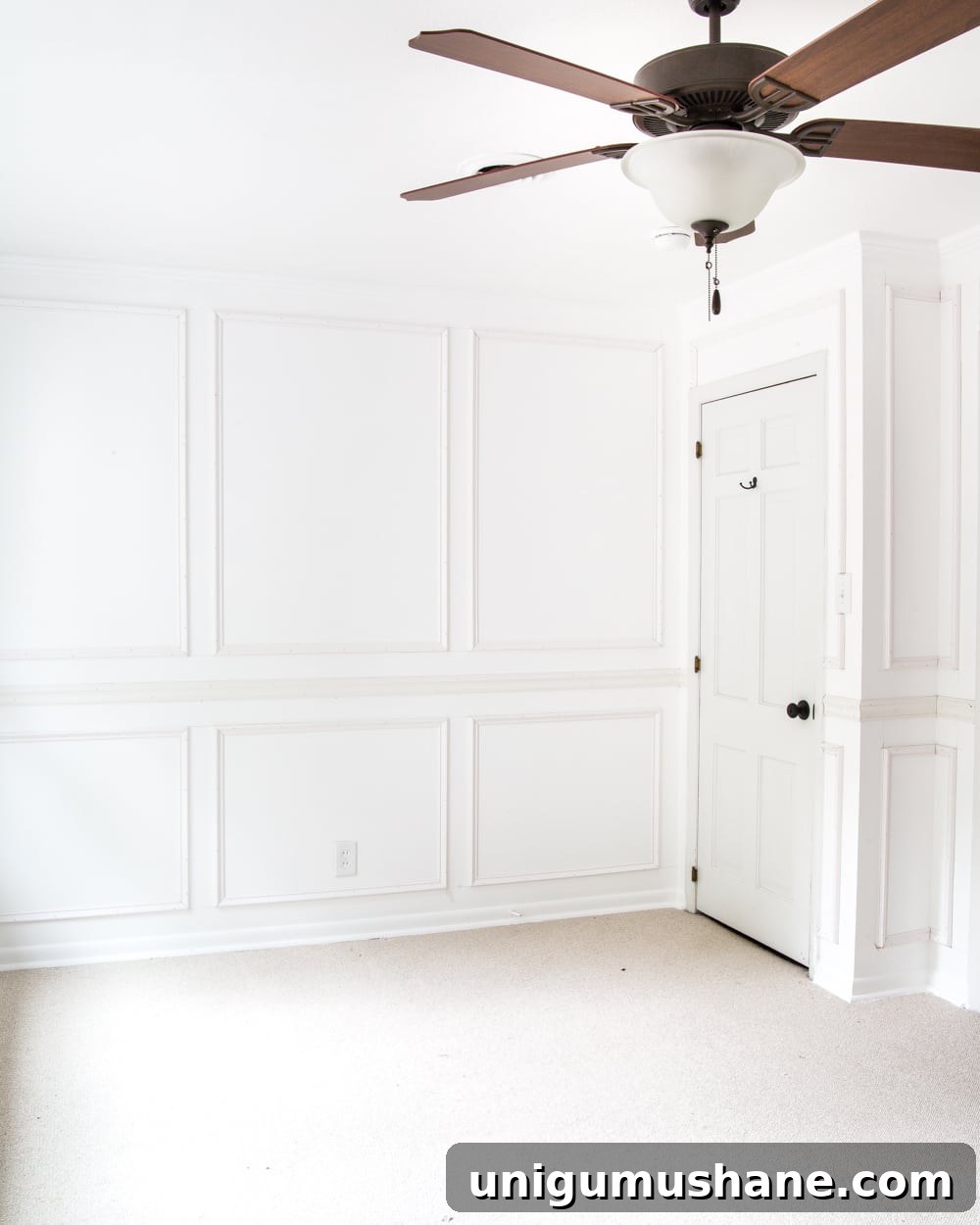
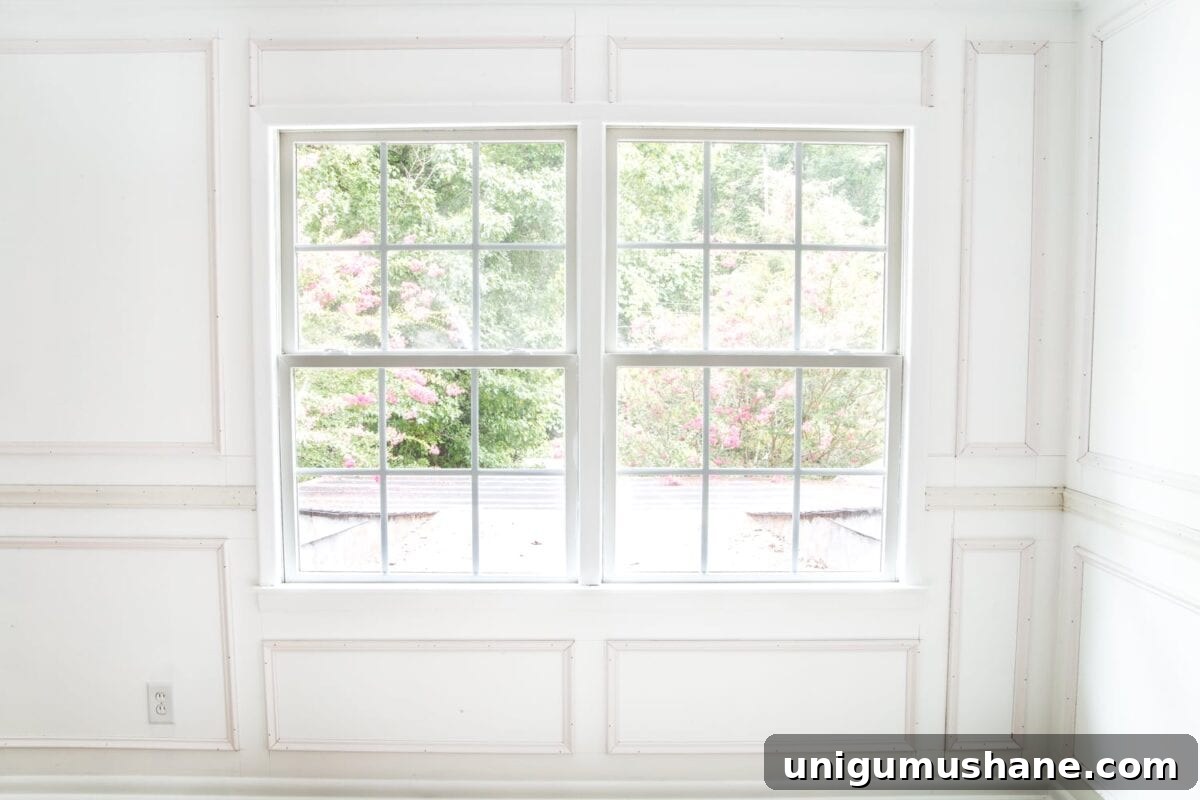
Now that all of the picture frame molding is installed, the next step is caulking and painting. Caulk will help fill the seams, nail holes, and small gaps so the molding looks smooth and built-in once painted.
After that, we plan to remove the old carpet, refinish the existing hardwood floors underneath, and replace the ceiling fan with something that feels softer and more feminine for the nursery.
For now, we will be busy caulking every edge and seam in the room.
If you want to save this picture frame molding tutorial for later, keep this image: